Whether a Bull Terrier Starts Fights or Finishes Them
Many people hear "Bull Terrier" and immediately envision a dog with a reputation for being tough, perhaps even aggressive. It's a stereotype that often unfairly colors public perception and leaves owners wondering if their beloved, goofy companion is a ticking time bomb waiting for a confrontation. If you're a Bull Terrier owner, or considering becoming one, and you've found yourself asking whether this breed is more likely to start a fight or grimly finish one, you're navigating a very common and valid concern. This guide aims to peel back the layers of misconception, diving deep into the Bull Terrier's unique temperament, historical influences, and how individual dogs typically handle dog-on-dog interactions, to give you a clearer picture of their true nature in conflict.
Understanding the Bull Terrier's Unique Nature
The Bull Terrier is a breed brimming with personality, often described as a "three-year-old in a dog suit" due to their boundless energy, strong will, and comical antics. But beneath that clownish exterior lies a complex history and a set of inherent traits that dictate how they perceive and react to the world, especially when it comes to other canines. Understanding these foundational aspects is crucial to predicting and managing their behavior in potentially challenging situations.
Their History and Instincts
To truly understand a Bull Terrier, you have to look back at their origins. Bred in the 19th century in England by James Hinks, the Bull Terrier was a refinement of the "bull and terrier" types, dogs historically used for bull-baiting and dog fighting. However, Hinks' vision was to create a more refined, elegant, and gentlemanly companion—the "White Cavalier"—that, while possessing strength and courage, was not inherently meant to start fights but rather to possess the fortitude to defend itself if challenged. This distinction is vital. They were never intended to be indiscriminate aggressors, but their ancestors were certainly capable of holding their own. This lineage means they often possess a high pain tolerance and an unwillingness to back down once engaged.
This history contributes to a certain resilience and tenacity that, in the wrong environment or without proper guidance, can be misinterpreted as aggression. They might not seek out conflict, but they are also not typically dogs that will quickly cower or retreat if another dog presses the issue. Their deep-seated loyalty to their human family often means they are less interested in "making friends" with every dog they meet and more focused on their people. They’re smart, but sometimes their smarts come out as stubbornness, particularly if they don't see the point in interacting with another dog they deem unworthy of their time. Why a Bull Terrier Decides a Cue Is Optional really hits home here—if they don't value the interaction, they might simply ignore the other dog, or worse, challenge it if it's perceived as annoying.
The "Clown" vs. The "Gladiator"
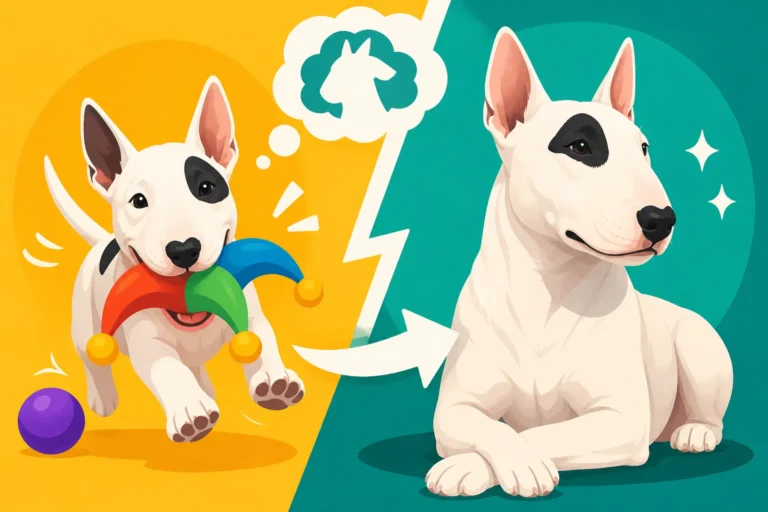
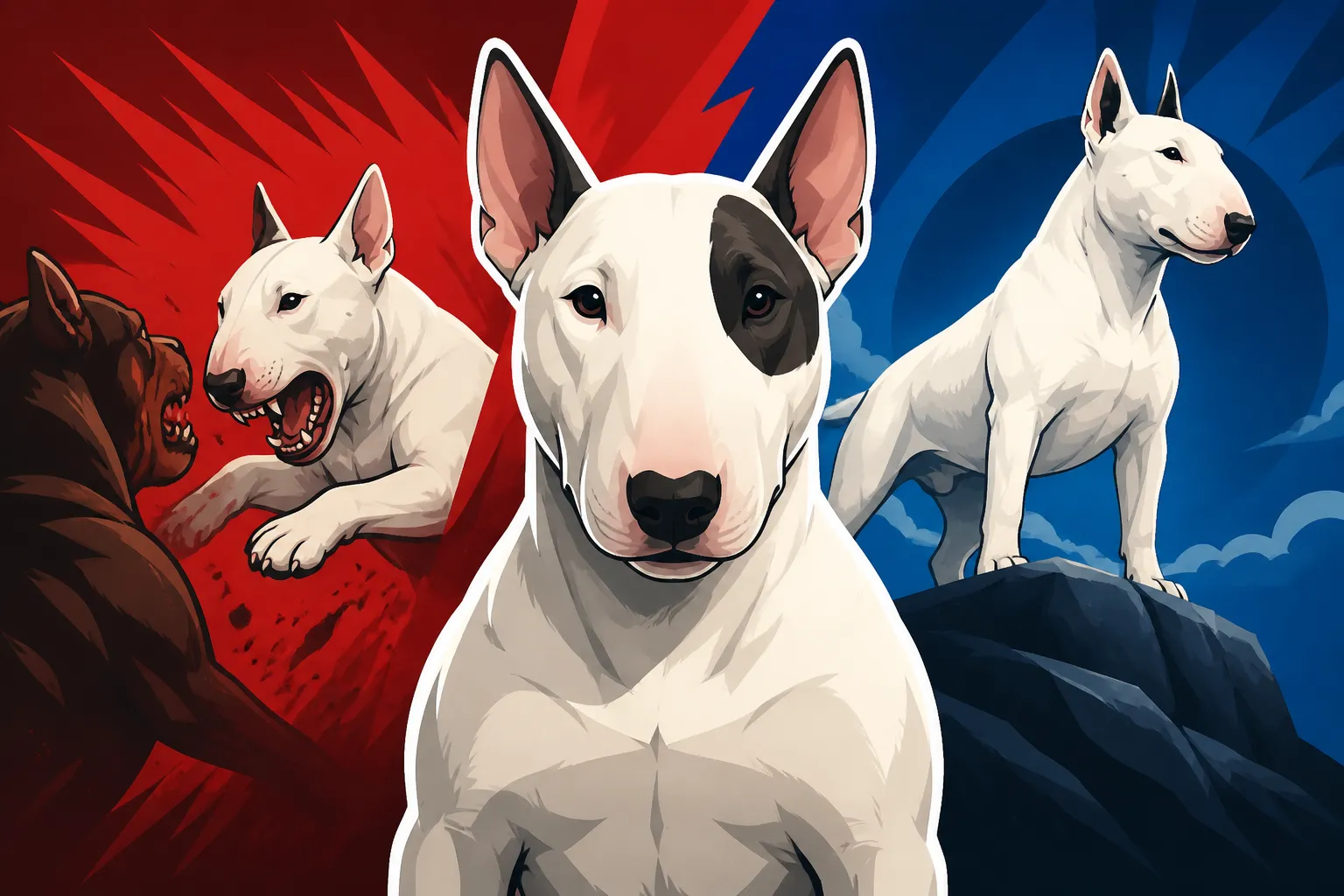
The dichotomy of the Bull Terrier's personality is perhaps its most captivating, yet often misunderstood, trait. On one hand, you have the famously goofy, affectionate, and playful "clown" who delights in making their human family laugh with their silly antics and endearing charm. They are deeply bonded to their people, thriving on companionship and often seeking to be the center of attention. This is the side of the Bull Terrier most owners cherish, the one that inspires articles like Why a Bull Terrier Is Called a Clown.
On the other hand, there's a subtle undertone of the "gladiator"—a quiet strength, a powerful build, and a sometimes-unyielding determination. This isn't to say they are always ready for battle, but rather that they carry an inherent confidence and physical prowess. When pushed, or when they perceive a threat to themselves or their family, this "gladiator" side can emerge. It's not usually about starting a confrontation out of malice, but about standing their ground. For example, a Bull Terrier might be perfectly content to ignore another dog, but if that dog repeatedly invades its personal space, stares intensely, or exhibits rude behavior, the Bull Terrier might issue a direct, no-nonsense correction that can quickly escalate. This switch can be startling for owners who are only familiar with their dog's clownish side, making it crucial to understand both facets of their personality.
Understanding Body Language
Bull Terriers, like all dogs, communicate through a complex system of body language, but their unique physical structure can sometimes make their signals harder to read for both humans and other dogs. Their small, triangular eyes, often set deep in their broad, egg-shaped head, can make it difficult to discern subtle eye movements or expressions that might signal discomfort or escalation in other breeds. This can lead to misunderstandings, where a Bull Terrier might be sending clear signals of unease that are missed by an approaching dog or an unsuspecting owner.
Furthermore, their natural muscularity and low-slung posture can sometimes be perceived as readiness for conflict, even when they are simply relaxed. A Bull Terrier standing still, perhaps with a low tail and ears forward, might look imposing to another dog, potentially inviting an unwanted challenge. It's vital for Bull Terrier owners to become experts in their dog's specific body language, looking for nuances like a stiffening body, a slow, deliberate turn of the head, or a subtle whale eye that indicate rising tension. Recognizing these cues early allows owners to intervene before a situation escalates, rather than reacting after a skirmish has begun. The subtle signs that mean "I'm not comfortable" are often there long before the growl or lunge.
Bull Terriers and Dog-on-Dog Interactions
When it comes to interactions with other dogs, Bull Terriers often present a nuanced picture. They aren't universally aggressive, nor are they typically the life of the dog park. Their responses are heavily influenced by individual temperament, early socialization, training, and the specific dynamics of the encounter. However, there are some patterns and tendencies that owners should be aware of.
The Challenge of Same-Sex Aggression
One of the more persistent challenges with Bull Terriers, particularly males, can be same-sex aggression. While not every Bull Terrier will exhibit this, it's a trait that can emerge, even in well-socialized dogs, especially as they mature. This isn't about starting a fight out of nowhere but often stems from a perceived challenge to dominance or a lack of tolerance for rude behavior from another dog of the same sex. A Bull Terrier might ignore another male dog for a while, but if that dog continuously tries to sniff, mount, or assert itself in a confrontational manner, the Bull Terrier might decide to end the interaction definitively. Why Two Same Sex Bull Terriers Fight delves into this in more detail, explaining the complexities of such dynamics.
It's crucial to understand that "finishing a fight" for a Bull Terrier often means doing so with conviction and without a lot of verbal posturing beforehand. They might not bark much, but once they decide to engage, they tend to be committed. This can be startlingly fast and intense. For this reason, many experienced Bull Terrier owners carefully manage interactions with unfamiliar dogs, especially those of the same sex. They often prefer one-on-one playdates with known, compatible dogs, or avoid dog parks altogether, opting for structured walks where encounters can be controlled. This isn't about fearing their dog, but about responsible management and understanding their inherent traits.
When a Bull Terrier Feels Challenged
Bull Terriers generally prefer to avoid direct confrontation, but they are not ones to back down when they feel challenged or cornered. This challenge doesn't necessarily have to be physical; it can be a persistent stare, an invasion of personal space, or an overly boisterous play style from another dog that the Bull Terrier finds irritating. They have a strong sense of self and can be quite sensitive to perceived disrespect from other canines. For instance, a Bull Terrier might be quietly enjoying a walk, only for an off-leash dog to charge up to them, barking and circling. While many dogs might yelp and retreat, a Bull Terrier is more likely to meet the perceived threat head-on, not necessarily initiating the aggression, but certainly escalating it if it continues.
Their high pain tolerance also means they might not show typical signs of discomfort before snapping, making it seem like they went "from zero to sixty" without warning. In reality, the Bull Terrier likely endured several subtle provocations that were missed by human observers or misinterpreted by the other dog. Once engaged, their powerful jaw and tenacious nature mean they are incredibly effective at shutting down a perceived threat. This is why prevention and careful management are paramount. Knowing your Bull Terrier's threshold and being able to intervene calmly and effectively before they reach their breaking point is key to responsible ownership.
Reading the Room: Avoiding Escalation
A significant part of managing dog-on-dog interactions with a Bull Terrier is the owner's ability to "read the room" — or rather, to read the environment and the other dogs involved. Bull Terriers thrive on routine and clear expectations. Unpredictable environments, like crowded dog parks with many different energy levels and temperaments, can be overwhelming and increase the likelihood of a negative interaction. Instead, focus on controlled, positive experiences.
| Interaction Scenario | Bull Terrier Initial Response (Likely) | Potential Escalation (If Unchecked) | Owner's Role |
|---|---|---|---|
| Boisterous, rude dog | Ignores, stiffens, side-eyes, moves away | Growls, air snaps, body slams, direct correction | Intervene, separate, clear physical barrier |
| Dominant, staring dog | Stands ground, returns stare, head up | Direct challenge, lunge, fight | Redirect, move away, break eye contact |
| Submissive, fearful dog | Ignores, sniffs briefly, may try to herd/control | Bullying, chasing, over-correction | Supervise closely, ensure fair play, intervene |
| Off-leash, charging dog | Stands ground, may give warning bark/growl | Engages defensively, holds its own | Create space, use firm commands, be vocal |
| Known, compatible dog | Engages in play, body slams, chases, roughhouses | Play gets too rough, becomes overstimulated | Monitor, provide breaks, intervene if play escalates |
This proactive approach means understanding that not every dog is a good match for your Bull Terrier's play style or personality. It also means advocating for your dog by removing them from situations where they are uncomfortable or where other owners are not managing their dogs responsibly. Trust your gut. If a situation feels off, it probably is. Why a Dog Park Goes Wrong for a Bull Terrier offers great insight into why these environments aren't always suitable for our unique clowns.
Managing and Preventing Conflict
Living harmoniously with a Bull Terrier means understanding their potential for intensity and proactively managing their environment and training to prevent conflict. It's not about suppressing their natural instincts, but channeling them appropriately and teaching them the skills to navigate the world safely and confidently.
Proactive Socialization and Training
Early, positive, and diverse socialization is perhaps the most critical step in shaping a Bull Terrier's dog-on-dog behavior. This isn't just about exposing them to other dogs, but ensuring those exposures are positive and structured. A puppy class, particularly one that focuses on polite greetings and impulse control, can be invaluable. Programs like those offered by BAXTER & Bella provide excellent online resources for structured puppy training from home, which can complement in-person classes, ensuring your Bull Terrier puppy learns appropriate social cues in a safe environment. Exposing them to different breeds, sizes, and temperaments in controlled settings helps them develop a broader understanding of canine communication.
Training needs to be consistent and reward-based. Bull Terriers are incredibly intelligent but can be notoriously stubborn. They will "train when it sees the point," as we often say. Strong recall, a solid "leave it" command, and a reliable "stay" are essential tools for managing interactions. For example, if another dog approaches, a strong "leave it" can redirect your Bull Terrier's focus and prevent an unwanted interaction. Weaving in mental enrichment, like puzzle toys found on Amazon, can also help reduce boredom and build a more balanced, less reactive dog. A well-exercised and mentally stimulated Bull Terrier is generally a happier and less reactive one. A Bull Terrier Trains When It Sees the Point perfectly encapsulates the need for motivation in their training.
Effective Management Strategies
Even with the best training and socialization, responsible Bull Terrier ownership involves ongoing management strategies. This means always being aware of your surroundings when out walking. If you see another dog approaching that seems reactive, or if its owner is not paying attention, cross the street or create distance. Using a sturdy, well-fitting harness (we discuss Which Harness Holds a Bull Terrier in another post) can give you better control on walks, especially if your Bull Terrier has a tendency to pull towards interesting smells or, less ideally, other dogs.
Managing their environment at home is equally important. If you have multiple dogs, especially same-sex pairs, supervised interactions and separate feeding areas might be necessary. Crates can be an invaluable tool for providing a safe space and for managing interactions when you can't actively supervise. Whether a Crate Helps a Bull Terrier Left Alone highlights the benefits of crate training for this breed, which extends beyond just house training. Remember, it's always better to prevent a negative interaction than to try and break up a fight. Knowing your dog's triggers and skillfully avoiding them is not a sign of weakness, but of responsible ownership.
Seeking Professional Guidance
If you find yourself struggling with your Bull Terrier's dog-on-dog reactivity or aggression, do not hesitate to seek professional help. A qualified positive reinforcement trainer or a veterinary behaviorist can provide invaluable insight and create a tailored plan to address specific issues. They can help you identify triggers, teach you advanced management techniques, and work on behavior modification protocols. This isn't a sign of failure; it's a commitment to your dog's well-being and the safety of your community.
A professional can also rule out underlying medical conditions that might be contributing to behavioral changes. Sometimes, pain or discomfort can lead to increased irritability and reactivity in dogs, even in breeds with high pain thresholds. For example, if your Bull Terrier is suddenly more reactive, it might be worth investigating if they are suffering from Patellar Luxation in a Bull Terrier or another orthopedic issue that causes discomfort. Getting a thorough veterinary check-up should always be the first step when addressing new or escalating behavioral problems.
The Role of the Owner in Bull Terrier Behavior
Ultimately, a Bull Terrier's behavior in dog-on-dog interactions is heavily influenced by the person on the other end of the leash. Your consistency, leadership, and ability to advocate for your dog are paramount in shaping their responses and ensuring safe, positive experiences.
Consistency and Leadership
Bull Terriers thrive on clear, consistent leadership. They are strong-willed dogs who will test boundaries, and if they perceive a vacuum in leadership, they might decide to take matters into their own paws. This doesn't mean being harsh or punitive; rather, it means being a calm, confident guide who sets clear rules and enforces them consistently. Every interaction, every walk, and every training session is an opportunity to reinforce your role as their trusted leader. When they look to you for guidance in a novel or potentially challenging situation, and you provide that guidance, their confidence in you grows.
Consistency also means everyone in the household is on the same page regarding rules and training. If one person allows certain behaviors while another doesn't, it creates confusion for the Bull Terrier, making them more likely to default to their own instincts, which may not always be ideal in a social setting. Regular training practice, even just 5-10 minutes a day, helps reinforce good habits and strengthens your bond, making your Bull Terrier more responsive when you need them to be. Teaching a Bull Terrier to Sit and Stay is a fundamental skill that, when consistently practiced, builds a strong foundation for managing more complex social scenarios.
Advocacy and Protection
As a Bull Terrier owner, you are your dog's strongest advocate and protector. This means being vigilant in public, recognizing when your dog is uncomfortable, and being willing to politely but firmly create space or remove your dog from a situation that could escalate. It might mean saying "no" to an off-leash dog approaching without permission or explaining to another owner why you prefer not to have their dog greet yours. You are responsible for setting boundaries for your dog and other dogs around them.
Part of this protection also involves ensuring their physical and mental well-being. A Bull Terrier that is well-fed, adequately exercised (we cover How Much Exercise a Bull Terrier Actually Needs in another post), and receives plenty of mental stimulation is generally a more balanced and less reactive dog. Providing a safe, consistent home environment where they feel secure in their role reduces stress and, in turn, reduces the likelihood of defensive or reactive behaviors. Remember, your dog relies on you to navigate the human world and protect them from situations they can't control.
Lifelong Learning and Adjustment
The journey with a Bull Terrier is one of lifelong learning and adjustment. Their personalities can mature and change as they age, with some exhibiting more same-sex aggression as they hit social maturity. What worked for a puppy might not work for an adult, and what works for a young adult might need adjustment as they enter their senior years. Caring for a Bull Terrier Past Eight emphasizes the importance of continuing to adapt your care and management as they age.
Stay open to learning from your dog, from other experienced Bull Terrier owners, and from reputable resources. Read books on canine behavior, consider attending advanced training classes, or simply observe your dog's subtle cues. Understanding What a Bull Terrier's Temperament Is Really Like will help you anticipate their reactions and respond proactively. Every Bull Terrier is an individual, and while breed tendencies exist, it's your relationship with your specific dog that will ultimately determine how they navigate the world and whether they are prone to starting, or finishing, a fight. With patience, understanding, and consistent effort, your Bull Terrier can be a well-adjusted, cherished member of your family, capable of navigating social interactions with confidence, even if they sometimes prefer to be the quirky lone wolf.
Disclaimer
This article is for general informational purposes only and does not constitute professional advice. Laws, prices and regulations vary by location and change over time. Consult a qualified professional for guidance on your specific situation.