Whether a Bull Terrier Should Be Supervised With a Toddler
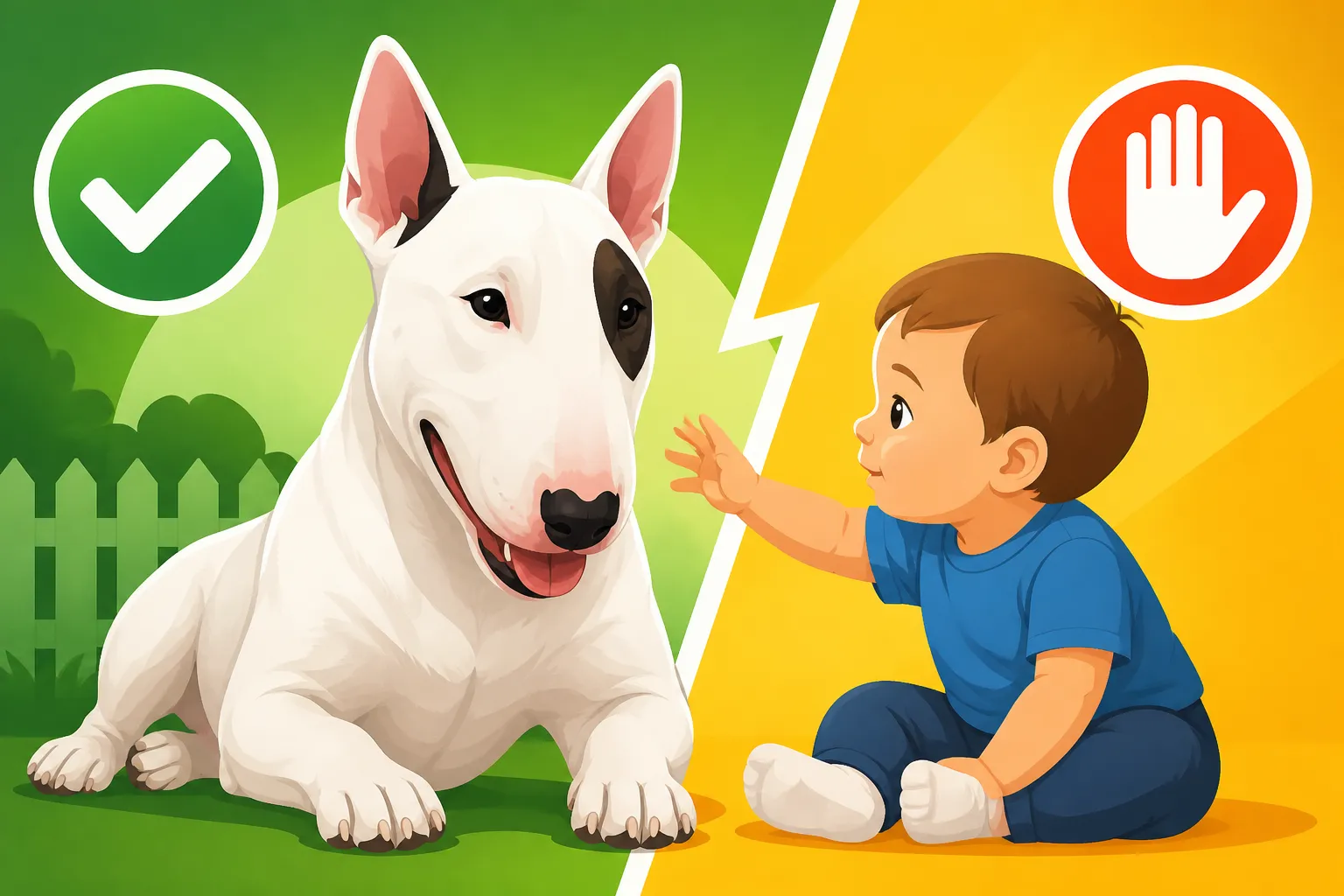
Bringing a new baby or a rambunctious toddler into a home that already has a Bull Terrier can feel like trying to mix oil and water, or at least a very powerful, enthusiastic dog with a very small, unpredictable human. Many Bull Terrier owners adore their dogs' clownish nature and robust build, but the thought of those traits interacting with a tiny, vulnerable child can trigger a wave of anxiety. This guide is here to walk you through exactly why constant, vigilant supervision isn't just a suggestion, but an absolute necessity when you have a Bull Terrier and a toddler under the same roof, and how you can manage their coexistence safely.
The Unique Dynamic of Bull Terriers and Small Children
Let's be honest, Bull Terriers are incredible dogs, known for their powerful build, boundless energy, and often goofy personalities. But these very traits, while charming to adults, can pose significant challenges when paired with the fragility and unpredictability of a toddler. It's not about malice; it's about physics and instinct.
Why Supervision Isn't Just "Recommended" – It's Essential
When we talk about a Bull Terrier and a toddler, we're not just discussing two different species; we're talking about vastly different physical capabilities and understandings of the world. Your Bull Terrier, no matter how sweet, possesses immense strength and a body that can easily outweigh a small child by two or three times. They might not intend to hurt anyone, but a playful nudge, an excited jump, or even just turning quickly can send a toddler tumbling with potentially serious consequences. Think about the energy your Bull Terrier brings when greeting you after a long day – that full-body wiggle, the head butts, the joyous leaps. Now imagine that directed, even accidentally, at a child who is just learning to stand or walk. It's a recipe for accidental injury. This isn't a breed that understands its own power, especially when caught up in the moment. You've probably seen your Bull Terrier How Easily a Bull Terrier Knocks You Over a grown adult with a happy tail wag; a toddler stands no chance.
Their exuberance also means they aren't always aware of their surroundings in the way a more delicate dog might be. They charge through life, quite literally, with a powerful frame that doesn't always register tiny obstacles like a crawling baby. A simple game of chase with an older child might result in a skinned knee, but the same interaction with a toddler could mean a serious fall or impact. It's a stark reality that we, as Bull Terrier owners, must accept and proactively manage. Relying on a dog, any dog, to instinctively know how to be gentle with a toddler is simply asking too much and puts everyone at risk.
Understanding a Bull Terrier's Play Style
If you've ever watched two Bull Terriers play, you know it's not a delicate affair. There's a lot of body contact, open-mouthed wrestling, and a generally robust, bouncy style that can easily be misinterpreted or simply be too much for a small child. They often engage in what we affectionately call "body slams" – leaning, pushing, and nudging with their entire weight as a form of greeting or play. While this might be endearing (and sometimes painful!) for an adult, a toddler lacks the core strength and balance to withstand it.
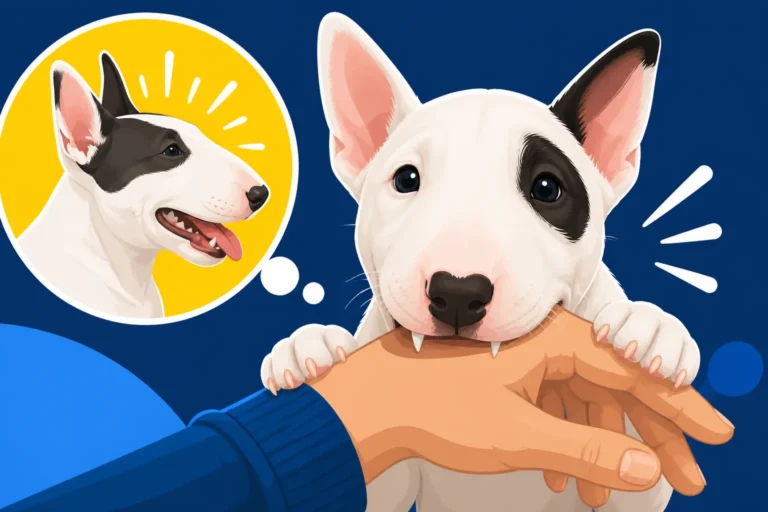
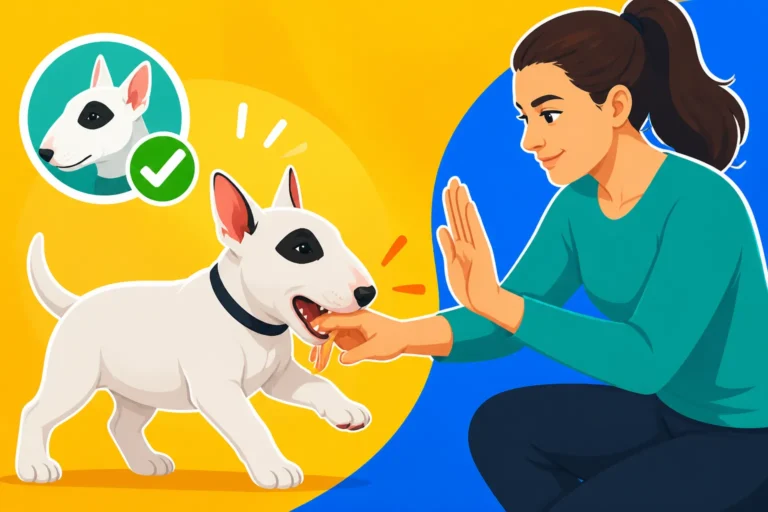
Furthermore, Bull Terriers often have a very physical way of showing affection or seeking attention. They might push their head into you, plop their whole body onto your lap, or even use their powerful jaws in a "mouthing" way that, while not aggressive, can still be alarming or accidentally painful for a child with fragile skin. Their concept of play doesn't distinguish between a durable adult and a tender toddler. They see interaction, and they engage with their full, enthusiastic selves. This is why you constantly hear stories about a Bull Terrier puppy being How Mouthy a Bull Terrier Puppy Is and needing consistent redirection to learn appropriate play. The risk isn't that your Bull Terrier is aggressive, but that its natural, joyful, and often boisterous play style is fundamentally incompatible with the physical vulnerability of a toddler.
Navigating the Developmental Stages of Both Toddler and Bull Terrier
The challenge of having a Bull Terrier and a toddler isn't just about their individual traits, but how their developmental stages often clash. Both are essentially learning about the world, but with very different capabilities and understanding.
The Toddler's Perspective: Unpredictability and Lack of Impulse Control
Toddlers are a whirlwind of discovery, curiosity, and, let's face it, a profound lack of impulse control. They are learning about cause and effect, boundaries, and how to interact with their environment. This means they might suddenly grab a handful of fur, pull an ear, poke an eye, or even sit on a dog, completely unaware of the potential pain or discomfort they are causing. Their movements are often jerky, their voices can be high-pitched and startling, and their interest in an animal might manifest as clumsy pokes or attempts to "ride" the dog.
A toddler's actions, while innocent, can be incredibly irritating or even frightening to a dog, even one as tolerant as a Bull Terrier. A dog's bite, even a warning nip, is often a last resort after numerous, ignored signals of discomfort. A toddler simply isn't equipped to read those signals – the stiffening body, the lip lick, the averted gaze. They live in the moment, driven by curiosity, and that makes them an unpredictable element in any interaction with a large, strong animal. We cannot reasonably expect a toddler to be consistently gentle or respectful of a dog's space, which places the full responsibility for safety squarely on the adult.
The Bull Terrier's Maturation: The "Three-Year-Old in a Dog Suit"
Bull Terriers are famously slow to mature. It's a common saying among owners that they are "three-year-olds in a dog suit," and it's remarkably accurate. While many breeds settle down significantly by their second birthday, a Bull Terrier often retains its puppy-like exuberance, high energy, and selective hearing well into its third year, sometimes even longer. This extended adolescence means that a Bull Terrier that is one or two years old, which might be considered "adult" in other breeds, is still very much a rowdy, playful, and often oblivious teenager in Bull Terrier terms. The Age a Bull Terrier Finally Settles varies, but it's certainly later than many owners expect.
This prolonged puppy stage directly overlaps with the most vulnerable years of a toddler's life. When your child is at their most physically fragile and unpredictable, your Bull Terrier might still be at their most boisterous and prone to forgetting their manners in the heat of play. This combination amplifies the need for constant, active supervision. You cannot assume that because your dog is technically an "adult," they will automatically possess the calm demeanor and delicate understanding required to navigate life with a tiny human. Their good nature is generally unquestionable, but their sheer physical presence and playful disregard for personal space require vigilant management.
Practical Strategies for Safe Coexistence
Given the unique dynamics of Bull Terriers and toddlers, creating a safe environment isn't about hoping for the best, but actively implementing strategies that prevent incidents before they ever have a chance to occur. It's about proactive management and clear boundaries for everyone involved.
Creating Physical Barriers and Safe Spaces
The single most effective tool for managing the Bull Terrier-toddler dynamic is the use of physical barriers. Baby gates are your absolute best friend. They allow you to safely separate your dog from your child, even if only for a few minutes while you answer the door or step away to grab something from the kitchen. This isn't about punishment; it's about prevention. Consider a network of baby gates, especially sturdy ones that a Bull Terrier won't simply bowl over, to create distinct "zones" in your home.
Beyond gates, crates are indispensable. A well-trained Bull Terrier views their crate as a safe, comfortable den. This provides your dog with a retreat when the toddler's energy becomes too much, or when you simply need a moment without worrying about accidental interactions. Invest in a heavy-duty crate that your Bull Terrier can't bend or break, offering them a true sanctuary. You might find a wide selection of robust options on platforms like Amazon. Similarly, designate "toddler-only" zones where your child can play freely without any risk of dog interaction. These safe spaces ensure both your Bull Terrier and your toddler have areas where they can relax without constant vigilance from you, at least for short periods.
Teaching Controlled Interactions and Leash Manners Indoors
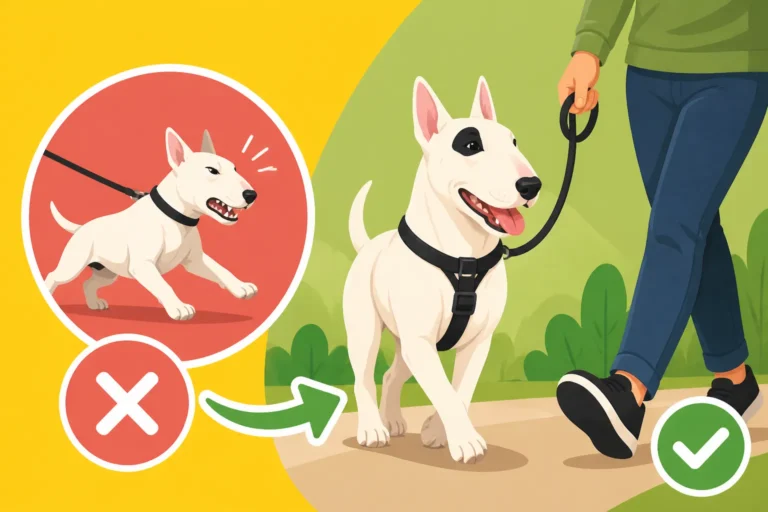
While the primary goal is often separation, there will be times when your Bull Terrier and toddler are in the same room. During these moments, every interaction must be highly controlled and actively supervised. This isn't a passive observation; it's active intervention. Use a leash indoors, even if your Bull Terrier is perfectly trained, to maintain immediate control. A leash allows you to prevent a sudden lunge, an excited jump, or an accidental bump before it happens.
Teach your Bull Terrier specific commands that promote calm behavior around your toddler, such as "place" (going to their bed) or a solid "sit-stay" from a distance. Reward them heavily with high-value treats for calm, quiet behavior in the presence of the toddler. Teaching a Bull Terrier to Sit and Stay is a crucial skill here, allowing you to establish distance and calm. The goal is to create positive associations for your dog with the toddler's presence, but always from a safe, controlled distance. Never allow your toddler to approach your Bull Terrier when the dog is crated, eating, or sleeping, as these are times when dogs are most vulnerable and prone to reacting defensively.
Educating the Toddler (and Older Children) on Dog Etiquette
While toddlers are limited in their understanding, establishing clear, consistent rules for all humans in the household is vital. For older children, this means teaching them how to interact respectfully with the Bull Terrier: no pulling ears or tails, no riding the dog, no disturbing them while they eat or sleep, and always asking an adult before approaching the dog. For toddlers, it's more about consistent redirection and physical management. If your toddler moves towards the dog, gently but firmly redirect them away. If they try to grab, intervene immediately.
Use simple, repetitive phrases like "Gentle hands" or "Leave it" to start instilling basic concepts, even if they don't fully grasp them yet. This consistent modeling helps set the stage for better behavior as they grow. The most important rule to convey to older children, and to embody yourself, is that dogs are not toys and need their space and respect. This communal understanding throughout the family creates a unified front for managing interactions and reinforcing appropriate behavior around your Bull Terrier.
Recognizing Warning Signs and Preventing Incidents
Even the most good-natured Bull Terrier has its limits. Understanding canine body language and recognizing subtle signs of stress or discomfort are critical skills for any owner, especially those with small children. Missing these cues can be the difference between a minor incident and a serious one.
Subtle Canine Communication You Need to Understand
Dogs communicate constantly, but often in ways we humans miss until it's too late. With a Bull Terrier, their expressive faces can sometimes mask underlying tension. Look for these subtle stress signals:
- Lip licking: Not after eating, but seemingly out of context, often a quick flick of the tongue.
- Yawning: Again, not when tired, but in response to a stressful situation.
- Averted gaze/turning head away: The dog is trying to disengage, showing they're uncomfortable.
- Stiff body posture: The dog becomes rigid, perhaps even freezes. This is a big red flag.
- "Whale eye": You can see the whites of their eyes, often when they are looking at something out of the corner of their eye, indicating tension.
- Moving away/seeking escape: If your Bull Terrier tries to leave the room or hide under furniture, they are telling you they need space.
- Growling: This is not a sign of aggression to be punished, but a crucial warning signal. A dog that growls is communicating its discomfort and should be given space immediately.
Many incidents occur because these early warning signals are ignored or misunderstood. Your Bull Terrier is likely to give many, many subtle cues before resorting to anything more drastic. It's our responsibility to be fluent in their language and respect their boundaries. A Bull Terrier's skin is often its A Bull Terrier's Skin Is Its Weakest Point, so any interaction that causes a nip or scratch can lead to more problems than just the initial injury.
When to Separate: Proactive Management is Key
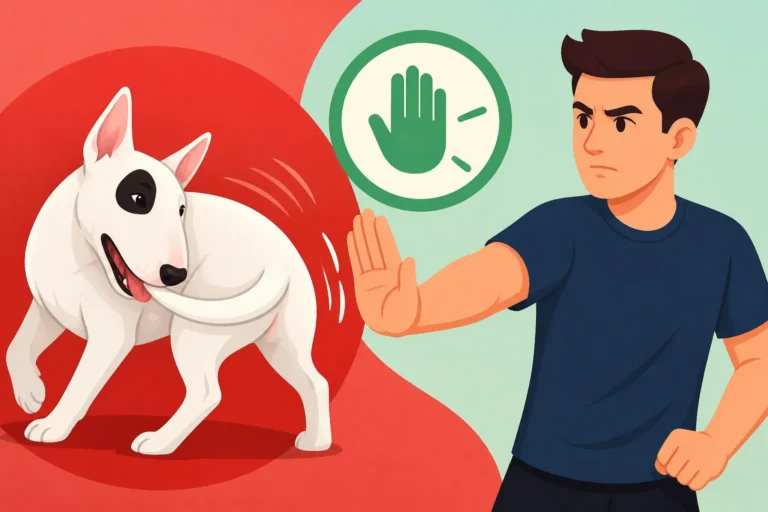
If you observe any of the warning signs mentioned above, or if you simply feel a moment of unease, it's time to separate the dog and child immediately. Don't wait, don't try to "fix" the interaction, just separate them. This isn't about blaming the dog or the child; it's about making a responsible decision to prevent harm. Even if the Bull Terrier just looks a bit tired or the toddler is becoming particularly whiny, proactive separation is always the safest choice.
This can mean moving the dog to its crate, putting up a baby gate, or even taking the dog for a short walk to decompress. The key is to manage the environment so that risky situations never arise. It's far better to separate them 100 times unnecessarily than to miss one critical sign that leads to an injury. Think of it as constant risk assessment. If the energy level is too high, if attention spans are waning, or if either party seems overwhelmed, then it's time for a break. This approach empowers you to maintain control and ensures peace of mind for everyone in the household.
Beyond Supervision: Long-Term Training and Socialization
While constant supervision is the immediate answer to a safe coexistence, building a foundation of solid training and responsible socialization is vital for the long haul. These elements don't replace supervision, but they greatly enhance your ability to manage your Bull Terrier's behavior and ensure a harmonious home.
Continued Training for a Well-Adjusted Bull Terrier
A well-trained Bull Terrier is not necessarily a perfectly behaved Bull Terrier around children without supervision, but they are certainly easier to manage. Investing in consistent, positive reinforcement training is paramount. Focus on impulse control exercises, such as "leave it" for dropped food or toys, "stay" for holding positions, and a reliable "recall" to call them away from any situation. These skills are invaluable for managing a boisterous Bull Terrier around a toddler. Remember, A Bull Terrier Trains When It Sees the Point, so keep sessions short, fun, and highly rewarding to maintain their engagement.
Consider enrolling in obedience classes or utilizing online training platforms like BAXTER & Bella. These resources can provide structured guidance and help you hone your Bull Terrier's manners, making them a calmer and more responsive companion. Even an adult Bull Terrier can benefit from refresher training or learning new skills, reinforcing good habits and maintaining their mental engagement. A dog that understands and respects boundaries is generally a safer dog to have in a home with small children, even if supervision remains non-negotiable.
Socialization with Children (Under Strict Control)
Proper socialization for your Bull Terrier regarding children is crucial, but it's often misunderstood. It does not mean allowing unsupervised free-for-all interactions. Instead, it means creating positive, controlled exposures to children from a distance, teaching your Bull Terrier to be calm and comfortable in their presence, without feeling the need to interact directly. This might involve taking your Bull Terrier on walks where children are present, rewarding them for calmly observing, or having quiet, supervised visits with older, dog-savvy children who understand boundaries.
The goal is to desensitize your Bull Terrier to the sights, sounds, and unpredictable movements of children, so they view them as a normal, non-threatening part of their environment, rather than something to be overly excited or fearful about. Always keep your Bull Terrier on a leash during these exposures and maintain a safe distance. Never force an interaction, and always end on a positive note. A Bull Terrier that is well-socialized to the general presence of children, taught to be respectful of personal space, and understands clear boundaries will be a more relaxed and predictable family member.
| Aspect of Coexistence | Recommendation | Why It's Important |
|---|---|---|
| Supervision | Constant, active, vigilant | Prevents accidental injury from Bull Terrier's strength/exuberance and toddler's unpredictability. |
| Physical Barriers | Baby gates, heavy-duty crates, designated safe zones | Ensures physical separation when direct supervision isn't 100% possible; provides retreat for dog and child. |
| Dog Training | Positive reinforcement; focus on impulse control | Helps manage Bull Terrier's behavior; teaches "leave it," "stay," and calm demeanor around children. |
| Child Education | Consistent rules; "gentle hands" messages | Teaches respect for dog's space (for older kids); helps toddler learn boundaries through repetition/redirection. |
| Warning Signs | Learn canine body language (lip licks, yawns, stiffness) | Enables early intervention, preventing escalation of discomfort into an incident. |
| Separation | Immediate, without blame | The safest response to any sign of stress, discomfort, or general unease from either dog or child. |
| Socialization | Controlled, positive exposure from a distance | Desensitizes Bull Terrier to children, fostering comfort without demanding direct interaction. |
Ultimately, owning a Bull Terrier and raising a toddler in the same home is a commitment to diligent management and unwavering supervision. While these dogs are known for their loving nature and their ability to bond deeply with their families, their physical attributes and playful dispositions demand that we, as responsible owners, never leave their interactions with fragile toddlers to chance. By implementing strong boundaries, fostering good training, and being ever-vigilant, you can ensure a safe and happy home for every member of your unique family.
Disclaimer
This article is for general informational purposes only and does not constitute professional advice. Laws, prices and regulations vary by location and change over time. Consult a qualified professional for guidance on your specific situation.