Teaching a Bull Terrier to Sit and Stay
Anyone who has ever tried to teach a Bull Terrier the basics knows it can feel like you're talking to a furry, four-legged comedian with an agenda all its own. Getting that glorious, egg-shaped head to lower into a "sit" or those sturdy paws to plant firmly in a "stay" is a triumph that can sometimes feel more like a negotiation than a command. This guide is here to walk you through the Bull Terrier’s unique approach to obedience, offering realistic strategies to get those essential manners locked in.
Understanding the Bull Terrier Approach to "Sit"
Teaching a "sit" might seem like the most straightforward command, but with a Bull Terrier, it's less about their intelligence (they're wicked smart!) and more about their inherent desire to weigh the benefits. They're often thinking, "What's in it for me right now?" and if your offer isn't compelling enough, you might get a head tilt, a quick bark, or a sudden burst of zoomies instead. This isn't defiance so much as it is a Bull Terrier being a Bull Terrier – full of personality and a healthy dose of charming stubbornness.
When you're starting, remember that their attention span isn't always built for long, drawn-out lessons. Think of them as eager learners who prefer their education in bite-sized, highly rewarding chunks. Short, upbeat sessions are far more effective than trying to drill a command for twenty minutes straight. You'll get much further with enthusiasm and high-value rewards than with frustration.
Luring and Shaping the Sit
To begin teaching "sit," you'll want to use a method called luring. Grab some truly irresistible treats – we're talking little bits of cheese, cooked chicken, or something equally amazing. Hold a treat near your Bull Terrier’s nose. Slowly move the treat in an arc over their head, towards their tail. As their nose follows the treat, their rear end should naturally lower to the ground. The instant their bottom touches the floor, mark that moment with a verbal cue like "Yes!" or a clicker if you use one, and immediately give them the treat. Repeat this a few times, always moving the lure in the same way.
Once your Bull Terrier is consistently sitting when lured, you can start adding the verbal cue "Sit" just as their rear end starts to descend, right before you give the treat. The goal is for them to associate the word with the action. Over time, you'll gradually fade the lure, making the hand motion smaller and smaller until they respond to just the verbal "Sit." Consistency is key here. Every single time you ask for a "sit," be prepared to follow through, even if it means going back to a full lure initially. This helps reinforce that "sit" means "sit" and not "sit if I feel like it."
The Art of the Short Session
Bull Terriers, for all their boundless energy, often have surprisingly short attention spans when it comes to formal training. Trying to force a long session is usually counterproductive and can lead to frustration for both of you. Aim for sessions that are just 5-10 minutes long, but do them frequently throughout the day. Two or three short bursts of training are far more beneficial than one long, tedious one. Keep it fun, keep it positive, and end on a high note. As I always say, How Short a Bull Terrier's Training Session Has to Be is usually shorter than you think!
During these short sessions, focus on success. If your Bull Terrier is struggling, make the task easier. If they're nailing it, you can slowly increase the difficulty, but never push to the point of failure. This builds confidence and makes them enthusiastic about working with you, rather than seeing training as a chore. Remember, they thrive on positive interaction and praise as much as, or sometimes even more than, treats.
Mastering the "Stay" with a Bull Terrier
The "stay" command introduces a whole new level of challenge for our beloved Bull Terriers. These are dogs bred for companionship and action; standing still and doing nothing can feel like torture to their active minds and bodies. Their innate desire to be near you, combined with their sometimes goofy and excitable nature, means that teaching "stay" requires patience, consistency, and a very systematic approach. It's not uncommon for a Bull Terrier to break a stay with a happy wiggle and a leap, convinced they know what you really want – more playtime!
The key is to build "stay" in small, achievable increments, focusing on three main elements: duration, distance, and distractions. Trying to tackle all three at once is a recipe for failure and frustration. Break it down, celebrate every tiny win, and understand that setbacks are a normal part of the Bull Terrier training journey.
Building Duration and Distance
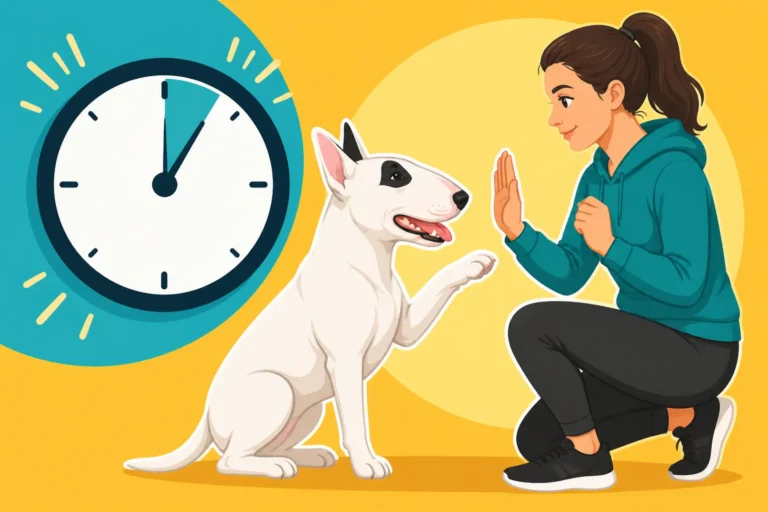
Start with your Bull Terrier in a "sit" position. Give your "Stay" command clearly and use an open-palm hand signal. Then, take one tiny step backward, count to one, step back to your dog, release them with a cheerful "Okay!" or "Free!", and reward them. Yes, one second and one step. That's it. It might seem ridiculously short, but this builds the foundation of understanding. Repeat this several times. Once they are consistently holding for one second, gradually increase the time to two seconds, then three, and so on.
Only when they are reliably holding for a few seconds should you start increasing distance. Again, do it incrementally. Go from one step away to two steps, then three. Always return to your Bull Terrier to release and reward them before they break the stay. If they break, calmly reset them to the "sit" position, give the "Stay" command again, and go back to an easier duration or distance. Avoid getting angry; a Bull Terrier shuts down under pressure, and a harsh tone can make them disengage. Remember, Why a Bull Terrier Shuts Down Under Pressure is often due to feeling overwhelmed or confused.
Introducing Distractions Gradually
Once your Bull Terrier can hold a "sit-stay" for a reasonable duration (say, 10-15 seconds) with you a few feet away, it's time to introduce mild distractions. Start small:
- Visual Distractions: Wiggle your fingers, take out your phone, or have another family member walk slowly across the room.
- Auditory Distractions: Gently drop a soft toy, jingle your keys quietly, or play some soft music.
- Movement Distractions: Walk in a small circle around your Bull Terrier while they hold the stay.
The trick is to start with very low-level distractions and gradually increase their intensity. If your Bull Terrier breaks, it means the distraction was too much. Go back to an easier level or a different type of distraction. For instance, if jingling keys is too exciting, try simply showing them the keys first. The world is full of interesting things for a Bull Terrier, so this phase is crucial for real-world reliability. This is also where high-value treats from places like Amazon can come in handy, making the reward truly outrank the exciting distraction.
Practical Tips for Consistency and Real-World Application
Teaching "sit" and "stay" in a quiet living room is one thing; having your Bull Terrier perform those commands reliably at the vet's office, a busy park, or when the doorbell rings is another entirely. The transition from controlled training environments to real-world situations requires strategic planning, unwavering consistency, and an understanding of the Bull Terrier's unique personality. They're incredibly intelligent but can sometimes be selective about when and where they apply their knowledge, often because Why a Bull Terrier Decides a Cue Is Optional if the perceived reward isn't there or the distraction is too compelling.
Integrating Commands into Daily Routines
The best way to solidify "sit" and "stay" is to weave them into your Bull Terrier’s everyday life. Don't just practice them in dedicated training sessions; make them a part of routines:
- Mealtime Manners: Before you put down their food bowl, ask for a "sit" and then a short "stay." Only release them to eat after they've held it for a moment. This teaches impulse control and associates the commands with something highly rewarding.
- Doorway Etiquette: Before going outside for a walk or letting them greet someone at the door, ask for a "sit-stay." This prevents barging and encourages calm behavior. It's a great way to reinforce that good things happen when they listen.
- Greeting Guests: When guests arrive, have your Bull Terrier perform a "sit-stay" before they get any attention. This prevents jumping and teaches them that polite greetings earn rewards.
- Vet Visits: Practice a "sit-stay" in the waiting room (if safe and calm) and on the examination table. This can make vet visits less stressful for everyone.
By making these commands functional, your Bull Terrier learns that listening isn't just for training class; it's how they navigate their world successfully and get what they want.
The Power of Motivation: What Drives a Bull Terrier
Bull Terriers are often food motivated, but their true currency can vary. Some will do anything for a squeaky toy, others for a vigorous game of tug, and many simply crave your enthusiastic praise and physical affection. Which Reward Outranks a Bull Terrier's Own Idea often depends on the individual dog and the situation. Experiment to find out what truly lights up your Bull Terrier.
- High-Value Treats: For new commands or highly distracting environments, use treats that are exceptionally tasty. Think tiny pieces of hot dog, cheese, or premium training treats.
- Praise and Affection: Bull Terriers are incredibly people-oriented and thrive on praise. A happy, "Good dog!" and a loving scratch behind the ears can be a powerful motivator. How Physically Affectionate a Bull Terrier Is often means they love your hands on them.
- Play: If your Bull Terrier loves toys, use a quick game of fetch or tug as a reward for a perfect "sit-stay."
Vary your rewards to keep things interesting and prevent your Bull Terrier from becoming bored or complacent. If they know a bland kibble piece is always coming, they might decide that chasing a leaf is more fun.
The Importance of a United Front
For a Bull Terrier, consistency from everyone in the household is paramount. If one family member allows jumping at the door and another demands a "sit-stay," your Bull Terrier will quickly learn that rules are flexible. This creates confusion and slows down progress. Ensure everyone uses the same commands, hand signals, and expectations. Hold a family meeting to discuss training protocols and agree on what you're working on. Resources like BAXTER & Bella often emphasize family involvement and consistent messaging, which is incredibly helpful for a breed like the Bull Terrier.
Common Challenges and Troubleshooting for Sit and Stay
Even with the best intentions and consistent effort, you're bound to hit some snags when teaching a Bull Terrier to sit and stay. They are known for their strong will, their playful antics, and their knack for finding the loopholes in every command. It's easy to get frustrated, but remember that these challenges are normal and often stem from miscommunication or simply pushing too fast. Patience and a willingness to adjust your approach are your best tools.
When Your Bull Terrier Plays "Dumb"
Sometimes, you'll swear your Bull Terrier suddenly forgot English the moment you say "Sit!" They might stare at you blankly, give a sassy head tilt, or even offer a completely different behavior like a paw shake. This isn't usually malice; it's often either confusion, a lack of motivation, or too many distractions.
- Go Back to Basics: If they're truly ignoring you, return to luring. Show them exactly what you want with the treat and a clear hand signal. This reminds them of the association.
- Increase Motivation: Is your treat good enough? Is your praise enthusiastic? For a Bull Terrier, the reward has to be worth their effort. If they're not motivated, they won't perform.
- Reduce Distractions: If you're practicing in a busy park and they're staring at a squirrel, you're asking too much. Move to a quieter area and gradually reintroduce distractions.
- Shorten Sessions: Maybe they're just bored. A quick, successful few reps are better than 15 minutes of them zoning out.
Fading the Lure: Beyond the Treat in Hand
A common pitfall is that your Bull Terrier will only sit if they see a treat in your hand. This means they've learned to follow the lure, but not the actual command. To fade the lure:
- Ghost Lure: Go through the motion of luring with an empty hand, but have the treat hidden in your other hand or pocket. Reward immediately from the hidden hand when they sit.
- Hand Signal First: Start giving the verbal command and hand signal before you even bring out the treat. If they respond to the signal, reward.
- Intermittent Rewards: Once they are consistent, you don't need to reward every single sit. Start rewarding every other sit, then every third, then randomly. Keep them guessing, but always praise. You never stop rewarding entirely, but the treats become less frequent and more varied.
"Why Can't My Bull Terrier Hold a Stay?"
If your Bull Terrier breaks their "stay" almost immediately, it's a clear sign that you've moved too fast. Don't punish them; simply reset and make the task easier.
- Shorter Duration: Go back to 1-2 seconds. Seriously. Build that foundation solid.
- Closer Distance: Stand right next to them, or even in front of them, rather than stepping away.
- Fewer Distractions: Practice in the quietest room in your house.
- Clear Release Cue: Make sure your release word ("Okay!" or "Free!") is distinct and exciting. They need to understand that breaking the stay is only allowed after this word.
- Reinforce the Position: If they fidget or start to stand, gently guide them back into the sit position without comment, then reset the "stay" command.
When to Seek Professional Guidance
Sometimes, despite your best efforts, you might feel stuck. Bull Terriers can be particularly challenging due to their unique blend of intelligence, strong will, and high energy. If you're consistently struggling, don't hesitate to reach out to a professional dog trainer or behaviorist. They can offer personalized advice, observe your interactions, and pinpoint specific areas for improvement.
A good trainer can help you understand your Bull Terrier's motivations better and provide tools to overcome specific hurdles. They can also help if you suspect your Bull Terrier's "stubbornness" is actually a sign of anxiety or a deeply ingrained habit. Remember, Whether a Bull Terrier Owner Should Hire a Behaviorist is a valid question, and often the answer is yes, especially for complex behavioral issues or if you feel overwhelmed.
Here’s a quick troubleshooting guide:
| Problem | Possible Cause | Solution |
|---|---|---|
| Ignores "Sit" command | Low motivation, high distraction, confusion | Use high-value treats, reduce distractions, revisit luring, shorten sessions |
| Only sits with treat in hand | Over-reliance on lure, hasn't generalized command | Practice ghost luring, use hand signal only, introduce intermittent rewards |
| Breaks "Stay" immediately | Moved too fast, not enough foundation, too many distractions | Go back to shorter durations/distances, reduce distractions, clear release cue |
| Gets up during "Stay" and approaches | Sees you as the reward for breaking, lacks impulse control | Return to dog to release, make breaking the stay unrewarding (no attention) |
| Becomes frustrated/shuts down | Pressure, boredom, over-correction | Keep sessions positive & short, use playful rewards, avoid harsh tones |
| Distracted by everything | Environment too stimulating | Train in quiet areas first, gradually add controlled distractions |
By approaching "sit" and "stay" with a healthy dose of patience, humor, and a deep understanding of your Bull Terrier's individual quirks, you'll eventually build a reliable foundation for these essential commands. It's a journey, not a sprint, but the bond you build along the way is priceless.
Disclaimer
This article is for general informational purposes only and does not constitute professional advice. Laws, prices and regulations vary by location and change over time. Consult a qualified professional for guidance on your specific situation.