Whether a Bull Terrier Ever Earns Off Leash Freedom
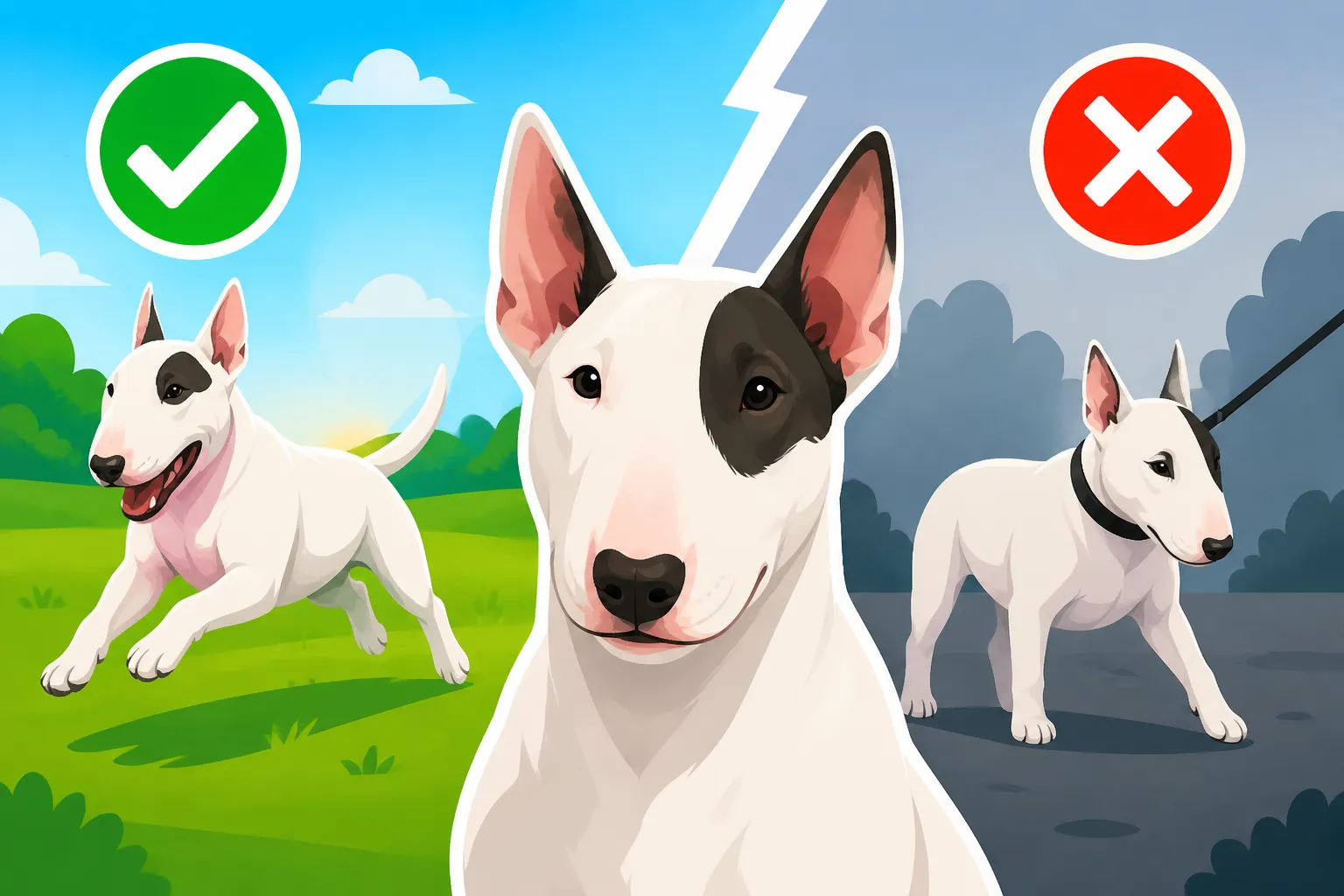
The dream of a Bull Terrier galloping freely across an open field, ears flopping, joy radiating, is a common one for many owners. However, the reality of achieving true, reliable off-leash freedom with this independent and often distraction-driven breed presents significant challenges and isn't a given for every dog. This guide will delve deep into the nuances of Bull Terrier temperament, training strategies, and realistic expectations to help you understand if and how your unique Bull Terrier might earn the privilege of off-leash adventures.
The Allure and Reality of Off-Leash Freedom for a Bull Terrier
It’s completely understandable to envision your beloved Bull Terrier enjoying boundless freedom, running and exploring without the physical tether of a leash. We see idyllic images online of dogs frolicking, seemingly carefree. For many dog breeds, especially those with a strong desire to please and low prey drive, this can be a relatively straightforward goal. But the Bull Terrier, with its unique blend of charm, intelligence, and often mischievous independence, presents a different scenario altogether.
The Dream vs. The Bull Terrier Reality
The image in our heads is often one of a dog that responds instantly to our call, staying within sight and politely greeting other dogs or people. We imagine them burning off energy, mentally stimulated by new scents and sights, all while remaining perfectly attuned to us. It’s a beautiful picture, isn’t it? However, a Bull Terrier's reality can often involve a powerful instinct to follow an interesting scent trail, a sudden burst of speed after a squirrel, or an intense focus on another dog that overrides all previous training. Their distinctive personality, often described as a "three-year-old in a dog suit," means their priorities can shift in an instant, often prioritizing their own fun over your earnest pleas.
Getting them to focus on you when there’s a captivating distraction can feel like shouting into the wind. Their intelligence means they learn quickly, but their stubbornness or strong self-will means they often decide for themselves if your request is worth their time and effort. This isn't a failing on their part or yours; it's simply a characteristic of the breed that must be understood and respected. What a Bull Terrier's Temperament Is Really Like explores this duality in more detail, highlighting why their delightful clownishness also comes with a strong independent streak.
Why Off-Leash Is a High-Stakes Goal
For a Bull Terrier, off-leash freedom isn't just about convenience or a nice walk; it's a high-stakes proposition that carries significant risks. The potential for them to bolt into traffic, get lost, encounter a dog-reactive animal, or even unintentionally frighten someone with their exuberant greetings is always present. Their powerful build and sometimes boisterous play style can be misconstrued, leading to conflict with other dogs or concerns from other park-goers. It's not just their safety at stake, but also the safety and comfort of others, and your reputation as a responsible owner.
This isn't to say it's impossible, but it demands an exceptionally reliable recall and a deep understanding of your individual dog's triggers and motivations. We're talking about a level of reliability that needs to be tested and proven in various environments, not just your backyard. Anything less risks disaster, and no owner wants to spend their afternoon frantically searching for their beloved companion or explaining an unfortunate incident.
Understanding Your Bull Terrier's Instincts and Why Off-Leash is a Challenge
To truly grasp the difficulty and the dedication required for off-leash training with a Bull Terrier, we need to look at their inherent traits. They are not naturally inclined to stick close to a human in an open environment in the same way some herding or retrieving breeds might be. Their history and genetics play a significant role in their responses to the world around them.
The Bull Terrier's Independent Streak
Bull Terriers are thinkers. They have a strong sense of self and an independent nature. While they are incredibly loyal and affectionate with their chosen people, they are not typically "velcro dogs" in the traditional sense when outside the home. They thrive on mental stimulation and can be quite clever at problem-solving – often, that problem involves how to get to the most interesting thing they see or smell, rather than how to get back to you immediately. Why a Bull Terrier Needs a Job speaks to their need for mental engagement, which, if not properly channeled, can lead them to find their own "jobs" out in the world, like tracking a scent or chasing a moving object.
This independence means that even with excellent training, there will always be a moment where your Bull Terrier weighs up your command against the allure of the distraction. For off-leash success, your command must always win, without hesitation, even when the distraction is overwhelming. This requires a bond built on trust, clear communication, and consistently higher value rewards than anything the environment can offer. It's a relationship, not just a series of commands.
Prey Drive: The Ultimate Distraction
Perhaps the biggest hurdle for off-leash freedom with a Bull Terrier is their often-pronounced prey drive. Bred from bull-and-terrier types, they possess an inherent instinct to chase and engage with fast-moving objects, be it a squirrel, a rabbit, a blowing leaf, or even a jogging human or bicyclist. This isn't aggression; it's a hard-wired predatory sequence that, once triggered, can make them temporarily deaf to your voice. How Strong a Bull Terrier's Prey Drive Is delves into the depths of this instinct.
Imagine your Bull Terrier is happily trotting beside you, and then a squirrel darts across the path. In that split second, their ancient instincts kick in. Their focus narrows, their body tenses, and they are off. The urge to pursue is incredibly powerful, and often, no amount of calling, clapping, or coaxing will bring them back until the chase is over, or the object of their desire disappears. This makes open, unfenced areas particularly risky. Even a well-trained dog can have an "oops" moment if their prey drive is sufficiently stimulated, and with Bull Terriers, that threshold can be lower and the pursuit more intense.
The "Selective Hearing" Phenomenon
Ah, the infamous selective hearing! Many Bull Terrier owners will nod knowingly at this phrase. It's not that your Bull Terrier doesn't hear you; it's that they often choose whether or not to obey you in that precise moment. This isn't malicious, but rather a manifestation of their intelligent, independent, and sometimes stubborn nature. How Many Reps a Bull Terrier Gives You touches on their training style, suggesting they often need to see the point, and once they do, repetition can lose its luster. They might perform a perfect recall in the living room, but if that same recall is given when they're intensely sniffing a fascinating patch of grass or engaging in a game of chase with another dog, suddenly your voice becomes background noise.
This "selective hearing" is less about defiance and more about their assessment of priorities. In their world, that amazing smell or that exciting play is often a higher reward than coming back to you for a piece of kibble. Overcoming this requires making you the most rewarding thing in their environment, even in the face of immense distractions. It requires a relationship where coming back is always more valuable than staying away, which takes consistent, high-value reinforcement in increasingly distracting environments.
Building a Bombproof Recall: The Absolute Foundation
If off-leash freedom is the castle, a bombproof recall is the bedrock it’s built upon. Without a recall that is 100% reliable, 100% of the time, in 100% of situations, off-leash adventures are simply too dangerous. This isn't just about your Bull Terrier knowing the command; it's about them performing it without hesitation, every single time, regardless of what else is happening.
Starting Early and Making Recall Fun
Recall training should begin the moment your Bull Terrier puppy comes home. Start indoors, in a low-distraction environment. Make coming to you the most exciting game in the world. Use a happy, inviting voice, clap your hands, or even crouch down to make yourself more appealing. When they come, reward them lavishly with high-value treats (think cooked chicken, cheese, or hot dogs) and enthusiastic praise. Never use recall as a command to scold them or do something they dislike, like nail trims or leaving the park. Associate "come" only with positive experiences.
Practice frequently, in short, fun bursts. Call them, reward them, then release them to play again. This teaches them that coming to you doesn't mean the fun ends; it means they get something even better, and then the fun resumes. Consider using a distinct, high-pitched "emergency" recall word or sound that you only use for life-or-death situations and never dilute with everyday use. This ensures it retains its power. How Short a Bull Terrier's Training Session Has to Be emphasizes the importance of keeping training sessions engaging and brief for this breed.
Proofing Your Recall in Different Environments
Once your Bull Terrier has a solid recall indoors, it's time to "proof" it in increasingly distracting environments. This is where many owners falter, as they assume an indoor recall translates to outdoor reliability. It rarely does. Start in your securely fenced yard, then move to a quiet park on a long line. A long line, available from retailers like Amazon, is an essential tool for this stage. It allows your dog to experience more freedom while still giving you control if they fail to respond.
Gradually introduce more distractions: other people, dogs at a distance, different scents. Always set your Bull Terrier up for success. Don't call them when you know they're too engrossed to listen. Call them when they are likely to come, reward heavily, and slowly increase the challenge. Practice often, and if they fail, don't punish them. Simply reel them in gently with the long line and try again in a less distracting environment. Remember, consistency is key, and every successful recall strengthens the behavior.
Emergency Recall: The Life-Saving Command
Beyond your everyday "come," every Bull Terrier owner should cultivate an emergency recall. This is a special command or sound (a whistle, a unique word) that you reserve only for critical situations, like when your dog is heading towards a road, another dog in distress, or disappearing into heavy brush. This command should be trained with the absolute highest value rewards imaginable – a whole hot dog, a squeaky toy they adore, or an entire game of tug.
The emergency recall should be practiced rarely, specifically to maintain its potency, but rehearsed enough that your Bull Terrier understands its gravity. Think of it as your nuclear option. The idea is that when they hear this command, their immediate, ingrained response is to stop everything and rocket back to you, because they associate it with an incomparable reward. This level of recall is incredibly difficult to achieve with a Bull Terrier due to their independent nature and prey drive, but it's the gold standard for any thought of off-leash activity. How Reliable a Bull Terrier's Recall Is elaborates on the importance of this level of precision.
Training Strategies and Tools for Off-Leash Success
Achieving any level of off-leash reliability with a Bull Terrier is an ongoing commitment, not a one-time training achievement. It requires specific strategies and tools to manage their instincts and build a strong enough foundation.
Long Lines and Controlled Practice
The long line is your best friend when practicing off-leash skills. It's essentially a very long leash (15 to 50 feet) that allows your Bull Terrier to roam further while still giving you control. It's perfect for teaching recall in open spaces without the risk of them running off. You can let them explore, sniff, and engage with their environment, but if they don't respond to your recall, you can gently guide them back.
Always attach the long line to a well-fitting harness, not a collar, to prevent neck injuries if you need to quickly stop them. Practice in quiet, open fields away from traffic and other dogs initially. As your Bull Terrier improves, you can move to slightly more distracting areas. Think of the long line as a temporary umbilical cord, gradually stretching its length as your dog proves they can handle more freedom. This tool is readily available on platforms like Amazon and is indispensable for safe, controlled off-leash training.
Positive Reinforcement and High-Value Rewards
Bull Terriers respond incredibly well to positive reinforcement. They thrive on praise, play, and especially, high-value food rewards. Harsh corrections or punishment can make them shut down or become more stubborn. Instead, focus on making every interaction a positive one, especially during training. When your Bull Terrier does something right, celebrate it! This strengthens their desire to repeat the behavior.
For recall, "high-value" means something extraordinary. Kibble won't cut it when a squirrel is darting by. Think boiled chicken, small pieces of cheese, hot dogs, or their absolute favorite squeaky toy. What Which Reward Outranks a Bull Terrier's Own Idea emphasizes is that you need to be constantly assessing what motivates your individual dog the most. Carry a variety of treats and toys with you. The goal is to make you the source of all good things, so coming back to you is always more exciting than anything else the environment offers. Keep your voice cheerful and enthusiastic – your energy is contagious!
Specialized Training Programs and Classes
Given the unique challenges of training a Bull Terrier, especially for off-leash work, enrolling in specialized training programs or working with a professional trainer can be incredibly beneficial. A skilled trainer can assess your dog's individual temperament, identify specific triggers, and develop a customized plan. They can also provide a safe, structured environment with controlled distractions for practicing recall and impulse control.
Online platforms, like those offered by BAXTER & Bella, can provide structured curricula, video tutorials, and even personalized coaching that you can follow from home. These resources can be invaluable for learning effective positive reinforcement techniques and understanding how to build a strong bond that underpins reliable obedience. Look for trainers who specialize in positive reinforcement and have experience with intelligent, strong-willed breeds. Group classes can also be helpful for practicing around other dogs in a controlled setting, which is crucial for building good manners in a dog that often enjoys enthusiastic, full-body greetings. Whether a Bull Terrier Can Pass a Canine Good Citizen Test points to the kind of foundational obedience and manners that such classes can instill, making off-leash scenarios safer.
Assessing Risk and Making Responsible Off-Leash Decisions
Even with a bombproof recall, off-leash freedom for a Bull Terrier is not a universal right to be exercised anywhere and everywhere. Responsible ownership means constant risk assessment and making smart decisions about when and where your dog can be off-leash.
Reading Your Dog and the Environment
This is perhaps the most crucial skill for any owner contemplating off-leash work. You must be able to read your Bull Terrier's body language and anticipate their reactions. Are they laser-focused on something in the distance? Is their tail twitching with interest at a passing jogger? Are they getting overstimulated by the environment? Knowing these cues allows you to intervene before they bolt, rather than reacting after the fact.
Equally important is reading the environment. Is the area securely fenced? Are there other dogs, children, or wildlife present? What is the proximity to roads or other hazards? Is it a legal off-leash area, and if so, is it well-maintained and free of unexpected exits? A quiet, empty field early in the morning might be suitable, whereas a bustling park at peak hours is an entirely different story. Never rely solely on your dog's training; always factor in the environment and your dog's current state of mind.
Legal and Ethical Considerations
Before you even consider letting your Bull Terrier off-leash, know the local leash laws. Many municipalities have strict regulations, and ignoring them can lead to fines, impoundment, or worse if an incident occurs. Public safety is paramount, and these laws are in place to protect everyone. Even in designated off-leash parks, there are often rules about behavior, waste disposal, and supervision.
Ethically, consider the impact of your dog on others. Not everyone loves dogs, and some people (and dogs) are genuinely fearful. Even a friendly Bull Terrier, with their muscular build and enthusiastic greetings, can be intimidating. An off-leash dog, no matter how well-behaved, can be perceived as a threat or a nuisance. Respecting others' space and ensuring your dog doesn't interfere with their enjoyment of public spaces is a hallmark of responsible ownership. This also extends to How a Bull Terrier Gets On With Other Dogs – while many are friendly, their play style can be intense and not appreciated by all canines.
Designated Off-Leash Areas: Parks and Private Land
The safest and most appropriate places for off-leash exercise are securely fenced dog parks or private land.
-
Dog Parks: These can be a fantastic way for Bull Terriers to burn energy and socialize, but choose wisely. Look for parks that are well-maintained, have separate areas for large and small dogs, and where owners actively supervise their pets. Watch for signs of overstimulation in your Bull Terrier or other dogs. Always be prepared to leave if the energy becomes too chaotic or if your dog isn't enjoying themselves. It's a privilege, not a right, to use these spaces.
-
Private, Fenced Land: If you have access to a large, securely fenced yard or a friend's farm, this offers the ultimate control and safety. You can practice recall, play games, and let your Bull Terrier run to their heart's content without worrying about external distractions or legal ramifications. This is often the ideal scenario for true off-leash enjoyment.
| Off-Leash Environment | Pros | Cons | Bull Terrier Considerations |
|---|---|---|---|
| Secure Dog Park | Socialization, space to run. | Other dogs (unknown temperament/vaccination), crowded, potential for conflicts. | High risk for prey drive triggers. Watch for over-excitement, body slams, and intense play. Needs bombproof recall from high distraction. Not suitable if dog-reactive. |
| Open Field/Trail | Exploration, mental stimulation, natural environment. | Wildlife (squirrels, rabbits), unpredictable human/dog encounters, no fences, easy to get lost, legal restrictions. | Extreme risk due to prey drive. High chance of bolting after wildlife. Recall must be flawless. Danger of roads, getting lost. Only for dogs with exceptional, proven reliability in high-distraction scenarios. Often not recommended. |
| Fenced Private Yard | Safe, controlled, familiar. | Limited space, can become boring if not varied. | Ideal for safe off-leash exercise. Still require supervision to prevent digging or jumping fences. Great for recall practice in a contained space. |
| Beach (Permitted) | Large open space, novel textures/smells. | Other dogs, tides, potential for ingesting foreign objects, legal restrictions. | High risk due to prey drive (birds, other dogs). Sand can be irresistible for digging. Requires strong recall and awareness of environment. Salt water ingestion can cause issues. |
When Off-Leash Isn't the Right Choice
It's important to have a realistic perspective. For some Bull Terriers, and in many environments, off-leash freedom is simply not a safe or responsible option. Recognizing these limitations is not a failure; it's a testament to your love and commitment to your dog's safety and well-being.
Understanding Limitations and Prioritizing Safety
Not every dog is cut out for off-leash adventures, and that's perfectly okay. If your Bull Terrier has an incredibly high prey drive that you simply cannot reliably override, or if they are prone to being easily distracted by other dogs, or if their recall isn't 100% in a busy environment, then keeping them on a leash is the safest choice. There are many factors that influence a dog's off-leash reliability, including genetics, past experiences, and ongoing training. Whether a Bull Terrier Is a One Person Dog can also play a role, as some dogs might be more inclined to stick close to their primary handler but wander further from others.
Prioritizing your Bull Terrier's safety means accepting these limitations. It means choosing management over risk. It means understanding that the joy of a long, safe walk on a leash, or a vigorous play session in a securely fenced yard, far outweighs the potential heartbreak of a lost dog or an unfortunate incident. Your dog's well-being is paramount, and sometimes that means a leash is a non-negotiable part of their outdoor life.
Alternatives to Off-Leash Freedom
Just because your Bull Terrier isn't suited for off-leash adventures in open spaces doesn't mean they can't have a fulfilling and enriched life. There are plenty of ways to provide them with mental and physical stimulation:
- Long Line Walks: As discussed, a long line allows them to explore more freely in open areas while keeping them safely connected to you.
- Secure Dog Parks: When carefully chosen and supervised, these can provide excellent opportunities for running and socializing.
- Sniffari Adventures: Take your Bull Terrier to new places on a long leash and let them indulge their incredible sense of smell. Exploring new scents is incredibly mentally stimulating for dogs.
- Puzzle Toys and Enrichment: At home, Which Puzzle Toys Occupy a Bull Terrier can keep their clever minds engaged, burning mental energy even if they can't run freely. Toys that require problem-solving or offer hidden treats are perfect for Bull Terriers.
- Structured Play: Games like fetch, tug, or hide-and-seek in a fenced yard provide exercise and reinforce your bond.
- Dog Sports: Activities like agility, scent work, or obedience trials (often on leash or in controlled environments) can provide an outlet for their energy and intelligence. How a Bull Terrier Does at Agility suggests they can excel, but it requires dedicated training.
The Lifelong Commitment to Management
Owning a Bull Terrier, especially one with a strong personality, is a lifelong commitment to thoughtful management and consistent training. Even if your Bull Terrier achieves a high level of off-leash reliability, it's never something you can simply assume will last without continued reinforcement. Their instincts are powerful, and distractions are ever-present.
This means continuously practicing recall, refreshing their obedience cues, and always being vigilant about their surroundings. It means understanding that even the best-trained dog can have an off day, or encounter an unprecedented distraction. For many Bull Terrier owners, the most responsible approach is to embrace the leash and use it as a tool for safety and connection, reserving truly off-leash experiences only for those rare, perfectly controlled environments. It's about accepting your unique dog for who they are and tailoring their life to ensure they are happy, healthy, and safe, whether on a leash or off.
Disclaimer
This article is for general informational purposes only and does not constitute professional advice. Laws, prices and regulations vary by location and change over time. Consult a qualified professional for guidance on your specific situation.