Why a Bull Terrier Stares at a Wall
It can be incredibly unsettling to walk into a room and find your Bull Terrier standing perfectly still, staring intently at a wall, a shadowy corner, or even just thin air. It’s not just quirky; it often makes you wonder if something is seriously wrong with your beloved clown. This behavior, often referred to as "trancing" or "ghost staring," is a peculiar and sometimes worrying trait in Bull Terriers, leaving many owners feeling confused and searching for answers. This guide will delve deep into what trancing is, why Bull Terriers do it, how to differentiate it from more serious medical concerns, and how best to support your idiosyncratic companion.
Understanding Bull Terrier Trancing and Its Characteristics
When we talk about a Bull Terrier staring blankly at a wall, we’re often referring to a specific behavior known as trancing, or sometimes "corner gazing" or "ghost staring." It's a fascinating, if sometimes bewildering, phenomenon that many Bull Terrier owners witness. It's distinct from just zoning out or being momentarily distracted by a fly; there's a certain ritualistic stillness to it that sets it apart.
What Does Bull Terrier Trancing Look Like?
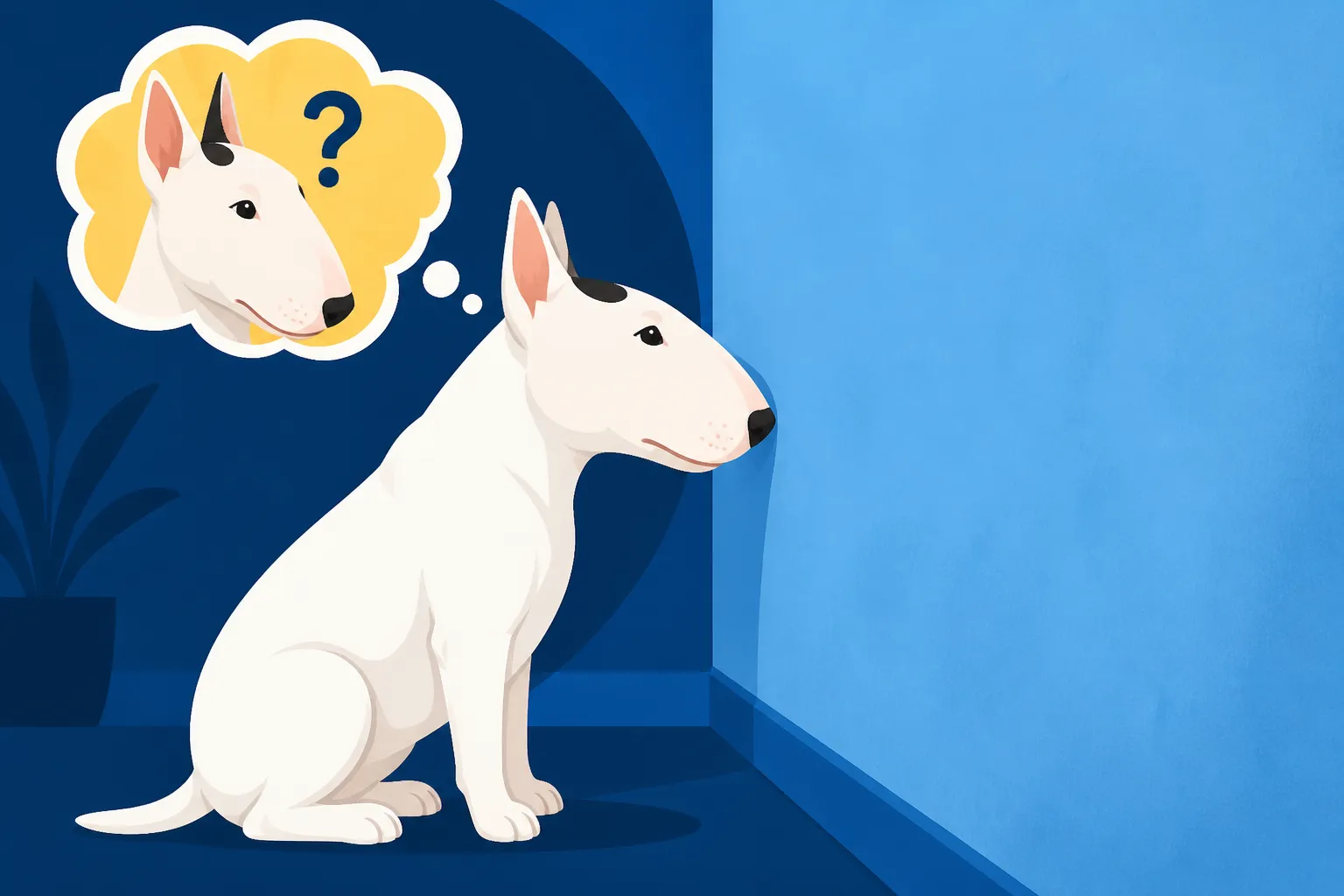
Imagine this: your normally boisterous Bull Terrier, full of beans and ready for play, suddenly comes to a dead halt. Its head might be slightly tilted, eyes wide and unfocused, fixed on a seemingly unremarkable patch of wall, a shadowy corner, or even the leaves of a houseplant. The body is usually very still, almost rigid, and the tail, which is normally wagging furiously or tucked into its usual question mark shape, hangs limp. They might move incredibly slowly, almost imperceptibly, creeping along a wall as if guided by an invisible force, their back slightly arched.
During these episodes, your Bull Terrier often seems completely oblivious to its surroundings. You might call their name, offer a favorite toy, or even rustle a treat bag, and they might not even blink. It's as if they've entered another dimension, entirely absorbed in whatever unseen spectacle has captured their attention. This isn't aggressive, fearful, or even particularly curious behavior; it’s an intensely focused, almost meditative state. It can last anywhere from a few seconds to several minutes, and then, as suddenly as it started, they "snap out of it," shake it off, and return to their usual, playful selves as if nothing happened. It's this abrupt return to normalcy that often leaves owners scratching their heads and wondering, "Did that just happen?"
The Difference Between Trancing and Other Behaviors
It's absolutely crucial to distinguish genuine Bull Terrier trancing from other behaviors that might look similar but signal entirely different, and often more serious, issues. This is where a lot of owner anxiety comes from, and rightly so. Nobody wants to miss a sign of distress or illness in their dog.
First, let's talk about tail chasing and spinning. While a Bull Terrier engaged in persistent tail chasing or spinning might seem to be in a trance-like state, completely consumed by the activity, it's generally considered a different behavioral pattern. Whether Bull Terrier Trancing Is the Same Thing is a common question, and the answer is typically no. Tail chasing is often repetitive, self-stimulating behavior that can sometimes be a sign of a compulsive disorder or even a neurological issue if it’s particularly intense or difficult to interrupt. A dog spinning in circles is physically moving, actively pursuing its tail, whereas a trancing Bull Terrier is usually stationary, captivated by something external, or at least perceived to be external. If you're seeing your Bull Terrier spinning excessively, that's a different path to explore with your vet.
Then there are seizures. This is perhaps the most frightening mimic of trancing for many owners. A Bull Terrier having a focal seizure might stare blankly, appear confused, or exhibit strange, repetitive movements, sometimes described as "fly biting" or "staring at the ceiling." However, a true seizure typically involves a loss of awareness that is more profound and less easily interrupted than trancing. There might be muscle tremors, drooling, or a loss of bladder/bowel control, none of which are typically associated with trancing. The post-seizure period, known as the post-ictal phase, also involves confusion, disorientation, and sometimes temporary blindness, which is a stark contrast to the sudden "snap out of it" of a trancing dog. How a Bull Terrier Seizure Differs From a Spin or trancing is a vital distinction to make, and if you suspect seizures, veterinary consultation is immediate.
Finally, just plain boredom or anxiety can sometimes lead to odd behaviors, but usually not the specific, still, fixed gaze of trancing. A bored Bull Terrier might chew furniture, pace, or whine. An anxious one might hide, pant, or become destructive. While a trancing episode might look like profound focus, it doesn't carry the same emotional weight as anxiety or the restless energy of boredom. Understanding these distinctions is the first step in addressing the behavior appropriately.
Common Theories Behind Bull Terrier Trancing
The exact cause of Bull Terrier trancing remains a bit of a mystery, which only adds to the allure and frustration for owners. There isn't one definitive scientific answer, but rather a collection of theories based on observation, veterinary experience, and the unique neuroses sometimes associated with the breed.
Sensory Hypersensitivity or Hypersensitivity to Light/Shadows
One of the most widely accepted theories, especially within the Bull Terrier community, points to sensory hypersensitivity. Think of it this way: Bull Terriers are an incredibly unique breed, known for their powerful build, egg-shaped heads, and those distinctive, small, triangular eyes. Some believe this unique physiology, particularly their skull structure and eye placement, might contribute to how they perceive light, shadows, and subtle visual stimuli.
A common observation is that trancing often occurs when a Bull Terrier is walking under a low-hanging object, like a tree branch, a curtain, or even a porch awning. The shifting patterns of light and shadow, perhaps created by dappled sunlight through leaves or the gentle sway of a curtain, might create an unusual visual effect that captivates them. It's almost as if the subtle play of light and dark on their peripheral vision triggers something, drawing them into this peculiar state. Their focus becomes entirely absorbed by these subtle, almost imperceptible changes. It's not that they're seeing "ghosts" in the literal sense, but rather that their visual processing is interpreting these environmental cues in a unique and utterly compelling way. For a breed already prone to quirks, this hypersensitivity could explain why some Bull Terriers are so easily entranced by something as simple as a shadow.
Neurological Factors and Inherited Predisposition
Another significant theory centers on neurological factors, suggesting that trancing might be a mild form of a benign seizure activity or a neurological quirk inherent to the breed. While we've discussed how trancing differs from full-blown seizures, some researchers speculate it could be a type of "absence seizure" or a similar, non-epileptic paroxysmal event. These are brief, sudden changes in behavior that stem from electrical disturbances in the brain but don't involve the dramatic convulsions often associated with grand mal seizures. The fact that the dog can usually be snapped out of it, albeit sometimes with effort, and shows no post-event confusion, makes a strong seizure less likely, but a milder, more subtle neurological event cannot be entirely ruled out without extensive testing.
Furthermore, there's a strong anecdotal belief among Bull Terrier breeders and enthusiasts that trancing has an inherited component. Owners often report that if one Bull Terrier in a lineage trances, subsequent generations might also exhibit the behavior. This suggests a genetic predisposition, hinting at a neurological or sensory pathway that is unique to the breed or certain lines within it. It’s not necessarily a "flaw," but simply another one of those fascinating genetic traits that make Bull Terriers, well, Bull Terriers. While no specific gene has been identified for trancing, the prevalence of the behavior within the breed points to something more than just random chance. It’s part of the unique tapestry of What a Bull Terrier's Temperament Is Really Like.
Environmental Triggers and Routine
Beyond genetics and sensory input, environmental factors and routine can also play a role, or at least influence when trancing occurs. While trancing itself isn't typically stress-induced in the same way destructive chewing might be, a dog that is under-stimulated, over-tired, or simply in a quiet, low-stimulus environment might be more prone to falling into a trance.
Consider a Bull Terrier puppy that hasn't had quite enough mental or physical exercise for the day, or one that is simply overtired. Just like human toddlers, How Much Sleep a Bull Terrier Puppy Needs is significant, and an overstimulated, exhausted puppy might engage in unusual behaviors. While it’s not the primary cause, an environment that offers repetitive, subtle visual stimuli – like a quiet room with light filtering through blinds, or a garden path lined with shrubs that cast dancing shadows – could provide the perfect conditions for a predisposed Bull Terrier to trance. The lack of other engaging activities might allow their focus to drift and lock onto these subtle patterns. It's not a direct trigger in the way a loud noise might startle a dog, but rather an enabling environment that permits the behavior to manifest. It’s a bit like us staring blankly at the TV after a long day – sometimes our brains just need a moment to process, or perhaps not process, the world around us.
When to Be Concerned About Wall Staring in Your Bull Terrier
While trancing is often a benign, quirky behavior in Bull Terriers, it’s absolutely essential for owners to know when to be concerned. Not all blank staring is harmless trancing; sometimes, it can be a red flag for underlying medical conditions that require veterinary attention. Better safe than sorry when it comes to your dog's health!
Distinguishing Normal Trancing from Medical Issues
This is where your keen observation skills as an owner really come into play. A "normal" trancing episode, while strange, generally follows a specific pattern:
- The dog is still and focused: As described earlier, usually fixed on a wall, corner, or object, often with an arched back and slow, creeping movement.
- It's interruptible, but sometimes with effort: You can usually break the trance with a clap, a firm command, or by gently leading them away. They might blink, shake their head, and immediately return to normal.
- No signs of distress or confusion: Once out of the trance, they are bright, responsive, and show no disorientation, drooling, or loss of bodily functions.
- It doesn't seem to cause discomfort: The dog doesn't cry out, stumble, or appear to be in pain during or after the episode.
- It often occurs in specific, repeatable circumstances: Like under an awning or near a particular shadow.
Now, compare that to behaviors that should worry you:
- Uninterruptible episodes: If your Bull Terrier cannot be roused from the staring, no matter what you do, that is a serious concern.
- Disorientation or confusion: After the episode, if your dog seems lost, bumps into things, is lethargic, or doesn't recognize you, it's a medical emergency.
- Physical symptoms: Drooling, lip-licking, muscle tremors (even subtle ones), twitching, uncontrolled urination or defecation, or collapse are all signs that you are likely witnessing a seizure or other neurological event, not trancing. When a Bull Terrier's Spinning Needs a Vet for tail chasing also applies to general odd behaviors; if it seems compulsive, involuntary, or physically impactful, get a vet involved.
- Changes in overall demeanor: If the wall-staring is accompanied by other changes like increased lethargy, loss of appetite, changes in thirst, or unexplained aggression, these point to a systemic issue. Bull Terriers are experts at How a Bull Terrier Hides Pain, so any subtle shift in behavior could be significant.
- Staring at nothing, anywhere, anytime: If the staring becomes more frequent, occurs anywhere without an obvious visual trigger, or starts disrupting their daily life, it's time for a check-up.
A good rule of thumb: if it deviates from the quiet, almost peaceful, albeit odd, stillness of typical trancing, pick up the phone to your vet.
Seeking Veterinary Advice and Diagnostic Steps
If you have any doubts whatsoever, the best course of action is always to consult your veterinarian. Don't feel silly describing "ghost staring" – a good vet understands that Bull Terriers have unique quirks. When you speak with your vet, be prepared to describe the episodes in as much detail as possible:
- When do they occur? (Time of day, specific locations, after certain activities)
- How long do they last?
- What exactly does your dog do during the episode? (Body posture, eye movement, any vocalizations, changes in breathing)
- How do you interrupt it? (Or is it uninterruptible?)
- What is your dog like immediately after?
- Have you noticed any other changes in behavior, appetite, thirst, or energy levels?
Your vet will likely start with a thorough physical examination and a neurological workup to rule out any underlying medical conditions. This might include:
- Bloodwork: To check for metabolic imbalances, organ function, or infections that could affect brain function.
- Urinalysis: Sometimes urinary tract infections can cause strange behaviors, and it's always a good idea to check kidney function, especially in Bull Terriers, which are prone to Hereditary Nephritis Takes Bull Terriers in Their Prime.
- Imaging (MRI/CT scans): If neurological issues are strongly suspected, your vet might recommend advanced imaging of the brain to look for structural abnormalities, tumors, or inflammation. This can be costly but is crucial for definitive diagnosis in some cases.
- Electroencephalogram (EEG): This test measures electrical activity in the brain and can help diagnose seizure disorders.
- Cardiac check: While less likely to cause staring, sometimes an underlying heart condition, such as The Heart Murmur a Bull Terrier Puppy Should Be Checked For, can cause periods of weakness or disorientation, so a vet might want to rule this out if other symptoms align.
Your vet might also suggest keeping a video diary of the episodes. Seeing the behavior firsthand, rather than just hearing a description, can be incredibly helpful for diagnosis. Even if it turns out to be "just trancing," getting a professional opinion provides peace of mind and ensures you're not missing something important.
Managing and Supporting a Trancing Bull Terrier
If your veterinarian has ruled out any underlying medical conditions and confirmed that your Bull Terrier's wall-staring is indeed benign trancing, then the focus shifts to management and ensuring your dog feels secure and understood. It's about creating an environment that minimizes potential triggers and gently helps them transition back to reality when an episode occurs.
Creating a Calming Environment
Since many theories about trancing point to sensory triggers, particularly light and shadows, one of the first steps you can take is to evaluate your home environment.
- Observe and identify triggers: Pay close attention to when and where your Bull Terrier trances. Is it always in the same spot? Under a specific lampshade? When sunlight hits a certain curtain just so? Identifying these patterns can help you anticipate and potentially modify the environment.
- Control lighting: If shadows or dappled light seem to be a trigger, consider adjusting your lighting. Draw curtains or blinds during peak sunlight hours in certain rooms. Use softer, diffused lighting indoors rather than harsh, direct light that creates sharp shadows. For a white Bull Terrier, who might also have sensitive skin, controlling sunlight is also vital for preventing Sunburn on a White Bull Terrier.
- Reduce clutter and visual stimuli: A less cluttered environment can reduce the number of potential visual focal points that might draw your Bull Terrier into a trance. Consider the placement of tall houseplants or decorative items that might cast interesting, yet distracting, shadows.
- Provide designated quiet spaces: Even if trancing isn't stress-related, having a calm, predictable space can be beneficial. A comfy dog bed in a less visually stimulating corner, perhaps with a blanket over a crate (if they are crate trained and comfortable with it), can offer a retreat where they feel safe and less exposed to triggers. You can find many options for calming beds and blankets on platforms like Amazon that might suit your Bull Terrier's comfort needs.
Remember, the goal isn't to eliminate all shadows or light, which is impossible, but to minimize the specific, repetitive, or novel patterns that seem to captivate your individual dog.
Gentle Redirection and Enrichment
When your Bull Terrier is in a trance, your immediate reaction might be to loudly call their name or rush over. However, a gentler approach is often more effective and less startling for your dog.
- Avoid startling them: A sudden loud noise or a rough touch can be jarring. Instead, try a soft, calm voice, or a gentle touch on their shoulder to bring them back to the present. You might crouch down and speak to them in a reassuring tone, rather than shouting from across the room.
- Offer a calm distraction: Once they acknowledge you, try to redirect their attention with a familiar, low-key activity. A favorite chew toy, a puzzle toy with a treat inside, or even just asking for a simple "sit" or "down" command can help them re-engage with you and their normal surroundings. The idea is to gently pull them out of the trance state and ground them in a positive interaction.
- Increase mental and physical enrichment: A Bull Terrier with plenty of appropriate outlets for their energy and intelligence might be less prone to falling into long trances. While trancing isn't necessarily a sign of boredom, ensuring your dog has a rich environment can only help.
- Interactive toys: Strong chew toys, puzzle feeders, and snuffle mats can keep their brains engaged. Which Puzzle Toys Occupy a Bull Terrier are fantastic for mental stimulation.
- Regular, engaging exercise: Bull Terriers need consistent physical activity. Think walks, playtime in a secure yard, or even fetch. How Much Exercise a Bull Terrier Actually Needs is often more than people realize, and a tired Bull Terrier is usually a happy Bull Terrier.
- Training sessions: Even if your Bull Terrier is already well-trained, short, fun training sessions can be excellent mental exercise. Online resources like BAXTER & Bella offer fantastic modules that focus on positive reinforcement and engagement, which can be invaluable for strengthening your bond and keeping your Bull Terrier mentally sharp, potentially reducing the frequency or intensity of trancing episodes by giving their brain other, more productive things to focus on. Even learning new tricks or practicing familiar cues can provide that mental workout.
- Scent work: Bull Terriers, with their keen noses, can excel at scent games. Hiding treats around the house for them to sniff out is a simple, effective form of enrichment that engages a primary sense and is less visually driven.
By combining environmental adjustments with gentle redirection and a consistent routine of enrichment, you can help your Bull Terrier navigate their unique trancing behavior with greater ease and confidence, making these quirky moments just another charming part of living with this incredible breed.
Here's a quick comparison of behaviors to help you distinguish:
| Behavior Type | Characteristics | Typical Triggers | When to Worry |
|---|---|---|---|
| Trancing | Still, fixed gaze, arched back, slow movement, appears oblivious, snaps out of it, normal afterward. | Light/shadow patterns, low-hanging objects, quiet environments. | If accompanied by other symptoms or becomes uninterruptible. |
| Tail Chasing/Spinning | Repetitive physical pursuit of tail, often intense, difficult to interrupt. | Boredom, anxiety, compulsive disorder, neurological issues. | Constant, self-injurious, hard to interrupt. |
| Seizure (Focal) | Blank stare, confusion, drooling, lip-licking, subtle muscle tremors, disorientation afterward. | Underlying neurological condition, brain injury. | Any occurrence, especially if new or worsening. |
| Boredom/Anxiety | Pacing, whining, destructive chewing, excessive barking, hiding, panting, inappropriate urination. | Lack of exercise/mental stimulation, separation distress, loud noises, new environments. | Persistent, impacts quality of life, causes destruction. |
Disclaimer
This article is for general informational purposes only and does not constitute professional advice. Laws, prices and regulations vary by location and change over time. Consult a qualified professional for guidance on your specific situation.