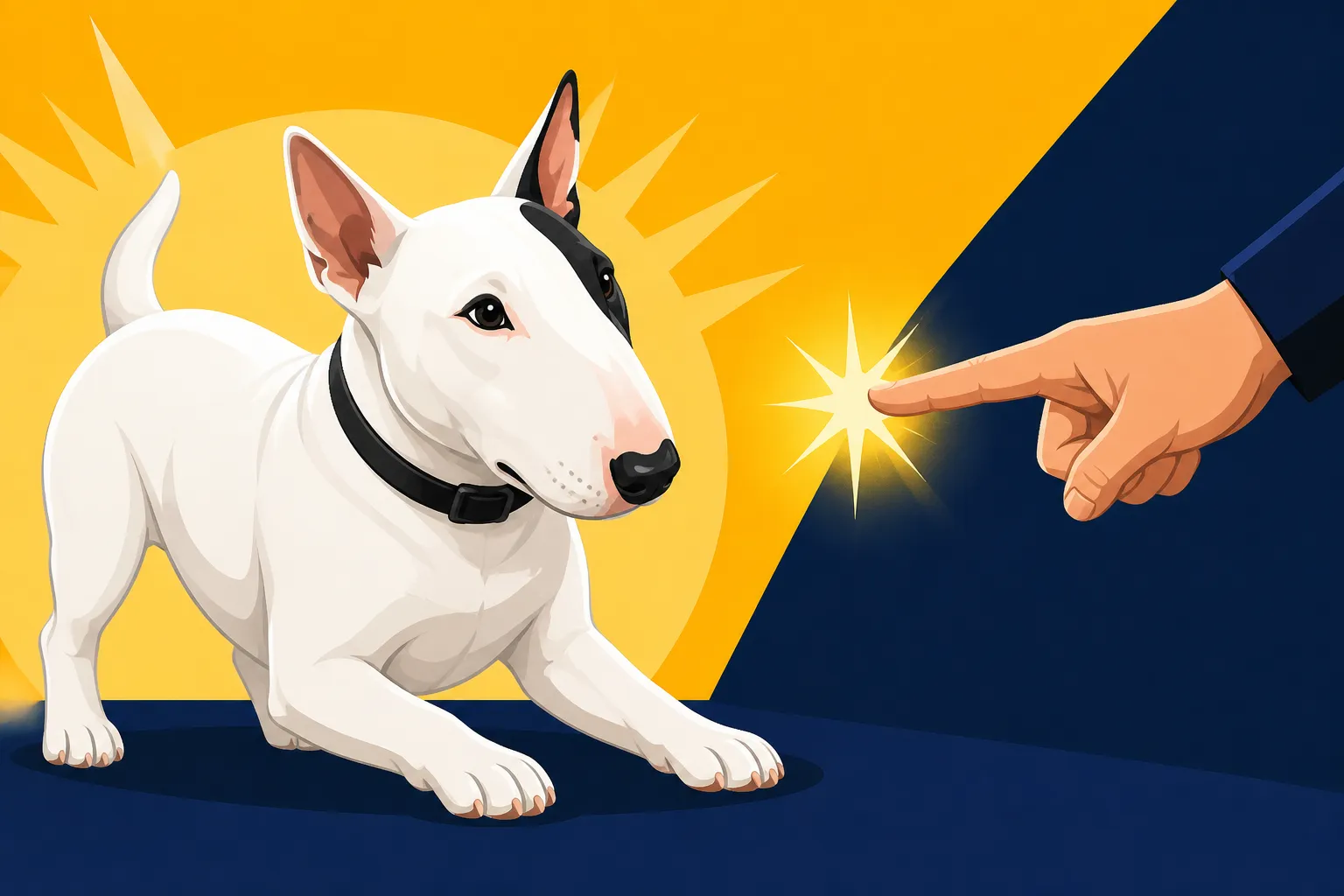
A Bull Terrier Trains When It Sees the Point
It’s a common scenario for Bull Terrier owners: you’re trying to teach your beloved, egg-headed companion a simple "sit," and they just stare at you, maybe cock their head, and then wander off to sniff something far more interesting. Many owners quickly discover that traditional "sit-stay-come" training methods don't always click with their strong-willed, intelligent, and often comedic companions. It's easy to get frustrated when your Bull Terrier gives you that look, implying they'd rather be doing literally anything else. This guide dives deep into understanding the Bull Terrier mindset, helping you unlock effective training strategies by showing your quirky companion why learning your rules is ultimately to their benefit.
Understanding the Bull Terrier Mindset: It's Not Stubbornness, It's Logic (to Them)
If you've ever owned a Bull Terrier, you know that "stubborn" is a word often thrown around to describe them. But calling them stubborn might be missing the point entirely. These dogs aren't intentionally difficult; they simply operate on a different wavelength when it comes to learning and compliance. Their independent nature, combined with a healthy dose of self-interest and a playful spirit, means that conventional training approaches often fall flat. Understanding this unique mental framework is the first, crucial step toward effective communication and training. It’s about meeting them where they are, rather than expecting them to conform to a standard mold.
The Independent Thinker: Why "Because I Said So" Doesn't Work
Unlike some breeds that live to please, a Bull Terrier often considers commands more like polite suggestions. They are fiercely independent thinkers, a trait that makes them wonderfully unique but also challenging in a training context. They aren't trying to defy you; they're simply weighing their options. "Because I said so" holds little sway with a Bull Terrier. If there isn't an immediate, compelling reason for them to comply, they'll often opt for whatever brings them the most personal satisfaction at that moment – whether that's chasing a leaf, investigating a smell, or simply enjoying the sunshine. This independent streak is why you'll often hear that How Smart a Bull Terrier Really Is is often underestimated, because their intelligence manifests in problem-solving and self-directed actions, rather than rote obedience.
This isn't to say they can't be trained, but rather that you need to tap into their intelligence in a way that resonates with them. They need to understand the "why" behind the request, even if that "why" is simply "because something amazing happens when I do it." Trying to force compliance through intimidation or harsh corrections will almost always backfire, leading to a shut-down dog who might refuse to engage at all. Bull Terriers thrive on cooperation, not coercion. They respond best when they feel they are part of the decision-making process, or at least that their actions lead to a desirable outcome.
The "What's In It For Me?" Attitude: Valuing Rewards Over Compliance
Let’s be honest, your Bull Terrier is probably always thinking, "What's in it for me?" when you ask them to do something. This isn't selfishness; it's a fundamental aspect of their motivation. They are pragmatic learners. If sitting politely leads to a delicious treat or a rousing game of tug, they're all ears. If it just means they're briefly stationary for your benefit, they might wonder why they should bother. This mercenary approach to training means that your reward system needs to be top-notch and consistently delivered.
This "show me the money" philosophy makes them incredibly honest trainees. If your reward isn't appealing enough, they won't pretend it is. They will literally "vote with their paws" and disengage. This forces you, as the trainer, to constantly evaluate and upgrade your motivational tools. What might be a high-value treat for another dog could be just "meh" for your Bull Terrier, especially if the environment offers more interesting distractions. Understanding this core motivator is key to keeping them engaged and making training a rewarding experience for both of you. You want them to want to work with you.
The Three-Year-Old in a Dog Suit: Playfulness and Short Attention Spans
Ah, the endearing, exasperating, and utterly accurate moniker: Why a Bull Terrier Is Called a Three Year Old in a Dog Suit. This comparison hits home for anyone living with a Bull Terrier. They possess a boundless, almost childlike enthusiasm for life, coupled with an attention span that can sometimes rival a toddler's. One minute they're laser-focused on a training exercise, the next they're distracted by a dust bunny floating across the room, or they decide it's time for zoomies. This isn't them being rude; it's just how their playful, energetic brains are wired.
This means that long, repetitive training sessions are often doomed to fail. Their minds simply aren't built for it. They'll quickly become bored, frustrated, or decide that whatever you're doing isn't nearly as fun as exploring their own ideas. Instead, short, energetic bursts of training, interspersed with play, are far more effective. Think five-minute sessions, multiple times a day, rather than one grueling half-hour ordeal. Embrace their playful nature and incorporate it into your training. Make it a game, and they'll be much more likely to participate with gusto.
Building a Foundation of Trust and Respect, Not Dominance
Forget everything you might have heard about needing to be an "alpha" or dominating your dog. With a Bull Terrier, that approach will only lead to resentment, fear, and a breakdown in your relationship. These intelligent, sensitive dogs thrive on clear, consistent leadership that is earned through trust and mutual respect. You want your Bull Terrier to choose to work with you, not to fear doing otherwise. Building this kind of relationship is paramount, especially with a breed that has such a strong sense of self.
Becoming the Source of All Good Things: Resource Guarding You (in a good way)
One of the most powerful tools in training a Bull Terrier is making yourself the ultimate source of all good things in their life. You control access to food, toys, walks, playtime, and even attention. This isn't about withholding love; it's about establishing a clear hierarchy where you are the benevolent provider. When your Bull Terrier understands that interacting positively with you directly leads to satisfying their desires, they become much more invested in paying attention to your cues. For instance, before you put down their food bowl, ask for a "sit" or a "stay." Before tossing a toy, ask for a "down."
This consistent practice builds a strong association: "My human is the gatekeeper to fun and sustenance, so it pays to listen to them." It redefines "resource guarding" in a positive way, where you become the most valuable resource. This approach leverages their "what's in it for me" mentality in a productive manner, making them eager to engage because they know it leads to rewards. It fosters a dependency on you for positive experiences, which is precisely what you want for a strong working relationship.
The Power of Positive Reinforcement: Making Training a Game
Positive reinforcement is not just a training method; it’s a philosophy that perfectly aligns with the Bull Terrier temperament. It focuses on rewarding desired behaviors, making them more likely to occur again. This approach creates a positive feedback loop: dog does something right, dog gets rewarded, dog feels good, dog wants to do it again. With a Bull Terrier, who can be sensitive to harsh corrections, positive reinforcement prevents them from shutting down or becoming fearful. What a Harsh Correction Does to a Bull Terrier can be counterproductive, leading to a dog that either avoids you or tries to guess what not to do rather than confidently offering behaviors.
Think of training as a series of fun games you play together, where your Bull Terrier always "wins" when they get it right. Use a clicker to mark the exact moment they perform the correct action, followed immediately by a high-value reward. This precision helps them understand exactly what they're being rewarded for. Whether it's a piece of cooked chicken, a favorite squeaky toy found on Amazon, or a quick game of fetch, the reward needs to be something your Bull Terrier truly values in that specific moment. This transforms learning from a chore into an exciting partnership, reinforcing your bond and their willingness to engage.
Consistency is Key: Setting Clear Boundaries and Expectations
Given their independent streak, Bull Terriers thrive on consistency. They need to understand what is expected of them, and those expectations need to be crystal clear, day in and day out, from everyone in the household. If "down" means something different depending on who says it or what room you're in, your Bull Terrier will quickly become confused and decide the command is optional. This applies not just to formal training commands, but also to household rules. Is jumping on guests allowed sometimes but not others? Is begging at the table acceptable if Dad is eating, but not Mom?
Inconsistency is a Bull Terrier's playground for finding loopholes. Establish rules, stick to them, and ensure every family member is on the same page. This predictability creates a sense of security for your dog and helps them understand the structure of their world. When they know what to expect, and what actions lead to positive outcomes, they are much more likely to comply. This consistency is also crucial for building trust; they learn that you mean what you say and that their world is stable and fair.
Short, Sharp, and Sweet: Tailoring Training Sessions for Bull Terriers
Attempting marathon training sessions with a Bull Terrier is a recipe for frustration, for both of you. Their unique blend of intelligence, boundless energy, and short attention span means that you need to rethink the traditional approach to dog training. Instead of long, drawn-out drills, think of training as quick, exciting bursts of learning. This keeps them engaged, prevents boredom, and maximizes the impact of each session.
The Bull Terrier's Training Threshold: Knowing When to Quit
A crucial aspect of training a Bull Terrier is understanding How Short a Bull Terrier's Training Session Has to Be. Their "training threshold" is often surprisingly low. You might only get 5-10 minutes of focused attention before their mind starts to wander, their goofy antics kick in, or they simply decide they've had enough. Pushing past this point won't yield better results; it will only lead to a bored, possibly frustrated, and ultimately uncooperative dog. It's far better to end a session when they're still eager and successful, leaving them wanting more.
This means short, frequent sessions are much more effective than long, infrequent ones. Two or three five-minute sessions throughout the day will achieve more than one twenty-minute session where their focus is waning for half the time. Learn to read your Bull Terrier's cues: a shake off, a yawn, looking away, or starting to mouth you are all signs that they're losing interest. End the session on a positive note, even if it's just after a single successful "sit." This reinforces the idea that training is fun and something they look forward to.
High-Value Rewards: What Truly Motivates a Bull Terrier
For a Bull Terrier, a reward isn't just a reward; it's a currency. And they demand high-value currency for their efforts! What might be motivating for a Labrador might barely register for your Bull Terrier. Dry kibble? Probably not going to cut it when there's an interesting smell outside. You need to discover Which Reward Outranks a Bull Terrier's Own Idea in any given situation. This often means reserving the absolute best treats or favorite toys specifically for training.
Think beyond basic store-bought biscuits. Small pieces of cooked chicken, cheese, hot dogs, or even tiny dollops of peanut butter can be incredibly motivating. For toy-driven Bull Terriers, a quick game of tug or fetch with a favorite, squeaky toy can be just as powerful as a treat. The key is variety and novelty. Rotate your rewards to keep them guessing and excited. What works indoors might not work outdoors with more distractions, so be prepared to escalate the "value" of your rewards when needed. Sometimes, even just enthusiastic praise and a quick, vigorous scratch behind the ears can be enough if your bond is strong.
Making it Fun: Incorporating Play and Variety into Learning
If training isn't fun for a Bull Terrier, they won't do it. It's as simple as that. Their clownish nature means they respond best to activities that feel like play rather than rigid drills. Incorporate games like "find it" for treats, or hide-and-seek, asking for a "stay" before you hide. Use toys as lures and rewards. Make silly noises, run in circles, and bring out your own playful side. This makes training engaging and prevents boredom, which is the death knell of a Bull Terrier's attention span.
Variety is also critical. Don't always train in the same spot, doing the same exercises in the same order. Take your training on the road – to the park, a friend's house, or even just a different room in your home. Introduce new challenges and build on existing skills in novel ways. For example, once they've mastered "sit" indoors, practice it in a slightly more distracting environment. This generalization of skills is essential, and doing it in a playful, varied manner will keep your Bull Terrier eagerly participating. Many online platforms, like BAXTER & Bella, offer structured yet fun approaches that can be adapted to this breed's unique needs.
Tackling Common Training Challenges with a Bull Terrier Twist
Every breed comes with its own set of common behavioral quirks and training hurdles, and the Bull Terrier is no exception. Their strength, determination, and independent spirit can make certain aspects of training particularly challenging. But with a nuanced understanding of their motivations and the right strategies, these obstacles become opportunities to strengthen your bond and communication.
The Art of the Recall: Why Coming When Called Is Optional
The Bull Terrier's independent nature truly shines when it comes to recall. For them, "come" can often be interpreted as "come… if nothing more interesting is happening over there." Their high prey drive and curiosity mean that a squirrel, a distant dog, or even a particularly interesting scent can be far more compelling than your voice. Getting a reliable recall with a Bull Terrier isn't just about repetition; it's about making yourself the most exciting thing in their universe, especially when they're off-leash. This is especially true when it comes to Teaching a Bull Terrier to Come Back Mid Zoomie, which requires an almost supernatural level of enticement.
To master recall, start in a low-distraction environment. Use the highest value rewards imaginable – something they only get for coming back. Practice frequently, randomly calling them when they're close, rewarding lavishly, and then releasing them to play again. This prevents them from associating "come" with the end of fun. Gradually increase distractions, but always set them up for success. Consider a long line (a 20-30 foot leash available on Amazon) in unfenced areas to allow them freedom while still maintaining control. Make coming to you the most incredible, rewarding event of their day, every single time.
Leash Manners: The Unstoppable Force Meets the Immovable Object
A Bull Terrier on a leash can feel like an unstoppable force. Their compact, muscular build and sheer determination mean they can pull with surprising power. Trying to simply overpower them is a losing battle and can be dangerous for both of you. Many owners find themselves with sore shoulders and bruised egos trying to teach leash manners. The challenge isn't just their strength; it's their intense curiosity about the world and their desire to investigate everything with gusto.
Teaching a Bull Terrier to walk nicely on a leash requires consistent positive reinforcement and the right tools. Techniques like "stop-and-go" (stopping every time they pull, and only moving forward when the leash is slack) can be effective, but require immense patience. Using a front-clip harness can help redirect their pulling power without causing discomfort to their throat. Focus on rewarding loose-leash walking constantly, even for just a few steps, with high-value treats. Make walking at your side the most rewarding place to be, and be prepared for it to be a long-term project.
Managing Nipping and Mouthiness in a Bull Terrier Puppy
Bull Terrier puppies are notoriously mouthy. Those sharp little teeth can feel like needles, and their desire to explore the world with their mouths can lead to painful nips during play. This isn't aggression; it's typical puppy behavior, but their strong jaws mean it needs to be managed effectively from a young age. Without proper redirection, this can escalate into a problematic habit as they grow.
The key is to teach bite inhibition. When your puppy nips too hard, immediately let out a high-pitched "ouch!" or "yip!" and withdraw your attention entirely. The game stops, the cuddles cease. This teaches them that hard bites make the fun disappear. Once they've calmed down, you can re-engage. Offer appropriate chew toys (again, Amazon has a great selection of durable Bull Terrier-proof toys) to redirect their chewing instincts. Consistency is crucial here; everyone in the household needs to respond the same way to prevent confusion. As they learn to control their bite pressure, gradually reduce your tolerance until they are only mouthing softly or not at all.
Beyond Basic Obedience: Giving Your Bull Terrier a "Job"
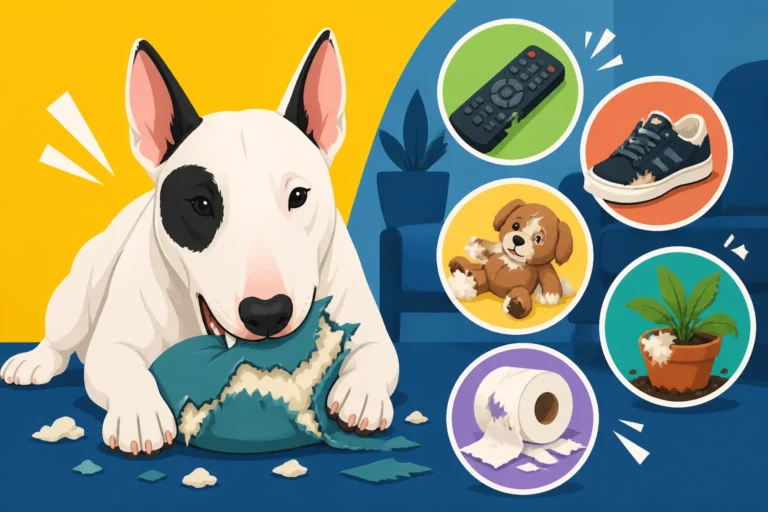
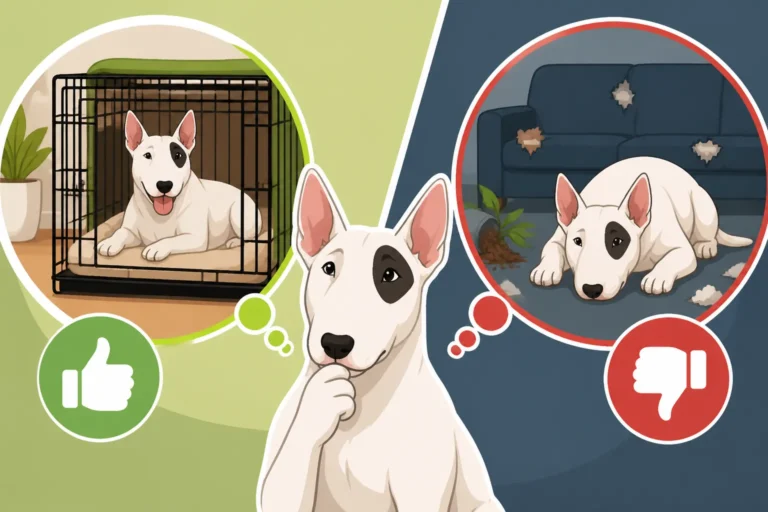
Bull Terriers are intelligent, high-energy dogs, and simply expecting them to be "couch potatoes" or just "pretty garden ornaments" will lead to frustration and destructive behaviors. They thrive when their minds and bodies are challenged. Providing them with a "job" – activities that engage their natural instincts and intellect – is paramount for their well-being and for a harmonious home life. A bored Bull Terrier is a destructive Bull Terrier, and trust me, you don't want to find out What a Bull Terrier Does When It Is Bored.
Engaging Their Minds: Puzzle Toys and Scent Work
Their intelligence isn't always about following commands, but about problem-solving. This makes them excellent candidates for mental stimulation. Puzzle toys, especially those that dispense treats, are a fantastic way to engage their minds. Look for durable, multi-level puzzles that require them to think, nudge, and manipulate to get their reward. Brands often cater to strong chewers, so look for those designed to withstand their powerful jaws. Which Puzzle Toys Occupy a Bull Terrier can be a journey of trial and error, but it's worth the investment.
Scent work is another incredibly rewarding activity for Bull Terriers. Their powerful noses are often overlooked, but they love to use them. Simple "find it" games, where you hide treats around the house or yard and encourage them to sniff them out, can be incredibly tiring and satisfying. You can even join local nose work classes or explore online resources like those offered by BAXTER & Bella, which provide structured scent detection exercises. This taps into their natural instincts and provides a mental workout that can be just as exhausting as a physical one.
Physical Outlets: Channeling Energy into Productive Activities
While mental exercise is vital, a Bull Terrier still needs plenty of physical activity to burn off their considerable energy. This isn't just about walks around the block; it's about providing opportunities for vigorous exercise that aligns with their build and personality. How Much Exercise a Bull Terrier Actually Needs is often more than new owners anticipate, especially during their younger years.
High-energy play, like fetch (if they're interested), flirt pole games, or robust tug-of-war sessions, can be excellent outlets. They love to run and chase, so secure, fenced areas are ideal. Some Bull Terriers enjoy swimming, though many are not naturally buoyant due to their dense musculature. Agility, while challenging due to their independent nature, can be a fantastic way to combine physical and mental exercise. The key is to find activities they genuinely enjoy and to be consistent in providing those opportunities daily.
The Importance of Socialization, Bull Terrier Style
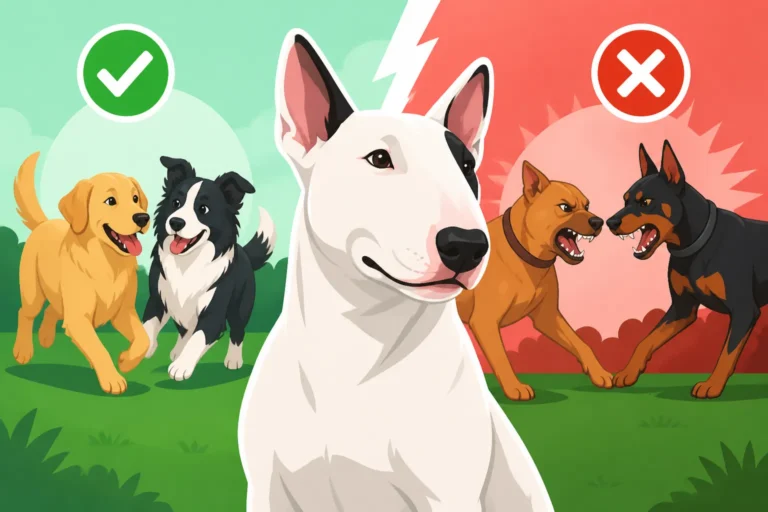
Proper socialization is crucial for any dog, but especially for a Bull Terrier. Their strong personalities and sometimes intense play style mean that early and ongoing exposure to various people, places, and other animals is paramount. However, "socialization" doesn't necessarily mean letting them run wild at the dog park. While some Bull Terriers are dog-friendly, many prefer human company or can be particular about their canine companions. For more on this, you might explore How a Bull Terrier Gets On With Other Dogs.
Focus on controlled, positive experiences. Puppy classes are excellent for structured exposure. Continue to expose them to new sights, sounds, and smells throughout their lives. When it comes to other dogs, supervised one-on-one playdates with calm, well-matched companions are often more beneficial than chaotic dog park visits. The goal is to create a confident, well-adjusted dog who is comfortable and polite in a variety of situations, not necessarily one who is universally best friends with every dog they meet. A well-socialized Bull Terrier is much less likely to develop fear-based or reactive behaviors.
Patience, Persistence, and a Sense of Humor: The Bull Terrier Owner's Mantra
Owning and training a Bull Terrier is an incredibly rewarding experience, but it's not always easy. There will be days of triumph, days of comedic frustration, and days where you wonder if they'll ever truly "get it." The truth is, training a Bull Terrier is a marathon, not a sprint. It requires a specific kind of dedication, a deep well of patience, and an unbreakable sense of humor. Without these, you'll likely find yourself constantly battling rather than bonding.
Celebrating Small Victories: Progress, Not Perfection
It's easy to get bogged down by what your Bull Terrier isn't doing or by the behaviors that are still a work in progress. But with this breed, it's essential to celebrate every tiny step forward. Did they hold a "sit" for two seconds longer than yesterday? Did they only pull for half the walk? Did they choose a chew toy instead of the sofa leg? These are all victories worth acknowledging and celebrating, both for your dog and for your own sanity.
Focusing on progress, rather than demanding immediate perfection, will keep you motivated and prevent burnout. Bull Terriers don't learn in a straight line; their learning curve can be winding, with plateaus and even occasional backslides. By recognizing and rewarding the small improvements, you reinforce the behaviors you want to see and maintain a positive attitude toward the training journey. Remember, every master once started as a beginner, and every Bull Terrier, no matter how clever, is always learning.
Learning to Read Your Bull Terrier: Their Unique Cues
Because Bull Terriers are such expressive and often comedic dogs, learning to read their subtle (and not-so-subtle) cues is paramount. They communicate constantly, whether it's the specific tilt of their head, the way their ears move, a soft grumble, or the infamous "Bullie lean." Understanding what these signals mean – boredom, excitement, discomfort, a need to potty, or just general mischief – will help you respond appropriately and preempt potential issues. They don't always use typical dog body language, so watching them closely is key.
For example, their unique brand of "sulking" when they don't get their way can be quite dramatic. Learning to interpret these moments with humor, rather than frustration, will serve you well. By understanding their individual communication style, you can anticipate their needs, avoid misunderstandings, and tailor your training and interactions more effectively. This deep observation will strengthen your bond and turn seemingly complex behaviors into understandable Bull Terrier logic.
The Long Game: Training is a Lifelong Journey
Finally, accept that training a Bull Terrier isn't a finite project with a clear end date. It's a lifelong journey of learning, adapting, and growing together. Even well-trained adult Bull Terriers will benefit from ongoing mental stimulation, refresher training, and new challenges. Their independent minds continue to develop, and their needs evolve as they age. This commitment to continuous learning is what truly defines the Bull Terrier-owner relationship.
You might find yourself consistently reinforcing polite greetings, even years into their adulthood, because their enthusiasm never quite wanes. Or you might discover new games or sports that ignite their passion at an older age. Don't stop engaging their minds and bodies just because they know "sit" and "stay." Embrace the fact that your Bull Terrier will always keep you on your toes, always make you laugh, and always challenge you to be a more patient, creative, and understanding companion. This ongoing commitment is part of the joy of sharing your life with such a truly special and charismatic breed. You might be surprised when The Age a Bull Terrier Finally Settles is much later than you thought, or even never quite fully.
Disclaimer
This article is for general informational purposes only and does not constitute professional advice. Laws, prices and regulations vary by location and change over time. Consult a qualified professional for guidance on your specific situation.