How to Tell Bull Terrier Muscle From Fat
It's a common conundrum for Bull Terrier owners: you look at your powerfully built, compact companion and wonder, "Are those rippling muscles, or is there a little too much cushion around the middle?" Their unique physique can make it genuinely tricky to discern between their natural, athletic bulk and unhealthy fat gain. This guide is here to demystify the process, helping you confidently assess your Bull Terrier's condition and ensure they're living their healthiest, happiest life.
Understanding the Bull Terrier's Unique Build
Bull Terriers are known for their distinctive, muscular build – it's part of their charm and heritage. Unlike many other breeds, they don't have a delicate frame; they are solid, well-boned dogs with an impressive amount of muscle mass. This inherent strength and density can sometimes obscure the early signs of weight gain, making it challenging for even experienced owners to tell if their Bull Terrier is simply well-conditioned or starting to carry extra weight.
The Standard for a Bull Terrier's Physique
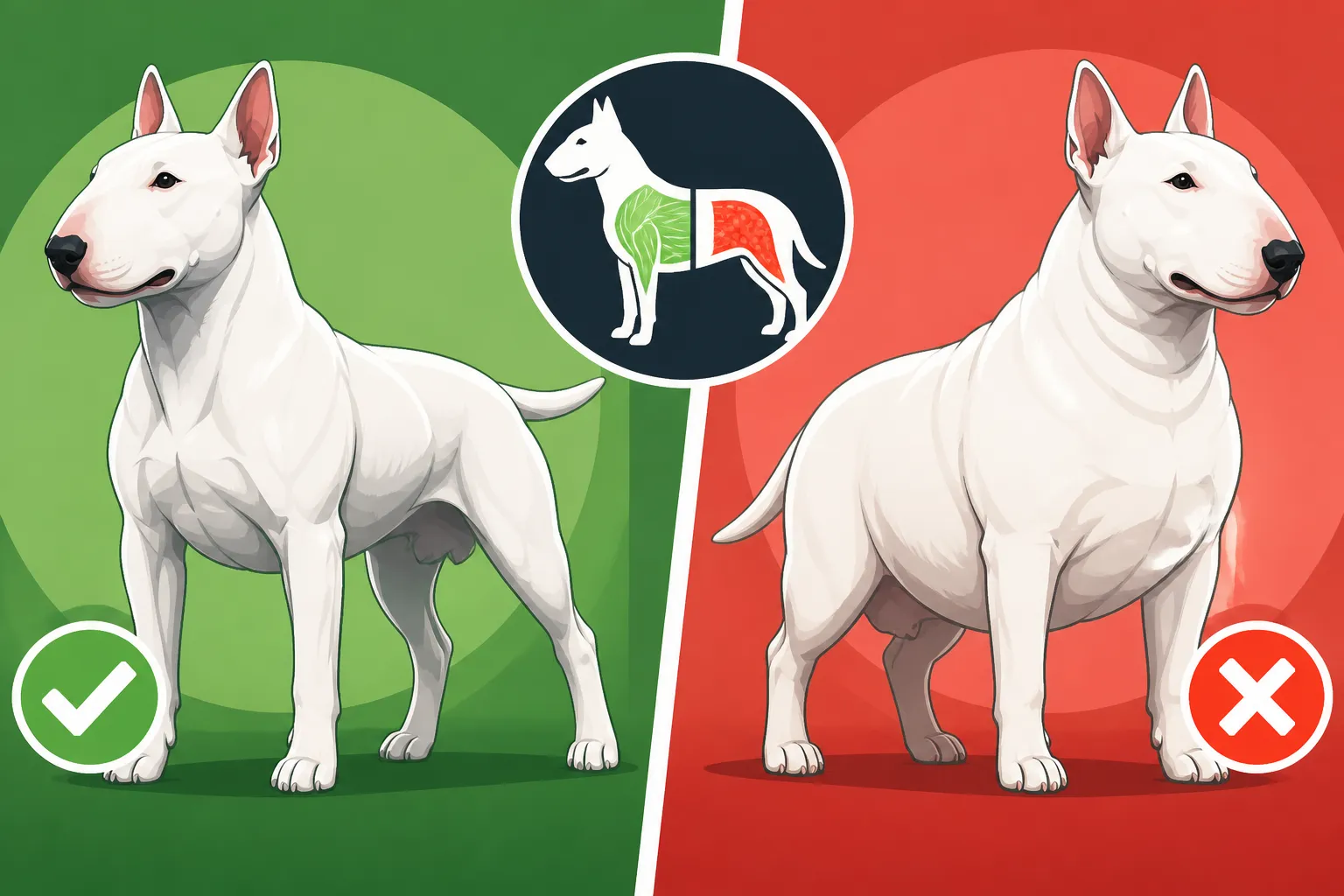
The breed standard describes the Bull Terrier as a "strongly built, muscular, well balanced and active dog with a keen, determined and intelligent expression." It emphasizes substance and a powerful, agile frame. This isn't a svelte, greyhound-like dog, nor is it a massive, lumbering breed. Instead, it's a compact powerhouse. When evaluating your Bull Terrier, remember that their musculature should be firm and well-defined, not soft or rounded. They should look athletic, even robust, but never chunky. Their broad chest and deep brisket can sometimes make their torso appear larger than it is, requiring a hands-on approach to truly understand their body condition. It’s a fine line to walk, ensuring they maintain that powerful form without tipping over into being overweight.
Why Muscle Can Mask Fat
The sheer density of a Bull Terrier’s muscle mass, especially across their shoulders, chest, and hindquarters, can act like a natural "suit" that hides subtle fat deposits. A layer of fat that might be obvious on a leaner breed can easily blend into the powerful contours of a Bull Terrier. This means that simply looking at them isn't always enough. You might see a seemingly lean dog, but when you run your hands over their body, you discover a surprising amount of padding. This is why a consistent, hands-on physical assessment is absolutely crucial for these dogs. Without it, you might be missing the signs that your Bull Terrier is beginning to put on unnecessary weight, which can lead to various health issues down the line. It's a key reason why many owners struggle with Why an Overweight Bull Terrier Is Hard to Spot.
The Hands-On Body Condition Score: Getting Personal
When it comes to telling muscle from fat on your Bull Terrier, your eyes can deceive you. Your hands, however, are your best tool. This tactile assessment, often called a body condition score (BCS), gives you a far more accurate picture of your dog's physical state. It's not about the number on the scale as much as it is about what you can feel.
Feeling for Ribs and Waistline
This is the most critical part of the assessment. Start by placing both hands on your Bull Terrier's sides, just behind their shoulders. Gently run your fingers along their rib cage. You should be able to feel each individual rib bone with light pressure, almost like feeling the knuckles on your hand. If you have to press firmly to feel the ribs, or if you can't feel them at all, that's a strong indicator of too much fat. Conversely, if the ribs are extremely prominent and easily visible without touching, your Bull Terrier might be too thin.
Next, move your hands back towards their hips. Just behind their ribs, you should be able to feel a distinct "tuck" or narrowing of their waistline. This is their hourglass figure, albeit a subtle one for a Bull Terrier. If your dog has a straight line from ribs to hips, or if their sides bulge outwards, they are likely carrying excess fat. A well-muscled Bull Terrier will still have this waist definition; the muscle simply adds to the overall density, not the width of the abdomen. Regularly doing How to Feel a Bull Terrier's Ribs is essential for monitoring their condition.
Assessing the Spine and Hip Bones
Continue your tactile examination by running your hands along your Bull Terrier's spine. You should be able to feel the tops of the vertebrae with a moderate amount of pressure. If they feel overly prominent and sharp, your dog might be underweight. If you can't easily distinguish the individual bumps of the spine without pressing hard, there's likely a fat layer covering them.
Similarly, feel for their hip bones (the bony protrusions on either side of the base of their tail). You should be able to feel these without much effort, but they shouldn't stick out sharply. A noticeable padding over the hip bones suggests excess fat. A healthy Bull Terrier will have well-covered but palpable hip bones, reflecting their muscularity without being obese. This consistent checking should be part of The Weekly Skin Check Every Bull Terrier Needs, ensuring you're not just looking for skin issues but also assessing their underlying condition.
| Feature | Ideal Bull Terrier (Lean Muscle) | Overweight Bull Terrier (Excess Fat) |
|---|---|---|
| Ribs | Easily felt with light pressure | Hard to feel, requires firm pressure |
| Waistline | Visible tuck behind ribs | Straight or bulging line from ribs to hips |
| Spine | Vertebrae palpable with moderate pressure | Hard to feel, covered by fat |
| Hip Bones | Palpable but not sharp | Covered by fat, difficult to feel |
| Muscle Tone | Firm, resilient to the touch | Soft, flabby, less defined |
| Abdomen | Tucked up, not sagging | Hanging, rounded, or prominent |
Visual Cues: What to Look for from a Distance
While hands-on assessment is paramount, visual cues still play an important role, especially once you've calibrated your eye with your hands. Over time, you'll learn to spot subtle changes in your Bull Terrier's silhouette that hint at their condition. Remember, their unique build means these cues can be less obvious than in other breeds, so pay close attention.
The "Hourglass" Figure and Abdominal Tuck
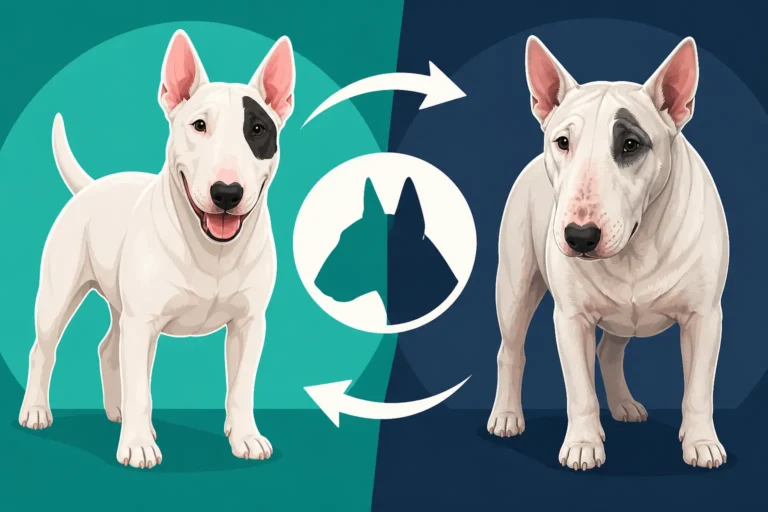
Even with their robust build, a healthy Bull Terrier should exhibit a subtle "tuck-up" from their chest to their abdomen when viewed from the side. This isn't as dramatic as with a sighthound, but it should still be present. If their abdomen appears straight or even sags slightly, they might be carrying extra weight. From above, you should see a discernible waist, where the body narrows just behind the rib cage. It’s not an exaggerated curve, but a definite indentation. If your Bull Terrier looks like a "brick" from above, with no waist definition, it's time for a closer look and a hands-on check. This visual check complements the tactile assessment of their What an Adult Bull Terrier Should Weigh.
Definition of Muscle Groups and Movement
A truly fit Bull Terrier will have visible muscle definition, particularly in their shoulders, thighs, and across their powerful hindquarters. You should see a sense of contour and shape in these areas, rather than a smooth, rounded appearance. This is often most apparent when they are moving, as their muscles flex and contract. Watch them walk, run, and jump; observe how their body moves. An overweight Bull Terrier will often move with less agility, and their gait might appear heavier. Their muscle groups will be less defined, appearing softer and less sculpted. Pay attention to their energy levels, too; while Bull Terriers are famous for their bursts of energy, a consistently sluggish demeanor could be another sign of excess weight slowing them down. This observation is part of the larger picture of How Much Exercise a Bull Terrier Actually Needs.
Maintaining an Ideal Physique: Diet and Exercise
Once you've assessed your Bull Terrier's body condition, the next step is to ensure they maintain a healthy weight or work towards it. This involves a careful balance of appropriate nutrition and regular, engaging exercise. It’s a commitment that lasts The Ten to Fourteen Years a Bull Terrier Gets.
Tailoring Their Diet
Bull Terriers are prone to gaining weight if their calorie intake isn't matched to their activity level. They also tend to be enthusiastic eaters who will happily hoover up whatever is offered. This means strict portion control is often necessary. Consider the specific caloric needs for your dog's age, activity, and individual metabolism. High-quality dog food, whether kibble, wet food, or a balanced fresh diet (like those offered by Ollie, ensuring it's nutritionally complete), should be fed in measured amounts. Avoid free-feeding, where food is left out all day, as this makes it impossible to monitor intake.
For treats, choose wisely. Opt for low-calorie options like small pieces of carrot, green beans, or specialized dental chews. If you're using treats for training, factor those calories into their daily allowance. Remember that even healthy snacks add up! Looking at ingredient lists carefully on platforms like Chewy or Amazon can help you find suitable options that align with your Bull Terrier's needs. If you're wondering How Many Calories a Bull Terrier Needs, consult your vet, as individual requirements can vary greatly.
The Right Exercise Regimen
Bull Terriers are active dogs and require consistent exercise to maintain their muscular build and mental well-being. This isn't just about a quick trot around the block. They need vigorous activity that engages both their bodies and minds. Daily walks, runs, or off-leash play in a secure area are vital. Activities like fetch, flirt pole games, or even supervised swimming can be excellent ways to burn calories and build lean muscle. Remember their tenacious nature; they thrive on activities that challenge them.
However, be mindful of their joints and avoid over-exertion, especially in puppies or older dogs. Just as important as physical exercise is mental stimulation. Puzzle toys, training sessions, and interactive games can help prevent boredom, which sometimes manifests as destructive chewing or overeating. Regular, consistent exercise helps keep their metabolism healthy and supports that strong, lean physique. If you're aiming for weight loss, increasing their activity slowly and steadily in conjunction with dietary changes is key. For more on managing their weight, check out Getting Weight Off a Bull Terrier.
Regular Monitoring and Adjustments
Maintaining a healthy weight is an ongoing process. Your Bull Terrier's needs will change as they age, with shifts in their activity level, and potentially with the onset of health conditions. Make the hands-on body condition assessment a regular habit – at least monthly, if not weekly. Keep a journal or a simple chart to track their weight and body condition score.
If you notice changes, don't hesitate to adjust their food intake or exercise routine. If your Bull Terrier is consistently gaining weight despite your efforts, or if you're unsure about their body condition, it's always best to consult your veterinarian. They can help rule out any underlying medical issues, provide personalized dietary recommendations, and guide you on an appropriate exercise plan. They can also provide a professional opinion on Signs a Bull Terrier Is Overweight. Remember, you're their advocate, and staying on top of their physical condition is one of the best ways to ensure a long, healthy life together.
Disclaimer
This article is for general informational purposes only and does not constitute professional advice. Laws, prices and regulations vary by location and change over time. Consult a qualified professional for guidance on your specific situation.