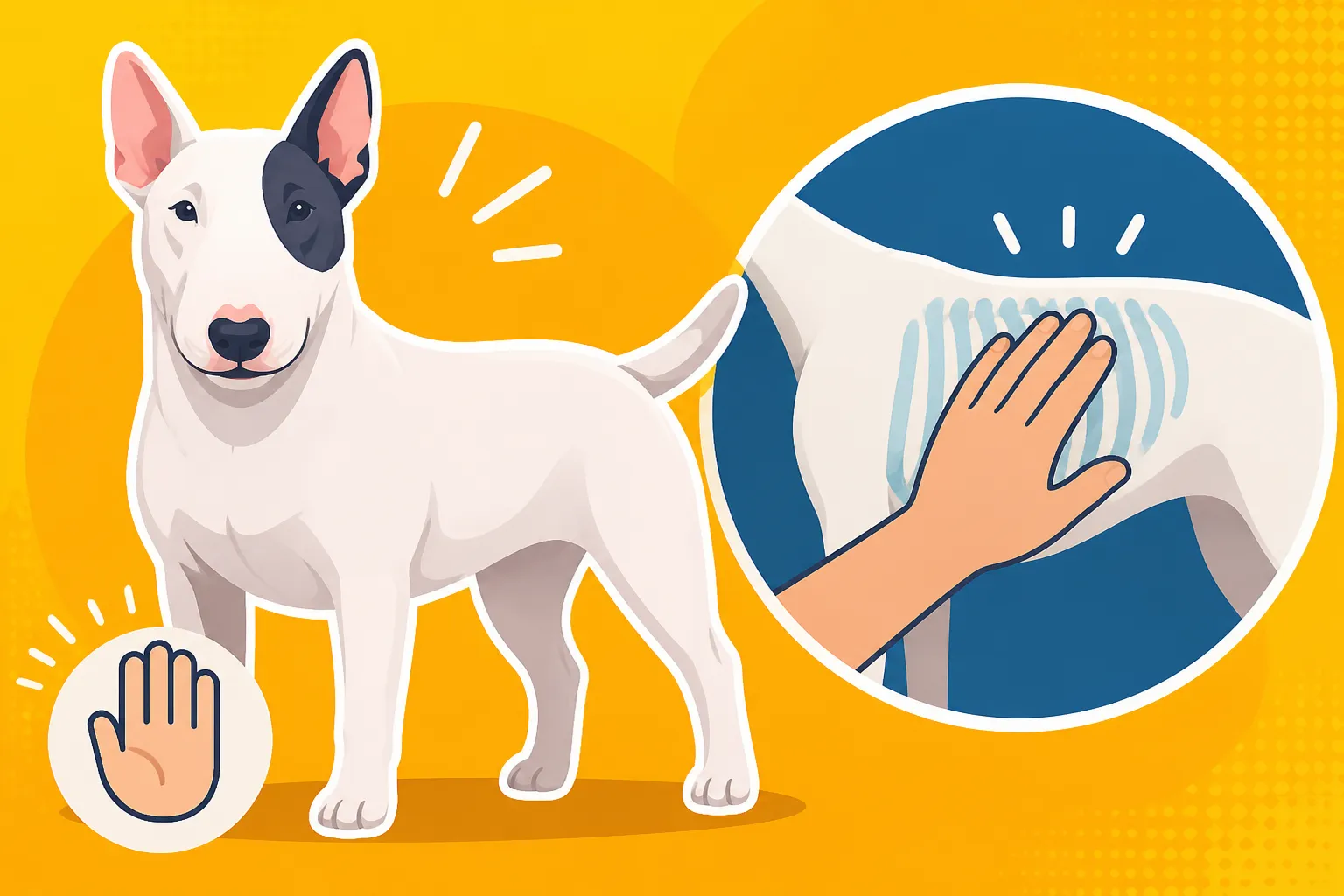
How to Feel a Bull Terrier’s Ribs
One of the trickiest parts of being a Bull Terrier parent is figuring out if your blocky, muscular companion is at a healthy weight. They aren't built like a svelte sighthound, nor are they as fluffy as a Malamute, both of which offer clear visual cues about their condition. Their unique physique, that iconic egg-shaped head, and dense build can make it really hard to tell just by looking. This guide will walk you through the simple, hands-on method of feeling your Bull Terrier's ribs to accurately gauge their body condition, offering peace of mind and actionable steps to keep them healthy.
The Bull Terrier's Unique Physique: Why Weight Assessment is Tricky
Let's be honest, our Bull Terriers are built like little tanks. They're compact, incredibly muscular, and have a unique silhouette that often leaves owners scratching their heads when it comes to weight management. Unlike many other breeds, a quick glance might not tell you the full story about whether they're carrying a few too many (or too few) pounds.
The Muscle-Bound Marvel: Understanding Their Build
Bull Terriers are, by design, powerful dogs. Their musculature is incredibly dense and well-developed, especially across their shoulders, chest, and hindquarters. This isn't just for show; it's a testament to their history as sturdy, active companions. When you look at a Bull Terrier, you see solid mass, not a lot of delicate angles. This dense muscle can act like a natural padding, making it challenging to visually distinguish between muscle mass and excess fat. You might think your dog looks trim because of their tight, short coat and defined shape, but that impressive musculature can sometimes hide a layer of extra weight that's not immediately obvious. They're true athletes in a compact package, and that athleticism needs to be maintained, not weighed down by extra pounds.
Their unique construction means that typical dog weight charts or even a simple glance might lead you astray. What looks "normal" for a Bull Terrier might actually be a bit on the heavy side when you consider their bone structure and ideal body composition. Understanding their build is the first step in truly assessing their health. We've talked before about How to Tell Bull Terrier Muscle From Fat, and it's a critical distinction to make for accurate weight assessment.
Beyond the Scale: Why Visual Cues Aren't Enough
Many dog owners rely on simply looking at their dog from above or the side to gauge their weight. For some breeds, this works reasonably well. You can often see a defined waist, a tuck in the abdomen, or the slight outline of ribs. For a Bull Terrier, however, these visual cues can be far less reliable. Their deep, broad chest and the way their body tapers only slightly to the hips can obscure the subtle waistline you might look for in other breeds.
Furthermore, while their coat is short and usually close-lying, variations in coat thickness or even color patterns can create illusions. A dog might appear lean in one light and stocky in another. Even that characteristic "egg-shaped" head, which we all adore, plays a role, creating an overall impression of robustness that can mask subtle weight changes in the body. The scale can give you a number, but it doesn't tell you whether that weight is healthy muscle or unhealthy fat. This is why a hands-on approach is so crucial for our Bull Terrier friends. You need to feel what's going on underneath that tough exterior to get an accurate picture of their physical condition.
The Hands-On Approach: How to Properly Feel for Ribs
Since visual cues can be misleading and the scale only tells part of the story, learning to properly feel your Bull Terrier's ribs is the most accurate and reliable way to assess their body condition. It’s a simple technique, but it requires a bit of practice and consistency to get right.
The Gentle Palpation Technique: Step-by-Step
To start, make sure your Bull Terrier is relaxed and standing comfortably on all four paws. You want them in a natural stance, not hunched or stretched.
- Position Yourself: Stand either directly over your dog, or crouch beside them, ensuring you can comfortably reach their rib cage with both hands.
- Place Your Hands: Gently place the palms of both hands flat on either side of their rib cage, just behind their shoulders. Imagine you're giving them a gentle hug around their chest.
- Sweep Back Gently: With your fingers extended and your palms still in contact, gently sweep your hands backward over their rib cage, applying very light pressure. Think of it like a light caress, not a deep massage.
- Feel for the Ribs: As you sweep your hands back, you should be able to feel the individual ribs underneath your fingertips. The key here is just barely feeling them without having to press hard. You should feel them distinctively, one by one, almost like touching the slats of a Venetian blind through a light curtain. If you have to press firmly to feel anything at all, your Bull Terrier might be carrying too much weight. If they feel like they're sticking out prominently with no discernible fat cover, they might be underweight.
The goal is to feel the ribs easily with minimal pressure, but not to see them visually protruding through the skin. This feeling should be consistent across the entire rib cage. Remember, this isn't about roughhousing; it's a calm, investigative touch that helps you connect with your dog's physical state.
What You Should and Shouldn't Feel
Veterinarians often use a system called the Body Condition Score (BCS), which includes a tactile component like feeling the ribs. To give you a real-world comparison, here’s what you’re aiming for when you feel your Bull Terrier’s ribs, along with what indicates they might be too thin or too heavy:
- Ideal (Just Right): When you sweep your fingers over their ribs, they should feel like the knuckles on the back of your hand when your hand is open and flat. You can feel them distinctly, but they aren't sharp or prominently visible. There's a slight, thin layer of fat and muscle covering them, providing a smooth transition. This means your Bull Terrier is lean, muscular, and in excellent condition. This is the sweet spot we're aiming for to ensure they live a long, active life.
- Too Thin: If the ribs feel like the knuckles on the back of your hand when you clench your fist tightly, then your Bull Terrier is likely too thin. The ribs will feel very prominent, sharp, and easy to count, possibly with little to no muscle or fat covering them. You might also be able to visually see the ribs, hip bones, and spine easily, especially in short-coated breeds like Bull Terriers. If this is the case, it’s crucial to investigate why, as it could indicate an underlying health issue or insufficient nutrition.
- Too Heavy: If you can’t easily feel the ribs without pressing down firmly, and instead, you feel a soft, squishy layer over them, it’s a sign that your Bull Terrier is carrying too much weight. The sensation might be similar to feeling the palm of your hand – smooth and padded, with no distinct bony projections. In this scenario, the excess fat is obscuring the ribs, and your dog could be at risk for a range of weight-related health problems. You might also notice a lack of a discernible waist and a general roundness to their body.
Regularly performing this simple rib check, perhaps during your weekly grooming session or cuddle time, will help you become attuned to your Bull Terrier's ideal body condition and spot any changes early. This consistent habit is a cornerstone of responsible Bull Terrier care.
Interpreting the Rib Check: What It Means for Your Bull Terrier's Health
Understanding what your hands tell you when you feel your Bull Terrier's ribs is only half the battle. The other, equally important part, is knowing what to do with that information. A healthy weight isn't just about aesthetics; it's fundamental to their overall well-being and longevity.
The Ideal Body Condition Score and Why It Matters
The "Body Condition Score" (BCS) is a veterinary tool, usually on a scale of 1 to 9 (or 1 to 5), that helps objectively assess a dog's fat reserves. A score of 5/9 (or 3/5) is generally considered ideal. When you can easily feel your Bull Terrier's ribs with slight pressure, that usually correlates with a healthy BCS. But why does this score matter so much for our tenacious companions?
Maintaining an ideal weight is absolutely crucial for a Bull Terrier's long-term health. These are active, powerful dogs, and carrying extra weight puts undue strain on their joints, especially as they age. Conditions like Patellar Luxation in a Bull Terrier can be exacerbated by excess pounds, leading to discomfort and mobility issues. Beyond joint stress, obesity significantly increases the risk of other serious health problems, including heart disease, diabetes, respiratory issues, and certain types of cancer. It can even shorten their lifespan, cutting short The Ten to Fourteen Years a Bull Terrier Gets that we cherish so much.
Conversely, being underweight can also be a red flag. While less common than obesity in adult Bull Terriers, it could indicate insufficient caloric intake, a poor-quality diet, or an underlying medical condition that's preventing them from absorbing nutrients properly. Either extreme warrants attention and often a conversation with your veterinarian.
Here's a simplified look at the BCS and how it relates to feeling your Bull Terrier's ribs:
| Body Condition Score | Rib Palpation | Visual Cues (Bull Terrier Specific) |
|---|---|---|
| Too Thin (1-2) | Ribs easily visible, feel sharp, no fat cover. | Prominent ribs, spine, and hip bones. Severe waist tuck. Muscle loss visible. |
| Ideal (3-5) | Ribs easily felt with slight pressure, like flat knuckles. | Ribs not visible, but a slight waist tuck behind the ribs. Muscular build evident. |
| Too Heavy (6-7) | Ribs difficult to feel, requiring moderate pressure. | No waist tuck, back is broad and flat. Abdomen may sag. Muscular definition softened by fat. |
| Obese (8-9) | Ribs cannot be felt under a thick layer of fat. | No waist, broad, rounded body. Heavy fat deposits over neck, tail base, and limbs. Significant abdominal sag. |
Adjusting Diet and Exercise Based on Your Findings
Once you've assessed your Bull Terrier's body condition through the rib check, you'll have a better idea of whether adjustments are needed.
If your Bull Terrier is too thin, your first step should always be a vet visit. It's vital to rule out any underlying medical issues that could be causing weight loss, such as parasites, dental problems, or more serious conditions like kidney disease. If medically cleared, you might need to increase their food intake, switch to a more calorie-dense food, or incorporate healthy, appropriate treats. When looking for high-quality, calorie-appropriate foods, I often check out Chewy for a wide selection or even explore options like Ollie that offer customized fresh meal plans. Always make dietary changes gradually to avoid upsetting their stomach.
If your Bull Terrier is carrying extra weight, the plan involves a careful balance of diet and exercise. Reducing their caloric intake is key. This doesn't necessarily mean feeding them less food but rather feeding them fewer calories. This might involve switching to a lower-calorie dog food, cutting back on treats, or ensuring treats are healthy and low in calories. For instance, instead of high-fat dog biscuits, consider using small pieces of steamed carrots or green beans as rewards.
Increasing their physical activity is also paramount. Bull Terriers need regular, vigorous exercise to maintain their muscle mass and burn off calories. This could mean longer walks, engaging in active play, or incorporating structured exercise like fetch. We’ve discussed How Far a Bull Terrier Should Walk Before It Gets Silly, and it's a good reminder that they thrive on purposeful activity. Look on Amazon for durable, engaging toys that can stand up to their powerful jaws and keep them moving. Remember that a balanced approach, combining mindful eating with consistent exercise, is the most effective and sustainable way to help your Bull Terrier reach and maintain a healthy weight.
When to Call the Vet: Beyond the Rib Check
While the hands-on rib check is an invaluable tool for regular monitoring, it’s important to remember that it's just one piece of the puzzle. There are times when even a seasoned Bull Terrier owner needs to bring in the professionals. Your veterinarian is your best partner in ensuring your dog's long-term health.
Sudden Weight Changes: A Red Flag
One of the biggest indicators that something might be amiss with your Bull Terrier’s health is a sudden or unexplained change in weight. If your dog rapidly loses weight, even if they're eating normally, or conversely, gains a significant amount of weight without a clear increase in food or decrease in exercise, it’s time to call the vet.
Rapid weight loss can be a symptom of various medical conditions, from dental issues making eating painful to metabolic diseases or even certain cancers. Bull Terriers, unfortunately, can be prone to certain genetic health issues, and unexplained weight changes can sometimes be an early warning sign. For example, conditions affecting their kidneys could lead to weight loss, making The Yearly Urine Test Every Bull Terrier Owner Should Book so vital. Similarly, sudden weight gain could indicate hormonal imbalances, fluid retention, or other underlying health concerns that need professional diagnosis and treatment. Don’t dismiss these changes as merely a shift in appetite or activity; they warrant a thorough veterinary examination.
Combining the Rib Check with Other Health Indicators
The rib check is powerful, but it's most effective when used in conjunction with other observations about your Bull Terrier's overall health and well-being. Think of it as one data point in a broader health assessment.
When you're checking their ribs, also take a moment to:
- Assess their waistline and abdominal tuck: From above, their body should ideally curve slightly inward behind the rib cage, and from the side, their abdomen should tuck up slightly rather than hanging low. If you're seeing Signs a Bull Terrier Is Overweight, these visual cues will often reinforce what your hands tell you about their ribs.
- Monitor their energy levels: Is your Bull Terrier as playful and energetic as usual? A decrease in activity could be a sign of discomfort from excess weight or an underlying illness.
- Observe their coat quality: A dull or sparse coat can sometimes indicate nutritional deficiencies or health problems.
- Check their appetite and thirst: Any significant changes here should always be noted. Are they suddenly ravenous or refusing meals? Are they drinking noticeably more or less water?
Regular veterinary check-ups are non-negotiable for keeping your Bull Terrier healthy. These visits allow your vet to perform a comprehensive physical exam, discuss any concerns you have, and conduct routine screenings like What a Bull Terrier's Yearly Bloodwork Should Cover. These tests can catch issues long before they become outwardly visible. By staying attuned to both the tactile feedback from your rib check and your dog's overall demeanor, you'll be well-equipped to provide the best possible care for your beloved Bull Terrier throughout their unique and wonderful life.
Disclaimer
This article is for general informational purposes only and does not constitute professional advice. Laws, prices and regulations vary by location and change over time. Consult a qualified professional for guidance on your specific situation.