How Long a Bull Terrier Lasts Alone Before It Chews
It's a question that keeps so many Bull Terrier owners up at night: "How long can I really leave my bully alone before I come home to a crater in the sofa or a newly sculpted doorframe?" The anxiety of potential destruction is real, and it often stems from not fully understanding their unique needs. This guide will dive deep into the heart of why Bull Terriers chew when left alone, offering practical strategies and insights to help you build a confident, calm companion who can handle alone time without turning your home into a chew toy showcase.
The Bull Terrier's Intense Need for Connection
Bull Terriers are not just dogs; they are charismatic, often quirky, and deeply attached members of the family. Their history as companions, not just working dogs, has cemented a profound need for human interaction that's unlike many other breeds. This isn't just a preference; it's often a hardwired expectation for them.
Why Bull Terriers Are Not Solitary Creatures
Unlike some breeds that are content to patrol a yard or simply snooze the day away, Bull Terriers thrive on being part of the action. They want to be where you are, doing what you're doing, even if that means just supervising your laundry folding. This deep social connection makes being left alone a much bigger deal for them than it might be for a more independent dog. They don't just tolerate companionship; they absolutely crave it.
This isn't a flaw in their character; it's part of what makes them such endearing and loyal companions. However, it does mean that if their need for interaction isn't met, they can quickly become distressed. A Bull Terrier who feels isolated isn't just bored; they're experiencing genuine emotional discomfort, which often manifests in ways we owners might find frustrating, like destructive behavior. Understanding this fundamental aspect of their personality is the first step in managing their alone time effectively.
The "Three-Year-Old in a Dog Suit" Phenomenon
You've probably heard the adage that a Bull Terrier is like a perpetual three-year-old in a dog suit. This isn't just a cute saying; it speaks to their incredible zest for life, their boundless energy, and their sometimes-challenging ability to entertain themselves in appropriate ways. Just like a toddler, a Bull Terrier needs supervision, guidance, and plenty of constructive outlets for their energy and curiosity.
When left unsupervised, a three-year-old might draw on the walls or empty kitchen cupboards for "fun." A Bull Terrier, similarly, might decide that the leg of your dining table makes an excellent chewing project, or that the sofa stuffing needs to be thoroughly investigated. Their intelligence and problem-solving skills, coupled with their sheer physical strength, mean that if they decide to get into something, they often succeed. This playful, often mischievous nature means that what starts as curiosity can quickly escalate into significant damage if they're not adequately prepared for solo hours. Why a Bull Terrier Is Called a Three Year Old in a Dog Suit touches on this perfectly.
Understanding Destructive Chewing in Bull Terriers
It's easy to label all chewing as "bad behavior," but for a Bull Terrier, chewing is a fundamental, natural activity. The key is understanding why they're chewing when left alone, as that informs how you can redirect this powerful instinct constructively.
Boredom and Lack of Mental Stimulation
A Bull Terrier’s mind is sharp, and if it's not being actively engaged, it will find its own ways to stay busy. And those ways very rarely align with our home decor choices. Boredom isn't just about physical inactivity; it's about a lack of mental challenge. A dog that's physically tired but mentally under-stimulated can still become destructive.
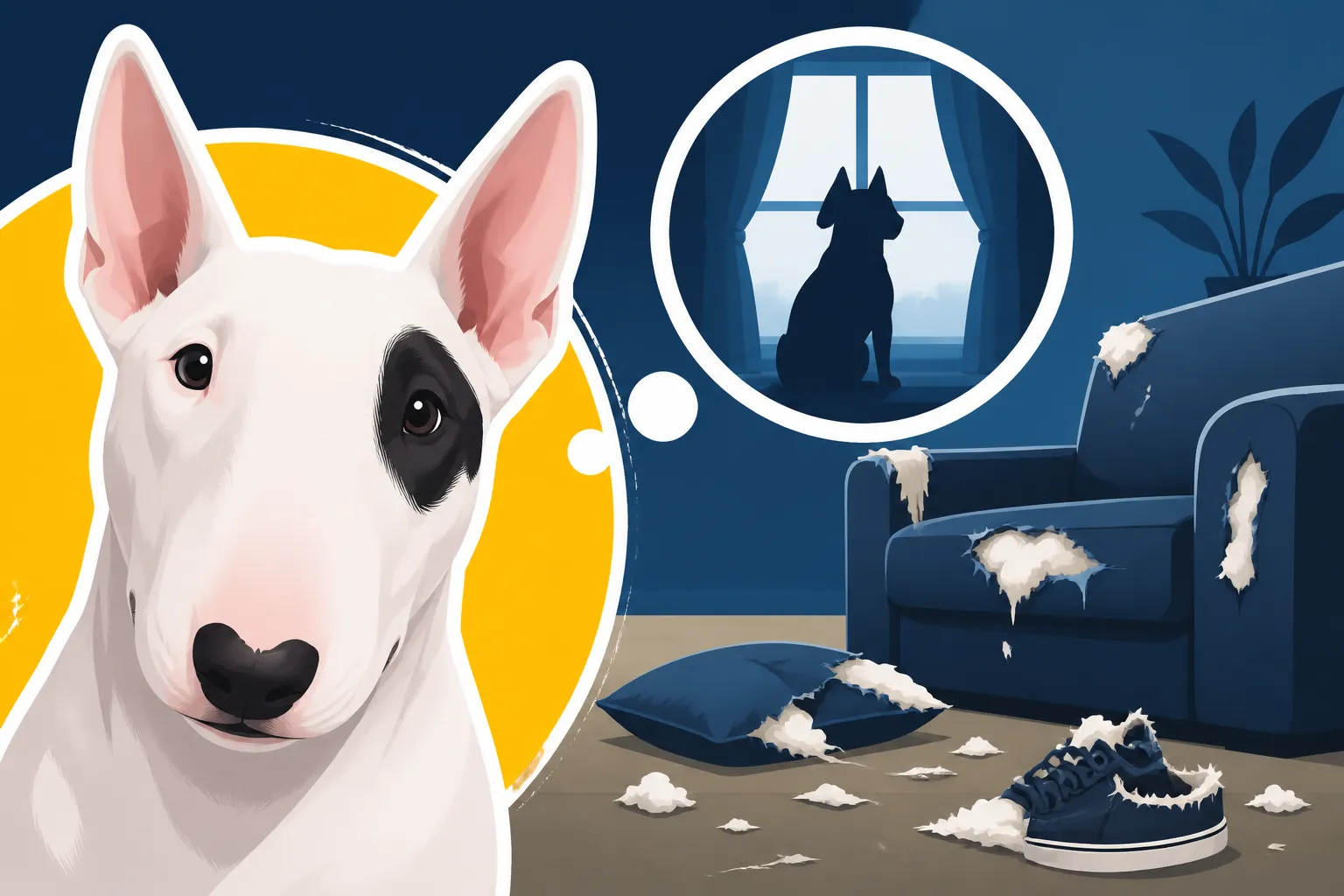
Imagine being stuck in a room with nothing to do. You might start fiddling with things, looking for entertainment. A Bull Terrier is no different. If they don't have appropriate puzzle toys, long-lasting chews, or a "job" to do, they will invent one. That job might involve dismantling a pillow, widening a door frame, or pulling up carpet. It's not malicious; it's simply a brain finding an outlet for its energy. This is precisely What a Bull Terrier Does When It Is Bored.
Separation Anxiety and Stress-Related Chewing
Sometimes, chewing isn't about boredom at all; it's a coping mechanism for stress. Bull Terriers are prone to developing separation anxiety due to their strong bond with their people. When you leave, they might not just be sad; they might experience genuine panic. This distress can manifest as excessive chewing, often focused on exits like doors or windowsills, or on items that carry your scent, like cushions or blankets.
Recognizing the difference between boredom chewing and anxiety chewing is crucial. Anxiety chewing is often accompanied by other signs like excessive drooling, pacing, vocalization (howling, barking), inappropriate urination or defecation, and frantic attempts to escape. If you suspect your Bull Terrier is experiencing true separation anxiety, the approach will be very different from simply providing more toys. Signs a Bull Terrier Has Separation Anxiety can offer more insights into identifying these critical indicators.
Energy Levels and Insufficient Exercise
Bull Terriers are muscular, powerful dogs with surprising bursts of energy. While they can be couch potatoes, a lack of sufficient physical exercise can leave them with a reservoir of pent-up energy that needs to be released. When left alone, this energy often finds an outlet in destructive behaviors, including chewing.
A quick walk around the block before you leave for work might not be enough to truly tire out a Bull Terrier. They need vigorous exercise, playtime, and opportunities to run and explore. A Bull Terrier who hasn't had a good run or a stimulating play session is much more likely to resort to chewing out of sheer physical restlessness. It's like asking a child who hasn't been to the playground all day to sit quietly for hours—it's just not going to happen without some form of explosion. Consider that a Bull Terrier puppy needs structured exercise, but too much can be detrimental to their growing joints. How Much a Bull Terrier Puppy Should Exercise can provide guidance on age-appropriate activity levels.
How Long is Too Long: Realistic Timelines for Being Alone
Determining how long your Bull Terrier can truly be left alone without issue is highly individual, but there are some general guidelines and factors to consider based on their age and personality. Pushing them past their comfort zone almost guarantees problems.
Puppy Stages: Building Blocks for Alone Time
Bull Terrier puppies, just like human infants, have very short attention spans and small bladders. Expecting them to hold it for hours or entertain themselves independently for long stretches is unrealistic and sets them up for failure. During these crucial early months, you're building the foundation for their comfort with alone time.
| Age of Bull Terrier Puppy | Maximum Recommended Alone Time (Approximate) | Key Focus During Alone Time |
|---|---|---|
| 8-10 weeks | 1 hour | Crate training, short intervals, positive associations, frequent potty breaks. |
| 10-12 weeks | 1-2 hours | Gradually increasing time, continued positive crate experiences, enriching toys. |
| 3-6 months | 3-4 hours | Consistent routine, ample exercise before leaving, appropriate chew toys, secure confinement (crate or puppy-proofed room). |
| 6-12 months | 4-5 hours | Solidifying alone-time skills, increasing mental stimulation, monitoring for signs of anxiety. |
Note: These are general guidelines. Every puppy is different, and some may require more gradual introductions to alone time.
Starting with very short periods, even just stepping out for five minutes, is vital. You want to make alone time a normal, non-eventful part of their routine. Providing them with a safe, comfortable space like a crate, filled with a delicious chew or puzzle toy, can help build positive associations. Whether a Crate Helps a Bull Terrier Left Alone offers more on this crucial training tool.
Adult Bull Terriers: Managing Expectations
Once a Bull Terrier reaches adulthood, typically around 12-18 months, they can generally handle longer periods alone, but there's a significant difference between can and should. A well-exercised, mentally stimulated, and confidence-trained adult Bull Terrier might manage 4-6 hours. However, pushing beyond that, especially on a regular basis, is often when destructive behaviors or signs of anxiety begin to emerge.
Even an adult Bull Terrier still thrives on routine and interaction. Leaving them for 8-10 hours every workday, five days a week, without any midday break or significant enrichment, is a recipe for disaster for many bullies. They aren't meant to be left idle for such extended periods. This is where options like dog walkers, doggy daycare, or even a trusted friend or neighbor coming over for a break become invaluable. Remember, they are highly intelligent and bond deeply, making isolation particularly challenging for them. Why a Bull Terrier Cannot Be Left Alone All Day is a crucial read for understanding these limits.
Senior Bull Terriers: Changing Needs
As Bull Terriers age, their needs can change once again. While their energy levels might decrease, they can become more prone to discomfort, cognitive decline, or increased anxiety. They may also have less bladder control, meaning they physically cannot hold it for as long as they once could.
A senior Bull Terrier might require more frequent potty breaks and could benefit from shorter periods of alone time. Their comfort and security become paramount. A familiar, quiet space, perhaps with soft bedding and easy access to water, is ideal. Monitoring them for signs of increased anxiety or confusion when left alone is important, as these could signal underlying health issues or cognitive changes that require veterinary attention. Caring for a Bull Terrier Past Eight covers many aspects of adjusting to their golden years.
Setting Your Bull Terrier Up for Success: Management Strategies
Successfully leaving your Bull Terrier alone is less about a magic time limit and more about strategic preparation and management. You want to create an environment where they feel safe, secure, and have appropriate outlets for their natural instincts.
Crate Training: A Safe Haven
A well-introduced crate is not a punishment; it's a den, a safe haven where your Bull Terrier can feel secure when you're not there to supervise. For many Bull Terriers, particularly as puppies, it's the most effective way to prevent destructive chewing and ensure their safety. A crate limits their access to valuable household items and prevents them from ingesting something dangerous.
Introducing the crate slowly, with positive reinforcement, delicious treats, and comfortable bedding, is key. Never use the crate as a punishment. It should be a place they willingly go to. For a Bull Terrier, a heavy-duty, robust crate is often necessary, as their strength and determination can make quick work of flimsy wire models. You might find excellent options on Amazon that are built to withstand a determined bully. Make sure it's large enough for them to stand up, turn around, and lie down comfortably.
Puppy-Proofing Your Home
Even with a crate, you'll eventually want to expand their boundaries. Puppy-proofing isn't just for puppies; it's essential for any Bull Terrier, especially when they're left unsupervised, even for short periods. This means going room by room, identifying potential hazards and temptations, and removing them.
Think like a Bull Terrier: What looks interesting to chew? What can be pulled down? What cords are accessible? This involves securing electrical cords, putting away shoes and remote controls, elevating wastebaskets, and removing throw rugs that might become a target. Anything valuable or dangerous should be out of reach. Consider using baby gates to block off certain rooms or areas until your Bull Terrier has proven they can be trusted. How to Bull Terrier Proof a Room delves into this in detail, offering comprehensive strategies for keeping your home intact.
Providing Appropriate Chews and Puzzle Toys
This is where you channel their natural chewing instinct into acceptable avenues. A Bull Terrier needs to chew. It's mentally stimulating, helps with dental health, and is a great stress reliever. The trick is to provide chews that are safe, durable, and appealing enough to capture their attention.
Look for extra-tough chew toys made from durable rubber or nylon that are designed for power chewers. Stuffed Kongs, frozen with peanut butter or plain yogurt, can keep them occupied for a significant period. Interactive puzzle toys, where they have to work to get treats out, are fantastic for mental stimulation and preventing boredom chewing. Experiment to find out what your individual Bull Terrier loves. Products available on Amazon often include reviews from other Bull Terrier owners, which can be a good indicator of durability. Providing How Many Chews a Bull Terrier Needs a Week is a crucial part of their daily routine.
Training and Enrichment to Combat Loneliness Chewing
Management strategies are excellent for damage control, but true success comes from training your Bull Terrier to be comfortable and confident when alone. This requires a multi-faceted approach focusing on desensitization and enriching their solo time.
Desensitization to Departure Cues
Many Bull Terriers start to get anxious the moment they see you picking up your keys or putting on your coat. These are "departure cues" that signal you're about to leave. By desensitizing them to these cues, you can help reduce their pre-departure anxiety.
Practice these actions randomly throughout the day without actually leaving. Pick up your keys, jingle them, put them back down. Put on your coat, walk to the door, then sit back down on the couch. Do this multiple times a day, varying the order and duration. The goal is to break the association between these actions and your actual departure, making them less impactful and less likely to trigger anxiety. Over time, your Bull Terrier will learn that your coat doesn't always mean you're leaving for hours.
Structured Alone Time Training
Teaching your Bull Terrier to enjoy being alone is a gradual process that starts with very short intervals. Begin by leaving them alone in their designated safe space (like their crate or puppy-proofed room) for just a minute or two, then return before they show any signs of distress. As soon as you return, don't make a big fuss; calmly reward them for being quiet and relaxed.
Gradually increase the duration of your absences, always returning before they get anxious. The idea is to build their confidence incrementally. This is where patience is paramount. If you come back to chewing or barking, you've gone too long, and you need to step back to a shorter duration. Some online training programs, like those offered by BAXTER & Bella, provide structured lesson plans for building alone-time confidence that can be incredibly helpful for owners.
Mental and Physical Enrichment Before You Leave
A tired Bull Terrier is a good Bull Terrier, especially when it comes to alone time. Before you leave, make sure your bully has had ample opportunity to expend both physical and mental energy. A long, brisk walk, a game of fetch, or a stimulating training session can make a huge difference in their ability to settle when you're gone.
Engage their minds with training games or a brief puzzle toy session. This "brain drain" can be just as effective as physical exercise in promoting calm. By tiring them out physically and mentally, you're increasing the likelihood that they'll spend their alone time napping or calmly working on a long-lasting chew, rather than inventing destructive pastimes. Remember, a Bull Terrier's intelligence means they truly need a job, even if it's just chewing on a Benebone for an hour.
When to Seek Professional Help
Despite your best efforts, some Bull Terriers struggle profoundly with alone time. If you've tried various management and training techniques and are still experiencing significant destructive chewing, excessive vocalization, or other signs of severe distress, it's time to call in the experts.
Recognizing Severe Separation Anxiety
It’s one thing for a Bull Terrier to chew a shoe out of boredom, but it’s another for them to injure themselves trying to chew through a door or window frame, or to become frantic and inconsolable when left alone. If you're seeing signs like constant pacing, drooling so much it creates puddles, self-mutilation (licking or chewing paws raw), or frantic escape attempts that cause injury, these are red flags for severe separation anxiety.
These behaviors indicate genuine panic, not just naughtiness. Punishment is not only ineffective but can worsen the anxiety. Such cases often require a nuanced, professional approach. Understanding the specific nature of their distress is key to finding the right solution. For example, Why a Bull Terrier Eats Things It Should Not might be an indication of Pica, a disorder often linked to anxiety or nutritional deficiencies.
Consulting a Certified Professional Dog Trainer or Behaviorist
For persistent or severe alone-time issues, a certified professional dog trainer or a veterinary behaviorist can be an invaluable resource. They can observe your Bull Terrier's behavior (sometimes even with video analysis while you're away) and help you develop a tailored behavior modification plan.
A behaviorist can help distinguish between boredom, mild anxiety, and full-blown separation anxiety, recommending appropriate strategies, which might include specific counter-conditioning techniques, desensitization protocols, or even medication in severe cases. They can also ensure you're not inadvertently reinforcing anxious behaviors. Don't hesitate to seek help; addressing these issues early can prevent them from becoming deeply ingrained and more difficult to resolve. Whether a Bull Terrier Owner Should Hire a Behaviorist delves into when and why this expert guidance is so important.
Working with Your Veterinarian
Your veterinarian should always be the first point of contact if you suspect a behavioral issue with your Bull Terrier. They can rule out any underlying medical conditions that might be contributing to the destructive chewing or anxiety, such as dental pain, gastrointestinal upset, or other physical discomforts.
Once physical causes are ruled out, your vet can work in conjunction with a behaviorist or trainer, and in some cases, might recommend anti-anxiety medication to help your Bull Terrier cope while you implement behavior modification. Medication isn't a cure, but it can be a valuable tool to lower their anxiety levels enough for the training to be effective. It’s about creating a holistic plan that supports your Bull Terrier’s emotional well-being.
Disclaimer
This article is for general informational purposes only and does not constitute professional advice. Laws, prices and regulations vary by location and change over time. Consult a qualified professional for guidance on your specific situation.