How Many Chews a Bull Terrier Needs a Week
One of the most common refrains I hear from new Bull Terrier owners, often with a hint of exasperation, is about the sheer destructive power of their beloved, egg-headed companion. It’s not just a phase; these dogs are built to chew, and if you don't give them appropriate outlets, your furniture, shoes, or even your doorframes will pay the price. Understanding how many chews a Bull Terrier truly needs each week isn't just about throwing a few toys their way; it’s about strategically managing their powerful instincts to ensure both their happiness and the integrity of your home. This guide will walk you through setting up a successful chewing regimen for your Bull Terrier, making sure they get the satisfaction they need without costing you a fortune in replacements.
The Relentless Chewing Instinct of a Bull Terrier
Let's be real: Bull Terriers are not known for their delicate sensibilities, especially when it comes to their mouths. They are powerful, driven dogs with an innate need to engage their formidable jaws. Dismissing this as mere naughtiness misses the fundamental truth of the breed.
Why Chewing is More Than Just a Pastime for Bull Terriers
A Bull Terrier’s unique skull structure isn’t just for looks; it houses a jaw that is remarkably strong and built for business. This isn't a casual gnawing breed; they are enthusiastic, committed chewers. From the moment they are puppies, exploring the world with their mouths, to their adult years, when chewing becomes a critical outlet for energy and stress, it's a constant in their lives. Chewing isn't just about keeping their teeth clean, though it certainly helps with dental hygiene to some extent. It's a fundamental behavioral need that taps into their primal instincts. Think of it as their equivalent of a human fidget spinner or stress ball, but with far more power behind it. When a Bull Terrier chews, they are expending mental and physical energy, relieving boredom, and even self-soothing. Ignoring this deeply ingrained need is like asking a fish not to swim.
Beyond the physical act, chewing provides immense mental stimulation. Figuring out how to manipulate a chew, breaking it down, or extracting treats from a puzzle toy engages their clever minds. A bored Bull Terrier is often a destructive Bull Terrier, and providing appropriate chewing outlets is one of the easiest ways to keep their sharp minds occupied. If you've ever wondered What a Bull Terrier Does When It Is Bored, the answer very often involves their teeth, and usually on something you value.
The Consequences of Insufficient Chews
If your Bull Terrier isn't given enough appropriate chewing opportunities, trust me, they will find their own. And more often than not, their choices will not align with yours. I've heard stories of everything from sofa cushions being systematically dismantled to solid wood furniture becoming an impromptu sculpture. This isn't spite; it’s a dog fulfilling a natural need on the only items available. The frustration for owners is real, and the cost of replacing damaged goods can quickly add up, easily contributing to The Destruction Budget Nobody Warns a Bull Terrier Owner About.
Beyond the material damage, a lack of appropriate chews can lead to a host of behavioral issues. Excessive barking, digging, tail chasing, or even increased reactivity can stem from pent-up energy and mental under-stimulation that chewing would otherwise address. For puppies, insufficient chews mean they may resort to nipping hands and clothing far more often, making the Teaching a Bull Terrier Puppy to Stop Nipping process much harder. In extreme cases, a Bull Terrier might even start to mouth or chew on themselves, leading to skin irritations or hot spots. It's a clear signal that they are not getting the outlet they desperately need. Providing a consistent supply of varied, safe chews is not a luxury; it's an essential part of responsible Bull Terrier ownership.
Decoding "How Many": Quantity vs. Quality for Your Bull Terrier
When we talk about "how many" chews a Bull Terrier needs, it's not simply a fixed number you can write on a shopping list. It's a dynamic equation that balances the type, durability, and mental engagement a chew provides, alongside your individual dog's unique needs.
Assessing Your Bull Terrier's Individual Chewing Needs
Every Bull Terrier is an individual, and their chewing habits will vary. A young, energetic Bull Terrier puppy might burn through soft chews in minutes and need several new ones a day to keep their busy jaws satisfied. As they mature, their chewing might become more focused but no less intense. A senior Bull Terrier, while still enjoying a good chew, might not have the same raw power or desire to constantly gnaw as their younger counterparts. The key is to observe your dog.
Consider their energy levels: a Bull Terrier that gets plenty of physical exercise and mental engagement might be less destructive, but still needs appropriate chews to wind down. A dog left alone for longer periods will undoubtedly need more robust and engaging chews to prevent boredom from setting in. Reflect on their history: do they have a reputation for being a "destroyer" of all toys? This is a clear indicator that you need to prioritize durable, long-lasting options. If you find your Bull Terrier is routinely getting through How Many Toys a Bull Terrier Goes Through a Year, it's time to re-evaluate the quality of the chews you're offering, not just the quantity.
A Balanced Approach to Chew Provision
So, how many chews a week? For an average adult Bull Terrier, a good starting point is to have at least two to three highly durable, long-lasting chews available daily for them to rotate through. These aren't meant to be consumed quickly, but rather to be worked on over several sessions. Think of these as their core, always-available chewing options.
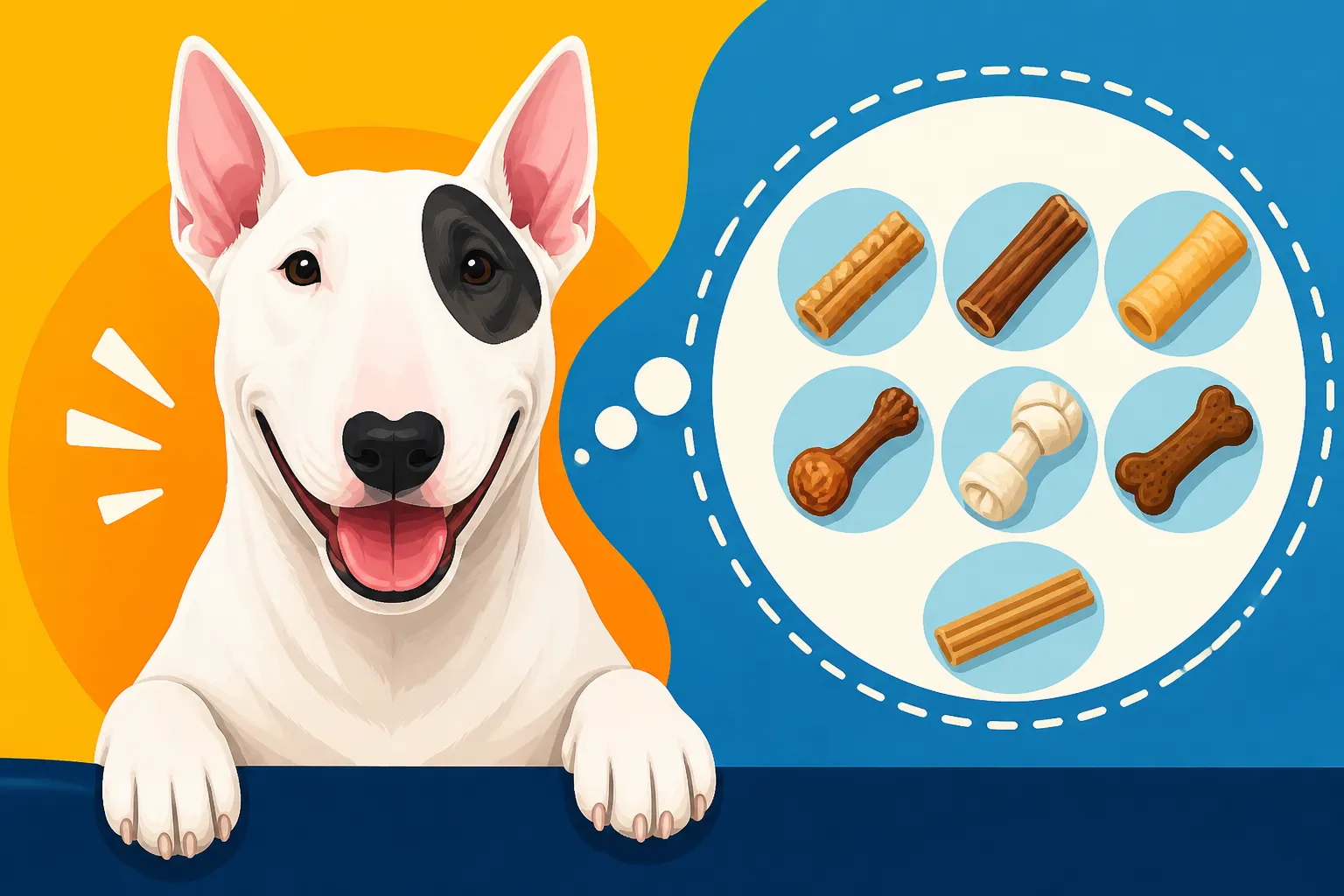
In addition to these long-lasting staples, you should aim to provide one or two consumable chews (like bully sticks or dental chews) per week. These are meant to be eaten and provide a different kind of satisfaction. They offer a quick, high-value chewing experience that can be especially useful for occupying them during short periods of alone time or as a special treat.
Furthermore, integrate one or two mentally stimulating chews (like a treat-dispensing puzzle toy or a hollow chew stuffed with food) every two to three days. These add variety and prevent boredom with the same old chews. The trick here is rotation. Instead of giving them all their chews at once, rotate them throughout the week. This keeps things fresh and interesting, making each chew feel like a "new" item to explore. If you're managing alone time, providing a stuffed KONG or a substantial chew just before you leave can make a world of difference for How Long a Bull Terrier Lasts Alone Before It Chews.
This approach ensures a diverse chewing experience, addressing different facets of their chewing drive:
- Long-lasting: For sustained mental and physical effort.
- Consumable: For high-value satisfaction and quick rewards.
- Interactive/Puzzle: For problem-solving and mental enrichment.
Selecting the Best Chews to Stand Up to a Bull Terrier
Choosing the right chew for a Bull Terrier is an art form, not a science. What works for one might be shredded in minutes by another. The key is prioritizing durability, safety, and mental engagement, always keeping A Bull Terrier's Teeth and That Enormous Jaw in mind.
Durable Options for Power Chewers
When you have a Bull Terrier, the word "durable" takes on a whole new meaning. Many standard dog toys simply won't cut it. You're looking for chews specifically marketed for "power chewers" or "extreme chewers."
Here are some categories and things to look for:
- Hard Rubber Toys: Brands like Kong (their "Extreme" line) or West Paw offer incredibly resilient rubber toys that can withstand serious abuse. These aren't meant to be eaten, but rather gnawed on and manipulated. Many of these can be filled with treats or peanut butter, adding an extra layer of engagement. You can find a huge selection of these kinds of robust chew toys on platforms like Amazon, making it easy to compare reviews from other power-chewer owners.
- Nylon Chews: These synthetic chews are very hard and long-lasting. Brands like Nylabone make specific varieties for aggressive chewers. The texture can vary, offering different sensations. The key with nylon chews is to monitor them; once they become too small or if sharp edges develop, they should be replaced to prevent choking or mouth injury.
- Hard Antlers or Horns: Natural, long-lasting options that some Bull Terriers absolutely adore. Elk or deer antlers are often very dense and can provide hours of chewing satisfaction. Make sure they are appropriately sized – too small is a choking hazard, too large might be too difficult to get a grip on. Again, supervision is key, and if they start to splinter or become too worn down, they need to be removed.
- Compressed Bones/Chews: Some companies offer highly compressed rawhide alternatives or chews made from durable, edible materials. Always check reviews and ingredients carefully. When considering anything edible, especially if your Bull Terrier is prone to swallowing items, refer to Why a Bull Terrier Swallows Toys and Why a Bull Terrier Eats Things It Should Not to understand the risks.
Avoid anything soft, flimsy, or easily destructible as "chews." Those might be fun for a quick game of fetch, but they won't satisfy the inherent chewing drive of a Bull Terrier and will quickly become trash. If you're wondering Which Toys Survive a Bull Terrier, look for those specifically designed for extreme durability.
Chews for Mental Engagement and Enrichment
Beyond sheer durability, chews that require some "work" from your Bull Terrier are invaluable for mental stimulation. These are often the ones that keep them engaged for longer periods, reducing the chances of boredom-induced mischief.
- Treat-Dispensing Toys: These are fantastic! Think about toys that you can stuff with kibble or small treats, and your Bull Terrier has to roll, nudge, or otherwise manipulate them to get the food out. This turns mealtime into a game and a prolonged activity. Again, brands like Kong and some harder rubber toys excel here.
- Hollow Chews: Many of the durable rubber chews have hollow centers. You can fill these with wet dog food, peanut butter, yogurt, or even a blend of fruits and vegetables, and then freeze them. This extends the chewing experience dramatically and provides a cool, soothing treat, especially for puppies.
- Snuffle Mats & Slow Feeders (as 'Chew' Alternatives): While not traditional chews, these are excellent for mental enrichment and can fulfill a similar drive for engagement. A snuffle mat allows your Bull Terrier to "hunt" for their kibble using their nose, which is incredibly enriching. Slow feeder bowls also extend mealtime, slowing down those eager eaters who inhale their food in seconds. While BAXTER & Bella focuses on training, their philosophy often emphasizes mental engagement and enrichment, and incorporating these types of problem-solving "chews" aligns perfectly with keeping an intelligent breed like the Bull Terrier satisfied.
Remember, the goal is not just to keep them quiet, but to provide a constructive outlet for their minds and bodies. These types of chews can be incredibly effective at doing just that.
| Chew Type | Durability for Bull Terriers | Mental Engagement | Supervision Level | Primary Benefit |
|---|---|---|---|---|
| Hard Rubber (e.g., Kong Extreme) | High | Medium to High | Low to Medium | Sustained gnawing, food puzzles |
| Nylon Chews (e.g., Nylabone Power Chew) | High | Low to Medium | Medium | Dental abrasion, long-lasting |
| Antlers/Horns | High | Medium | High | Natural, long-lasting, mineral content |
| Bully Sticks/Dental Chews | Low to Medium | Low | Medium to High | Consumable, quick satisfaction, dental cleaning |
| Stuffed & Frozen Kongs | Medium (while frozen) | High | Low to Medium | Extended engagement, cooling |
| Treat Dispensing Balls | Medium | High | Low | Problem-solving, mental stimulation |
Note: Supervision level for edible chews should always be high until you understand your Bull Terrier's chewing style and tendency to swallow large pieces.
Integrating Chews Into Your Bull Terrier's Daily Routine
Providing chews isn't a one-and-done deal; it's an ongoing strategy. How and when you offer chews can significantly impact their effectiveness and help prevent potential problems down the line.
Supervised Chewing: A Non-Negotiable Rule
I cannot stress this enough: always supervise your Bull Terrier with new chews, and continue to supervise them with any chew that is consumable or could potentially break apart. This might seem like overkill, but it's crucial for their safety. Bull Terriers, with their strong jaws and determined nature, can break off pieces from even the toughest chews, or try to swallow something too big. This creates a choking hazard or a risk of intestinal blockage, which can lead to emergency vet visits.
For hard rubber toys, a quick check before and after play to ensure no pieces are missing is usually sufficient once you know your dog's habits. For natural chews like antlers or edible chews like bully sticks, direct supervision is essential. Be ready to take away a chew if it becomes too small, splinters, or if your Bull Terrier attempts to swallow a large chunk. This is where early training on "drop it" or "leave it" commands, often covered in comprehensive programs like those offered by BAXTER & Bella, becomes truly invaluable for safety and control.
When and How to Offer Chews
Strategic timing can make chews far more effective.
- Before Alone Time: If you know you're going to be leaving your Bull Terrier alone, even for a short while, offering a high-value, long-lasting chew (like a frozen stuffed Kong) just before you depart can help create a positive association with your absence and keep them occupied. This is particularly effective for dogs prone to separation anxiety.
- After Exercise: A tired Bull Terrier is a good Bull Terrier! After a vigorous walk, a romp in the yard, or a stimulating training session, offering a chew can help them settle down and relax. It provides a final, calming outlet for any remaining energy.
- As a Wind-Down Activity: In the evenings, when you're trying to relax, giving your Bull Terrier a durable chew can help them settle near you without getting into mischief. It's a quiet, independent activity that allows them to decompress.
- Training Rewards: While not their primary function, a favorite chew can be used as a high-value reward for good behavior. For example, if you're working on Teaching a Bull Terrier to Settle on a Mat, a special chew presented on the mat can reinforce that desired behavior. The positive reinforcement methods advocated by services like BAXTER & Bella align perfectly with using chews to reward calm, appropriate chewing behavior.
Preventing Resource Guarding Around Chews
Bull Terriers, like many breeds, can develop resource guarding behavior around high-value items, including their favorite chews. This is when they become possessive and might growl, snap, or bite if someone tries to approach or take their chew. It’s a natural instinct, but one that needs careful management for safety.
- Start Early: With puppies, practice trading. Offer a less desirable treat, then gently take their chew, praise them, and immediately give the chew back. This teaches them that a hand approaching their chew means good things, not loss.
- "Drop It" Command: Teach a reliable "drop it" command. Practice this with lower-value toys first, then gradually introduce it with chews, always rewarding them generously when they comply.
- Separate Spaces: If you have multiple dogs, always give high-value chews in separate, secure areas to prevent conflict. Even the best-behaved dogs can squabble over a prized chew.
- Avoid Confrontation: Never punish your Bull Terrier for guarding a chew. This will only make the behavior worse. Instead, work on positive reinforcement and conditioning as described above. If the guarding is severe, consult a professional dog trainer or behaviorist who can guide you.
By thoughtfully integrating a variety of safe, appropriate chews into your Bull Terrier's routine, you're not just saving your furniture; you're contributing significantly to their overall well-being, mental health, and happiness. It’s an investment that pays dividends in a calm, contented companion.
Disclaimer
This article is for general informational purposes only and does not constitute professional advice. Laws, prices and regulations vary by location and change over time. Consult a qualified professional for guidance on your specific situation.