Whether a Bull Terrier Is Too Rough for a Toddler
The thought of bringing a Bull Terrier into a home with a tiny human, or introducing a toddler to your beloved Bullie, can bring a whirlwind of emotions. On one hand, you know your Bull Terrier's heart of gold and playful spirit, but on the other, their sheer enthusiasm and powerful build can spark genuine concern. This guide is here to realistically explore whether a Bull Terrier is too rough for a toddler and, more importantly, how to navigate this unique dynamic safely and harmoniously for everyone involved.
Understanding the Bull Terrier's Core Nature
Before we even consider interaction, it's crucial to really understand what makes a Bull Terrier tick. They are not just dogs; they are a breed with a distinct personality, energy level, and physical presence that sets them apart. Their nature directly impacts how they might interact with the unpredictable, often clumsy, world of a toddler.
The "Clown in a Dog Suit" Persona
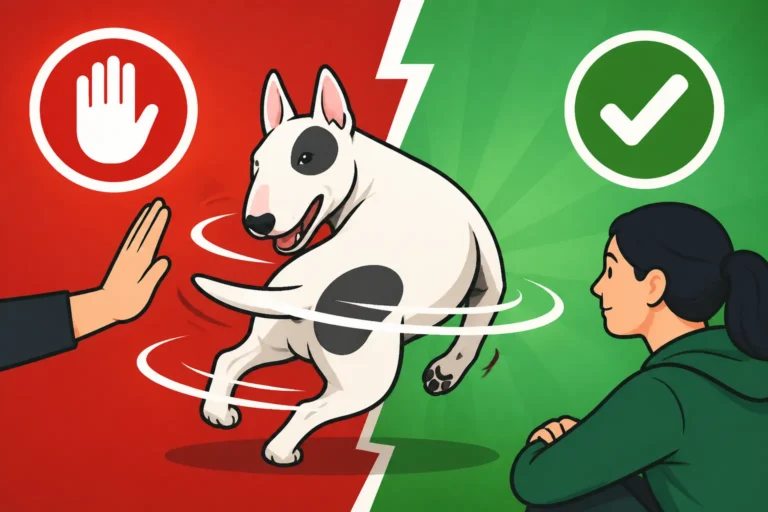
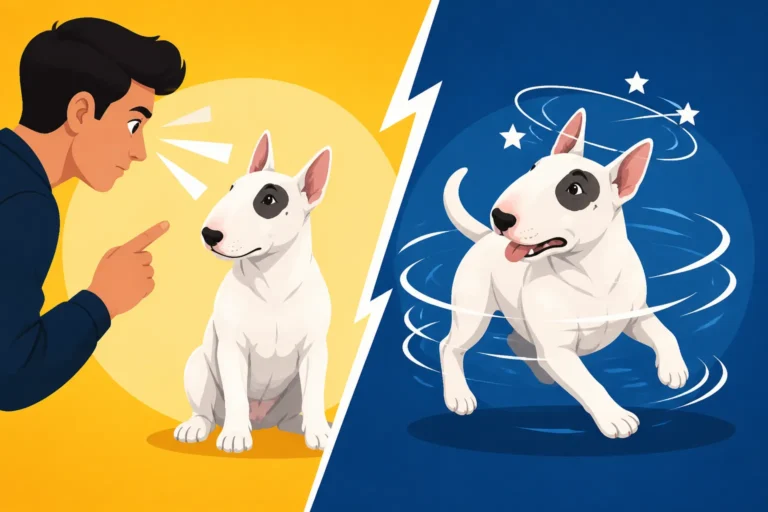
Anyone who has ever lived with a Bull Terrier knows their reputation as the "clown in a dog suit" is absolutely spot on. They are goofy, endlessly entertaining, and possess a unique sense of humor that can lighten any mood. This clownishness often manifests as boisterous, uninhibited play. They love to throw themselves into activities with gusto, whether it's chasing a ball, wrestling with another dog, or simply demanding attention from their favorite human. This exuberance, while charming, means they aren't always aware of their own size and strength. A Bull Terrier might greet you with a full-body lean or a joyful head-butt that, to an adult, is a charming display of affection, but to a small child, it could be overwhelming or even dangerous. They live in the moment, and that moment is usually about fun and engagement.
This playful, sometimes oblivious, nature is a double-edged sword when it comes to toddlers. They aren't malicious, ever, but their sheer love for life and lack of spatial awareness can lead to accidental bumps and tumbles. Imagine a toddler learning to walk, wobbling around, and then your Bull Terrier, overcome with excitement at your presence, barrels through the room. While the dog means no harm, the impact could easily send a tiny tot sprawling. Understanding this inherent trait is the first step in managing their interactions with vulnerable family members.
Physicality and Play Style
Bull Terriers are robust, muscular dogs, built like little tanks. They have incredible strength in their bodies and particularly in their jaws. Their play style, even with other dogs or older children, often involves body slamming, wrestling, and a fair amount of "mouthiness" – not aggressive biting, but using their mouths to interact and explore, much like puppies do. This isn't inherently bad; it's how they communicate and enjoy themselves within their own species. However, it's critical to acknowledge that this physical play style is entirely inappropriate for a toddler.
When a Bull Terrier wants to play, they don't hold back. They might nudge with their hard skull, push with their broad chest, or even jump up in excitement. These actions, which are endearing or manageable for an adult, can easily knock a toddler over or cause injury. Their powerful tails can also swing with surprising force. It’s not about aggression; it’s about their natural, high-impact way of engaging with the world. You might find yourself saying, "My dog would never intentionally hurt a fly!" and that's likely true, but accidents happen when there's a significant size and strength disparity combined with a rambunctious play style. It's why we need to be extra vigilant and proactive. For more on their playful nature, read How a Bull Terrier Plays With Children.
Natural Affection and Bonding
Despite their tough exterior and boisterous play, Bull Terriers are incredibly affectionate and bond deeply with their families. They are often described as "people dogs" who thrive on human companionship and want to be involved in everything you do. They can be incredibly gentle and loving when they choose to be, often seeking closeness, leaning on you, or snuggling up. This strong desire for connection is a wonderful trait, but it also means they want to be where you are, which, when you have a toddler, often means being where the toddler is.
They don't understand that a toddler is fragile or that their loving full-body tackle isn't always welcome. Their affection is unconditional and often expressed with great enthusiasm. A Bull Terrier might genuinely want to "comfort" a crying toddler by nudging them with their head, which could be misconstrued or simply too much for the child. This inherent sweetness means they often want to be gentle, but their physical attributes and lack of awareness can get in the way. It's a testament to their loving spirit, but also a call for responsible management. How a Bull Terrier Bonds to a Child delves deeper into these strong connections.
Toddler-Specific Challenges and Bull Terrier Responses
The dynamic between a Bull Terrier and a toddler isn't just about the dog's nature; it's equally about the toddler's unpredictable behavior and how the dog perceives and reacts to it. This interaction creates a unique set of challenges that need careful consideration.
Unpredictable Toddler Behavior
Toddlers are, by nature, bundles of unpredictable energy and curiosity. They experiment, they explore, and they don't yet understand boundaries or personal space, especially when it comes to animals. A toddler might:
- Grab, pull, or poke: Ears, tails, fur – anything within reach is fair game for a curious little hand.
- Scream, shriek, or cry suddenly: Loud, high-pitched noises can be startling or even frightening for a dog.
- Run erratically: Quick, jerky movements can trigger a dog's chase instinct, or simply get them underfoot.
- Offer food inappropriately: A child might drop food or try to feed the dog from their hand in a way that could lead to accidental nips.
- Crawl into the dog's bed or personal space: This can feel like an invasion to a dog, even one as tolerant as a Bull Terrier.
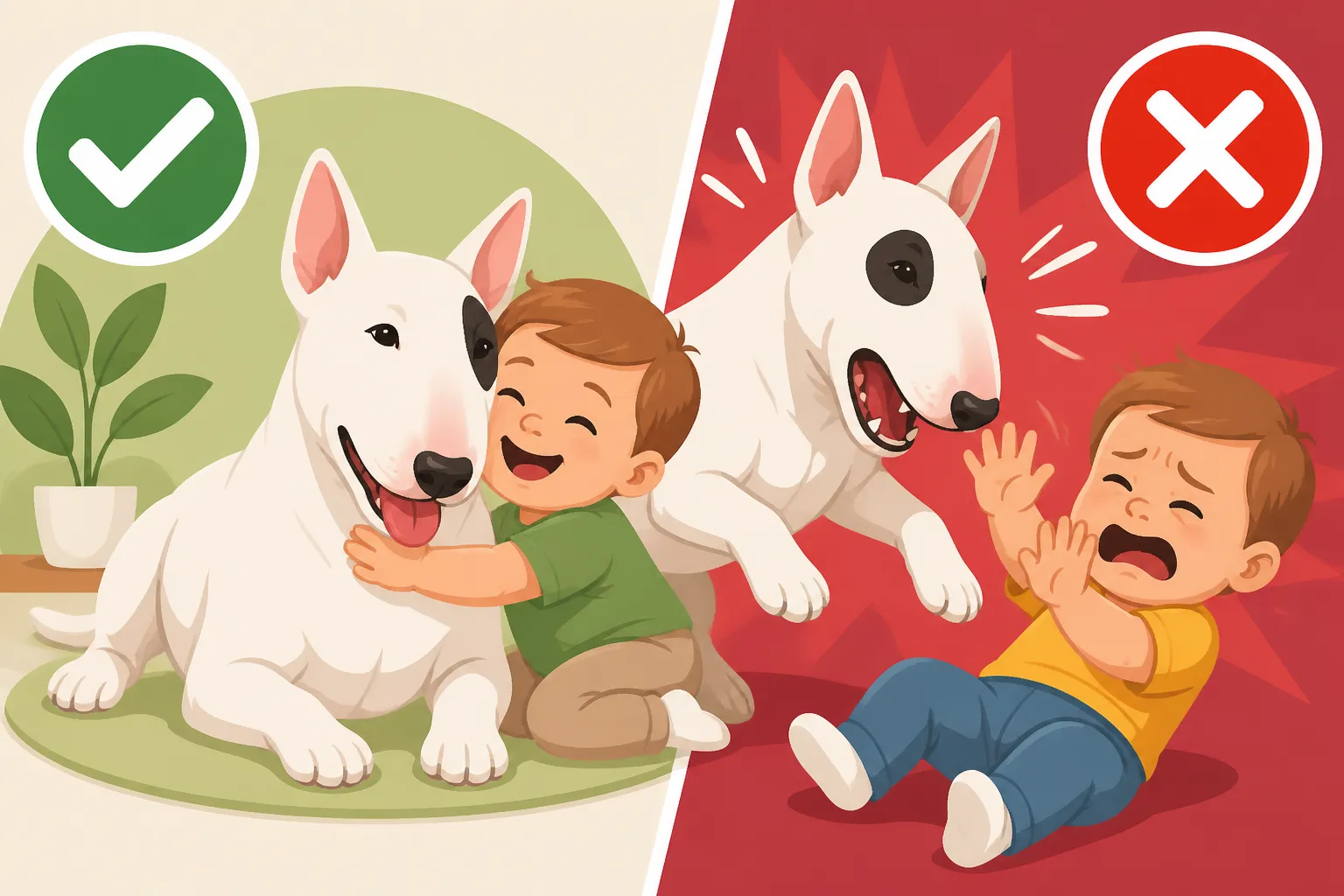
These behaviors, though innocent from a child's perspective, can be confusing, annoying, or even threatening to a dog. A Bull Terrier, even a very patient one, has its limits. A dog might tolerate a lot, but a sudden tug of an ear could cause a sharp, reflexive reaction that, while not aggressive in intent, could still harm a child. We, as adults, must be the ones to bridge this communication gap and protect both parties.
Bull Terrier's Tolerance Threshold
While Bull Terriers are generally known for their good nature and patience, especially with "their" people, every dog has a threshold. This threshold can be influenced by their individual temperament, past experiences, pain, or even just being tired or overstimulated. What one Bull Terrier might tolerate with a gentle sigh, another might react to with a low growl or a quick snap. It’s never a good idea to push any dog to its limits, especially when a child is involved.
A Bull Terrier might tolerate a certain amount of playful pushing or climbing from an older, more discerning child, but a toddler's clumsy, insistent advances are a different matter. The critical concern isn't just a full-blown attack, which is exceedingly rare in a well-socialized Bull Terrier. Rather, it's the subtle signs of stress or discomfort that often go unnoticed by busy parents until it's too late. A stiff body, a whale eye (where the whites of the eyes show), lip licking, or turning away are all signals that the dog is uncomfortable and needs space. Ignoring these signals can lead to escalation.
Managing High Energy Encounters
Bull Terriers, particularly younger ones, are renowned for their boundless energy. They need a significant outlet for this energy to be calm and settled indoors. If a Bull Terrier isn't sufficiently exercised, they can become restless, destructive, and even more prone to boisterous, impulsive behavior. This is a recipe for disaster when combined with a small child. An under-exercised Bull Terrier might see a running toddler as an invitation to a high-speed chase or an impromptu wrestling match.
Managing these high-energy encounters requires a proactive approach. It means ensuring your Bull Terrier gets plenty of physical and mental stimulation away from the toddler. Long walks, vigorous play sessions in the yard, puzzle toys, and training sessions are all crucial. A tired Bull Terrier is usually a well-behaved Bull Terrier, and certainly a safer one around small children. Never expect your Bull Terrier to "wear itself out" playing with a toddler; it's not safe, fair, or effective. For more insights into their activity needs, see How Much Exercise a Bull Terrier Actually Needs.
Strategies for a Harmonious Household
Creating a safe and harmonious environment where both your Bull Terrier and your toddler can thrive requires intentional effort, clear boundaries, and consistent management. This isn't about hoping for the best; it's about actively shaping the interactions.
Strict Supervision and Boundary Setting
This is perhaps the single most important strategy: never leave a Bull Terrier and a toddler unsupervised, even for a second. Accidents happen quickly, and even the most well-behaved dog can react unpredictably. This means if you need to step away for a moment, either the dog or the child needs to be in a separate, secure area.
Establishing clear physical boundaries is also vital. Baby gates are your absolute best friend. They allow the dog and child to see and hear each other, reducing feelings of isolation for the dog, while keeping them physically separate. Create "safe zones" for your Bull Terrier where they can retreat without being disturbed. This might be their crate, a bed in a separate room, or a space blocked off by a gate. Teach your toddler, as they get older, to respect these spaces. This is especially important during feeding times or when the dog is resting. Products like sturdy metal baby gates, easily found on Amazon, can be invaluable for creating these essential barriers.
Early Socialization and Training
A well-socialized and well-trained Bull Terrier is inherently safer and more adaptable. Socialization should begin in puppyhood, exposing your Bull Terrier to a variety of sights, sounds, people, and appropriate dog interactions in a positive way. This helps them develop confidence and good manners. While you can't socialize them with toddlers directly without strict control, you can expose them to children from a distance, rewarding calm behavior.
Consistent training is also non-negotiable. Your Bull Terrier needs to reliably respond to basic obedience cues like "sit," "stay," "leave it," and "down." These commands are not just tricks; they are safety tools. A strong "leave it" can prevent your dog from snatching food dropped by a toddler, and a reliable "stay" can keep them out of the way during a moment of chaos. Consider enrolling in online training programs, like those offered by BAXTER & Bella, which provide structured guidance and support for integrating a puppy into a family environment, including tips for living with children. This type of training helps build a strong foundation of communication and respect between you and your dog. Don't underestimate the power of these skills; they can truly make all the difference.
Here's a quick comparison of behaviors and management strategies:
| Bull Terrier Behavior Trait | Potential Toddler Interaction | Management Strategy |
|---|---|---|
| Boisterous Play | Accidental knocking over, roughhousing | Supervise constantly, separate during high energy, direct dog to appropriate play. |
| "Mouthy" Tendencies | Nipping during play or excitement | Teach "no bite" from puppyhood, redirect to toys, enforce calm interactions. |
| Strong Body Lean/Nudge | Toddler losing balance, being pushed | Teach "off" command, prevent jumping/leaning on toddler, use gates. |
| High Energy Levels | Chasing, overwhelming, restlessness | Ensure ample separate exercise, mental stimulation. |
| Curiosity/Desire to be Close | Invading toddler's space, hovering | Establish clear boundaries, teach "place" command, provide dog's own safe retreat. |
| Food Motivation | Snatching dropped food, accidental nips | Teach "leave it," feed dog separately, never allow toddler to feed dog. |
Creating Safe Zones for Both
Think of your home in terms of dog-free zones and toddler-free zones. This doesn't mean your Bull Terrier should be relegated to a corner, but it means intentional spaces where each can feel secure and undisturbed.
For your Bull Terrier, this often means their crate. A crate, when introduced positively, becomes a den, a safe haven where they can relax away from the hustle and bustle of a toddler. It's a place they can go for a nap, to chew a favorite toy, or just to decompress without a curious toddler poking them. It’s also crucial for managing separation when you can't actively supervise. Ensure the crate is in a quiet, undisturbed area. For the toddler, a playpen or a securely gated room can serve as their own safe haven, allowing them to explore and play without inadvertently stumbling into the dog's personal space, or vice-versa. Teaching both your dog and your child to respect these boundaries is key to a peaceful home. This strategy directly addresses concerns like Whether a Bull Terrier Should Be Supervised With a Toddler.
Recognizing Warning Signs and Seeking Help
Even with the best intentions and proactive strategies, it's vital for Bull Terrier owners to be attuned to their dog's body language and recognize when things might be going awry. Understanding canine communication is your first line of defense.
Identifying Stress Signals in Your Bull Terrier
Dogs communicate primarily through body language, and it's our responsibility to learn to read these subtle cues, especially around children. A Bull Terrier showing stress isn't necessarily aggressive, but they are signaling discomfort, and these signals should always be taken seriously. Look for:
- Lip licking or yawning (when not tired): These are often appeasement behaviors, indicating stress.
- Turning head away or avoiding eye contact: The dog is trying to disengage from the interaction.
- Stiff body posture or freezing: The dog is tense and uncertain, a precursor to a more assertive reaction.
- Whale eye: The whites of the dog's eyes are visible, indicating stress or fear.
- Growling (even a soft one): This is a clear warning sign. Respect it immediately. Never punish a growl, as it's a dog's way of saying "I need space." Punishing it can teach a dog to bite without warning.
- Tucking tail or crouching: Signs of fear or anxiety.
- Excessive shedding or panting: Can be stress-related.
Understanding these signals means you can intervene before an incident occurs. It means removing the dog or the child from the situation, not reprimanding the dog. Remember, your Bull Terrier isn't being "naughty" by showing these signs; they are communicating their needs. Ignoring them is a grave mistake. Consider looking into How Much a Bull Terrier Tolerates From a Child for specific scenarios.
When to Intervene and Separate
Intervention should happen at the first sign of discomfort from either the Bull Terrier or the toddler. If your dog is showing any of the stress signals mentioned above, or if your toddler is being overly boisterous, grabbing, or not respecting the dog's space, it's time to separate them. This isn't a punishment for the dog or the child; it's responsible management.
Immediate separation can involve directing your dog to their safe zone (e.g., their crate or another room), or moving your toddler to a gated play area. The goal is to diffuse the situation and allow both parties to calm down. It's also important to intervene if the play becomes too rough, even if both seem to be enjoying it. A Bull Terrier can easily become overstimulated, and what starts as playful wrestling can quickly escalate beyond safe boundaries for a child. Your role is to be the calm, consistent mediator who ensures physical safety and emotional well-being for both your furry and human family members.
Professional Guidance and Resources
If you find yourself struggling to manage the interactions, or if your Bull Terrier is consistently showing stress signals or reacting negatively to your toddler, do not hesitate to seek professional help. This is not a sign of failure; it's a sign of a responsible owner. A certified professional dog trainer or a veterinary behaviorist can observe your specific dynamics, identify triggers, and provide tailored strategies.
They can help you understand subtle body language, implement effective training techniques, and create a comprehensive safety plan. Sometimes, a fresh pair of eyes can spot something you've missed. Investing in professional guidance is an investment in the safety and peace of mind of your entire family. Never try to "fix" behavioral issues on your own if they involve potential harm to a child. Your family's well-being is paramount. For example, if you're dealing with problematic behaviors, you might eventually ask Whether a Bull Terrier Owner Should Hire a Behaviorist.
Preparing for the Reality of Coexistence
Bringing a Bull Terrier and a toddler together isn't just about managing moments; it's about a long-term commitment to a lifestyle that prioritizes safety, understanding, and proactive care for all members of your household. It's an ongoing process, not a one-time fix.
The Importance of a Proactive Approach
Being reactive means waiting for something to go wrong before you act. A proactive approach means anticipating potential issues and putting measures in place to prevent them. This includes:
- Educating yourself and your family: Everyone in the household, including older children, needs to understand dog body language, safety rules, and the importance of supervision.
- Dog-proofing your home: Just as you toddler-proof, you need to dog-proof for a toddler. This means ensuring your Bull Terrier's toys are not choking hazards for a toddler, and that the toddler doesn't have access to the dog's food or water bowls without supervision.
- Consistency: All rules and boundaries need to be consistently enforced by every adult in the home. Inconsistency confuses dogs and undermines training.
- Prioritizing your dog's needs: Even with a new baby, your Bull Terrier still needs their routine, exercise, and one-on-one attention to remain a happy, well-adjusted member of the family.
A proactive mindset reduces stress for both your Bull Terrier and your toddler, allowing them to grow up together in an environment of mutual respect and safety.
Lifestyle Adjustments for Success
Integrating a Bull Terrier and a toddler successfully often means making significant lifestyle adjustments. This isn't always easy, but it's essential.
- Time management: You will need to dedicate separate, focused time to both your dog and your child. This means scheduling dedicated walks and play sessions for your Bull Terrier, independent of the toddler.
- Altered routines: Your once free-flowing schedule will likely become more structured. Naps might be the only time your Bull Terrier gets uninterrupted couch cuddles, or early morning walks might become mandatory.
- Accepting limitations: You might not be able to do everything you once did. Dog parks or large gatherings might be off-limits for a while if your Bull Terrier struggles with overstimulation or displays guarding behaviors that could be an issue around children.
- Financial commitment: Safety equipment, professional training, and potentially even behavioral consultations are an investment. You need to be prepared for the financial aspect of ensuring a safe environment. What the First Year With a Bull Terrier Costs and What a Bull Terrier Costs Over Its Lifetime provide a comprehensive financial picture.
These adjustments are a reflection of your commitment to the well-being of all your family members. It requires patience, flexibility, and a deep understanding of both Bull Terrier and toddler development.
Long-Term Commitment to Safety
The relationship between your Bull Terrier and your toddler will evolve as both grow and mature. What works when a toddler is 18 months might need adjustment when they are 3 years old and more assertive. Your Bull Terrier's temperament might also change with age, or due to health issues. Therefore, the commitment to safety is a lifelong one.
Regularly reassess your household dynamics. Continue with ongoing training for your Bull Terrier, reinforcing good manners. Keep educating yourself on canine behavior and toddler development. Be honest with yourself about what is working and what isn't, and be prepared to adapt your strategies. Ultimately, it is possible for a Bull Terrier and a toddler to coexist beautifully, but it's never left to chance. It requires constant vigilance, thoughtful management, and an unwavering dedication to creating a secure and loving home for everyone. The peace of mind that comes from knowing you've done everything in your power to ensure their safety is immeasurable. A Bull Terrier With Children provides further context on the overall relationship.
Disclaimer
This article is for general informational purposes only and does not constitute professional advice. Laws, prices and regulations vary by location and change over time. Consult a qualified professional for guidance on your specific situation.