Signs a Bull Terrier Has Separation Anxiety
It’s truly heartbreaking to walk into your home after a long day and find it in shambles – chewed door frames, a sodden carpet, or a crate that looks like it’s been in a wrestling match. You love your Bull Terrier more than words can say, but these incidents leave you wondering if they're just being a mischievous clown or if something deeper is at play. This guide aims to help you recognize the true signs of separation anxiety in your Bull Terrier, differentiating between normal rambunctiousness and genuine distress, so you can start finding solutions.
The Subtle Whimpers Versus the Full-Blown Meltdown
When your Bull Terrier is left alone, their reaction can range from quiet agitation to a full-blown panic. Understanding these vocalizations, or even the lack thereof, is often the first clue to discerning if separation anxiety is brewing. It’s not just about noise; it’s about the context and intensity.
Vocalizations That Go Beyond Normal Canine Chat
We all know Bull Terriers can be vocal. They might grumble when they want attention, bark at a squirrel outside, or let out a happy howl when you return. But with separation anxiety, the vocalizations take on a distinct, distressed quality that only occurs when they are left alone or anticipate you leaving. This isn't just expressing boredom or an alert bark; it's a plea.
Imagine your neighbor leaving you a polite (or not-so-polite) note about your Bull Terrier's "constant barking." You might shrug it off, thinking they just miss you. But if this barking, whining, or howling is incessant from the moment you leave until you return, or for long stretches in between, that’s a red flag. It’s a sustained protest against solitude. Whining can be low and mournful, almost like crying, while barking often sounds frantic and repetitive, lacking the purposeful woof of an alert bark. Howling, which some Bull Terriers are prone to, might echo through the neighborhood, sounding truly mournful and prolonged. These sounds aren't about something outside the house; they are about you being outside the house.
The Silence That Can Be Just as Worrying
Sometimes, a Bull Terrier suffering from separation anxiety might not make a peep. This can be deceptive, making owners think everything is fine, especially if they haven't set up a camera. However, silence doesn't always mean calm. For some Bull Terriers, anxiety manifests internally, and you might come home to a dog that seems subdued, perhaps even withdrawn.
You might notice signs of intense panting or excessive drooling, even though the house temperature is comfortable. This isn't just a bit of slobber; it's often enough to soak their chest or leave damp spots on the floor. Pacing is another silent indicator. A Bull Terrier might walk restless circles, back and forth, unable to settle. They might even try to hide, squeezing into small spaces or cowering in a corner, indicating they are overwhelmed and trying to self-soothe in a distressed way. These silent struggles can be just as heartbreaking as the noisy ones, and it's why having a way to observe your Bull Terrier when you're gone – even a simple webcam – can be incredibly illuminating. What seems like calm might actually be a freeze response to intense stress, leaving them utterly drained by the time you walk through the door.
Destructive Tendencies and Escape Attempts
This is often the most visible and frustrating symptom for Bull Terrier owners. When a Bull Terrier is anxious about being alone, their stress can manifest in highly destructive behaviors, often directed at the very things that separate them from you or objects that strongly smell of you. This isn't naughty behavior; it's panic.
Chewing and Digging Targeted at Exits or Personal Items
A normal Bull Terrier puppy will chew. They explore the world with their mouths, and they go through teething. But a Bull Terrier with separation anxiety directs its chewing with a desperate intent. Instead of just munching on a forgotten shoe, they'll target doorframes, windowsills, or the bars of their crate, often focusing on the areas where they know you exited. It's an attempt to break free, to follow you, to alleviate the crushing feeling of abandonment. What a Bull Terrier Chews When Left Out gives more detail on the typical targets.
You might come home to deep gouges in wooden doors, splintered window frames, or scratched-up paint around entry points. If crated, the destruction might focus on the crate door or the bottom, with metal bent or plastic chewed to bits. This isn't casual chewing; it’s frantic, often causing damage that is expensive to repair and potentially harmful to your dog. They might also fixate on items that carry your scent, like your laundry pile, a blanket from your bed, or shoes you recently wore. It's a primal effort to feel closer to you, even if it means destroying the item in the process. This kind of targeted, intense destruction is a clear indicator of distress, not just boredom.
The Desperate Need to Get Out (or to You)
Beyond chewing, a Bull Terrier with separation anxiety might try actively to escape. This isn't just about breaking out of their crate; it can involve serious, dangerous attempts to get out of the house entirely. They're not trying to run away from home; they're trying to get to you.
I've heard countless stories of Bull Terriers bending metal crate bars until they resemble modern art, or even breaking out of heavy-duty crates meant for much larger, stronger dogs. Sometimes, they'll attempt to jump through windows, especially if you live in an apartment where they can see you leave. This often results in cuts, scrapes, or more severe injuries from broken glass. If left in a yard, they might dig relentlessly under fences, climb over them, or even chew through wooden panels, all driven by the intense desire to reunite. These escape attempts are incredibly dangerous, not only risking injury to your Bull Terrier but also potentially leading to them getting lost or hit by a car. This isn’t a dog being defiant; it’s a dog in a full-blown panic attack, desperate to end the isolation. Understanding this helps you see it through their eyes.
Potty Accidents and Other Less Obvious Clues
While destructive chewing and frantic vocalizations are often the most obvious signs, separation anxiety can also manifest in more subtle, yet equally distressing, ways. These might be overlooked or misattributed, but they are crucial pieces of the puzzle.
House Soiling Strictly When Alone
One of the most frustrating aspects of separation anxiety for owners can be finding urine or feces inside the house, especially from a dog that is otherwise perfectly house-trained. The key here is the context. If your Bull Terrier has accidents only when left alone, and holds it perfectly well when you're home or if someone else is watching them, it's highly likely to be anxiety-related, not a house-training lapse or a medical issue.
This isn't your Bull Terrier being spiteful; it's often an involuntary physiological response to extreme stress. The anxiety causes them to lose control of their bladder or bowels. You might find puddles or piles in prominent places, like right by the front door or in the middle of the living room, rather than discreetly hidden. This behavior can be heartbreaking because it feels like a step backward in their training, but it's essential to remember it's a symptom of panic. A Bull Terrier who is truly panicked cannot help themselves. If you suspect this, consult your vet to rule out any underlying medical conditions first, but if those are clear, then it's time to consider separation anxiety as the root cause.
Self-Harm and Obsessive Behaviors
Beyond the visible destruction of your home, your Bull Terrier might turn their anxiety inward, exhibiting behaviors that can lead to self-harm or simply seem odd. These behaviors are often self-soothing mechanisms, even if they're detrimental in the long run.
Excessive licking, particularly of their paws, is a common sign. They might lick so intensely that the fur becomes stained with saliva, or even create raw, inflamed patches on their skin. This is distinct from casual grooming; it's repetitive and compulsive. Some Bull Terriers might also engage in unusual behaviors like incessant pacing, continuously circling the room, or even repetitive tail chasing or spinning. Why a Bull Terrier Chases Its Tail explores this in more detail, as it can also have other medical causes, but when linked to being alone, it often points to anxiety. They might also appear to be "trancing" or staring blankly at walls or corners, which can be an anxious coping mechanism. If you find your Bull Terrier exhibits these behaviors only when you're not around, it's a strong indicator that they are struggling with intense emotional distress, seeking any repetitive action to try and calm their overstimulated nervous system. These self-soothing behaviors can lead to skin infections, sores, or even physical injury if not addressed.
The Crucial Timing: When Do These Signs Appear?
One of the most important diagnostic tools for separation anxiety is observing when these behaviors occur. The timing, particularly in relation to your departure and return, is critical to distinguishing true separation anxiety from general naughtiness, boredom, or other behavioral issues.
Pre-Departure Cues and Anticipatory Anxiety
A Bull Terrier with separation anxiety often starts showing signs of distress before you even walk out the door. They become acutely aware of your routine and the "cues" that signal your impending departure. This is called anticipatory anxiety, and it's a huge tell.
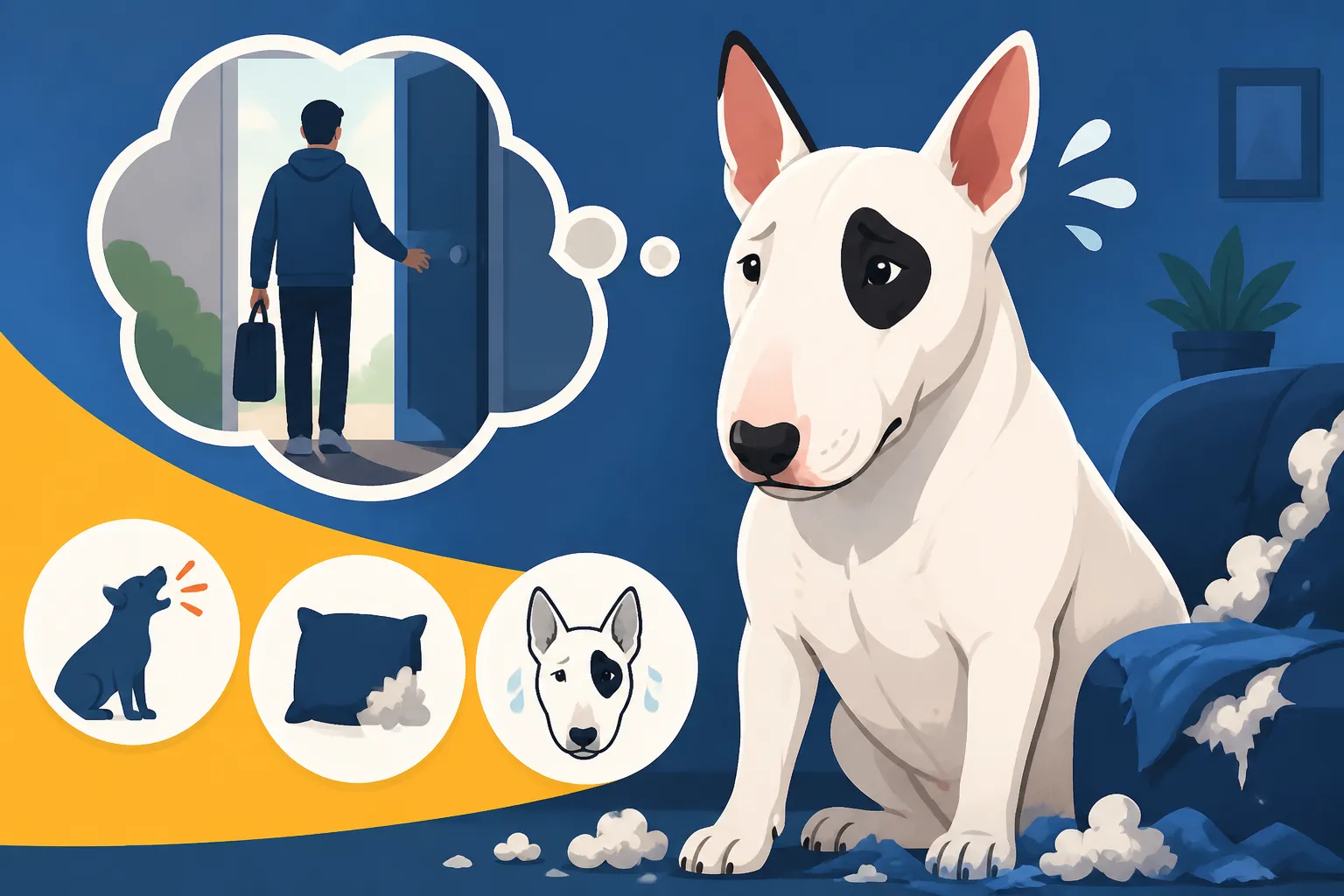
Think about your morning routine: picking up your keys, grabbing your coat, putting on your shoes, or even just showering. Does your Bull Terrier start to become clingy? Do they follow you from room to room, perhaps whining softly or trying to block your path to the door? They might start panting, pacing, or even drop into a submissive posture. Some will start to tremble or try to get onto your lap, desperately seeking reassurance. I’ve known owners who say their Bull Terrier starts panicking the moment they put on their work uniform, even if it’s hours before they actually leave. This heightened awareness and distress before you've even gone is a profound sign of their impending struggle. It shows they anticipate the isolation and the panic it brings, and they start to unravel long before you're out of sight.
Immediately After You Leave and Upon Return
The real moment of truth, and often the most intense manifestation of separation anxiety, occurs right after you leave and then again when you return. This is where a camera truly becomes your best friend. Something simple from Amazon that you can check on your phone can make all the difference.
When you first close the door, a Bull Terrier with separation anxiety often erupts into a flurry of activity: intense vocalizations, immediate attempts at destruction or escape, or frantic pacing. This isn't a gradual build-up; it's an instantaneous reaction to your absence. They are not waiting a few minutes to decide if they're bored; the panic hits them instantly. How Long a Bull Terrier Lasts Alone Before It Chews is often not long at all if separation anxiety is the issue.
Upon your return, the greeting can also be indicative. While all Bull Terriers are excited to see their people, one with separation anxiety might greet you with an almost frantic, over-the-top intensity. They might jump excessively, whimper, lick incessantly, or even lose bladder control in their excitement, unable to contain their relief that you’ve come back. This isn’t just a happy welcome; it’s a desperate release of pent-up anxiety. If you find that your Bull Terrier is calm and relaxed when you're home but transforms into a wreck the moment you're gone, it's a very clear signal that you're dealing with separation anxiety.
Here's a quick table to help differentiate some common behaviors:
| Behavior | Could Be Boredom/Naughtiness | Likely Separation Anxiety |
|---|---|---|
| Vocalizations | Occasional bark at outdoor stimuli, attention-seeking whines | Incessant howling, frantic barking, mournful whining, only when alone |
| Chewing/Destruction | Chewing on available toys, random household items | Targeted at exits (doors, windows, crate), items with owner's scent, attempts to escape |
| House Soiling | Inconsistent training, medical issue, marking behavior | Only occurs when left alone, even in a perfectly trained adult dog |
| Pacing/Restlessness | Seeking attention, mild boredom, wanting a walk | Continuous, frantic pacing, circling, unable to settle, when alone |
| Drooling/Panting | Hot weather, excitement | Excessive, unrelated to temperature or exercise, when alone |
| Pre-Departure Cues | No specific reaction | Becomes clingy, whines, trembles, tries to block you from leaving |
| Upon Return | Happy greeting, wagging tail | Frantic, over-the-top greeting, potential submissive urination |
Recognizing these signs is the first, vital step towards helping your beloved Bull Terrier. It's tough to see them in distress, but with understanding and the right approach, you can work towards building their confidence and helping them feel safe even when you're not physically present. Sometimes this might mean seeking professional guidance. Whether a Bull Terrier Owner Should Hire a Behaviorist can be a great next step, as they can provide tailored plans. Resources like BAXTER & Bella can offer foundational positive reinforcement training that helps build a dog's confidence and a strong bond, which is crucial for tackling anxiety. You might also want to look into solutions like durable toys, readily available on Amazon, which can help redirect some of that nervous energy into appropriate outlets. Remember, a worried dog isn't trying to be bad; they're trying to cope. Whether a Crate Helps a Bull Terrier Left Alone is another important consideration, as sometimes a crate can exacerbate anxiety if not introduced properly.
Disclaimer
This article is for general informational purposes only and does not constitute professional advice. Laws, prices and regulations vary by location and change over time. Consult a qualified professional for guidance on your specific situation.