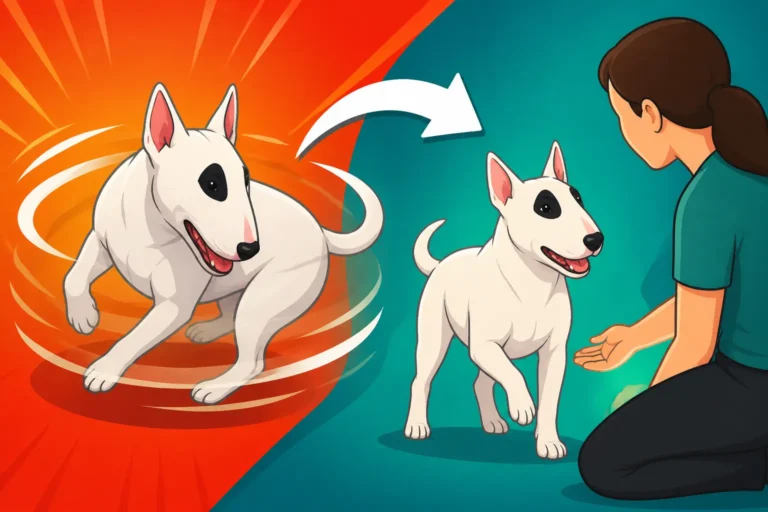
Whether a Bull Terrier’s Trancing Should Be Stopped
It’s a peculiar sight that can make any Bull Terrier owner pause: your usually rambunctious, clownish companion suddenly stiffens, moves in slow motion, and stares blankly at a wall or a curtain. This behavior, often called "trancing" or "ghost-walking," frequently leaves owners confused and sometimes even worried. This guide will help you understand what trancing is, why Bull Terriers do it, and whether you should ever interrupt your quirky canine's moment of Zen.
What Exactly Is "Trancing" in Bull Terriers?
For many Bull Terrier owners, witnessing trancing for the first time can be a bit unsettling. It’s so unlike their usual boisterous selves that it often sparks concern. But rest assured, this isn't typically a sign of distress or a medical emergency, but rather a unique, breed-specific quirk.
The Peculiar Stance and Slow Motion
When a Bull Terrier "trances," the transformation is quite noticeable. Their movements become incredibly slow and deliberate, almost as if they are moving through thick molasses or in a slow-motion film. Their head will often be lowered, sometimes brushing against a low-hanging object like a curtain, a houseplant, or even the edge of a tablecloth. Their eyes might take on a glazed, faraway look, appearing unfocused and distant. It's as if they've entered their own little world, completely absorbed by the tactile sensation of whatever is gently touching their head or back.
Imagine a scene: your Bull Terrier, who moments ago was tearing through the house with zoomies, suddenly approaches a floor-length curtain. Instead of sniffing it or pushing it aside, they will slowly, almost imperceptibly, lower their head and begin to walk, inch by inch, allowing the fabric to brush along their back, neck, and head. They might stand there for several minutes, utterly still, seemingly in a hypnotic state. This isn't them trying to hide, or being naughty; it’s a distinct behavior that is both fascinating and, frankly, a bit endearing once you understand it. It's a quiet, introspective moment for an otherwise incredibly outgoing breed.
Is It a Seizure or Something Else?
One of the most common anxieties for new Bull Terrier owners witnessing trancing is the fear that it might be a seizure. This is a very natural concern, especially if you’ve never encountered trancing before. However, it's crucial to understand the key differences. A true seizure involves uncontrolled muscle activity, loss of consciousness, or a dazed, disoriented "post-ictal" phase afterward. Your dog might drool, paddle their legs, or even lose bladder or bowel control.
Trancing, on the other hand, lacks all of these dramatic indicators. Your Bull Terrier remains fully conscious, aware of its surroundings, even if their eyes seem distant. There’s no muscle rigidity, no falling down, and no disorientation afterward. They simply "snap out of it" and return to their normal selves, often with a shake and a happy wag. It’s a quiet, calm event, not a violent neurological episode. If you're ever in doubt about a specific behavior, always consult your veterinarian, but knowing the typical signs of trancing can offer a lot of peace of mind. For other concerning behaviors, it can be helpful to read about How a Bull Terrier Seizure Differs From a Spin, which further highlights the distinct nature of different movements.
Why Do Bull Terriers Trance? Unraveling the Mystery
The exact "why" behind trancing remains a delightful mystery, even among Bull Terrier enthusiasts and canine behaviorists. There isn't a definitive scientific answer, but several compelling theories offer insight into this charming quirk. It's not a behavior that dogs learn, but rather an innate response that seems to bring them a unique form of quiet contentment.
Seeking Sensory Input
The most widely accepted theory suggests that trancing is primarily a response to a specific type of sensory input. Think about it: Bull Terriers almost always choose soft, light objects that brush gently against their sensitive skin, particularly around their head, neck, and back. Curtains, delicate house plants like palm fronds, or even low-hanging clothing on a rack are common targets. It seems they actively seek out these textures and the feeling they provide.
Bull Terriers have a very short, smooth coat, which might make them particularly sensitive to tactile sensations. Their unique skull shape, often referred to as an "egg head" or "downface," with a strong, broad neck, might also play a role, allowing for a comfortable and immersive experience as they push into or under objects. It’s almost like a doggy massage, providing a soothing, pleasant pressure. This isn't just a random act; it's a deliberate seeking out of a sensation that appears to be deeply satisfying to them. You might even find them nudging their way into a small space just to get that specific feeling. They aren't trying to destroy the curtain or plant, they're simply enjoying the delicate caress.
A Form of Self-Soothing or Meditation
Another fascinating perspective is that trancing serves as a form of self-soothing or even a meditative state for your Bull Terrier. In a world full of exciting sights, sounds, and smells, a Bull Terrier's mind can be quite busy. Trancing offers a moment of quiet focus, a chance to tune out the external distractions and simply be. It's a voluntary "time out" that seems to calm their system.
Consider how humans might seek quiet moments for mindfulness or how some people find repetitive, gentle movements incredibly relaxing. It's possible that the consistent, light pressure of a curtain or plant on their skin provides a similar calming effect for Bull Terriers. It's not a sign of boredom or anxiety, but rather a positive, self-initiated behavior. You'll rarely see a Bull Terrier trance when they're stressed or overstimulated; it usually happens in a relaxed, safe environment when they are comfortable enough to indulge in this unique pleasure. It’s their way of hitting the reset button, taking a moment of peace before returning to their usual antics.
Should You Interrupt Your Bull Terrier's Trance?
This is the big question many Bull Terrier owners grapple with, often out of concern or simply curiosity. Given that trancing is generally a benign and enjoyable experience for your dog, the consensus leans heavily towards leaving them to it.
The "Hands-Off" Approach
For the most part, interrupting a trancing Bull Terrier is unnecessary and can even be counterproductive. When your dog is in this state, they are completely focused on the sensory experience, and a sudden interruption can be startling. Imagine someone suddenly shaking you awake from a deep sleep or pulling you out of a meditative state – it can be jarring and unpleasant. Your Bull Terrier might jump, look confused, or even give a startled bark.
Since trancing is harmless and often quite brief, typically lasting only a few minutes, there's little reason to cut their moment of bliss short. Letting them complete their trance allows them to fully enjoy and benefit from this self-soothing behavior. It’s part of their unique charm, and respecting it reinforces a positive relationship built on understanding their individual quirks. Observing them in their trance can even be a quiet, heartwarming moment for you as an owner, witnessing a rare stillness in your energetic companion.
When Gentle Interruption Might Be Needed
While a "hands-off" approach is generally recommended, there are a few specific scenarios where a gentle interruption might be wise for your Bull Terrier's safety or to protect your home. For example, if your Bull Terrier decides to trance under a delicate antique lace curtain that’s on the verge of tearing, or against a very unstable piece of furniture that could topple over, you might need to intervene. Similarly, if they're trancing in a high-traffic area where they could be accidentally tripped over, or are blocking a doorway, a gentle nudge might be in order.
In such cases, the key word is gentle. Avoid sudden loud noises, abrupt movements, or physical force. Instead, try a soft, calm verbal cue like "Okay, let's go" or their name spoken quietly. You can also try a very light, reassuring touch to their shoulder or flank, slowly bringing them out of their focused state. The goal is to gently redirect them without causing alarm or associating their trancing with punishment. They're not doing anything wrong, they're just enjoying a sensory experience. If you find your Bull Terrier frequently gravitates to unsafe or fragile objects for trancing, you might consider gently re-arranging your home to offer safer alternatives, or using child-proof latches on things they might push into, like cabinet doors, which can be found easily on Amazon.
Distinguishing Trancing from Other Bull Terrier Behaviors
Bull Terriers are known for their strong personalities and sometimes unusual behaviors. It's important for owners to learn to differentiate between their quirky trancing, more concerning compulsive behaviors like spinning, and genuine medical issues such as seizures. Mistaking one for the other can lead to unnecessary worry or, worse, overlooking a real problem.
Trancing vs. Tail Chasing or Spinning
One common confusion arises when comparing trancing to behaviors like compulsive tail chasing or spinning. While both can appear unusual to an outsider, their underlying causes and manifestations are vastly different. Trancing is characterized by its slow, deliberate, almost hypnotic quality. The dog is calm, focused, and seems to be enjoying a tactile sensation. There's no frantic energy, no self-mutilation, and no signs of distress. It's a serene, internal experience.
In stark contrast, persistent tail chasing or spinning is often a sign of a compulsive disorder or a neurological issue. These behaviors are typically frantic, repetitive, and difficult to interrupt. A Bull Terrier engaged in compulsive spinning might circle relentlessly, sometimes to the point of exhaustion, injury, or even causing damage to its own tail. It is not a calm, self-soothing act but often indicates anxiety, boredom, or even a medical problem like a seizure disorder. If your Bull Terrier is spinning excessively, especially if it seems uncontrollable or leads to self-harm, that’s a clear signal to consult your veterinarian. This is a much more serious concern than the placid act of trancing, and you can learn more about it in articles like Why a Bull Terrier Chases Its Tail or Redirecting a Bull Terrier That Has Started Spinning.
Trancing vs. Attention-Seeking
It’s easy for owners, especially those new to the breed, to misinterpret trancing as an attention-seeking behavior. After all, when your dog does something out of the ordinary, our first instinct is often to react, which can inadvertently reinforce behaviors if the dog is seeking attention. However, trancing typically isn't a plea for your gaze or interaction.
Bull Terriers that are seeking attention will usually employ more direct tactics: nudging your hand with their head, pawing at you, whining, barking, or bringing you a toy. These are clear attempts to engage you. When a Bull Terrier is trancing, they are usually in their own world, seemingly oblivious to your presence, or at least uninterested in soliciting a response. They often pick out-of-the-way spots for their trances, rather than placing themselves squarely in your line of sight. If you approach a trancing Bull Terrier, they might slowly acknowledge you but won't typically try to intensify the behavior to get more of your focus. Because trancing is a self-rewarding sensory experience, it doesn't need external validation. If you're concerned about general attention-seeking or other behavioral issues, platforms like BAXTER & Bella offer online training resources that can help you understand and manage your Bull Terrier's communication methods more effectively, teaching them appropriate ways to interact.
Living with a Trancing Bull Terrier: Practical Tips
Embracing your Bull Terrier's unique trancing habit is part of the joy of owning this breed. Once you understand it’s a normal, harmless behavior, you can even find it quite charming. However, a little preparation and observation can ensure that both you and your dog enjoy this quirk safely and without stress.
Creating a Safe Trancing Environment
Since your Bull Terrier is likely to seek out specific types of objects for their trances, you can help them by making these spots safe and appealing. Take a look around your home: where does your Bull Terrier typically choose to trance? Is it under the long drapes, behind a potted plant, or near a low-hanging blanket? Once you identify these areas, you can take a few simple steps.
First, remove any fragile or valuable items from these zones. A Bull Terrier, even in its trance state, is a powerful dog, and while they are being gentle, accidents can happen if something delicate is in their path. For instance, if they love trancing under a specific curtain, ensure there are no breakable lamps or decorative items nearby. You might also consider introducing new, safe "trance-friendly" objects. A soft throw blanket draped over a low chair, or even a sturdy, large houseplant (ensure it's non-toxic, of course) can provide that appealing sensory input without risk. You can find sturdy, chew-proof dog beds and blankets on Amazon that might offer a similar tactile comfort without the risk of damage to your home. Providing a cozy, designated spot might even encourage them to trance there, making it easier for you to manage their environment.
Observing for Changes or Concerns
While trancing itself is generally benign, it’s always a good practice to be an observant pet parent. Keep a mental note of your Bull Terrier’s trancing habits. How often do they trance? How long does each episode last? Do they always choose the same type of object? Any sudden or significant changes in this behavior could be worth noting. For instance, if your Bull Terrier suddenly starts trancing for much longer periods, becomes withdrawn, or exhibits any signs of discomfort before, during, or after trancing, it warrants a closer look.
Also, be mindful of their general health. Bull Terriers can be prone to certain health issues, and sometimes subtle changes in behavior can be an early indicator of a problem. For example, if you notice them trancing more frequently and appearing distressed, it might be a symptom of underlying pain or anxiety. A strong emphasis on routine health checks, such as those covered in The Yearly Urine Test Every Bull Terrier Owner Should Book or being aware of common issues like A Bull Terrier's Skin Is Its Weakest Point, ensures that any subtle shifts in behavior aren't masking something more serious. If you have any concerns that the trancing is changing or accompanied by other worrying symptoms, don't hesitate to consult your veterinarian. They can help rule out any medical causes and offer reassurance or further guidance.
Here's a quick comparison of trancing with other Bull Terrier behaviors that sometimes cause confusion:
| Behavior | Key Characteristics | Duration | Dog's State of Mind | Typical Triggers | Should You Interrupt? |
|---|---|---|---|---|---|
| Trancing | Slow, deliberate movement; glazed eyes; head lowered/rubbing against soft objects; calm and focused. | Minutes | Calm, focused, self-soothed, enjoying tactile sensation. | Soft, low-hanging objects (curtains, plants). | Generally no, unless safety is a concern. |
| Tail Chasing/Spinning | Frantic, repetitive circling; often hard to interrupt; can lead to self-harm. | Minutes to hours, or sporadic short bursts. | Anxious, compulsive, sometimes distressed. | Boredom, stress, neurological issues, attention-seeking. | Yes, gently redirect and consult vet if persistent. |
| Seizure | Uncontrolled muscle contractions (paddling, rigidity); loss of consciousness; drooling; post-ictal disorientation. | Seconds to minutes (active phase). | Unconscious, disoriented (post-ictal). | Underlying neurological conditions, toxins, idiopathic epilepsy. | No, ensure safety and seek vet care immediately. |
This table should help clarify the distinctions between these very different manifestations. Understanding these differences will empower you to respond appropriately and ensure your Bull Terrier receives the right care and understanding.
Disclaimer
This article is for general informational purposes only and does not constitute professional advice. Laws, prices and regulations vary by location and change over time. Consult a qualified professional for guidance on your specific situation.