Living With a Bull Terrier That Body Slams You for Fun
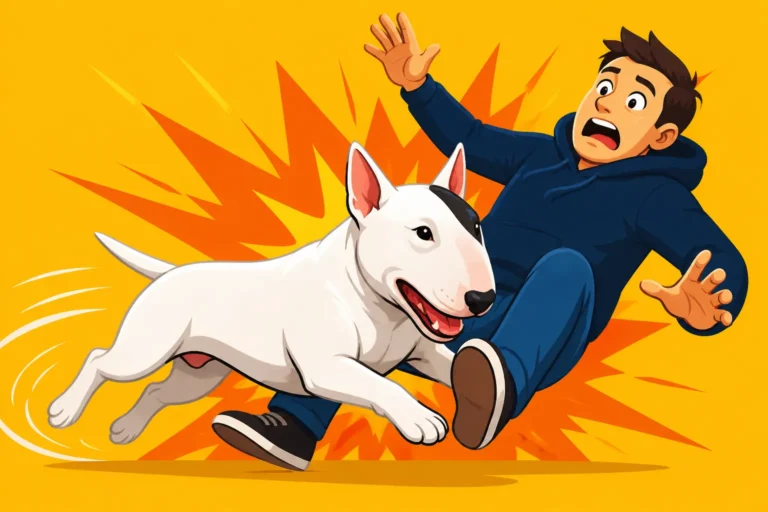
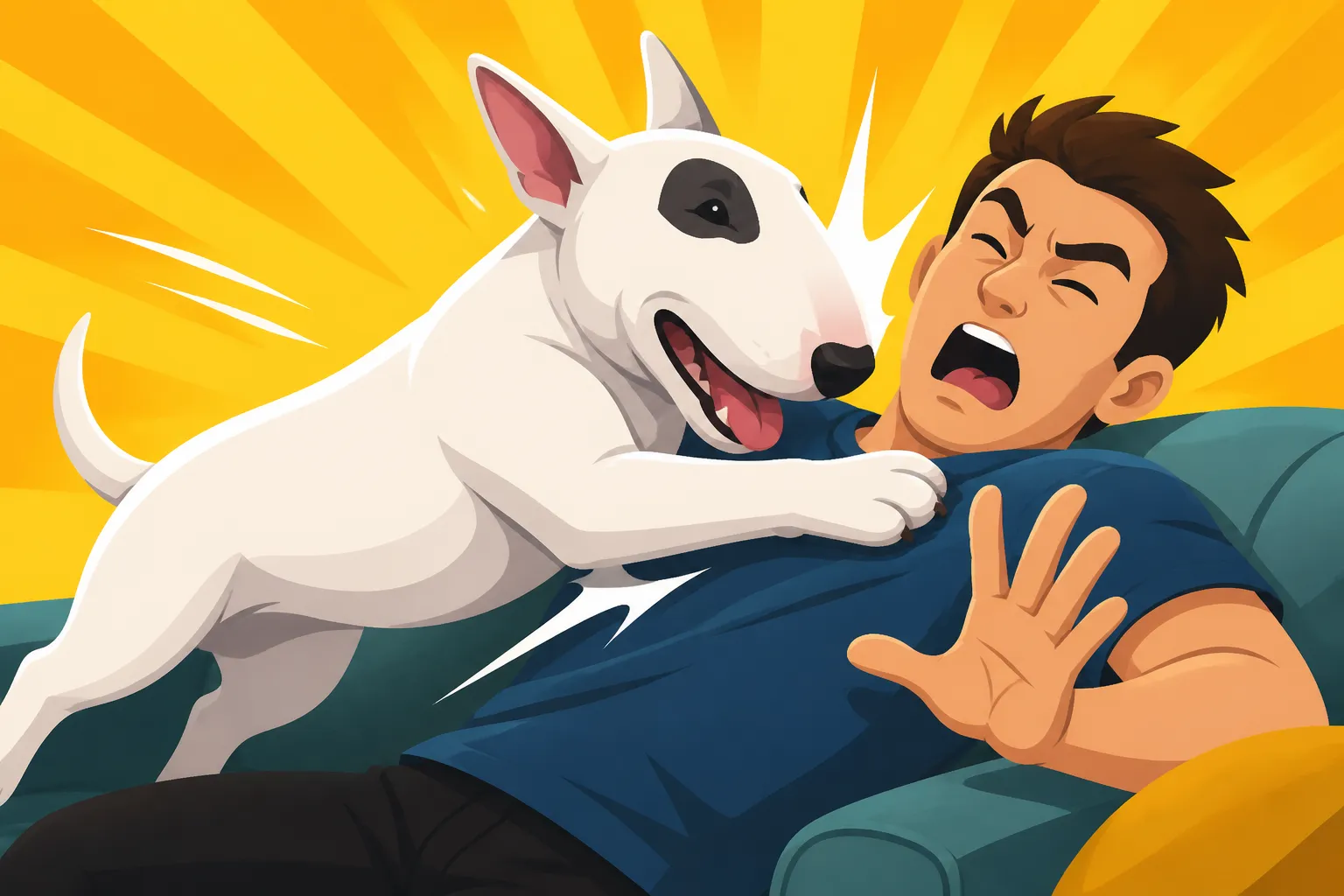
The moment your Bull Terrier careens around the corner, eyes gleaming with joy, and launches their solid, muscular form directly into your legs, it’s a feeling many of us know all too well. It's their unique, full-body declaration of affection, a testament to their exuberance, but let's be honest, it can also send you staggering, spill your coffee, or even knock you completely off balance. This guide is here to help you understand why your beloved Bull Terrier expresses their love with such physical abandon and, more importantly, how to channel that powerful enthusiasm into safer, more polite greetings and interactions for everyone involved.
Understanding the Bull Terrier's Unique Affection
Bull Terriers are renowned for their larger-than-life personalities, and this extends directly to how they show affection. They aren't subtle creatures; when they love you, they do it with every ounce of their being. This often translates into highly physical displays that can catch unsuspecting owners and guests off guard. It's not aggression, nor is it defiance – it's just pure, unadulterated Bull Terrier joy, poorly managed.
The Bull Terrier's Inner Clown
Anyone who has spent time with a Bull Terrier will tell you they possess an almost unparalleled sense of humor and a deep desire to entertain. They are truly Why a Bull Terrier Is Called a Clown, and their antics often involve their entire body. This playful spirit means they see interactions, even greetings, as an opportunity for fun and games. For them, a full-speed body check might just be their version of a hilarious game, especially if it gets a reaction from you.
This clownish nature can make them incredibly endearing, but it also means they don't always consider the implications of their actions. They're living in the moment, driven by their enormous hearts and playful instincts. They simply want to engage, to be close, and to make you smile, or at least acknowledge their presence, in the most dramatic way possible. Understanding this core part of their personality is the first step in managing their physical enthusiasm.
They thrive on interaction and often equate physical contact with positive attention. If a body slam consistently gets them a laugh, a pat, or even a stern "No!", in their minds, they've achieved their goal: they've gotten your attention. This reinforces the behavior, making it more likely to happen again in the future, even if your reaction was meant to deter them.
Affectionate Nudges, Not Nasty Shoves
It's crucial to distinguish a Bull Terrier's body slam from any form of aggression or dominance. A true body slam from a Bull Terrier is almost always rooted in affection and over-excitement, not malice. They aren't trying to hurt you; they're trying to connect, to literally lean into your space and communicate their happiness at your presence. This is part of How Physically Affectionate a Bull Terrier Is.
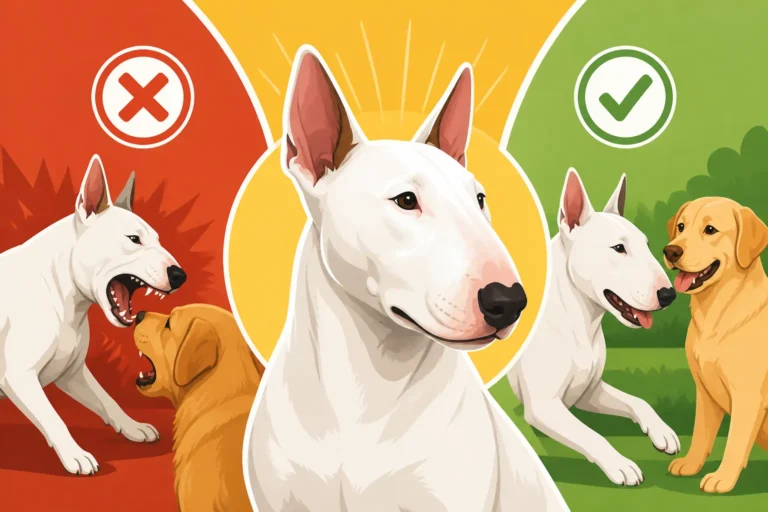
Their entire body language usually reflects this: a wagging tail, loose posture, maybe a play bow, and that characteristic Bull Terrier grin. If there were any signs of stiff body language, growling, or snapping, then you would be dealing with a completely different issue requiring a different approach. But with the typical Bull Terrier body slam, it's all about an overwhelming surge of friendly emotion that they just haven't learned to contain gracefully.
They naturally Why a Bull Terrier Shows Affection With Its Whole Body, using their powerful physique to express their feelings. This might involve leaning against you while you're standing, plonking their head in your lap, or, yes, a full-on body slam. It’s their way of saying, "You're here! I'm so happy! Let's play/cuddle/be together right now!" They don't have the delicate sensibilities that some other breeds possess, preferring direct, physical communication.
Why a Bull Terrier Leans on People
The body slam is often an amplified version of a more common Bull Terrier behavior: leaning. If your Bull Terrier isn't slamming you, they're likely leaning on you. They will press their side against your legs when you're standing, often so heavily that you find yourself bracing to stay upright. When you're sitting, they might just flop their entire body across your lap, or even just push their head firmly into your side or back.
This leaning is a form of deep affection and a desire for physical closeness. It's their way of claiming you, of saying, "You are mine, and I want to be as close to you as possible." It also gives them a sense of security and contact. A body slam can be seen as a sudden, intense version of this lean, born from an explosion of excitement that prevents them from executing their usual "lean-in" with any finesse.
Many owners find this leaning endearing, a quirky Bull Terrier trait that makes them feel loved and needed. It’s part of their tactile nature. When that lean becomes a full-force slam, however, it’s a sign that their impulse control and awareness of their own physical power need some serious work. They haven't learned to modulate their affection, to scale it back from a full-body experience to a gentle lean or a polite sit.
The Physics of a Bull Terrier Body Slam
Understanding why your Bull Terrier’s affectionate greetings can feel like a tackle from a linebacker involves appreciating their unique physical build and boundless energy. These dogs are solid, muscular, and surprisingly agile when they decide to be. When you combine that with their characteristic exuberance, you have a recipe for some truly impactful interactions.
Their Body, Their Balance
Bull Terriers are built like compact tanks. They possess a broad chest, dense bone structure, and powerful musculature, all contributing to a substantial amount of mass that can really shift. When they launch themselves, even a mid-sized Bull Terrier can have the kinetic energy of a small, fast-moving object. They are naturally balanced and sturdy, but when they use their body to express joy, they rarely consider the balance of the human on the receiving end.
Their low center of gravity gives them excellent stability, which means they can often execute these slams without losing their own footing. This, unfortunately, teaches them that such movements are perfectly fine and have no negative consequences for them. The impact might cause you to stumble, but for your Bull Terrier, it’s just another Tuesday. They lack the self-awareness to understand that their impressive physical presence can be overwhelming or even dangerous to a person.
Think about it from their perspective: they’ve got this amazing, powerful body, and they use it for everything from digging to playing tug. Why wouldn't they use it to say hello? They don't consciously calculate the force needed to knock you sideways; they just throw their whole self into the greeting, propelled by sheer delight.
The "Zoomie" Factor
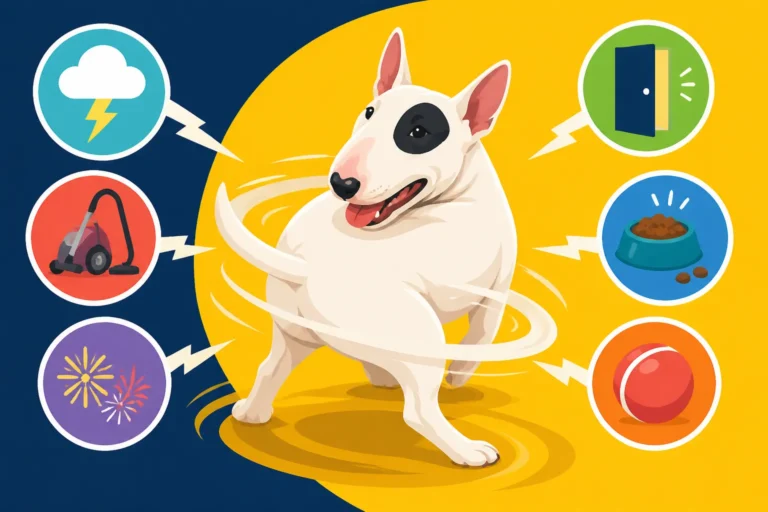
Ah, the zoomies. Every Bull Terrier owner knows them, loves them, and sometimes fears them. When a Bull Terrier gets the zoomies, they transform into a furry, four-legged rocket, tearing around the house or yard at top speed, often with an expression of pure, unadulterated glee. If you’re caught in the path of a zoomie, a body slam is almost inevitable. It's often accompanied by Why a Bull Terrier Runs at You at Full Speed.
These bursts of frantic energy are a natural way for dogs to release pent-up excitement or energy. For a Bull Terrier, they are a fundamental part of their physical expression. A body slam during a zoomie isn't a deliberate act of affection; it's often an accidental collision that happens because you are simply in the way of their magnificent, uncontrolled sprint. They're moving too fast, too unpredictably, to avoid you.
You can often see What a Bull Terrier's Zoomies Look Like: a sudden explosion of speed, tight turns, full body wiggles, and maybe even some silly hops. When this intense energy collides with a human, the result is a body slam. It’s less about greeting and more about momentum and poor spatial awareness during a highly excited state. Managing zoomies and teaching appropriate outlets for that energy can indirectly help reduce accidental body slams.
Misinterpreting Excitement
Bull Terriers are highly excitable dogs, especially around their favorite people. When you come home, or when a guest arrives, their excitement levels can spike dramatically. This surge of emotion often overrides any polite manners they might have learned. They become so focused on the object of their excitement that their ability to think clearly or control their actions diminishes.
They misinterpret the energy of the moment. Your cheerful "Hello!" might be seen as an invitation to a wrestling match. Your attempts to gently redirect them might be perceived as part of the game. They haven't learned to differentiate between a calm, gentle interaction and a boisterous play session. This over-arousal is a common reason for them to launch themselves without thinking.
It’s not that they don't know how to be calm; it’s that their intense emotions in certain situations temporarily short-circuit their learned responses. Their brain is screaming, "Excitement! Fun! Human!" and their body just follows suit, often with a powerful, joyous impact. Teaching them to settle and manage their excitement is key to curbing these overzealous greetings.
Why They Do It: The Root Causes of the Slam
It's tempting to think your Bull Terrier is just being a wild child, but there are usually specific reasons behind their body slamming behavior. Understanding these root causes is essential for developing effective training and management strategies. It’s rarely malicious, but rather a combination of their innate traits and learned behaviors.
A Playful Invitation
For many Bull Terriers, a body slam is simply their way of initiating play. They're not just saying hello; they're saying, "Hello! Now let's wrestle, chase, or just generally roughhouse!" This is especially true with puppies and younger Bull Terriers who are still learning the boundaries of appropriate interaction. They're testing the waters, seeing what kind of physical play you're willing to engage in.
If a body slam, even an accidental one, results in you stumbling, grabbing them, or pushing them away, they might interpret that as a form of play. Any physical contact, even negative, can be seen as an invitation for more. Their idea of fun might involve a level of physical intensity that isn't safe or comfortable for humans, and they need to be taught what is acceptable.
This play invitation is often paired with other playful cues, like a wide-open mouth (without teeth showing), a low bark, or a happy tail wag. They expect you to engage in kind, which can be particularly challenging for new Bull Terrier owners who aren't used to such an in-your-face approach to play. It highlights the importance of teaching appropriate play behaviors from an early age.
Seeking Attention, Bull Terrier Style
Let's face it, Bull Terriers are attention hogs, and they've often learned that big, dramatic gestures get the quickest response. If you've ever accidentally reinforced a body slam by laughing, fussing over them, or even just yelling their name, they've filed that away as "successful attention-seeking behavior." Even negative attention is attention, and for some dogs, that's enough to keep the behavior going.
They might use the body slam as a way to interrupt what you're doing, whether it's talking on the phone, working on your computer, or simply relaxing on the couch. They want to be the center of your universe, and if a nudge or a bark isn't getting the job done, a full-frontal assault usually will. This is a classic example of a dog trying to control the interaction.
It's a testament to their intelligence and persistence. They've observed that this particular action elicits a strong reaction from you, and therefore, it's a valuable tool in their communication toolkit. To change this, you have to consistently teach them that calm, polite behaviors are what earn them the attention they crave, and that body slamming gets them absolutely nothing.
Over-Arousal and Lack of Impulse Control
Perhaps the most common underlying cause of the body slam is a combination of over-arousal and a lack of impulse control. Bull Terriers are often intensely passionate about everything they do, and when that passion translates into excitement, it can quickly become overwhelming. They simply lose the ability to regulate their behavior in the moment.
Think of it like a child getting so excited they literally can't sit still or keep their hands to themselves. Your Bull Terrier experiences something similar. Their brains are flooded with happy chemicals, and their bodies just react. This means they literally don't think before they act. They see you, they're thrilled, and boom – they're on you. This ties into why A Bull Terrier Trains When It Sees the Point.
A lack of proper impulse control training means they haven't learned to pause, take a breath, and choose a calmer, more appropriate action. They haven't developed the mental "brake" that allows them to override their immediate urges. This is a fundamental training goal for Bull Terriers, not just to stop body slamming, but for overall manners and safety.
Assessing the Risk: When Fun Becomes a Hazard
While the Bull Terrier body slam is usually born of affection, it’s not without its risks. Their sheer power and enthusiasm can quickly turn a playful greeting into an accidental injury, especially for certain individuals. It’s vital for owners to recognize these hazards and prioritize safety.
Children, Elderly, and Unsuspecting Guests
The adorable clumsiness of a Bull Terrier puppy quickly grows into the formidable strength of an adult. An adult Bull Terrier can weigh a substantial amount and is capable of knocking over even a sturdy adult. This becomes a serious concern when interacting with vulnerable individuals. Small children, for instance, can be easily bowled over, potentially leading to bumps, bruises, or worse. An excited Bull Terrier might see a child as a playmate, not realizing the disparity in their sizes and strengths. This is why supervision is paramount, as discussed in A Bull Terrier With Children.
Elderly family members or friends are also at significant risk. A fall for an older person can have severe consequences, from broken bones to head injuries. A Bull Terrier's sudden impact can easily dislodge their balance, even if the dog doesn't intend harm. Whether a Bull Terrier Is Safe Around an Elderly Person is a common concern for owners, and it highlights the need for consistent training and management strategies to ensure everyone's safety.
Unsuspecting guests, who might not be familiar with your Bull Terrier's affectionate but boisterous nature, are also vulnerable. They might not brace themselves or know how to react, making them prime targets for an enthusiastic greeting. It's not fair to expect every visitor to understand your dog's quirks, so it falls to the owner to manage these interactions proactively.
Preventing Accidental Injuries
The key to preventing accidental injuries lies in proactive management and consistent training. It's about setting up your Bull Terrier for success and preventing situations where they might resort to body slamming. This means controlling the environment and teaching alternative behaviors before the slam occurs.
One immediate strategy is to physically manage your dog during greetings, especially if guests are involved. A leash and harness can be invaluable tools here. If your Bull Terrier is prone to launching themselves at visitors, having them on a leash allows you to step in and prevent the behavior. Consider a front-clip harness, as it gives you more leverage and redirection power than a collar alone. You might find Which Harness Holds a Bull Terrier helpful in choosing the right equipment.
Furthermore, teaching a "place" command or a "sit-stay" at the door can be a game-changer. This provides your Bull Terrier with an alternative, polite behavior to perform during exciting moments. Instead of allowing them to free-range into a potential slam, you're giving them a clear job to do that keeps everyone safe.
The Role of Size and Strength
Bull Terriers are powerful dogs, plain and simple. They may not be giants, but their compact, muscular build means they pack a lot of punch. How Easily a Bull Terrier Knocks You Over isn't just a funny anecdote; it's a real physical risk due to their strength and momentum. This is a breed that was developed for strength and tenacity, and that raw power is evident in their physical interactions.
When they hit you, it's not like being nudged by a smaller, lighter breed. It's a solid, forceful impact that can genuinely disorient or unbalance. This is why even well-intentioned body slams can lead to pulled muscles, bruises, or falls. Owners often underestimate the sheer physical force their dogs can exert, especially when their Bull Terrier is in a state of high excitement.
Acknowledging their inherent size and strength is crucial for responsible ownership. It means understanding that what might be a minor bump from a smaller dog can be a significant impact from a Bull Terrier. This awareness should drive your commitment to training impulse control and polite greetings, ensuring that their formidable physical attributes are always used safely and respectfully.
| Type of Interaction | Typical Bull Terrier Behavior | Potential Risk | Recommended Response |
|---|---|---|---|
| Coming Home | Full-speed zoomie, body slam | Falls, dropped items | Ignore initial excitement, wait for calm, then reward. Practice "doorway manners." |
| Greeting Guests | Leaping, body slamming, intense sniffing | Guest imbalance, fear, accidental injury | Leash control, "place" command, reward calm sitting. Educate guests. |
| Play Invitation | Nudging, pawing, body checking | Over-rough play, scratches, bruises | Redirect to appropriate toys (e.g., tough fetch, tug). End play if too rough. |
| Attention Seeking | Slamming into leg/hip when ignored | Interruption, annoyance, minor injury | Turn away, ignore. Reward polite sit or calm proximity. |
| During Walk/Run | Sudden lunge, body contact with handler | Handler trip/fall, loss of control | Use appropriate harness, practice loose-leash walking, reward focus. |
Training Strategies to Manage the Body Slam
Changing a deeply ingrained behavior like body slamming requires patience, consistency, and a solid understanding of positive reinforcement. Your goal isn't to extinguish your Bull Terrier's joyful spirit, but to teach them more appropriate and safer ways to express it.
Teaching an Alternative Greeting Behavior
The most effective way to stop an unwanted behavior is to replace it with a desired one. Instead of body slamming, you want your Bull Terrier to offer a polite greeting, such as a sit-stay or coming to you calmly for a gentle pet. This is a foundational concept in any effective dog training program.
Start by practicing in low-excitement environments. When you walk through the door, instead of letting your Bull Terrier jump and slam, calmly ignore them. Turn your back, cross your arms, and avoid eye contact. The moment all four paws are on the floor, or they offer even a slight pause in their excitement, turn and calmly say "Good" or "Yes," and reward them with a treat or a quiet pet. The key is to reward the absence of the slam and the presence of a calm behavior.
Gradually introduce more exciting scenarios. Have a family member or friend act as a "guest" and practice the same routine. As your Bull Terrier gets better, you can introduce a specific cue like "Go say hello" when they are calm, and reward them for approaching politely. This teaches them that politeness, not force, is what gets them what they want – interaction with you. These are the building blocks of Teaching a Bull Terrier to Sit and Stay.
Impulse Control Exercises
A significant part of the body slam problem stems from a lack of impulse control. Your Bull Terrier gets over-excited and acts on instinct rather than thought. Therefore, dedicated impulse control exercises are vital. These exercises teach your Bull Terrier to pause, think, and choose a calmer action even when highly stimulated.
"Wait" is an invaluable command. Practice it before meals, before going out the door, and before getting a toy. Hold the food bowl, open the door, or show them the toy, and ask them to "wait." Only release them with a "free" or "okay" command when they are calm. This teaches them that good things happen after they demonstrate self-control, not when they charge forward.
Another great exercise is "leave it." This teaches them to ignore tempting items or distractions until given permission. You can use it for food on the floor, other dogs, or even that exciting person who just walked in. If your Bull Terrier learns to "leave" that exciting person and focus on you for a moment, you can then reward them for that self-control with a calm greeting. Many online training programs, like those offered by BAXTER & Bella, offer comprehensive modules on impulse control that can be incredibly helpful for Bull Terrier owners.
Consistent Management and Reinforcement
Consistency is the absolute bedrock of successful Bull Terrier training. If you sometimes allow the body slam and sometimes discourage it, your Bull Terrier will become confused and continue to try the behavior, hoping it's one of the "allowed" times. Every member of the household must be on the same page, and even guests need to be gently coached on how to interact with your dog.
Always reward the behavior you want to see. If your Bull Terrier greets you with a calm sit, shower them with praise, treats, and affection. If they start to wind up for a slam, immediately disengage, turn away, or if necessary, put them on a leash and guide them to a "place" command. The consequence for the unwanted behavior should be the removal of the attention they crave.
Management also plays a huge role. Until your Bull Terrier's training is solid, use physical barriers like baby gates or crates when you know high-excitement situations are likely. For example, when you first get home, keep your Bull Terrier behind a gate until they've settled, then let them out for a calm greeting. This prevents them from practicing the unwanted behavior and gives you an opportunity to reinforce the good stuff. Remember, A Bull Terrier Trains When It Sees the Point, and the point needs to be crystal clear and consistent.
Tools and Aids for a Smoother Interaction
Training is paramount, but sometimes, a little help from the right equipment can make all the difference in managing your Bull Terrier's enthusiastic greetings. These tools can provide better control, redirect their energy, and make interactions safer for everyone.
Harnesses and Leashes for Control
For a Bull Terrier prone to body slamming, especially when greeting guests or out on walks, a well-fitting, sturdy harness is an absolute must. A flat collar can put pressure on their trachea and doesn't offer much control when they decide to lunge or charge. A harness, particularly a front-clip design, distributes pressure more evenly across their chest and shoulders and can significantly reduce pulling and lunging. When they pull, a front-clip harness gently redirects them to the side, making it harder for them to maintain momentum for a full-on slam.
When selecting a harness, look for durable materials and strong hardware, as Bull Terriers are masters at testing equipment. Brands like Ruffwear or sturdy models available on Amazon can be excellent choices. Coupled with a strong, comfortable leash, this setup allows you to physically manage your Bull Terrier's greetings. You can keep them on a short leash when people enter the home, guiding them into a polite sit or "place" before allowing any interaction. This preventative measure is crucial for dogs who struggle with impulse control.
The right leash is also important. A good quality, comfortable leash (not too thin, not too thick) allows you to maintain a firm but gentle connection. It's not about yanking your dog around, but about having the ability to subtly check their movement or guide them into a calmer position before they can launch themselves.
Redirecting Energy with Appropriate Toys
A Bull Terrier with pent-up energy is a Bull Terrier more likely to engage in unwanted behaviors, including body slamming. Providing appropriate outlets for their boundless energy is a critical component of managing their behavior. Toys, especially tough, interactive ones, can be a lifesaver.
When your Bull Terrier is about to get overly excited or has a burst of zoomies, redirecting that energy into a game of fetch or tug can prevent a body slam. Keep a favorite, durable toy handy, and when you see the signs of impending exuberance, immediately engage them in a structured play session. This teaches them that energy can be released in acceptable ways, rather than by barreling into a human. This is also a fantastic way to offer them What a Bull Terrier Does When It Is Bored.
Look for toys that can withstand a Bull Terrier's powerful jaws. Brands like Kong and Nylabone offer heavy-duty options designed for strong chewers. Puzzle toys, available through retailers like Amazon, can also be excellent for mentally stimulating your Bull Terrier and tiring them out without excessive physical exertion, which can help prevent over-arousal that leads to slamming. Remember, a tired Bull Terrier is usually a well-behaved Bull Terrier, and How Much Exercise a Bull Terrier Actually Needs can be substantial.
Professional Help and Online Resources
Sometimes, despite your best efforts, managing a Bull Terrier's body slamming behavior can feel overwhelming. Don't hesitate to seek professional guidance. A certified professional dog trainer or a veterinary behaviorist can provide personalized strategies tailored to your dog's specific temperament and the nuances of your household. They can observe your dog's behavior and identify triggers you might have missed.
There are also excellent online resources and training programs that can guide you through the process. Programs like BAXTER & Bella offer virtual puppy and dog training courses that cover impulse control, polite greetings, and managing high-energy breeds. These platforms can provide structured lessons, video demonstrations, and even direct access to trainers for support, all from the comfort of your home. They can be particularly useful for Bull Terrier owners who appreciate a step-by-step approach.
Investing in professional help or a reputable online program is not a sign of failure, but rather a commitment to your Bull Terrier's well-being and your family's safety. These experts can help you fine-tune your techniques, introduce advanced commands, and address any underlying behavioral issues that might be contributing to the body slamming. They can help you unlock your Bull Terrier's potential to be a well-mannered, joyful companion without the accidental concussions!
Living Safely and Happily with Your Enthusiastic Bull Terrier
Integrating training and management strategies into your daily routine is key to enjoying your Bull Terrier's wonderful personality without the worry of accidental body slams. It's about proactive planning, setting clear expectations, and ensuring a safe environment for everyone.
Setting Boundaries with Guests
It’s your home, your dog, and your responsibility to manage interactions, especially when guests are involved. Before friends or family come over, have a plan in place. This might involve putting your Bull Terrier on a leash or behind a baby gate when the doorbell rings. Explain your training efforts to your guests and ask for their cooperation. Politely request that they ignore your dog's initial attempts at attention, especially if they are overly enthusiastic.
Instruct guests to only engage with your Bull Terrier once they are calm, ideally sitting or lying down. Ask them to reward calm behavior with a gentle pet or a treat (if you approve). This reinforces the message that polite behavior is what earns attention, not boisterous greetings. You are effectively making your guests part of your training team.
Consider practicing with a few patient friends first. Have them come and go, rehearsing the calm greeting routine until your Bull Terrier consistently offers polite behavior. Over time, as your dog improves, you can gradually loosen these boundaries, but always be prepared to step back and re-implement stricter management if needed. This consistent approach helps manage What a Bull Terrier's Temperament Is Really Like in high-excitement situations.
Exercise as a Preventative Measure
A well-exercised Bull Terrier is generally a calmer Bull Terrier. Physical activity helps burn off excess energy that might otherwise manifest as uncontrolled excitement or body slamming. How Much Exercise a Bull Terrier Actually Needs can vary, but generally, they require a good amount of daily physical and mental stimulation.
Incorporate regular, vigorous exercise into their daily routine. This could be long walks, runs, hikes, or structured playtime in a securely fenced yard. Engaging them in activities like fetch, tug, or even agility training can be fantastic outlets. A flirt pole can be excellent for satisfying their prey drive and burning energy in a contained space. The goal is to ensure they are physically tired, not just mentally.
Mental exercise is equally important. Puzzle toys, training sessions, and scent work can help tire their brains, reducing the likelihood of over-arousal. A Bull Terrier who has had a good physical and mental workout is far less likely to greet you with a body slam than one who has been cooped up all day with pent-up energy. Ensure they have outlets for their natural drive, as Why a Bull Terrier Needs a Job.
Ongoing Socialization and Exposure
Continued socialization and exposure to various people, places, and situations are crucial for raising a well-adjusted Bull Terrier who understands how to interact appropriately. It's not just about meeting other dogs; it's about learning how to be calm and respectful in different environments and around different types of people.
Regularly expose your Bull Terrier to new sights and sounds in a controlled, positive manner. This can include walks in busy parks (on a leash, with management!), visits to pet-friendly stores, or even just sitting calmly on a bench and observing the world go by. The more they learn to be comfortable and calm in various scenarios, the less likely they are to become over-aroused and resort to body slamming as a default reaction.
Consider enrolling in obedience classes or even trick training. These activities not only provide mental stimulation but also reinforce impulse control and focus on you, even in distracting environments. A Bull Terrier who is confident and well-practiced in polite manners is a joy to live with, transforming those enthusiastic body slams into something far more manageable and endearing. Remember, the goal is not to suppress their spirit, but to guide it responsibly so everyone can appreciate their unique charm.
Disclaimer
This article is for general informational purposes only and does not constitute professional advice. Laws, prices and regulations vary by location and change over time. Consult a qualified professional for guidance on your specific situation.