Why a Bull Terrier Runs at You at Full Speed
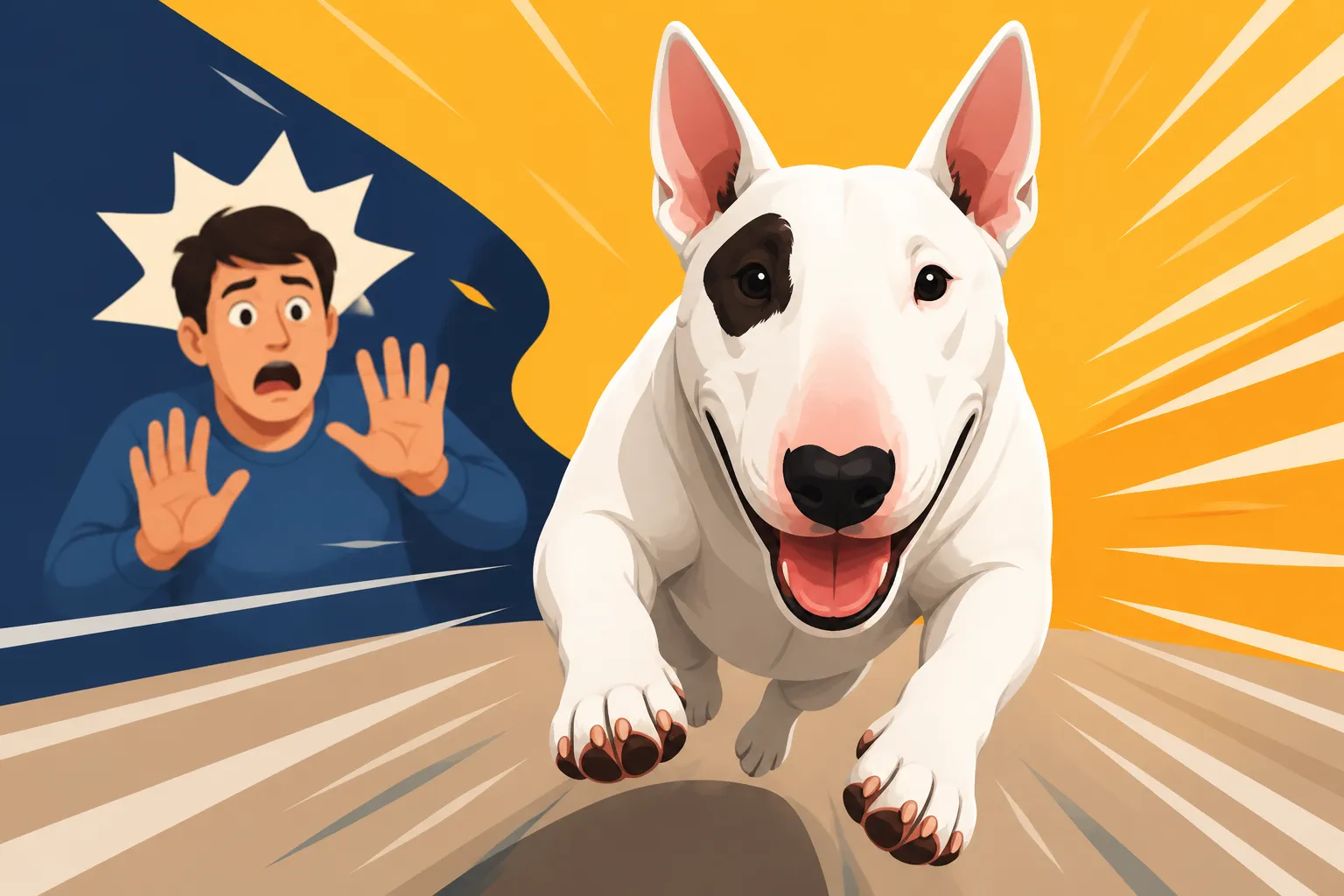
It’s a scenario many Bull Terrier owners know well: you walk into a room, or perhaps return home, and suddenly, your beloved, egg-headed companion is hurtling towards you at Mach speed. What often starts as a comical burst of affection can quickly turn into a bruising body slam, leaving you wondering why your dog treats you like a human bowling pin. This guide delves into the fascinating reasons behind your Bull Terrier’s full-speed charges and provides practical, empathetic strategies to help channel that exuberant energy into safer, more polite interactions.
Understanding the Bull Terrier's Burst of Energy
Bull Terriers are renowned for their distinctive looks and their equally distinctive personalities. They are often described as clowns in a dog suit, and for good reason! Their playful, spirited nature means they often approach life, and their people, with an infectious enthusiasm that can sometimes be overwhelming.
The "Three-Year-Old in a Dog Suit" Persona
Bull Terriers are known for their lively, almost childlike demeanor that often belies their substantial physical strength. They tend to mature slowly, maintaining a puppy-like exuberance for much longer than many other breeds. This prolonged adolescent phase can manifest as sudden, intense bursts of energy, affectionately known as "zoomies" or Frenetic Random Activity Periods (FRAPs). It’s not at all uncommon for a Bull Terrier, even a well-exercised adult, to suddenly decide that the living room is a racetrack and you are the finish line. This behavior isn't born of malice; it’s pure, unadulterated joy, a dash of mischief, and their unique way of expressing happiness or extending an invitation to play. The post Why a Bull Terrier Is Called a Three Year Old in a Dog Suit perfectly captures this enduring aspect of their personality.
These sudden bursts of energy often appear to come out of nowhere. One moment your Bull Terrier might be snoozing peacefully on their bed, and the next they are up, moving at full tilt, careening around the house with wide, delighted eyes and that characteristic goofy grin. For many owners, these antics are a source of endless amusement, highlighting the breed’s unique charm. However, for households with small children, elderly family members, or those with mobility challenges, these powerful, unexpected charges can quickly become a source of anxiety, raising concerns about accidental injury. It’s crucial to understand that this behavior is often an instinctual and deeply ingrained part of their quirky, high-spirited nature.
This inherent exuberance, while part of their undeniable appeal, also underscores their need for appropriate and consistent outlets for their energy. A Bull Terrier typically isn't content with just a leisurely stroll around the block; they truly thrive on opportunities to stretch their powerful legs, engage their intelligent minds, and truly let loose. Without adequate physical exercise and mental stimulation, these energetic bursts can become more frequent, more intense, and potentially more problematic. The goal isn't to suppress their spirit, but rather to find that crucial balance between their spirited nature and teaching them how to behave safely and appropriately within the home environment.
The Instinct to Engage and Connect
Beyond simply burning off excess energy, Bull Terriers possess a strong, innate desire to engage deeply with their human companions. They are profoundly devoted and highly social dogs, often forming incredibly strong, almost Velcro-like bonds with their families. When a Bull Terrier runs at you at full speed, it’s very frequently an earnest attempt to initiate interaction, whether it’s an explicit invitation to play, a demanding plea for attention, or simply an overwhelming outpouring of exuberant greeting. They view you as the absolute center of their world and are always eager to share their excitement and affection. For more on their expressive ways, consider How Physically Affectionate a Bull Terrier Is.
Picture a common scenario: you've just walked through the door after a long, tiring day at work. Your Bull Terrier hasn't seen you for hours, and their excitement levels are absolutely through the roof. What better way, in their mind, to express this overwhelming wave of joy than to launch themselves directly at you, tail wagging furiously, eyes gleaming with adoration? While undeniably endearing in its intent, this kind of greeting can be quite overwhelming, especially if you’re juggling groceries, carrying a bag, or have any limitations in your mobility. It's important to remember they aren't trying to cause harm; they are simply attempting to convey a mountain of affection in the most physically direct and impactful way they instinctively know how.
This powerful instinct to engage also extends readily to playtime. A sudden dash and a playful body slam might very well be your Bull Terrier’s way of issuing a challenge, saying, "Catch me if you can!" or "Let's wrestle!" They truly thrive on interaction and often interpret your reaction, even if it’s a surprised yelp or a gentle push back, as a form of engagement and participation in their game. This is precisely why consistent training and the establishment of clear, firm boundaries are so critically important. These tools teach them how to engage with you and others without causing chaos, accidental injury, or undue stress. They need to learn that a gentle nudge or a calm sit can be just as, if not more, effective at getting your attention and affection than a full-frontal assault.
Common Reasons for the Full-Speed Charge
Understanding why your Bull Terrier suddenly decides to treat you like a moving target is the first step toward managing this energetic behavior. There are typically a few key motivators behind their high-speed charges.
Over-Excitement and Greeting Rituals
One of the most frequent and understandable reasons a Bull Terrier will launch themselves at you is simply overwhelming over-excitement. This behavior is particularly pronounced during greetings, such as when you return home after an absence, or when a new guest steps into your house. Their emotional arousal tends to ramp up very quickly, and without a learned, appropriate alternative behavior, that surge of energy has to find an outlet. For a Bull Terrier, that "somewhere" often involves a powerful, direct trajectory towards the object of their excitement, which is usually you or your visitor. It’s crucial to distinguish this from aggression; it is purely an outpouring of joy and enthusiasm that their large, muscular bodies simply struggle to contain gracefully.
Take a moment to consider the subtle cues you might inadvertently be giving that reinforce this behavior. Do you tend to make a significant fuss and use an excited tone of voice when you walk through the door? Do you immediately get down on their level and encourage boisterous play upon your arrival? While these interactions feel loving and natural, they can, unintentionally, reinforce the idea that charging at you is not only acceptable but also a rewarded behavior. Bull Terriers are incredibly smart and learn very quickly what actions elicit a reaction. For them, a full-speed greeting definitely gets a reaction, even if that reaction from you is one of startled exasperation or a gentle push.
This pattern of over-excitement also readily applies to new people entering your home. A guest stepping through the threshold represents a novel, exciting event, a fresh source of attention and interaction. Your Bull Terrier, eager to participate and perhaps show off their unique personality, might launch themselves into a greeting that is far too intense and physical for a stranger. This isn't just about potentially knocking someone over; it can also be quite intimidating for individuals unfamiliar with the Bull Terrier's unique blend of immense strength and clownish eagerness. As an owner, you want your dog to be welcoming and friendly, but crucially, to do so in a way that is safe and comfortable for everyone involved.
Pent-Up Energy and Insufficient Exercise
Despite their often-calm and settled demeanor indoors, Bull Terriers are fundamentally active, robust, and athletic dogs. They require a significant amount of both physical exercise and mental stimulation to truly thrive and be well-adjusted companions. If they are not consistently receiving enough opportunities to run, play, explore, and engage their minds, that pent-up, unused energy has to be released in some form. Your living room or hallway can quickly become their personal Olympic track, and you, an unwitting obstacle or target in their self-directed game. A Bull Terrier that has been cooped up all day, especially with limited activity, is significantly more likely to engage in these explosive bursts of energy directed at their people. The post How Much Exercise a Bull Terrier Actually Needs provides essential insights into meeting their considerable physical requirements.
It’s important to understand that this isn’t solely about physical exhaustion; mental stimulation plays an equally critical role. A bored Bull Terrier, one whose intelligent mind hasn’t been challenged with training, puzzle toys, or engaging activities, will almost certainly invent their own entertainment. This can range from destructive chewing on furniture or shoes to, yes, spontaneous and powerful body slams. They inherently need a "job" or at the very least, consistently engaging activities to prevent boredom-induced mischief and unwanted behaviors. While a long, leisurely walk is certainly beneficial, a brisk run, an energetic game of fetch, or even structured training sessions focused on problem-solving are often far more effective at draining that particular brand of intense Bull Terrier energy. You can explore this further in What a Bull Terrier Does When It Is Bored.
Consider the common scenario of a Bull Terrier left alone for many hours while their owner is at work. When you finally return, they aren't just happy to see you; they are literally bursting at the seams with a full day's worth of unused energy. This intense, explosive release, often directly aimed at you, is a very clear signal that their daily routine might be seriously lacking in the crucial exercise department. Providing ample, structured outlets for this robust energy before it has a chance to boil over and manifest as a full-speed charge is a fundamental key to fostering a calmer, more manageable, and happier Bull Terrier at home.
Seeking Attention Positive or Negative
Bull Terriers, with their keen intelligence and strong desire for connection, can be master manipulators when it comes to capturing human attention. They thrive on interaction and will very quickly learn precisely which behaviors elicit a response from you. If charging at you at full speed, even if it results in you exclaiming "No!" or gently pushing them away, successfully gets them attention, they will, without a doubt, likely repeat that behavior. For a Bull Terrier, negative attention is still attention, and in their world, any attention is generally preferable to being ignored. They absolutely adore being the center of your universe, and they will pull out all the stops to achieve that coveted status, sometimes with astonishing creativity.
This attention-seeking behavior can quickly become a self-reinforcing cycle. You react to their charge, they successfully gain the attention they crave, and consequently, the problematic behavior becomes more deeply solidified in their routine. They might very well interpret your protests or even your exasperated sighs as an invitation to engage further, perhaps even as part of a fun game. It's a classic Bull Terrier trait to believe they are being playful when, in reality, you are feeling overwhelmed or annoyed. Understanding this crucial dynamic is absolutely essential for effectively changing the behavior. Your primary goal is to teach them that calm, polite, and solicited behaviors are the specific actions that consistently earn them your undivided and enthusiastic attention.
Consider a common household scenario: your Bull Terrier charges you, you push them off, and then, perhaps feeling guilty or wanting to soothe them, you immediately pet them as they briefly settle. In this moment, you’ve just inadvertently rewarded the entire sequence of behavior – the charge, the push-off, and the brief calm. It's incredibly challenging to break this habit, but consistently ignoring the undesired charging behavior and generously rewarding the desired calm behavior is, without question, the most effective long-term approach. This means being incredibly mindful and intentional about when and how you choose to provide your Bull Terrier with attention and affection.
Managing and Redirecting Enthusiastic Greetings
Channelling your Bull Terrier’s powerful enthusiasm into more appropriate behaviors requires patience, consistency, and a clear understanding of their unique personality. It’s about setting them up for success.
Consistent Training and Clear Boundaries
The absolute cornerstone of effectively managing any Bull Terrier behavior, especially their exuberant charges, is the establishment of consistent training and clear, non-negotiable boundaries. While they are highly intelligent dogs, they are also famously stubborn and possess a strong independent streak. Therefore, you must be even more consistent and persistent than they are! From puppyhood, it is vital to instill a strong foundation of impulse control. Commands such as "sit," "stay," and "wait" are incredibly invaluable tools in this regard. When you arrive home, instead of immediately giving in to their excited antics, calmly ask for a sit. Only once they are calmly sitting with all four paws on the floor should you then offer praise and a gentle, calm pet. This teaches them a vital lesson: calm, controlled behavior is the direct pathway to receiving positive rewards and your cherished attention. The article A Bull Terrier Trains When It Sees the Point elaborates on how crucial clear motivation is for this breed.
Make it a point to practice "polite greetings" with every single family member, consistently applying the same rules. When your Bull Terrier begins to wind up for a charge, your immediate response should be to turn your back, cross your arms, and completely ignore them. Do not speak to them, do not look at them, do not touch them. Resume engagement only when all four of their paws are firmly on the floor and they have shown a moment of calm. The instant they calm down, even for just a second, turn back around and offer calm, positive interaction. This approach is tough, especially when you're equally eager to greet your loving dog, but it is absolutely vital for breaking the deeply ingrained cycle of enthusiastic but unruly greetings. Over time, they will gradually learn that calmness and politeness are the essential keys to earning what they truly desire – your affection and attention.
For particularly boisterous greetings, especially when expecting visitors or during your own arrival home, consider using a lightweight house line (a short leash that drags on the floor). This provides you with a subtle degree of physical control without resorting to harsh corrections. You can use it to gently guide them to a "place" command, such as their dog bed or mat, and then reward them generously for staying there calmly while guests enter or while you settle in. Online training resources, such as those offered by BAXTER & Bella, provide excellent guidance and structured programs to help you implement these specific impulse control exercises, adapting them to your Bull Terrier's unique personality and learning style.
Providing Adequate Outlets for Energy
As the old adage goes, a tired dog is often a good dog – and for Bull Terriers, this rings especially true. Ensuring your Bull Terrier consistently receives a sufficient amount of both physical exercise and mental stimulation is not just beneficial, it's absolutely paramount for their overall well-being and managing their energetic behavior. This goes far beyond just a quick walk around the block. Think about integrating more vigorous activities into their daily routine, such as brisk jogging, energetic fetch sessions in a securely fenced yard, or even exploring structured dog sports like agility, flyball, or lure coursing if your Bull Terrier shows an aptitude and enjoyment for them. These types of vigorous outlets allow them to effectively burn off that explosive, characteristic Bull Terrier energy in a constructive and appropriate manner, significantly reducing the likelihood of it spilling over into inappropriate charging behavior indoors.
Crucially, mental stimulation is just as important, if not more so, than purely physical exercise. A Bull Terrier's intelligent mind needs to be challenged. Puzzle toys, snuffle mats, and engaging training sessions that specifically involve problem-solving can be incredibly effective at wearing out a Bull Terrier's mind, often as thoroughly as physical exercise wears out their body. To keep things interesting and prevent boredom, rotate their toys frequently, introducing new challenges and rediscovering old favorites. A durable treat-dispensing toy, readily available from retailers like Amazon, can keep your Bull Terrier happily occupied and mentally engaged for extended periods, making them significantly less likely to invent their own, less desirable, games. Always remember, a mentally stimulated Bull Terrier is a less bored Bull Terrier, and a less bored Bull Terrier is less likely to decide you're their next race target.
Strategically schedule their exercise to preempt problem behaviors. If you’ve noticed your Bull Terrier is most prone to bursts of zoomies or charging behavior in the evening, make a conscious effort to ensure they get a really good, vigorous exercise session right before that typical time. A substantial, long play session in the yard, a robust walk, or an energetic run before you settle down for the evening can make a world of difference in their overall calmness and significantly reduce the impulse to charge or engage in other unruly behaviors. You can find more targeted advice on appropriate activity levels in How Far a Bull Terrier Should Walk Before It Gets Silly.
Redirecting and Discouraging Unwanted Behavior
When you observe your Bull Terrier beginning to wind up for a charge, the crucial strategy is effective redirection, rather than attempting punishment. Instead of yelling at them or, even worse, chasing them (which they might happily interpret as an invitation to play), try to interrupt the behavior with a clear, distinct sound. This could be a loud clap, a sharp, firm "Ah-ah!" or a whistle. The moment you get their attention, immediately redirect them towards an appropriate chew toy, a favorite ball, or a well-known command like "sit" or "down." Make sure to reward them generously with praise or a treat the instant they comply with the desired behavior. The core objective here is to intervene and catch them before they make full physical contact with you.
For those accidental body slams, especially in households with children or elderly individuals where the risk of injury is higher, teaching your Bull Terrier a reliable "go to your mat" or "place" command can be an absolute lifesaver. This command provides them with a safe, designated spot where they can learn to settle, relax, and calm down, away from the immediate hustle and bustle. Practicing this command regularly, rewarding them consistently and heavily for staying calmly on their mat, will establish it as a positive and effective alternative to initiating contact by charging. The advice in How to Stop a Bull Terrier Jumping Up also shares similar principles for managing overly enthusiastic physical interactions.
It is critically important to never, ever encourage rough play that involves body slamming, nipping, or knocking into people, even when your Bull Terrier is a small puppy. While these antics might seem cute and harmless in a tiny puppy, they quickly become dangerous and unacceptable as they mature into powerful, full-grown adults. From day one, teach them the rules of gentle play. If playtime starts to get too rough or intense, immediately disengage and stop the interaction. Walk away, turn your back, or even briefly leave the room. Your Bull Terrier will very quickly learn that rough play makes the fun stop, while gentle and appropriate play allows the good times to continue.
| Method | Description | Pros | Cons |
|---|---|---|---|
| Ignore & Turn Away | Completely disengage, turn your back, and avoid eye contact when charging starts. Re-engage only when calm. | Teaches the Bull Terrier that charging is ineffective for gaining attention. | Requires immense consistency and patience; can be frustrating for owners initially. |
| Redirection to Toy | Interrupt the charge with a vocal cue, then immediately offer a high-value toy or bone. | Channels explosive energy into an appropriate object; maintains positive interaction. | Requires quick reflexes from the owner; the Bull Terrier might still prefer human interaction. |
| "Place" Command | Send the Bull Terrier to a designated mat or bed when excitement begins to build. | Creates a safe, predictable zone for calming; teaches impulse control and settling. | Needs extensive prior training of the "place" command; may not be immediate in high arousal. |
| Leash Management | Keep a lightweight house line (short leash) on the Bull Terrier for gentle control during high-excitement periods, like when guests arrive. | Provides physical control without harsh corrections; helps prevent accidental contact. | Can be cumbersome; needs to be used as a temporary training aid, not a permanent solution. |
When to Seek Professional Help and Specialized Training
While many Bull Terrier owners can manage enthusiastic greetings with consistent training, there are times when professional intervention becomes necessary for the safety and well-being of everyone involved.
Identifying Problematic or Compulsive Behaviors
While your Bull Terrier's exuberance is undoubtedly part of their charm, there's a distinct line between endearing playful antics and genuinely problematic or potentially dangerous behavior. If the full-speed charges are constant, seem uncontrollable, or if your Bull Terrier appears unable to calm down even after receiving ample physical exercise and mental stimulation, it might be a clear signal that it's time to consider seeking professional help. It's important to watch closely for any signs of compulsive behaviors, such as repetitive spinning, obsessive tail chasing, or relentless licking, as these can sometimes be indicative of underlying anxiety, stress, or even neurological issues. Furthermore, if the charging is ever accompanied by overt aggression, growling, snapping, or attempts to bite, that is an immediate and serious red flag requiring urgent expert intervention. The detailed insights in Whether a Bull Terrier Needs a Behaviorist can help you determine when it's appropriate to call in the professionals.
Another critical indicator that professional assistance might be needed is if the behavior consistently causes harm, either to people (especially vulnerable individuals like children or the elderly) or to other pets in the household, despite your most diligent and consistent efforts at management. If your Bull Terrier is repeatedly knocking over family members, causing bruises, scrapes, or other injuries, the inherent risks associated with the behavior far outweigh any perceived humor or playfulness. This isn't just about inconvenience; it's fundamentally about safety. Sometimes, what simply appears to be playful energy can actually mask a deeper, underlying issue, such as an inability to self-regulate high arousal levels, which the dog genuinely cannot control on their own.
When considering professional help, it’s highly beneficial to meticulously document the behavior. Keep a log of key details: when does the charging occur? Who are the individuals involved or present? What events or situations typically precede the full-speed charge? What happens immediately after the behavior? This comprehensive information will prove invaluable for a professional behaviorist or your veterinarian, helping them to accurately diagnose the root cause of the behavior and formulate the most effective and tailored behavior modification plan. Sometimes, what initially appears as simple "zoomies" could indeed be a subtle symptom of chronic stress, an unmet behavioral need, or an underlying medical condition that requires a much more nuanced and expert approach.
Consulting a Veterinarian and Certified Behaviorist
Your very first and most crucial step should always be to consult your veterinarian. They can conduct a thorough examination to rule out any underlying medical conditions that might be contributing to excessive energy, pain-driven behavior, or subtle neurological issues. For instance, something as seemingly simple as an untreated allergy, chronic discomfort, or even certain metabolic imbalances can make a dog restless, irritable, and more prone to frenetic, hard-to-control activity. After receiving a clean bill of health from your vet, they can then provide trusted referrals to a certified professional dog trainer or, for more complex cases, a veterinary behaviorist. These specialists possess the specific expertise to accurately assess your Bull Terrier's unique situation, understand the nuances of their breed-specific traits, and develop a highly individualized and effective training or behavior modification plan.
A certified professional dog trainer, particularly one with demonstrated experience working with Bull Terriers or other strong-willed, intelligent breeds, can offer invaluable hands-on guidance. They can help you implement effective techniques specifically designed for impulse control, teach your dog appropriate alternative behaviors for greetings, and significantly improve the clarity and consistency of your communication with your Bull Terrier. Such a trainer might also suggest specific management tools, like certain types of harnesses for better control during excited greetings, or introduce specialized training exercises to build focus and self-regulation. Furthermore, they can objectively observe your home environment and identify any subtle triggers or patterns that you, as the owner, might inadvertently be overlooking.
For more severe, complex, or deeply ingrained behavioral issues, consulting a veterinary behaviorist is often the most comprehensive and recommended course of action. These highly specialized professionals are veterinarians who have undergone extensive, advanced training in animal behavior, making them uniquely qualified to diagnose and treat behavioral disorders. Their expertise allows them to consider the intricate interplay between physical health, neurological function, and complex behavior, often including the appropriate use of medication if deemed necessary, in conjunction with a robust behavior modification program. They offer the most holistic and comprehensive approach to addressing deeply rooted behavioral challenges or those linked to anxiety or other clinical conditions.
Long-Term Management Strategies
Addressing and successfully modifying the full-speed charge behavior in a Bull Terrier is rarely a quick fix; it absolutely requires a dedicated, consistent, and long-term commitment. This means not just relegating training to specific "sessions," but consciously integrating desired behaviors and polite interactions into every single aspect of your daily routine. Every interaction, every greeting, every playtime, and every moment spent together becomes a valuable opportunity to reinforce the calm, polite, and well-mannered Bull Terrier you envision. Always remember that Bull Terriers are incredibly intelligent and, with their stubborn streak, will perpetually test boundaries, meaning your consistency and patience need to be unwavering throughout their lives.
Continue to prioritize both appropriate physical exercise and engaging mental enrichment throughout your Bull Terrier's entire life. As they inevitably age, their energy levels will naturally shift and mellow, but their fundamental need for engagement and stimulation will never truly disappear. Adapt their activities to their changing needs – perhaps incorporating shorter, more frequent walks for a senior Bull Terrier, but still diligently including puzzle toys, scent games, and gentle training to keep their minds sharp and content. Investing in a variety of durable, high-quality toys that can withstand a Bull Terrier's incredibly powerful jaw is always a wise and cost-effective long-term strategy. Regular, routine check-ups with your veterinarian are also essential to proactively catch any emerging health issues that could potentially impact their behavior or energy levels.
Finally, wholeheartedly embrace and celebrate the truly unique personality of your Bull Terrier. Their characteristic exuberance, even when it sometimes requires gentle shaping and consistent guidance, is an integral part of what makes them such incredibly special and captivating companions. With a combination of unwavering patience, profound understanding, and persistent effort, you can successfully channel their powerful energy and spirited nature into fostering a joyful, well-behaved, and incredibly loving companion who greets you not with a bruising full-on charge, but with a happy, controlled wiggle and a calm, affectionate presence. Understanding their behavior, as outlined in What a Bull Terrier's Zoomies Look Like, helps distinguish normal exuberance from more challenging habits.
Disclaimer
This article is for general informational purposes only and does not constitute professional advice. Laws, prices and regulations vary by location and change over time. Consult a qualified professional for guidance on your specific situation.