Whether an Adult Bull Terrier Can Learn to Tolerate Dogs
It’s a heart-sinking moment, isn't it? You’re walking your beloved adult Bull Terrier, perhaps enjoying a quiet afternoon stroll, when suddenly another dog appears. What follows can be a chaotic scene: lunging, barking, a desperate tug on the leash, and that familiar wave of embarrassment and frustration. Many Bull Terrier owners live with the daily reality of their adult dogs not getting along with other canines, and the question often gnaws at us: can this ever truly change? This guide aims to tackle that very real struggle, exploring whether an adult Bull Terrier can learn to tolerate dogs, what steps you can take, and what realistic outcomes you can hope for.
Understanding the Bull Terrier's Baseline with Other Dogs
Before we even think about training, it's crucial to acknowledge the unique blueprint of the Bull Terrier when it comes to dog-dog interactions. These aren't your average "love everyone" kind of dogs, and understanding their historical context helps us approach their behavior with the right perspective and patience.
The Breed's Innate Predispositions
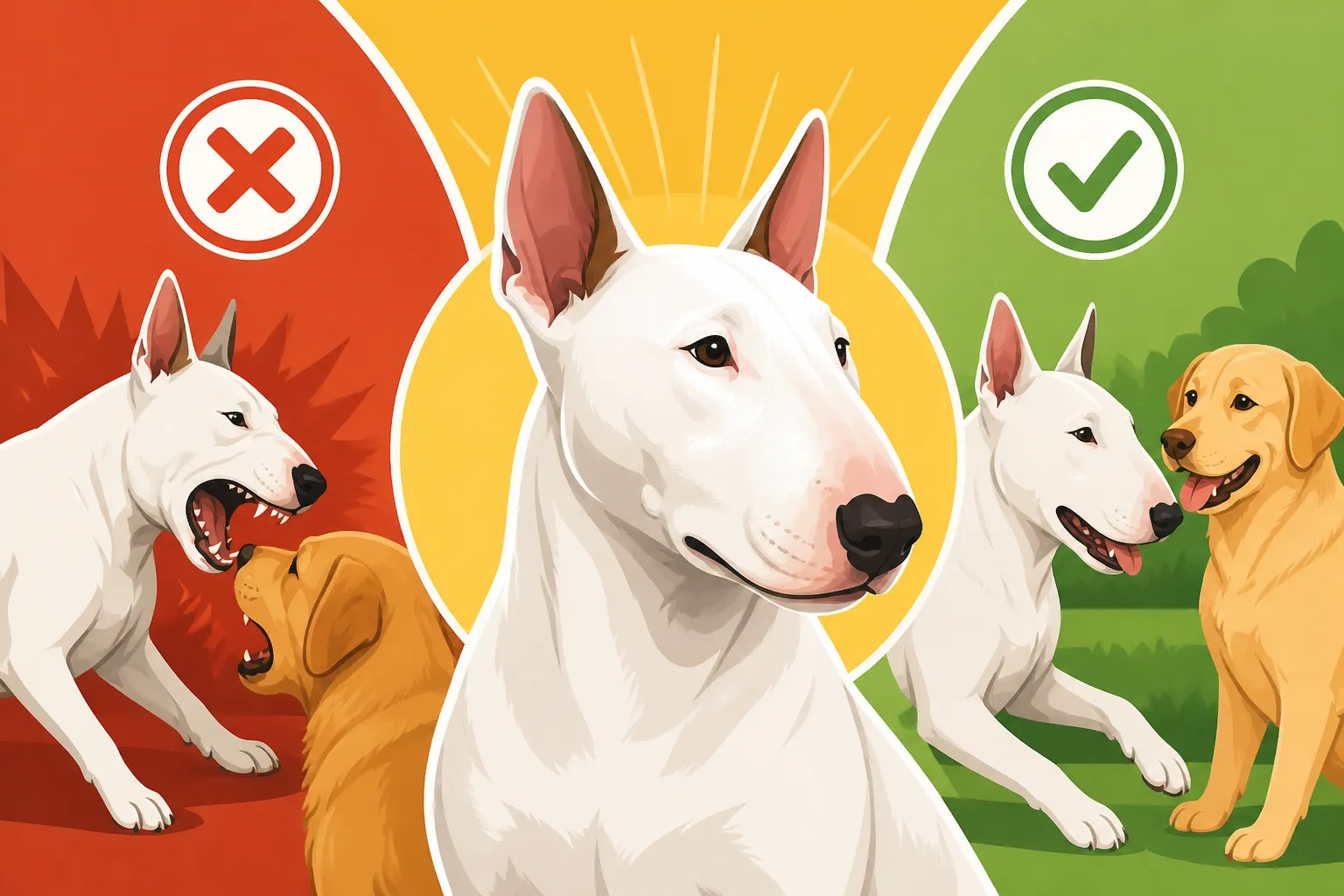
Let's be blunt: Bull Terriers were originally bred for tasks that required a certain level of tenacity and sometimes, unfortunately, dog-on-dog aggression. While modern breeding has certainly softened these edges, the underlying genetics and temperament are still very much present. They were not designed to be dog park socialites. Their strong prey drive, coupled with a sturdy, muscular build and often a low tolerance for rude behavior from other dogs, means they can quickly escalate situations. It’s not about them being "mean" dogs; it’s about their historical purpose and inherent characteristics. You might find that your Bull Terrier is perfectly polite with humans, leaning into them for affection and showing their silly, clownish side, but the minute another dog enters the picture, a switch flips. This is a common story, and it's vital to recognize that you're not dealing with a fault in your dog, but rather a manifestation of their breed's deep-seated traits. How a Bull Terrier Gets On With Other Dogs explains this in more detail.
Why Early Socialization Is Key And Often Missed
The importance of early, positive socialization for any puppy cannot be overstated, but for a breed like the Bull Terrier, it's absolutely paramount. Introducing a Bull Terrier puppy to a wide variety of sights, sounds, people, and, yes, other appropriate dogs during their critical developmental window (roughly 3 to 16 weeks) can lay a foundation for tolerance. However, life happens. Maybe your Bull Terrier was a rescue with an unknown past, or perhaps they had a bad experience as a youngster, or even simply weren't exposed to enough dogs in a controlled, positive way.
When this crucial early socialization is missed, or done incorrectly, an adult Bull Terrier can develop anxieties or reactiveness towards other dogs. They might not have learned the subtle cues of canine communication, or they might have learned that offense is the best defense. This isn't just about missing a few playdates; it's about missing critical learning opportunities that shape how they perceive the world, and specifically, other dogs. The world can be a very confusing, and even threatening, place for a dog that hasn't learned to navigate it with confidence and neutrality towards other canines.
Assessing Your Adult Bull Terrier's Current State
Before you embark on any training journey, you need to understand why your Bull Terrier is reacting to other dogs. Not all reactivity is the same, and what works for one dog might be detrimental to another. It requires a bit of detective work and a lot of honest observation.
Differentiating Reactivity from Aggression
This is a critical distinction. Reactivity often stems from fear, anxiety, frustration, or over-excitement, and it manifests as barking, lunging, and pulling on the leash. The dog might look aggressive, but their underlying emotion is often one of distress or simply an inability to cope. True aggression, on the other hand, is usually driven by a desire to harm or dominate, and it can involve snapping, biting, or a relentless pursuit.
Here's a quick comparison to help you distinguish:
| Behavior Aspect | Reactive Bull Terrier | Aggressive Bull Terrier |
|---|---|---|
| Motivation | Fear, anxiety, frustration, over-excitement | Desire to harm, dominate, protect resources/territory |
| Body Language | Stiff, tense, tail tucked or stiff/high, whale eye, sometimes frantic barking/lunging, may try to escape if possible | Stiff, confident, direct stare, hackles up, low growl, often no retreat, intent to engage |
| Recovery Time | Can calm down relatively quickly once the trigger is gone or distance is created | May stay aroused for a longer period, fixated on the trigger |
| Response to Space | Improvement with increased distance from trigger | May escalate or maintain intensity regardless of distance |
If you're unsure, or if your Bull Terrier has ever broken skin on another dog or human, it's absolutely vital to seek professional help immediately. A certified professional dog trainer or veterinary behaviorist can help you accurately assess the situation and create a safe plan.
Identifying Triggers and Body Language
Understanding what sets your Bull Terrier off is the first step in managing their behavior. Is it only intact males? Small, yappy dogs? Dogs that stare? Dogs that approach too quickly? Any dog on a leash? Off-leash dogs? The context matters immensely. Keep a log of these incidents:
- Location: Dog park, street, vet's office?
- Distance: How close was the other dog before your Bull Terrier reacted?
- Type of dog: Size, breed, energy level, intact/neutered?
- Your Bull Terrier's body language before the reaction: Stiffening? Lip licking? Yawning? Hard stare? Ears back?
- Your reaction: Did you tighten the leash? Get tense?
Learning to read your Bull Terrier's subtle cues can give you precious seconds to intervene before they hit their threshold. A slight stiffening, a head turn, a quick lip lick – these are often early warning signs. Think about it like a traffic light: green (relaxed), yellow (tensing up, observing), red (full-blown reaction). Your goal is to identify the yellow light and act before it turns red. This might involve changing direction, crossing the street, or creating distance. The more you can prevent your Bull Terrier from practicing reactive behaviors, the more you can build a new, calmer association with other dogs. How a Bull Terrier Hides Pain can sometimes give clues to underlying discomfort that might exacerbate reactivity.
Strategies for Building Tolerance
Once you have a good grasp of your Bull Terrier's triggers and tendencies, you can start implementing strategies to help them. This is often a long and dedicated process, but the payoff of a more peaceful existence is well worth the effort.
Professional Guidance: When to Call for Help
For an adult Bull Terrier with a history of reactivity, professional guidance is almost always recommended. This isn't a sign of failure; it's a smart investment in your dog's future and your own peace of mind. Look for a certified professional dog trainer (CPDT-KA) or a veterinary behaviorist (DACVB). Avoid trainers who advocate for harsh punishment, shock collars, or methods that rely on "dominance" theory. These methods can often suppress outward behavior without addressing the underlying emotional state, leading to increased anxiety or redirected aggression.
A good trainer will work with you using positive reinforcement and force-free methods. They can help you:
- Refine your leash handling skills to communicate more clearly.
- Identify subtle body language you might be missing.
- Structure controlled setups for training.
- Teach your Bull Terrier alternative behaviors.
Many trainers, like those associated with BAXTER & Bella, offer online programs or in-person sessions that focus on real-world solutions for common behavioral challenges. They understand that a Bull Terrier's strong will needs a specific approach. Whether a Board and Train Suits a Bull Terrier might be a good read if you're considering intensive training.
Controlled Exposure and Desensitization
The core of teaching tolerance involves carefully controlled exposure to other dogs, gradually reducing your Bull Terrier's sensitivity to them. This is not about throwing your dog into a dog park. It’s about creating positive associations at a distance where your dog can remain calm.
- Find the Threshold: This is the distance at which your Bull Terrier notices another dog but does not react. They might look, but they don't lunge, bark, or get tense. This might be across the street, across a park, or even just seeing a dog through a window.
- Positive Association: Once you've found that threshold, every time your Bull Terrier sees another dog and remains calm, immediately reward them with a high-value treat (something they absolutely adore, like cooked chicken or cheese). The goal is for them to associate "dog" with "delicious treat" rather than "stress."
- Gradual Reduction: Slowly, over many, many sessions, you'll aim to decrease the distance to other dogs, always ensuring your Bull Terrier stays below their threshold. If they react, you've gone too close, too fast. Increase the distance again and try a step back.
- Parallel Walks: A very effective technique is to do parallel walks with a calm, well-behaved "helper" dog. Start far apart, walking in the same direction. Gradually decrease the distance over time, always rewarding calm behavior. The goal is not for them to interact, but for your Bull Terrier to simply exist peacefully in the presence of another dog.
Remember, consistency is key. Short, frequent sessions (5-10 minutes) are often more effective than long, infrequent ones. And always end on a positive note.
Management Techniques and Environmental Control
While you're working on changing your Bull Terrier's emotional response, you also need robust management strategies to prevent unwanted incidents and keep everyone safe.
- Leash and Harness: Invest in strong, reliable equipment. A sturdy harness that discourages pulling, like a front-clip harness, can give you more control without causing pain or discomfort to your Bull Terrier's throat. Pair it with a strong, comfortable leash. You don't want equipment failure to lead to a dangerous situation.
- Avoid Triggers: Until your Bull Terrier shows significant improvement, simply avoid situations where you know they will react. This means no dog parks, no crowded pet stores, and carefully planned walks during off-peak hours. If an unexpected dog appears, be prepared to turn and walk the other way, or use a "u-turn" command to quickly change direction.
- High-Value Rewards: Always carry high-value treats on walks. These aren't just for training sessions; they're for immediate redirection if a trigger appears suddenly. You want to be more interesting and rewarding than the other dog. Items you can find easily on Amazon, like treat pouches and various types of tasty, soft treats, are essential.
- Enrichment at Home: A Bull Terrier that is mentally and physically stimulated at home is less likely to be frustrated and reactive on walks. Provide puzzle toys, chew items, and engage in training games that build confidence. What a Bull Terrier Does When It Is Bored and Which Puzzle Toys Occupy a Bull Terrier offer great ideas.
Realistic Expectations and Ongoing Commitment
It's important to manage your expectations when working with an adult Bull Terrier's dog-dog behavior. While significant improvement is possible, turning a reactive adult into a social butterfly who loves all dogs might not be a realistic goal, and that's perfectly okay.
Understanding "Tolerance" vs. "Friendship"
For many adult Bull Terriers, the goal isn't to make them best friends with every dog they meet. It's about achieving tolerance. This means your Bull Terrier can see another dog without reacting, can walk calmly past them, or can share a space (like a waiting room at the vet) without causing a scene. They might never want to play with strange dogs, and that's a perfectly acceptable outcome. Celebrate these small victories! A Bull Terrier that can simply ignore another dog is a huge step forward from one that barks and lunges. How a Bull Terrier Plays With Children reminds us that their play style is often very physical, which might not be appreciated by all dogs.
The Lifelong Journey of Management
Even with successful training, managing an adult Bull Terrier's interactions with other dogs is often a lifelong commitment. Relapses can happen, especially if they have a negative experience or if you let your guard down. This means:
- Continuing to advocate for your dog: Don't let well-meaning strangers or their dogs invade your Bull Terrier's space. It's okay to say, "My dog isn't friendly," or "Please give us space."
- Maintaining training: Keep up with short, positive reinforcement sessions, even when things are going well.
- Staying vigilant: Always be aware of your surroundings on walks and be ready to redirect or create distance.
Living with a reactive adult Bull Terrier can be challenging, but it is absolutely possible to create a harmonious life. With patience, consistency, and often professional guidance, your Bull Terrier can learn to navigate the world of other dogs with greater calmness and confidence, making walks and daily life much more enjoyable for both of you.
Disclaimer
This article is for general informational purposes only and does not constitute professional advice. Laws, prices and regulations vary by location and change over time. Consult a qualified professional for guidance on your specific situation.