Why Most Bull Terriers Sink
It’s a common misconception, isn’t it? We see pictures and videos of dogs leaping into lakes with joyful abandon, and we just assume that every dog is born knowing how to swim. Then you get a Bull Terrier, full of beans and curiosity, and you take them to the water’s edge, expecting a graceful dog paddle, only to watch them sink like a stone! It’s startling, sometimes even a little heartbreaking, to realize that your beloved Bullie isn't a natural swimmer. This guide is here to shed some light on why most Bull Terriers struggle in the water and how you can help them safely enjoy water activities without the pressure of becoming Olympic swimmers.
The Bull Terrier's Unique Physique: Not Built for Buoyancy
Let’s talk about that incredible Bull Terrier body we all adore. It’s a masterpiece of strength and unique conformation, but honestly, it’s just not engineered for effortless aquatic maneuvers. When you look at a breed like a Labrador Retriever, built with an otter-like tail, webbed feet, and a dense, water-repellent coat, you can immediately see the differences. Your Bull Terrier, on the other hand, possesses a set of physical attributes that actively work against buoyancy and efficient propulsion in water.
Think about it – when your Bullie steps into the water, they're not just fighting gravity, they're fighting their own build. It's like asking a weightlifter to be a nimble ballerina; they can move, but it's going to be a lot harder and less natural for them than for someone built specifically for it. This isn't a sign of weakness; it's just the reality of their distinct design, a design that makes them truly one-of-a-kind on land.
Dense Bone Structure and Muscle Mass
One of the primary reasons Bull Terriers often sink is their incredibly dense bone structure and substantial muscle mass. These dogs are built like little tanks – solid, compact, and packed with powerful, tight muscle. While this gives them their iconic sturdy appearance and incredible strength, it also makes them incredibly heavy for their size. Water displacement is key to buoyancy, and a heavy, dense object simply displaces less water relative to its weight, making it harder to float.
Imagine trying to float a solid oak log versus a hollow plastic pipe of the same size. The oak log, being denser, will sink or barely break the surface, while the plastic pipe will float high. Your Bull Terrier is much more like that solid oak log. Their bones are not lightweight and spongy; they're thick and strong. Their muscles, while fantastic for running, jumping, and leaning into you for cuddles, add considerable weight without contributing to natural floatation. This isn’t something they can train out of; it’s fundamental to their skeletal and muscular makeup. It's part of What a Bull Terrier Weighs and How Tall It Stands, and that weight carries a lot of density.
Body Shape and Short Legs
Beyond density, the Bull Terrier’s unique body shape also plays a significant role in their less-than-stellar swimming abilities. They have a deep, barrel chest, a short back, and relatively short, stout legs. This combination is superb for power and agility on land, giving them that characteristic roll and spring in their step. In water, however, it’s a recipe for struggle.
Their deep chest means their center of gravity is quite low, pulling them down. Their short legs, while strong, simply can't generate the necessary power or reach through the water to propel their heavy, compact body effectively. Compare this to a Golden Retriever with its long, powerful legs that act like paddles, and a more streamlined body that cuts through the water. A Bull Terrier's legs end up churning furiously but achieving little forward momentum or lift. They often end up doing a frantic, vertical dog paddle, expending immense energy just to keep their head above water, which is exhausting and frankly, quite inefficient.
Head Shape and Snout Length
Ah, the iconic egg-shaped head! It's undeniably one of the most distinctive features of the Bull Terrier, a hallmark of the breed. But when it comes to swimming, that beautiful, downfaced profile with its lack of a distinct stop can be a real hindrance. Unlike breeds with longer muzzles and lighter heads, a Bull Terrier often has to tilt their entire head back significantly just to keep their nose and mouth clear of the water.
This head position can throw off their balance, making them feel even more unstable in the water. It’s an awkward angle that puts strain on their neck and makes it harder to coordinate their body. Imagine trying to swim while constantly craning your neck backwards; it’s not only tiring but also makes it difficult to see where you're going or to relax into a rhythm. This design, while charming and perfectly suited for their role as companions, wasn't built for buoyancy or streamlined aquatic movement. It’s just another physical characteristic that contributes to Why Most Bull Terriers Sink.
Instinct vs. Design: Why Some Dogs Naturally Swim and Bull Terriers Don't
It's tempting to think all dogs are natural swimmers because we see so many breeds take to water with an almost innate grace. But the truth is, the "dog paddle" isn't a universal canine skill. Many breeds, particularly those developed for specific land-based tasks, lack the inherent instinct or the physical design to be proficient in the water. The Bull Terrier falls squarely into this category. They were developed for companionship and courage, not for retrieving ducks or diving for fish.
Their history, tracing back to the fighting pits and later refined into the "White Cavalier" and a gentleman's companion, simply didn't involve water work. James Hinks Built the Bull Terrier in Birmingham in the 1860s with a focus on specific traits like courage, agility, and a distinctive appearance, none of which required swimming prowess. Therefore, they didn't inherit the physiological advantages or deep-seated instincts for swimming that you see in water-retrieving breeds.
The "Dog Paddle" Instinct
While most dogs will instinctively try to paddle their paws when put in water, the effectiveness of that paddle varies wildly. For breeds like retrievers, Newfoundlands, or Portuguese Water Dogs, that instinct comes with a body built to support it. Their strong hindquarters, broad tails (acting as rudders), and powerful, long strokes make their dog paddle efficient and sustainable.
For a Bull Terrier, the instinct to paddle is there, but their physical limitations turn it into more of a frantic scramble. Their short legs, dense body, and challenging head shape mean they might be paddling with all their might, but barely staying afloat or moving forward. This can quickly lead to exhaustion and panic. It's not that they don't try; it's that their body isn't designed to make that effort productive in the water. It becomes a struggle, not a joyful activity, and this can shape their entire perception of water. This is a far cry from the effortless agility they display on land, where their strength makes them capable of impressive feats.
Lack of Webbed Feet or Water-Repellent Coat
When you look at true water dogs, you’ll notice a few key adaptations. Many have partially webbed feet, which act like natural flippers, increasing the surface area for pushing through water. They also often boast thick, double coats that are naturally oily and water-repellent, keeping them insulated and helping water bead off, preventing them from becoming waterlogged and heavy.
Your Bull Terrier, with its short, harsh, single coat, has none of these advantages. Their sleek coat, while easy to maintain on land, offers no protection against water absorption. Once wet, their fur clings to their skin, adding more weight and making them feel colder. Their paws, while sturdy, lack the webbing that would give them extra purchase in the water. Essentially, they're stepping into the water with no natural gear for swimming, relying purely on brute force which, as we’ve discussed, isn’t enough. This is why A Bull Terrier's Coat Is Easy and Its Skin Is Not – it’s a coat designed for simplicity, not for aquatic adventures.
Fear and Discomfort in Water
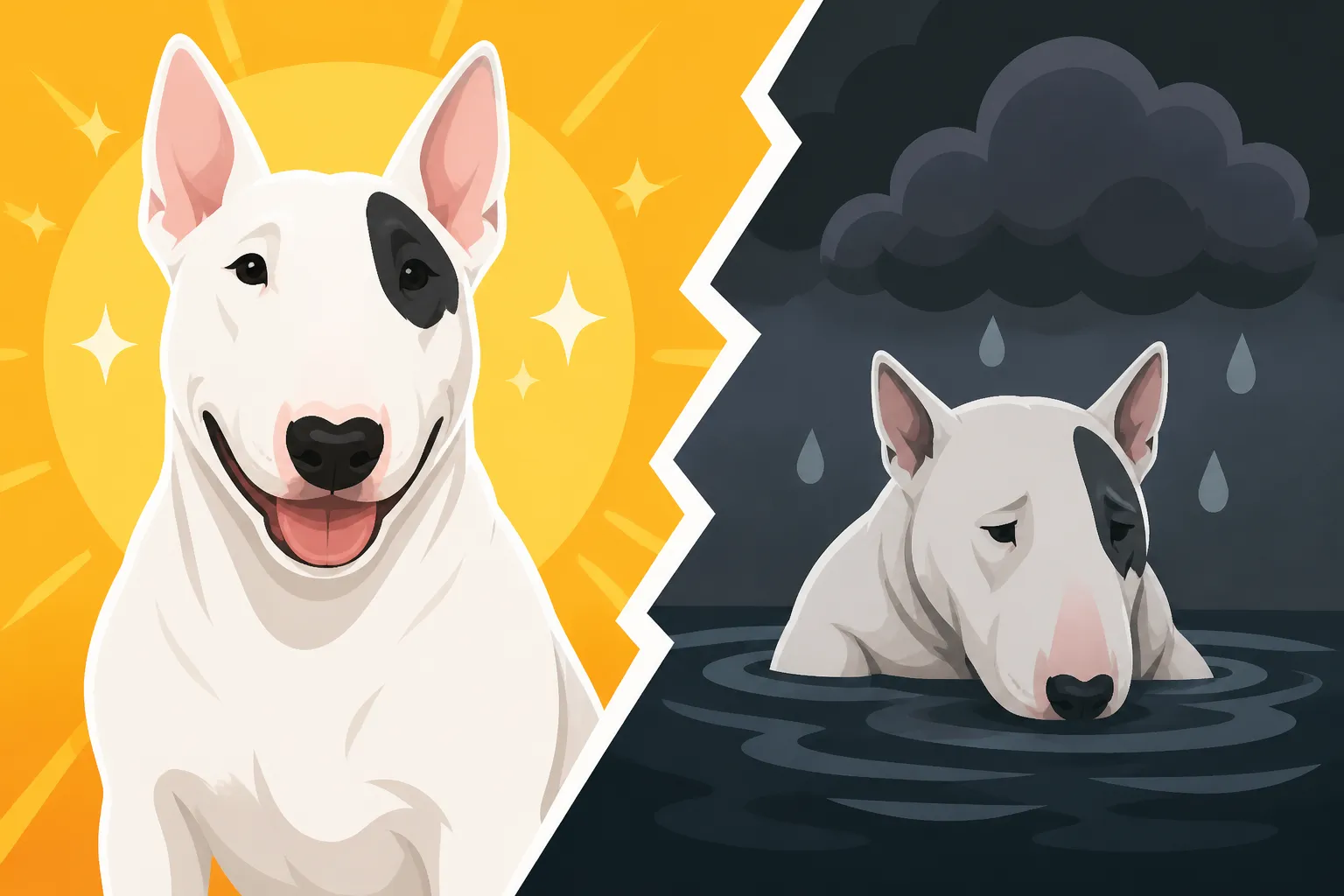
Because of these physical challenges, many Bull Terriers develop a genuine fear or strong aversion to deep water. Imagine trying to learn a skill when your body is constantly working against you, when every effort feels like a monumental struggle, and you're always on the verge of sinking. It's not fun, it's exhausting, and it can be terrifying.
A Bull Terrier who experiences this struggle repeatedly can quickly associate water with fear, discomfort, and a sense of vulnerability. They might be eager to splash in shallow puddles or tolerate a bath, but a large body of water presents a whole different challenge. It's crucial for owners to recognize this and not force their Bullie into situations that trigger panic. Building a positive association with water, if possible, needs to be done with extreme patience and without pressure. Understanding What a Bull Terrier's Temperament Is Really Like means recognizing their sensitivity to perceived failure or discomfort, which can manifest as stubbornness or outright refusal.
Safety First: Helping Your Bull Terrier Enjoy Water Safely
Just because your Bull Terrier isn't the next Michael Phelps doesn't mean they can't enjoy the water! Many Bullies absolutely adore splashing, wading, or playing with sprinklers. The key is to prioritize safety and ensure any water activity is on their terms, tailored to their abilities and comfort levels. We want happy memories, not scary ones. This often means providing extra support and creating environments where they can feel secure, even if they aren't fully submerged.
Remember, every Bull Terrier is an individual. Some might surprise you with a moderate ability to paddle, especially in a life vest, while others will be absolute "dry-land-only" enthusiasts. Respect their preferences and focus on fostering positive experiences, whether that means a full-on swim or just a supervised paddle in the kiddie pool. Their well-being and confidence should always come first.
Essential Safety Equipment
For any Bull Terrier venturing beyond ankle-deep water, a high-quality, properly fitted dog life vest is non-negotiable. This isn't just a suggestion; it's a vital piece of safety equipment. A good life vest will provide the buoyancy their dense bodies lack, helping them stay afloat without expending all their energy. It also offers a handle on the back, which is incredibly useful for guiding them, lifting them out of the water, or helping them onto a boat or dock.
When choosing a vest, look for one with strong buckles, durable material, and plenty of flotation around the chest and under the belly. Adjustable straps are crucial for a snug fit that won’t chafe or allow them to slip out. Many owners find a good selection of dog life vests available on platforms like Amazon, where you can read reviews and compare features. Make sure you measure your Bull Terrier carefully, especially their chest girth, to ensure the best fit. Without this essential gear, even a quick dip can turn dangerous very quickly for a non-swimming Bull Terrier.
Gradual Introduction to Water
If you want to introduce your Bull Terrier to water, approach it slowly and positively. Think of it less as "swim lessons" and more as "water play and exposure." Start in very shallow water, perhaps a kiddie pool in your backyard, or the edge of a calm lake where they can easily touch the bottom. Let them explore at their own pace. Toss a favorite floating toy just a few feet away, or wade in yourself and encourage them to join you.
Never, ever force them into the water or throw them in. This can be traumatic and create a lifelong aversion. Use lots of praise, high-value treats, and gentle encouragement. If they seem hesitant, just sit by the water with them, letting them observe and feel safe. The goal is to build positive associations, not to make them swim. Some Bull Terriers will happily wade up to their chest and splash about, considering that their version of a "swim," and that's perfectly fine. Patience is key; remember, their natural clownish nature thrives on fun, not fear. How a Bull Terrier Plays With Children and people often shows their playful, but sometimes sensitive, side.
Alternative Water Activities
For Bull Terriers who simply aren't keen on deep water, or those whose owners prefer to keep them safer, there are plenty of alternative ways to enjoy water. A shallow splash pad or a sprinkler in the yard can provide immense fun on a hot day. Many Bullies love to "hunt" the stream of water from a hose, pouncing and barking at it with pure delight.
Consider a small, sturdy dog pool (not an inflatable child's pool, as those rarely stand up to a Bull Terrier's claws and enthusiasm!). Fill it with just enough water for them to comfortably stand or lie down, and toss in some floating toys. This allows them to cool off, play, and interact with water without the stress of needing to float or swim. These controlled, shallow environments are often where their playful nature truly shines, letting them indulge their inner "clown" without any aquatic pressure. How Much Exercise a Bull Terrier Actually Needs can often be met with vigorous land play, rather than swimming, if water isn't their thing.
Training and Encouragement: Building Water Confidence
Even with their physical limitations, some Bull Terriers can learn to be more confident and comfortable around water. It’s not about transforming them into competitive swimmers, but rather about ensuring they feel safe and happy when near lakes, pools, or the ocean. This process is less about formal "training" and more about gentle guidance, positive experiences, and understanding their unique personality. A confident Bull Terrier is a safer Bull Terrier, especially around water.
Just like with any other skill you might teach your Bullie, patience, consistency, and a deep understanding of their individual quirks are paramount. They respond best to making things fun and rewarding, which is also true when introducing them to new environments like water.
Positive Reinforcement and Rewards
If you're introducing your Bull Terrier to water, especially if they’re initially hesitant, positive reinforcement is your best friend. Every small step they take towards or into the water should be met with enthusiastic praise, petting, and high-value treats or their absolute favorite toy. Make it a game! If they dip a paw in, jackpot! If they wade up to their knees, celebrate like they just won Best in Show.
Avoid scolding or showing frustration if they’re reluctant. This will only create negative associations. The goal is for them to think, "Water equals amazing treats and attention from my human!" Rather than trying to force a full-on swim, aim for comfortable wading. Many Bull Terriers are motivated by play, so a floating squeaky toy can be a great incentive. Just make sure it’s something they can easily retrieve from shallow water. Consistency in making water a fun, rewarding experience, even if it's just for a few minutes at a time, will build their confidence over time. This approach works for almost anything, from Teaching a Bull Terrier to Sit and Stay to getting them comfortable with new textures.
Professional Guidance
For Bull Terriers who are particularly fearful of water, or if you're feeling overwhelmed, don't hesitate to seek professional help. A qualified dog trainer with experience in water safety or even a specialized canine hydrotherapy center can offer invaluable guidance. These professionals understand canine body language and fear responses, and they have the tools and techniques to introduce dogs to water in a safe, controlled, and positive manner.
They might use specific gentle methods, or special facilities with ramps and shallow entry points, to help your Bull Terrier build confidence without feeling pressured. A trainer from a program like BAXTER & Bella might offer virtual guidance on building general confidence and positive associations, which can then be applied to water. They can also teach you how to recognize your Bull Terrier's stress signals, ensuring you don't push them past their comfort zone. Sometimes, a neutral third party can achieve breakthroughs that an owner, simply because of the emotional bond, might struggle with.
Recognizing Limits and Avoiding Pressure
Ultimately, the most important aspect of a Bull Terrier and water is recognizing and respecting their individual limits. Not every dog is meant to love swimming, and that's perfectly okay. If your Bull Terrier consistently shows signs of stress, fear, or discomfort around water – whining, shivering, refusing to enter, or trying to escape – it's crucial to accept that swimming might just not be their thing.
Never force them into situations that cause them distress. Their safety and emotional well-being are far more important than any preconceived notion of what a "dog" should do in water. There are countless ways for you and your Bull Terrier to bond and enjoy activities together on dry land. Whether they’re chasing a ball, going for a brisk walk, or just enjoying some quiet cuddle time, their unique personality shines brightest when they feel secure and loved. Let them be the unique, wonderful Bull Terrier they are, whether they love water or prefer to stay firmly on solid ground. The Ten to Fourteen Years a Bull Terrier Gets are precious; make them joyful and safe.
Disclaimer
This article is for general informational purposes only and does not constitute professional advice. Laws, prices and regulations vary by location and change over time. Consult a qualified professional for guidance on your specific situation.