How Easily a Bull Terrier Knocks You Over
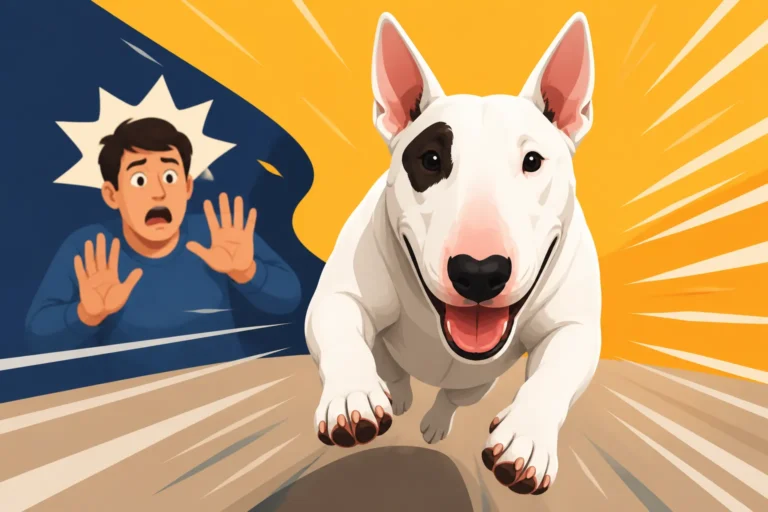
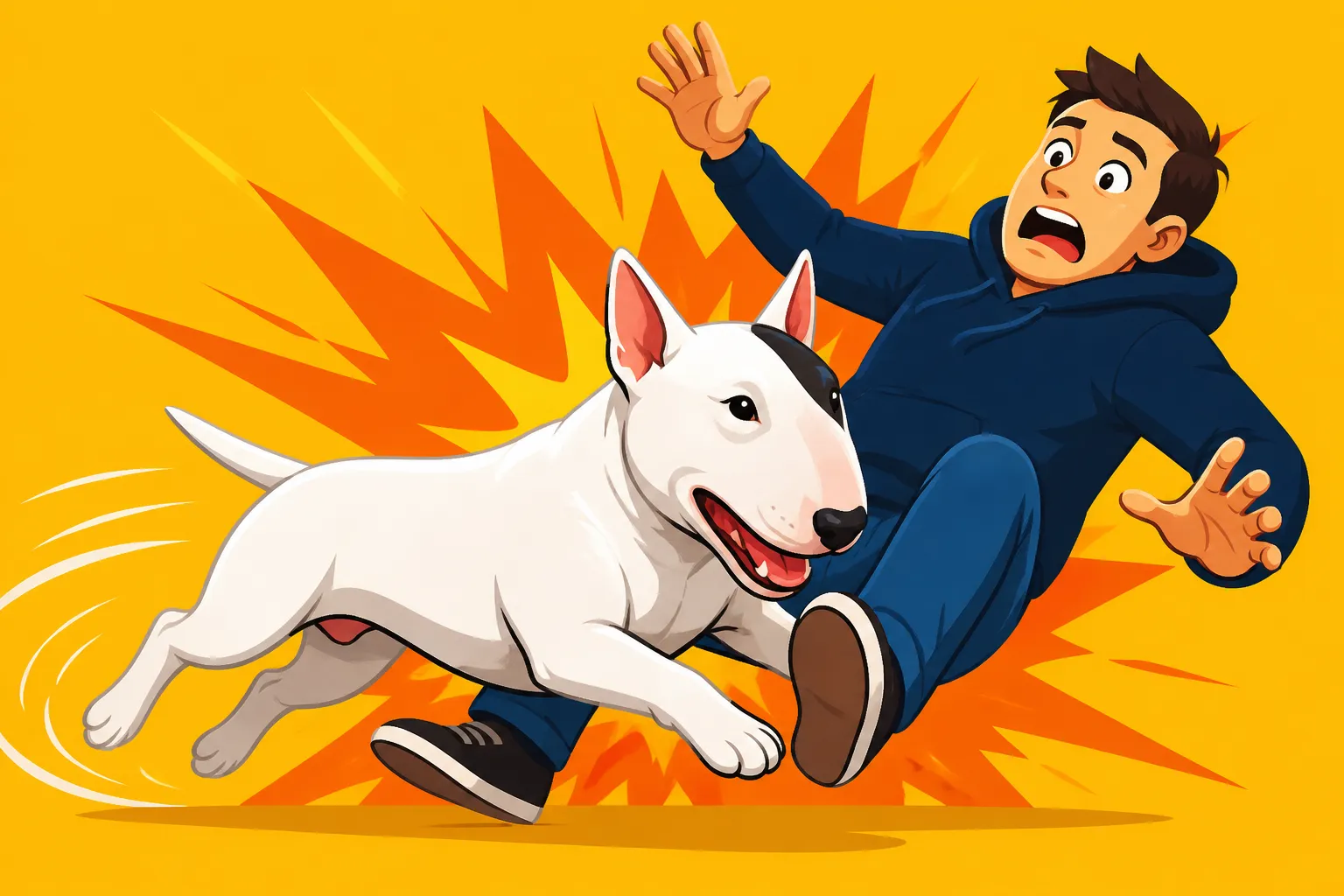
It’s a common scenario for Bull Terrier owners: one moment you’re standing, the next you’re stumbling, or even on the floor, thanks to a sudden, enthusiastic lunge or lean from your beloved blockhead. This isn’t usually aggressive behavior, but rather an endearing (though sometimes painful) display of affection, excitement, or simply a complete lack of personal space awareness. This guide will delve into the Bull Terrier’s unique physical attributes and behavioral quirks that make them prone to knocking people over, helping you understand why it happens and how to manage it for a safer, more comfortable life together.
The Bull Terrier's Unique Build: A Powerhouse of Enthusiastic Energy
Let's face it, Bull Terriers are built like compact, powerful tanks. They possess a remarkable blend of musculature, bone density, and a low center of gravity that makes them incredibly sturdy and surprisingly forceful, even for their medium size. This isn't a delicate breed; they are robust and ready for action, and that physical prowess can sometimes lead to unintended consequences when directed at humans.
Understanding Their Compact Power
A Bull Terrier might not be the tallest dog on the block, but what they lack in height, they more than make up for in sheer substance. Picture their broad chest, solid bone structure, and densely packed muscle; it’s like a furry bowling ball with legs. When a dog of this build decides to launch itself at you in a moment of pure joy, or simply lean into your leg for attention, the impact can be significant. It’s not about malice; it’s just physics meeting an unbridled spirit. Many owners quickly learn that a Bull Terrier’s idea of a greeting can feel more like a friendly tackle. This physical enthusiasm is a hallmark of the breed, a big part of their charm, but also a major consideration for anyone sharing their home with one.
The Low Center of Gravity Advantage
Their characteristic egg-shaped head and deep chest contribute to a very low center of gravity. This makes them incredibly stable on their feet, able to change direction rapidly and absorb impact, whether it's from play or a minor collision. Unfortunately, this same stability means that when they put their weight into a bump or a lean, they transfer a considerable amount of force to whatever they hit – which is often your leg, your hip, or even your back. Unlike lighter, more spindly breeds that might bounce off you, a Bull Terrier tends to stick and push. They are naturally grounded, which is great for them, but less so for your balance. This design served them well in their historical roles, but in a modern living room, it translates to a surprisingly potent force against an unprepared human.
Behavioral Quirks That Lead to Knock-Overs
It's not just their physique; certain deeply ingrained Bull Terrier behaviors also contribute to their tendency to body-slam or push people. Their unique blend of exuberance, a desire for physical contact, and sometimes a complete obliviousness to human boundaries creates a perfect storm for accidental take-downs. It’s not that they want to knock you over; it’s often that they just haven't learned not to.
The Art of the Body Slam and Affectionate Lean
Ah, the infamous Bull Terrier "body slam." If you own a Bull Terrier, you know exactly what I mean. One moment they’re across the room, the next they’ve launched themselves into your side, often with a thud and a happy grunt. This is often their way of seeking attention, expressing joy, or initiating play. They crave physical contact and often demonstrate affection with their entire body. This can range from a subtle, prolonged lean against your legs while you're standing, which can throw you off balance if you're not expecting it, to a full-on, running-start collision. For a Bull Terrier, physical presence is a form of communication, and they expect you to understand their language. Understanding Why a Bull Terrier Leans on People is key to deciphering these physical cues. Sometimes, it’s just their way of saying, “Hello, I’m here, and I love you with all my 60 pounds!”
Over-Excitement and Lack of Spatial Awareness
Bull Terriers, especially in their younger years, are bundles of boundless energy and enthusiasm. A new visitor, the jingle of keys for a walk, or even just seeing you after a short absence can trigger an explosion of excitement. In these moments, their spatial awareness tends to go out the window. They'll zip around corners, jump up, and forget that you’re a fragile, two-legged creature easily toppled. They’re simply not thinking about where your knees are when they pivot at full speed. This is less about dominance and more about pure, unadulterated joy that they haven't learned to temper. It's a classic case of a "three-year-old in a dog suit," as the saying goes, operating on instinct and immediate gratification.
Table: Common Bull Terrier Behaviors and Their Impact on Your Balance
| Behavior | Motivation | Potential Impact on You |
|---|---|---|
| The "Body Slam" | Excitement, play, seeking attention | Sudden loss of balance, stumble, knocked over |
| The Affectionate Lean | Seeking closeness, comfort, attention | Gradual shift of weight, stumble, loss of footing |
| Zoomies (fast running) | Pent-up energy, joy, play | Accidental collision, trip hazard |
| Jumping Up | Greeting, attention-seeking | Chest impact, scratch, push-back causing fall |
| Weaving between legs | Curiosity, seeking closeness, leading | Tripping hazard, entangled feet, loss of momentum |
Who Is Most Vulnerable to a Bull Terrier Knock-Over?
While any human can be surprised by a Bull Terrier's unexpected push or lean, certain individuals are at a much higher risk of actually being knocked off their feet or injured. It's crucial for Bull Terrier owners to be acutely aware of these vulnerabilities, both within their own household and when guests come to visit.
Children and the Elderly
The size and strength disparity between a playful Bull Terrier and a small child or an elderly person is significant. A child, especially a toddler, simply doesn't have the weight or balance to withstand a Bull Terrier's enthusiastic bump or jump. What might be a minor nudge to a sturdy adult could send a child sprawling, potentially leading to bumps, bruises, or even more serious injuries. Similarly, older adults, who may have reduced balance, bone density, or slower reaction times, are incredibly susceptible. A simple lean from a Bull Terrier could easily cause a fall that results in a fracture. It’s not that Bull Terriers are inherently unsafe with these groups, but the risk of accidental injury is undeniably higher. Strict supervision and proactive management are not optional when you have both Bull Terriers and vulnerable individuals in the same space. Consider reading How a Bull Terrier Plays With Children for more insights.
Individuals with Mobility Issues or Small Stature
Anyone with pre-existing mobility challenges – perhaps due to an injury, a medical condition, or simply being unsteady on their feet – is also at a heightened risk. A Bull Terrier's sudden movement could easily exacerbate an existing issue or cause a fall that an able-bodied person might recover from. Moreover, smaller adults, even if they are perfectly healthy, simply don't have the mass to counteract the force of a full-grown Bull Terrier. A seventy-pound Bull Terrier, full of beans, can easily overpower someone significantly lighter. It's a matter of leverage and momentum. Owners must be mindful of their own physical state and that of anyone interacting with their Bull Terrier. What you can absorb, someone else might not.
Practical Strategies to Prevent Your Bull Terrier from Knocking You Over
The good news is that you don't have to just live with the constant threat of being bowled over by your beloved Bull Terrier. With consistent training, thoughtful management, and a good understanding of their unique needs, you can teach your Bull Terrier better manners and significantly reduce the risk of accidental knock-overs. It all comes down to setting clear boundaries and reinforcing calm behavior.
Teaching "Off" and "Four on the Floor"
One of the most fundamental commands to teach your Bull Terrier is "off" or "four on the floor." This means all four paws must remain on the ground, especially during greetings or moments of excitement. Start training this in calm environments, gradually increasing distractions. When your Bull Terrier jumps, calmly turn your back, cross your arms, and completely ignore them. The moment their paws hit the floor, even for a second, immediately turn and reward them with a treat and calm praise. Repeat, repeat, repeat. Consistency is crucial. Avoid yelling or pushing them off, as this can inadvertently be perceived as attention, which is exactly what they're seeking.
For jumping or body-slamming, you can also practice greetings with a leash on. When a guest arrives, have your Bull Terrier on a leash. If they jump, gently guide them back down and ask for a sit. Reward the sit. This gives you more control and prevents the unwanted behavior from becoming a habit. The goal is for your Bull Terrier to understand that the only way to get your attention or a greeting is to keep all four paws on the ground. How to Stop a Bull Terrier Jumping Up provides more detailed steps for tackling this common issue.
Managing Excitement and Providing Appropriate Outlets
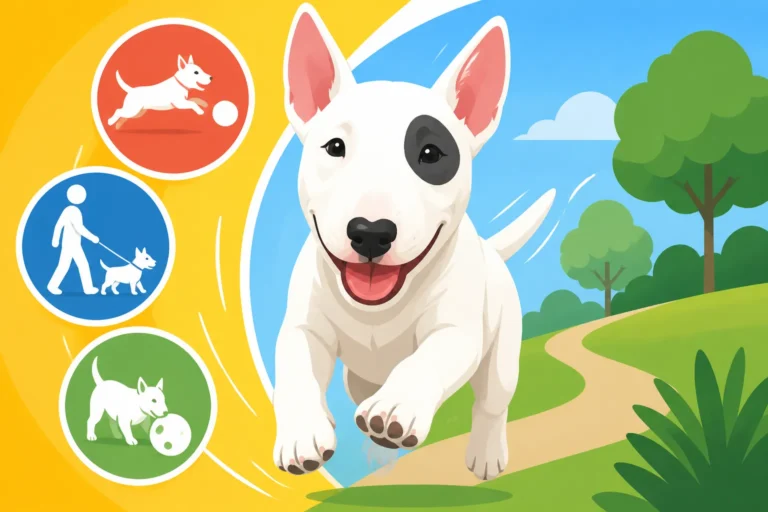
A Bull Terrier with pent-up energy or boredom is far more likely to engage in boisterous, body-slamming behavior. Ensuring your Bull Terrier receives adequate physical exercise and mental stimulation is paramount. This means more than just a quick stroll around the block. Think brisk walks, engaging play sessions in a securely fenced yard, or even structured training games. A tired Bull Terrier is generally a well-behaved Bull Terrier.
Consider introducing puzzle toys or chew toys that can keep them mentally engaged. Brands like KONG or Nylabone offer durable options for strong chewers, readily available on Amazon. For mental stimulation, short, frequent training sessions can be incredibly effective. Bull Terriers are smart but also notoriously stubborn, so keep sessions brief and fun. Engage their minds with basic obedience cues like Teaching a Bull Terrier to Sit and Stay or practicing impulse control games. The online training platform BAXTER & Bella offers a wealth of resources and programs that can help owners teach impulse control and manners, which are vital for reducing over-excitement. By channeling their energy positively, you reduce the likelihood of them using you as an outlet for their exuberance.
Using Management Tools and Environmental Control
Sometimes, training alone isn't enough, or you need a temporary solution while training is underway. This is where management tools come in handy. For walks, using a front-clip harness can significantly reduce pulling and give you more control, especially if your Bull Terrier is prone to sudden lunges. Which Harness Holds a Bull Terrier offers a deeper dive into selecting the right equipment. For greetings with guests, consider having your Bull Terrier on a leash until they've settled, or even crating them for a few minutes until the initial excitement subsides.
Creating a "safe zone" for guests, where your Bull Terrier cannot easily access them with a body slam, can also be helpful, especially for vulnerable individuals. This might mean using baby gates or keeping your Bull Terrier in a separate room initially. Teaching your Bull Terrier to "go to mat" or "place" can also be invaluable, giving them a designated spot to settle down when company arrives or when you need a moment of calm. Remember, management isn't a substitute for training, but it's a vital tool for preventing unwanted behaviors and ensuring safety while you work on building those good habits.
Disclaimer
This article is for general informational purposes only and does not constitute professional advice. Laws, prices and regulations vary by location and change over time. Consult a qualified professional for guidance on your specific situation.