Why an Overweight Bull Terrier Is Hard to Spot
It’s a common frustration for Bull Terrier owners: you look at your beloved companion, and they just seem… solid. Not fat, not skinny, but like a brick wall on four legs. This incredibly muscular and uniquely built breed makes it genuinely challenging to tell if they’re carrying a few extra pounds, even when those pounds are quietly creeping up and posing potential health risks. This guide will help you understand your Bull Terrier's distinctive physique and provide actionable strategies to accurately assess their weight, ensuring they stay healthy and happy.
The Bull Terrier's Deceptive Build: Muscle and Bone
Bull Terriers are known for their incredibly distinct physique, a blend of power and unique aesthetics that can make recognizing subtle weight changes a real head-scratcher. Their entire structure is designed for strength and compactness, which often means that any fat they gain doesn't present itself in the obvious ways you might see in other breeds. Owners often feel a sense of confusion, wondering if their dog is just "built like that" or if there's actually a problem lurking beneath that taut, short coat.
The "Egg Head" and Broad Chest
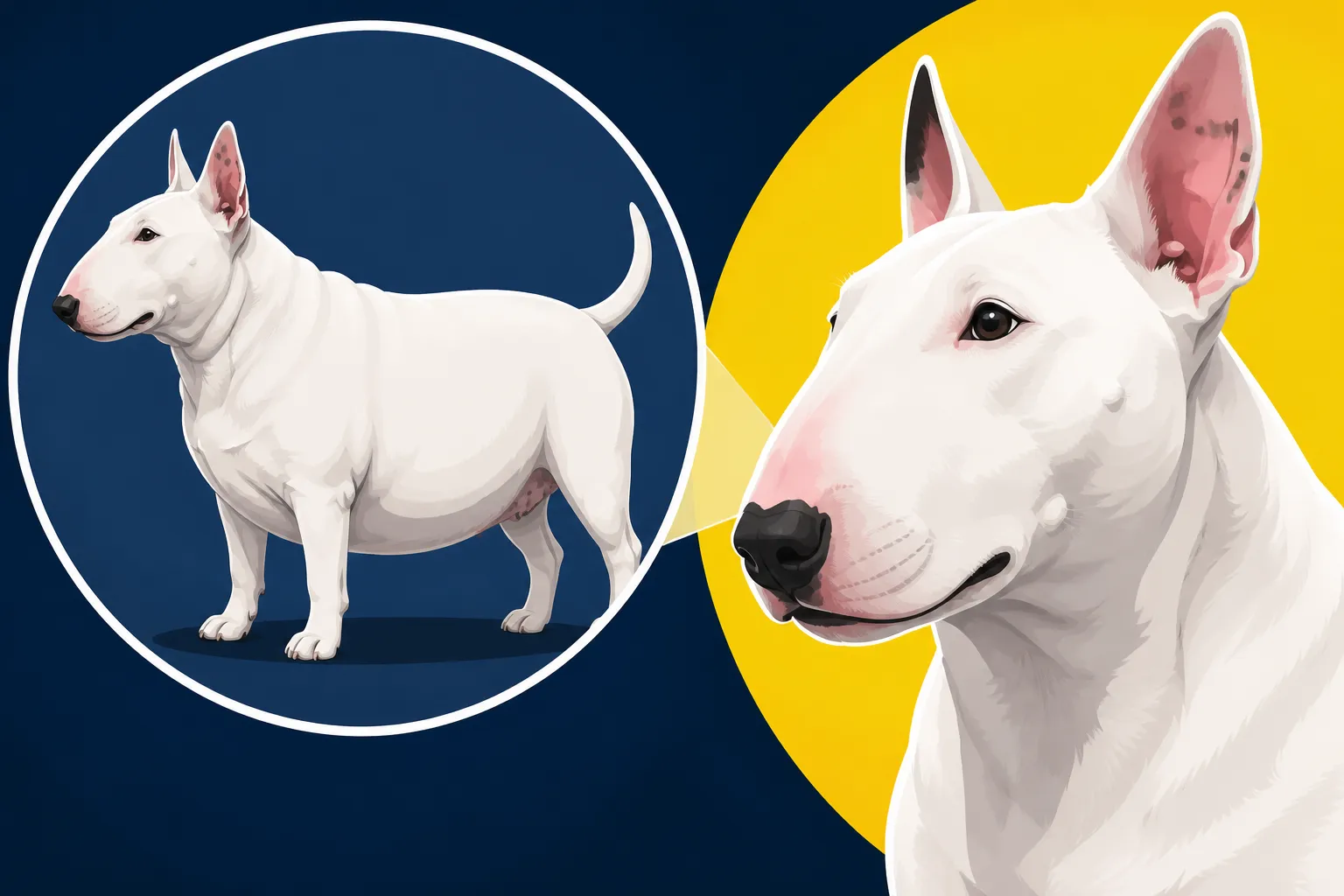
When you think of a Bull Terrier, that iconic "egg head" and broad, deep chest immediately come to mind. This isn't just a quirky aesthetic; it's fundamental to their bone structure and muscle distribution. Their skulls are dense, their necks are thick, and their chests are incredibly wide and deep, often making them appear stocky and robust even when they are in peak condition. This natural stoutness can easily mask the early signs of weight gain. You might look at your dog and think, "Well, they've always been solid," overlooking the fact that the definition in their shoulders or the slight taper of their waist might have subtly softened over time. It's not like looking at a Greyhound, where every rib and muscle ripple is on display. A Bull Terrier is built like a compact powerhouse, and that inherent bulkiness can be a very effective camouflage for a little too much indulgence.
Furthermore, the density of their bone structure adds to this illusion. They carry a lot of heft naturally, which contributes to their powerful presence. This means that a healthy Bull Terrier often feels heavier than you might expect for their size, and this inherent weight can make it difficult to discern if the extra poundage is muscle and bone or if a layer of fat is beginning to accumulate. Many owners, myself included, have stood over their Bull Terriers, scratching their heads, convinced they couldn't possibly be overweight because they just feel so "solid." It’s a trick of the eye and the hand, a testament to their unique evolutionary path.
Natural Musculature vs. Fat
Bull Terriers are incredibly muscular dogs, built with an athletic, powerful frame that once suited their original purposes. This robust musculature is a defining characteristic of the breed, giving them their characteristic strength and agility. However, this natural build can also be your biggest challenge when trying to spot an overweight dog. Unlike breeds with less defined muscle structure, where fat might stand out more readily, a Bull Terrier's abundant muscle mass tends to obscure extra fat, making it incredibly difficult to differentiate between a well-conditioned dog and one that’s getting a bit chubby.
Imagine trying to see subtle curves on a sculpted statue versus a more delicate figure. The Bull Terrier is the sculpted statue. Fat tends to settle underneath or around those strong muscles, rounding out their already powerful contours without immediately creating obvious rolls or sagging pouches. You might notice your Bull Terrier's legs look sturdy, their chest feels firm, and their back seems broad, all perfectly normal traits. But within that framework, a sneaky layer of adipose tissue can be building up, making them less agile, slower to rise, or less energetic without you even realizing why. This can lead to a vicious cycle where decreased activity contributes to more weight gain, which then further reduces their desire to move. It’s a frustrating reality that their impressive physique, a hallmark of the breed, is also the very thing that can make recognizing a problem so elusive.
How Fat Hides on a Bull Terrier's Unique Body
The Bull Terrier’s unique physical characteristics—from their short coat to their specific fat deposition patterns—make it a real detective mission to figure out if they’re packing on too many pounds. It’s not just about their overall solid build; it’s about the subtle ways their body shape changes that can easily be missed by even the most attentive owner.
The Illusion of a Smooth Coat
While it might seem counterintuitive, the Bull Terrier's short, tight, and wonderfully smooth coat, which is so easy to maintain, paradoxically makes it harder to spot weight gain. You’d think that with no long fur to hide anything, every lump and bump would be visible, right? Not quite. On a leaner, less muscular breed with a short coat, you might easily see a slight softening of the waistline or the hint of a rib if they're gaining weight. But on a Bull Terrier, that dense muscle and tight skin often create a very smooth, almost taut surface that doesn't easily show subtle changes.
When a Bull Terrier starts to put on weight, their entire frame just seems to get "fuller" rather than developing distinct rolls of fat, at least not initially. The skin remains smooth and pulled tight over the accumulating fat and muscle, making their body appear uniformly rounded instead of showing clear bulges or folds. This means that the visual cues you might look for in other breeds—like seeing a dog's ribs, which is often cited as a sign of a healthy weight—are tricky with a Bull Terrier. A healthy, lean Bull Terrier often won't have visible ribs due to their deep chest and heavy musculature, so relying on that visual alone won't tell you if they're carrying extra fat. It's a double-edged sword: easy grooming, difficult weight assessment.
Where Bull Terriers Store Fat
Understanding where Bull Terriers tend to accumulate fat is key to spotting an overweight dog. It's rarely a uniformly distributed blanket of flab, and it certainly doesn't always show up as an obvious potbelly in the initial stages. Instead, fat tends to gather in specific, often less obvious, areas that can easily be mistaken for normal breed characteristics.
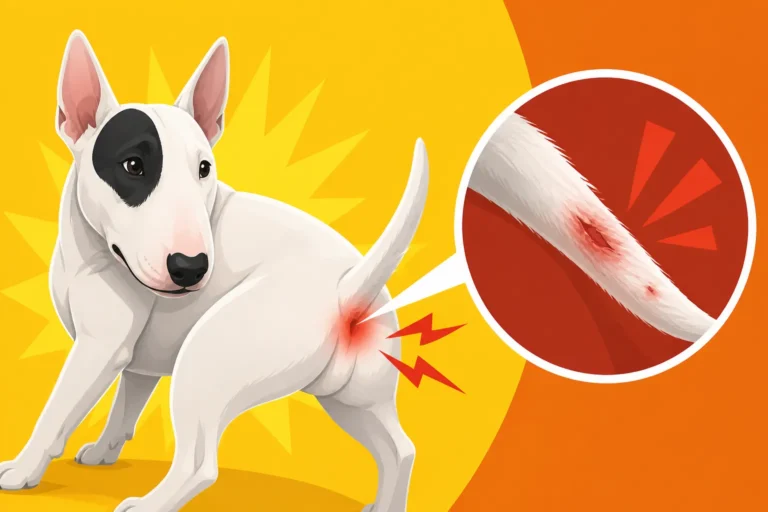
One of the most common spots is around the base of their tail. If you notice the area where the tail meets the body becoming broader, losing its natural taper, or feeling softer and squishier than usual, that's a prime indicator. Another sneaky place is over their hips and along their lower back. A healthy Bull Terrier should have a slight, discernible waist tucked behind their ribs; an overweight one will often lose this definition, appearing more cylindrical from above. The fat here can make their already broad back seem even wider and flatter. The Ten to Fourteen Years a Bull Terrier Gets depends on overall health and lifestyle, and keeping them at a healthy weight is a significant factor.
You might also find fat building up on their neck, making it appear thicker and less distinct from their shoulders, or behind their shoulders, making them look even more square. Their chest, already deep and wide, can also become excessively full, losing the athletic definition. Because these areas are already naturally substantial on a Bull Terrier, these changes can be easily dismissed as "just how they are." It takes a tactile examination, and a keen eye for subtle changes in contour, to truly catch these sneaky deposits of fat before they become a more significant problem.
Beyond the Eyeball Test: Objective Ways to Assess Weight
Relying solely on your eyes to gauge a Bull Terrier's weight is a recipe for missing crucial signs. Their unique build and muscle mass make visual assessment incredibly misleading. To truly understand if your Bull Terrier is at a healthy weight, you need to get hands-on and employ more objective, measurable techniques. This isn't just about looking; it's about feeling and tracking.
The Rib and Waistline Check
This is where the real work begins, and it requires you to get tactile with your Bull Terrier. The "rib check" is often misinterpreted for Bull Terriers because, as we've discussed, you typically won't see their ribs at a healthy weight due to their dense musculature and deep chest. Instead, you need to feel for them. Run your hands along your Bull Terrier's sides, over their rib cage. You should be able to easily feel each rib, almost like feeling the knuckles of your hand under a thin layer of skin. If you have to press firmly to feel them, or if it feels like a thick cushion of fat is covering them, then your dog is likely overweight. The ribs shouldn't be visible, but they absolutely should be easily palpable.
Next, move to the waistline. Look at your Bull Terrier from above while they are standing. A healthy Bull Terrier, even with their broad chest, should have a discernible tuck behind their last rib, before their hips. It won't be as dramatic as some sighthounds, but there should be a clear indentation, not a straight line from chest to hips. Now, view them from the side. Their abdomen should tuck up slightly from their chest, not hang low or be completely flat. If their waistline looks like a straight barrel, or worse, bulges outwards, that's a strong indicator of excess weight. Many owners miss this subtle change, thinking their dog's straight profile is normal, when in fact, a healthy Bull Terrier should still have that athletic silhouette.
Here's a quick reference for these essential checks:
| Feature | Healthy Bull Terrier | Overweight Bull Terrier |
|---|---|---|
| Ribs (Feel) | Easily felt with light pressure, like knuckles. | Hard to feel without firm pressure; padded. |
| Waist (Top View) | Visible tuck behind the ribs, slight hourglass shape. | Straight line from chest to hips, no tuck, or bulging. |
| Waist (Side View) | Abdomen tucks up slightly from the chest. | Abdomen hangs low or appears flat/bulging. |
| Base of Tail | Smooth transition, bones palpable. | Round, soft, fat cushion at tail base. |
For a detailed guide on what to look for, check out How to Feel a Bull Terrier's Ribs. This hands-on approach is far more reliable than just looking.
Regular Weight Monitoring and Body Condition Scoring
Because the visual and tactile checks can still be somewhat subjective, incorporating objective measurements into your routine is paramount. Consistent weight monitoring and using a standardized Body Condition Score (BCS) chart are your best friends in preventing and managing obesity in your Bull Terrier. Don't just rely on guesswork or occasional observations; make it a regular habit.
Weighing your Bull Terrier regularly – perhaps once a month at your vet's office (most vets are happy for you to pop in for a quick weigh-in) or on a sturdy home scale designed for pets – provides a concrete data point. Track this number. Even a gain of a pound or two can be significant for a medium-sized dog like a Bull Terrier and is much easier to address early than five or ten pounds down the line. Remember, What an Adult Bull Terrier Should Weigh can vary, but consistent monitoring helps you see trends specific to your dog.
The Body Condition Score (BCS) is a veterinarian-approved tool that removes much of the guesswork. Typically, a BCS scale ranges from 1 (emaciated) to 9 (severely obese), with an ideal score being 4 or 5. These charts usually include diagrams and descriptions to help you assess your dog based on visual and tactile cues, focusing on areas like the ribs, waist, and spine. While general charts are useful, apply them with a Bull Terrier lens, keeping their natural musculature in mind. Your vet can demonstrate how to properly assess your Bull Terrier's BCS, offering invaluable guidance on their optimal score. Don't be shy about asking them during your next wellness checkup. Tools like these help clarify How Many Calories a Bull Terrier Needs to maintain that ideal score. You can often find detailed BCS charts and even scales suitable for home use on sites like Amazon, making it easier to keep up with this crucial monitoring.
The Health Risks of an Overweight Bull Terrier and How to Prevent It
Ignoring those extra pounds on your Bull Terrier isn't just about aesthetics; it's about safeguarding their long-term health and quality of life. An overweight Bull Terrier faces a higher risk of developing, or exacerbating, several serious health issues that can significantly impact their well-being and shorten their lifespan. It's a heavy topic, but one every Bull Terrier owner needs to face head-on.
The Hidden Dangers
The "hidden dangers" of an overweight Bull Terrier are particularly insidious because their robust build can mask the internal strain these extra pounds are putting on their body. Think about it: a Bull Terrier is already a stocky, heavy-boned breed. Adding excess fat on top of that natural bulk is like asking a weightlifter to carry an extra 20 pounds around all day, every day. This increased load places immense stress on their joints, even if they aren't traditionally prone to certain orthopedic issues like some larger breeds. Conditions like Patellar Luxation in a Bull Terrier, while often genetic, can be made significantly worse by carrying too much weight, leading to earlier onset or more severe symptoms. The cartilage and ligaments simply weren't designed to support that sustained, unnecessary pressure.
Beyond the musculoskeletal system, an overweight Bull Terrier is at a higher risk for a cascade of other health problems. Their hearts, already working hard to pump blood through their powerful bodies, face added strain, potentially exacerbating existing conditions like What Mitral Valve Dysplasia Does to a Bull Terrier or predisposing them to new cardiac issues. They are also more susceptible to metabolic diseases, including diabetes, and their overall immune function can be compromised. Overheating is also a concern, especially for a muscular dog with a short muzzle that might struggle to dissipate heat effectively; extra insulation from fat makes this even harder. Whether a Bull Terrier Needs a Cooling Mat can become a more critical question if they're carrying extra weight, especially in warmer climates. The sad truth is, while we adore their solid, powerful presence, letting them become overweight quietly chips away at their health from the inside out.
Tailored Exercise and Diet
Preventing and managing weight in a Bull Terrier comes down to a consistent, tailored approach combining appropriate exercise and a carefully controlled diet. This isn't about deprivation, but about balance and understanding what your individual dog needs. Bull Terriers are incredibly energetic, even if they have a reputation for being couch potatoes after a good run. They need consistent, engaging activity, not just a quick potty break. How Much Exercise a Bull Terrier Actually Needs is often more than people assume, and it needs to be mentally stimulating too, as What a Bull Terrier Does When It Is Bored often involves destructive behaviors that can also burn calories if channeled correctly.
Regular walks, vigorous playtime in a securely fenced yard, or even dog sports like agility or obedience can help burn calories and build lean muscle. Just remember that their powerful build means they're strong, so managing them on a leash is paramount. Exercise also helps reduce stress, which can sometimes contribute to weight gain.
When it comes to diet, portion control is absolutely critical. Avoid free-feeding, where food is left out all day. Instead, measure out their meals accurately and feed them twice a day. How Much an Adult Bull Terrier Eats varies based on age, activity level, and metabolism, so work with your vet to determine the ideal caloric intake. High-quality dog food, like options found on Chewy, provides essential nutrients without excessive fillers. Some brands, like Ollie, even offer customized meal plans that can be incredibly helpful for managing weight, ensuring your Bull Terrier gets exactly what they need in the right portions. If your Bull Terrier eats too quickly, which many do – How Fast a Bull Terrier Eats is often a race! – consider a slow-feeder bowl or puzzle feeder to make mealtime last longer and aid digestion. And for treats, stick to low-calorie options and factor them into their daily caloric intake. Which Treats Suit a Bull Terrier on a Diet often involves crunchy vegetables or small pieces of lean meat. It's a holistic approach that ensures your beloved Bull Terrier stays at their healthy, active best for as long as possible.
Disclaimer
This article is for general informational purposes only and does not constitute professional advice. Laws, prices and regulations vary by location and change over time. Consult a qualified professional for guidance on your specific situation.