How to Trim a Bull Terrier’s Nails Without a Fight
If you’re a Bull Terrier owner, the phrase "nail trim" might send a shiver down your spine – and probably your dog's too! It often feels less like a simple grooming task and more like a full-contact wrestling match, leaving both of you stressed, frustrated, and sometimes even a little bit hurt. This guide is here to help you transform that dreaded ordeal into a manageable, and dare I say, almost pleasant routine for both you and your beloved Bull Terrier.
Why Nail Trims Become a Battleground for Bull Terriers
It’s easy to feel like your Bull Terrier is just being stubborn or difficult when they fight a nail trim. But often, there's more to it than simple defiance. Their reactions stem from a combination of natural instincts, past experiences, and sometimes, even physical discomfort. Understanding these root causes is the first step toward finding a more peaceful path.
The Fear Factor and Past Traumas
Bull Terriers, for all their robust appearance and clownish antics, can be surprisingly sensitive creatures. A negative experience, especially one involving pain, can leave a lasting impression. If their quick (the sensitive part of the nail containing blood vessels and nerves) has been cut even once, they remember it. That sharp, sudden pain, the bleeding, and your own worried reaction can create a strong aversion. Each subsequent attempt, even if you’re perfectly careful, can trigger that fear response. They associate the clippers or the Dremel with discomfort, and they’ll do everything in their power to escape it. This isn't just a Bull Terrier being difficult; it's a dog trying to protect itself from what it perceives as a threat. They might be trying to tell you, in the only way they know how, "I don't trust this process because it has hurt me before." They are, after all, a breed that trains When It Sees the Point, and if the point of nail trims has been pain, they're going to opt out.
Physical Discomfort and Handling Aversion
Beyond fear of the quick, some Bull Terriers simply don't enjoy having their paws handled. Their paws are vital tools for exploration, play, and movement, and being held still or having pressure applied can feel unnatural or even threatening. For some dogs, this aversion can be exacerbated by underlying physical issues. Arthritis, an old injury, or even just general stiffness, especially in an older Bull Terrier, can make flexing and holding a paw uncomfortable or painful. Bull Terriers are known for being stoic, and they often try to hide pain, so a subtle limp or discomfort might not be obvious until you touch a sensitive area. How a Bull Terrier Hides Pain is a real phenomenon, making it crucial to rule out any medical reasons for their resistance. If every attempt to touch their paws results in them pulling away or showing signs of pain, a vet check-up might be in order before you even pick up the clippers. Their powerful physique, while impressive, also means that restraining a resisting Bull Terrier is not only difficult but can escalate their fear and make future attempts even harder.
Setting the Stage for Success: Tools and Environment
You wouldn't attempt a delicate task with the wrong equipment or in a chaotic environment, and nail trimming for your Bull Terrier is no different. The right tools, combined with a carefully prepared space, can significantly reduce stress and improve your chances of a successful, peaceful session.
Choosing the Right Tools
Having the right equipment is paramount. Dull clippers or a weak Dremel can make the job longer, more painful, and more frustrating for everyone involved.
- Clippers: There are two main types: scissor-style and guillotine. For a Bull Terrier's thick, strong nails, scissor-style clippers are often preferred as they provide more leverage and control. Look for a heavy-duty, sharp pair. Dull clippers will crush the nail rather than cut it cleanly, causing discomfort and making your Bull Terrier even less cooperative. Quality clippers don't have to break the bank, and you can often find reliable options on sites like Chewy or Amazon.
- Dremel/Grinder: Many Bull Terrier owners swear by a rotary tool (like a Dremel) for nail care. Grinders offer a more gradual approach, allowing you to take off tiny layers at a time, which significantly reduces the risk of quicking. This can be a huge relief for dogs with dark nails where the quick is hard to see. The downside is the noise and vibration, which can be frightening for some dogs. If you opt for a Dremel, choose a quiet, cordless model designed for pets. You can find a range of options on Amazon.
- Styptic Powder: This is an absolute non-negotiable item to have on hand, always. Even with the utmost care, accidents happen. Styptic powder (often containing benzocaine to numb and ferric subsulfate to stop bleeding) will quickly staunch any bleeding from a quicked nail. Having it immediately accessible shows your Bull Terrier that even if there’s a mishap, you can fix it swiftly, preventing a full-blown panic. Many pet supply stores and online retailers like Chewy carry various brands.
Creating a Calm and Safe Space
The environment plays a huge role in your Bull Terrier's emotional state during a nail trim. Think of it as creating a spa experience, not a dental appointment.
- Location, Location, Location: Choose a quiet room where you won't be interrupted. A non-slip surface is critical – a bath mat or a yoga mat can provide good grip and make your Bull Terrier feel more secure, preventing them from sliding around, which can be a huge source of anxiety for dogs. You might even consider purchasing a durable non-slip mat specifically for grooming, available on sites like Amazon.
- Distraction is Your Best Friend: High-value treats are key. We’re talking about treats so good your Bull Terrier would perform circus tricks for them. Think cheese, cooked chicken, peanut butter (xylitol-free!), or even a portion of their regular meal mixed with something truly enticing. A lick mat smeared with peanut butter or a stuffed Kong can keep them occupied for several minutes, allowing you to work on multiple nails. Brands like Ollie offer fresh, human-grade food that can be fantastic high-value distractions.
- Lighting Matters: Good lighting is crucial, especially if your Bull Terrier has dark nails. You need to clearly see the outline of the quick to avoid cutting too far back. A bright overhead light or a headlamp can make all the difference.
- Your Mindset: Your Bull Terrier is incredibly attuned to your emotions. If you’re tense, rushed, or frustrated, they will pick up on it immediately and mirror that anxiety. Take a few deep breaths. Approach the task with patience, calm, and a positive attitude. Even if it takes longer than you'd like, keeping your cool will pay off in the long run.
Here’s a quick comparison of the main tools:
| Tool Type | Pros for Bull Terriers | Cons for Bull Terriers | Best For |
|---|---|---|---|
| Scissor-Style Clippers | Powerful cut for thick nails, quick results. | Higher risk of quicking, especially with dark nails. | Confident owners, dogs accustomed to clipping, quick touch-ups. |
| Guillotine Clippers | Often spring-loaded, can be easy to handle for smaller nails. | Less control on very thick nails, can pinch. | Smaller dogs, or Bull Teriers with unusually delicate nails (rare). |
| Rotary Tool (Dremel) | Reduces quicking risk, smooth finish, gradual removal. | Noise and vibration can be scary, takes longer, generates heat. | Nervous dogs, dark nails, maintaining short nails, desensitization. |
The Gentle Approach: Step-by-Step Training and Trimming
The key to a successful nail trim with a Bull Terrier isn't about brute force; it's about building trust and positive associations. This often means breaking down the process into tiny, manageable steps and celebrating every small victory.
Desensitization and Positive Association
This is where the real work, and the real magic, happens. If your Bull Terrier already has a negative association with nail trims, you need to rewire their brain to think of it as a good thing. This takes time, patience, and a lot of high-value treats.
- Start with Touch: Begin by simply touching their paws gently, for just a second. Immediately reward with a treat and praise. Repeat this many times a day, every day. Gradually increase the duration of the touch, and then start handling individual toes. The goal is for them to not just tolerate paw touching but to actively enjoy it because it predicts treats.
- Introduce the Tools: Once paw handling is a non-issue, bring out the clippers or Dremel. Don't do anything with them yet! Just let your Bull Terrier sniff them, then give a treat. Place the tools on the floor near them while they eat. The idea is to make the tools a neutral, even positive, part of the environment.
- Simulate the Action:
- For Clippers: Gently touch the clippers to their nails, without actually clipping. Treat. Repeat. Then, make the clipping sound (away from their paw) and immediately treat. Gradually, you can combine the sound with touching the clippers to their nails, then treating.
- For Dremel: This requires more patience due to the noise and vibration. First, turn the Dremel on across the room while giving treats. Gradually move it closer over several sessions. Then, touch the off Dremel to their nails and treat. Finally, touch the on Dremel to one nail for a fraction of a second, then immediately remove and treat.
Remember, for a Bull Terrier, positive reinforcement is key because they only truly engage when A Bull Terrier Trains When It Sees the Point. You are building a new, positive point for nail trims.
The Trimming Technique (Clippers)
Once your Bull Terrier is comfortable with the tools and paw handling, you can begin the actual trimming, always remembering to go slowly and reward generously.
- Positioning: Find a position that is comfortable for both of you. Some owners prefer to have their Bull Terrier lie down, others might prefer them standing. Ensure they are on a non-slip surface.
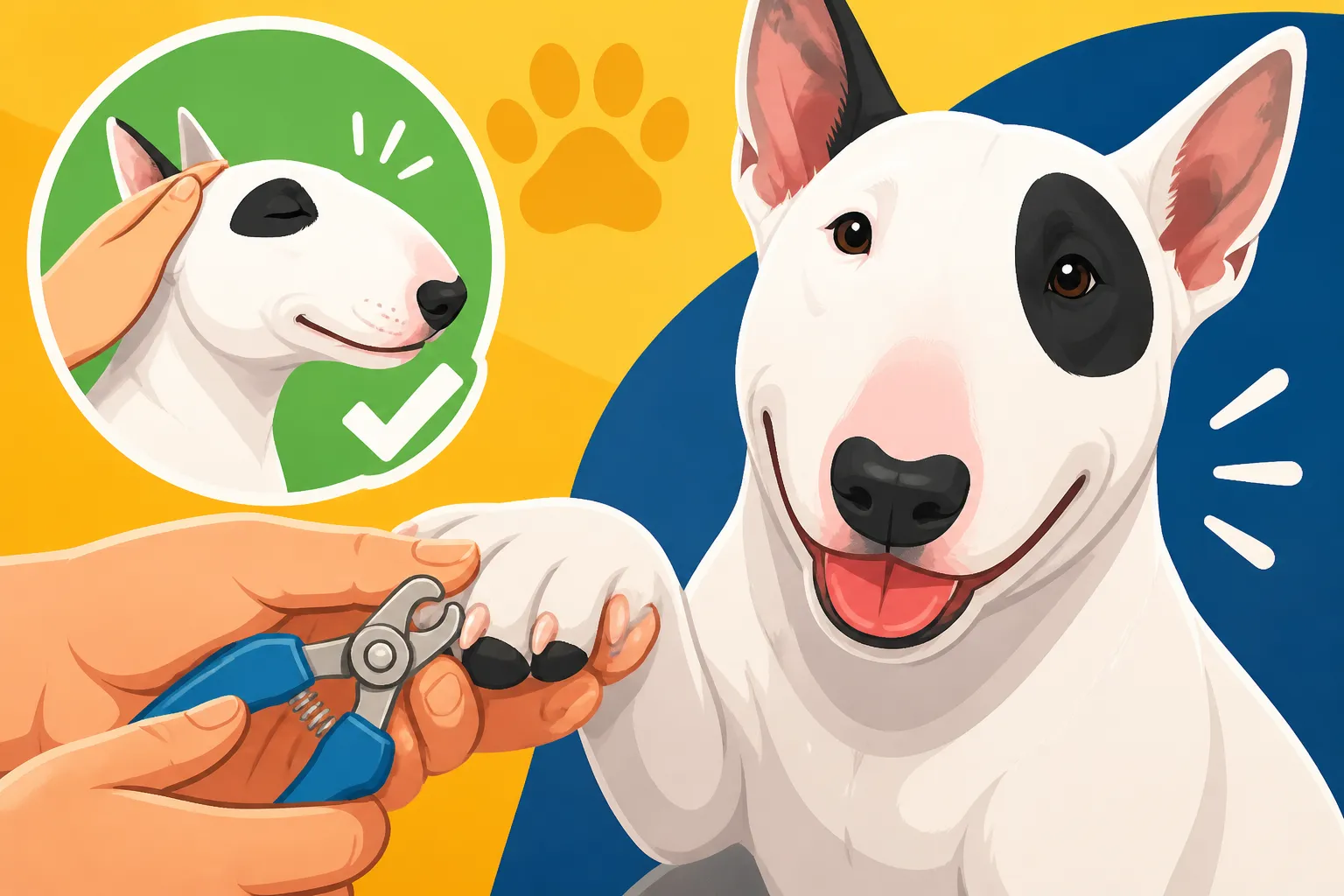
- Hold Firmly but Gently: Pick up a paw and gently, but firmly, hold one toe. This prevents sudden jerks that could lead to an accidental quicking.
- Identify the Quick: On white nails, the quick is usually visible as a pink area within the translucent nail. On dark nails, it’s much harder. Look for the crescent-shaped indentation on the underside of the nail, or a small grey/black dot in the center. The goal is to trim only the tip, just before this point.
- Clip Small Amounts: Don't try to take off too much at once. It's always better to clip tiny amounts frequently than to risk cutting into the quick. Aim for a 45-degree angle.
- Reward, Reward, Reward: After each successful clip, give a high-value treat and enthusiastic praise. If your Bull Terrier tolerates multiple clips in a session, great! If they only allow one or two before getting fidgety, stop there and try again later or the next day. How Often a Bull Terrier's Nails Need Trimming depends on their growth rate, but frequent, short sessions are far superior to infrequent, stressful ones.
The Grinding Technique (Dremel)
Using a Dremel offers a smooth finish and a lower risk of quicking, but it requires its own technique.
- Secure the Paw: Just like with clippers, hold the paw gently but firmly. You want to ensure stability and keep hair away from the rotating head.
- Short Bursts: Instead of continuous grinding, use short bursts of 1-2 seconds per nail. This prevents heat buildup, which can be uncomfortable for your Bull Terrier.
- Angle and Shape: Hold the Dremel at a slight angle, grinding from the bottom of the nail up to the tip. You want to create a smooth, rounded edge.
- Check for Heat: Periodically touch the nail to check for warmth. If it feels warm, take a break before continuing.
- Reward Consistently: Again, treat and praise after each successful nail. If the Dremel's noise or vibration still makes your Bull Terrier nervous, a lick mat or stuffed Kong can be a wonderful distraction during the session.
Making It a Routine, Not a Ruckus
Consistency is key to making nail trims a non-event. Short, frequent sessions (even just doing one or two nails a day) are far more effective than trying to do all four paws in one grueling battle every few weeks. Incorporate paw handling into your daily interactions, separate from actual trimming. Massage their paws, inspect their pads, and make it a pleasant experience. You can also work on training them to settle calmly on a mat during grooming. Teaching a Bull Terrier to Settle on a Mat for a designated 'spa spot' can help create a predictable and comfortable routine.
Troubleshooting and Maintaining Progress
Even with the best intentions and techniques, things can sometimes go awry, or you might hit a plateau. It’s important to have strategies for addressing continued fear or aggression and to maintain the positive progress you’ve made.
When Fear Takes Over: De-escalation and Professional Help
If your Bull Terrier remains genuinely terrified, or worse, shows signs of aggression like growling, snapping, or trying to bite, it’s crucial to stop and re-evaluate. Forcing the issue will only escalate their fear and damage your bond.
- De-escalation: If a session turns sour, calmly put the tools away. Don't punish or scold your Bull Terrier for their fear. Instead, try to end on a neutral or slightly positive note, if possible – perhaps with a gentle stroke and a treat for just being near you.
- Professional Groomer: A professional groomer has experience with many breeds and temperaments. They often have specialized equipment, like grooming tables with harnesses, that can make the process quicker and safer. They can also provide a fresh start, as your Bull Terrier won't associate them with past negative experiences. Sometimes, just having someone else do it can break the cycle of fear.
- Veterinary Assistance: If fear is extreme or if your Bull Terrier shows aggression, consult your veterinarian. They can rule out any underlying medical conditions causing pain or discomfort. In some cases, for dogs with severe anxiety or aggression during grooming, a vet might recommend mild sedatives or anti-anxiety medication to make the experience less traumatic. This isn't a long-term solution but can be a valuable tool to get past an initial hurdle and allow positive reinforcement training to begin from a calmer baseline. It's important to discuss What a Vet Charges to Trim a Bull Terrier's Nails, as this can be an ongoing expense if you can't manage it at home.
Keeping Nails Short Between Trims
Trimming is only one part of nail care. Maintaining short nails between official sessions can make the actual trimming much easier and less frequent.
- Natural Wear: Regular walks on abrasive surfaces like pavement, concrete, or even rough trails can help naturally wear down your Bull Terrier's nails. However, be realistic: for many Bull Terriers, especially those with robust nails, walks alone won't be enough to keep them perfectly short. It's a supplemental aid, not a complete solution.
- Continue Positive Reinforcement: Even when you’re not actively trimming, continue practicing paw handling exercises with treats. Keep the tools visible and associated with good things. This reinforces the positive association and keeps the foundation strong.
- Enrichment Toys: Engage your Bull Terrier with toys that can help distract and provide positive mental stimulation. Using Which Puzzle Toys Occupy a Bull Terrier during or immediately after a short nail session can help associate the entire process with reward and fun. This shifts their focus from the mild discomfort to the exciting treat.
Adapting for the Aging Bull Terrier
As our beloved Bull Terriers get older, their needs change, and nail trimming might require some adjustments. Caring for an Old Bull Terrier involves recognizing these shifts.
- Increased Sensitivity and Joint Pain: Older Bull Terriers might develop arthritis or other joint issues, making it painful to hold their paws in certain positions or to stand for extended periods. Be extra gentle, and consider having them lie down on a soft, supportive bed or mat during trims.
- Nail Changes: Senior Bull Terriers' nails can become thicker, more brittle, or grow in unusual ways. This can make them harder to clip and more prone to splitting. A Dremel might become a gentler option if clipping becomes too difficult.
- Vision and Hearing: Their senses might decline, making them more easily startled by sudden movements or the sound of the clippers/Dremel. Approach them slowly, speak softly, and ensure they can see you clearly. If they're showing signs of discomfort or pain during paw handling, remember that How a Bull Terrier Hides Pain means you need to be extra vigilant and consult your vet to rule out any new health issues.
Ultimately, successfully trimming your Bull Terrier's nails without a fight comes down to a blend of understanding, patience, the right tools, and a consistent commitment to positive reinforcement. It's not about winning a battle, but about fostering trust and ensuring their comfort and health throughout their lives.
Disclaimer
This article is for general informational purposes only and does not constitute professional advice. Laws, prices and regulations vary by location and change over time. Consult a qualified professional for guidance on your specific situation.