Whether a Bull Terrier Needs Zinc
As a Bull Terrier owner, you're always on the lookout for anything that might affect your quirky, loving companion. One nutritional concern that often pops up in discussions about Bull Terriers, especially given their unique genetic predispositions, is zinc. It’s not just about giving a supplement; it’s about understanding a complex interaction between genetics, diet, and overall health. This guide will thoroughly explore whether your Bull Terrier needs zinc, why it matters, and how to navigate the specific challenges this breed can face.
The Essential Role of Zinc in Canine Health
Before we dive into the specifics of Bull Terriers, it's crucial to understand why zinc is such a powerhouse mineral for all dogs. It’s not just some obscure trace element; it’s fundamental to countless bodily functions, acting as a crucial cog in the machine that keeps your dog healthy.
Why Zinc is Critical for All Dogs
Zinc is an essential trace mineral, meaning dogs need it in small but consistent amounts. It's involved in over 300 enzymatic reactions in the body, making its presence vital for proper functioning from nose to tail. Think of it as a microscopic manager, overseeing operations in every cell. For starters, zinc plays a massive role in immune system function. Without enough zinc, a dog's ability to fight off infections can be severely compromised, leaving them vulnerable to various illnesses. It’s a key component in the development and function of white blood cells, which are the body’s first line of defense.
Beyond immunity, zinc is indispensable for healthy skin and coat. It helps maintain the integrity of the skin barrier, promotes wound healing, and ensures that your dog’s fur is shiny and strong. Reproductive health is another area where zinc shines; it's essential for hormone production and fertility in both male and female dogs. Growth and development, especially in puppies, rely heavily on adequate zinc intake. It's involved in cell division and protein synthesis, ensuring proper tissue and organ formation. Even something as basic as appetite and taste perception can be affected by zinc levels. When a dog isn't getting enough, their entire system can feel the ripple effect.
Common Signs of General Zinc Deficiency
A general zinc deficiency, separate from the breed-specific issue we'll discuss, can manifest in several ways, often starting with the most visible parts of your dog: their skin and coat. You might notice dry, flaky skin, poor coat quality, or even patches of hair loss, especially around pressure points like elbows and hocks. Wounds might take an unusually long time to heal, or minor scrapes could become easily infected, pointing to a compromised immune response.
Beyond the visible, other signs can be more subtle. A dog with a zinc deficiency might experience a decrease in appetite, leading to weight loss over time. They might seem lethargic or just "off." In severe cases, particularly in growing puppies, a lack of zinc can lead to stunted growth and skeletal abnormalities. Diarrhea and vomiting can also be symptoms, as zinc plays a role in gastrointestinal health. If you suspect your dog might have a general zinc deficiency, perhaps because they're on a homemade diet that isn't properly balanced, or if they have an underlying condition affecting nutrient absorption, a conversation with your vet is definitely in order. They can help determine if it's truly a deficiency or something else entirely.
Bull Terriers and Their Unique Zinc Challenge: Lethal Acrodermatitis (LAD)
Now, let's get to the heart of the matter for our Bull Terriers. While any dog can potentially suffer from a general zinc deficiency, Bull Terriers carry a specific genetic burden that makes zinc a far more complex and heartbreaking issue: Lethal Acrodermatitis, or LAD.
What Makes LAD Different from a Simple Zinc Deficiency
It's vital to understand that LAD is not a simple dietary zinc deficiency. You can't just sprinkle some zinc on your Bull Terrier's food and fix it, which is often a source of frustration and confusion for owners. A regular zinc deficiency means the dog isn't getting enough zinc in their diet or can't absorb it well due to some external factor. LAD, however, is an inherited metabolic disorder where the Bull Terrier's body is unable to properly utilize the zinc it does absorb. It’s a bit like having a car with plenty of fuel in the tank, but the engine is wired wrong and can’t use that fuel to drive.
This means that even if a Bull Terrier puppy with LAD is eating a perfectly balanced diet rich in zinc, their cells simply cannot process it to perform the necessary functions. This fundamental difference is why LAD is so devastating and why conventional zinc supplementation doesn't work to cure it. It’s a genetic flaw in the metabolic pathway, not a dietary oversight. Why an Acrodermatitis Bull Terrier Cannot Absorb Zinc goes into more detail about this specific biological hurdle.
The Genetic Basis of LAD in Bull Terriers
Lethal Acrodermatitis is an autosomal recessive genetic disorder. What does that mean for us, the Bull Terrier lovers? It means a puppy must inherit two copies of the defective gene – one from each parent – to be affected by the disease. If a puppy inherits only one copy, they are considered a "carrier" but will not show symptoms of LAD themselves. They can, however, pass that gene on to their own offspring if bred.
The specific gene responsible for LAD in Bull Terriers has been identified, which has been a monumental step forward for the breed. Which Gene Causes Acrodermatitis in Bull Terriers explains the science behind this discovery. This knowledge allows responsible breeders to test their breeding stock and make informed decisions to avoid producing affected puppies. Unfortunately, before the genetic test became widely available, LAD puppies were often born into litters from seemingly healthy parents who were unknowingly carriers. This discovery changed the game for the future of the breed, offering hope that this tragic condition can eventually be eliminated.
How LAD Impacts a Bull Terrier's Ability to Use Zinc
Imagine zinc as a key, and the body's cells have specific locks that zinc needs to open to do its job. In a Bull Terrier with LAD, those locks are faulty. The zinc gets into the bloodstream from the gut, but it can't get into the cells where it's desperately needed. This cellular inability to process zinc leads to a profound and systemic deficiency at a cellular level, despite adequate zinc levels appearing in the diet or even in blood tests initially.
The impact is widespread and severe. Zinc is crucial for rapidly dividing cells, especially those in the skin and immune system. When these cells can't get the zinc they need, they malfunction and fail to develop correctly. This leads to the characteristic skin lesions, immune system collapse, and failure to thrive seen in affected puppies. The body essentially starves for zinc at a cellular level, even if the dog is consuming plenty of it. This is why What Lethal Acrodermatitis Does to a Bull Terrier describes a condition that is so much more than just a rash.
Identifying Symptoms of Zinc-Related Issues in Your Bull Terrier
Spotting issues early is always the goal, but with zinc problems in Bull Terriers, especially LAD, the signs can be particularly distressing. Knowing what to look for can help you seek veterinary care promptly.
Distinctive Skin and Paw Manifestations
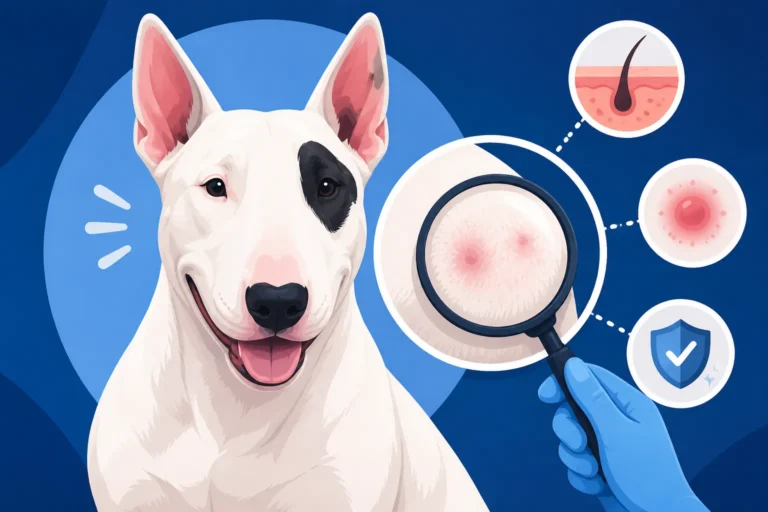
For Bull Terriers with LAD, the skin and paws are usually the first places where the severe lack of usable zinc manifests. You'll often see distinct, symmetrical skin lesions, particularly on the pressure points, around the eyes, mouth, ears, and genitals. These lesions can be thick, crusty, and hyperpigmented (darkened), often resembling severe eczema or psoriasis. The skin can become incredibly inflamed and prone to secondary bacterial or fungal infections, making the dog extremely uncomfortable and itchy.
The paws are another key area. Puppies with LAD often develop thickened, cracked, and painful paw pads. These can become so severe that they interfere with walking, and the pads might even bleed or ulcerate. The nails can also become brittle or deformed. Many owners describe their What an Acrodermatitis Bull Terrier's Paws Look Like as being incredibly sore and visibly abnormal. What starts as what might look like a minor skin irritation quickly escalates into debilitating discomfort, which, combined with immune suppression, opens the door for opportunistic infections that further complicate the picture.
Growth, Immunity, and Behavioral Changes
Beyond the visible skin and paw issues, a Bull Terrier puppy suffering from LAD will show signs of systemic failure. Growth is severely stunted; affected puppies often fail to gain weight and remain significantly smaller than their littermates. Why an Acrodermatitis Bull Terrier Puppy Stops Growing explains that this isn't just a matter of calories, but a fundamental failure of cellular development. Their immune systems are severely compromised, leading to recurrent, severe infections that are difficult to treat. They might suffer from chronic diarrhea, respiratory infections, or ear infections that just won't clear up. Why an Acrodermatitis Bull Terrier Catches Every Infection truly highlights how vulnerable these puppies become.
Behaviorally, these puppies are often lethargic, weak, and generally unwell. They lack the typical playful exuberance of a healthy Bull Terrier puppy. They might also exhibit poor appetite or difficulty eating due to oral lesions, and some may even have an arched palate, further complicating feeding. Their quality of life is severely impacted, and the cumulative effect of these issues makes LAD a truly "lethal" condition. Owners often see these issues escalating between 4 and 7 weeks of age, leading to a rapid decline. Signs a Bull Terrier Puppy Has Acrodermatitis can help you recognize these early, crucial indicators.
Diagnosing Zinc-Related Conditions in Bull Terriers
Getting an accurate diagnosis is paramount, especially when facing a condition as serious as LAD. It’s not always a straightforward path, but modern veterinary medicine offers crucial tools.
The Crucial Role of Genetic Testing for LAD
For any Bull Terrier breeder or owner considering breeding, genetic testing for LAD is not just recommended, it's absolutely essential. Since LAD is an inherited condition, a simple DNA test can identify whether a dog is clear, a carrier, or affected. This test typically involves a buccal swab, which is a non-invasive way to collect cells from inside the dog's cheek. The sample is then sent to a specialized lab for analysis.
Knowing the genetic status of potential breeding dogs means breeders can avoid mating two carriers, thereby preventing the birth of affected puppies. If one parent is a carrier, and the other is clear, none of the puppies will be affected by LAD, though some may be carriers. If both parents are clear, all puppies will be clear. This proactive approach is the most effective way to combat LAD within the breed. Whether the Bull Terrier Acrodermatitis Test Is Reliable explores the efficacy of these tests, which have become a cornerstone of responsible Bull Terrier breeding programs. It's a small investment with a massive payoff in preventing heartbreak.
Differentiating General Zinc Deficiency from LAD
This is where things can get a bit tricky for veterinarians and owners alike, especially if the genetic status of a puppy is unknown. The symptoms of a severe general zinc deficiency can sometimes mimic early signs of LAD, particularly the skin lesions. However, the key difference lies in the underlying cause and response to treatment.
A general zinc deficiency might occur in a non-Bull Terrier breed, or even a Bull Terrier that isn't genetically predisposed to LAD, due to a diet lacking sufficient zinc, or other absorption issues. In these cases, a course of appropriate zinc supplementation can often lead to a significant improvement in symptoms relatively quickly. For LAD, as we’ve discussed, standard zinc supplementation simply doesn't work because the cellular metabolism is flawed. The puppy might temporarily appear to improve, but the underlying issue remains, and the condition invariably progresses. This is why a confirmed genetic test for LAD in a Bull Terrier exhibiting symptoms is so critical for proper diagnosis and prognosis.
Bloodwork and Biopsies: What Your Vet Looks For
When faced with a Bull Terrier puppy showing symptoms indicative of a zinc problem, a veterinarian will likely start with a thorough physical examination and a detailed history, including questions about the parents' health and any genetic testing performed. Beyond that, several diagnostic tools can be employed:
- Blood Tests: While general zinc levels in the blood might not always tell the full story with LAD (as the issue is cellular utilization, not necessarily circulating levels), they can rule out other systemic problems. Vets will also check for signs of infection, anemia, and overall organ function, which are often compromised in affected puppies.
- Skin Biopsy: A biopsy of the affected skin lesions can be highly diagnostic. Under a microscope, pathologists look for characteristic changes in the skin cells that are specific to LAD. These changes indicate a severe cellular zinc deficiency, even if the blood levels of zinc appear normal. This histological pattern is quite distinctive for LAD and helps differentiate it from other dermatological conditions.
- Genetic Test: As mentioned, if the puppy's genetic status for LAD isn't known, this will be the definitive test. A positive result confirms LAD, while a negative result, in conjunction with other clinical findings, would point towards a more general zinc deficiency or another skin condition.
Combining these diagnostic approaches allows the veterinarian to build a comprehensive picture and accurately diagnose the problem, which is the first step towards deciding on the most appropriate, albeit often heartbreaking, course of action.
Managing Zinc Needs: Dietary Approaches and Supplementation
Navigating a Bull Terrier's zinc needs is a balance between providing a healthy diet for general well-being and understanding when specific intervention is (or isn't) appropriate.
Standard Dietary Zinc for Healthy Bull Terriers
For the vast majority of healthy Bull Terriers, their zinc needs are met through a high-quality, complete, and balanced commercial dog food. These foods are formulated to meet the nutritional requirements established by bodies like the AAFCO (Association of American Feed Control Officials) and contain appropriate levels of zinc along with other essential vitamins and minerals. Whether you choose kibble, wet food, or a combination, look for foods that state they are "complete and balanced" for your dog's life stage. Brands like Purina Pro Plan, Royal Canin, or Hill's Science Diet are generally reliable choices, formulated by veterinary nutritionists.
If you prefer to feed a raw or homemade diet, this is where you need to be extremely careful. Formulating a nutritionally complete homemade diet is incredibly complex and often requires the guidance of a board-certified veterinary nutritionist. Without expert input, it's very easy to create nutritional imbalances, including zinc deficiencies or, less commonly, excesses. Even seemingly healthy ingredients might not provide the right balance or bioavailability of minerals. For instance, diets very high in calcium can sometimes interfere with zinc absorption. If you're passionate about preparing your Bull Terrier's meals, consider working with services that provide pre-portioned, balanced meals like Ollie, or seeking out supplements specifically designed for homemade diets.
Navigating Zinc Supplementation: When and How
For a Bull Terrier without LAD but with a diagnosed general zinc deficiency, supplementation can be a lifesaver. This would typically be determined by a veterinarian who has run tests and ruled out LAD. The type and dosage of zinc supplement are critical. Zinc sulfate, zinc picolinate, or zinc methionine are common forms used for dogs, and they vary in their bioavailability. Never start zinc supplementation without veterinary guidance, as too much zinc can be toxic, leading to issues like anemia, copper deficiency, and gastrointestinal upset. Your vet will prescribe the correct form and dose based on your dog's specific needs and weight.
However, it's crucial to reiterate: for a Bull Terrier diagnosed with LAD, zinc supplementation is unfortunately futile. Whether Zinc Helps a Bull Terrier With Acrodermatitis confirms that direct zinc supplementation does not correct the underlying metabolic defect. While some owners might try it out of desperation, it will not change the tragic prognosis for an affected puppy. Giving zinc to an LAD puppy is like trying to fill a bucket with a hole in the bottom – the water just won right out. It's a hard truth, but an important one for owners to understand. For obtaining general supplements, if recommended by your vet, places like Chewy or Amazon often carry a wide range of veterinary-approved options, but always double-check with your vet for specific product recommendations.
The Harsh Reality of Managing LAD
The management of LAD in Bull Terriers is one of the most heartbreaking aspects of owning this breed. Because it's a genetic metabolic defect, there is currently no cure. The focus of care becomes palliative, aiming to manage symptoms and provide comfort, though even this is often an uphill battle. Puppies affected by LAD usually succumb to the disease by around seven months of age, often much earlier. The Age Acrodermatitis Kills a Bull Terrier makes this devastating timeline clear.
Veterinary care often involves aggressive treatment of secondary infections, pain management for skin lesions and paw issues, and supportive care to maintain hydration and nutrition as best as possible. Despite the best efforts, the relentless progression of the disease and the severe compromise to the immune system and overall health means that affected puppies rarely survive. Euthanasia is often the most humane option when the puppy's quality of life deteriorates beyond recovery, preventing further suffering. It is an incredibly difficult decision, but one made out of love and necessity for these suffering little ones. Lethal Acrodermatitis Kills a Bull Terrier Puppy Before It Grows Up is a stark reminder of this tragic reality.
Preventing Zinc-Related Problems in Bull Terriers
Prevention is always better than cure, and this holds especially true for genetic conditions like LAD. Proactive measures can safeguard the health of future generations of Bull Terriers.
Responsible Breeding and Genetic Screening
The single most impactful way to prevent LAD is through responsible breeding practices that incorporate genetic screening. Since the gene for LAD has been identified, breeders can easily test their breeding dogs to determine if they are clear, carriers, or affected. A reputable breeder will always be transparent about the health testing of their breeding stock and will readily provide proof of these tests for both parents. They will actively avoid mating two carrier dogs, as this combination has a 25% chance of producing affected puppies.
By selectively breeding only clear dogs, or breeding carriers only with clear mates (which produces only clear or carrier offspring, never affected ones), the incidence of LAD can be dramatically reduced over time. This commitment to health testing is a hallmark of a breeder who genuinely cares for the well-being of the breed, not just appearance or winning ribbons. When looking for a Bull Terrier puppy, always ask about the parents' LAD test results, and don't hesitate to walk away if a breeder is evasive or hasn't performed these crucial screens. What a Bull Terrier Breeder Should Have Tested is a vital resource for understanding the full scope of responsible health screening.
Partnering with Your Veterinarian for Proactive Care
Even if your Bull Terrier is clear of the LAD gene, a strong partnership with your veterinarian is key to ensuring all their nutritional needs, including zinc, are met. Regular check-ups are essential, especially during puppyhood when rapid growth makes adequate nutrition even more critical. Your vet can advise on appropriate diets, discuss any concerns you have about your dog's growth or skin health, and perform diagnostic tests if issues arise.
If you're considering a homemade diet, consult with your vet or a veterinary nutritionist to ensure it's balanced. They can help you formulate recipes or recommend commercially prepared options that meet all nutritional requirements. For a white Bull Terrier, who may have a more delicate A Bull Terrier's Skin Is Its Weakest Point, keeping an eye on their skin for any unusual changes is particularly important. Early detection of any problem, whether it's a general zinc deficiency or another health concern, allows for prompt intervention and the best possible outcome for your beloved Bull Terrier. Remember, your vet is your most valuable ally in keeping your Bull Terrier happy and healthy for their The Ten to Fourteen Years a Bull Terrier Gets.
Disclaimer
This article is for general informational purposes only and does not constitute professional advice. Laws, prices and regulations vary by location and change over time. Consult a qualified professional for guidance on your specific situation.