Signs a Bull Terrier’s Eye Is Irritated
As a Bull Terrier owner, there's little that pulls at your heartstrings quite like seeing your goofy, energetic companion look uncomfortable. When their usually bright, mischievous eyes start looking red, watery, or just plain off, a wave of worry can hit you. It's frustrating because they can't tell you what's wrong, and those subtle changes can quickly escalate. This guide is here to walk you through the various signs of eye irritation in Bull Terriers, from the obvious to the easily missed, helping you understand what to look for and when it's time to seek professional help.
Understanding Your Bull Terrier's Unique Eyes
Bull Terriers are known for their distinct appearance, and their eyes are no exception. Those small, deep-set, triangular eyes give them an almost mischievous or knowing expression, but this unique anatomy can also influence how eye irritations present themselves and even predispose them to certain issues. You might think a smaller eye would be less prone to problems, but sometimes it just means the issues are harder to spot until they're further along.
The Bull Terrier's Eye Anatomy and Why It Matters
Our Bull Terriers have eyes that are often described as "triangular" or "almond-shaped," set obliquely, and notably smaller than many other breeds. This specific conformation, along with their sometimes prominent brow, can create a slightly more protected socket, but it also means that irritants might get trapped more easily, or drainage can be slightly different. For example, some Bull Terriers might have Why a Bull Terrier's Eye Is So Small or even Why a Bull Terrier's Eye Is the Smallest of Any Breed. This characteristic can sometimes make it harder to observe the whites of their eyes clearly, where early signs of redness often begin.
Furthermore, the skin around their eyes, particularly in white Bull Terriers, can be quite sensitive. Just like their broader skin health, A Bull Terrier's Skin Is Its Weakest Point, and this extends to the delicate areas around their eyes. Any inflammation or dryness in the surrounding skin can quickly impact the eye itself. It's not uncommon for environmental allergens or even simple dryness to manifest as irritation right at the eyelid margin before moving into the eye itself.
Another thing to consider with their unique eye set is their field of vision. While they can see very well, some owners wonder Whether a Bull Terrier Can See Straight Ahead as effectively as breeds with more forward-facing eyes. While this isn't directly related to irritation, it can affect how they react to sudden light or objects, potentially leading to more rubbing if their vision feels compromised by discomfort. Their expressions might also be harder to read compared to breeds with larger, rounder eyes, making it even more crucial for us as owners to be vigilant about subtle cues.
Common Environmental Irritants
Just like us, our Bull Terriers are exposed to all sorts of environmental irritants that can cause their eyes to become uncomfortable. Think about that dusty walk in the park, a sudden gust of wind kicking up pollen, or even just a bit of sand getting into their eye while digging their favorite "treasure." These seemingly minor events can be surprisingly irritating for a dog.
Common culprits often include dust, pollen (especially during allergy season, which many Bull Terriers are prone to), grass seeds, and even smoke from fireplaces or barbecues. Cleaning products used in the home, airborne particles from renovations, or even harsh shampoos during bath time can inadvertently splash into their eyes and cause a reaction. You might notice them rubbing their face against the carpet or furniture more often after being exposed to these things.
Even something as benign as having their head out the car window, which many Bull Terriers adore, can lead to dry, irritated eyes from the wind exposure. While they love the thrill, that direct blast of air can dry out the tear film and introduce debris. If your Bull Terrier frequently rides with the windows down, or if you live in a particularly dusty or windy area, eye irritation might become a recurring issue you need to proactively manage with preventative measures, like doggles or simply rolling up the window a bit.
Visible Signs of Eye Irritation in Bull Terriers
When your Bull Terrier's eye is irritated, it often sends out clear visual signals. These signs are generally the easiest to spot and can give you immediate clues that something is amiss. However, because our Bull Terriers are so stoic, sometimes these signs can be quite subtle at first, only becoming pronounced as the irritation worsens.
Redness, Swelling, and Discharge
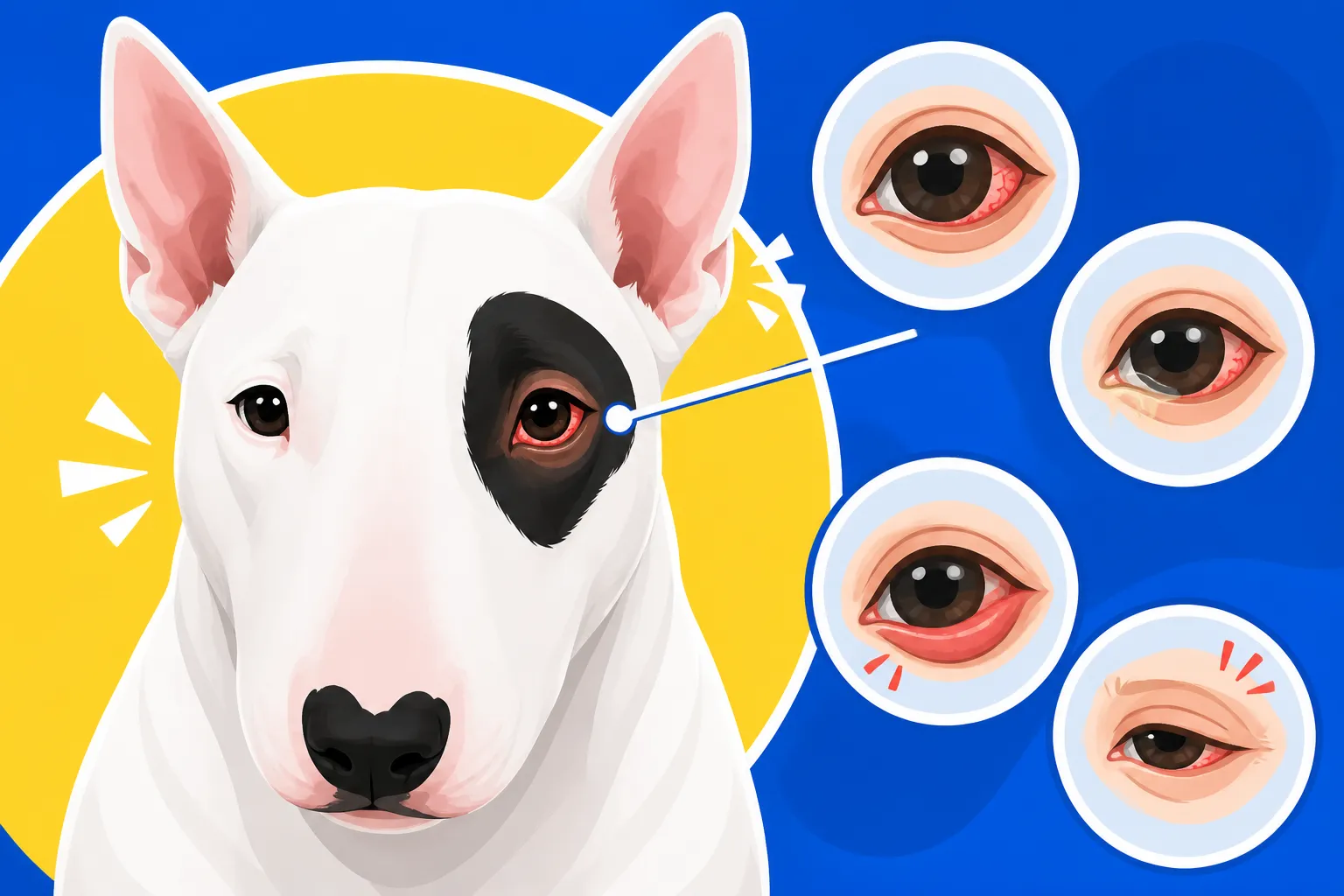
One of the first things you'll likely notice is redness. This can appear as a pink or red hue in the whites of their eyes (the sclera) or along the inner lining of the eyelids. Sometimes, the entire eye area can look generally inflamed. Alongside redness, you might see swelling. This could be a slight puffiness around the eyelids or the eye itself appearing more prominent. If the eyelid swelling is significant, it might even partially close the eye, making your Bull Terrier look quite miserable.
Discharge is another common and easily identifiable symptom. This can vary widely in appearance, offering clues about the underlying cause. A clear, watery discharge, often called epiphora, can indicate simple irritation, allergies, or blocked tear ducts. It's like their eyes are constantly tearing up. On the other hand, a thick, yellow, green, or even white discharge is usually a strong indicator of a bacterial infection. This type of discharge might crust around the eye, especially after they've been sleeping, and can sometimes even stick their eyelids together.
It's important to pay attention to the consistency and color of any discharge. A little bit of clear "sleep" in the corner of their eyes is usually normal, but persistent or colored discharge is a definite red flag. You might also notice a difference in the hair around their eyes becoming matted or stained from excessive tearing. This is something you should definitely address, perhaps with gentle, dog-specific eye wipes that you can often find on platforms like Chewy or Amazon to keep the area clean while you figure out the root cause.
Squinting, Tearing, and Pawing at the Face
Beyond just the appearance of the eye itself, your Bull Terrier will often communicate their discomfort through physical actions. Squinting, or blepharospasm, is a clear sign that the eye is painful or highly irritated. It’s their way of trying to protect the eye from light or further irritation. Sometimes, they might only squint intermittently, while other times the eye might be held almost completely shut.
Excessive tearing, even if the discharge is clear, is another obvious sign. Their eyes might simply water profusely, causing streaks down their face or a constantly wet patch below the eye. This isn't just a sign of sadness; it's a physiological response to irritation, flushing out whatever is bothering the eye. Sometimes this tearing is so heavy it can lead to skin irritation or even yeast infections in the folds of their face if not kept dry, especially in Bull Terriers with deeper set eyes or facial wrinkles.
Perhaps the most common behavioral indicator is pawing, rubbing, or scratching at their face and eyes. They might use a paw, rub their face along the carpet, or even try to rub it on you. This is their attempt to relieve the itch or pain, but it can unfortunately make the problem much worse by introducing bacteria, scratching the cornea, or increasing inflammation. If you see this, it’s a strong signal they are truly uncomfortable and need attention quickly.
Changes in Eye Appearance: Cloudiness or Film
Sometimes, the irritation might not be external, but rather a change in the internal appearance of the eye itself. One concerning sign is any cloudiness or a bluish-white film over the cornea, which is the clear outer layer of the eye. This cloudiness can indicate several serious conditions, from corneal ulcers to glaucoma. It might make their eye look dull or hazy instead of clear and sparkling.
Another change could be an alteration in the size of the pupil (the black center of the eye), or if one pupil appears larger or smaller than the other. While not always directly related to surface irritation, it can signal deeper eye issues that might cause discomfort. You might also notice a visible foreign object, like a piece of grass seed, stuck on the surface of the eye or under an eyelid. Even a tiny speck can cause immense irritation and pain.
It's also worth noting that some Bull Terriers can develop conditions like Dry Eye in a Bull Terrier, where the eye doesn't produce enough tears, leading to a dull, sometimes mucousy appearance and constant irritation. Or, in more serious cases, you might observe a cherry-red mass protruding from the corner of the eye, which is a prolapsed third eyelid gland and requires veterinary attention. These visual changes are often critical indicators that something more severe is happening beyond simple surface irritation.
Behavioral Cues That Point to Eye Discomfort
Our Bull Terriers are masters of expressing themselves, even when they can't use words. Their behavior often shifts dramatically when they're in pain or discomfort, and eye irritation is no different. It's about noticing those subtle changes in their day-to-day routine or personality that tell you something isn't quite right.
Increased Rubbing, Blinking, or Sensitivity to Light
We've already touched on pawing and rubbing, but it bears repeating just how frequently a Bull Terrier will try to self-soothe an irritated eye. They might be more persistent, rubbing their face on furniture, dragging their head along the carpet, or even pushing their face into your lap for comfort. This isn't just a casual scratch; it's a focused effort to alleviate discomfort. Watch for repetitive behaviors.
Beyond rubbing, you might observe an increase in blinking, often rapid or forceful. This rapid blinking is another instinctive attempt to clear an irritant or reduce pain. If they're blinking more than usual, even without visible redness, it's a sign their eyes are bothering them. They might also appear more sensitive to light, a condition known as photophobia. They might seek out darker areas, squint more when stepping outside, or avoid direct sunlight. This sensitivity usually points to deeper corneal pain or inflammation within the eye.
It's crucial to distinguish between normal grooming behaviors and signs of distress. A Bull Terrier might occasionally rub its face after waking up, but prolonged, intense, or focused rubbing on one eye is a cause for concern. Sometimes, this rubbing can become obsessive, creating secondary problems like hair loss or skin abrasions around the eye area, which further compounds their discomfort.
Reluctance to Play or Changes in Activity Levels
When a Bull Terrier isn't feeling well, their playful, clownish nature often takes a backseat. Eye irritation can be surprisingly debilitating, making them reluctant to engage in their usual games or activities. Imagine trying to chase a ball or wrestle with your favorite toy when one of your eyes feels gritty, itchy, or painful. They might shy away from bright lights or fast movements, which are common in play.
You might notice a general decrease in their energy levels, even if they're usually high-drive dogs. They might sleep more, seem lethargic, or simply not respond with their usual enthusiasm to cues for walks or playtime. If your Bull Terrier, who normally greets you with a full-body wiggle and demands attention, is instead lying quietly with a half-closed eye, it's a strong indicator they're in pain.
Changes in appetite or even house-training habits can also subtly point to a larger problem, though these are less specific to eye irritation alone. But when combined with visible eye symptoms, they can underline the severity of your dog's discomfort. Monitoring their overall demeanor and comparing it to their normal happy self is key. You know your Bull Terrier best, and if something feels "off," trust your gut.
When to Call the Vet: Urgent Signs and Next Steps
Recognizing the signs of eye irritation is the first crucial step, but knowing when to act immediately versus when you can observe a bit longer is equally important. When it comes to eyes, it's always better to err on the side of caution, as many serious conditions can rapidly lead to permanent damage or even loss of vision if left untreated.
Red Flag Symptoms Requiring Immediate Attention
There are certain symptoms that should send you straight to the veterinary emergency room or at least prompt an immediate call to your vet. These "red flag" signs indicate a potentially severe condition that needs rapid diagnosis and treatment. Any sudden onset of blindness or significant vision loss is an emergency, as is a sudden bulging of the eye or a noticeable change in its size.
Severe pain, indicated by constant squinting, uncontrolled pawing at the face, or crying out when the eye is touched, also warrants immediate care. A thick, opaque discharge, especially if it's yellow or green, suggests a serious infection that needs antibiotics. If you see blood in the eye, or if the eye itself looks cloudy, blue, or has a visible foreign object embedded in it, do not delay. Conditions like glaucoma, corneal ulcers, or Primary Lens Luxation in a Bull Terrier can progress very quickly and cause irreparable harm.
Also, be aware of specific breed-related conditions. While less common, Bull Terriers can sometimes be predisposed to things like Ectropion in a Bull Terrier, where the eyelid rolls outwards. While not always an emergency, a sudden worsening of this or any rapidly developing eye issue in a Bull Terrier should always be treated as urgent. When in doubt, call your vet; they can help you determine the urgency based on your specific observations.
Preparing for Your Veterinary Visit
Once you've identified concerning signs and decided to consult your vet, preparing for the visit can make a big difference in the efficiency and effectiveness of the examination. Start by noting down all the symptoms you've observed, when they started, and if anything seems to make them better or worse. Did it begin after a walk in tall grass? Have you changed anything in their diet recently?
Think about any relevant medical history. Does your Bull Terrier have a history of allergies, Dry Eye in a Bull Terrier, or other health issues? Bring a list of any medications or supplements they are currently taking. If there's discharge, try to get a photo of it, especially if it's intermittent, as it might not be present during the vet visit. You can also mention any recent changes in their diet, especially if you've recently transitioned to a new food, as sometimes dietary issues can manifest in surprising ways, though less commonly directly in the eyes. If you're using a fresh food service like Ollie, for instance, note any recent batch changes.
Your vet will likely perform a thorough ophthalmic exam, which may include checking tear production, staining the cornea to look for ulcers, and checking eye pressure. They might need to use special tools to look inside the eye. Remember that early diagnosis can prevent more serious complications, so don't hesitate to seek professional help. Regular check-ups, which might include discussions about How Often a Bull Terrier Needs a Wellness Exam, can also help catch potential issues before they become emergencies.
Here's a quick summary of key eye irritation signs:
| Symptom Category | Specific Signs to Look For | Urgency Level | Potential Causes |
|---|---|---|---|
| Appearance | Redness of whites/lids | Moderate-High | Irritation, Allergies, Infection |
| Swelling around the eye | Moderate-High | Allergies, Inflammation, Infection, Trauma | |
| Clear/Watery Discharge | Moderate | Irritation, Allergies, Blocked tear ducts | |
| Yellow/Green/Thick Discharge | High | Bacterial Infection | |
| Cloudiness/Film over cornea | High | Ulcer, Glaucoma, Inflammation | |
| Visible Foreign Object | High | Grass seed, debris | |
| Protruding "Cherry Eye" | High | Prolapsed third eyelid gland | |
| Behavioral Cues | Persistent Squinting/Eye closure | High | Pain, Foreign object, Ulcer, Glaucoma |
| Pawing/Rubbing at face | Moderate-High | Itch, Pain, Foreign object | |
| Excessive Blinking | Moderate | Irritation, Allergies, Dry eye | |
| Sensitivity to Light (Photophobia) | High | Corneal pain, Uveitis, Glaucoma | |
| Reluctance to play/Lethargy | Moderate-High | General discomfort, Pain | |
| Changes in pupil size (uneven) | High | Neurological issues, Uveitis, Glaucoma |
Remember, any "High" urgency symptom warrants an immediate call to your vet or an emergency clinic. For "Moderate" symptoms, monitor closely and call your vet for advice if they persist or worsen.
Disclaimer
This article is for general informational purposes only and does not constitute professional advice. Laws, prices and regulations vary by location and change over time. Consult a qualified professional for guidance on your specific situation.