Where the Bull Terrier Comes From
That unmistakable, egg-shaped head and those tiny, triangular eyes belong to a breed unlike any other: the Bull Terrier. While today we know them as playful, devoted, and undeniably quirky family members, many owners aren't fully aware of the incredibly dramatic and often misunderstood journey this breed took to become the "White Cavalier" we cherish. This guide will walk you through the fascinating and sometimes brutal history of the Bull Terrier, from its gritty origins in fighting pits to its rise as a cherished companion.
The Bloody Origins: From Fighting Pits to a Gentleman's Companion
It's a tough truth to swallow, especially for those of us who adore our goofy, cuddly Bull Terriers, but the breed's foundational roots are firmly planted in the grim reality of 19th-century bloodsports. While it wasn't the Bull Terrier itself, but its direct ancestors, that engaged in these brutal activities, understanding this period is crucial to grasping the breed's inherent strength, tenacity, and unique psychological makeup. The journey from a working dog bred for combat to a show-ring star and family pet is one of remarkable transformation.
The Old English Bulldog and Terriers: A Brutal Mix
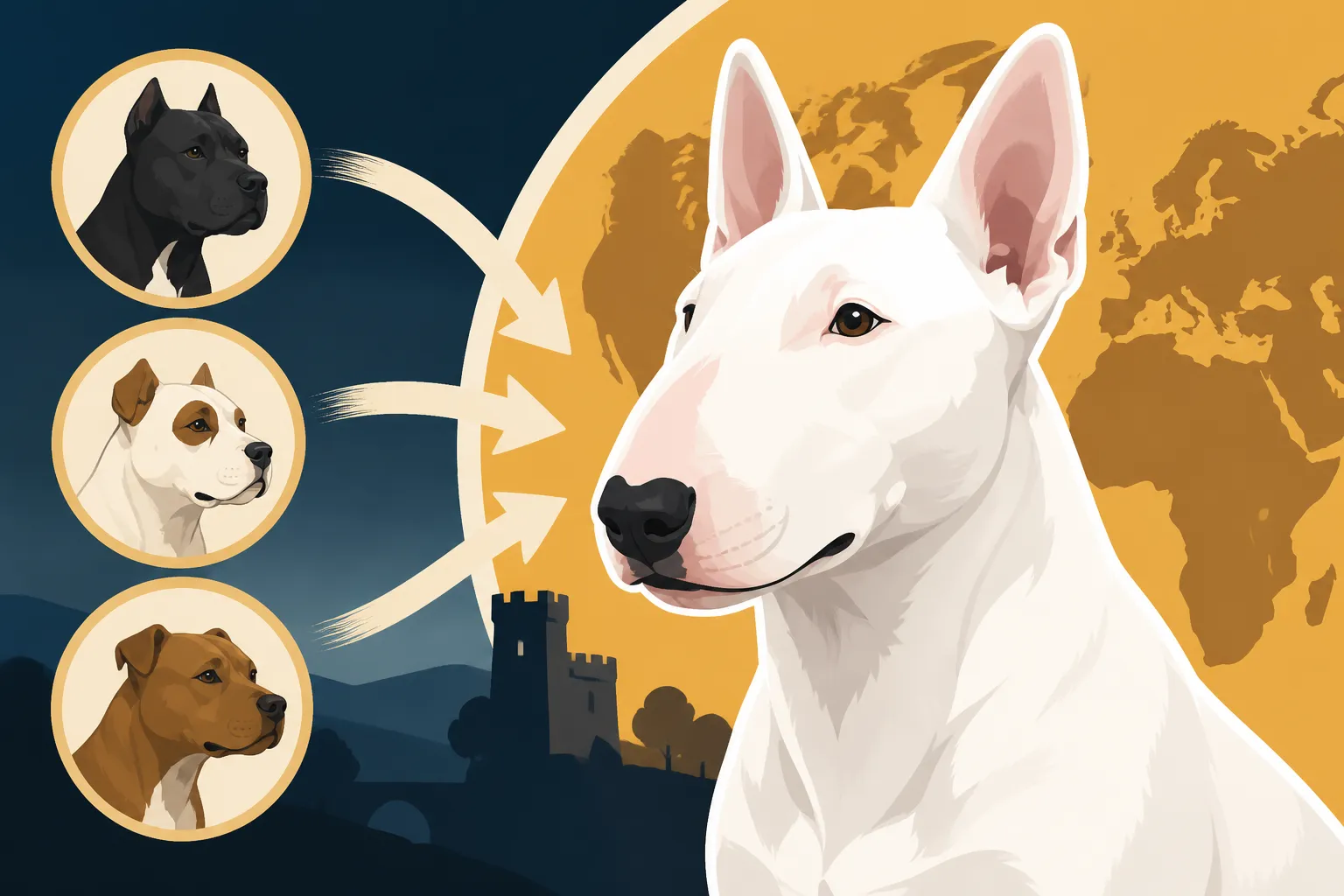
Before the Bull Terrier as we know it, there existed a type of dog known simply as the "bull and terrier." These were not standardized breeds in the modern sense, but rather a cross-type bred for a singular, brutal purpose: fighting. Picture the Old English Bulldog, a stocky, powerful animal known for its incredible jaw strength and unwavering grip, designed for bull-baiting. Now, imagine crossing that formidable strength with the speed, agility, and high prey drive of various working terriers. You get a dog built for tenacity, endurance, and a refusal to back down – traits that, in a gentler context, translate to the Bull Terrier's famed stubbornness and determination.
These early bull and terriers were utilitarian animals, valued for their "gameness" – an unrelenting drive to continue fighting regardless of injury or pain. Owners in industrial cities like Birmingham would often pit these dogs against each other or against rats in pits, a popular, albeit horrifying, form of entertainment. This wasn't about aesthetics; it was about performance. Breeders cared little for uniform appearance; what mattered was a dog's ability to win. This intense selective pressure for physical prowess and a formidable temperament laid the groundwork for the Bull Terrier's powerful physique and the sometimes intense focus it can bring to a task, whether that task is digging a hole or guarding its favorite person.
The societal context of these activities is hard for us to imagine today. In the 18th and 19th centuries in Britain, animal sports were widespread, reflecting a different set of cultural values and a harsher daily reality. These dogs weren't pampered pets; they were tools, bred for a specific, often violent, job. It's why, even today, some people still hold misconceptions about the Bull Terrier's temperament, unfairly associating it with aggression. While the underlying genetics for power and determination are certainly there, modern breeding practices have thankfully shifted the focus dramatically, prioritizing companionability and a stable temperament over raw fighting instinct.
The Shift Towards a More Refined Image
As the 19th century progressed, public sentiment began to turn against overt animal cruelty, and blood sports gradually fell out of favor or were pushed underground. This societal shift created an opportunity for a different kind of dog. While the desire for a strong, courageous companion remained, there was a growing appreciation for aesthetics and a more refined temperament suitable for emerging dog shows and a more "gentlemanly" pastime. This was the turning point that would lead to the Bull Terrier's creation.
No longer were breeders solely focused on the ultimate fighting machine; they began to consider how a dog looked and how it behaved in public. This meant moving away from the rough-and-tumble appearance of the original bull and terriers and striving for a more uniform, striking appearance. The concept of a "show dog" was gaining traction, and with it came the desire for breeds that embodied elegance alongside their inherent strength. This wasn't just about ending cruelty; it was also about elevating dog breeding to an art form, creating animals that could be admired for their beauty and composure, not just their ferocity.
This era saw an influx of new breeds and a growing fascination with creating distinct types. For the ancestors of the Bull Terrier, this meant a conscious effort to soften their edges, both physically and temperamentally, without losing the brave heart that made them so appealing. The stage was set for a visionary breeder to take the raw materials of the bull and terrier and mold them into something entirely new – a dog that retained the power but added a layer of sophistication, transforming a fighter into a true "cavalier." This drive for refinement would be the catalyst for James Hinks's pioneering work, forever changing the trajectory of the breed.
James Hinks: The Architect of the White Cavalier
Every breed has its foundational figures, and for the Bull Terrier, that figure is undoubtedly James Hinks. Often described as the "father of the Bull Terrier," Hinks was a true visionary who took the existing, somewhat crude "bull and terrier" type and, through careful and intentional breeding, transformed it into the iconic breed we recognize today. His work was not just about physical appearance; it was about creating a dog that embodied both strength and dignity, a true gentleman's companion.
The Vision for an All-White Dog
Who James Hinks Was is a fascinating question, as he wasn't just a dog breeder; he was a businessman. Operating out of Birmingham, England, in the mid-19th century, Hinks was a dog dealer and kennel owner who understood the changing tastes of the public. He saw an opportunity to create a distinctive, fashionable dog that would appeal to the burgeoning middle and upper classes. His boldest innovation was the pursuit of an all-white dog, a radical departure from the typically brindled or patched bull and terriers of the time.
Why white? In Victorian England, white symbolized purity, elegance, and status. An all-white dog stood out, signaling refinement and a break from the gritty past of its ancestors. Hinks envisioned a dog that, while retaining the courage and tenacity, would possess a clean, striking appearance that commanded attention in the show ring and as a companion. He began with the existing bull and terrier stock, but to achieve his desired look and temperament, he introduced other breeds. The most widely accepted contributors were the now-extinct English White Terrier, known for its elegant lines, and the Dalmatian, which brought a sleek body, upright ears, and potentially improved stamina. Some speculate that even Greyhounds or Pointers might have been used to refine the head shape and add grace.
This was no small feat. Breeding for pure white could, and did, bring challenges, particularly concerning deafness. However, Hinks's commitment to his vision was unwavering. He meticulously selected dogs not just for their color, but for their overall conformation, balanced temperament, and robust health within the limitations of the knowledge of his era. His goal was to produce a dog that was not only beautiful but also possessed the strength and spirit of its forebears, yet without their aggressive reputation.
The English White Terrier's Contribution and Decline
The English White Terrier played a critical, albeit short-lived, role in the Bull Terrier's ancestry. This breed, now extinct, was an elegant, erect-eared terrier, purely white, with a fine coat. It lent the developing Bull Terrier its pristine white coloration and contributed significantly to the breed's refined silhouette. However, the English White Terrier was also known for being delicate and prone to various health issues, including deafness and skin problems, which are often associated with the pure white gene.
Hinks's genius lay in selectively breeding for the desirable traits of the English White Terrier – namely its striking white coat and elegant form – while striving to infuse the hardiness and robust health of the bull and terrier types. Essentially, he perfected the idea of a white terrier and then surpassed it, creating a more vigorous and resilient dog. As the Bull Terrier gained popularity, the English White Terrier, being less hardy and often plagued by health issues, slowly faded from existence. It couldn't compete with the vitality and appeal of Hinks's creation, eventually leading to its When the English White Terrier Died Out.
The legacy of the English White Terrier, however, continues to influence the Bull Terrier. The predisposition to deafness in white Bull Terriers, for example, is a direct inheritance from these early pure white lines. It’s why responsible breeders today are diligent about health testing, particularly the BAER test. Why a White Bull Terrier Should Be BAER Tested is a crucial step for any white Bull Terrier puppy, highlighting how a seemingly aesthetic choice centuries ago continues to impact the breed's health considerations in the modern era. Hinks's work was a testament to selective breeding, but also a reminder that sometimes the pursuit of a specific aesthetic can have unforeseen health consequences that later generations must address.
The Birth of a New Breed: The 1860s and Beyond
The 1860s marked a pivotal decade for the nascent Bull Terrier breed. It was a time when James Hinks's efforts truly came to fruition, launching his "White Cavalier" into public consciousness and firmly establishing it as a distinct and admired breed. This period cemented the Bull Terrier's reputation and laid the groundwork for the unique characteristics that define it even today.
The 1862 Cremorne Dog Show and the Rise of Puss
If there's one story that encapsulates the dramatic debut of the Bull Terrier, it's the legendary tale of Hinks's white bitch, Puss, at the 1862 Cremorne Dog Show in London. What Happened at the 1862 Cremorne Show is more than just a historical anecdote; it's a foundational myth for the breed. The story goes that Hinks presented Puss, a stunning all-white Bull Terrier, at the show. A challenge was issued by a gentleman who owned a traditional bull and terrier. The wager was simple: Hinks's Puss against the other dog in a fight. Hinks, confident in his breeding, accepted.
The remarkable part of the story is that Puss reportedly won the fight cleanly, and even more impressively, returned to the show ring the very next day, virtually unscratched. This wasn't just a victory for Puss; it was a triumph for Hinks's vision. It proved that his refined, all-white Bull Terriers, while elegant and composed, had lost none of the courage or capability of their more brutal ancestors. It demonstrated that a Bull Terrier could possess both beauty and brawn, without being overtly aggressive or disfigured by conflict. This event dramatically elevated the Bull Terrier's status, signaling its transition from a fighting type to a dignified, yet still formidable, companion.
The impact of this public demonstration was immense. It showcased that Hinks had successfully bred a dog that transcended its fighting origins, proving it could be a noble and impressive animal in its own right. This solidified the Bull Terrier's reputation as the "White Cavalier" – a dog of impeccable courage and loyalty, combined with an aristocratic appearance. From that point on, the Bull Terrier's popularity soared, championed by gentlemen who admired its striking looks and unwavering spirit. This moment defined the breed's initial trajectory and established its place in the dog world.
Early Breed Characteristics and Standardisation
In the years following Puss's triumph, the Bull Terrier's form began to solidify. Early Bull Terriers, while recognizably ancestors of today's dogs, were generally longer in body and more athletic in build than the stockier bull and terriers. They possessed a lean elegance, combined with powerful musculature, reflecting their heritage. Hinks's focus was on a symmetrical, balanced dog with a strong head and keen expression. The upright ears, which became a hallmark of the breed, were also a deliberate choice, contributing to the alert and intelligent appearance.
The process of standardisation truly took off in the latter half of the 19th century. Breed clubs were formed, dedicated to promoting and preserving the Bull Terrier's distinct characteristics. These clubs played a crucial role in drafting the first breed standards, which outlined the ideal physical and temperamental traits. This included everything from coat color and texture to body proportions and gait. One of the most distinctive features to emerge and become firmly embedded in the standard was the unique "downface" – the gently curving profile from the top of the skull to the tip of the nose – and the deep-set, triangular eyes, which are exclusive to the Bull Terrier. How the Bull Terrier's Head Changed Over Time is a testament to breeders' dedication to refining this unique silhouette.
These standards provided a blueprint for breeders, ensuring consistency and guiding the development of the breed. It meant that a Bull Terrier bred in one part of the country would broadly resemble one bred elsewhere, fostering a cohesive identity for the breed. While the journey of refinement continued for decades, with subtle changes and preferences emerging over time, the fundamental characteristics established during this period remain central to the Bull Terrier's identity today.
| Characteristic | Early Bull Terrier (Mid-19th Century) | Modern Bull Terrier (20th/21st Century) |
|---|---|---|
| Head Shape | More conventional, slight stop | Distinctive "egg-shaped" downface |
| Eye Shape | Round or almond, darker | Small, deep-set, triangular, dark |
| Body Build | Leaner, longer, more athletic | Stockier, more muscular, powerful |
| Ear Set | Often cropped, or naturally dropped/rose | Naturally erect, uncropped |
| Coat Color Focus | Predominantly all-white | White, colored, or brindle permitted |
| Temperament | Courageous, tenacious, refined | Playful, stubborn, devoted, comical |
The Introduction of Color and the Miniature Variety
While James Hinks originally championed the all-white Bull Terrier, the breed's evolution didn't stop there. Over time, practical considerations and a desire for diversity led to significant developments, most notably the reintroduction of color and the establishment of a distinct miniature variety. These changes further shaped the Bull Terrier family into what we know today.
The Re-introduction of Color
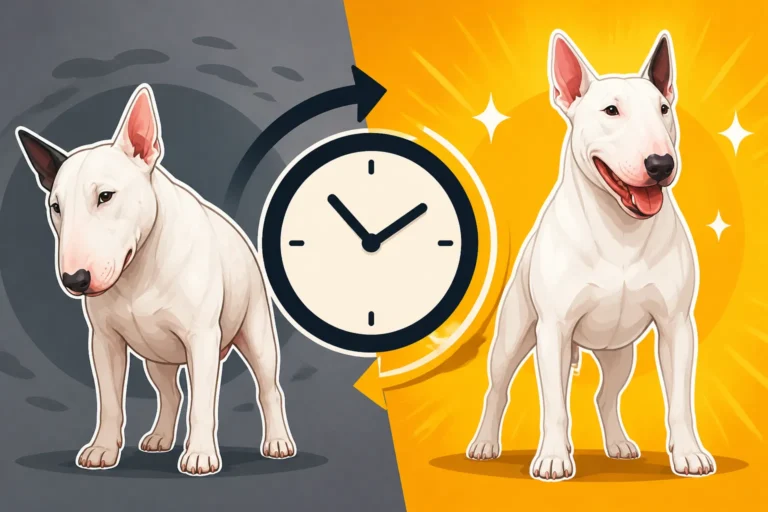
For a considerable period, the all-white Bull Terrier reigned supreme, adhering to Hinks's original vision of the "White Cavalier." However, this exclusive focus on white came with a significant drawback: health issues, particularly deafness, which was rampant in the early all-white lines. The gene responsible for white coat color is linked to inner ear development, and unfortunately, many otherwise magnificent white Bull Terriers were born either unilaterally (one ear) or bilaterally (both ears) deaf. This presented a serious challenge for breeders and owners alike.
To combat these health problems and to broaden the genetic diversity of the breed, a strategic decision was made to reintroduce color. This wasn't without controversy, as many purists fiercely defended the tradition of the all-white dog. However, forward-thinking breeders recognized the long-term health benefits of a more diverse gene pool. This reintroduction often involved crossing back to some of the earlier bull and terrier types that carried various colors, or even other breeds with suitable characteristics. The aim was to bring in genes for colored coats, which would hopefully mitigate the prevalence of deafness and strengthen the overall health of the breed.
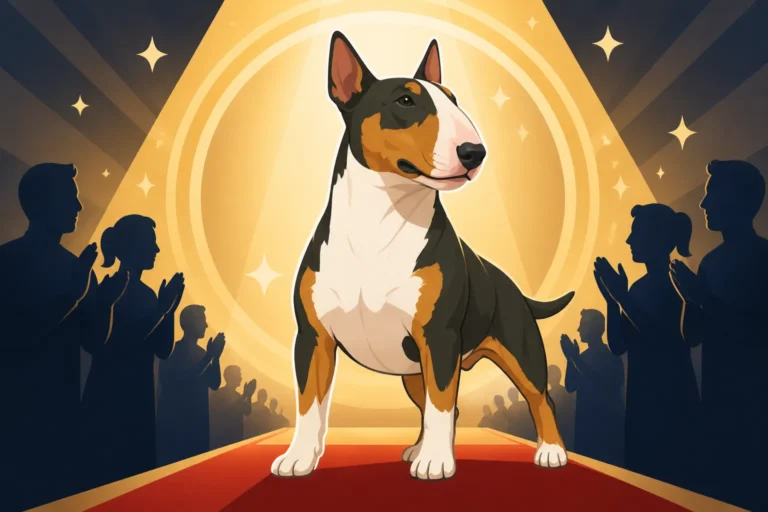
The acceptance of colored Bull Terriers was a gradual process. Initially, they were often shown in separate classes, and it took time for them to gain the same respect and popularity as their white counterparts. But eventually, the pragmatism of improving health won out, and When Colored Bull Terriers Were Accepted into the main breed standard was a turning point. Today, Bull Terriers come in a wonderful array of colors, including brindle, tri-color, red, and black, often with white markings. These colors are not only beautiful but also represent a healthier, more robust future for the breed, demonstrating a commitment to well-being that sometimes required challenging established norms. If you're looking for specialized collars or durable leashes for your colored or white Bull Terrier, you can often find a great selection on Chewy.
The Emergence of the Miniature Bull Terrier
It's a common misconception that the Miniature Bull Terrier is simply a smaller version of the standard Bull Terrier, perhaps the result of breeding down the larger dogs. However, The Miniature Bull Terrier Is a Different Breed. While they share the unmistakable "egg head," triangular eyes, and clownish personality, the Miniature Bull Terrier has its own distinct history and breed standard, recognized as separate by kennel clubs. Their development paralleled that of the standard Bull Terrier, with breeders seeking to create a more compact version of the beloved "White Cavalier" that might be better suited for smaller living spaces or different lifestyles.
The Miniature Bull Terrier was cultivated from smaller specimens of the standard breed, sometimes with outcrosses to other small terrier types to achieve the desired size without sacrificing the unique Bull Terrier characteristics. They maintain the same courageous, spirited, and sometimes mischievous temperament, just in a more manageable package. This differentiation allowed for a broader appeal, offering the Bull Terrier experience to those who might not have the space or capacity for a full-sized dog.
While they share many health concerns with the standard Bull Terrier, such as patellar luxation, lens luxation, and heart conditions, some specific issues might be more prevalent in the miniature variety. This underscores the importance of seeking out responsible breeders for either size, ensuring that health testing is a priority. Ultimately, the existence of the Miniature Bull Terrier means that more people can enjoy the companionship of this truly special breed, choosing the size that best fits their lifestyle while still getting all the unique charm of a Bull Terrier.
The Bull Terrier in Modern Times
From its controversial beginnings in the fighting pits to its rise as a gentleman's companion and a pop culture icon, the Bull Terrier has carved out a unique place in the canine world. Today, it continues to be celebrated for its distinctive looks and larger-than-life personality, captivating owners worldwide. However, with its increasing popularity comes the ongoing responsibility to understand and address its needs, both in terms of health and behavior.
Global Popularity and Cultural Impact
The Bull Terrier's journey from a British novelty to a global phenomenon is fascinating. After gaining prominence in the UK, the breed quickly made its way across the Atlantic to America and other parts of the world, where its unique appearance and spirited nature endeared it to a new generation of enthusiasts. The American Kennel Club recognized the Bull Terrier in 1885, cementing its place in the American dog fancy.
Perhaps no other breed has achieved such iconic status in popular culture as the Bull Terrier. Think of Spuds MacKenzie, the smooth, sunglasses-wearing "party animal" from the 1980s Bud Light commercials, who brought the breed into millions of homes and created a surge in popularity. Then there's Bullseye, the adorable, white Bull Terrier with the red target logo painted around her eye, who serves as the beloved mascot for Target stores. Which Famous Bull Terriers Everyone Remembers are more than just advertising gimmicks; they've ingrained the Bull Terrier's image into the collective consciousness, often portraying them as cool, fun-loving, and quirky companions.
These cultural portrayals, while endearing, sometimes oversimplified the breed's complex nature. While they are indeed clownish and fun, Bull Terriers are also strong-willed, intelligent, and require dedicated training and socialization. Their unique look makes them instantly recognizable, and their loyalty makes them cherished family members. The demand for quality Bull Terrier products, from specialized food to durable toys, is easily met by retailers like Chewy, ensuring that these distinctive dogs have access to everything they need to thrive in modern homes.
Ongoing Health and Temperament Considerations
Despite its long history of development and refinement, the Bull Terrier, like many purebred dogs, still faces specific health challenges that responsible owners and breeders must be aware of. Conditions such as hereditary nephritis (a severe kidney disease), cardiac issues like mitral valve dysplasia and aortic stenosis, and the aforementioned deafness in white lines are ongoing concerns. What a Bull Terrier Breeder Should Have Tested includes a range of screenings for these conditions, emphasizing the critical role of health testing in responsible breeding. Without these tests, owners can be blindsided by devastating illnesses that could have been avoided.
Beyond health, understanding the Bull Terrier temperament is paramount. They are often described as a "three-year-old in a dog suit" due to their perpetual puppy-like energy, stubborn streak, and mischievous nature. Why a Bull Terrier Is Called a Three Year Old in a Dog Suit perfectly captures their playful, yet often challenging, personality. They thrive on human companionship and can become destructive if bored or left alone for extended periods. Early and consistent socialization, coupled with positive reinforcement training, is essential to channel their strong will and energy into acceptable behaviors. They need a job, whether it's obedience, agility, or just being an active family member, to keep their intelligent minds occupied.
The Bull Terrier's journey from the brutal pits of 19th-century England to the loving homes of today is a testament to the power of selective breeding and human dedication. They are a breed unlike any other, demanding respect, patience, and a good sense of humor, but rewarding their owners with unparalleled devotion and endless entertainment. Understanding their origins helps us appreciate the depth of their character and the ongoing commitment required to care for these truly special dogs for The Ten to Fourteen Years a Bull Terrier Gets. When you consider What a Bull Terrier Costs to Buy in 2026, it’s clear that this is an investment not just in a pet, but in a long and unique companionship.
Disclaimer
This article is for general informational purposes only and does not constitute professional advice. Laws, prices and regulations vary by location and change over time. Consult a qualified professional for guidance on your specific situation.