Whether the Bull Terrier Was a Regimental Mascot
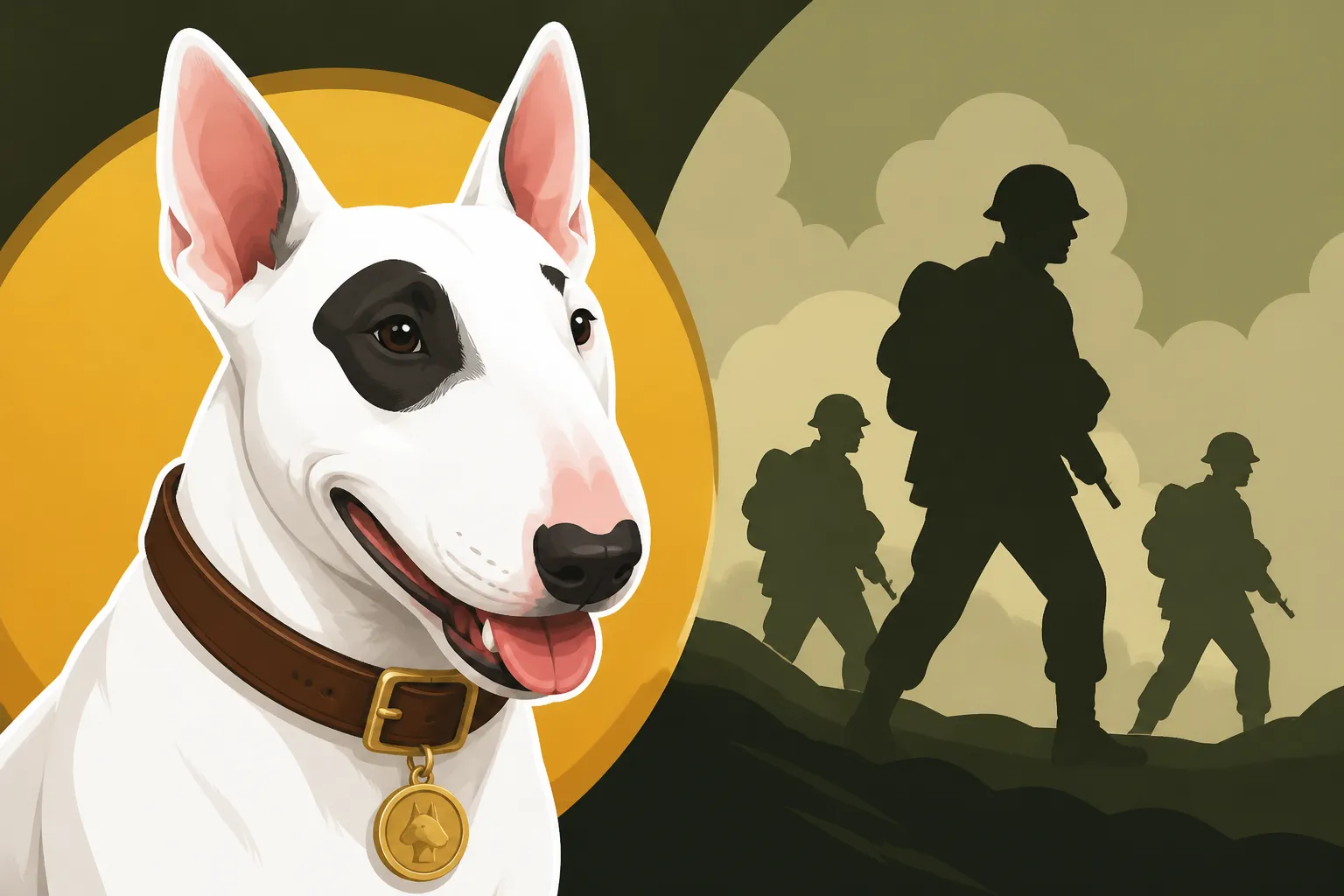
A Bull Terrier could become a regimental mascot, but the breed was not the official mascot of one regiment as a whole. The distinction matters because military mascots were usually individual animals adopted by particular units, not a breed-wide appointment. Here’s how that tradition worked, what a mascot did, and why stories about Bull Terriers in uniform can be hard to pin down.
Was the Bull Terrier a regimental mascot
Individual dogs, not an official breed appointment
The most accurate answer is that individual Bull Terriers could serve as regimental mascots, but there was no single formal appointment making the Bull Terrier the mascot of the British Army or of every regiment. A unit might adopt a dog, give it a name, and treat it as part of its identity. Another regiment could have a goat, a ram, a cat, or no animal mascot at all.
That difference can get blurred in short retellings. “A Bull Terrier was a regimental mascot” may refer to one dog associated with one unit, while “the Bull Terrier was a regimental mascot” sounds as though the breed held a standing military role. The first can be true without the second being accurate.
Mascots were often a personal, local tradition rather than a carefully standardized military position. A dog might be adopted by a company or battalion, travel with soldiers, and appear in photographs or stories. Its association could be cherished by the unit even if the dog was never formally listed in a way that survives in an easily accessible record.
Why Bull Terriers suited the image
Bull Terriers were recognizable, sturdy-looking dogs, and their confident appearance made them a memorable companion for a military unit. Their distinctive head and compact, muscular build stood out in photographs and public appearances. At the same time, a mascot’s value was not simply its looks: soldiers often formed a strong attachment to the animal as a familiar presence amid difficult or monotonous conditions.
The breed also carried a complicated public image. People associated Bull Terriers with toughness, but that reputation does not mean every individual dog was aggressive or trained for fighting. A mascot was generally valued as a companion and emblem, not as a weapon or working combat animal. For more context on those assumptions, see Whether the Bull Terrier Was a Fighting Dog and The White Cavalier: Why the Bull Terrier Never Started Fights.
It helps to remember that historical accounts often use “Bull Terrier” loosely. Older descriptions may not always distinguish clearly between breeds or types of bull-and-terrier dogs. Without a photograph, kennel record, or detailed description, a dog described in a story as a Bull Terrier may be difficult to identify confidently by modern breed standards.
What a regimental mascot did
A companion and a symbol of unit identity
A regimental mascot gave soldiers something familiar to care for and talk about. Military life could involve long waits, separation from home, strict routines, and sudden changes of location. An animal that followed the unit through daily life could become part of its shared story, helping people feel connected to one another and to the regiment.
Mascots also helped make a unit recognizable to the public. At parades, ceremonies, and other formal occasions, an animal could draw attention and become a visual symbol of the regiment. People might remember the dog’s name or appearance long after they had forgotten details about a particular event. That visibility helped turn a mascot into a small but meaningful piece of regimental identity.
This does not mean the dog had a fixed set of duties. One mascot might appear with its unit during public events, while another was mainly a companion around camp or barracks. The role depended on the animal, the soldiers who cared for it, and the circumstances in which the regiment served.
Mascot did not mean combatant
A mascot’s presence near a military unit should not be confused with military service in the formal sense. A dog might travel with soldiers or be photographed alongside them, but that alone does not show that it was trained for battlefield work. Mascots were generally valued for companionship, morale, and their connection to the unit.
The practical side of keeping a dog also mattered. A regiment had to find food, provide care, and decide whether the animal could safely accompany the unit as it moved. Conditions could be unpredictable, and an animal might be left behind or cared for by someone else if travel became unsafe or impractical. The affectionate stories that survive do not always record those difficult choices.
For modern owners, the distinction is useful when interpreting old photographs. A dog standing beside uniformed soldiers may have been a mascot, a privately owned companion, or simply an animal present at the time. A caption or unit record can help establish the context, but the image alone rarely tells the whole story.
Why the history can be hard to verify
Mascots were recorded unevenly
Some regimental mascots became famous enough to appear in newspapers, photographs, memoirs, or formal histories. Others were known mainly to the soldiers who lived with them. If a mascot was mentioned only in a brief anecdote, its name and breed might not have been recorded consistently, and later writers may have repeated the story with changing details.
Even a clearly remembered animal can be difficult to classify. A photograph may show a short-coated, sturdy dog, but appearance alone may not prove its exact breed. Breed names and standards also changed over time, and descriptions in older accounts did not always use today’s precise terminology.
That is why it is sensible to be cautious about claims naming a particular Bull Terrier as a regiment’s official mascot unless the claim can be tied to a clear record. The general tradition of units keeping animal mascots is well established; the exact history of an individual dog may be less clear. The same care is worthwhile when reading about famous dogs such as the one discussed in Puss, the Bull Terrier That Won a Wager Without a Scratch.
Mascot stories can become larger than the records
A good mascot story is easy to remember: a distinctive dog, a group of soldiers, and a bond formed during an unusual period in history. As the story is retold, details can become simplified. A dog associated with a particular unit may become “the regiment’s mascot,” and then a reader may assume that the breed itself held an official position.
When checking a claim, look for the name of the regiment, the dog’s name, the time period, and the source of the account. A photograph with an original caption or a regimental history is more useful than an unattributed social media post. If the details differ between accounts, treat the specific identification as uncertain rather than choosing the most dramatic version.
For a wider view of the breed’s place in popular memory, see Which Famous Bull Terriers Everyone Remembers. The breed’s public image has been shaped by individual dogs, stories, and cultural references—not by a single mascot role. Its history also includes changing expectations about appearance and temperament, as explored in Where the Bull Terrier's Egg Shaped Head Came From and How the Bull Terrier's Head Changed Over Time.
| Question | Best-supported way to understand it |
|---|---|
| Was the Bull Terrier an official mascot for the whole military? | No. Mascot traditions belonged to individual units, not to the breed as a whole. |
| Could an individual Bull Terrier be a regimental mascot? | Yes. Individual dogs could be adopted and associated with particular units. |
| Did a mascot usually serve as a combat dog? | No. Mascots were generally companions and symbols of unit identity. |
| Can every historical mascot described as a Bull Terrier be identified confidently? | Not always. Older descriptions and incomplete records can make breed identification uncertain. |
How to read the Bull Terrier mascot story today
Separate the broad tradition from a specific claim
If you hear that a Bull Terrier was a regimental mascot, ask whether the account is about one named dog or the breed in general. Those are different claims. A named dog may have belonged to a particular regiment, while the breed as a whole was never designated as a formal mascot.
Then look for details that make the account testable: the unit, the dog’s name, the approximate period, and where the information comes from. A specific, consistent account is more convincing than a claim that only says “Bull Terriers were army mascots” without any supporting particulars.
This approach does not take away from the human connection behind the story. It simply gives the dog’s history a fairer telling. A mascot could matter enormously to the soldiers who knew it even if the surviving record is brief or incomplete.
Avoid reading modern breed stereotypes into the past
The Bull Terrier’s bold appearance can make it tempting to imagine a mascot as a symbol of toughness above all else. But individual dogs have individual temperaments, and a dog’s role as a companion should not be mistaken for evidence about the character of the entire breed. Breed reputation is often more dramatic than everyday life with a real dog.
That same caution applies to present-day expectations. Bull Terriers are energetic, physical dogs with their own needs, and their suitability for a household depends on the individual dog, training, socialization, and the owner’s circumstances. A military mascot story can be an engaging part of breed history, but it is not a guide to whether a Bull Terrier will fit someone’s home. For a more practical overview, read What a Bull Terrier's Temperament Is Really Like.
Ultimately, the soundest answer is a measured one: individual Bull Terriers may have served as regimental mascots, but the breed was not the official mascot of a regiment or military service in general. The most meaningful stories are the specific ones—about a dog adopted by a unit, cared for by its people, and remembered as part of their shared history.
Disclaimer
This article is for general informational purposes only and does not constitute professional advice. Laws, prices and regulations vary by location and change over time. Consult a qualified professional for guidance on your specific situation.