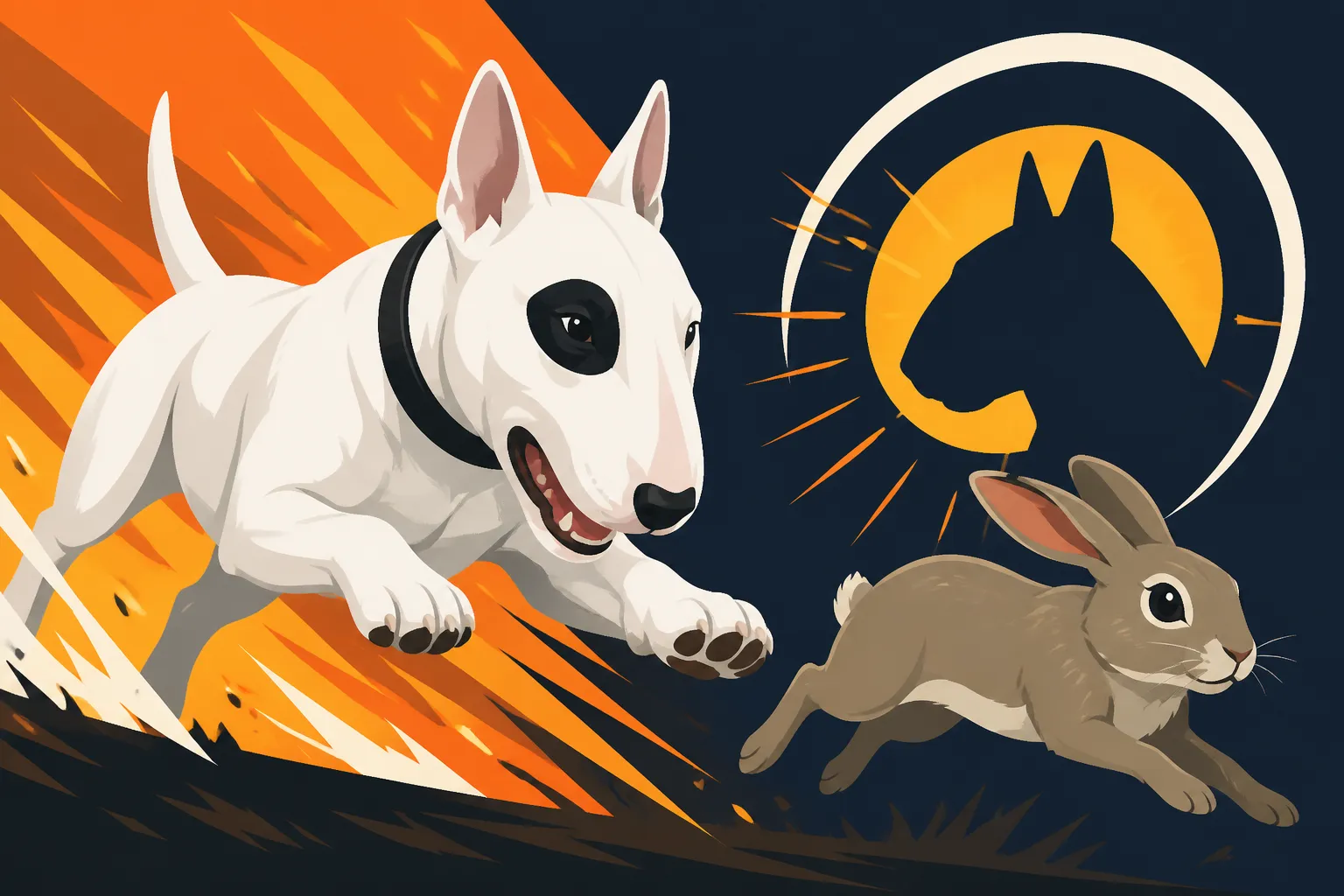
How Strong a Bull Terrier’s Prey Drive Is
One of the most defining, and sometimes challenging, traits of our beloved Bull Terriers is their incredibly strong prey drive. Many a Bull Terrier owner has found themselves suddenly, and quite literally, dragged off their feet by a flash of white, brindle, or tri-color, all because a squirrel dared to cross their path. This isn't just a quirky habit; it's a deep-seated instinct that needs to be understood, managed, and respected for a happy and safe life with your Bull Terrier.
Understanding the Bull Terrier's Instinctual Prey Drive
It’s easy to throw around terms like "prey drive," but what does it really mean for a Bull Terrier, and why is it so potent in our unique companions? When we talk about prey drive, we’re delving into a fundamental, hardwired set of behaviors that allowed their ancestors to hunt and survive. For our modern Bull Terriers, this ancestral programming manifests in ways that can be both exhilarating and, let's be honest, a little nerve-wracking.
What is Prey Drive, Really?
At its core, prey drive is a sequence of natural hunting behaviors. Think of it as a chain of actions that typically includes searching, stalking, chasing, biting to kill, dissecting, and finally, consuming. Now, before you panic, most domestic dogs don't go through the entire sequence with your neighbor's chihuahua! However, certain parts of this chain are very much alive and kicking in our Bull Terriers. You'll most commonly see the "searching," "stalking," and "chasing" components. A Bull Terrier might spot a rustle in the bushes, instantly lock on, go stiff, and then launch itself in pursuit, demonstrating incredible speed and focus. This isn't them being disobedient or trying to be naughty; it’s simply their genes shouting, "Go! Get it!"
The intensity of this drive varies from dog to dog, even within the Bull Terrier breed, but it's generally considered a hallmark trait. It means they're exceptionally motivated by movement, sound, and scent, particularly from small, fast-moving critters. Understanding this fundamental aspect of their nature is the first step in living harmoniously with a Bull Terrier. It's about acknowledging that this drive is a powerful, intrinsic part of who they are, not a flaw to be "trained out" entirely, but rather channeled and managed.
Bull Terriers and Their Historical Role
To truly grasp the strength of a Bull Terrier's prey drive, we need to take a quick trip back in time to their origins. These magnificent dogs weren't originally bred for lounging on sofas – though they excel at that now! They emerged from the rough-and-tumble world of bull-and-terrier crosses in 19th-century England. The goal was to create a dog that combined the tenacity and power of the bulldog with the agility and spirit of various terrier breeds. These ancestors were used in blood sports, which, while abhorrent today, etched an indelible blueprint into their genetic makeup.
What was required of these early dogs? Unwavering focus, incredible stamina, immense physical power, and a drive to pursue and "hold" their target. While James Hinks, the father of the modern Bull Terrier, aimed to refine the breed into the "White Cavalier" – a gentleman's companion known for its beauty and good nature – the underlying drives from their bull-and-terrier heritage remained. This history explains why your Bull Terrier can go from serene to projectile missile in a split second when a rabbit darts across the field. Their powerful jaws, muscular build, and incredible stamina are all remnants of a past where these traits were paramount for survival and success in their designated roles. It’s a legacy of tenacity and single-minded pursuit, and it means that once a Bull Terrier is locked onto something, breaking that focus can be incredibly challenging.
Manifestations of Prey Drive in the Modern Bull Terrier
So, how does this historical prey drive actually show up in your day-to-day life with a Bull Terrier today? It's not always about grand, dramatic chases, though those certainly happen! More often, it's the subtle cues, the sudden shifts in attention, and the intense focus that define this instinct in action. Being aware of these manifestations can help you anticipate and manage them, keeping both your Bull Terrier and other creatures safe.
The Squirrel in the Park Phenomenon
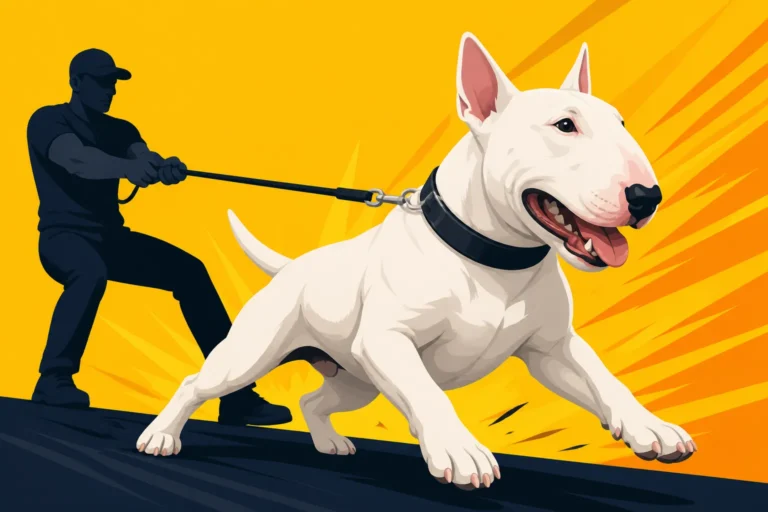
This is perhaps the most classic and widely recognized manifestation of prey drive in Bull Terriers. You're enjoying a peaceful walk, your Bull Terrier trotting along, seemingly oblivious to the world, and then— BAM! A squirrel darts up a tree, a rabbit hops across the path, or a pigeon takes flight. In that instant, your calm, composed dog transforms into a powerful, single-minded hunter. The leash snaps taut, and you might find yourself abruptly reacquainted with the pavement. This isn't them being deliberately disobedient; it's an instinctive, almost involuntary reaction. Their entire being becomes consumed by the chase.
The suddenness and intensity are what often catch owners off guard. One moment, they’re a loving companion, the next, a force of nature. This is why How Strong a Bull Terrier Is on a Leash is such a crucial topic for Bull Terrier owners. A strong, securely fitted harness and a reliable leash are absolutely non-negotiable. Many Bull Terrier owners even use a double-leash system, one attached to a collar and one to a harness, for extra security. It's a testament to the sheer power and focus these dogs can exhibit when that prey switch is flipped. Don't take it personally if your Bull Terrier ignores your frantic calls in favor of a fleeing critter; it's just their ancient programming overriding their manners.
Bull Terriers and Small Animals (Cats, Chickens, etc.)
The presence of prey drive extends beyond just wildlife in the park; it often raises significant questions about how Bull Terriers interact with other, smaller animals in and around the home. Can a Bull Terrier live peacefully with a cat? What about a family with guinea pigs or backyard chickens? The answer is often "it depends," but it always comes with a healthy dose of caution and a strong emphasis on management. For many Bull Terriers, the sight or movement of a small, fast-moving creature can trigger that deep-seated chase instinct.
Early and careful socialization can certainly help, especially if a Bull Terrier puppy is raised with a cat from a very young age. However, even with the best intentions and consistent training, the underlying prey drive is never truly "removed." It might simply be suppressed or redirected. Living With a Bull Terrier and a Cat requires constant vigilance, especially when the owner isn't present. Separate living spaces, crates, and gates often become standard practice to ensure everyone's safety. For smaller, more vulnerable pets like rabbits, hamsters, or chickens, the risk is often too high. It's not that a Bull Terrier is inherently "mean"; it's that their instincts, honed over generations, can kick in without warning, leading to tragic consequences. Therefore, asking Whether a Bull Terrier Is Safe With Chickens is a valid concern, and the answer is generally that extreme caution and secure enclosures are vital, and even then, direct, unsupervised interaction should be avoided.
Bull Terriers and Their Interaction with Other Dogs
While prey drive is typically associated with smaller, non-canine animals, it's worth noting that it can, at times, influence how a Bull Terrier interacts with other dogs. This isn't usually the primary factor in dog-on-dog issues, but it can play a role, particularly during high-energy play or when there's a significant size difference. A smaller, yappy, or very fast-moving dog might inadvertently trigger a Bull Terrier's chase instinct, especially if the play escalates too quickly. It's crucial to differentiate this from true aggression, which typically stems from fear, territoriality, or resource guarding. Prey-driven behavior in dog interactions is less about dominance or hostility and more about the innate desire to pursue and engage with something that moves like prey.
Understanding How a Bull Terrier Gets On With Other Dogs involves recognizing that their play style can be quite robust. They might "grip" during play, which, to an uninitiated owner or dog, might look aggressive but is often just intense play. When you see a Bull Terrier intently focused on another dog that is darting around, it's important to intervene before that focus crosses the line from playful chase to an instinctual pursuit. This is one of the many reasons Why a Dog Park Goes Wrong for a Bull Terrier for many of these dogs; the unpredictable nature of multiple dogs, varied sizes, and different play styles can easily trigger undesirable behaviors, making structured, supervised playdates with known, tolerant dogs a far safer and more enjoyable option. Monitoring their interactions and being ready to redirect their focus is key to preventing misunderstandings and ensuring positive social experiences.
Managing and Redirecting a Bull Terrier's Prey Drive
Living with a Bull Terrier's strong prey drive doesn't mean you're doomed to a life of constant struggle. It means you need to be smart, consistent, and proactive in how you manage their environment and provide appropriate outlets. It's about working with their instincts, not against them.
Leash Management and Safety Protocols
When you have a Bull Terrier with a strong prey drive, your leash and harness become your lifelines. A standard collar, even a strong one, is simply not enough. A Bull Terrier can often slip a collar if they pull hard enough, or cause injury to their throat and neck with their sheer power. This is why a well-fitting, secure harness is paramount. Look for harnesses that have both front and back clips, which can offer better control. Some owners find brands like BAXTER & Bella, known for their training and behavior programs, also offer insights into equipment choices, though checking specific product reviews for durability is always a good idea given a Bull Terrier's strength. Many Bull Terrier enthusiasts swear by dual-clip harnesses or even double-leashing, where one leash attaches to the collar and another to the harness, providing a backup if one piece of equipment fails.
Reliable recall is the holy grail for any dog owner, but for a Bull Terrier with a high prey drive, it's particularly challenging. Teaching a Bull Terrier to Come Back Mid Zoomie feels like a superhuman feat, but consistent, high-value reward-based training can make a difference. However, even the best recall is fallible when a squirrel makes a surprise appearance. This is why the ultimate safety protocol for most Bull Terriers is simple: no off-leash freedom in unfenced or unsecured areas. Ever. It might sound restrictive, but it's the safest way to prevent tragic incidents. Instead, seek out securely fenced dog parks or private yards where they can stretch their legs without the risk of bolting after a deer or a cat.
Enrichment and Outlet Strategies
Since you can't simply "turn off" a Bull Terrier's prey drive, the next best thing is to provide safe, appropriate, and satisfying outlets for it. This is where enrichment comes in, channeling that natural instinct into acceptable behaviors. Interactive toys are your best friend. Strong, durable tug toys are fantastic because they allow your Bull Terrier to engage in the "capture" and "shake" phases of the prey drive sequence in a controlled way. You can find a huge variety of super tough tug toys and puzzle feeders on Amazon that are designed to stand up to even the strongest jaws. Flirt poles are another excellent tool; they mimic the chase of small prey, allowing your dog to stalk, chase, and "catch" a lure on a string. Whether a Flirt Pole Suits a Bull Terrier is often a resounding yes, as it provides a fantastic physical and mental workout.
Scent work and hide-and-seek games are also brilliant for engaging the "searching" and "stalking" aspects of prey drive. Hiding treats or toys and encouraging your Bull Terrier to sniff them out taps into their natural instincts without the chaotic chase. Remember, a tired Bull Terrier, especially one whose instincts have been satisfied in a controlled way, is a well-behaved Bull Terrier. Engaging their minds and bodies with these types of activities helps reduce the likelihood of them seeking out inappropriate outlets for their drive, potentially leading to less reactive behavior on walks. Exploring Which Puzzle Toys Occupy a Bull Terrier is a great way to keep their keen minds engaged and their prey drive constructively satisfied.
Training Techniques for a High Prey Drive Dog
Training a Bull Terrier with a strong prey drive requires patience, consistency, and a profound understanding of canine behavior. It's not about forcing compliance but about building a stronger relationship and teaching alternative, desirable behaviors. Positive reinforcement is key here. Make yourself and the rewards you offer more interesting than the external distractions. High-value treats (think cooked chicken, cheese, or hot dogs) are often necessary to compete with the allure of a fleeing critter. Start training in low-distraction environments, mastering basic commands like "watch me," "leave it," and a solid "stay" before gradually introducing more challenging scenarios.
Counter-conditioning and desensitization are powerful tools. This involves changing your Bull Terrier's emotional response to prey. Instead of seeing a squirrel and thinking "chase," you want them to see a squirrel and think "treat from my human!" This involves showing them a squirrel (at a distance where they are aware but not over-stimulated) and immediately rewarding them with something amazing. Over time, you slowly decrease the distance. Remember, a Bull Terrier trains when it sees the point, so make the "point" of ignoring prey incredibly rewarding. A Bull Terrier Trains When It Sees the Point perfectly encapsulates their intelligent yet stubborn nature. This is a lifelong management process, not a quick fix. You're teaching them to make a choice, not eradicating an instinct. Consistency, repetition, and keeping training sessions fun and short are vital to maintaining their engagement.
Recognizing the Nuances and Risks
Living with a Bull Terrier, especially one with a strong prey drive, means constantly being aware of the nuances of their behavior and the inherent risks that come with such powerful instincts. It's about being an advocate for your dog and a responsible member of your community.
When Prey Drive Can Look Like Aggression
One of the most critical distinctions for a Bull Terrier owner to understand is the difference between prey-driven behavior and true aggression. Because prey drive involves chasing, grabbing, and shaking, it can often be mistaken for aggression, especially by those unfamiliar with the breed or canine body language. A Bull Terrier might have an intense play style, characterized by rough-and-tumble antics, enthusiastic mouth-play, and the classic "grip" during tug or wrestle games. How a Bull Terrier Grips When It Plays is often a point of misunderstanding for others, as it can appear intimidating.
However, true aggression usually stems from fear, resource guarding, pain, or territoriality, and it's accompanied by different body language cues (e.g., growling, snarling, stiff body, raised hackles, whale eye). Prey drive, on the other hand, is often characterized by intense focus, a sudden burst of energy, and an almost joyful, albeit sometimes alarming, pursuit. It's crucial for owners to learn to read their own dog's body language and understand the context. Educating friends, family, and even strangers at the dog park about your Bull Terrier's play style and how to distinguish it from aggression can prevent misunderstandings and ensure safer interactions for everyone. If you're ever unsure, always consult with a certified professional dog trainer or behaviorist.
The Importance of Secure Environments
Given the intensity of a Bull Terrier's prey drive and their sheer physical capabilities, secure environments are not just a recommendation; they are an absolute necessity. A flimsy fence, an open gate, or even a moment of inattention in an unfenced area can lead to your Bull Terrier disappearing over the horizon in pursuit of a perceived prey animal. How Hard a Bull Terrier Chases Squirrels is not just a joke; it's a genuine safety concern. The dangers of an escape are manifold: your dog could be hit by a car, injure another animal, or even get lost.
For these reasons, a sturdy, escape-proof fence around your yard is non-negotiable. Regularly check for weak spots, digging areas, or gates that don't latch securely. Indoors, crate training is an invaluable tool. It provides a safe, secure den for your Bull Terrier when you can't supervise them, preventing them from engaging in destructive behaviors driven by boredom or unsatisfied urges, and also keeps them out of trouble if there are other small pets in the home. Whether a Crate Helps a Bull Terrier Left Alone is often yes, especially for younger dogs or those prone to mischief when unsupervised. The bottom line is that anticipating their drive and proactively creating safe boundaries is the best way to ensure the long-term well-being of your Bull Terrier and everyone around them.
| Behavior Trait | Description of Prey Drive Manifestation | Potential Other Causes (if mistaken for aggression) | Management Strategy |
|---|---|---|---|
| Sudden Chase | Instantaneous, intense pursuit of small, fast-moving objects (squirrels, cats, leaves, sometimes small dogs). Focused, determined, often deaf to commands. | Fear (fleeing from perceived threat), excitement (general overstimulation), lack of training. | Secure leash/harness, no off-leash in unsecured areas, high-value recall training, flirt pole, consistent "leave it." |
| Intense Focus/Stare | Locking onto a moving target, body stiffening, low crouch, unwavering gaze, ignoring external cues. | Fear (staring down a perceived threat), guarding (object or person), anxiety. | Redirect attention early with high-value treats/toys, engage in structured games, practice "watch me" in low-distraction areas. |
| Biting/Grabbing Play | Energetic play with toys, often involving firm grip, shaking motions. Can transfer to smaller, faster dogs in play. | True aggression (fear, resource guarding), pain/discomfort, lack of bite inhibition training. | Supervised play with appropriate toys, teach polite play, positive redirection, avoid rough-and-tumble play with smaller dogs. |
| Disinterest in Others | Ignores other dogs/people when a prey item is present, single-minded focus on the chase. | Social anxiety, fear aggression, learned avoidance, overstimulation. | Increase distance from triggers, build positive associations (treats when prey is spotted), reward calm focus on handler. |
| Escaping Fences | Climbing, digging, or jumping fences to pursue a target on the other side. | Separation anxiety, boredom, territoriality, general escape artist tendencies. | Secure fencing, appropriate exercise/mental stimulation, crate training, supervision. |
Disclaimer
This article is for general informational purposes only and does not constitute professional advice. Laws, prices and regulations vary by location and change over time. Consult a qualified professional for guidance on your specific situation.