Whether a Bull Terrier Guards Its Food
It's one of those moments that makes your heart sink a little: you approach your Bull Terrier's food bowl, intending to refill it or just walk past, and you're met with a low growl, a stiff body, or even a snap. This isn't just a rude habit; it's a sign of food guarding, a behavior that can be deeply unsettling and even dangerous if not addressed with understanding and patience. This comprehensive guide will walk you through why your Bull Terrier might be guarding their food, how to recognize the signs, and most importantly, how to prevent and manage this behavior effectively, turning mealtime into a peaceful experience for both of you.
Understanding Why Your Bull Terrier Guards Its Food
Food guarding, also known as resource guarding, is a behavior deeply rooted in canine instinct. While it can be alarming for us, it's a natural behavior that stems from a dog's desire to protect valuable resources from perceived threats. For our beloved Bull Terriers, known for their strong personalities and sometimes intense focus, this instinct can manifest quite prominently.
Instinct vs. Learned Behavior
At its core, resource guarding is an instinctual survival mechanism. In the wild, animals protect their food, mates, and territory to ensure their survival and the survival of their offspring. Your Bull Terrier, despite living a pampered life in your home, still carries these ancient instincts. When they guard their food, they are essentially saying, "This is mine, and I perceive you as a potential competitor trying to take it." It's not about being "mean" or "dominant" in the human sense; it's about deeply ingrained self-preservation.
Sometimes, this instinct can be inadvertently strengthened by learned behaviors. For instance, if a puppy is constantly bothered or has its food taken away by well-meaning humans (especially children) or other pets, it might learn that guarding is an effective way to keep its valuable meal. Conversely, a dog that has never felt threatened around its food is less likely to develop severe guarding issues. It's a delicate balance between respecting their space and teaching them that human presence around their food is a good thing.
Breed-Specific Tendencies in Bull Terriers
Bull Terriers are renowned for their strength of character, their unwavering focus once they've set their mind on something, and their general exuberance. This intensity can sometimes translate into resource guarding. They are not typically a breed known for being delicate or submissive; they are confident and self-assured, often described as having What a Bull Terrier's Temperament Is Really Like. This strong will, while endearing in many ways, means that if a Bull Terrier feels its resources are threatened, it's likely to stand its ground with conviction.
Their physical prowess also plays a role. A Bull Terrier is a robust, muscular dog, and even a mild growl can feel intimidating. This means that early intervention and consistent, positive training are even more critical for this breed. If you have a Bull Terrier, you know they don't do anything halfway, and guarding a resource can be one of those intense behaviors. Understanding Why a Bull Terrier Is Called a Three Year Old in a Dog Suit gives insight into their spirited, sometimes stubborn nature, which applies to resource guarding too.
Recognizing the Signs of Food Guarding
Identifying food guarding early is key to preventing it from escalating into a more serious problem. It's often not an overnight switch from a docile eater to an aggressive one; rather, it's a progression of increasingly clear signals.
Subtle Cues and Early Warnings
Often, the first signs of food guarding are subtle. You might notice your Bull Terrier stiffen its body as you approach the bowl, or drop its head lower over the food, trying to cover it with its body. They might speed up their eating pace, trying to finish the meal before you get too close. You might also observe a quick glance in your direction, followed by an immediate return to the food with a more intense focus.
Another common early warning is a low, soft growl or rumble that might be barely audible. This isn't usually an aggressive growl, but rather a cautionary one, a polite (in dog terms) request for more space. They might also show whale eye, where the whites of their eyes are visible as they eye you without turning their head fully away from the bowl. These subtle cues are your Bull Terrier communicating its discomfort and establishing a boundary. It's important not to punish these early signals, as doing so can teach your dog to suppress the warning signs and go straight to a bite without preamble.
Escalating Behavior
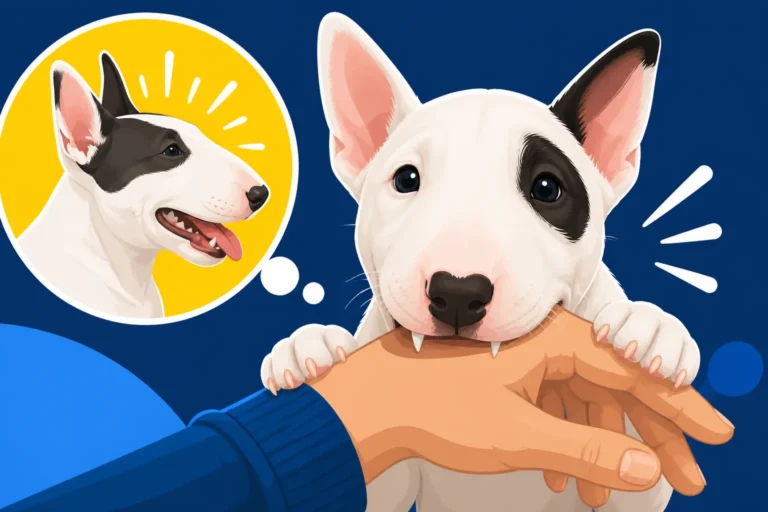
If the subtle warnings are ignored or accidentally reinforced, the behavior can escalate. This might involve louder, more insistent growling, baring teeth, or a quick snap in the air as you draw near. The dog might actually lunge at you, even if they don't make contact, as a clear "back off" signal. In more severe cases, a Bull Terrier might even bite if it feels its boundaries are repeatedly violated or ignored.
The table below illustrates the typical progression of food guarding behavior. Recognizing where your dog is on this spectrum can help you determine the appropriate intervention strategy.
| Behavior Level | Description | What Your Bull Terrier Is Communicating |
|---|---|---|
| Subtle | Stiff body, lowered head, accelerated eating, quick glances, whale eye, soft growl/rumble. | "I'm uncomfortable. Please give me space." |
| Moderate | Louder growling, baring teeth, stiff-legged stance, freezing over the bowl, quick snaps (no contact). | "I really mean it. Back off now." |
| Severe | Lunging, biting with contact, chasing away perceived threat, guarding empty bowl. | "This is mine, and I will defend it aggressively." |
It’s crucial to understand that even an empty bowl can trigger guarding behavior in some dogs if they anticipate it being refilled or if they are simply protecting the idea of their food space.
Preventing Food Guarding in Puppies
The best approach to food guarding is prevention, especially starting with a Bull Terrier puppy. Establishing positive associations with human presence around food from a young age can set your pup up for a lifetime of peaceful mealtimes.
Positive Association with Food and Presence
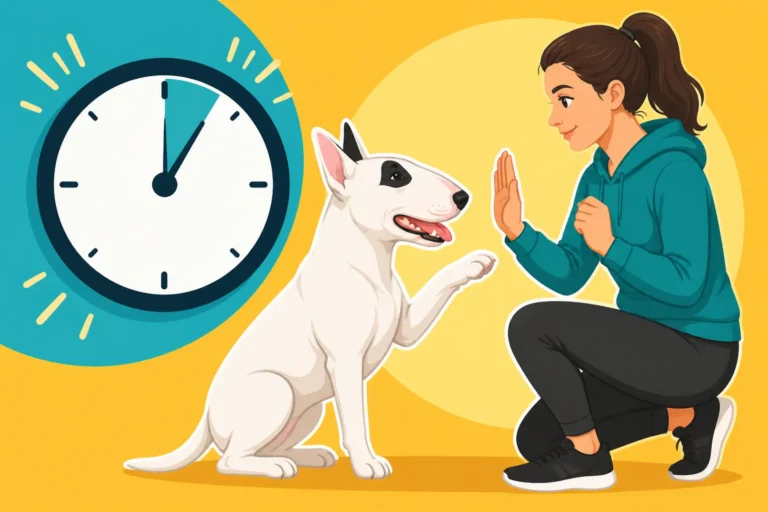
From the moment you bring your Bull Terrier puppy home, start making your presence around their food a positive experience. Instead of leaving their full bowl on the floor and walking away, practice approaching them while they eat and adding something delicious to their bowl. This could be a tiny piece of cooked chicken, cheese, or another high-value treat. Drop it in, praise them softly, and then walk away. Repeat this several times during each meal, gradually increasing the duration of your presence near the bowl.
The goal is to teach your puppy that humans approaching their food bowl doesn't mean the food is being taken away; it means more good stuff is coming. This counter-conditions any potential instinct to guard. You can also hand-feed small portions of their meal, especially when they are very young, to build trust and show them your hands are a source of good things. What Puppy Classes Cost a Bull Terrier Owner might seem like an extra expense, but the early socialization and training received can be invaluable in preventing issues like resource guarding before they ever take root.
Management Strategies for Puppy Mealtimes
Beyond positive association, intelligent management of mealtime can prevent guarding from developing. Always feed your Bull Terrier puppy in a quiet, undisturbed location where they feel safe and secure. This might be in their crate, a separate room, or a designated feeding area away from high-traffic zones, other pets, or young children.
Consider using a slow feeder, which you can easily find on Amazon. Not only does this prolong the meal and prevent fast eating, but it can also make the food less "precious" by removing the rapid consumption aspect that can sometimes trigger guarding. Never take a puppy's food away once they've started eating unless it's an emergency, as this directly teaches them that your approach is a threat. If you absolutely must remove the bowl (e.g., if you dropped something dangerous in it), trade them for a much higher-value treat, then return the original bowl if safe to do so. Consistency and predictability build trust, which is paramount for Bull Terriers.
Managing Food Guarding in Adult Bull Terriers
Addressing food guarding in an adult Bull Terrier requires patience, consistency, and a very structured approach. This isn't about "showing them who's boss" but rather about systematically changing their emotional response to your presence near their food.
Creating a Safe Feeding Environment
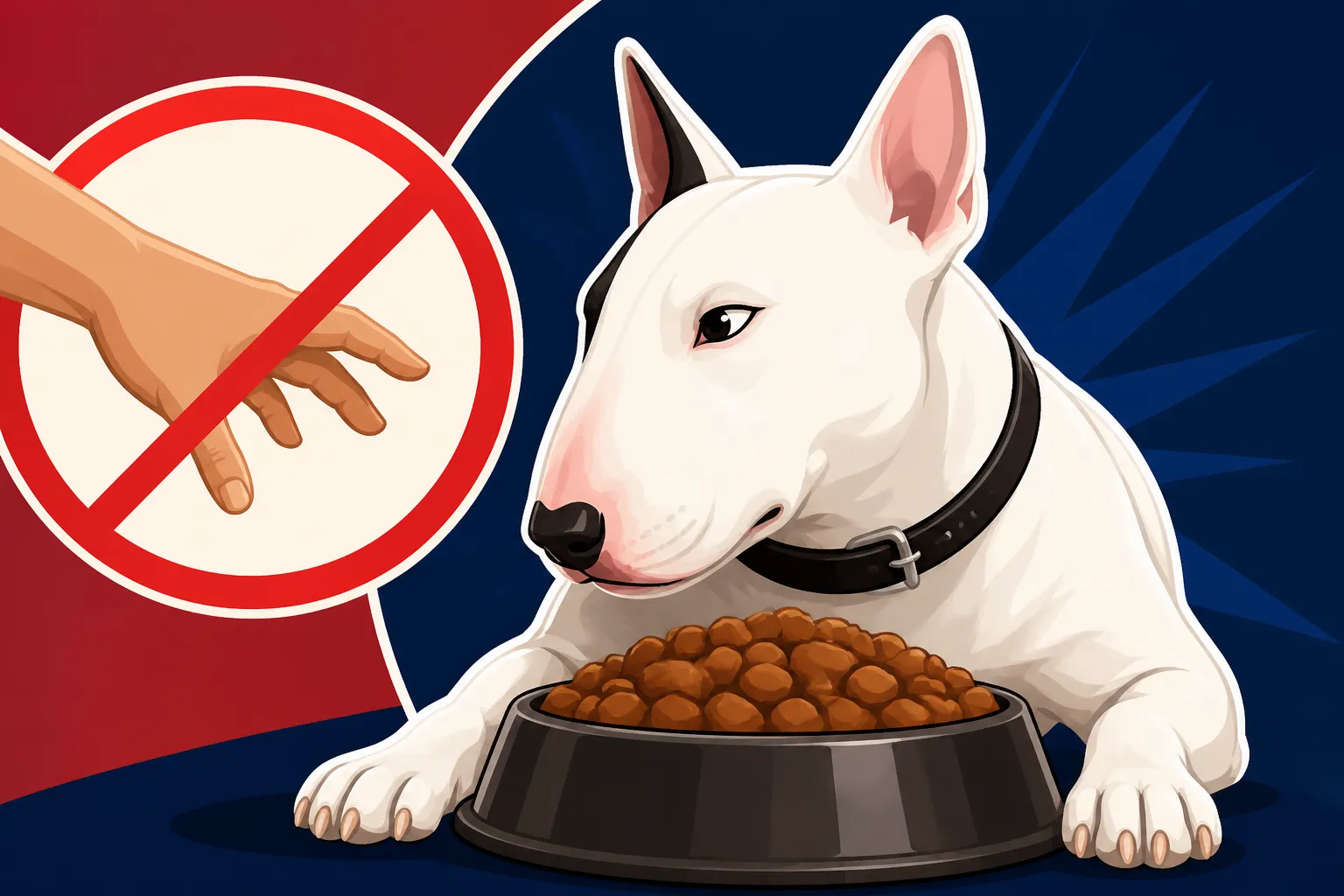
First and foremost, you need to manage the environment to prevent any guarding incidents. Feed your adult Bull Terrier in a secure, isolated area where they will not be disturbed by anyone, human or animal. This might mean feeding them in their crate with the door closed, in a separate room with the door shut, or in a pen. The goal is to remove any perceived threats and allow them to eat in peace. If you have other pets, ensure they are fed separately and cannot access your Bull Terrier's food. For multi-dog households, this is absolutely non-negotiable.
Until the behavior is under control, no one should approach your Bull Terrier while they are eating. This includes children, who should be taught explicitly not to go near a dog's food bowl. Even though Bull Terriers often bond strongly with children, as discussed in How a Bull Terrier Bonds to a Child, boundaries around food are critical for safety. You want your dog to feel absolutely no need to guard because there is no one there to guard against. This management provides the foundation for behavior modification.
Implementing Desensitization and Counter-Conditioning
Once you've established a safe feeding environment, you can begin a systematic desensitization and counter-conditioning program. This process slowly changes your Bull Terrier's negative association with your presence near their food into a positive one.
- Start from a distance: Begin by standing far enough away from your Bull Terrier's eating area that they don't react negatively to your presence.
- Toss high-value treats: As they eat, gently toss a very high-value treat (like a piece of chicken, cheese, or cooked hot dog) towards their bowl, but not so close that it lands in it and startles them. This teaches them that your presence, even from a distance, predicts good things. Repeat this several times during each meal.
- Gradually reduce distance: Over many sessions (days or even weeks), very slowly decrease the distance from which you toss the treats. Only move closer if your Bull Terrier remains relaxed and continues eating without any signs of guarding. If they stiffen or growl, you've moved too fast; increase the distance again.
- Approach the bowl: Eventually, you should be able to approach the bowl and gently drop a high-value treat directly into it, then calmly walk away. Never reach into the bowl to remove food; always add to it.
This process takes time and immense patience. Never force the issue or punish your dog for growling; a growl is communication, and punishing it can remove that warning signal, making future interactions more dangerous. Online training platforms, like those offered by BAXTER & Bella, often have modules on resource guarding that can provide structured guidance and video demonstrations for owners.
When to Seek Professional Help
While prevention and management can go a long way, some cases of food guarding require expert intervention. Knowing when to call in a professional can ensure both your safety and the effectiveness of the training.
Identifying Red Flags
There are clear red flags that indicate you need professional help immediately. If your Bull Terrier has ever bitten someone (even a nip without breaking skin) over food, or if their guarding behavior is severe and escalating rapidly, it's time for an expert. If you feel genuinely afraid to approach your dog while they're eating, or if the behavior extends beyond food to other high-value resources like toys, beds, or even specific people, then you're dealing with a deeper issue that DIY methods might not adequately address.
Another red flag is if the guarding behavior started suddenly in an adult dog that previously showed no signs. While resource guarding can develop, a sudden onset might indicate an underlying medical issue, pain, or discomfort that is making your dog more irritable or anxious. A veterinary check-up should always be the first step in such cases to rule out any health problems before assuming it's purely a behavioral issue.
Finding a Qualified Professional
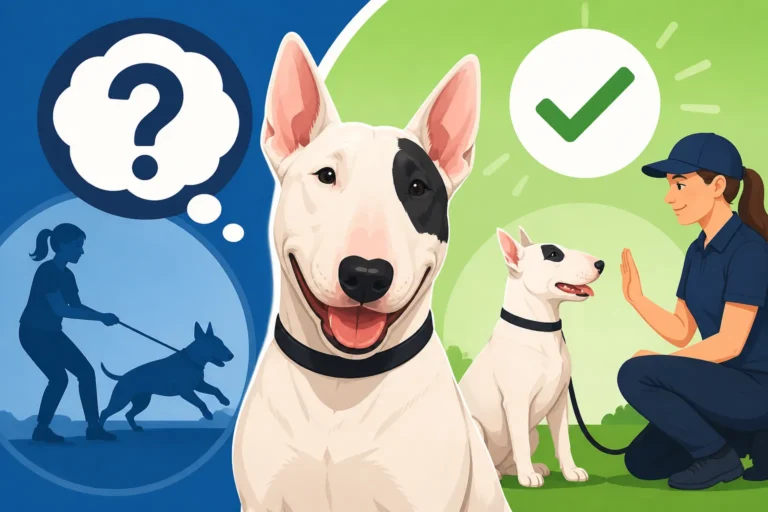
When seeking professional help, it's crucial to find a qualified and ethical force-free dog trainer or certified applied animal behaviorist (CAAB). Avoid anyone who advocates for punishment-based training, "dominance theory," or using physical corrections. These methods are outdated, often ineffective, and can exacerbate guarding behavior, potentially making your Bull Terrier more aggressive or fearful. How Sensitive a Bull Terrier Is to Tone emphasizes that this breed thrives on positive reinforcement and clear, fair communication.
Look for professionals who use positive reinforcement, desensitization, and counter-conditioning techniques. They should be experienced with resource guarding and understand the nuances of working with breeds like Bull Terriers. A good professional will work with you and your dog, observing their behavior, creating a tailored training plan, and teaching you how to implement it safely and effectively. They should prioritize safety for all family members, including your beloved Bull Terrier. Consider asking your veterinarian for a referral or looking for certified professionals through organizations that adhere to ethical, science-based training principles. Whether a Bull Terrier Needs a Behaviorist is a crucial question, and if you're seeing these red flags, the answer is likely yes.
Addressing Common Misconceptions
Food guarding is one of the most misunderstood canine behaviors, often leading to inappropriate and even harmful training attempts. Dispelling these myths is vital for effective and humane management.
Dominance Theory Debunked
Perhaps the most persistent myth surrounding resource guarding, and indeed many other canine behaviors, is that it stems from a dog trying to be "dominant" or "alpha" over its human family. This outdated concept, largely based on misinterpreted wolf pack studies, has been thoroughly debunked by modern canine ethology. Your Bull Terrier isn't trying to usurp your position in the household when they guard their food. They are simply reacting to a perceived threat to a valuable resource.
Approaching food guarding with a "dominance" mindset often leads to confrontational training methods, such as physically removing the food bowl, alpha rolls, or staring down the dog. These methods are not only ineffective but incredibly dangerous. They escalate the dog's fear and anxiety, often leading to increased aggression and a breakdown of the trust between dog and owner. For a Bull Terrier, who can be quite self-assured, confrontational methods can lead to a serious escalation. They are more likely to double down than back down under perceived aggression, as their strong will, which makes them such engaging companions, can also be a challenge if handled incorrectly.
The Role of Resource Guarding
Instead of dominance, we now understand that food guarding is a form of resource guarding. This means the dog is simply protecting something it considers valuable. It's not a challenge to your authority; it's a plea for personal space and security around an item that is important for survival. Think of it from your Bull Terrier's perspective: food is essential for life. If they feel that precious resource is at risk, their instinct kicks in to protect it.
Understanding this subtle but critical difference changes the entire approach to managing the behavior. Instead of trying to "dominate" or "punish" the dog, which only confirms their fear that you are a threat to their resources, the focus shifts to building trust and creating positive associations. We want our Bull Terriers to feel safe, not threatened. We want them to understand that humans are the source of good things, not the takers of good things. This is especially important for a breed known for its loyalty and deep affection for its family, as highlighted by How Physically Affectionate a Bull Terrier Is. They want to be close to you, but they also need to feel secure in their basic needs.
Building Trust and Confidence Around Food
Beyond specific training techniques, fostering a general sense of trust and confidence in your Bull Terrier can profoundly impact their behavior around food. A secure dog is less likely to feel the need to guard its resources.
Establishing Predictability and Routine
Dogs, including our often-silly Bull Terriers, thrive on routine and predictability. Knowing when and where their meals will arrive can significantly reduce anxiety around food. Feed your Bull Terrier at consistent times each day and in the same designated safe spot. This removes uncertainty, which is a major trigger for anxious behaviors like guarding. When they know that their food will always appear without fuss and that no one will bother them during mealtime, the perceived need to protect it diminishes.
Think about how much more relaxed you are when you know your next meal is coming. Your Bull Terrier feels the same way. This predictability, combined with positive associations, helps them understand that their resources are stable and abundant, not scarce or constantly under threat. This foundation of security is a powerful tool against resource guarding. A strong bond, built on trust and consistent positive experiences, is key to a well-adjusted Bull Terrier.
General Confidence Building and Enrichment
A Bull Terrier that is confident in itself and its environment is less likely to feel insecure enough to guard resources. Engage your Bull Terrier in regular, positive training sessions using rewards-based methods. This not only teaches them good manners but also builds their confidence as they learn to succeed and earn rewards. Why a Bull Terrier Needs a Job speaks to their intelligent and energetic nature; channeling this into productive activities can prevent anxiety and boredom from manifesting as problem behaviors.
Provide plenty of mental and physical enrichment. Puzzle toys (many available on Amazon), regular walks, and interactive play can help tire out their minds and bodies, making them generally more relaxed. For a breed that can sometimes have a touch of stubbornness, ensuring they feel engaged and understood is vital. If your Bull Terrier has a strong bond with you and feels secure and happy, the likelihood of them feeling threatened enough to guard their food significantly decreases. Building this positive relationship is fundamental to preventing and resolving many behavioral challenges.
Disclaimer
This article is for general informational purposes only and does not constitute professional advice. Laws, prices and regulations vary by location and change over time. Consult a qualified professional for guidance on your specific situation.