Traveling With a Bull Terrier
One of the biggest joys of having a Bull Terrier is sharing your life with them, but the thought of hitting the road or taking to the skies with your mischievous, strong-willed companion can feel utterly daunting. Many owners worry about their Bull Terrier’s notorious "three-year-old in a dog suit" personality clashing with the confines of travel, from endless car rides to unfamiliar hotel rooms. This guide is here to walk you through how to prepare your Bull Terrier for travel, navigate different modes of transport, and ensure both you and your unique companion have a fun, safe, and relatively stress-free adventure.
Preparing Your Bull Terrier for Travel: Laying the Groundwork
Before you even think about packing bags, it's crucial to lay the proper groundwork. Traveling with a Bull Terrier isn't a spontaneous decision; it requires careful planning and training to ensure success. These dogs thrive on routine and can be sensitive to new environments, making preparation key to a smooth journey.
Building Positive Associations with Travel Gear
The first step often involves getting your Bull Terrier comfortable with the equipment they'll encounter. Think about carriers, crates, seatbelts, and even just the car itself. For a Bull Terrier, anything new can be a challenge or a chew toy if not introduced correctly. Start small, perhaps by leaving a travel crate out in your living room, making it a cozy spot for naps. Toss treats inside, feed meals there, and let them explore it at their own pace. You want them to view it as a safe haven, not a punishment. Which Crate Holds a Bull Terrier is a great resource if you're still looking for a sturdy travel crate.
Similarly, introduce car harnesses or seatbelt attachments slowly. Let them wear it for short periods around the house, paired with positive reinforcement like praise and treats. The goal is to make these items feel normal and comfortable, reducing the novelty and anxiety when it's time to actually use them for travel. You might even find some excellent options for durable travel bowls and car seats on Amazon, designed to withstand the typical Bull Terrier enthusiasm.
Desensitization to the Vehicle and Short Trips
Many Bull Terriers can be prone to car sickness or anxiety, which can turn even a short trip to the vet into a nightmare. Start by simply sitting in the car with your Bull Terrier, engine off, offering treats and calm praise. Once they're relaxed with that, move on to short trips around the block. Keep these initial journeys brief and make sure the destination is always somewhere fun, like a park for a quick sniffari, rather than just the vet. This positive association is vital for a breed that thrives on knowing "what's in it for them."
Gradually increase the duration and distance of your car rides. Pay close attention to any signs of discomfort like drooling, panting, yawning excessively, or lip licking, which can indicate nausea or stress. For some Bull Terriers, a covered crate in the back seat can provide a sense of security, reducing visual stimulation that might contribute to motion sickness. Always remember that A Bull Terrier Trains When It Sees the Point, so demonstrating that car rides lead to good things is paramount.
Essential Travel Documents and Health Checks
Before any extended trip, especially across state lines or internationally, ensure all your Bull Terrier’s vaccinations are current and you have copies of their health records. Some destinations require specific vaccinations or parasite prevention. It’s a good idea to chat with your vet well in advance of your travel dates to understand any requirements for your destination and to ensure your Bull Terrier is healthy enough for the journey. For international travel, the requirements can be complex and involve microchipping, specific blood tests, and import permits, so give yourself months of lead time.
Beyond health certificates, make sure your Bull Terrier is microchipped and that your contact information is up to date. Consider getting a temporary tag with your travel destination's address and your mobile number. It’s better to be overprepared in case of an unforeseen separation. This proactive approach not only keeps your Bull Terrier safe but also ensures you're not caught off guard by unexpected regulations or emergencies away from home.
Navigating Road Trips with Your Bull Terrier
Road trips can be fantastic adventures with your Bull Terrier, offering flexibility and plenty of opportunities for exploration. However, they also come with their own set of challenges, from managing energy levels in the car to finding appropriate places for breaks.
Car Safety and Containment
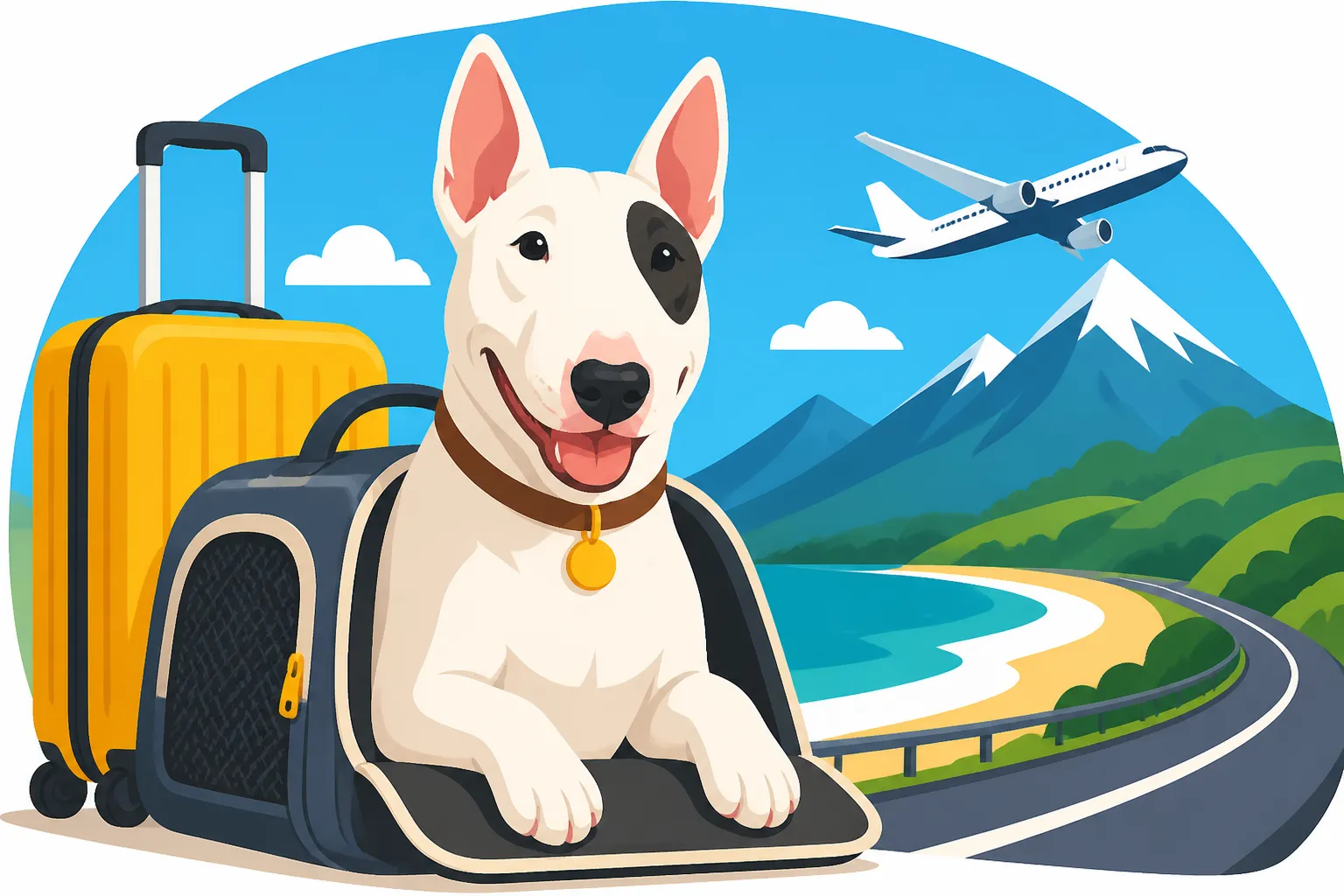
The safety of your Bull Terrier during a road trip should be paramount. An unrestrained Bull Terrier can become a dangerous projectile in an accident, or a distracting hazard if they decide to climb into the front seat. Options for car containment include crash-tested crates, seatbelt harnesses, or car seats designed for larger dogs. For a Bull Terrier, a sturdy, well-ventilated crate often works best. It provides a secure space, minimizes distractions, and can offer a sense of den-like security for your dog.
Position the crate or harness in the back seat or cargo area, ensuring it’s secured and won't shift during sudden stops. If using a harness, ensure it's properly fitted and attaches to the car's seatbelt system. Never attach a seatbelt clip directly to your Bull Terrier's collar, as this can cause serious neck injury in a sudden stop. Remember, their enthusiasm means they can easily accidentally hurt themselves or others if not properly secured.
Planning for Breaks and Exercise
Bull Terriers, despite their muscular build, can sometimes be surprisingly content to lounge around, but they absolutely need regular breaks, especially on long drives. Aim for stops every 2-3 hours to allow for potty breaks, a drink of water, and a chance to stretch their legs. Look for dog-friendly rest areas, parks, or even quiet side roads where you can safely pull over.
When you do stop, make sure your Bull Terrier is on a secure leash before opening the car door. Their prey drive can be strong, and a sudden squirrel sighting could send them bolting into traffic. A long line can be a great tool for giving them a bit more freedom to sniff and explore in a safe, open area. Remember that How Much Exercise a Bull Terrier Actually Needs varies, but even a quick 15-minute sniff-and-stretch break can do wonders for their mental and physical well-being on a long drive, helping to mitigate What a Bull Terrier Does When It Is Bored.
Managing Car Sickness and Anxiety
Even with careful desensitization, some Bull Terriers struggle with car sickness or anxiety. If your dog frequently gets nauseous, avoid feeding them a large meal right before a trip. Small, bland snacks or ginger chews can sometimes help settle a sensitive stomach. Talk to your vet about anti-nausea medications or anti-anxiety supplements if the problem persists. These might be a lifesaver for making travel manageable for both of you.
For anxiety, ensuring a consistent routine and a familiar comfort item, like a favorite blanket or toy, can provide reassurance. A Thundershirt or calming pheromone collar might also offer some relief. Keeping the car temperature comfortable, with good ventilation, also helps. If your Bull Terrier is generally anxious or prone to stress, resources like BAXTER & Bella’s online training programs might have modules on desensitization or crate training that could be adapted for travel scenarios, helping them build confidence in new situations.
Air Travel Considerations for Your Bull Terrier
Air travel with a Bull Terrier is a more complex undertaking, and frankly, often not the easiest or most recommended option for this breed. While they aren't a brachycephalic (short-nosed) breed, their unique head structure means careful consideration of breathing and temperature regulation, especially in stressful environments. Many airlines also have specific restrictions based on breed perception or size.
Researching Airline Regulations Thoroughly
This is the most critical step. Every airline has its own policies regarding pet travel, and these can change frequently. You must contact the airline directly and confirm their rules for Bull Terriers specifically, both for in-cabin and cargo travel. Most Bull Terriers will be too large to travel in the cabin, meaning they would need to fly as checked baggage or cargo. This is where extra caution is needed.
Ask about crate requirements (size, ventilation, labeling), health certificate timelines, specific breed restrictions, and temperature embargoes. Airlines often refuse to fly pets in cargo during extreme hot or cold weather to protect their well-being. Additionally, certain destinations may have quarantine requirements or specific import permits for pets, which can add significant complexity and cost. Never assume; always verify directly with the airline and the destination country's animal health authorities.
Preparing Your Bull Terrier for Cargo Travel
If cargo travel is the only option, preparing your Bull Terrier is paramount. The goal is to make the travel crate as comfortable and stress-free as possible. Start well in advance by getting your Bull Terrier completely acclimated to their travel crate, ensuring it meets IATA standards for size and construction. It should be large enough for them to stand, turn around, and lie down comfortably. Attach "Live Animal" labels, "This Way Up" arrows, and your contact information clearly to the outside.
Place a familiar blanket or soft bedding inside, along with a secure water bowl that can be filled from the outside without opening the door. Freeze water in the bowl so it slowly melts during the flight. Attach a small bag of their food to the top of the crate, with feeding instructions, in case of delays. While some sedation might seem appealing, many vets advise against it for air travel as it can interfere with temperature regulation and balance, which is already challenging in a cargo hold. Instead, focus on making the crate a positive, familiar space, potentially using calming pheromones or scents. Whether a Bull Terrier Tolerates Anesthesia is a related article that discusses the risks of sedating your dog.
Alternatives to Air Travel
Given the potential stress, cost, and risks associated with air cargo for Bull Terriers, exploring alternatives is always a good idea. For domestic travel, a long road trip might be more feasible and less stressful for your dog. For international travel, if you're relocating, consider ground transport services that specialize in pet relocation. These services can be expensive but often offer a safer, more comfortable journey for your Bull Terrier, often with dedicated handlers and climate-controlled vehicles.
Another alternative, if traveling for leisure, is to find a reputable pet sitter or boarding facility that your Bull Terrier is comfortable with. While you might miss them, sometimes the kindest option is to leave them in a familiar environment rather than subject them to the rigors and potential dangers of air travel. Weigh the risks and benefits carefully, always prioritizing your Bull Terrier's well-being.
Accommodations and Activities Away from Home
Once you arrive at your destination, the adventure continues! Finding dog-friendly accommodations and planning activities that suit your Bull Terrier’s unique personality are key to a successful trip.
Finding Dog-Friendly Lodging
More and more hotels, vacation rentals, and even campgrounds are becoming pet-friendly, but "pet-friendly" doesn't always mean "Bull Terrier-friendly." Always check specific breed restrictions and pet policies before booking. Some places have weight limits, or specific rules about where dogs are allowed (e.g., not in common areas, only certain rooms). Clearly communicate that you have a Bull Terrier and confirm their acceptance to avoid any unwelcome surprises upon arrival.
When staying in a hotel or rental, make sure your Bull Terrier is comfortable and settled. Bring their own bed or crate (a familiar crate can be invaluable for helping them feel secure in a new place). Never leave your Bull Terrier unattended if they are prone to destructive behavior or separation anxiety, as this could lead to damage or complaints from other guests. What a Bull Terrier Does When It Is Bored can be quite extensive, so mitigating boredom is crucial. Using a "do not disturb" sign on the door can also prevent staff from entering and startling your dog.
Managing Behavior in New Environments
New places mean new sights, smells, and sounds, which can be exciting but also overwhelming for a Bull Terrier. Maintaining as much of their routine as possible can help them adjust. Stick to regular feeding times, exercise schedules, and bedtimes. Always keep them leashed in unfamiliar areas, especially outdoors, to prevent them from running off or encountering other animals unexpectedly. Why a Bull Terrier Pulls Toward Everything can become even more pronounced in a stimulating new environment.
Consider investing in a long-lasting chew toy or puzzle feeder to keep them occupied when you need them to settle down, perhaps while you're having dinner or relaxing. If your Bull Terrier tends to be noisy, be mindful of other guests. Addressing barking or whining quickly and calmly is important for everyone's peace. Remember, a tired Bull Terrier is usually a well-behaved Bull Terrier, so ensure they get plenty of appropriate exercise.
Enjoying Activities with Your Bull Terrier
Traveling with your Bull Terrier means finding dog-friendly activities. Research local dog parks, hiking trails, beaches, and even restaurants with pet-friendly patios. Always respect local leash laws and clean up after your dog. Be realistic about your Bull Terrier's temperament. If they aren't great with other dogs, avoid crowded dog parks. Instead, opt for quiet walks or runs.
Bring portable water bowls and plenty of fresh water, especially during warmer weather. Bull Terriers, with their short coats, can be prone to overheating. If you have a white Bull Terrier, remember that Why a White Bull Terrier Sunburns, so protective clothing or dog-safe sunscreen might be necessary for outdoor activities. The key is to enjoy the journey together, making memories while ensuring your Bull Terrier's comfort and safety at every step.
Disclaimer
This article is for general informational purposes only and does not constitute professional advice. Laws, prices and regulations vary by location and change over time. Consult a qualified professional for guidance on your specific situation.