Living With a Bull Terrier and a Cat
Bringing a new cat into a home with an existing Bull Terrier, or introducing a Bull Terrier puppy to your feline residents, can feel like a high-stakes gamble. Many Bull Terrier owners worry endlessly about their dog's strong prey drive and whether their quirky, energetic bully breed can ever truly coexist peacefully with a quick, darting cat. This guide is here to walk you through the realities, the challenges, and the practical, empathetic steps you can take to foster a harmonious multi-species household, giving you the best chance at success.
Understanding the Bull Terrier's Natural Instincts
Before you even think about introductions, it’s crucial to truly understand the Bull Terrier. These magnificent dogs were originally bred for tasks that required immense drive, tenacity, and a strong response to movement. This isn't just about being "bad" or "aggressive"; it's about deeply ingrained instincts that dictate how they perceive and react to smaller, fast-moving creatures. You can’t train out a breed's core nature, but you can manage it with intelligence and consistency.
The Role of Prey Drive in a Bull Terrier
The Bull Terrier, while often lauded for its clownish personality and love for its human family, carries a significant legacy of its ancestry. They were developed from fighting dogs and terriers, and while the fighting aspect has largely been bred out for generations, the "terrier" part certainly hasn't. Terriers, by definition, were bred to hunt and dispatch vermin, which means they have a natural, strong drive to chase, catch, and, unfortunately, kill small animals. This drive, often referred to as prey drive, is hardwired. It’s not aggression towards the cat in a malicious sense; it’s an instinctual response to a small, furry creature that moves like prey.
For a Bull Terrier, a cat dashing across the room can trigger this innate chase response. It’s like flipping a switch. Their focus narrows, their body language becomes intense, and they might ignore all commands in pursuit. How Strong a Bull Terrier's Prey Drive Is delves deeper into this inherent trait. This isn't to say all Bull Terriers will be overtly dangerous to cats, but it means you must approach introductions and coexistence with extreme caution and never underestimate this powerful instinct. Ignoring it or hoping for the best is simply not an option for responsible pet ownership.
Identifying Signs of High Prey Drive Towards Cats
Knowing what to look for can literally be a lifesaver for your cat. A Bull Terrier with a high prey drive might exhibit several key behaviors when a cat is present, even if it's just a glimpse. You might see a sudden stiffening of the body, an intense stare, dilated pupils, ears perked and focused entirely on the cat. They may also emit a low growl or whine, not necessarily out of aggression but out of intense excitement and frustration at not being able to reach their "prey." Some might even make quick, lunging movements towards the cat, pulling hard against their leash or restraint.
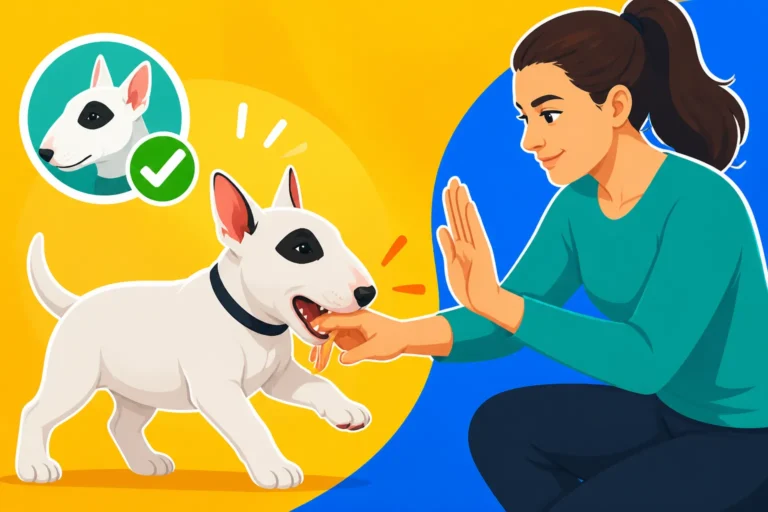
Even playful nips or attempts to "herd" the cat should be taken seriously. What might seem like play to a young, inexperienced Bull Terrier could quickly escalate if the cat panics and runs. Understanding What a Bull Terrier's Temperament Is Really Like can help you differentiate between general Bull Terrier exuberance and specific prey-driven behavior. It's not about punishing these instincts, but about recognizing them so you can manage the environment and train alternative, safer responses. If your Bull Terrier exhibits any of these signs, proceed with extreme caution and consider professional guidance.
Initial Introductions: Setting the Stage for Success
Introducing a Bull Terrier to a cat requires meticulous planning, patience, and a recognition that rushing the process can have dire consequences. This isn't a scenario where you simply "let them work it out." You are the mediator, the protector, and the one responsible for creating a safe environment for both animals.
The Critical First Meeting
Forget the romantic notions of dogs and cats instantly becoming best friends. The very first meeting must be carefully controlled and supervised. It should ideally happen with the Bull Terrier on a leash, in a calm environment, where the cat has an escape route or is safely secured in a carrier. The goal isn't interaction, but calm observation from a distance. You want both animals to be aware of each other's presence without feeling threatened. Have high-value treats ready for your Bull Terrier, rewarding any calm behavior, even just glancing at the cat without reacting.
It's often beneficial to have a second person present, one to manage the dog and one to ensure the cat's safety and comfort. Keep these initial sessions extremely short, perhaps only a minute or two, and end on a positive note before either animal shows signs of stress. If your Bull Terrier shows intense focus, lunging, or aggressive vocalizations, stop immediately and retreat. This indicates you need to go back to even more indirect exposure, perhaps scent swapping, before attempting visual contact again.
Gradual Desensitization and Positive Association
After the initial, highly controlled visual introductions, the process moves into gradual desensitization and building positive associations. This involves slowly increasing exposure to each other's presence in a way that is consistently rewarding and non-threatening. Start by feeding them on opposite sides of a closed door, where they can smell each other but not see each other. This helps them associate the other animal's scent with something positive (food).
Next, use baby gates or a crate for your Bull Terrier to allow visual exposure while maintaining a physical barrier. During these times, reward your Bull Terrier heavily with treats and praise for remaining calm. Give the cat treats and attention as well to ensure they feel safe and secure. Teaching a Bull Terrier to Settle on a Mat can be incredibly helpful here, as it teaches your Bull Terrier a designated calm space where they can observe the cat without being stimulated to chase. The key is to never force interaction. Allow them to exist in the same space, separated, for increasing periods, always ensuring positive experiences. This stage can take weeks, or even months, depending on the individual personalities of your pets.
Managing Interactions and Living Spaces
Coexistence isn't about constant interaction; it's about respectful space and managing your home environment to prevent conflict. This means being proactive, creating boundaries, and never leaving things to chance.
Creating Safe Zones for Your Cat
One of the most critical steps in fostering peace between a Bull Terrier and a cat is ensuring the cat has safe, dog-free zones. Cats are arboreal by nature, meaning they feel safer when they can be up high. Install cat shelves, tall scratching posts, or even small pet gates that the cat can easily jump over but the Bull Terrier cannot. These vertical spaces become sanctuaries where your cat can retreat, observe the dog from a safe vantage point, and eat or sleep undisturbed. Think of it as creating a "cat highway" through your home.
You should also designate at least one room as a no-dog zone, accessible to the cat at all times. This could be a spare bedroom, a bathroom, or even a utility room equipped with a cat flap or a pet gate positioned high enough for the cat to slip underneath. This ensures the cat always has an escape route and a place to truly relax without fear. Food and water bowls for the cat should be placed in these elevated or secluded areas, especially if your Bull Terrier is prone to "counter-surfing" or investigating anything remotely edible.
Supervised Interactions and Leash Control
Even after successful initial introductions, all interactions between your Bull Terrier and cat should remain supervised, especially in the early stages and for some dogs, indefinitely. When they are together in the same room, your Bull Terrier should always be on a leash, or at least a drag-line (a leash without a handle that trails on the floor) for easy control. This allows you to immediately intervene if you see any signs of heightened prey drive or overexcitement.
This isn't just about preventing harm; it's about consistent training. Every time your Bull Terrier doesn't chase or intently focus on the cat, it's an opportunity to reward calm behavior. Practice walking your Bull Terrier on a leash past the cat (who is safe in a separate room or on a high perch) and reward for ignoring. Gradually decrease the distance. For those looking for structured guidance, programs like BAXTER & Bella offer online puppy and dog training courses that can help you establish foundational obedience, which is invaluable for managing a Bull Terrier's impulses. Remember, the goal is to teach your Bull Terrier that the cat is not a toy, not prey, and not something to be interacted with without explicit permission and calm behavior. This takes immense dedication, but it’s worth it for the safety of your feline companion.
Addressing Challenges and Training Solutions
Even with the best intentions and careful planning, challenges can arise. It's vital to have a clear strategy for addressing unwanted behaviors and to understand that consistency is your greatest tool.
Dealing with Chasing Incidents
If your Bull Terrier attempts to chase your cat, even playfully, it must be interrupted immediately and consistently. A sharp "No!" or a verbal interrupter, followed by redirecting their attention to a toy or a known command like "sit" or "down," can be effective. Never allow the chase to continue, as it reinforces the behavior and teaches your Bull Terrier that it's acceptable. If the chase happens when your dog is on a drag-line, gently step on the line to prevent further pursuit.
After an interruption, remove the Bull Terrier from the situation for a short "time-out" in a separate room, or put them back in their crate. This isn't meant as punishment in an angry sense, but rather a clear signal that chasing the cat leads to the immediate removal of all fun and attention. Consistency is key here. Every single time the chase occurs, the same consequence must follow. Over time, your Bull Terrier will begin to associate chasing the cat with an undesirable outcome.
Reinforcing Calm Behavior and Alternative Activities
The flip side of stopping unwanted behavior is lavishly rewarding desired behavior. Whenever your Bull Terrier is calm in the presence of your cat, even if they're simply lying down and ignoring the cat, praise them and give them a high-value treat. This positive reinforcement teaches them that calm co-existence is what earns rewards. Use verbal markers like "Good calm!" or "Yes!" immediately before giving the treat so they understand what they are being rewarded for.
Beyond training, providing ample mental and physical enrichment for your Bull Terrier is paramount. A bored Bull Terrier is far more likely to engage in unwanted behaviors, including harassing a cat. Ensure they get sufficient exercise appropriate for their age and fitness level. Puzzle toys, such as those found on Amazon, that dispense treats, long-lasting chews, and regular training sessions can help satisfy their intelligent minds and high energy. What a Bull Terrier Does When It Is Bored and Which Puzzle Toys Occupy a Bull Terrier offer excellent insights into preventing boredom-induced mischief. Engaging their minds with activities like scent work or trick training can also redirect their natural drive in a constructive way, making them less likely to fixate on the cat.
Long-Term Harmony: Creating a Multi-Pet Household
Achieving true harmony isn't a one-time event; it's an ongoing commitment to training, management, and understanding your pets' needs. It means continuously monitoring their interactions and adapting as they age and their dynamics change.
Ongoing Training and Enrichment
Even after your Bull Terrier and cat seem to be coexisting peacefully, ongoing training and mental enrichment are crucial. Regular refreshers on basic obedience commands, especially "leave it" and "stay," will reinforce your control. Continue to provide engaging activities for your Bull Terrier to prevent boredom and keep their minds active. Rotate toys, introduce new puzzle feeders, and continue short, fun training sessions daily.
Consider advanced training classes or dog sports like Rally Obedience or even K9 Nose Work. These activities tap into a Bull Terrier's intelligence and drive in a positive way, building their confidence and strengthening your bond, which in turn can lead to better impulse control in the home. Remember, a well-exercised, mentally stimulated Bull Terrier is a happier, calmer Bull Terrier, and a calmer Bull Terrier is a safer Bull Terrier to have around a cat. How a Bull Terrier Gets On With Other Dogs highlights the importance of socialization and management, principles that extend to interspecies relationships.
Recognizing Stress Signals in Both Pets
As time goes on, you might become complacent, assuming everything is fine. However, it's vital to remain vigilant and learn to read the subtle stress signals in both your Bull Terrier and your cat.
For your Bull Terrier:
- Stiffening body: A sudden rigidity, often accompanied by a low head carriage or intense stare.
- Lip licking or yawning: Can be displacement behaviors indicating stress, especially if not associated with food or tiredness.
- Whale eye: When the whites of the eyes are prominently visible.
- Avoiding eye contact: Can be a sign of discomfort or appeasement.
- Low growl or soft whine: A precursor to more intense behavior.
For your Cat:
- Crouching low to the ground: Indicates fear or readiness to flee.
- Flattened ears: A clear sign of anxiety or aggression.
- Hissing or growling: Overt warning signs.
- Piloerection (puffed fur): Especially along the back or tail.
- Dilated pupils: Can indicate fear or high arousal.
- Excessive grooming: A displacement behavior for stress.
- Hiding more frequently: If your cat suddenly becomes reclusive, it could be a sign of chronic stress from the dog's presence.
By recognizing these signs, you can intervene before a situation escalates. This might mean separating them for a while, redirecting the Bull Terrier, or giving the cat extra attention and comfort. Pay attention to The Age a Bull Terrier Finally Settles, as their behavior can change as they mature, sometimes for the better, but sometimes requiring renewed vigilance. Don't hesitate to consult a certified professional dog trainer or veterinary behaviorist if you're struggling to read the signs or manage interactions. Sometimes, an objective expert eye can spot issues you might miss.
Case Study: Max and Whiskers
Let's look at a hypothetical scenario. Sarah adopted Max, a rambunctious two-year-old Bull Terrier, into her home which already had Whiskers, a somewhat timid tabby cat. Sarah knew Bull Terriers had a strong prey drive, so she didn't just throw them together.
Initial Steps: Sarah used baby gates to separate them, allowing Whiskers free run of the house while Max was confined to certain dog-proofed areas. She set up high shelves in the living room specifically for Whiskers. For the first two weeks, Max only saw Whiskers from behind a sturdy baby gate, and Sarah would reward Max with treats and praise every time he looked at Whiskers without barking or lunging.
Gradual Progress: Sarah then started structured, on-leash introductions. With Max on a short leash, she allowed Whiskers to enter the room. Max would often try to lunge, but Sarah would calmly say "no" and redirect his attention to a "Kong" toy filled with peanut butter, a favorite high-value treat she purchased from Amazon. Whiskers always had an escape route, usually jumping onto a cat tree. These sessions were short, five minutes at most, and always ended on a good note.
Ongoing Management: It took three months of consistent, patient work before Max could be off-leash in the same room as Whiskers for short periods, and only under direct supervision. Sarah made sure Max was always well-exercised before these sessions. If Max even looked too intently at Whiskers, Sarah would call his name and reward him for looking away. She also enrolled Max in an online training program like BAXTER & Bella to work on his impulse control, using their modules on "leave it" and "stay" with a high degree of success.
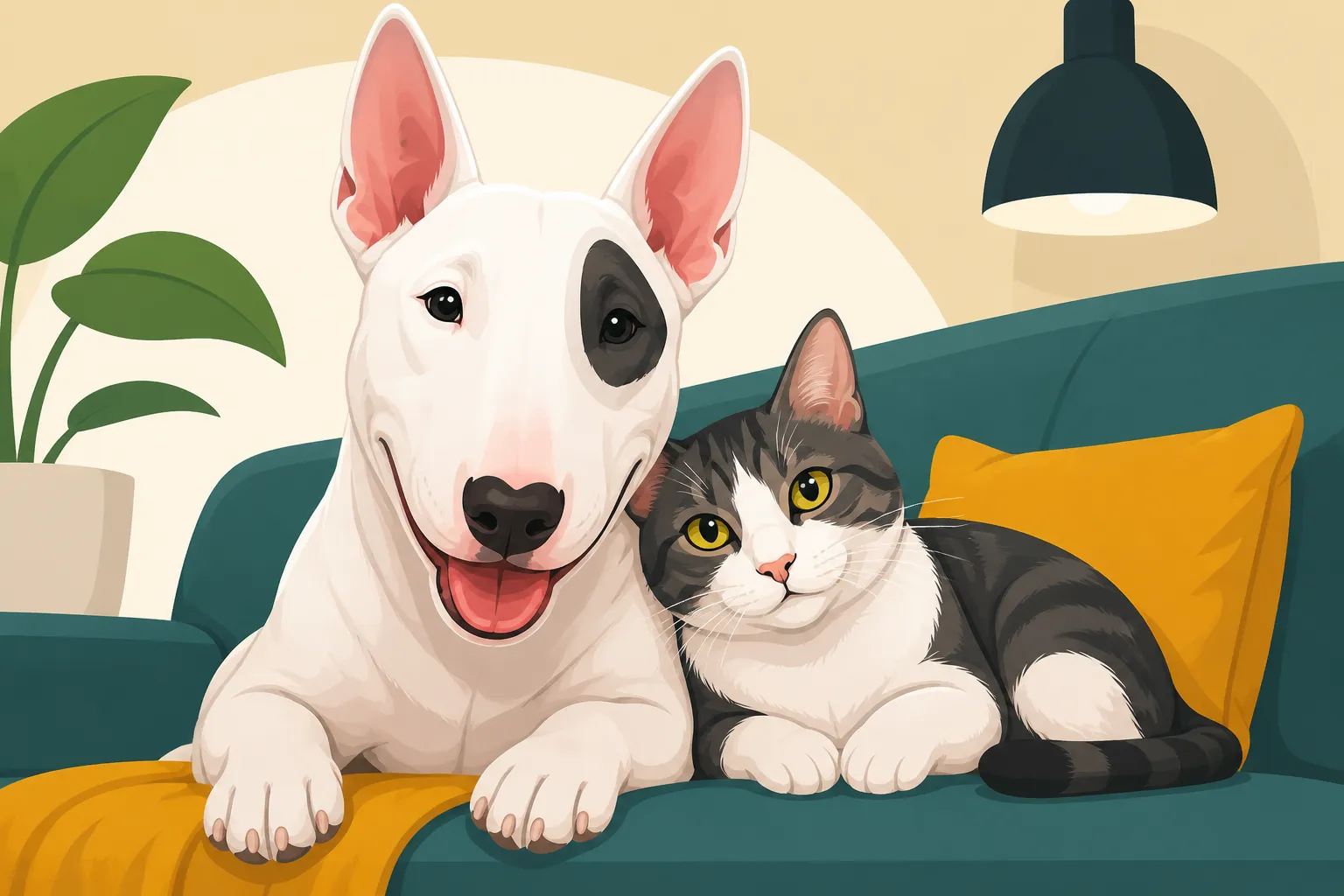
Current Situation: Now, a year later, Max and Whiskers mostly ignore each other. Whiskers occasionally rubs against Max's leg, and Max might give a gentle sniff. They'll nap in the same room, but Sarah still doesn't leave them unsupervised for extended periods. She understands that while harmony has been achieved, vigilance is always necessary when living with a Bull Terrier and a cat.
This journey for Sarah, Max, and Whiskers illustrates that success is possible, but it requires commitment, understanding of breed traits, and consistent management.
Building Bridges: Tips for Success
Here's a table summarizing key strategies for fostering peaceful coexistence between your Bull Terrier and cat.
| Strategy | Description | Why It Works |
|---|---|---|
| Scent Swapping | Before visual introductions, swap blankets or toys between the dog and cat's living areas. | Familiarizes each animal with the other's scent in a non-threatening way, reducing novelty and potential stress during direct encounters. |
| Baby Gates & Vertical Space | Use sturdy baby gates to create physical barriers. Install cat trees, shelves, and high perches accessible only to the cat. | Provides essential safe zones for the cat to escape, observe, and feel secure, preventing forced interactions and giving them control over their environment. |
| On-Leash Supervision | Always keep your Bull Terrier on a leash or drag-line during initial and early supervised interactions. | Allows for immediate control and intervention if prey drive is triggered, preventing chases and reinforcing that you are in charge of interactions. |
| Positive Reinforcement | Heavily reward calm behavior from your Bull Terrier when the cat is present (e.g., ignoring the cat, lying down). Give the cat treats and praise in the dog's presence. | Creates positive associations with the other animal. For the dog, it links calm behavior with rewards. For the cat, it ensures they don't associate the dog's presence solely with fear. |
| Mental & Physical Exercise | Ensure your Bull Terrier receives adequate physical exercise and mental stimulation daily (e.g., long walks, puzzle toys, training sessions). | A tired dog is a good dog. Reduces boredom and excess energy that might otherwise be directed towards the cat. Mentally stimulating activities also satisfy their instincts in a constructive way. |
| Never Punish Fear | If the cat hisses or swats, do not punish the cat. If the dog is showing fear, address that, too. | Punishing fear only makes it worse. It's crucial for both animals to feel safe enough to express their discomfort without negative consequences, allowing you to identify and address the root cause. |
| Avoid Free Feeding | Feed both animals separately, ideally with the cat's food in a dog-proof area. | Prevents food guarding issues and ensures both pets eat their full meals without stress. It also reinforces boundaries regarding shared resources. |
| Professional Help | Don't hesitate to seek guidance from a certified professional dog trainer or veterinary behaviorist if you encounter significant challenges. | Provides tailored advice and strategies for your specific situation. An expert can help identify subtle issues and guide you through difficult behavioral modification techniques safely and effectively. |
Conclusion
Living with a Bull Terrier and a cat is undeniably a commitment, and it's not a path for the faint of heart or those unwilling to put in consistent effort. The Bull Terrier's inherent prey drive is a significant factor that cannot be ignored or wished away. However, with careful planning, slow and patient introductions, diligent supervision, and ongoing management of their environment and interactions, many households successfully foster a peaceful coexistence.
It requires you to be the constant advocate for both animals, ensuring the cat has undeniable safe havens and that your Bull Terrier is well-trained, exercised, and mentally stimulated. While they might never become cuddle buddies, achieving a state where they can comfortably and safely share a home is a rewarding experience. Always prioritize the safety and well-being of both pets, and remember that professional guidance is an invaluable resource if you find yourself struggling. The goal is a household where both your strong-willed Bull Terrier and your clever cat can thrive.
Disclaimer
This article is for general informational purposes only and does not constitute professional advice. Laws, prices and regulations vary by location and change over time. Consult a qualified professional for guidance on your specific situation.