How a Bull Terrier Differs From a Miniature Bull Terrier
It's incredibly common for people to admire the distinctive, egg-shaped head and muscular build of the Bull Terrier, only to then wonder about its smaller counterpart, the Miniature Bull Terrier. Many assume it's just a smaller version of the same dog, but there are crucial differences beyond just inches and pounds that can significantly impact whether one breed or the other is the right fit for your home and lifestyle. This guide will walk you through the key distinctions between these two unique breeds, from their physical characteristics to their subtle temperament variations and specific care needs.
Physical Distinctions: More Than Just Size
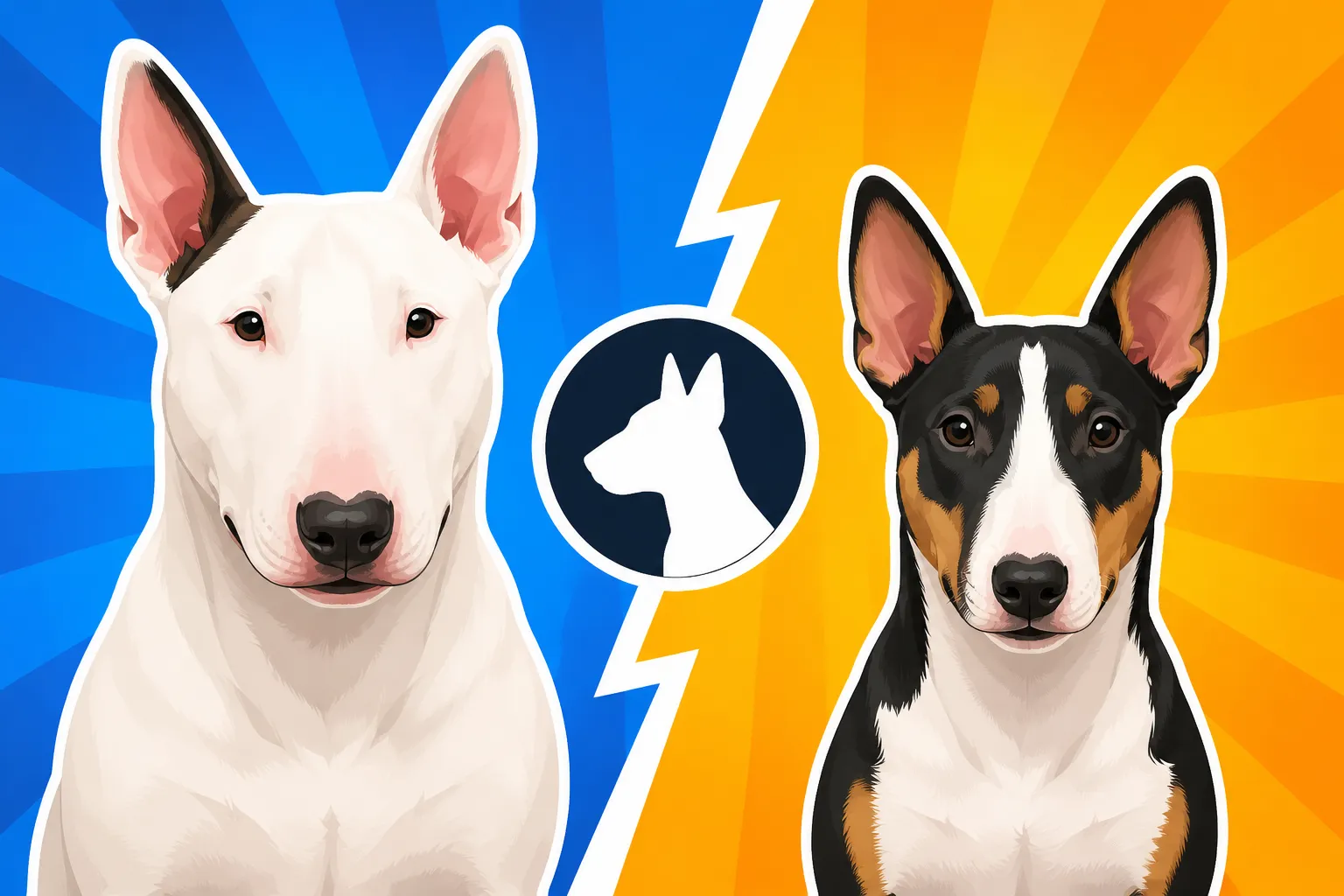
When you first lay eyes on a Bull Terrier and a Miniature Bull Terrier side-by-side, the most obvious difference is, of course, their size. However, to truly appreciate how one differs from the other, it's important to look beyond just the tape measure and delve into their overall proportions, bone structure, and even the subtle nuances of their iconic heads. They are, in fact, recognized as distinct breeds, not merely size varieties of the same one.
Size and Weight Discrepancies
The most significant and defining difference between the standard Bull Terrier and the Miniature Bull Terrier lies in their size and weight. A standard Bull Terrier is a substantial dog, usually standing about 21 to 22 inches (53-56 cm) tall at the shoulder and weighing anywhere from 50 to 70 pounds (23-32 kg), sometimes even a bit more for a particularly robust male. They are solidly built, with a powerful, athletic frame that feels surprisingly dense when you lift them or watch them move. Their sheer physical presence is undeniable, making them a formidable and often clumsy force in any home.
The Miniature Bull Terrier, on the other hand, is specifically bred to be smaller. Their breed standard dictates a maximum height of 10 to 14 inches (25-36 cm) at the shoulder, with no weight specified beyond being "in proportion to height." This usually translates to a weight range of 18 to 30 pounds (8-14 kg). While they retain the same distinctive Bull Terrier look, their smaller stature makes them much more manageable in tight spaces and easier to handle for individuals who might find a standard Bull Terrier's strength a bit overwhelming. They are essentially a compact version, a "pocket Bullie," but one that still packs a lot of personality into a smaller package. How Small a Miniature Bull Terrier Is gives a good sense of their dimensions.
Body Proportions and Bone Structure
While both breeds share the same general outline and muscularity, a closer look reveals slight differences in their body proportions and bone structure, largely due to the selective breeding for size. The standard Bull Terrier often presents a longer, more powerful stride due to its longer legs and larger frame. Its bone structure is heavy and substantial, designed to support its considerable muscle mass, giving it a very sturdy, barrel-chested appearance. The length of body compared to height might be subtly different, though both aim for a balanced, athletic build.
The Miniature Bull Terrier, while proportionally similar, has been developed to maintain that classic Bull Terrier "stance" and powerful appearance in a reduced form. Their bone structure is still robust for their size, but it's naturally finer than their larger cousins. They don't have the same ground-covering stride but move with a lively, spirited gait. Despite their smaller size, they are still incredibly strong and agile, possessing all the Bull Terrier's characteristic endurance and energy, just scaled down. This means they are not delicate, but rather condensed bundles of muscle.
Subtle Head and Eye Variations
The iconic egg-shaped head, or "downface," and the small, triangular eyes are hallmarks of both Bull Terrier varieties. However, there can be subtle variations that experienced breeders and enthusiasts notice. The standard Bull Terrier's head tends to be longer and more refined in its curve, with a powerful, deep muzzle that flows seamlessly from the top of the skull to the nose, without a "stop" (the indentation between the eyes). The eyes are often described as deeply set, giving them a piercing, almost mischievous gaze. Where the Bull Terrier's Egg Shaped Head Came From delves into the history of this unique feature.
For the Miniature Bull Terrier, while the "egg head" is equally desired and distinct, some argue that the curve might be slightly less extreme or appear a bit "fuller" in proportion to their overall smaller skull. Their eyes are still triangular and dark, conveying that classic keen expression, but the overall impression might be slightly less imposing due to the reduced scale. These are very fine points, and to the casual observer, the heads of both breeds look remarkably similar in their unique, unforgettable silhouette. It's the overall balance with the body that truly distinguishes them.
Temperament and Personality Nuances
It's often said that a Bull Terrier, regardless of size, is a "three-year-old in a dog suit," and that description holds true for both the Standard and Miniature varieties. They share a core personality that is full of clownish antics, boundless energy, and an endearing stubborn streak. However, their size difference can lead to subtle nuances in how these traits manifest and how they might fit into different family dynamics.
Energy Levels and Playfulness
Both Bull Terriers and Miniature Bull Terriers are incredibly energetic dogs. They are not content to be couch potatoes and require significant daily exercise and mental stimulation to thrive. They love to play, often with a boisterous enthusiasm that can be quite overwhelming for the unprepared owner. They are natural comedians, always ready to entertain with their goofy antics, chasing their tails, or inventing new ways to get your attention. Their zest for life is infectious.
The difference in energy, if any, is more about the impact of that energy. A full-sized Bull Terrier can body-slam you with surprising force, knock over lamps, and clear coffee tables with a wag of its powerful tail. Their play is physically demanding, and they require a robust playmate, whether human or canine, who can match their intensity without being intimidated. A Miniature Bull Terrier, while equally playful and energetic, is simply less likely to cause accidental chaos simply due to its smaller mass. They can still be quite intense in their play, but the consequences of their exuberance are generally less severe. For families with very young children or elderly members, the Miniature's scaled-down physicality might be a safer option, though supervision is always key. How Clownish a Bull Terrier Is describes their playful nature well.
Stubbornness and Trainability
Ah, the Bull Terrier stubbornness! It's legendary, and it's present in both varieties. These aren't dogs that live to please; they live to please themselves, and if your command doesn't align with their current agenda, they might just give you that classic side-eye and trot off to do their own thing. They are incredibly intelligent, but their intelligence is often channeled into creative problem-solving (like figuring out how to get to the forbidden treat) rather than rote obedience. This makes training a unique challenge and a deeply rewarding experience for the patient and consistent owner. Why a Bull Terrier Decides a Cue Is Optional is a very real frustration for owners.
The scale of this stubbornness, again, is impacted by size. Trying to convince a 70-pound Bull Terrier to move when it's decided to park itself on your lap (or the sofa, or the middle of the sidewalk) is a different proposition than persuading a 25-pound Miniature. While both require positive reinforcement, consistency, and a good sense of humor, the sheer physical strength of the standard Bull Terrier means that early and effective leash training is non-negotiable. With a Miniature, you still need that training, but they are less likely to pull you off your feet if they decide to chase a squirrel. Both breeds respond best to short, fun, engaging training sessions that feel like a game rather than a chore.
Socialization and Family Dynamics
Both Bull Terriers and Miniature Bull Terriers thrive on human companionship and are incredibly devoted to their families. They are "people dogs" through and through and do not do well when left alone for long periods. They crave attention and inclusion in family activities. However, their strong personalities and potential for selective dog-friendliness mean that early and ongoing socialization is paramount for both breeds. They can be wary of strangers and sometimes possess a strong prey drive, which needs careful management, especially around smaller animals.
In multi-dog households, the same-sex aggression often attributed to Bull Terriers can manifest in both sizes, though the consequences of a fight between two Miniatures are obviously less severe than between two Standards. Why Two Same Sex Bull Terriers Fight highlights this concern. With children, both breeds can be wonderful companions, but their boisterous play style means close supervision is always necessary, especially with toddlers. A Miniature might be less likely to accidentally knock over a small child, but its enthusiasm can still be overwhelming. The Bull Terrier, of any size, forms strong bonds with children but needs to be taught appropriate play boundaries. They see themselves as part of the family, not just a pet, and will want to be wherever the action is.
Health Considerations Specific to Each
While both the Standard and Miniature Bull Terriers are generally robust dogs, they share some common breed-specific health concerns due to their genetic heritage. However, there are also some conditions that might be more prevalent or manifest differently in one size versus the other, which is crucial for prospective owners to understand. Choosing a reputable breeder who performs thorough health screenings is the best way to ensure you're getting the healthiest puppy possible. What a Bull Terrier Breeder Should Have Tested provides a comprehensive overview of essential screenings.
Common Health Issues for Standards
Standard Bull Terriers are prone to several health issues that owners should be aware of. One of the most serious is Hereditary Nephritis, a genetic kidney disease that can lead to kidney failure at a young age. This is a progressive condition, and regular urine protein creatinine (UPC) ratio tests are vital for early detection. Another significant concern is heart disease, particularly mitral valve dysplasia and aortic stenosis. These conditions can sometimes be detected through an echocardiogram, especially if a heart murmur is present. The Heart Murmur a Bull Terrier Puppy Should Be Checked For explains why this is so important.
Skin allergies are also very common in Bull Terriers, leading to itchy skin, hot spots, and chronic ear infections. Their short, coarse coat can belie sensitive skin underneath. Deafness, especially in white Bull Terriers, is another well-known issue, and responsible breeders will BAER test all white puppies. Patellar luxation, where the kneecap slips out of place, can also occur, causing lameness. Due to their size and power, any orthopedic issues can be more debilitating for a standard Bull Terrier.
Health Concerns More Prevalent in Miniatures
Miniature Bull Terriers share many of the same health predispositions as their larger cousins, including Hereditary Nephritis, heart issues, deafness, and skin allergies. However, there are some conditions that seem to be either more prevalent or have a different impact in the smaller variety. Primary Lens Luxation (PLL) is a significant eye condition in Miniature Bull Terriers where the lens of the eye dislocates, potentially leading to glaucoma and blindness. This condition has a DNA test, and responsible breeders will screen for it.
Another condition sometimes seen in Miniatures, though it can occur in Standards too, is patellar luxation. Given their lighter frame, the presentation and treatment might differ slightly, but it still requires careful management. While both breeds can suffer from psychological conditions like obsessive compulsive disorders, which often manifest as tail chasing or spinning, the smaller size of the Miniature might make owners more prone to dismiss it as "cute" behavior rather than a medical problem. Tail Chasing in a Bull Terrier Is a Medical Problem emphasizes the seriousness of this issue.
Shared Genetic Predispositions
Both Standard and Miniature Bull Terriers unfortunately share a common lineage and, therefore, many of the same genetic vulnerabilities. Aside from Hereditary Nephritis, heart conditions, deafness, and skin problems, both breeds can be prone to conditions like zinc-responsive dermatosis, where their bodies have trouble absorbing zinc, leading to skin issues. Lethal Acrodermatitis (LAD), a devastating genetic disorder causing severe skin lesions, immune deficiency, and failure to thrive in puppies, also affects both, though thankfully it is rare and has a DNA test. Whether a Miniature Bull Terrier Carries Acrodermatitis confirms this shared risk.
When considering either breed, it is paramount to seek out a breeder who can provide clear documentation of health testing for both parents, including BAER testing for deafness (especially for white dogs), cardiac clearances (echocardiogram), kidney screening (UPC ratios), patella examinations, and DNA tests for PLL (for Miniatures) and LAD (for both, if available or relevant to the line). Knowing the health history of the parent dogs is the best proactive step an owner can take to minimize the risk of inheriting these conditions. For common ailments like skin allergies, having a good veterinary relationship and access to specialized shampoos or foods, perhaps found on Chewy, can be very helpful.
| Feature / Condition | Standard Bull Terrier | Miniature Bull Terrier |
|---|---|---|
| Height (Approx.) | 21-22 inches (53-56 cm) | 10-14 inches (25-36 cm) |
| Weight (Approx.) | 50-70+ lbs (23-32+ kg) | 18-30 lbs (8-14 kg) |
| Physical Strength | Very high, can be overwhelming | High for its size, but less physically imposing |
| Key Health Concerns | Hereditary Nephritis, Heart Disease, Deafness, Skin Allergies, Patellar Luxation | Primary Lens Luxation (PLL), Hereditary Nephritis, Heart Disease, Deafness, Skin Allergies, Patellar Luxation |
| Energy Impact | Can cause accidental damage due to size | Energetic but less prone to accidental large-scale damage |
| Training Challenges | Significant physical challenge for stubbornness | Mental challenge for stubbornness, less physical resistance |
| Suitability for Apartments | Can adapt with enough exercise, but tight spaces challenging | Generally better suited due to smaller size |
| Interaction with Children | Requires close supervision due to boisterousness | Still requires supervision, less likely to overpower |
| Breed Recognition | Separate AKC/KC breed | Separate AKC/KC breed |
Training and Exercise Needs
Regardless of whether you bring home a standard or miniature Bull Terrier, you are signing up for an active, intelligent, and often hilariously stubborn companion. Their training and exercise needs are remarkably similar in type, but the sheer scale of the dog makes a significant difference in the intensity and management required. Both need consistency, patience, and a sense of humor.
Daily Activity Requirements
Both Bull Terriers are bundles of energy that need a healthy outlet for their exuberance. We're not talking about a quick stroll around the block here. A standard Bull Terrier needs at least an hour, if not two, of vigorous exercise daily. This could include long, brisk walks, runs in a secure, fenced area, intense games of fetch, or even structured activities like agility. Without adequate physical exercise, a Bull Terrier can become destructive, bored, and develop unwanted behaviors. Their powerful bodies are built for activity, and they thrive when they have a job to do, even if that job is just tiring themselves out. How Much Exercise a Bull Terrier Actually Needs covers this in detail.
Miniature Bull Terriers, despite their smaller size, have very similar energy requirements. They might not cover as much ground in a single stride, but they can keep going and going. They also need substantial daily exercise, which could include long walks, play sessions, and engaging activities. Don't let their compact size fool you into thinking they're lap dogs who are content with minimal activity; they are still terriers at heart, bred for stamina and drive. The advantage is that their smaller size might make it easier to exercise them in smaller yards or indoor spaces, especially on bad weather days, but the intensity of the exercise should not be underestimated.
Mental Stimulation and Boredom
Physical exercise is only half the battle with these clever breeds. Both standard and Miniature Bull Terriers possess sharp minds that need to be challenged. They get bored very easily, and a bored Bull Terrier is a destructive Bull Terrier. They are notorious for chewing, digging, and generally redecorating your home if left to their own devices without mental engagement. This is where puzzle toys, training games, and interactive play come in.
For any owner, having a well-stocked arsenal of durable chews and interactive puzzle toys, readily available on platforms like Chewy, is essential for keeping their minds occupied. Teach them new tricks, engage them in scent work, or enroll them in obedience classes that focus on positive reinforcement and fun. For example, Which Puzzle Toys Occupy a Bull Terrier offers great suggestions. The standard Bull Terrier's powerful jaws mean that toys must be exceptionally robust, while the Miniature, though smaller, still requires toys that can withstand enthusiastic chewing. Mental exhaustion is often as important as physical exhaustion for a well-behaved Bull Terrier.
Leash Training and Socialization
Leash training is absolutely critical for both Bull Terrier varieties, but for different reasons. A standard Bull Terrier, with its considerable strength and size, can easily pull an unprepared adult off their feet if they decide to chase a squirrel or greet another dog too enthusiastically. Early and consistent training with a strong, appropriate harness or head collar is vital. Teaching a Bull Terrier to Walk Without Pulling is a skill that will save your shoulders and your patience.
For the Miniature Bull Terrier, while they might not drag you down the street, their strong prey drive and terrier instincts mean they are still prone to bolting or chasing. A reliable leash is just as important, especially in areas with traffic or other animals. Both breeds benefit immensely from early and ongoing socialization with a variety of people, places, and appropriate dogs. Puppy classes are highly recommended to help them learn good manners and curb any potential aggression or fear issues. Due to their independent and sometimes dominant nature, particularly with other dogs, careful socialization from a young age is key to ensuring they grow into well-adjusted adults.
Living Arrangements and Suitability
Deciding between a Standard and Miniature Bull Terrier often comes down to the practicalities of your living situation and your experience as a dog owner. Both breeds require significant commitment, but their size directly influences how they fit into different homes and lifestyles.
Apartment vs. House Living
Many people assume a smaller dog is automatically better suited for apartment living, and while the Miniature Bull Terrier certainly has an advantage here, it's not a clear-cut distinction. A Miniature Bull Terrier can absolutely thrive in an apartment, provided they receive ample exercise and mental stimulation daily. Their compact size means they take up less physical space, and their indoor energy can be managed more easily than a larger, more sprawling dog. However, they are not quiet dogs; they can be quite vocal when bored or when strangers pass by.
A standard Bull Terrier can live in an apartment, but it's a much bigger undertaking. They need considerably more space to stretch out and move without bumping into things. Their high energy, coupled with their sheer mass, means that if they don't get enough outdoor exercise, they can become destructive very quickly. A small yard, while helpful, is rarely enough for either breed; they need to be out and exploring. For both, proximity to parks, dog-friendly trails, or open spaces is far more important than the size of your dwelling. Regardless of size, neither breed tolerates being left alone in a yard for long periods; they are companion animals and need to be with their people indoors. Whether a Bull Terrier Suits an Apartment is a frequent question for potential owners.
Suitability for First-Time Owners
This is where the distinction can become quite stark. Neither a standard Bull Terrier nor a Miniature Bull Terrier is typically recommended for first-time dog owners. Their unique combination of intelligence, strong will, high energy, and potential for stubbornness can be incredibly challenging for someone without prior experience with strong-willed breeds. They require an owner who is confident, consistent, and patient, and who understands positive reinforcement training.
However, if a first-time owner is absolutely set on a Bull Terrier and has done extensive research, the Miniature Bull Terrier might be a slightly less daunting option. Their smaller size makes them physically easier to manage if they decide to be stubborn or pull on the leash. The potential for accidental injury to humans or damage to property is reduced. That said, all the behavioral and training challenges remain the same. An experienced mentor or professional trainer is highly recommended for any Bull Terrier owner, regardless of size, especially if it's their first time with a terrier-type breed. Whether a Bull Terrier Suits a First Time Owner provides more detail on this often-underestimated challenge.
Managing Destructive Tendencies
Both Bull Terriers have a reputation for being champion chewers and can be incredibly destructive if their needs aren't met. This isn't out of malice, but usually out of boredom, frustration, or separation anxiety. They have incredibly powerful jaws and a natural instinct to "work" with their mouths. This means your home needs to be "Bull Terrier-proofed" to an extreme degree. Electrical cords, furniture legs, shoes, children's toys – nothing is safe.
The difference lies in the scale of the destruction. A standard Bull Terrier can demolish a sofa, chew through a door frame, or make short work of drywall with shocking efficiency. Their sheer size and strength amplify the damage they can inflict. Investing in heavy-duty crates, indestructible toys, and chew-proof beds is essential. What a Heavy Duty Bull Terrier Crate Costs gives a glimpse into the necessary investment. The Miniature Bull Terrier can also be destructive, but the damage tends to be less extensive simply because they are smaller. They might still ruin a favorite pair of shoes or chew a chair leg, but they're less likely to dismantle an entire room. Again, providing ample exercise, mental stimulation, and appropriate chew toys (found readily on Chewy, for instance) is the best defense against these destructive tendencies for both varieties.
Breeding and Recognition: Separate Paths
While undeniably sharing a common ancestor and unmistakable family resemblance, the Standard Bull Terrier and the Miniature Bull Terrier are recognized as distinct breeds. This separation is critical for ethical breeding practices and understanding their unique histories and characteristics.
Separate Breed Standards
The American Kennel Club (AKC) and other major kennel clubs worldwide recognize the Bull Terrier and the Miniature Bull Terrier as entirely separate breeds, each with its own distinct breed standard. The primary differentiator, as we've discussed, is size. The standard for the Bull Terrier sets no height or weight limit but emphasizes substance and power in proportion, indicating a large, muscular dog.
Conversely, the Miniature Bull Terrier's standard specifically stipulates a height limit, usually between 10 to 14 inches at the shoulder, with weight being secondary to proportion. This means that a standard Bull Terrier that happens to be on the smaller side is still a standard, and a Miniature Bull Terrier that is slightly oversized is still a Miniature, provided they meet all other criteria for their respective standards. This distinction ensures that breeders are working towards specific goals for each breed, maintaining their unique characteristics and preventing the blurring of lines.
Breeding Practices and Considerations
Because they are separate breeds, Standard and Miniature Bull Terriers should never be intentionally bred together. Such a practice would undermine decades of careful selective breeding aimed at establishing their distinct sizes and possibly even introduce unforeseen health or structural issues. Reputable breeders of either variety are dedicated to preserving the integrity of their chosen breed. They adhere to strict ethical guidelines, perform all recommended health screenings pertinent to their specific breed, and strive to produce puppies that meet the breed standard in terms of health, temperament, and conformation.
Finding a responsible breeder for either breed is paramount. They should be able to provide health clearances for the parents for conditions like Hereditary Nephritis, heart disease, deafness, and for Miniatures, Primary Lens Luxation. They will typically have a waiting list, interview prospective owners thoroughly, and show a genuine commitment to the long-term well-being of their puppies. Any breeder offering "miniature" Bull Terriers that are simply undersized standards, or attempting to mix the two, is a red flag.
Historical Development
The history of both breeds intertwines closely with James Hinks, who developed the original Bull Terrier in Birmingham, England, in the 1860s. Hinks created the "White Cavalier" by crossing various terrier types with the now-extinct English White Terrier and possibly Dalmatians and Spanish Pointers. His goal was a dog that was refined, athletic, and beautiful, embodying a gentleman's companion rather than a pure fighting dog. James Hinks Built the Bull Terrier in Birmingham in the 1860s gives fascinating insight into his work.
The Miniature Bull Terrier then emerged later, developed from the smaller specimens of the early Bull Terrier lines. It wasn't a separate creation from scratch, but rather a deliberate selection for smaller size within the existing Bull Terrier gene pool. Over time, as distinct size preferences emerged, the Miniature gained its own recognition and dedicated breeders. The acceptance of colored Bull Terriers in the main breed also played a role in the evolution of both, as early Bull Terriers were primarily white. So, while their paths diverged into separate breeds, their shared heritage remains strong, influencing their iconic looks and lively temperaments.
Disclaimer
This article is for general informational purposes only and does not constitute professional advice. Laws, prices and regulations vary by location and change over time. Consult a qualified professional for guidance on your specific situation.