Teaching a Bull Terrier to Walk Without Pulling
Oh, the joy of a Bull Terrier on a leash! If you’ve ever found yourself being dragged down the street, feeling more like a water-skier than a dog walker, you’re definitely not alone. Many Bull Terrier owners grapple with the sheer, unadulterated strength and enthusiasm their quirky companions bring to a simple stroll. This guide is here to untangle the leash, explain why your Bull Terrier thinks they're leading the expedition, and equip you with the practical, patient strategies needed to achieve those dreamy, loose-leash walks you both deserve.
Understanding the Bull Terrier's Leash Pulling Instincts
Before we can even begin to teach our Bull Terriers polite leash manners, it’s absolutely crucial to understand the unique blend of genetics, personality, and physical attributes that contribute to their pulling. It’s not about malice; it’s about instinct, energy, and how they perceive the world – and you – on the other end of that leash. Trying to fight against these inherent traits without understanding them is like trying to swim upstream in a hurricane.
The Bull Terrier's Natural Enthusiasm and Drive
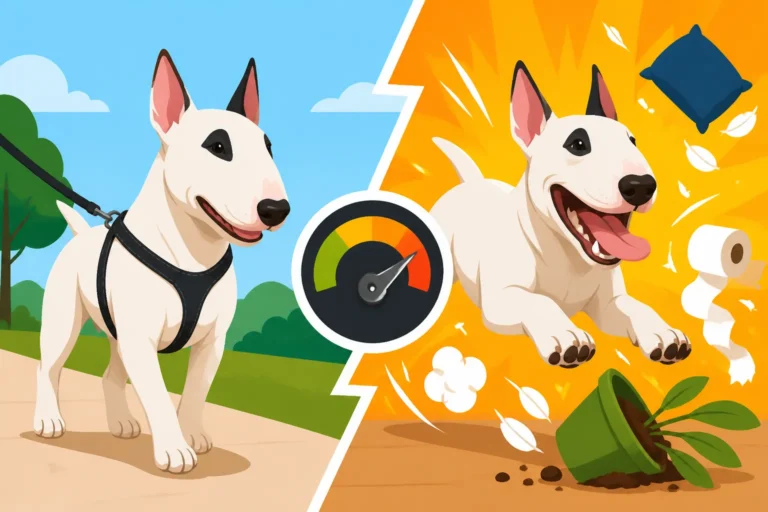
Let's face it, Bull Terriers are often described as "a three-year-old in a dog suit" for a reason. They possess an almost boundless energy and an unshakeable curiosity. Every walk is an adventure, a sensory explosion of smells, sights, and sounds that they must investigate. This enthusiasm, while endearing in many contexts, translates directly into a powerful desire to get to whatever has captured their attention, and fast. When they spot a squirrel, another dog, or even just an interesting patch of grass, their primal drive kicks in. They're not consciously trying to disrespect you; they're simply following their instincts with gusto, and you, unfortunately, become a human anchor slowing their progress.
This inherent drive also means they often have a very high prey drive. That rustling bush or distant cat isn't just a fleeting thought; it's a call to action. Their powerful bodies are built for chasing and engaging, and a leash often feels like an irritating impediment rather than a guide. Understanding How Strong a Bull Terrier Is on a Leash is key here – they are solid, muscular dogs, and what feels like a minor tug to them can feel like a major yank to a human. Their determination can be truly remarkable, and without proper guidance, they will absolutely use that strength to their advantage.
Misinterpreting Leash Pressure and Opposition Reflex
One of the biggest hurdles in leash training a Bull Terrier is something called the "opposition reflex." Essentially, it's a natural canine tendency to pull against pressure. Think about it: if you pull a dog forward, their natural inclination is to lean back and resist. If you pull back, they often push forward. This isn't unique to Bull Terriers, but their sheer physical power makes this reflex far more pronounced and frustrating for their human counterparts. Every time they feel a tug on the collar, their instinct is to pull harder, inadvertently teaching themselves that pulling gets them closer to their goal. It becomes a self-reinforcing cycle.
Many owners, out of frustration, end up constantly pulling and correcting, which only intensifies this opposition reflex. The dog learns that the leash is a constant source of pressure, and the only way to alleviate it is to push into it. We unintentionally train them to become champion pullers. Instead of seeing the leash as a communication tool or a gentle guide, they perceive it as a tether they need to constantly strain against. It's a classic example of both parties being caught in a misunderstanding of communication.
Lack of Early Training and Consistency
Like any breed, Bull Terriers thrive on consistency and clear expectations. If a Bull Terrier puppy is allowed to pull from day one, even if it's "cute" or "manageable" when they're small, they are learning that pulling is an acceptable, and even effective, way to get around. Once this habit is ingrained, it's incredibly difficult to undo, particularly with an adult Bull Terrier's strength. Think about it: if every time they pull, they eventually get to sniff that interesting lamppost or greet that person, they've been rewarded for pulling. They see it as a successful strategy.
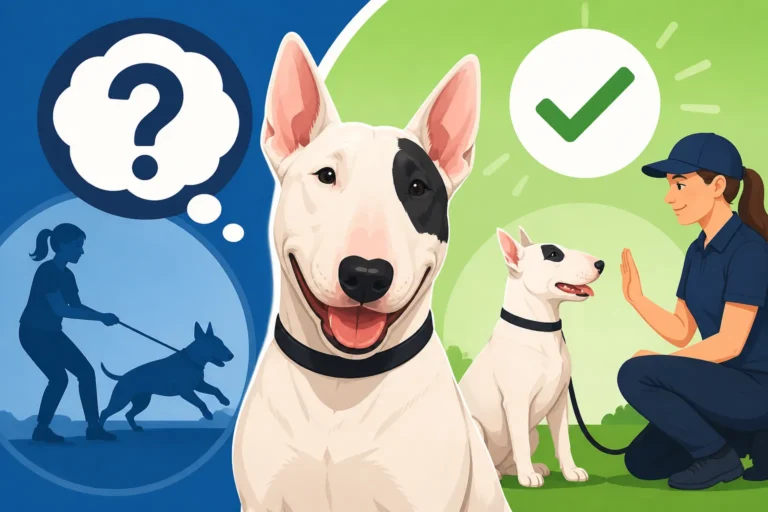
Furthermore, a lack of consistency between household members can sabotage even the best efforts. If one person allows pulling and another tries to enforce loose-leash walking, the Bull Terrier quickly learns that rules are flexible. They'll pull with the person who lets them and maybe try a little harder with the person who doesn't, always testing the boundaries. For a breed that already Decides a Cue Is Optional, this inconsistency can be particularly detrimental. Early, consistent, and positive reinforcement-based training is paramount to establishing good habits from the start.
Essential Tools for Leash Training Success
While training techniques are at the heart of teaching loose-leash walking, having the right equipment can make a world of difference, especially with a powerful breed like the Bull Terrier. The wrong tool can exacerbate pulling or even cause harm, while the right one can provide better control and comfort for both you and your dog. It's about finding what helps you communicate most effectively.
Harnesses: Front-Clip vs. Back-Clip
Harnesses are a popular choice, and for good reason: they distribute pressure across the chest and shoulders rather than the throat, which is crucial for a breed like the Bull Terrier that might otherwise strain against a collar and risk damage to their trachea. However, not all harnesses are created equal when it comes to preventing pulling.
-
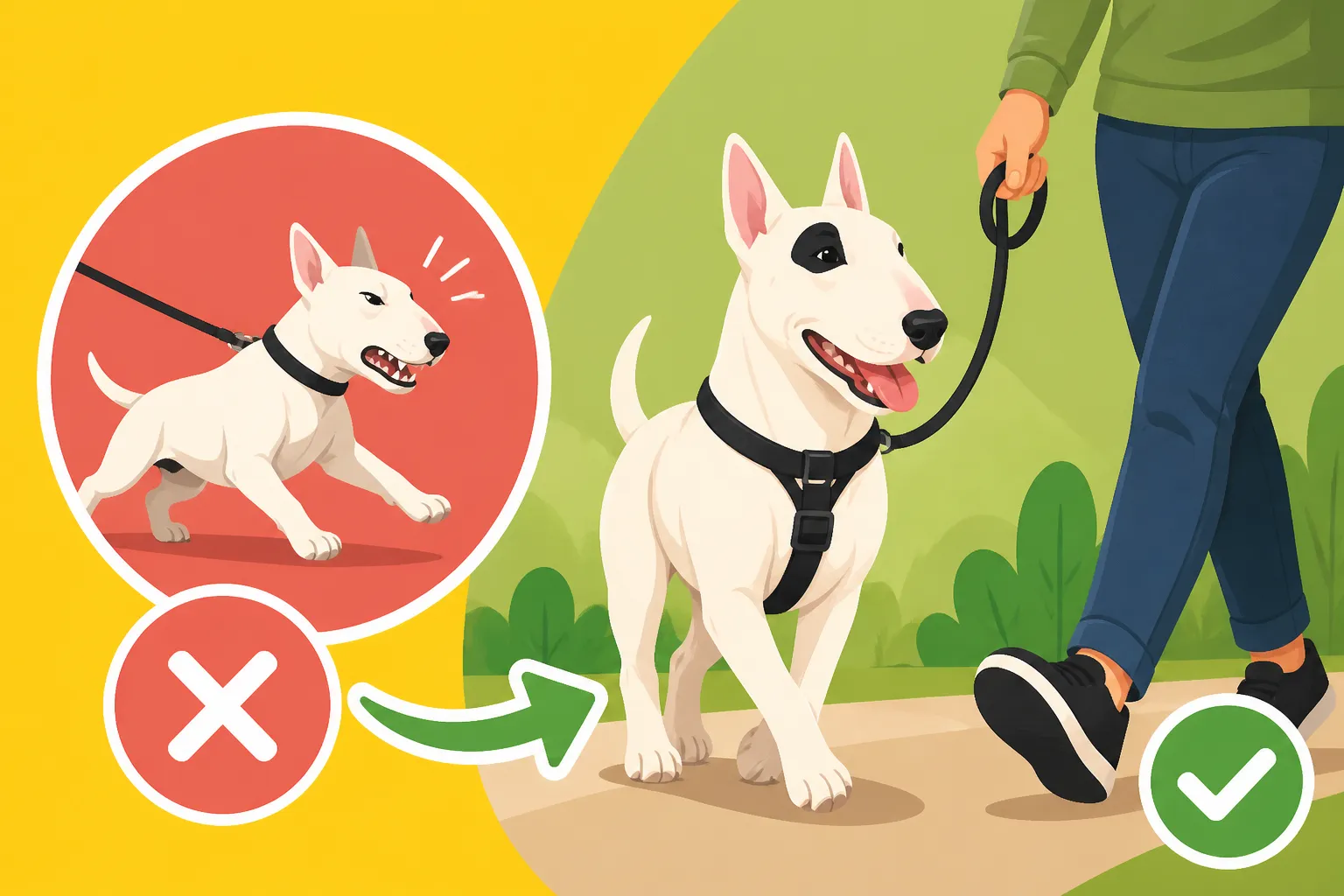
Back-Clip Harnesses: These harnesses have the leash attachment point on the dog's back. While comfortable and excellent for dogs who already walk nicely, they can actually encourage pulling in strong dogs like Bull Terriers. When the leash clips to the back, it allows the dog to lean into the harness and use their full body weight and strength to pull forward, much like a sled dog. They become a powerful locomotive with little directional control for the handler. For a Bull Terrier that's still learning, a back-clip harness can be an exercise in frustration for both of you.
-
Front-Clip Harnesses: These are often the go-to recommendation for pullers. The leash attachment is on the dog's chest. When your Bull Terrier pulls, the leash redirects their momentum to the side, gently turning them around to face you rather than allowing them to power forward. This interrupts their forward motion without causing discomfort or pain. Brands like Easy Walk and Sensation Harnesses are well-known examples you might find on Amazon. The key is that the dog learns that pulling just turns them sideways, which is far less rewarding than making forward progress. For more options, you might want to read Which Harness Holds a Bull Terrier.
Head Halters and Their Proper Use
Head halters, sometimes called head collars (like the Gentle Leader or Halti), are another incredibly effective tool for managing strong pullers. They work similarly to how a halter works on a horse, providing control over the dog's head, and where the head goes, the body often follows. When your Bull Terrier pulls, the head halter gently redirects their nose and head downwards or to the side, preventing them from forging ahead.
It's important to introduce a head halter slowly and positively, as many dogs initially resist them. They might try to paw it off, rub their face on the ground, or freeze. This isn't because it's painful, but simply because it's an unusual sensation. Associate the halter with high-value treats and praise, letting them wear it for short periods before attaching the leash. Never use it to yank or harshly correct your dog; the goal is gentle guidance. When used correctly, a head halter can offer immediate control, allowing you to focus on rewarding polite behavior. It's often a game-changer for owners of very strong or reactive Bull Terriers, but patience with the initial introduction is paramount. If you're wondering Whether a Head Halter Suits a Bull Terrier, it's definitely worth considering if other methods haven't worked.
Leash and Collar Choices for Bull Terriers
The leash itself plays a role, though perhaps less so than the harness or halter. A standard 4-6 foot leash is generally ideal for loose-leash training, as it gives your Bull Terrier enough room to walk comfortably beside you without excessive slack, but not so much that they can get too far ahead. Avoid retractable leashes entirely for training loose-leash walking. They teach dogs that pulling is how they get more leash, which is the opposite of what we want. They also offer very little control and can be dangerous.
For collars, a flat buckle collar is perfectly fine for ID tags, but for walking, especially during the training phase, it offers minimal control for a determined Bull Terrier. If you're using a back-clip harness or a head halter, the flat collar can still hold their ID tags and serve as a backup attachment point if needed. Never use choke chains or prong collars without the guidance of a professional, positive-reinforcement trainer, as improper use can cause physical harm and damage your relationship with your dog. For a Bull Terrier, which Shuts Down Under Pressure and can be sensitive, harsh corrections can be particularly counterproductive. The emphasis should always be on guiding and rewarding, not punishing.
| Tool Type | Leash Attachment | Primary Benefit | Potential Drawback | Ideal For |
|---|---|---|---|---|
| Flat Collar | Neck | Holds ID, basic control | Poor control for pullers, risk of neck strain | ID tags, minimal training |
| Back-Clip Harness | Back | Comfortable, no neck pressure | Can encourage pulling, less steering control | Dogs already walking well, general wear |
| Front-Clip Harness | Chest | Redirects pulling, good steering | Can tangle legs if not fitted well | Active pullers, training loose leash |
| Head Halter | Muzzle (under chin) | Excellent control over head and body | Initial resistance from dog, requires gentle use | Strong pullers, reactive dogs |
Foundational Training Techniques for Loose Leash Walking
Once you have the right equipment, it's time to dive into the actual training. Remember, patience is your most important tool, and consistency is your mantra. Bull Terriers are smart, but they also have strong wills, so be prepared for some delightful stubbornness. The goal isn't to force them, but to teach them that walking politely benefits them more than pulling does.
The "Stop and Go" Method for Impulse Control
This is a classic and highly effective technique for teaching your Bull Terrier that pressure on the leash means "stop," not "pull harder." Start in a low-distraction environment, like your backyard or a quiet street.
- Start Walking: Begin walking with your Bull Terrier.
- Feel the Pull, Freeze: The instant you feel any tension on the leash, any forward pull from your dog, immediately stop dead in your tracks. Don't say anything, don't yank, just become a statue.
- Wait for Slack: Wait. Your Bull Terrier will likely be confused. They might turn to look at you, they might sniff around, or they might even try to pull a few more times. The moment they ease up on the leash, even for a second, and you feel the leash go slack, that's your cue.
- Reward and Resume: Immediately say "Yes!" or click your clicker (if you use one), and give them a high-value treat at your side. Then, praise them warmly and start walking again.
- Repeat, Repeat, Repeat: The moment they pull again, stop. As soon as there's slack, reward and move. Your Bull Terrier will quickly start to associate pulling with stopping and slack with moving forward and treats. This teaches them that the reward (moving forward) only happens when the leash is loose.
This method teaches immediate consequences for pulling (stopping) and immediate rewards for slack (moving and treats). It's incredibly effective because it directly addresses the opposition reflex and uses what the dog wants (to move forward) as the motivator. Be prepared to stop a lot in the beginning. Your first "walk" might involve more stopping than walking, and that's perfectly normal!
Redirection and Positive Reinforcement
Bull Terriers are often highly motivated by food and play, so harnessing these motivators through positive reinforcement is key. Instead of waiting for your Bull Terrier to pull and then stopping, actively work to keep their attention on you before they start pulling.
- Lure and Reward: Hold a high-value treat near your Bull Terrier's nose at your side. Take a few steps, and if they walk beside you with a loose leash, immediately reward them with the treat. Increase the number of steps before rewarding as they improve. The goal is to make your side the most interesting place to be.
- Verbal Cues: Pair this with a verbal cue like "heel" or "let's go" as they are walking nicely beside you. This builds an association between the command and the desired behavior.
- Change of Direction: This is a powerful redirection tool. If your Bull Terrier starts to fixate on something ahead or drift too far, simply change direction abruptly. If they were pulling left, turn right. If they were pulling straight, turn around. This keeps them paying attention to you and prevents them from getting into a pulling rhythm. When they re-orient to you and the leash slackens, reward them generously. This technique can be a lifesaver, as it prevents them from getting locked into a single-minded pull toward a distraction. Why a Bull Terrier Pulls Toward Everything often comes down to their unwavering focus, and a change of direction helps break that focus.
Consistency is everything here. Every time your Bull Terrier walks with a loose leash, even for a few steps, acknowledge it with praise and a reward. Ignore the pulling (by stopping) and reward the slack.
Changing Directions: Making You More Interesting
Beyond the "stop and go" method, incorporating frequent, unpredictable changes of direction can be a powerful tool for engaging your Bull Terrier and teaching them to pay attention to you rather than the environment. This technique ensures they constantly monitor your movements, rather than forging ahead mindlessly.
Imagine your Bull Terrier is pulling hard towards a fascinating bush. Instead of bracing against the pull, make an immediate 90-degree turn to the left or right, or even a 180-degree turn. This sudden shift in direction will naturally throw them off balance and require them to re-engage with you to figure out where you're going. The moment the leash goes slack and they turn with you, mark that behavior with a verbal "Yes!" or a click, and reward them with a high-value treat at your side.
The beauty of this method is that it makes you, the handler, unpredictable and interesting. Your Bull Terrier learns that if they don't pay attention, they'll miss where you're going. It transforms the walk from a static drag into an interactive dance. This builds a strong habit of checking in with you, making your presence more valuable than whatever fleeting distraction is ahead. This also helps with Teaching a Bull Terrier to Come Back Mid Zoomie, as it reinforces the idea that paying attention to you leads to good things, even when they're highly engaged.
Addressing Common Challenges in Bull Terrier Leash Training
Even with the best tools and techniques, training a Bull Terrier will undoubtedly come with its unique set of challenges. Their strong personalities, high energy, and potential for reactivity mean you’ll encounter specific hurdles. Understanding these and having strategies to overcome them is crucial for your sanity and your dog’s success.
Distractions and Over-Arousal on Walks
A Bull Terrier’s world on a walk is a vibrant tapestry of smells, sounds, and sights. A bird, a leaf blowing, a distant dog bark, or even a shadow can trigger an intense focus that quickly overrides any previous training. This "over-arousal" is a common problem. When they get fixated, their cognitive function can temporarily decrease, making it hard for them to respond to cues they usually know.
The key is to manage their environment and gradually introduce distractions. Don't start leash training in a busy park if your Bull Terrier is highly distractible. Begin in a quiet area, master the "stop and go" and redirection techniques, and then slowly increase the level of distraction.
- Proximity is Power: Practice at a distance from triggers. If another dog causes a meltdown, start by walking across the street, or even a block away, from where other dogs usually are. Reward calmness and loose-leash walking at this distance.
- Engagement Games: Carry high-value treats or a favorite squeaky toy (if appropriate) to play quick engagement games. If your Bull Terrier starts to stare at something, get their attention with a sound or a treat, reward them for looking at you, and then continue. This teaches them to disengage from the distraction and re-engage with you. Remember, Which Toy a Bull Terrier Will Work For might vary, so have a few options in your treat pouch.
It's also worth considering how much exercise your Bull Terrier is getting before the walk. A dog with pent-up energy will naturally be more prone to over-arousal and pulling. Ensure they are getting How Much Exercise a Bull Terrier Actually Needs before you embark on a training walk.
Dealing with Reactive Pulling
Reactive pulling is a specific type of pulling that happens when your Bull Terrier sees a trigger (like another dog, a person, or a bike) and reacts with barking, lunging, or intense pulling. This isn't usually aggression; it's often a combination of excitement, frustration, fear, or over-stimulation. It’s incredibly stressful for both ends of the leash.
The approach here is similar to managing general distractions but with an added layer of sensitivity:
- Identify Triggers and Thresholds: Know what sets your Bull Terrier off and at what distance. Their "threshold" is the point at which they can still notice the trigger but remain calm and responsive to you. Work below this threshold.
- Counter-Conditioning and Desensitization: When your Bull Terrier sees their trigger at a distance where they are still calm, immediately start feeding them high-value treats. The goal is to change their emotional response from negative/over-excited to positive: "Oh, another dog! That means treats from my human!"
- Engage and Move: As soon as they notice the trigger, start the counter-conditioning. If they start to get over their threshold and begin to react, immediately increase the distance or turn and walk away. Don't punish the reaction; just remove them from the overwhelming situation.
- Seek Professional Help: Reactive pulling can be complex. If you're struggling, don't hesitate to consult a certified professional dog trainer or a veterinary behaviorist. Services like BAXTER & Bella offer online resources and coaching that might be a great starting point for understanding and addressing reactivity with expert guidance. They can help you implement a tailored plan.
Consistency, Patience, and Realistic Expectations
This might be the toughest challenge of all, especially when you're tired, frustrated, or running late. But with a Bull Terrier, consistency is the bedrock of all successful training. If you let them pull one day and correct them the next, you're teaching them that the rules are arbitrary. Every walk, every outing, every time the leash goes on, is a training opportunity.
- Manage Your Own Frustration: Bull Terriers are often sensitive to tone and body language. If you're stressed or angry, they will pick up on it, making them more anxious or less willing to cooperate. Try to approach each walk with a calm, positive mindset.
- Short, Frequent Sessions: Instead of one long, grueling training walk, break it down into shorter, more frequent sessions. Even 5-10 minutes of dedicated loose-leash practice several times a day can be more effective than one 30-minute session where frustration builds.
- Celebrate Small Wins: Don't expect perfection overnight. Celebrate those three steps of loose-leash walking, that moment they looked at you instead of pulling. Every tiny improvement is a step in the right direction. A Bull Terrier's journey to perfect leash manners is often a long one, but with persistence, it's absolutely achievable. Remember, The Age a Bull Terrier Finally Settles varies greatly, so be prepared for a long game!
Integrating Advanced Strategies and Ongoing Practice
Once your Bull Terrier has a grasp of the basic loose-leash concepts in low-distraction environments, it's time to solidify those skills and prepare them for the real world. This means gradually increasing complexity and refining your communication. Remember, training isn't a one-and-done event; it's an ongoing conversation throughout your Bull Terrier's life.
Introducing Different Environments and Stimuli
Mastering loose-leash walking in your quiet neighborhood is a fantastic first step, but the world is a lot bigger and more stimulating than that. Your Bull Terrier needs to generalize their new skills to a variety of environments.
- Gradual Exposure: Don't leap from your backyard to a bustling city street. Start by introducing slightly more challenging areas: a different block, a quiet park trail, then perhaps a busy sidewalk during off-peak hours.
- "Look at That" Game: This is an advanced counter-conditioning game. When your Bull Terrier notices a distraction (e.g., a person walking by, a barking dog in the distance), say "Look at that!" and immediately give them a high-value treat. Repeat this. The goal is to associate the distraction with a positive reward from you, rather than feeling the need to pull towards it. Over time, your Bull Terrier will see a distraction, look at you expectantly for a treat, and ideally, maintain a loose leash.
- Varying Your Route: Don't always walk the same path. New sights, smells, and sounds are great opportunities to practice those "stop and go" and redirection techniques. It keeps your Bull Terrier on their toes and less likely to fall into a predictable pulling pattern. This also helps with providing What Enrichment a Spinning Bull Terrier Needs, as mental engagement on walks is just as important as physical exertion.
Advanced Leash Handling and Body Language
Beyond simply holding the leash, your body language and how you handle the leash can significantly impact your Bull Terrier's performance.
- Loose Leash, Not Tight: Your leash hand should be relaxed, and the leash should have a slight curve – this is your visual cue for "loose leash." A tight leash signals tension to your dog and can trigger the opposition reflex.
- Anticipate and Act: Become attuned to your Bull Terrier's body language. Can you see their ears perk up, their head lift, or their body tense just before they fixate on a squirrel? That's your moment to act! Use a verbal cue to get their attention, offer a treat, or change direction before the pulling starts. Prevention is always easier than correction.
- Use Your Body as a Barrier: If your Bull Terrier is trying to forge ahead, gently step into their path, using your body to block their forward movement. This is a subtle, non-confrontational way to communicate "stop" or "wait." It helps them understand boundaries without relying on leash pressure alone.
- Positive Reinforcement Timing: The timing of your reward is critical. You want to mark the exact moment your Bull Terrier offers loose-leash walking. If you're too slow, they might get rewarded for pulling a little before they correct themselves. Short, sharp "Yes!" or a click, followed immediately by a treat, makes the connection clear.
Seeking Professional Guidance
While this guide provides a solid foundation, some Bull Terriers, due to extreme pulling, reactivity, or deeply ingrained habits, may benefit from professional intervention. Don't view seeking help as a failure; view it as an investment in a better relationship with your dog.
- Certified Professional Dog Trainers (CPDT-KA): These trainers specialize in behavioral modification and can provide personalized guidance. They can assess your Bull Terrier's specific issues, observe your leash handling, and offer tailored solutions. Look for trainers who use positive reinforcement and fear-free methods.
- Online Training Platforms: For those with busy schedules or limited local options, online platforms can be incredibly valuable. Services like BAXTER & Bella offer virtual coaching, courses, and resources that allow you to learn and practice at your own pace with expert support. They can provide feedback on videos of your walks and help troubleshoot specific problems. Many owners find this flexible approach very effective.
- Veterinary Behaviorists: If your Bull Terrier's pulling is accompanied by significant aggression, severe anxiety, or other complex behavioral issues, a veterinary behaviorist (a veterinarian with specialized training in animal behavior) might be the most appropriate professional. They can evaluate underlying medical conditions that might contribute to the behavior and prescribe medication if necessary, in conjunction with a behavioral modification plan.
No matter how challenging it seems right now, a calm, enjoyable walk with your Bull Terrier is an achievable goal. It takes consistent effort, the right tools, and an understanding of your unique and wonderful companion.
Disclaimer
This article is for general informational purposes only and does not constitute professional advice. Laws, prices and regulations vary by location and change over time. Consult a qualified professional for guidance on your specific situation.