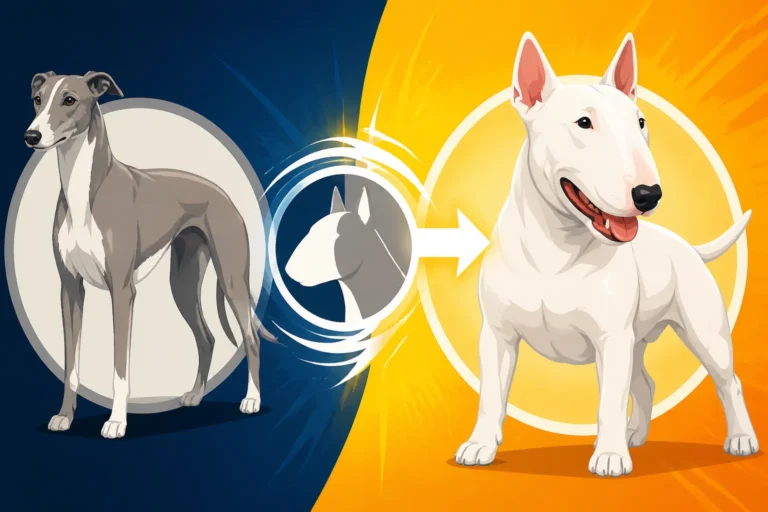
Whether a Bull Terrier Can Be All Black
Can Bull Terriers be all black? This is a question many prospective owners ponder, often seeing photos that might suggest it but conflicting with breed standard knowledge. It leads to confusion and sometimes misidentification of the breed or misunderstandings about what's accepted. This guide will dive deep into Bull Terrier coat colors, dispelling myths and clarifying what an 'all-black' Bull Terrier truly means within the breed's rich history and genetic makeup.
Unpacking the Bull Terrier Breed Standard on Color
When we talk about Bull Terrier colors, it's crucial to understand where the breed came from and what the original breeders envisioned. The journey of the Bull Terrier's coat color is as fascinating as the breed itself, having undergone significant shifts in preference and acceptance over the centuries. What was once considered a fault is now a celebrated part of the breed's diversity.
The White Cavalier and Early Preferences
The Bull Terrier, as we know it today, truly began to take shape in the mid-19th century thanks to James Hinks. His vision was clear: to create an all-white dog, a "White Cavalier" that embodied strength, courage, and gentlemanly demeanor, without the aggressive tendencies of its bull-and-terrier ancestors. This all-white ideal became the hallmark of the breed, a symbol of purity and distinction. It was believed that the white coat made the dogs stand out in the show ring and, perhaps more romantically, signified a fresh start from the darker, often brindled fighting dogs from which they descended. The focus was so intensely on the white coat that any patch of color, no matter how small, was considered a serious fault, practically disqualifying the dog from showing or breeding consideration. This historical emphasis on whiteness led to generations where breeders strived for dogs as pristine as possible. It’s no wonder then that many people still associate the breed almost exclusively with its iconic white coat. This initial breeding philosophy deeply ingrained the idea that white was the 'true' Bull Terrier color, overshadowing any other possibilities for decades. Why Hinks Wanted an All White Dog and The White Cavalier: Why the Bull Terrier Never Started Fights explore this fascinating history further.
The Accepted Spectrum of Bull Terrier Colors
While the "White Cavalier" still holds a special place in the breed's history, the standard has evolved significantly to embrace a wider array of beautiful coats. Today, the American Kennel Club (AKC) and other major kennel clubs accept white, brindle, red, fawn, black-brindle, and tricolor as standard colors. For white Bull Terriers, any colored markings are permitted, but only on the head. Markings elsewhere on the body, except for minor pigmentation on the skin (which you might see if you part the fur), would be considered a fault in the show ring. However, for colored Bull Terriers, pigmentation can be anywhere.
What's really interesting is the nuance within these accepted colors. A "solid" colored Bull Terrier, such as a red or fawn, is perfectly acceptable. However, the term "solid black" without any other distinguishing features like brindle stripes or tan points is where things get a bit hazy. While a dog can appear almost entirely black due to dense brindle, a truly uniform, pigment-only solid black Bull Terrier is not explicitly listed as a distinct, separate color in the same way red or fawn is. This is where the genetics come into play, explaining why what looks solid black often has a different genetic story. We encourage you to delve into Which Colors a Bull Terrier Comes In for a complete overview.
Decoding the Genetics of a Bull Terrier's Coat
Understanding dog coat color genetics can feel like learning a whole new language, filled with alleles, loci, and dominant/recessive traits. However, it's the key to understanding why "all black" Bull Terriers are such a nuanced topic. The seemingly endless variations in dog coats are actually governed by a relatively small number of genes, and the Bull Terrier is no exception.
The Dominance of Brindle and Red
In Bull Terriers, certain color genes are more common and, often, dominant. The "K locus" is a primary player, with the allele K (dominant black) being important, but it's often masked or modified by other genes. The "A locus" (agouti series) and "E locus" (extension series) also significantly influence color expression. Red and fawn colors, for instance, are often expressions of genes that allow pheomelanin (red pigment) to be fully expressed. Many Bull Terriers carry genes for red or fawn, which are quite common and highly visible.
Brindle, too, is a dominant pattern. It’s caused by a specific allele at the K locus, often denoted as kbr. This gene causes stripes of darker pigment (eumelanin, typically black) over a base of lighter pigment (pheomelanin, like red or fawn). So, a "black brindle" Bull Terrier has black stripes over a red or fawn base. When these black stripes are incredibly dense, running very close together, the dog can appear almost entirely black to the casual observer. This dense brindle is actually a common genetic outcome and perfectly within the breed standard. It's a striking look and one of the closest you'll get to a very dark Bull Terrier.
Why Pure Solid Black is a Genetic Rarity
Now, let's tackle the elusive "pure solid black" Bull Terrier. While the gene for black pigment (eumelanin) is present in the breed, achieving a truly solid black coat – meaning black pigment uniformly covering the entire body without any visible brindle stripes, white markings, or tan points – is genetically quite rare. When we see a dog that looks black, it's usually either a very dense black brindle, a black-and-tan with minimal tan points, or a tricolor with extensive black. The genes that create solid black in some other breeds (like a Labrador Retriever or a black Poodle) don't operate in the exact same way or aren't as prevalent in the Bull Terrier gene pool without the influence of other modifying genes.
For a Bull Terrier to be truly solid black, it would typically need to be homozygous for the dominant black (K/K or K/k) at the K locus and also express only eumelanin across its body, with no modifiers creating brindle or tan points. This combination, while technically possible, is not the norm and is far less common than the dominant brindle or red expressions. It means that while a Bull Terrier carries the potential for black pigment, that pigment is usually expressed in conjunction with another pattern like brindle or the tan points of a tricolor. This genetic setup makes a "ghost" of brindle almost always present, even if it's so subtle you need sunlight to see it.
The Appearance of "All Black" vs. Standard Black Markings
It’s easy to look at a Bull Terrier and assume it’s one solid color, especially with their sleek, short coats. However, for black-looking Bull Terriers, there’s often more than meets the eye. The subtle nuances in their coat patterns are what define their color within the breed standard.
Black Brindle: The Closest You'll Get to Dark
If you're dreaming of a Bull Terrier with a dark, almost solid black appearance, the black brindle is likely the color you're picturing. These dogs have a base coat of a lighter color (often red or fawn, sometimes even a very dark mahogany) with prominent black stripes overlaying it. However, in many black brindle Bull Terriers, these stripes are so incredibly dense and close together that they can completely mask the underlying lighter pigment, making the dog look remarkably solid black. Imagine a tiger's stripes being so thick they blend into a dark, uniform canvas – that's often what happens with a dense black brindle Bull Terrier.
You'll notice it most under direct sunlight or if you really look closely at the direction of the fur. The subtle texture and shimmer can reveal the ghost of the stripes. This is a perfectly accepted and highly sought-after color in the breed. It offers that deep, dark aesthetic while adhering to the established breed standard. Many owners adore the way the light catches the hidden brindle, revealing a secret pattern that isn't immediately obvious. This striking coloration gives a Bull Terrier a powerful and sophisticated look, and it's a testament to the beauty of the brindle pattern. What a Brindle Bull Terrier Looks Like offers a deeper dive into this pattern.
Tricolor and Black and Tan Patterns
Beyond the dense black brindle, other standard Bull Terrier colors can feature extensive black, leading some to perceive them as "all black" at first glance.
First, there's the Tricolor Bull Terrier. As the name suggests, these dogs exhibit three distinct colors: black, white, and tan. The black typically forms large patches, often covering the back and head, but it is always accompanied by white markings (often on the chest, muzzle, and paws) and distinct tan points. These tan points usually appear on the eyebrows, cheeks, inside the ears, and sometimes on the legs, mimicking the pattern seen in breeds like Rottweilers or Dobermans, though often less sharply defined in Bull Terriers. While the black portions can be vast and dominant, the presence of white and tan clearly differentiates them from a solid black dog. It’s a beautiful, complex pattern that adds depth to the Bull Terrier's appearance. What a Tricolor Bull Terrier Looks Like will show you examples of this lovely coloration.
Then we have Black and Tan. While less common as a standalone description for Bull Terriers, this pattern also involves significant black with tan points. It's essentially a tricolor without the white markings, though some minor white might still be permitted depending on the exact interpretation of the standard. Here, the dog's body is predominantly black, but it will have those tell-tale tan points on its face and legs. Again, while the black is extensive, it's not a uniform, unblemished black from nose to tail. These patterns showcase the genetic diversity within the Bull Terrier breed and demonstrate how black pigment is often expressed in combination with other colors or patterns rather than in pure, unadulterated solidity.
| Bull Terrier Color | Description | Breed Standard Acceptance | "All Black" Appearance Likelihood |
|---|---|---|---|
| White | Pure white coat, may have colored markings on head only. | Fully accepted | No |
| Brindle | Base color (often red or fawn) with darker black stripes. Can be very dense, appearing almost solid. | Fully accepted | Very High (for black brindle) |
| Red | Solid reddish-brown to deep mahogany, uniform color. | Fully accepted | No |
| Fawn | Light tan to biscuit color, uniform. | Fully accepted | No |
| Tricolor | Black, white, and tan markings in distinct patterns (black often dominant, but white and tan present). | Fully accepted | Low (due to white and tan) |
| Black and Tan | Predominantly black body with tan points (e.g., eyebrows, cheeks, legs). | Fully accepted | Low (due to tan points) |
| Solid Black | Pure, unpatterned black without any visible brindle, white, or tan markings. | Not explicitly listed as a distinct primary color; often a very dense brindle or variant. | Extremely Low (rarely truly solid without genetic markers of other colors/patterns) |
Misconceptions and Identifying a Truly "All Black" Bull Terrier
The allure of a unique or rare dog can sometimes lead to misunderstandings, especially regarding coat colors that aren't common or explicitly defined in breed standards. When it comes to "all black" Bull Terriers, what you see isn't always what you get, and it's important to approach such claims with a discerning eye.
Why You Might See "All Black" Bull Terriers Online
It's entirely possible to stumble upon photos or videos online that seem to feature a completely solid black Bull Terrier. There are several reasons for this, and most of them boil down to perception rather than an actual deviation from the breed's genetic norms. Firstly, photography and digital editing can play a significant role. Lighting conditions can drastically alter how a dog's coat appears. A black brindle Bull Terrier, for example, photographed in dim light or against a dark background, might look entirely solid black, with its subtle stripes completely invisible. Filters and saturation adjustments common in social media can further enhance this illusion, making a very dark brindle appear uniformly black.
Secondly, some dogs advertised as "all black Bull Terriers" might actually be cross-breeds. A Bull Terrier mixed with another breed known for solid black coats (like a Labrador or a Staffordshire Bull Terrier, which can be solid black) could produce offspring that share the Bull Terrier's distinctive head shape but inherit a solid black coat. These dogs, while charming, are not purebred Bull Terriers according to established kennel club standards. Finally, some breeders operating outside of the recognized breed clubs might intentionally or unintentionally mislabel dogs. They might use terms like "rare solid black" to attract buyers, even if the dog is genetically a dense black brindle or has faint, overlooked tan points. For those browsing pet supply sites like Chewy or online communities, it's always good to cross-reference with official breed information.
The Kennel Club Perspective and Ethical Breeding
From the perspective of major kennel clubs, like the AKC or the Kennel Club (UK), the breed standard is paramount. This standard outlines the ideal characteristics of a Bull Terrier, including its accepted colors and patterns. While a Bull Terrier with an appearance so densely brindled that it looks solid black would be accepted and shown, a dog that is genetically and phenotypically pure solid black without any brindle or tan points would be an anomaly. It wouldn't necessarily be considered "disqualified" unless the standard explicitly excluded it, but it wouldn't align with the common genetic expressions of the breed's black coloration. The emphasis is on pattern for colored Bull Terriers, rather than absolute solidness.
Ethical and reputable breeders are meticulously dedicated to upholding the breed standard, not just for aesthetics but for health and temperament. They understand the genetics of coat color and will be transparent about a puppy's likely adult coloration. They prioritize health testing, proper socialization, and matching puppies to suitable homes. A reputable breeder will never market a dog as "rare" due to an unusual color that deviates from the standard, especially if it implies a health advantage or unique characteristic that isn't true. They will provide all necessary health certificates and pedigree information, ensuring you know exactly what you're getting. Which Certificates a Bull Terrier Breeder Must Hand Over details what to expect from a responsible breeder.
Living with a Bull Terrier of Any Color
Once you move past the fascinating specifics of coat color, you realize that the color of a Bull Terrier's coat has absolutely no bearing on the wonderful dog beneath it. Whether your Bull Terrier is white, red, brindle, or that elusive near-solid black, their core essence remains the same.
Color and Temperament: A Non-Connection
It’s a common misconception that certain coat colors are linked to specific temperaments or health issues. While there are some well-known genetic links (like deafness being more prevalent in white dogs across many breeds, including Bull Terriers), for the vast majority of coat colors and patterns, there is no scientific evidence to suggest a correlation with a dog’s personality or overall health. A Bull Terrier is a Bull Terrier, regardless of whether its coat is pure white, a vibrant red, or a striking black brindle. Their unique personality – often described as a "three-year-old in a dog suit" – is a hallmark of the breed, a delightful mix of clownish antics, deep affection, and sometimes, stubborn independence. What a Bull Terrier's Temperament Is Really Like explores their characteristic traits in depth.
They are known for their boundless energy, their propensity for zoomies, and their often-hilarious expressions. You can expect a loyal, playful, and surprisingly sensitive companion. Their determination means they thrive with consistent, positive reinforcement training, and their intelligence needs to be channeled into engaging activities to prevent boredom. The famous "clownish" nature of the Bull Terrier is something you'll find in every color of the rainbow. Why a Bull Terrier Is Called a Clown perfectly encapsulates this joyful aspect of the breed. What truly defines your Bull Terrier will be its individual genetics for temperament, its early socialization, and the love and training you provide, not the shades of its coat.
Finding a Reputable Breeder Who Understands Color
When you're ready to welcome a Bull Terrier into your life, the most important step is finding a reputable breeder. This cannot be stressed enough. A good breeder will prioritize the health, temperament, and welfare of their dogs above all else. They will have a deep understanding of the breed's genetics, including coat colors, and will be able to explain exactly what patterns and variations their puppies carry. They won't make outlandish claims about "rare" or "exclusive" colors, and they certainly won't charge exorbitant prices for a dog simply because its coat is a less common shade. Instead, they focus on producing healthy, well-adjusted puppies that conform to the breed standard in structure and disposition.
A reputable breeder will perform all the recommended health tests for their breeding dogs, such as cardiac screenings, kidney function tests, and BAER testing for deafness, especially in white puppies. They should be transparent about these results and happy to share them with you. They will ask you many questions about your lifestyle and experience, aiming to ensure their puppies go to the right homes. They'll also provide a contract and a health guarantee. Don't be shy about asking questions about the parents' temperaments, the puppy's socialization, and yes, the genetics behind their coat colors. A good breeder sees color as one of many traits, not the defining characteristic. What a Bull Terrier Breeder Should Have Tested provides a comprehensive list of tests to ask about. Remember, whether your Bull Terrier is a striking brindle or a beautiful white, their core needs for quality food, durable toys, and a comfy bed remain the same. You can find everything from specialized diets to chew-proof options at retailers like Chewy, ensuring your Bull Terrier is well-cared for, regardless of their coat color. Invest in good grooming tools. A smooth coat still sheds, and a rubber curry brush or a shedding blade can do wonders. You can easily find these and other essential grooming supplies for your Bull Terrier on platforms like Chewy, making coat maintenance a breeze. When researching colors and genetics, you might find conflicting information, especially from less reputable sources. Always refer to official breed club websites or trusted veterinary resources, rather than just relying on anecdotal forum posts or images you find on general pet supply sites like Chewy.
Disclaimer
This article is for general informational purposes only and does not constitute professional advice. Laws, prices and regulations vary by location and change over time. Consult a qualified professional for guidance on your specific situation.