What a Bull Terrier Does When It Is Bored
One of the biggest frustrations Bull Terrier owners face is witnessing their otherwise charming, quirky companion transform into a canine wrecking ball the moment boredom sets in. It’s not about malice; it’s about a deeply intelligent, energetic breed trying to entertain itself when left to its own devices, and often, that entertainment comes at the expense of your furniture, sanity, or both. This guide is here to walk you through exactly what happens when a Bull Terrier gets bored and, more importantly, how you can channel that boundless energy into productive, positive outlets.
The Deep-Seated Need for Engagement in a Bull Terrier
To truly understand why a bored Bull Terrier is such a force to be reckoned with, we have to delve into their unique psychological makeup and their historical purpose. These aren't dogs content to simply snooze all day; they were bred for engagement, for partnership, and for having a "job" to do, even if that job today is simply being the family clown.
The "Three-Year-Old in a Dog Suit" Phenomenon
If you’ve spent any time around Bull Terriers, you’ve probably heard them described as a "three-year-old in a dog suit." It's an apt comparison, highlighting their mischievous nature, their boundless curiosity, and their astonishing ability to find trouble. A three-year-old left unsupervised for too long will inevitably find something to get into – markers on the wall, pulling every pot out of the cupboard, trying to climb the bookshelf – and a Bull Terrier isn't much different in spirit. They possess a childlike wonder and an equal measure of tenacity, which, when combined with boredom, becomes a potent cocktail of creative destruction.
This isn't just about high energy; it's about a distinct need for mental stimulation. Their minds are constantly whirring, observing, and seeking interaction. If that interaction isn't provided by their human companions, they'll invent it themselves. This inherent drive means that simply letting them out in the yard isn't enough; they need an outlet for their cleverness and their physical prowess. Ignoring this fundamental aspect of their personality is a surefire way to invite chaos into your home.
It's a truth universally acknowledged among Bull Terrier owners that a quiet Bull Terrier is often a suspicious Bull Terrier. The moments of silence are frequently punctuated by the discovery of a new "project" they've undertaken, be it unearthing the baseboards or systematically disassembling a perfectly good dog bed. Understanding this innate drive for activity and engagement is the first step in preempting destructive boredom behaviors. You need to always be one step ahead of their next brilliant, albeit inconvenient, idea for self-amusement.
A History of Purpose: Not Just a Pretty Face
The Bull Terrier’s lineage, though refined over the centuries, points to a working past that demands attention. While they are no longer fighting dogs, their ancestors were certainly bred for stamina, courage, and a strong prey drive. These traits, while softened and redirected, remain deep within the modern Bull Terrier's genetic code. They have a tenacity that few other breeds can match, and an independent streak that means they're not always looking to please, but rather to entertain themselves in ways they find satisfying.
They were companions, yes, but also robust, active dogs designed to be resilient and endlessly curious. This historical context helps explain why they aren't content with just a leisurely stroll around the block. Their minds and bodies crave more. They need to feel engaged, challenged, and even have a sense of purpose. Think of them less as a couch potato and more as a furry, egg-headed detective constantly looking for clues, or perhaps, for a sock to liberate from the laundry basket.
Neglecting this fundamental need for mental and physical exertion isn't just a recipe for a messy house; it can lead to deeply unhappy dogs. Their intelligence, combined with their physical strength, means that when boredom strikes, their chosen activities are often elaborate and incredibly effective at achieving their goal, whether that's digging a Grand Canyon-sized hole in your garden or removing every single bit of stuffing from a plush toy in under two minutes. Recognizing their heritage helps us cater to their needs more effectively.
Common Manifestations of Bull Terrier Boredom
So, what does this deep-seated need for engagement look like when it goes unfulfilled? A Bull Terrier will rarely just sit quietly and mope. Instead, they’ll embark on a mission to alleviate their boredom, and these missions often involve significant collateral damage to your belongings and peace of mind.
Destructive Chewing and Digging
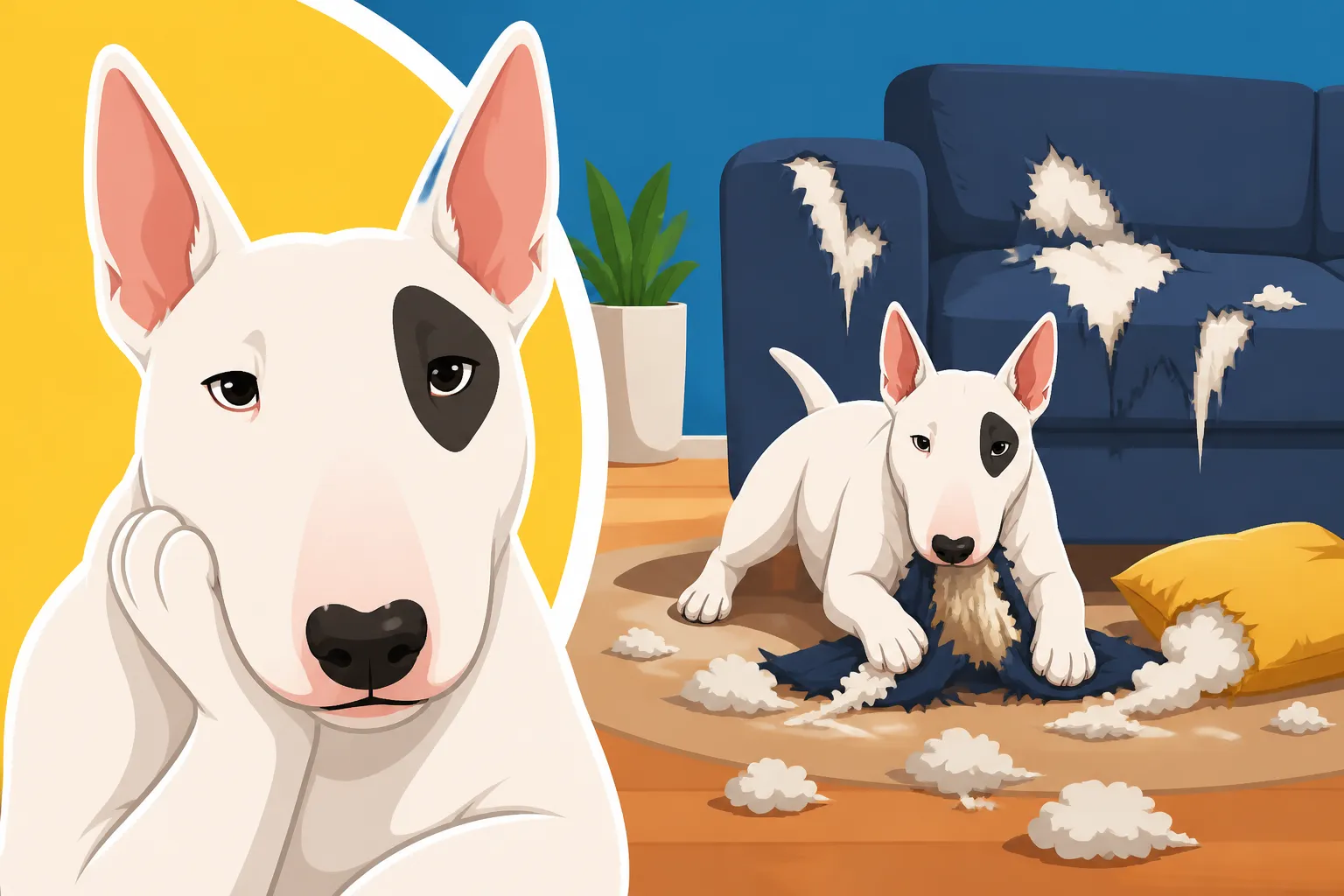
This is probably the most infamous sign of a bored Bull Terrier. Their powerful jaws, bred for tenacity, are perfectly suited for dismantling objects. They don't just chew; they destroy. A sofa leg, a door frame, baseboards, shoes, remote controls – nothing is truly safe when a Bull Terrier decides it needs an outlet for its energy. This isn't out of spite, but a genuine attempt to stimulate themselves. Chewing is a natural canine behavior, calming and satisfying, but for a Bull Terrier, it can become an obsessive, destructive habit if not properly managed. They need appropriate chew toys, and lots of them, specifically designed to withstand their formidable bite.
Digging is another common outlet, especially for those Bull Terriers with access to a yard. What starts as a small hole to investigate a scent can quickly escalate into a crater if they’re truly bored. They might dig at the fence line in an attempt to "escape" their monotonous surroundings, or simply excavate your prize-winning petunias for the sheer joy of it. This isn't just an outdoor problem; some Bull Terriers will dig at carpets, beds, or even hardwood floors indoors, leaving behind a trail of destruction that will have you pulling your hair out. It's their way of saying, "I have energy, and I'm going to use it!" Providing a designated digging area or, better yet, upping their exercise and mental game can mitigate this.
The sheer power behind their chewing can be astounding. I've known Bull Terriers to chew through heavy-duty plastic crates, solid wood furniture, and even metal links in chains if given enough time and motivation. It's why robust chew toys, like those from Kong's extreme line or similar durable brands available on Amazon, are not just a luxury, but a necessity for Bull Terrier ownership. Without appropriate outlets, your home will bear the brunt of their undirected energy. Remember, they aren't being "bad"; they're simply being Bull Terriers who are desperately seeking stimulation.
Excessive Barking and Vocalizations
While not typically known as incessant barkers, a bored Bull Terrier can certainly develop a knack for nuisance barking. This can manifest as attention-seeking barks directed at you, or more commonly, "alert" barking at every leaf that blows past the window, every person walking down the street, or every squirrel daring to enter their perceived territory. They might also develop a habit of whining or howling, expressing their dissatisfaction and loneliness in a loud, clear manner. This isn't just irritating; it can quickly become a problem with neighbors if not addressed.
These vocalizations often stem from a lack of mental engagement. They're trying to communicate their boredom, their frustration, or their need for attention. For a Bull Terrier, barking can also be a form of self-entertainment, a way to create some excitement in an otherwise dull day. They might bark at their toys, bark at shadows, or even bark at their own reflection. It's their way of creating a "conversation" when there's no one else to engage with them. This is often accompanied by pacing, restless behavior, and an inability to settle.
It’s crucial to understand that responding to these barks by yelling or getting angry often reinforces the behavior, as any attention (even negative) is still attention for a bored Bull Terrier. Instead, the focus needs to be on prevention and redirection. Providing stimulating activities before the barking starts, or interrupting the behavior with a puzzle toy, can be far more effective. What a Harsh Correction Does to a Bull Terrier is a good read if you're struggling with how your Bull Terrier reacts to your training efforts.
Obsessive Behaviors (Spinning, Licking)
Boredom can sometimes lead to more unusual, even concerning, behaviors in Bull Terriers, especially if they are predisposed to certain breed-specific traits. One of the most recognized is obsessive tail chasing or "spinning." While not all spinning is due to boredom (it can be a compulsive disorder), a lack of adequate physical and mental stimulation can certainly exacerbate or even trigger this behavior. A Bull Terrier might spin wildly in circles, sometimes for extended periods, seemingly oblivious to its surroundings. This self-stimulating action can be incredibly difficult to interrupt once it begins.
Another common obsessive behavior is excessive licking, either of themselves (paws, legs, flank) or of surfaces (floors, furniture). This can lead to hot spots, skin infections, or even damage to household items. While some licking can be attributed to allergies or underlying medical conditions, often it's a direct symptom of boredom and anxiety. The rhythmic action of licking can be self-soothing, a way for them to cope with a lack of engagement. If you notice your Bull Terrier suddenly fixating on a spot on their leg, or incessantly licking the kitchen floor, it's worth evaluating their daily routine for sufficient mental and physical enrichment.
It’s important to distinguish these behaviors from playful antics. A brief chase of their tail or a quick lick after a treat is normal. However, prolonged, repetitive, or self-harming behaviors warrant closer inspection. For persistent spinning, it's wise to consult a vet to rule out underlying medical causes, but even then, addressing environmental enrichment is paramount. You might find valuable insights in How a Spinning Bull Terrier Is Treated for dogs with this particular challenge. These behaviors are a cry for help, indicating a dog that is under-stimulated and likely stressed.
Why Traditional Solutions Often Fail with Bull Terriers
Many common dog-management strategies that work for other breeds simply fall flat with a Bull Terrier. Their unique blend of intelligence, stubbornness, and boundless energy requires a more tailored approach. What might seem like a simple fix often doesn't even slow down a determined Bull Terrier.
The Problem with Passive Entertainment
Leaving a Bull Terrier with a few generic toys and expecting them to entertain themselves for eight hours while you're at work is, frankly, setting yourself up for disappointment. Unlike some breeds that might be content to nap most of the day or gently play with a soft toy, a Bull Terrier sees a passive toy as a challenge to be conquered, or worse, completely ignores it in favor of something more "interesting"—like your favorite pair of sneakers. A squeaky toy might last five minutes before it's dismembered, and a plush toy will be a pile of fluff before you've even left the driveway.
They crave active engagement. This means toys that require problem-solving, like puzzle feeders, or toys that can withstand rigorous chewing and interactive play. Simply having toys available isn't enough; the toys need to be rotated, hidden, filled with treats, or part of a game. A static toy quickly becomes irrelevant to their curious minds. This is where brands like Kong come in handy, offering durable toys that can be stuffed and frozen, providing a longer-lasting challenge. Even then, no single toy is a magic bullet; it's about a continuous strategy of mental stimulation.
Consider also that leaving the TV on or playing music, while sometimes helpful for dogs with separation anxiety, often has little impact on a truly bored Bull Terrier. Their boredom isn't just about sensory input; it's about a lack of purposeful activity. They need to do something, to engage their powerful brains and bodies. Passive entertainment might fill the silence, but it won't fill the void of mental and physical engagement that a Bull Terrier truly craves.
Overcoming Their Stubborn Streak
Let's be honest, Bull Terriers have a reputation for being delightfully stubborn. They are intelligent enough to understand what you want, but often, they’ll only comply if they see the point, or if the reward is sufficiently enticing. This makes training, especially for behaviors like "leave it" when they've found something irresistible, a marathon, not a sprint. Trying to verbally reprimand a bored Bull Terrier who is already engaged in a destructive activity is often futile; their focus is so intense that your words might as well be background noise.
Their stubbornness also means they learn quickly what they can get away with. If chewing the remote control once resulted in a momentary burst of attention (even negative attention), they might try it again. They are masters of cause and effect, and if boredom leads to an interesting effect (like your reaction), they might lean into it. This is why consistency is absolutely critical. Every family member needs to be on the same page about rules and redirection, otherwise, a Bull Terrier will quickly learn who the "soft touch" is.
Training for a Bull Terrier needs to be framed as a game, something fun and engaging, rather than a chore. Short, positive reinforcement sessions work best, focusing on high-value rewards. Thinking that a Bull Terrier will just "grow out of" their destructive habits is a common misconception, often leading to bigger problems down the line. Their stubbornness means that prevention and consistent positive redirection are far more effective than trying to correct them after they've already gotten into trouble. A Bull Terrier Trains When It Sees the Point delves deeper into effective training methods for this unique breed.
Strategies for Preventing Boredom
The key to a happy, well-behaved Bull Terrier (and a pristine home) lies in proactive boredom prevention. You need to outsmart them, anticipate their needs, and provide enriching activities that tap into their natural instincts and intelligence.
Structured Exercise Routines
Bull Terriers are muscular, powerful dogs, and they need a significant amount of physical exercise to be truly content. This isn't just a quick potter around the block; it's about vigorous activity that tires them out both physically and mentally. Think fast-paced walks, jogging, hiking, or even supervised off-leash play in a secure area. Two 30-45 minute sessions of brisk walking or running a day is often a good starting point, but some Bull Terriers may need more, especially in their younger years. Remember, a tired Bull Terrier is a good Bull Terrier.
Varying their exercise routine can also prevent boredom. Don't do the same route every day. Explore new parks, trails, or even different streets in your neighborhood. The new sights, sounds, and smells provide invaluable mental stimulation alongside the physical exertion. Playing fetch in a large, fenced yard or a secure dog park (if your Bull Terrier is well-socialized and enjoys it) can also be an excellent way to burn off energy. Always be mindful of their temperament around other dogs; A Bull Terrier With Other Dogs explains why this is so critical.
Beyond just physical activity, consider activities that combine exercise with mental challenges, like agility or scent work. Even a simple game of hide-and-seek with treats in the house or yard can be a wonderful way to combine their love of movement with their sharp minds. The goal is not just to tire their legs, but to engage their whole being. How Much Exercise a Bull Terrier Actually Needs is a great resource for understanding their specific requirements.
Mental Stimulation Through Training and Puzzles
Physical exercise alone is often not enough for a Bull Terrier; their brilliant minds need a workout too. This is where consistent training and puzzle toys become indispensable tools. Short, daily training sessions, even just 10-15 minutes, can be incredibly enriching. Focus on basic obedience commands like "sit," "stay," and "come," but also teach them fun tricks. Bull Terriers love to learn, especially when positive reinforcement and high-value treats are involved. Online training programs, like those offered by BAXTER & Bella, can provide structured lessons and help you maintain consistency.
Puzzle feeders are another absolute must-have. These toys require your Bull Terrier to figure out how to access their food or treats, engaging their problem-solving skills. Look for durable, robust options that can withstand their powerful jaws. Brands available on Amazon offer a wide variety, from treat-dispensing balls to more complex sniff mats and interactive games. Rotating these toys keeps them novel and interesting. Don't give them all the toys at once; introduce one or two, then swap them out after a few days to maintain interest.
Beyond formal training and puzzle toys, integrate mental challenges into their daily lives. Make them "work" for their meals by scattering kibble in the yard, hiding it around the house, or putting it in a snuffle mat. Play "find it" games with their favorite toy. Teach them the names of their toys and ask them to retrieve specific ones. Anything that requires them to think, strategize, and use their senses will help ward off boredom. Which Puzzle Toys Occupy a Bull Terrier offers some excellent suggestions.
Socialization and Playdates
Bull Terriers are generally people-oriented dogs, and while their relationships with other canines can be complex, appropriate socialization is crucial for their mental well-being. A Bull Terrier thrives on interaction with its human family. They are not dogs that should be left alone for extended periods without meaningful contact. Regular playtime with you, involving tug-of-war, fetch, or even just wrestling on the floor, strengthens your bond and provides vital engagement.
For some Bull Terriers, supervised playdates with compatible, well-mannered dogs can be a fantastic energy outlet. However, it's absolutely vital to understand your individual Bull Terrier's temperament with other dogs. Not all Bull Terriers are dog-park candidates, and pushing them into uncomfortable situations can backfire dramatically. If your Bull Terrier enjoys canine company, ensure the play is always supervised and safe. Introductions should be slow and controlled, and any signs of aggression or discomfort should be addressed immediately.
Even if your Bull Terrier isn't a fan of other dogs, exposure to novel environments and people in a controlled manner is still beneficial. Trips to pet-friendly stores (if they are calm in public), walks in bustling areas, or even just sitting on a park bench and observing the world go by (known as "decompression walks") can provide a wealth of mental stimulation. The key is to manage these experiences so they are positive and enriching, rather than overwhelming. Remember, a Bull Terrier often thrives when it feels like a valued member of the family unit, actively participating in your life.
Damage Control and Management When Boredom Strikes
Despite your best efforts, there will be times when boredom inevitably creeps in, perhaps on a rainy day, or when your schedule just doesn't allow for their usual level of activity. Having strategies for damage control and management is essential to minimize the fallout.
Bull Terrier-Proofing Your Home
This isn't about blaming the dog; it's about setting them up for success. Bull Terrier-proofing your home means removing temptations and securing anything that could be damaged or, more importantly, could harm your dog. This often means putting away shoes, remote controls, books, and anything else within their reach that you don't want to be chewed. Consider investing in durable furniture or covers if your Bull Terrier has a penchant for redecorating.
Crates are an invaluable tool for managing a Bull Terrier, especially when you can't supervise them directly. A heavy-duty, reinforced crate (not a flimsy wire one, which they can often bend or break) provides a safe, secure space where they cannot get into trouble. Introduce the crate positively with treats and toys, making it their den, not a punishment zone. A Bull Terrier who is comfortable and happy in their crate can safely be left alone for reasonable periods without destroying your house. You might find some excellent advice in What a Heavy Duty Bull Terrier Crate Costs.
Consider using baby gates or exercise pens to restrict access to certain areas of the house when you're busy or away. This creates a smaller, more manageable space that is easier to "proof." Ensure electrical cords are secured, valuable items are put away, and trash cans are inaccessible. Think like a Bull Terrier: what would they find interesting to chew, dig, or play with? Then, remove or secure it. This proactive approach saves you stress and potential vet bills from swallowed foreign objects.
Redirecting Undesirable Behaviors
When you catch your Bull Terrier in the act of chewing a forbidden item or digging where they shouldn't, the goal is redirection, not punishment. A sharp "no" or an interruption sound (like a clap) can get their attention, but immediately follow it up by offering an appropriate chew toy or redirecting them to a designated activity. The key is to show them what they can do, rather than just what they cannot. For example, if they're chewing the couch leg, say "no," then immediately hand them a sturdy chew bone and praise them when they take it.
Consistency in redirection is paramount. Everyone in the household needs to use the same method. If one person allows a behavior, or doesn't consistently redirect, the Bull Terrier will get mixed signals and be more likely to repeat the undesirable action. Teach them clear "leave it" and "drop it" commands as part of their regular training. These are not just obedience commands; they are safety commands that can prevent disaster. Programs like BAXTER & Bella can offer guidance on teaching these essential cues effectively.
If your Bull Terrier is engaging in obsessive behaviors like spinning or licking, redirect their focus with a sudden, novel activity. A quick game of fetch, a training command, or a puzzle toy can break the cycle. Sometimes, simply changing rooms or going outside for a moment can help. For persistent behaviors, a veterinary consultation is essential to rule out medical issues, but even then, environmental enrichment and redirection remain vital parts of the management plan. How to Redirect a Spinning Bull Terrier offers specific strategies for that particular challenge.
The Importance of Consistent Routine and Boundaries
Bull Terriers, despite their independent streak, thrive on routine and clear boundaries. A predictable schedule helps them understand what to expect, reducing anxiety and boredom by establishing a sense of order in their lives.
The Role of a Crate in Managing Alone Time
For many Bull Terrier owners, a crate is not just a tool, but a sanity saver. It provides a safe, personal den for your dog, a place where they can feel secure and where they cannot engage in destructive behaviors when unsupervised. Introducing a crate positively, with comfortable bedding, toys, and treats, helps your Bull Terrier associate it with good things. It should be their safe haven, not a place of punishment.
When planning for alone time, gradually increase the duration your Bull Terrier spends in the crate. Start with short periods while you're still home, then move to leaving them for brief excursions. Ensure they've had plenty of exercise and a potty break before being crated. A stuffed Kong or a long-lasting chew can provide mental stimulation while they're inside, making the experience more positive and helping them settle. If your Bull Terrier struggles with separation, consult Whether a Crate Helps a Bull Terrier Left Alone for more detailed advice.
The crate isn't a permanent solution for all boredom, but it's a critical management tool for those times when you simply cannot provide direct supervision. It buys you peace of mind, knowing your home and your dog are safe. However, it's important to remember that a crate is not a substitute for adequate exercise, mental stimulation, and quality time with their family. It's a temporary management tool, not a full-time residence.
Setting Expectations for Alone Time
Bull Terriers are not dogs that can be left alone for eight or ten hours a day, day after day, without consequence. While they are resilient, they are also social creatures who thrive on interaction. Setting realistic expectations for how long your Bull Terrier can happily be left alone is crucial for their well-being and your home's integrity. Most adult Bull Terriers can manage 4-6 hours comfortably in a stimulating environment (i.e., with puzzle toys and post-exercise tiredness), but anything beyond that is pushing it for many individuals.
If your schedule requires longer periods away, consider arranging for a dog walker or a trusted friend/family member to visit and provide a potty break, some playtime, and mental enrichment halfway through the day. Doggy daycare can also be an option for some Bull Terriers, but careful selection is vital, as not all Bull Terriers thrive in group play environments. The goal is to break up long stretches of solitude and provide an outlet for their energy.
Establishing a consistent routine for departure and arrival can also help manage their expectations. Avoid overly dramatic goodbyes and hellos, which can inadvertently increase anxiety. Keep departures calm and quiet, and greetings low-key until they’ve settled. This helps them understand that your leaving is a normal part of the day and that you will return. Whether a Bull Terrier Can Be Left While You Work explores this topic further, offering practical advice for working owners.
When Boredom Bleeds Into More Serious Issues
While occasional boredom is manageable, prolonged and chronic under-stimulation can lead to more serious behavioral problems that go beyond simple mischief. It's important to recognize these warning signs and understand when to seek professional help.
Differentiating Boredom from Separation Anxiety
It's easy to confuse the destructive behaviors of a bored Bull Terrier with those of separation anxiety, but there are key differences. A bored Bull Terrier's destruction is often exploratory and aimed at entertaining themselves, and it might happen even when you're home but busy. They might chew on items or dig at specific spots, often without showing signs of distress before or after your departure. They might be quiet or restless, but not necessarily panicking.
Separation anxiety, on the other hand, is a panic response to being left alone. Dogs with separation anxiety often show signs of distress before you leave (pacing, whining, shadowing you), and their destructive behaviors are often focused around exit points (doors, windows) as they try to escape to find you. They might drool excessively, have accidents inside even if house-trained, or engage in persistent, frantic barking and howling the entire time you're gone. The destruction is a result of their panic, not just a way to pass the time. Signs a Bull Terrier Has Separation Anxiety offers a detailed look at this condition.
While boredom can certainly contribute to anxiety, true separation anxiety is a more complex issue requiring targeted behavioral modification, often with the guidance of a professional. If you suspect your Bull Terrier is suffering from separation anxiety rather than just boredom, it's critical to address it directly, as it can be incredibly distressing for the dog.
Consulting a Professional Trainer or Behaviorist
If you've tried all the strategies for preventing and managing boredom, but your Bull Terrier's destructive behaviors, excessive vocalizations, or obsessive habits persist or worsen, it's time to seek professional help. A certified professional dog trainer or a veterinary behaviorist can provide invaluable guidance and develop a tailored plan for your specific situation. They can help identify underlying causes, assess your Bull Terrier's individual needs, and teach you effective techniques that you might not have considered.
A good trainer or behaviorist will use positive reinforcement methods and focus on teaching your Bull Terrier appropriate coping mechanisms and alternative behaviors. They can also help you understand the nuances of Bull Terrier behavior, like their unique temperament and learning style. Don't view seeking professional help as a failure; view it as a responsible step towards ensuring your Bull Terrier lives a happier, more fulfilling life, and that your household remains intact.
Early intervention is always best. The longer undesirable behaviors are allowed to continue, the more ingrained they become, making them harder to modify. Investing in professional guidance can save you countless hours of frustration, thousands of dollars in repairs, and significantly improve the bond you share with your unique companion. Whether a Bull Terrier Needs a Behaviorist details when and why expert help is crucial. Remember, you're not alone in this journey; many Bull Terrier owners face similar challenges, and professional guidance can make all the difference.
| Boredom Behavior | Common Triggers | Management Strategies | When to Seek Help |
|---|---|---|---|
| Destructive Chewing | Lack of exercise, no appropriate chews | Provide robust chew toys, structured exercise, crate training | If chewing is self-harming or consumes dangerous items |
| Excessive Digging | Lack of outdoor supervision, no digging outlet | Designated digging pit, increased outdoor activity, secure yard | If digging leads to escapes or injury |
| Nuisance Barking | Loneliness, attention-seeking, lack of mental work | Increase mental puzzles, interactive play, consistent "quiet" training | If barking is constant and distress-related |
| Obsessive Licking | Anxiety, under-stimulation, allergies | Rule out medical causes, enrichment, redirection, calming aids | If skin damage occurs, or licking is compulsive |
| Tail Chasing/Spinning | Boredom, anxiety, compulsive disorder | Rule out medical causes, increase mental/physical stimulation | If behavior is persistent, frantic, or causes injury |
Disclaimer
This article is for general informational purposes only and does not constitute professional advice. Laws, prices and regulations vary by location and change over time. Consult a qualified professional for guidance on your specific situation.