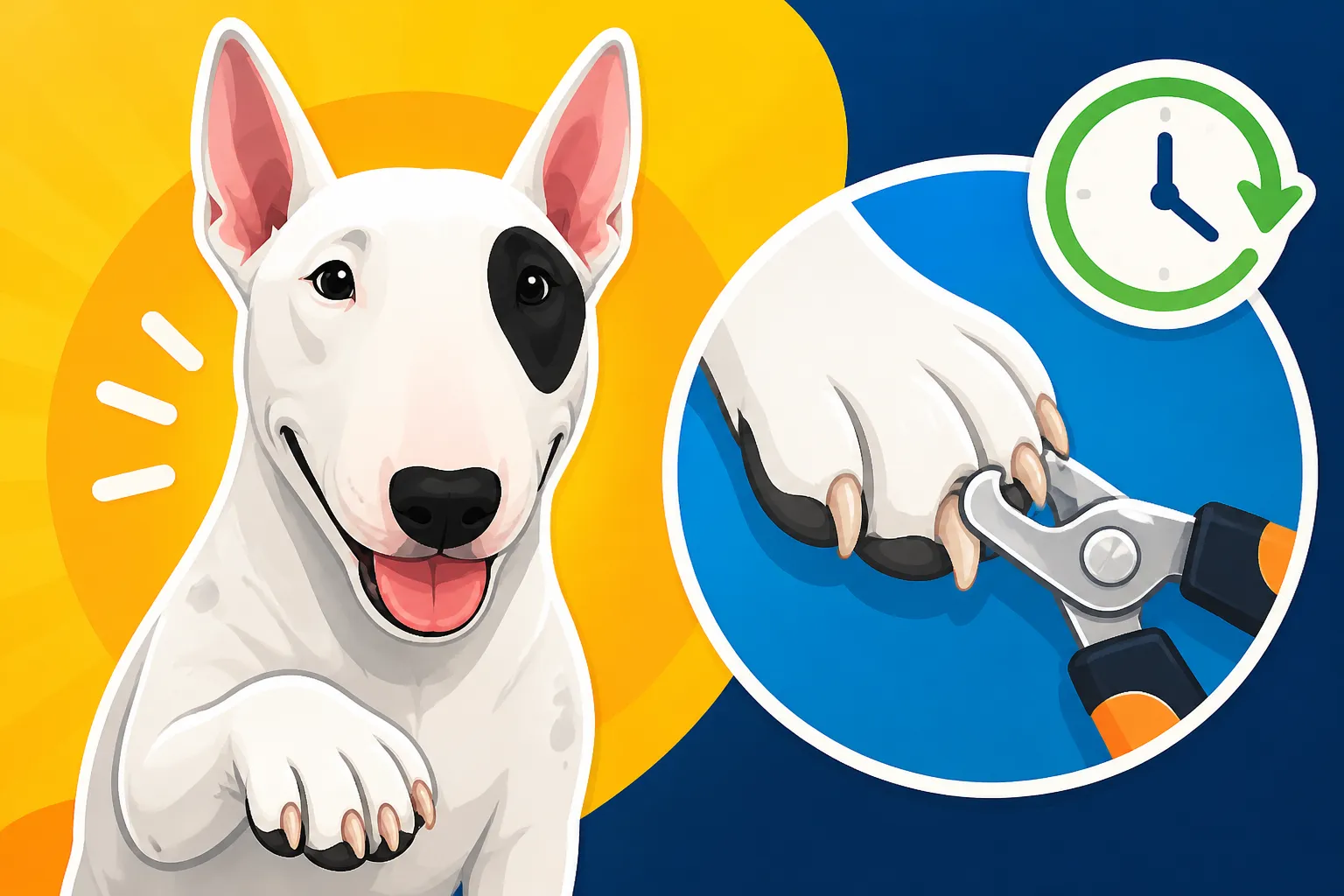
How Often a Bull Terrier’s Nails Need Trimming
It's a common struggle for Bull Terrier owners: trying to trim those hard, fast-growing nails when your dog views the clippers as a medieval torture device. We've all been there, wrestling with a strong-willed Bull Terrier who just knows you're trying to inflict pain. But keeping those nails at a healthy length isn't just about avoiding scratches on your hardwood floors; it's a vital part of your Bull Terrier's overall health and comfort. This guide will walk you through why regular trimming is so important, how often you should be tackling the task, and practical tips to make it a less stressful experience for both of you.
The Basics: Why Regular Nail Trimming Matters for Your Bull Terrier
Ignoring your Bull Terrier's nails might seem like a small thing, but it can lead to a cascade of problems that impact their comfort, mobility, and even their long-term health. Those strong, dense nails don't wear down as easily as you might think, especially for dogs who spend a lot of time on softer surfaces.
More Than Just Aesthetics: The Health Impact of Long Nails
When your Bull Terrier's nails get too long, they hit the ground before the paw pad does. This simple fact initiates a chain reaction of subtle, uncomfortable changes in their posture and gait. Imagine trying to walk around all day with shoes that are too small and push your toes back – that's a bit like what long nails feel like to your dog. Their toes are forced upwards and outwards, putting unnatural strain on the toe joints and the entire foot structure. Over time, this constant pressure can lead to painful conditions like splayed feet, where the toes spread out excessively, and even contribute to the development of arthritis in their older years. A Bull Terrier is a robust, active breed, and anything that hinders their natural movement is going to affect their joy for life and overall well-being. It's a fundamental part of their care, as important as feeding them well or providing ample exercise. Caring for an Old Bull Terrier especially means paying attention to details like nail length to support their aging joints.
Beyond the skeletal impact, long nails are also more prone to snagging and tearing. A sudden tear, often deep into the quick, is incredibly painful and can lead to bleeding, infection, and an emergency vet visit. We've all seen dogs limp on a torn nail, and it's heartbreaking. Moreover, nails that curl under can actually grow into the paw pad, causing excruciating pain and severe infections if not caught early. This isn't just a matter of keeping them looking tidy; it's about preventing outright injury and chronic discomfort that can subtly impact your Bull Terrier's quality of life without you even realizing it until the problem is advanced. How a Bull Terrier Hides Pain makes it even more critical to be proactive about common issues like nail length.
Understanding the Quick and Why It Matters
The "quick" is perhaps the most anxiety-inducing part of nail trimming for many owners. It's the living part of the nail, containing blood vessels and nerve endings. If you cut into the quick, it will bleed and be painful – a surefire way to make your Bull Terrier distrust future trimming sessions. The critical thing to understand about the quick is that it grows with the nail. If nails are allowed to grow long, the quick extends further down the nail shaft. This makes it incredibly difficult to trim the nail back to a healthy length without hitting the quick, creating a vicious cycle where you can never quite get the nails short enough.
The goal of regular, frequent trimming is to encourage the quick to recede. Each small, careful trim just before the quick allows it to gradually pull back, making future trims easier and less stressful. This is why consistency is key; infrequent trims mean the quick remains long, and you're always playing catch-up. For Bull Terriers with dark nails, locating the quick can be particularly challenging, as it's not visible through the nail. This is where patience, good lighting, and often, a little guidance from a vet or groomer comes in handy. Knowing where the quick is for each nail type is foundational to successful, pain-free trimming.
The Bull Terrier's Unique Nail Structure
Bull Terriers are sturdy, powerfully built dogs, and their nails often reflect this robustness. They tend to have thick, strong nails that can be surprisingly tough to cut through with inadequate tools. While some breeds have finer, more delicate nails, a Bull Terrier's nails are built for their energetic, rough-and-tumble lifestyle. This means you can't just grab any old pair of clippers from the discount bin and expect an easy job. The strength of their nails often necessitates sharp, high-quality clippers or even a rotary tool (like a Dremel) for effective trimming.
Another aspect is the color of their nails. Many Bull Terriers, especially those with white feet or white patches, will have clear or translucent nails, making the quick easier to spot as a pinkish area. However, colored Bull Terriers or those with black paw pads often have dark nails where the quick is completely hidden. This requires a different approach, trimming off tiny slivers at a time until you see a small black dot appear in the center of the cut surface – that's your cue to stop, as the quick is just ahead. Understanding this distinction is crucial to avoiding accidental quicking and maintaining a positive trimming experience for your sensitive Bull Terrier.
How Often is "Often Enough"? Establishing a Trimming Schedule
So, how do you know when it's time to tackle those formidable Bull Terrier claws again? It's not a set-it-and-forget-it schedule, but rather an ongoing assessment based on a few key indicators. Every Bull Terrier is an individual, and their nail growth rate will vary depending on their lifestyle.
The "Clicking" Test: Your Primary Indicator
The most reliable, immediate sign that your Bull Terrier's nails need attention is the sound they make when your dog walks on a hard surface. If you hear a distinct "click, click, click" as they move across your kitchen tiles, hardwood floors, or pavement, their nails are too long. Ideally, when your Bull Terrier is standing, their nails should not touch the ground at all. They should hover just above the surface. When the nails are long enough to make noise, it means they are pushing up into the nail bed, forcing the toes back, and impacting their natural stance and gait.
Take a moment to listen to your dog as they walk. Is the sound subtle or pronounced? Even a slight clicking can indicate that it's time for a trim. This simple auditory cue is often the most accurate way to gauge when those nails have grown beyond a healthy length. Make it a habit to listen as they wander through the house, and you'll quickly develop an ear for when they're due for a trim. It’s a bit like listening for the subtle hints that signal A Bull Terrier Trains When It Sees the Point – you learn to interpret their unique cues.
Factors Influencing Nail Growth
Several factors play a significant role in how quickly your Bull Terrier's nails grow and wear down. Understanding these can help you anticipate your trimming needs.
- Activity Level and Surfaces: A Bull Terrier who spends a lot of time romping on concrete, asphalt, or rough trails will naturally wear down their nails more than one who mostly walks on grass, carpet, or softer indoor surfaces. If your dog gets How Much Exercise a Bull Terrier Actually Needs on hard ground, you might find you need to trim less often. Conversely, a less active dog, or one exercised primarily on soft ground, will require more frequent trims.
- Diet and Genetics: While less common, certain nutritional deficiencies or genetic predispositions can influence nail health and growth. Generally, a balanced diet supports healthy nail growth. Some individual dogs simply have faster-growing nails, regardless of other factors, just like some people's hair grows quicker than others.
- Age: Puppy nails tend to be softer and grow rapidly, requiring frequent trims to establish good habits and keep the quick short. As Bull Terriers age, their activity levels might decrease, leading to less natural wear. Senior dogs might also have thicker, more brittle nails that require extra care, making Caring for an Old Bull Terrier even more important.
Considering these variables will help you tailor a realistic trimming schedule for your individual Bull Terrier.
Recommended Frequency: A General Guideline
Given all these variables, a general guideline for Bull Terrier nail trimming is every 2 to 4 weeks. For some highly active dogs on abrasive surfaces, they might stretch to a month or even a bit longer. For less active dogs, or those with naturally fast-growing nails, you might find yourself trimming every week or two. The key is consistency. Regular, small trims are far better than infrequent, drastic cuts. When you trim frequently, the quick has less chance to extend, making each session quicker, easier, and less stressful for everyone involved.
Think of it as preventive maintenance. By keeping the nails consistently short, you're preventing discomfort, potential injuries, and the dreaded long quick. If you’re unsure, err on the side of more frequent, shorter trims rather than waiting until you hear that persistent clicking. It's much easier to take off a tiny bit every two weeks than to try to take off a lot every two months.
| Frequency | Activity Level on Hard Surfaces | Nail Length Indicator (Visual/Auditory) | Benefit | Challenge |
|---|---|---|---|---|
| Weekly | Low to Moderate | Nails barely touch ground, no click yet | Keeps quick short, less stress per session | Requires high commitment, easy to quick if rushed |
| Every 2 Weeks | Moderate | Nails just starting to touch, faint click | Ideal for most dogs, maintains quick recession | Requires consistent effort |
| Every 3 Weeks | Moderate to High | Nails make light clicking sound | Good balance for active dogs | Quick may start to lengthen if inconsistent |
| Monthly | High | Clear clicking sound on hard floors | Less frequent, but harder work per session | Quick will be longer, higher risk of quicking |
| Less often | Very High (rare) | No clicking, nails naturally worn | Minimal owner effort | Very few Bull Terriers wear nails down enough |
Tools and Techniques: Making Nail Trimming Less of a Chore
The right tools and a gentle, consistent technique can transform nail trimming from a battle into a manageable routine. It might take some trial and error to find what works best for you and your Bull Terrier, but don't give up!
Choosing the Right Trimmers for a Bull Terrier's Nails
Given the robust nature of a Bull Terrier's nails, choosing the right trimming tool is paramount. Cheap, dull clippers will only crush the nail, cause discomfort, and make the experience unpleasant for your dog.
-
Guillotine vs. Scissor-Type Clippers:
- Guillotine clippers: These have a small hole you insert the nail into, and a blade that slices through. They are often good for quick, precise cuts, but can be less forgiving if the blade isn't perfectly sharp or if used incorrectly. Some owners find them harder to maneuver with a squirming Bull Terrier. Brands like Millers Forge or Safari make sturdy guillotine clippers. You can find a good selection of these on Amazon or Chewy.
- Scissor-type (Resco or plier-style) clippers: These resemble a pair of scissors with curved blades. Many owners find these easier to handle and more comfortable for both themselves and their dogs, especially for thicker nails. They offer more control over the angle of the cut. For Bull Terriers, the heavy-duty plier-style clippers are usually the best bet.
- Regardless of type, sharpness is critical. Replace clippers regularly or get them sharpened. A dull blade will snag, split, or crush the nail, causing pain and making your dog reluctant for future sessions.
-
Rotary Tool/Grinder (Dremel): For many Bull Terrier owners, a Dremel-style nail grinder is a game-changer. These tools use a rotating abrasive band to grind the nail down gradually, rather than cutting it.
- Pros: Reduces the risk of quicking significantly as you take off small amounts at a time. It also smooths the nail, preventing sharp edges. Many dogs tolerate the grinding motion better than the sudden "snap" of clippers, especially once accustomed to the vibration and noise. This method is particularly effective for slowly receding the quick.
- Cons: The noise and vibration can be intimidating for some dogs initially, requiring a desensitization period. It takes longer than clipping. But for a Bull Terrier who battles traditional clippers, a Dremel can be a lifesaver. You can find good quality Dremel tools designed for pets on Amazon. For specific guidance on using one, check out Whether a Dremel Suits a Bull Terrier's Nails.
Ultimately, the "best" tool is the one you and your Bull Terrier are most comfortable with and that gets the job done safely and effectively. It might be worth trying both clippers and a grinder to see which your dog tolerates better.
Step-by-Step Guide to a Successful Trim
Once you have your tools, a calm approach is key. Remember, your Bull Terrier is keenly sensitive to your emotions. If you're stressed, they'll pick up on it. How to Trim a Bull Terrier's Nails Without a Fight truly begins with your mindset.
-
Preparation is Everything:
- Choose a calm time: Don't try to trim nails when your dog is hyped up from a walk or playtime. A relaxed moment, perhaps after a meal or a quiet cuddle, is ideal.
- Gather your supplies: Have your chosen clippers or Dremel, styptic powder (like Kwik Stop) on hand in case you accidentally quick them, and plenty of high-value treats.
- Find good lighting: This is especially crucial for dark-nailed Bull Terriers. You need to be able to clearly see the nail and identify any subtle changes that might indicate the quick.
-
Handling and Positioning:
- Sit with your Bull Terrier in a comfortable position. Some prefer to have their dog lie on their side, others prefer a standing position with the paw held securely. Experiment to find what makes both of you feel most at ease.
- Gently hold one paw, making sure to support the toe you're working on. Isolate the nail you're trimming. Many Bull Terriers lean on people, so use that natural body contact to your advantage, keeping them close and secure.
-
The Trimming Technique:
- For white/clear nails: You'll see the pink quick clearly. Trim the white tip, stopping a millimeter or two before the pink quick. Cut straight across, or at a slight angle that mimics the natural curve of the paw.
- For dark nails: This is where patience and tiny cuts are vital. Trim off only the very tip of the nail. Look at the cut surface. You'll see a white or gray ring, followed by a darker gray or black circle in the center. That dark circle indicates you're close to the quick. Stop immediately. Never cut beyond this point. It's better to take off too little than too much.
- Dewclaws: Don't forget the dewclaws (the thumbs on the inside of their legs)! These don't touch the ground, so they don't wear down naturally and can grow into a painful circle if left untrimmed.
- Angle: Aim to keep the nail relatively flat on the bottom, not pointy. The goal is for the nail to be flush with the ground when the paw pad is on the floor, or slightly above it.
-
After Each Nail: Offer a treat and praise. Make it a positive, quick interaction. If your Bull Terrier gets stressed, do just one nail, or even just one paw, and finish later.
Desensitization and Positive Reinforcement
Building a positive association with nail trimming is paramount, especially with a breed as intelligent and sensitive as the Bull Terrier. If your dog already has a negative association, it will take time and patience to reverse it.
- Start Small, Go Slow: Even if your Bull Terrier is an adult, start as if they were a puppy. Just touching their paws, then touching the clippers to their paws without cutting, then cutting just one nail, then building up slowly. Use high-value treats with every step.
- Introduce the Tools Positively: Let your Bull Terrier sniff the clippers or Dremel. Place them near their food bowl. Turn on the Dremel for a second from a distance, then offer a treat. Gradually move closer, associating the sight, sound, and smell of the tools with something wonderful.
- Counter-Conditioning: If your dog fears trimming, you'll need to counter-condition. This means changing their emotional response. Every time the clippers come out, good things happen (tasty treats, gentle praise). If they flinch, stop, wait for them to relax, then try again with a smaller step and even better treats. Never force them or reprimand them; this will only make the fear worse.
- The Power of Treats and Praise: Bull Terriers respond incredibly well to positive reinforcement. Which Reward Outranks a Bull Terrier's Own Idea? Often, it's a super-tasty, novel treat! Cheese, bits of cooked chicken, or even a lick of peanut butter on a spoon can be fantastic motivators. Make each nail trim a "payday" for cooperation. Praise lavishly for even the slightest tolerance.
- Regular Handling: Beyond trimming, regularly handle your Bull Terrier's paws, toes, and nails. Make it part of your daily affection. This helps desensitize them to touch and makes nail time less of a shock. How Physically Affectionate a Bull Terrier Is means they're usually open to touch when it's loving and gentle.
Remember, patience is a virtue here. It might take weeks or even months to get your Bull Terrier comfortable, but the payoff in reduced stress and better health is absolutely worth it.
When to Seek Professional Help (and Why It's Okay!)
Sometimes, despite your best efforts, nail trimming at home just isn't working out. This is nothing to be ashamed of. A professional can provide invaluable assistance and ensure your Bull Terrier gets the care they need.
Overgrown Nails and the Risk of Injury
If your Bull Terrier's nails have become severely overgrown, to the point where they are curling under, impacting their gait significantly, or are extremely thick and hard, it's often best to seek professional help. A veterinarian or professional groomer has specialized tools, experience, and often a second pair of hands that can safely tackle the job. Severely overgrown nails often have very long quicks, making a home trim risky and potentially painful. A professional can gradually work the nails back over several sessions, or even sedate your dog for a safe and thorough trim if necessary.
Curled nails can get caught on things, leading to painful tears or even ingrown nails that cause infections. A broken nail, especially if it's deep, can be a medical emergency requiring veterinary attention to clean, bandage, and prevent infection. If you're facing nails that are causing your Bull Terrier visible discomfort or injury, don't hesitate to reach out to your vet. They can not only trim the nails safely but also address any secondary issues like infection or lameness.
Fear, Anxiety, and Aggression During Trimming
Perhaps the most common reason owners turn to professionals is their Bull Terrier's intense fear, anxiety, or even aggression surrounding nail trims. Bull Terriers are strong dogs, and if they decide they don't want their nails trimmed, it can be a wrestling match you're unlikely to win. Not only is this incredibly stressful for both of you, but it can also be dangerous, risking injury to your dog or yourself.
If your Bull Terrier growls, bites, pulls away violently, or shows extreme distress, it's a clear sign that professional intervention is needed. A veterinarian can often prescribe mild sedatives or anti-anxiety medication to be given before grooming appointments, helping your dog remain calmer. Professional groomers are also experts in handling difficult dogs, using calm techniques and specialized restraints (not for force, but for safety) to get the job done efficiently. They can also provide tips and strategies for you to continue positive reinforcement at home. Sometimes, breaking the negative cycle requires a fresh start with a professional. Whether a Bull Terrier Needs a Groomer at All is a valid question, and for nail trims, sometimes the answer is a resounding "yes."
Special Considerations: Senior Bull Terriers and Medical Conditions
Aging Bull Terriers often present unique challenges when it comes to nail care. They might have:
- Arthritis or joint pain: Holding their paws in certain positions might be uncomfortable or painful. Gently supporting their joints and finding a comfortable position is crucial.
- Vision or hearing loss: They might be startled more easily by sounds or movements, requiring a gentler, more predictable approach.
- Thicker, more brittle nails: Senior nails can become harder, making them tougher to cut and more prone to splintering. A Dremel might be particularly suitable here, or a professional who can handle the tougher texture.
- Cognitive decline: An older Bull Terrier might become less tolerant of handling or more confused by the process.
For Bull Terriers with underlying medical conditions, especially those affecting mobility, skin, or circulation, seeking vet-led nail care is even more important. They can ensure the trimming process doesn't exacerbate any existing health issues. Regularly checking in with your vet during annual wellness exams, like The Yearly Urine Test Every Bull Terrier Owner Should Book, can also be a good time to discuss any nail care challenges with your aging dog.
The Long-Term Benefits of Consistent Nail Care
While it might feel like a never-ending chore, consistently caring for your Bull Terrier's nails pays dividends in their overall health, comfort, and your shared bond. It's an investment in their well-being that truly makes a difference.
Preventing Future Pain and Costly Vet Bills
Imagine the cumulative effect of walking on painful, overgrown nails day in and day out. It's not just uncomfortable; it can lead to chronic lameness, joint issues, and compensatory changes in their posture that cause pain in their hips and back. By keeping your Bull Terrier's nails at a proper length, you actively prevent these long-term orthopedic problems. This proactive care often means fewer vet visits for related injuries or pain management in the future.
Consider the cost of treating a deeply torn nail, an infected ingrown nail, or long-term arthritis exacerbated by poor foot care. These medical interventions, sometimes requiring sedation or even surgery, can quickly add up. Investing time (or a modest fee for professional trims) now is a small price to pay to avoid significant physical pain for your dog and potentially hefty medical bills for you down the road. It's part of the comprehensive care that informs What a Bull Terrier Costs a Month Before Any Illness, as routine grooming prevents bigger issues.
Enhancing Your Bull Terrier's Quality of Life
A Bull Terrier with properly trimmed nails can move freely, comfortably, and naturally. They can walk, run, and play without the constant, subtle discomfort of nails pressing into their quicks or pushing their toes back. This seemingly small detail has a profound impact on their mobility and overall joy. They can grip surfaces better, feel more stable on their feet, and simply experience the world with less impediment.
Their playful nature, often described as a "three-year-old in a dog suit," thrives on physical comfort. When they're not bothered by their feet, they're free to fully engage in their daily antics, zoomies, and Why a Bull Terrier Is Called a Clown. It allows them to be the happy, unhindered companions we cherish. A comfortable dog is a happy dog, and that enhanced quality of life is truly priceless.
Strengthening the Bond Through Trust and Care
Beyond the physical benefits, regular, gentle nail trimming reinforces the bond you share with your Bull Terrier. It's an act of care that, when done positively, builds trust. By handling their paws gently, associating the experience with treats and praise, and being patient with their fears, you teach your Bull Terrier that you are a source of comfort and safety, even during slightly uncomfortable procedures.
When you take the time to desensitize them to the process and ensure it's a positive experience, you're not just trimming nails; you're building a foundation of cooperation and mutual respect. This trust extends beyond nail trims, making other necessary handling – like ear checks, teeth brushing, or vet visits – much easier. Your Bull Terrier learns that even when something feels a little weird, you have their best interests at heart, and there will always be a reward for their patience. This deepens the unique connection we have with our Bull Terriers, making every moment with them more enjoyable.
Disclaimer
This article is for general informational purposes only and does not constitute professional advice. Laws, prices and regulations vary by location and change over time. Consult a qualified professional for guidance on your specific situation.