Whether a Bull Terrier Can Pass a Canine Good Citizen Test
Many Bull Terrier owners wonder if their intelligent but famously independent companions can truly excel in structured obedience. The Canine Good Citizen (CGC) test, designed to showcase well-behaved dogs, often feels like it might clash with the Bull Terrier's "clown in a dog suit" persona. You might worry if your spirited pup's unique quirks will hinder their chances. This guide will dismantle those concerns, outlining how your Bull Terrier can absolutely pass the CGC test and how to prepare them for success, validating their wonderful, if sometimes challenging, nature.
Understanding the Canine Good Citizen Test for Your Bull Terrier
It’s easy to look at a list of test items and feel overwhelmed, especially when you’re thinking about your Bull Terrier’s particular brand of enthusiasm. But the CGC test isn’t about transforming your unique companion into a robot; it’s about demonstrating that they are a well-mannered member of society, a good neighbor, and a pleasure to be around.
What the CGC Test Actually Measures
The Canine Good Citizen program, established by the American Kennel Club (AKC), is fundamentally about responsible pet ownership and basic dog manners. It’s not looking for advanced competitive obedience, but rather practical skills that make a dog a good citizen in everyday situations. Think of it as a foundation. The test consists of ten specific items, and each one assesses a real-world behavior. For instance, "Accepting a Friendly Stranger" tests whether your dog can remain calm when a new person approaches, rather than jumping all over them in excitement or displaying undue fear. "Walking on a Loose Leash" isn't about perfect heelwork, but about your dog being able to walk by your side without dragging you down the street.
Other components include sitting politely for petting, showing good manners during appearance and grooming (like a quick brush or ear check), walking through a crowd without becoming agitated, performing a sit and down on command with a short stay, coming when called, reacting appropriately to another dog (without lunging or barking), handling common distractions (like a dropped bag or a jogger), and demonstrating controlled behavior during a brief supervised separation from their owner. Each item is a small piece of the puzzle that shows your Bull Terrier can be relied upon to behave predictably and calmly in public and at home. It’s a fantastic benchmark for any dog owner who values manners and safety.
Why Bull Terriers Might Seem Like an Unlikely Candidate
Let's be honest, Bull Terriers have a reputation, and while we love them for it, that reputation can sometimes make people scratch their heads at the idea of them passing a formal obedience test. They are known for their intelligence, certainly, but also their formidable independence and a delightful, sometimes infuriating, stubborn streak. It’s not uncommon for owners to joke that their Bull Terrier is like a Why a Bull Terrier Is Called a Three Year Old in a Dog Suit – full of boundless energy, curiosity, and a distinct lack of regard for rules that don't immediately make sense to them.
Their "bull-headed" nature means they can decide that a command is optional today, thank you very much. They can be easily distracted by an interesting smell, a flapping leaf, or the sheer joy of seeing the world around them. This independence, while endearing in many ways, can feel like an uphill battle when you're trying to achieve a consistent "stay" or a perfectly loose leash walk. You might find yourself thinking, "My dog is too busy being a clown to focus on this!" These frustrations are completely valid, and many Bull Terrier owners experience them. The key is to understand that these traits don't mean your Bull Terrier can't learn; it just means you need to approach their training in a way that respects their unique personality. They aren't trying to be difficult; they're just being a Bull Terrier.
Preparing Your Bull Terrier for CGC Success: The Bull Terrier Way
Training a Bull Terrier for anything, let alone a formal test, requires a good sense of humor, immense patience, and a deep understanding of what makes them tick. It’s not about force; it’s about making them want to participate.
Building a Strong Foundation Through Positive Reinforcement
With a Bull Terrier, positive reinforcement isn't just a preferred method; it's often the only effective method. These dogs respond incredibly poorly to harsh corrections or punitive training. If you try to strong-arm a Bull Terrier into compliance, you'll likely find them shutting down, becoming confused, or simply digging in their heels even further. What a Harsh Correction Does to a Bull Terrier can damage your relationship with your Bull Terrier and make them less willing to engage in training at all. Instead, focus on making training a fun, rewarding game where they feel like they’re winning.
Keep training sessions short and sweet, ideally no more than five to ten minutes at a time, especially when they're puppies or first starting out. Bull Terriers have brilliant minds but can lose interest if things drag on. How Short a Bull Terrier's Training Session Has to Be is a critical factor in maintaining their engagement. Find what truly motivates your particular Bull Terrier. Is it a high-value, stinky treat? A favorite squeaky toy from Amazon? Enthusiastic praise and a good ear rub? For many Bull Terriers, a fantastic toy can sometimes Which Reward Outranks a Bull Terrier's Own Idea, especially if it means a game of fetch or tug. Consistency is vital, but so is variety. Don't be afraid to mix things up to keep their keen minds engaged. Frequent, brief, and joyful training interactions will build a strong foundation of trust and eagerness, rather than resentment.
Tackling Specific CGC Components with a Bull Terrier in Mind
Once you understand how your Bull Terrier learns best, you can tackle the specific CGC test items. Each presents its own unique challenge, but with the right approach, your Bull Terrier can master them all.
Loose Leash Walking
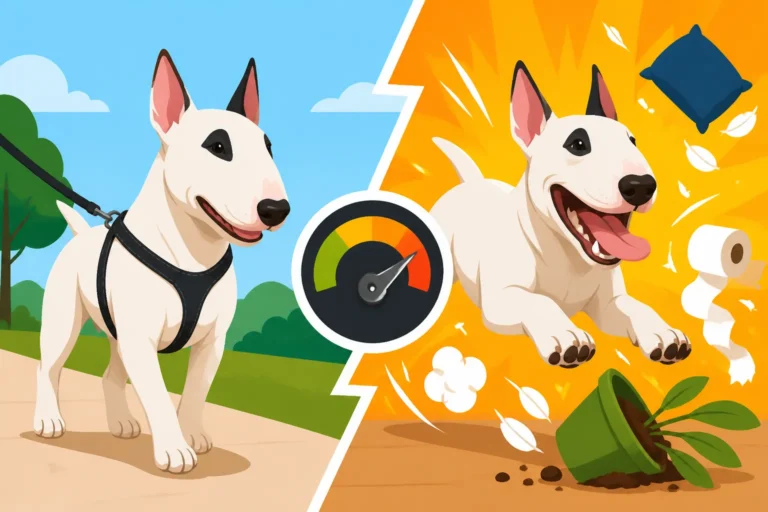
This is often one of the biggest hurdles for Bull Terrier owners. These dogs are powerful, muscular, and curious, which can make them formidable pullers. Traditional choke or prong collars can be detrimental. Instead, invest in a well-fitting front-clip harness or a head halter, which gives you more control with less force. Practice in quiet areas first, rewarding every step your Bull Terrier takes with a loose leash. Start with just a few steps, mark the behavior, and reward. Gradually increase the distance and introduce mild distractions. Consistency is absolutely key here, and remember to always carry those high-value rewards! If you're struggling, a good trainer or an online program like BAXTER & Bella can provide structured lessons on Teaching a Bull Terrier to Walk Without Pulling.
Distractions and Other Dogs
Bull Terriers can be quite dog-selective, or intensely focused when they see another dog or an interesting distraction. The CGC test requires your dog to remain calm when another dog passes by, and also when faced with common distractions like a person dropping a clipboard. The trick is gradual exposure. Start practicing these elements at a distance where your Bull Terrier notices the distraction but isn't over the top. Reward them for not reacting, or for giving you their attention instead. Positive, controlled socialization from a young age is paramount for a Bull Terrier's comfort around other dogs. A Bull Terrier With Other Dogs often need careful introductions and boundaries. For the distraction component, create your own "distraction scenarios" at home, slowly increasing the intensity and always rewarding calm behavior.
Sit, Down, Stay, and Come When Called
These are fundamental commands, and your Bull Terrier absolutely can learn them, but they might need a bit more convincing than some other breeds. For "sit" and "down," use lures (a treat held to guide their body) and once they perform the action, reward heavily. Gradually add a verbal cue and then a hand signal. For "stay," start with very short durations and tiny distances, slowly building up. Don't set them up for failure by asking for too much too soon. You can get specific guidance on Teaching a Bull Terrier to Sit and Stay from many reputable training resources. Coming when called, or recall, needs to be the most rewarding game you play. Practice in a safe, enclosed area, making it a party every time they return to you, even if they were only a few feet away. For a Bull Terrier, who can be easily distracted, a strong recall is a lifesaver. Teaching a Bull Terrier to Come Back Mid Zoomie means proving to them that coming to you is far more interesting than whatever they were doing.
Supervised Separation
This part of the test requires you to briefly leave your dog with a trusted person. Bull Terriers are notoriously attached to their people and can sometimes develop Whether a Bull Terrier Gets Separation Anxiety. To prepare for this, practice short, positive separations at home. Give your Bull Terrier a high-value chew toy or a stuffed Kong when you leave the room for a minute or two. The goal is to make them associate your absence with something wonderful. Gradually increase the time you’re gone, and ensure they are comfortable being left with another trusted family member before the test day.
Overcoming Bull Terrier Quirks and Challenges
Every breed has its unique characteristics, and Bull Terriers certainly have theirs. Embracing these quirks while gently guiding them towards desired behaviors is the art of Bull Terrier training.
Managing the "Clownish" Nature and Distractibility
Ah, the "clownish" nature! It’s one of the things we adore about them, isn't it? Their goofy antics and sheer zest for life are captivating. However, it can also mean that focusing on a stern "stay" command suddenly seems far less interesting than, say, chasing a dust bunny or trying to roll over for belly rubs. How Clownish a Bull Terrier Is makes them fantastic companions, but sometimes challenging students. The key is to manage their environment and energy levels effectively.
Start your training sessions in a quiet, distraction-free space. As your Bull Terrier becomes more proficient, slowly introduce mild distractions, always rewarding their focus on you. Use a "watch me" or "look" command to capture their attention before asking for a behavior. This teaches them to check in with you, even when there’s a lot going on. Importantly, make sure your Bull Terrier has had plenty of physical and mental exercise before a training session or the CGC test itself. A tired Bull Terrier is a well-behaved Bull Terrier. How Much Exercise a Bull Terrier Actually Needs is often more than people assume, and burning off that initial burst of energy can significantly improve their ability to concentrate. A brisk walk or a vigorous game of fetch can make all the difference in their ability to settle and learn.
The Role of a Great Trainer and Continuous Learning
While you absolutely can train your Bull Terrier for the CGC test yourself, there’s immense value in seeking guidance from an experienced dog trainer. Look for trainers who use positive, reward-based methods and ideally have experience with independent or "strong-willed" breeds. They can offer tailored advice, help you troubleshoot specific issues, and provide a controlled environment to practice with distractions. Many group classes also offer excellent opportunities to proof your Bull Terrier's skills around other dogs and people, mimicking test conditions.
Beyond in-person classes, online training programs can be a fantastic supplement or even a primary resource, especially for those with busy schedules. Programs like BAXTER & Bella offer comprehensive online courses that allow you to work at your own pace, providing expert guidance through video tutorials and support. This can be particularly useful for a Bull Terrier owner who appreciates flexibility. Remember, passing the CGC is a wonderful achievement, but it's not the end of the journey. It's a stepping stone to a lifetime of good manners and an even stronger bond with your dog. Keep practicing, keep learning, and keep celebrating the unique spirit of your Bull Terrier!
The Benefits of Achieving CGC with Your Bull Terrier
While the journey to the CGC can be a fun challenge, the rewards extend far beyond a certificate. It's about deepening your relationship and unlocking new opportunities for you and your extraordinary companion.
Enhanced Bond and Communication
Embarking on the CGC training journey together inherently strengthens the bond between you and your Bull Terrier. The consistent practice, the mutual understanding you develop, and the shared successes build a foundation of trust and respect. You learn to read your Bull Terrier's subtle cues, anticipate their needs, and effectively communicate your expectations in a way they understand. Conversely, your Bull Terrier learns that listening to you leads to good things – treats, praise, and enjoyable activities. This isn't just about commands; it's about a deeper connection, a shared language that makes everyday life smoother and more harmonious.
When your Bull Terrier reliably comes when called, sits politely for greetings, or walks calmly on a leash, it’s not just a display of good manners; it’s a testament to the effective communication and strong relationship you’ve cultivated. This enhanced bond means more enjoyable outings, less stress in novel situations, and a greater sense of partnership. It reaffirms that despite their independent nature, Bull Terriers thrive on this connection and are eager to please their beloved people when shown the way.
Real-World Practicality and Opening Doors
Passing the Canine Good Citizen test opens up a surprising number of doors for you and your Bull Terrier, offering practical benefits in daily life. For starters, it serves as official proof of responsible dog ownership. In a world where certain breeds, including Bull Terriers, sometimes face unwarranted stereotypes or breed-specific legislation, having that CGC title can be incredibly valuable. It demonstrates to landlords, insurance companies, or even local authorities that your Bull Terrier is well-trained, reliable, and not a nuisance. This can make a real difference in finding housing, securing appropriate insurance, or simply changing public perception.
Beyond the administrative benefits, a CGC title can qualify your Bull Terrier for various activities. Many therapy dog programs require a CGC as a prerequisite, allowing your gentle giant to bring comfort and joy to hospitals, nursing homes, or schools. Some dog parks or doggy daycares might look favorably upon a CGC-certified dog. It’s also a fantastic stepping stone if you’re interested in pursuing more advanced dog sports like obedience, rally, or even trick training, further enriching your Bull Terrier's life and showcasing their incredible capabilities. Ultimately, the CGC isn't just a piece of paper; it's a passport to a more inclusive and fulfilling life with your Bull Terrier.
Here's a quick look at how common Bull Terrier traits can be successfully channeled for the CGC:
| CGC Test Item | Bull Terrier Trait to Consider | Training Approach |
|---|---|---|
| Accepting a Friendly Stranger | Often social but can be boisterous | Practice polite greetings with calm visitors, focus on 'four on the floor'. Reward calm. |
| Sitting Politely for Petting | Can lean or push for attention, or be a "wiggle butt" | Emphasize a calm sit, reward for holding position; practice with different people. |
| Appearance & Grooming | Can be sensitive about handling, especially ears | Gradual desensitization with brushes, ear checks, and paw handling; high-value rewards. |
| Walking on a Loose Leash | Strong, easily distracted puller | Use appropriate equipment (front-clip harness, head halter), positive reinforcement for slack leash. |
| Walking Through a Crowd | Can be prone to distractions or seek attention | Practice in low-distraction environments first, slowly increase crowd density; reward focus. |
| Sit & Down on Command/Stay | Can be stubborn, short attention span | Keep sessions short and fun, use high-value rewards, build duration and distance gradually. |
| Coming When Called | May choose to ignore you if something is more interesting | Make recall the most rewarding game; practice frequently in safe, enclosed spaces. |
| Reaction to Another Dog | Can be dog-selective, overly enthusiastic, or reactive | Controlled, positive exposures from a distance, focus on 'leave it' and 'watch me' cues. |
| Reaction to Distraction | Curious, can be easily sidetracked | Create controlled distraction scenarios, reward calm responses and attention to owner. |
| Supervised Separation | Bonds strongly, prone to separation distress | Gradual increases in alone time, make separations positive with high-value chews. |
Disclaimer
This article is for general informational purposes only and does not constitute professional advice. Laws, prices and regulations vary by location and change over time. Consult a qualified professional for guidance on your specific situation.