Whether the Bull Terrier Will Stay Recognizable
A Bull Terrier’s egg-shaped head, small triangular eyes, upright ears and muscular outline make the breed easy to recognize. But recognizable does not mean frozen in time: breed standards, breeding choices and public preferences can all shape how dogs look. This guide explains what is likely to endure, what may change, and why health-focused breeding matters as much as preserving a familiar silhouette.
What makes a Bull Terrier recognizable
The features people notice first
Most people recognize a Bull Terrier by its distinctive head. The profile curves from the top of the skull down toward the nose without the obvious stop seen in many breeds. Add the oval outline, strong muzzle and small, dark, triangular eyes, and the breed has a look that is difficult to confuse with a typical terrier. The history behind that shape is explored in Where the Bull Terrier's Egg Shaped Head Came From.
The head is only part of the picture. Bull Terriers are compact, muscular dogs with a deep chest, strong shoulders, a short coat and naturally erect ears. Their outline is substantial without being a low, heavy bulldog shape. A dog’s color can vary, too: white, brindle, red, fawn, black brindle and combinations such as tricolor are among the familiar patterns. The development of colored lines is covered in Colored Bull Terriers Were a Separate Fight.
Owners may notice details that are less obvious to passersby: a lively, purposeful gait, a short tail carried horizontally, and an alert expression that can look mischievous even when the dog is simply watching the kitchen. These features help create the overall impression of a Bull Terrier. They matter together; a single feature, such as a curved head or white coat, does not make a dog representative of the breed on its own.
A standard guides appearance but does not make every dog identical
A breed standard describes the traits breeders and judges aim to preserve. It is not a promise that every Bull Terrier will have the same proportions, markings or expression. Dogs vary within the breed, just as people vary within a family. A pet Bull Terrier may have a softer head profile, a broader body or different markings from a show dog and still be unmistakably a Bull Terrier.
Standards can also be revised or interpreted over time. Judges, breeders and breed clubs may place different emphasis on certain details, while the basic identity of the breed remains recognizable. For owners, the practical takeaway is that “typical” should not become a reason to overlook function. A dog should be able to move comfortably, breathe normally and live an active life, not merely match an exaggerated idea of the ideal outline.
The triangular eye is one of the breed’s most distinctive features, but it is not the whole definition. The Bull Terrier Is the Only Breed With a Triangular Eye explains why that feature draws so much attention, while Why a Bull Terrier Has No Stop looks at another element of the recognizable profile. Together, these traits help explain why a Bull Terrier can be identified quickly even when its size, color or individual features differ.
What could change in the breed’s appearance
Fashion and selective breeding can shift the look
When breeders repeatedly choose dogs with a particular trait, that trait can become more common over generations. The change may be subtle: a slightly longer head, more pronounced curve, heavier bone, or a preference for a particular color. Those choices are not automatically harmful, but selection becomes concerning when a striking feature is valued more than comfortable movement and sound health.
Show-ring preferences can influence the dogs people consider desirable, though no single judge or trend determines the breed’s future. Breeders also respond to their own goals, the dogs available in their lines and the interests of puppy buyers. The result is variation rather than a neat, sudden transformation. Over time, however, repeated preferences can make one version of the Bull Terrier more familiar than another.
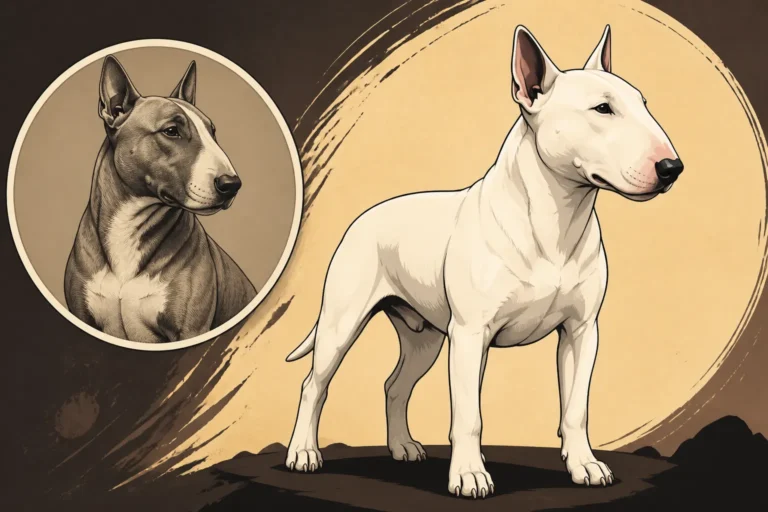
That is why historical photographs and older descriptions can be useful. They show that the breed’s appearance has developed over time rather than appearing in one finished form. How the Bull Terrier's Head Changed Over Time offers context for those shifts, while When Colored Bull Terriers Were Accepted traces a change in which coat patterns became part of the recognized breed picture.
Health priorities will influence which traits are preserved
A recognizable appearance is worth preserving only if the dogs can live well in their bodies. Bull Terriers can face inherited and other health concerns, so thoughtful breeding involves more than choosing dogs that look alike. Health history, appropriate screening and honest discussion of results help breeders make decisions with the next generation in mind. What a Bull Terrier Breeder Should Have Tested outlines the kinds of health checks prospective owners can ask about.
There is no single test that guarantees a puppy will never develop a health problem. Screening helps identify risks and supports informed breeding decisions; it does not replace veterinary care or careful observation throughout a dog’s life. A breeder who discusses both the strengths and limitations of testing is generally offering a more useful picture than one who promises a “perfectly healthy” dog.
This balance matters because some health problems may not be visible when a puppy is chosen. A buyer looking only at a striking head or rare coat color may miss the more important questions: what health information is available for the parents, whether the breeder can explain the results, and whether adult relatives have lived comfortably. Appearance is memorable, but health and temperament shape daily life with the dog.
How health-conscious breeding can preserve breed identity
Preserve the outline without exaggerating it
The goal need not be to make every Bull Terrier look identical. It is to preserve the features that give the breed its identity while avoiding extremes that could make ordinary movement or daily comfort harder. A balanced dog can still have a recognizable profile, strong body and characteristic expression without every feature being pushed to its most dramatic version.
For example, a breeder might value a clear head profile but also consider how the dog moves, how its relatives have aged, and whether it has the temperament to cope well in a home. That broader view helps keep conformation connected to function. The question is not simply, “Does this dog look like a Bull Terrier?” It is also, “Can this dog do the things a healthy companion should be able to do?”
Owners can support this approach by asking for health documentation and by avoiding decisions based entirely on color, size or online photos. If a breeder cannot explain why particular dogs were paired, or treats health questions as an insult, that is a reason to slow down. A thoughtful conversation does not guarantee an ideal outcome, but it gives a buyer better information than appearance alone.
DNA tests can offer clues but not prove a dog’s identity
A commercial dog DNA test may estimate breed ancestry or test for specific variants, depending on the test. It is not the same as a pedigree, and it cannot confirm that a dog meets a breed standard. Results should be understood as one source of information, not as a certificate that a dog is a “true” or “perfect” Bull Terrier.
If you are comparing a DNA kit sold through a retailer such as Chewy, look carefully at what the test actually reports. A breed estimate, a health screen and formal pedigree documentation answer different questions. Chewy may be a convenient place to browse pet products, but a retailer listing is not a substitute for understanding the test’s stated scope or discussing a medical result with a veterinarian.
Likewise, a DNA result should not be used to dismiss a dog’s real-world appearance, health or behavior. Mixed ancestry can be difficult to interpret, and breed estimates do not tell an owner what an individual dog will be like. For a registered puppy, ask the breeder for pedigree and screening records directly; for an adult dog with unknown history, use DNA information as a clue rather than a verdict.
Will the Bull Terrier stay recognizable
The likely answer is yes, with gradual variation
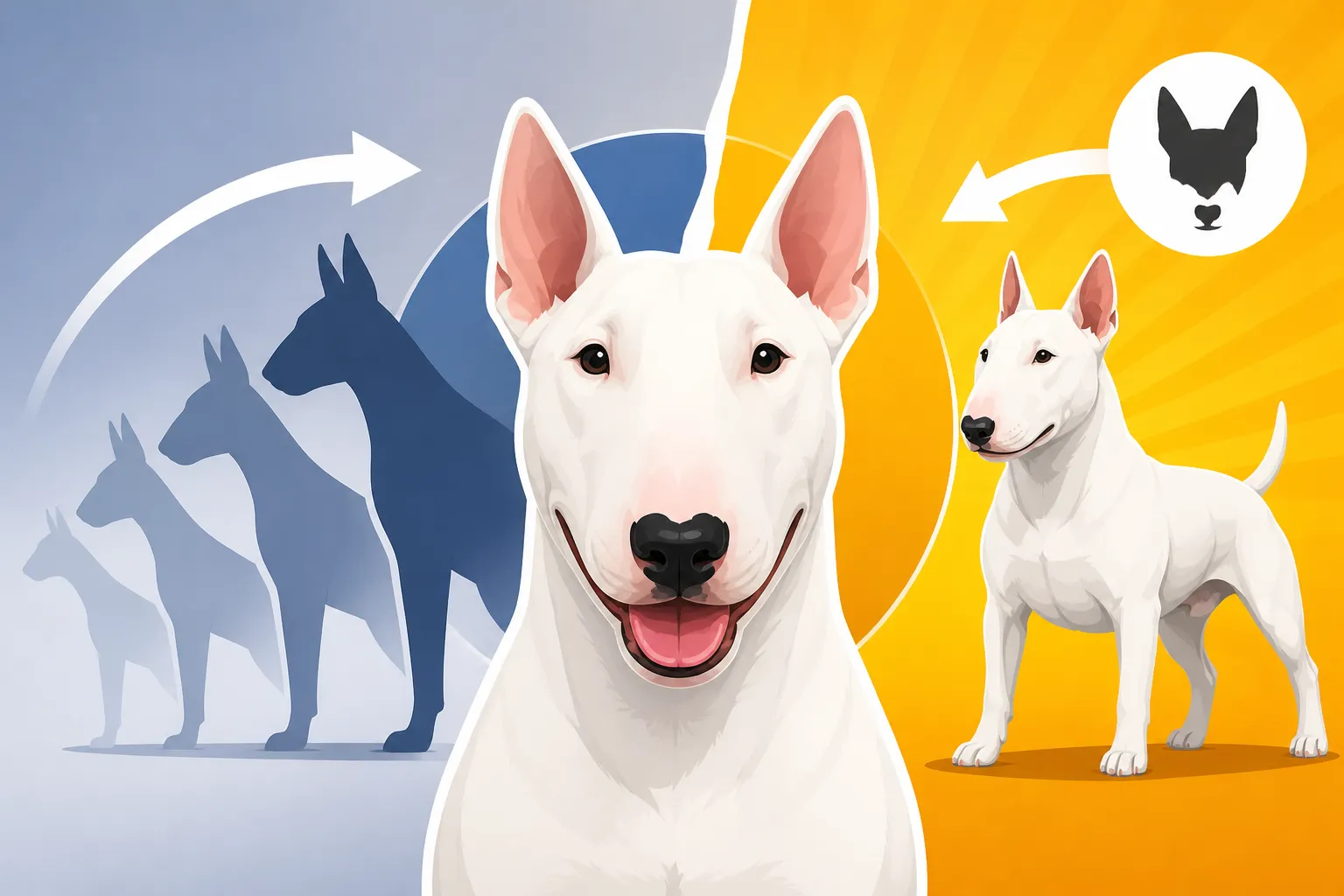
The Bull Terrier’s central features are well established and widely recognized. Its curved head profile, compact muscular build, short coat and upright ears give it a distinctive identity that is unlikely to disappear simply because individual dogs differ. Coat colors and small differences in proportions may become more or less common, but the breed’s familiar outline is likely to remain recognizable so long as breeders continue to value its defining traits.
“Recognizable,” though, does not mean unchanged. Breeds evolve through selection, health priorities and shifts in what breeders and owners favor. Future Bull Terriers may differ slightly from dogs remembered from decades earlier, just as earlier generations differed from the dogs seen today. A changing breed can remain recognizable if its core features persist and selection does not reduce the dog to a single exaggerated trait.
The most meaningful measure of success is not whether a Bull Terrier looks exactly like a photograph from the past. It is whether future dogs retain the breed’s characteristic appearance while being healthy, functional companions. If preserving a feature conflicts with a dog’s comfort, welfare should take priority over nostalgia.
What owners can do to support a sound future
Prospective owners can help by choosing breeders who talk openly about health, temperament and the reasons behind their breeding decisions. Ask to see relevant records, learn what is known about the parents and close relatives, and make sure the breeder can explain how puppies are raised and matched to homes. Which Breeds Went Into the Bull Terrier and Who Bred the First Colored Bull Terriers provide further background on how the breed’s history and variety have developed.
Current owners also contribute by sharing accurate information about their dogs’ health and experiences with breeders and veterinarians. That does not mean every symptom predicts an inherited condition, or that an owner should try to diagnose one at home. It means keeping records, asking questions and seeking veterinary advice when something changes. Those everyday choices help make health a visible part of conversations about the breed, rather than an afterthought to appearance.
If you enjoy the Bull Terrier’s unmistakable look, it is reasonable to hope it stays familiar. The strongest way to protect that identity is to support careful breeding that values both appearance and wellbeing. A breed remains truly recognizable not only because of its outline, but because generations of healthy, well-cared-for dogs continue to embody what people love about it.
Disclaimer
This article is for general informational purposes only and does not constitute professional advice. Laws, prices and regulations vary by location and change over time. Consult a qualified professional for guidance on your specific situation.