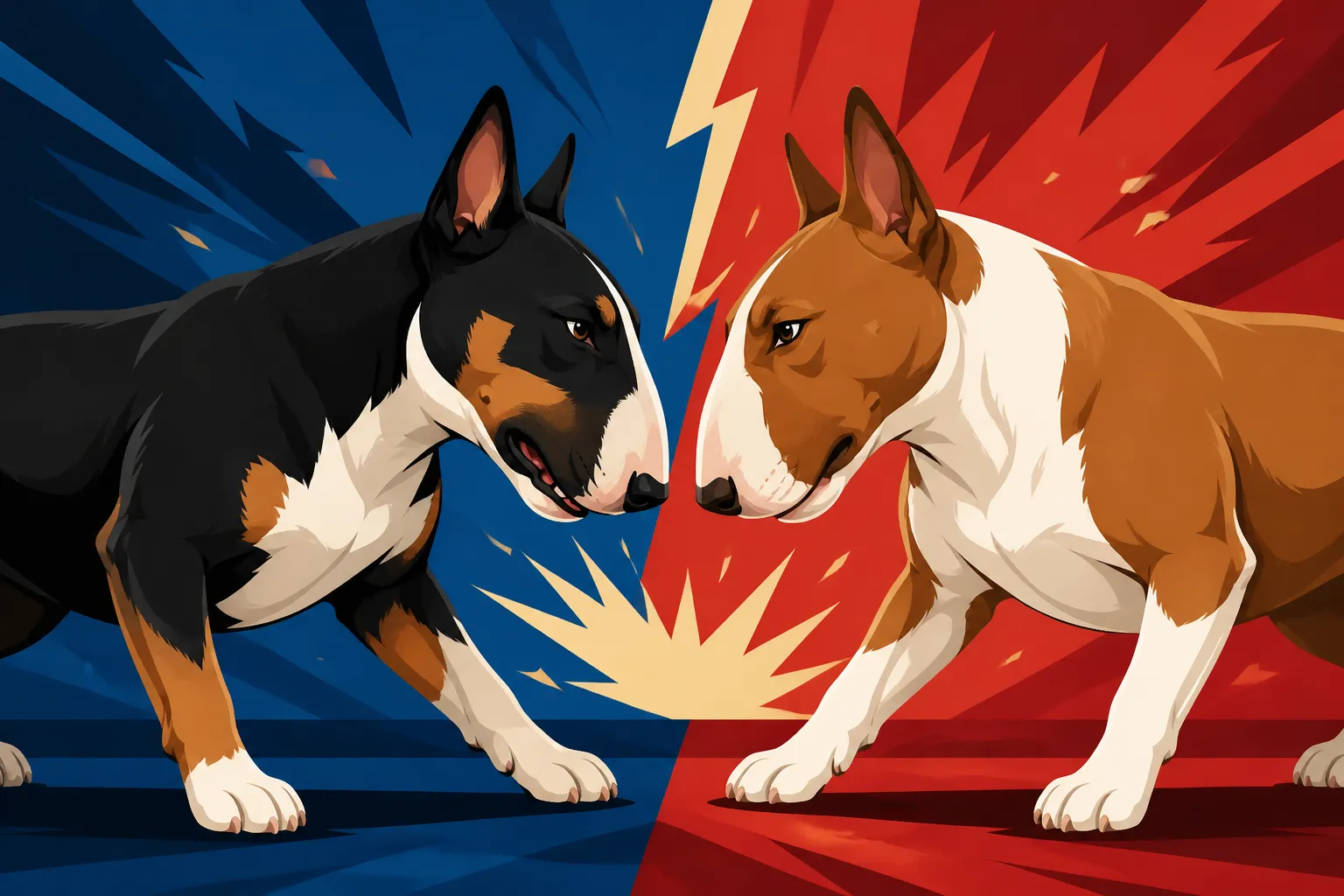
Colored Bull Terriers Were a Separate Fight
When you first think of a Bull Terrier, chances are a sleek, all-white dog with that unmistakable egg-shaped head springs to mind. It's the iconic image, the "White Cavalier" that captured the hearts of early enthusiasts. But for a long time, if your Bull Terrier wasn't pure white, it was considered an outsider, a second-class citizen in the show ring. The journey for colored Bull Terriers to gain full acceptance and be celebrated alongside their white counterparts was a long and often contentious battle, a "separate fight" that reshaped the breed's very identity and enriched its genetic diversity forever. This guide delves into that fascinating history, exploring why color was initially shunned, the tireless efforts to bring it back, and the beautiful spectrum of Bull Terriers we cherish today.
The Reign of the White Cavalier: Early Bull Terrier Ideals
The very foundation of the modern Bull Terrier breed is steeped in the lore of the "White Cavalier," a moniker that proudly declared its pristine, unblemished coat. For many years, an all-white appearance was not just preferred, but mandated by breed standards, largely due to the vision of one man who shaped the breed into what we began to recognize. This singular focus on white, while creating an iconic look, also inadvertently paved the way for certain health challenges and the marginalization of dogs born with any other hue.
James Hinks' Vision for Purity
The story of the Bull Terrier truly begins with James Hinks in 19th-century Birmingham, England. Hinks was a keen dog breeder with a specific aesthetic in mind. He sought to create a new breed from the old "Bull and Terrier" types, combining the strength and courage of the bulldog with the agility and refinement of terriers. But crucially, he also wanted a dog that was distinctive, elegant, and had a dignified presence. For him, purity meant white. He believed an all-white coat symbolized the "gentleman's companion" he was aiming to produce, a dog that was courageous but not quarrelsome, distinct from its rough-and-tumble fighting ancestors.
Hinks meticulously bred for this trait, using white English Terriers and Dalmatians, among other breeds, to achieve the desired snowy coat. His famous dog, "Puss," a pristine white Bull Terrier, reportedly won a wager in 1862 by defeating a badger and then a much larger dog without a single scratch, solidifying the breed's reputation and the ideal of the "White Cavalier." This victory cemented the aesthetic preference for white, pushing any other color into the background and influencing breed standards for decades to come. The emphasis was so strong that any hint of color was seen as a flaw, a deviation from the perfect, pure white specimen.
The initial breed standards rigorously upheld this "white only" rule. Breeders who deviated were often scorned, and their puppies, no matter how structurally sound or temperamentally excellent, were devalued if they carried even a small patch of color. This created a significant bottleneck in the gene pool, as certain desirable traits might have been carried by dogs with colored coats, but these dogs were systematically excluded from the breeding programs of those aiming for the top. It was a strict, almost uncompromising commitment to an ideal that was, in hindsight, perhaps too narrow.
The Cost of Purity
While the all-white Bull Terrier certainly achieved a striking and unique appearance, this intense focus on a single coat color came with significant, unforeseen consequences for the breed's health. The genetic pathways that produce a pure white coat are often linked to other, less desirable traits. One of the most prominent issues that arose from this selective breeding was congenital deafness. Many white Bull Terriers were, and still are, born partially or completely deaf.
This direct correlation meant that as the "White Cavalier" ideal gained traction, so too did the prevalence of deafness within the breed. It’s a heartbreaking reality for owners and breeders alike, trying to manage a dog with a sensory impairment that could have been avoided with a broader genetic base. Thankfully, modern science has given us the BAER test, or Brainstem Auditory Evoked Response test, which can accurately assess a puppy's hearing. It's now standard practice for responsible breeders to have every puppy BAER tested, especially white ones, a crucial step in understanding How Many White Bull Terriers Are Born Deaf and working to mitigate the issue.
Beyond deafness, the lack of pigment often meant a heightened sensitivity to sunlight. A Bull Terrier's skin, especially on its delicate nose and ear tips, is quite prone to sunburn if not properly protected. This can lead to discomfort, peeling, and in severe cases, an increased risk of skin cancer over time. This sensitivity is particularly pronounced in white Bull Terriers, whose pink skin can burn surprisingly quickly, even through their short coats. Owners must be vigilant about sun exposure, using dog-safe sunscreens or protective clothing, particularly during peak UV hours. It reminds us that A Bull Terrier's Skin Is Its Weakest Point, regardless of color, but especially so for the unpigmented white variety.
Color's Enduring Legacy: Ancestry and Hidden Genes
Despite the early breed standard's unwavering dedication to the all-white ideal, color was never truly absent from the Bull Terrier's lineage. It was merely suppressed, lying dormant in the genetic blueprint passed down through generations. To truly understand the re-emergence of colored Bull Terriers, we need to look back at the origins of the breed and the surprising persistence of these "hidden" genes.
Tracing the Ancestry of Color
The Bull Terrier, as James Hinks envisioned it, was not created from scratch but rather developed by crossing existing breeds. The primary contributors to the Bull Terrier we know today were the Old English Bulldog, the White English Terrier (now extinct), and the Dalmatian. Each of these foundational breeds brought specific traits to the mix, and crucially, they also brought a diverse palette of colors. The "Bull and Terrier" types that predated Hinks' refined creation were certainly not uniformly white; they came in all sorts of brindle, fawn, black, and piebald patterns. Which Breeds Went Into the Bull Terrier reveals a far more colorful ancestry than the pure white standard suggested.
The Old English Bulldog, for instance, was typically brindled, fawn, or piebald. These were robust, powerful dogs, and their genetic contribution was vital for the Bull Terrier's strength, tenacity, and unique head shape. Similarly, the Dalmatian, while known for its spots on a white background, also carries genes for black and liver pigment, and its genetic influence would have introduced a wider array of color potential. Even the White English Terrier, although white, still carried the underlying genetic code for color, which could be expressed if paired with the right genes from another breed. This rich, multi-colored heritage of What the Bull and Terrier Was meant that even as Hinks focused on white, the genetic information for color was still very much present within his breeding stock, just not outwardly expressed.
So, while Hinks successfully created a predominantly white line, the genetic memory of color remained. Think of it like this: a recessive gene for a certain color might be carried by a white dog, and if that dog mates with another carrier, suddenly a colored puppy appears in an otherwise all-white litter. These "throwback" puppies, with their splashes of brindle or solid patches of red, were living proof that color was an intrinsic part of the Bull Terrier's identity, simply waiting for the right combination of genes to manifest.
The Unseen Genes
The concept of recessive genes is key to understanding how color persisted even when it wasn't the dominant trait being selected for. For a dog to be entirely white, it needs to carry specific genes that inhibit color expression or result in extreme piebaldism. However, a dog could carry a gene for, say, brindle, but if it also carried the dominant gene for white, or was paired with another dog also carrying dominant white, the brindle might not show. These genes were silently passed down through generations, effectively "hidden" within the white Bull Terrier population.
Every so often, a litter would surprise a breeder with a puppy that had a patch of color – perhaps a black ear, a brindle spot, or a tan marking. These puppies were often viewed as anomalies, aberrations from the desired white standard, and were sometimes culled or simply not used for breeding, further reinforcing the misconception that Bull Terriers were supposed to be white. However, each time one of these colored puppies appeared, it was a living testament to the powerful, underlying genetic diversity that the breed still possessed.
The continued presence of these color genes, even when largely unseen, was ultimately a blessing for the breed. It meant that when the time came for colored Bull Terriers to gain acceptance, the genetic pool for color had not been completely eradicated. Instead, it had been maintained, albeit in a suppressed state, allowing for the eventual reintroduction and diversification of the Bull Terrier's appearance without having to 'start from scratch' with new breed crosses. This genetic resilience underscores the deep roots of color in the Bull Terrier's ancestry, ready to bloom once the breed world was ready to embrace it.
The Battle for Recognition: Ted Lyon and the Colored Bull Terrier Movement
The steadfast insistence on an all-white coat for Bull Terriers, while creating a striking image, also created a genetic bottleneck and led to the suppression of otherwise healthy and well-typed colored dogs. This rigid adherence to the "White Cavalier" ideal didn't sit well with everyone, particularly as some of the inherent health challenges associated with exclusive white breeding became more apparent. It took visionary individuals and persistent advocacy to challenge the status quo and pave the way for a more inclusive future for the breed.
Ted Lyon's Crusade
In the early 20th century, as the breed matured, some dedicated fanciers recognized the need to reintroduce color not just for aesthetic variety but for the overall health and vigor of the Bull Terrier. One of the most influential figures in this movement was Ted Lyon, a passionate and outspoken advocate for colored Bull Terriers. Lyon was deeply concerned about the limited gene pool and the increasing incidence of deafness and other health issues in exclusively white lines. He understood that broadening the genetic base by reintroducing color could infuse new vitality into the breed. Who Ted Lyon Was to the Bull Terrier is a story of determination against a very entrenched belief system.
Lyon meticulously researched the breed's history, highlighting the presence of color in its foundational ancestors. He began to champion the cause of colored Bull Terriers, breeding them himself and showcasing their quality despite the prevailing bias. His efforts weren't just about personal preference; they were about securing the long-term health and survival of the Bull Terrier as a breed. He believed that good dogs came in all colors, and that judging a Bull Terrier solely on its coat color was detrimental to the breed's progress.
His persistent efforts culminated in the formation of the Colored Bull Terrier Club in 1919 in the UK, an organization dedicated to promoting, breeding, and exhibiting colored Bull Terriers. This club served as a rallying point for like-minded individuals who believed in the value of color. They faced an uphill battle, often met with resistance and skepticism from the established "white-only" enthusiasts. However, Lyon and his club members were unwavering, continuing to breed beautiful, healthy colored dogs and demonstrating their worth in every possible venue.
Early Opposition and Resistance
The journey for colored Bull Terriers was anything but smooth. The initial resistance from the established Bull Terrier community was fierce, steeped in tradition and the romanticized ideal of the "White Cavalier." For many, the idea of a colored Bull Terrier was a step backward, a dilution of the breed's unique identity painstakingly cultivated by James Hinks. They viewed color as a sign of impurity, a genetic flaw that marred the perfect white canvas.
Arguments against colored Bull Terriers often focused on purity of lineage and the aesthetic preference that had dominated for decades. Traditionalists feared that introducing color would lead to a loss of type, that the distinct Bull Terrier head and body structure would somehow be compromised. There was a strong emotional attachment to the all-white image, and any deviation felt like an attack on the very essence of the breed. This resistance was not just verbal; it manifested in judging rings where colored dogs were simply ignored or penalized, and in breeding practices where colored puppies, even those from otherwise excellent lines, were deemed undesirable.
The Colored Bull Terrier Club, under Ted Lyon's leadership, had to work tirelessly to counter these ingrained prejudices. They organized their own shows and events, creating a platform where colored Bull Terriers could be judged on their merits, structure, and temperament, rather than just their coat. They provided education, historical evidence, and, most importantly, living examples of magnificent colored Bull Terriers that undeniably possessed all the hallmark traits of the breed. It was a long, arduous process of changing hearts and minds, proving that true Bull Terrier quality was not, and never had been, confined to a single color.
From Exclusion to Acceptance: Official Breed Standards Evolve
The dedicated efforts of Ted Lyon and the Colored Bull Terrier Club eventually began to chip away at the long-standing bias against non-white Bull Terriers. While tradition is powerful, the compelling arguments for genetic diversity and the undeniable quality of colored dogs became increasingly difficult to ignore. The shift from exclusion to full acceptance was a landmark moment, fundamentally altering the breed's trajectory and ensuring its healthier future.
The British Kennel Club's Decision
The turning point for colored Bull Terriers largely occurred in their homeland, the United Kingdom. After years of relentless campaigning by Ted Lyon and the Colored Bull Terrier Club, the British Kennel Club, the governing body for dog shows and registration in the UK, finally began to seriously consider the arguments for their recognition. The evidence was mounting: colored Bull Terriers were thriving, exhibiting excellent conformation, temperament, and vital health benefits from a wider gene pool. The health issues associated with exclusive white breeding, particularly deafness, underscored the urgency of integrating color.
In 1931, a monumental decision was made: the British Kennel Club officially recognized colored Bull Terriers as part of the breed. This was a massive victory, signaling an end to decades of marginalization. When Colored Bull Terriers Were Accepted marked a new era where dogs of all approved colors could compete alongside their white counterparts, judged equally on the merits of their structure and character rather than the hue of their coat. This recognition didn't just open the show ring; it validated the tireless work of those who had fought for inclusion and acknowledged the inherent value of color to the breed's overall well-being.
The updated breed standard now included specific descriptions for acceptable colors, effectively dismantling the "white only" dogma. This move encouraged breeders to consider colored dogs in their programs, fostering greater genetic diversity and helping to reduce the incidence of certain hereditary conditions. It was a testament to the power of advocacy and the understanding that true breed health and excellence lie in a robust and varied gene pool.
Crossing the Pond: Acceptance in America and Other Regions
The momentum for colored Bull Terrier acceptance didn't stop in the UK; it soon spread across the Atlantic and beyond. The American Kennel Club (AKC), which had also historically favored the white ideal, observed the developments in Britain and began to review its own standards. While sometimes a bit slower to change, American Bull Terrier enthusiasts, many of whom were already importing dogs from the UK, began to advocate for similar recognition.
In 1936, the AKC followed suit, officially recognizing colored Bull Terriers. This was another crucial step, cementing their place in the breed standard throughout North America. This dual recognition from the two most influential kennel clubs in the world effectively standardized the breed globally, ensuring that colored Bull Terriers were no longer seen as anomalies but as legitimate and integral members of the breed. Countries around the world gradually adopted similar standards, embracing the diversity that colored Bull Terriers brought.
This widespread acceptance meant that breeders everywhere could now confidently breed for type and temperament, incorporating a broader range of genetic material without fear of their dogs being rejected based on color. It allowed for greater flexibility in breeding programs, giving breeders more options to produce healthy, well-adjusted Bull Terriers. The fight had been won, and the Bull Terrier breed was richer and more robust for it, embodying the full spectrum of its vibrant heritage.
A Rainbow of Terriers: Understanding Modern Bull Terrier Colors
With the official recognition of colored Bull Terriers, the breed's appearance diversified dramatically, moving beyond the singular image of the "White Cavalier." Today, Bull Terrier enthusiasts can choose from a stunning array of colors and patterns, each contributing to the breed's unique visual appeal. Understanding these variations is key to appreciating the full spectrum of Bull Terrier beauty and adhering to modern breed standards.
Standard Colors and Patterns
The modern Bull Terrier breed standard recognizes a variety of colors, no longer limiting them to white. These colors are generally grouped into categories, and within these, various patterns are also acceptable. The most common and widely recognized colors include:
- Brindle: This is a truly striking pattern, often described as "tiger-striped." It consists of dark stripes (usually black) over a lighter base color, which can range from red to fawn. A well-defined brindle pattern is highly prized. What a Brindle Bull Terrier Looks Like can be quite dramatic, with intricate swirls and stripes that make each dog visually unique.
- Red: Ranging from a deep mahogany to a lighter reddish-fawn, red Bull Terriers are often vibrant and eye-catching. They can have minimal white markings, usually on the chest or feet.
- Fawn: A softer, lighter shade than red, fawn can vary from a pale cream to a rich tan. Like red, fawn Bull Terriers typically have limited white markings.
- Black Brindle: This is a variation of brindle where the dark stripes are so dense they almost create a solid black appearance, but upon closer inspection, the brindle pattern is still visible, especially in good light.
- Tricolor: This striking color combination involves a primary black coat with tan markings (typically on the face, chest, and legs) and white markings. The tan points give these dogs a very distinctive appearance, reminiscent of a Rottweiler or Doberman, but with that quintessential Bull Terrier body and head. What a Tricolor Bull Terrier Looks Like is a dog that really stands out in a crowd, blending elegance with power.
- White with Markings: Even white Bull Terriers can have colored markings, provided they are not excessively large or detract from the overall "white" impression. A small patch of color on the head, for example, is acceptable. Whether Markings on a White Bull Terrier Are Allowed is a common question, and yes, minor colored markings, typically on the head or ears, are perfectly fine and do not disqualify a dog from the show ring or breed standard.
Less common, but still recognized, variations exist, such as solid black or piebald (a primarily white dog with large patches of color). However, certain colors like blue or liver are considered non-standard and indicate the presence of genes not typically associated with the breed. It's also worth noting that Whether a Red Smut Bull Terrier Is Standard depends on the intensity; 'smut' refers to black tipping on a red or fawn coat, and is generally acceptable as part of the overall color description.
Understanding Markings and Pigmentation
Beyond the primary coat colors, the details of markings and pigmentation play a significant role in the Bull Terrier's appearance. White markings are common in all colored Bull Terriers, usually appearing on the chest, feet, and tip of the tail. These white areas are considered acceptable as long as they don't dominate the overall colored coat. For example, a "colored" Bull Terrier should primarily be colored, with white being a secondary feature.
Pigmentation of the nose, eye rims, and lips is also crucial. A fully pigmented black nose is generally preferred, as are dark eye rims and lips. While some white Bull Terriers might have pink or mottled noses, solid black pigmentation is considered ideal across all colors. This isn't just about aesthetics; good pigmentation often correlates with overall health and robust immune function.
The intensity and distribution of color can also vary widely, even within the same litter. Genetics are a fascinating and sometimes unpredictable force, meaning that no two colored Bull Terriers are exactly alike. This diversity is what makes the breed so visually appealing to many owners, offering a unique canine companion in terms of both personality and appearance. Whether you prefer the classic white, the dramatic brindle, or the striking tricolor, there's a Bull Terrier hue for every taste, all united by that distinctive, captivating presence.
Color and Health: A Lifelong Connection
The decision to reintroduce and officially recognize colored Bull Terriers was largely driven by the understanding that a broader gene pool would lead to a healthier breed. While color itself isn't a direct indicator of health, the genetic pathways responsible for certain coat colors are inextricably linked to specific health considerations that every Bull Terrier owner and breeder should be aware of.
White and Deafness
The most significant health concern directly tied to coat color in Bull Terriers is congenital deafness, particularly in all-white dogs. The gene responsible for extreme white spotting, which leads to the all-white coat, is closely associated with genes that affect the development of the auditory system in the inner ear. This means that white Bull Terriers have a significantly higher incidence of unilateral (deaf in one ear) or bilateral (deaf in both ears) deafness compared to their colored counterparts.
For owners of white Bull Terriers, or those considering one, understanding this risk is paramount. It’s why responsible breeders routinely conduct BAER (Brainstem Auditory Evoked Response) tests on every puppy before they go to their new homes. This test measures the electrical activity in the cochlea and auditory pathways in the brain in response to sound, providing an objective assessment of hearing. Knowing Why a White Bull Terrier Should Be BAER Tested is not just good practice, it's essential for early intervention and proper training if a puppy is found to be deaf. What a BAER Test Tells a Bull Terrier Owner can prepare them for the specific needs of a deaf or partially deaf dog, which, while manageable, requires a dedicated approach to training and communication.
While colored Bull Terriers are less prone to deafness, the gene can still be present, especially if white was recently in their lineage. Therefore, while the risk is lower, many conscientious breeders still test all puppies, regardless of color, to ensure comprehensive health screening and to avoid passing on potential issues unknowingly.
Skin and Sun Protection
Another health consideration often linked to coat and skin pigmentation is sensitivity to the sun. Just as humans with fair skin and light hair are more prone to sunburn, Bull Terriers with unpigmented skin are at a higher risk. This applies most significantly to all-white Bull Terriers, but also to colored Bull Terriers with large white patches, particularly on their ears, nose, and belly where the skin is thinnest and most exposed.
The skin of a white Bull Terrier can be quite delicate, lacking the protective melanin that darker pigments provide. This makes them highly susceptible to sunburn, which isn't just uncomfortable but can lead to long-term issues like actinic keratosis and an increased risk of squamous cell carcinoma, a type of skin cancer. Therefore, Sunburn on a White Bull Terrier is not a minor inconvenience; it's a serious health concern requiring proactive management.
Owners must take precautions, especially during peak sun hours. This might include applying dog-specific sunscreen to vulnerable areas like the nose, ear tips, and thinly furred bellies. You can often find a good selection of safe sunscreens and protective clothing on sites like Chewy. Limiting outdoor exposure during the strongest sunlight hours, or providing ample shade, is also crucial. Similarly, owners of colored Bull Terriers with significant white markings should also be mindful of these areas, ensuring adequate protection. This diligent care helps prevent painful burns and safeguards against more severe health problems down the line, ensuring that their Bull Terrier, regardless of color, can enjoy the outdoors safely. Whether a White Bull Terrier Needs Sunscreen isn't a question of preference, but a vital aspect of their long-term health care.
Breeding Ethics and the Future of Color
The journey of colored Bull Terriers from exclusion to full acceptance underscores a critical lesson in responsible breeding: genetic diversity is paramount for the health and longevity of any breed. Today, ethical breeding practices involve more than just producing visually appealing puppies; they require a deep understanding of genetics, a commitment to health testing, and a vision for the breed's future that embraces all its healthy variations.
Testing for Health, Not Just Color
Modern responsible Bull Terrier breeders prioritize comprehensive health testing for all their breeding stock, regardless of coat color. While the battle for color acceptance was fought decades ago, the underlying principle – that health should always come first – remains as relevant as ever. Genetic testing for hereditary conditions is now a cornerstone of ethical breeding. This includes, but isn't limited to, screening for conditions prevalent in Bull Terriers such as hereditary nephritis (kidney disease), heart conditions (like subvalvular aortic stenosis and mitral valve dysplasia), and patellar luxation.
Every potential breeding dog should undergo a full battery of health tests, including BAER testing for deafness, cardiac exams, kidney evaluations (including UPC ratios), and patella checks. This proactive approach ensures that breeders are making informed decisions, striving to produce puppies that are not only sound in structure and temperament but also free from preventable hereditary diseases. What a Bull Terrier Breeder Should Have Tested goes far beyond simply looking at a dog's coat. They should be transparent about these results, providing documentation and being willing to discuss the health history of their lines. The goal is to produce robust, healthy Bull Terriers that can live full, active lives with their families, irrespective of their coat color.
The focus has shifted from an exclusionary visual standard to an inclusive health standard. It's about ensuring that the gene pool is as broad and healthy as possible, using all available tools and knowledge to mitigate the risks of inherited diseases. This commitment to health means that Which Health Tests a Bull Terrier Breeder Should Run are clearly defined by breed clubs and health organizations, providing a roadmap for ethical practices that benefits every Bull Terrier puppy.
The Continued Importance of Diversity
The reintroduction of colored Bull Terriers was a vital step in enhancing the genetic diversity of the breed. By opening the gene pool to dogs with different color genetics, breeders could access a broader range of traits, helping to strengthen the breed against potential weaknesses that can arise from narrow breeding practices. This diversity isn't just about different coat patterns; it's about introducing variety into the entire genetic makeup, which can improve overall vigor, immunity, and resilience to disease.
Maintaining this diversity is an ongoing commitment. It means resisting the temptation to over-focus on any single trait, whether it's a particular color, head shape, or even a winning show line, to the detriment of other valuable genetic contributions. It involves carefully selecting breeding partners to ensure a balanced infusion of desirable traits and avoiding the concentration of undesirable ones. For instance, the fight to ensure Whether Acrodermatitis Can Be Bred Out of Bull Terriers (a severe zinc deficiency condition) is another example of how genetic screening and careful breeding choices are crucial for the breed's future.
Ultimately, the future of the Bull Terrier breed, in all its beautiful colors, lies in the hands of responsible breeders and informed owners. By valuing genetic diversity, prioritizing comprehensive health testing, and adhering to ethical breeding principles, we can ensure that this unique and beloved breed continues to thrive for generations to come. The "separate fight" for colored Bull Terriers taught us that true beauty and strength lie not in uniformity, but in the rich, vibrant tapestry of their diverse heritage.
Disclaimer
This article is for general informational purposes only and does not constitute professional advice. Laws, prices and regulations vary by location and change over time. Consult a qualified professional for guidance on your specific situation.