Whether a Bull Terrier Mix Keeps the Head Shape
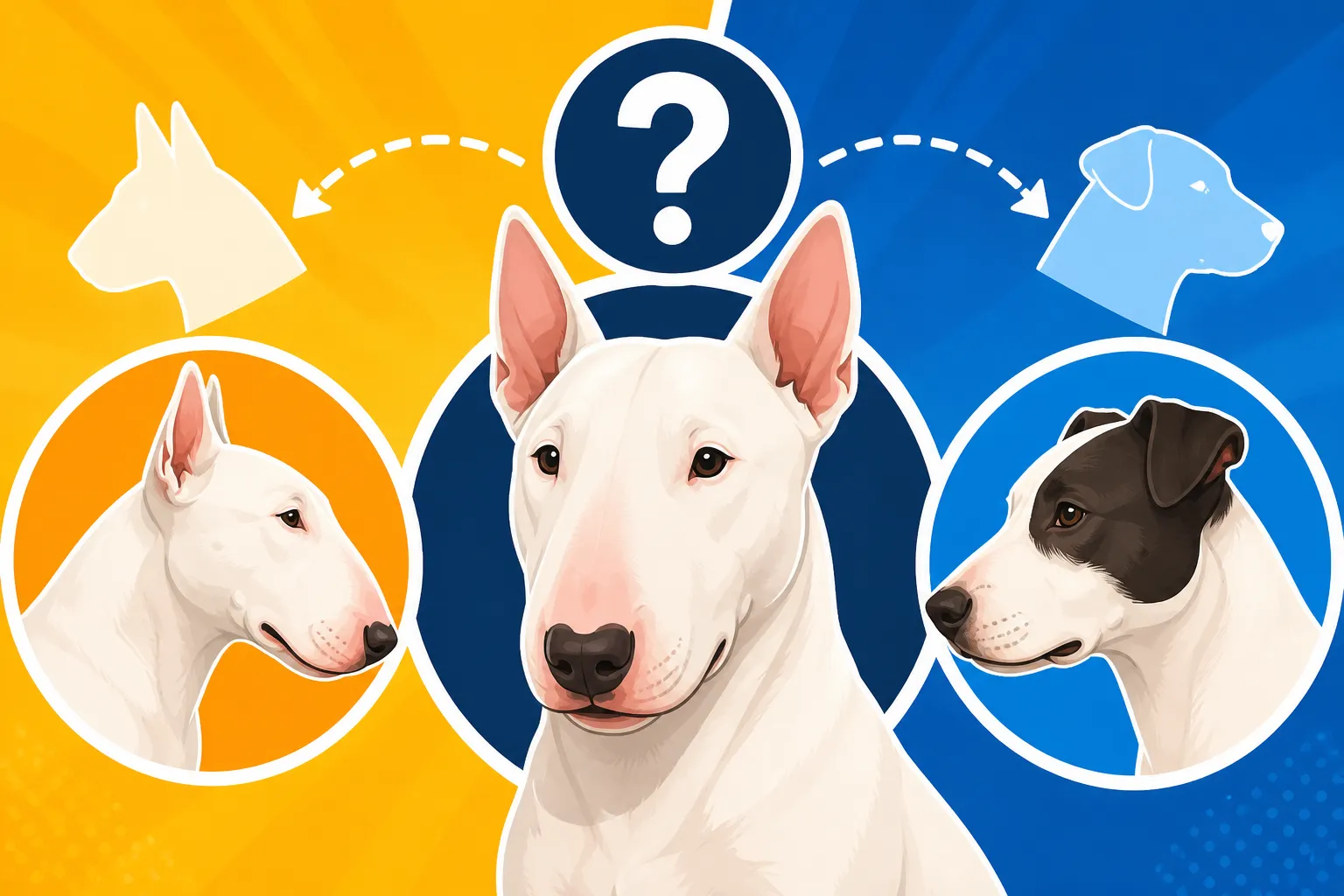
A Bull Terrier mix may inherit the breed’s distinctive egg-shaped head, but there is no guarantee it will. Head shape depends on many genes, the other parent’s traits, and how the puppy develops. This guide explains what to look for, why mixes vary—even within one litter—and why a dog’s profile alone can’t confirm its ancestry.
Why a Bull Terrier’s head shape is distinctive
The egg-shaped outline is made up of several features
The Bull Terrier’s familiar profile is more than a long muzzle or a rounded skull. In a typical adult, the head has a gently curving outline from the top of the skull down toward the nose, with little or no obvious indentation between the forehead and muzzle. That smooth profile is often called a downface. The breed’s close-fitting skin and strong, full jaw help complete the overall look.
The shape is not a single feature that can be inherited like a simple on-or-off switch. Skull width, muzzle length, the curve of the profile, jaw structure, and the position of the eyes all contribute. A dog may have one or two traits that look Bull Terrier-like without having the breed’s complete head shape.
It helps to separate a general resemblance from the specific breed outline. A broad head or powerful jaw can occur in several breeds and mixes. The distinctive Bull Terrier profile comes from the way the forehead and muzzle flow together, along with the proportions of the rest of the skull. For a closer look at those terms, see What a Bull Terrier's Downface Is and Why a Bull Terrier Has No Stop.
Head shape varies even among purebred Bull Terriers
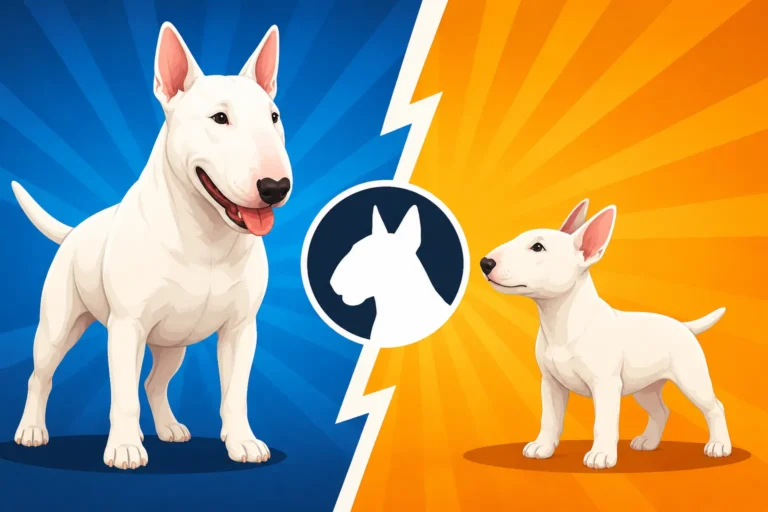
The breed’s signature head did not appear all at once. Bull Terriers’ appearance changed over generations as breeders selected for particular features, and individual dogs still vary. Some have a more pronounced curve; others have a subtler profile. Age, sex, and overall build can also affect how a dog’s head looks in comparison with its body.
That variation matters when you’re trying to predict what a mix might look like. There isn’t one perfectly uniform Bull Terrier head that every mix will either inherit or lose. A parent with a pronounced profile may pass on some of the features, but the puppy’s other parent contributes genes too—and those influences may show up in different combinations. The breed’s developing appearance is discussed in How a Bull Terrier's Head Changed Over Time.
A puppy’s head also changes as it grows. The proportions of a young dog can look different from those of an adult, so a puppy’s current profile may not be a reliable preview of its mature appearance. If you’re considering a mix, ask about the adult dogs in the puppy’s family when possible, but treat them as clues rather than a promise.
What a Bull Terrier mix may inherit
Genes combine in varied ways
A mixed-breed dog inherits genetic material from both parents, but that doesn’t mean it will look like a tidy halfway point between them. Traits are inherited in combinations. One puppy might get a Bull Terrier-like muzzle profile and the other parent’s narrower skull, while a littermate has a broader head with little visible downface.
The head is especially hard to forecast because its overall appearance depends on multiple traits working together. A puppy may inherit some elements associated with Bull Terriers—such as a strong jaw or a gently curved profile—without inheriting the full egg-shaped outline. Conversely, a mix may look surprisingly Bull Terrier-like even if the other parent’s appearance seems very different.
This is one reason breed labels don’t reliably predict a dog’s exact appearance. Knowing that one parent is a Bull Terrier tells you that Bull Terrier traits are possible, not that they are certain to appear in a particular way. For background on the breeds and ancestry people sometimes assume are involved, see Whether a Bull Terrier Is Half Terrier.
The other parent can strongly influence the result
The second parent’s head shape matters. If that parent has a longer, narrower muzzle, the puppies may have a more tapered profile. A parent with a short muzzle, broad skull, or pronounced stop may contribute those traits instead. The result can be a blend, a stronger resemblance to one parent, or a mix of features that doesn’t closely match either adult.
Even the phrase “Bull Terrier mix” can cover many different pairings. A Bull Terrier crossed with a Staffordshire Bull Terrier may have a different range of possible head shapes from a Bull Terrier crossed with a sighthound or a small companion breed. The other parent’s specific build and family background matter more than a generic label. You can compare some of the breed distinctions in How a Bull Terrier Differs From a Staffordshire Bull Terrier and How a Bull Terrier Differs From an American Pit Bull Terrier.
| What you notice | What it may suggest | What it cannot confirm |
|---|---|---|
| A smooth curve from skull toward muzzle | A Bull Terrier-like profile may be present | That the dog is purebred or has a particular mix |
| A broad skull or strong jaw | The dog may have inherited some traits common in muscular breeds | Bull Terrier ancestry by itself |
| A head that resembles one parent more than the other | Some features may be more visible in that dog | How the rest of the litter will look |
| A puppy with a rounded head | Its appearance may change as it matures | Its final adult head shape |
Crosses and later generations add more variation
In a first-generation cross, each parent contributes genetic material, but the puppies still won’t necessarily split their appearance evenly. In later-generation mixes, the range can widen further. A dog with Bull Terrier ancestry several generations back may show a recognizable feature—or may show few obvious signs of it.
Backcrosses can make some traits more likely, depending on which dogs are bred, but they still don’t guarantee an exact head shape. The rest of the inherited traits matter, and siblings can differ. For examples of the many possible pairings, see Which Crosses Bull Terriers Appear In.
How to assess a mix’s head without guessing too much
Look at the whole profile, not one feature
If you’re trying to understand whether a dog has a Bull Terrier-like head, view the head from the side and from the front. Notice the curve from the top of the skull toward the nose, the length and depth of the muzzle, and how the jaw relates to the rest of the face. A single trait, such as a broad forehead, is not enough to identify a particular breed.
Photos can be misleading. Camera angle, lens distortion, posture, lighting, and a dog’s expression can all change how the head appears. A close-up taken from slightly above may make the muzzle look shorter, while a side view can make a gradual profile easier to see. Compare several clear views, preferably of an adult dog standing naturally.
It’s also worth remembering that a resemblance is just that: a resemblance. Head shape can suggest that a dog has inherited features associated with Bull Terriers, but it cannot prove parentage. Breed ancestry is more complicated than matching a dog’s appearance to a picture.
Consider age and family resemblance
For puppies, look at the parents and, if you can, older relatives or adult offspring from the same pairing. Those dogs may offer a better sense of the range of features in the family. Even then, each puppy inherits a different combination, so a parent or sibling is a reference point—not a guarantee.
A puppy’s skull and body proportions continue to change as it grows. What seems especially rounded or broad at one stage may look more balanced later, and the adult profile may become more apparent over time. Avoid making firm conclusions from a very young puppy’s head alone.
If the dog is an adult, consider its overall structure rather than focusing narrowly on the head. A Bull Terrier-like profile can occur alongside a body, coat, or temperament that reflects another breed. The full mix may not match an imagined “half Bull Terrier, half other breed” template.
DNA tests and visual identification have limits
A canine DNA test may estimate breed ancestry, but it does not predict the exact shape of an individual dog’s head. Even when a test identifies Bull Terrier ancestry, it cannot promise that the dog will develop the breed’s full characteristic profile. Ancestry estimates and appearance are related, but they answer different questions.
Likewise, a visual assessment by a knowledgeable professional can describe a dog’s features, but appearance alone generally cannot establish its pedigree. If the dog’s background matters for a practical reason—such as understanding possible health risks—discuss the dog’s history and appropriate screening with a veterinarian rather than relying on a head shape or breed label.
Appearance is not the same as health or temperament
A particular head shape does not establish health
A Bull Terrier-like profile is not, by itself, evidence that a dog is healthy or unhealthy. Overall wellbeing depends on many factors, including inherited conditions, the dog’s development, and its individual medical history. A striking profile should not distract from routine care, veterinary examinations, and attention to changes in eating, breathing, comfort, or behavior.
If a dog has difficulty eating, persistent breathing problems, pain, or another concerning symptom, seek veterinary advice. Don’t try to diagnose the cause from the shape of the skull. A veterinarian can assess the dog as an individual and decide whether further evaluation is needed.
The same caution applies to choosing a puppy. A seller’s claim that a dog has a “perfect Bull Terrier head” is not a substitute for clear information about the puppy’s parents, care, and health. For broader context on the breed’s development and structure, see How a Bull Terrier's Skull Is Filled Out.
Breed appearance cannot predict the whole dog
People sometimes expect a dog that looks like a Bull Terrier to behave exactly like one—or assume a dog without the classic head shape has little Bull Terrier ancestry. Neither conclusion is dependable. A dog’s behavior reflects many influences, including genetics, early experiences, training, health, and environment.
If you’re choosing a mix, focus on the individual dog and the realities of living with it. Ask what is known about the parents, observe how the puppy or adult dog responds to people and new situations, and plan for appropriate training and veterinary care. Appearance can be part of the appeal, but it’s only one small piece of understanding a dog.
A Bull Terrier mix can keep some of the breed’s characteristic head shape, but it may inherit only part of it—or look quite different. The most realistic expectation is variation: among pairings, within litters, and as puppies grow into adults.
Disclaimer
This article is for general informational purposes only and does not constitute professional advice. Laws, prices and regulations vary by location and change over time. Consult a qualified professional for guidance on your specific situation.