Whether a Bull Terrier Breeder Shows the Acrodermatitis Result
It’s a heartbreaking situation many prospective Bull Terrier owners face: you've found an adorable puppy, you're falling in love, but then the nagging question arises about serious genetic conditions. Specifically, with Bull Terriers, Lethal Acrodermatitis (LAD) is a devastating concern, and it can be incredibly stressful trying to figure out if a breeder has genuinely taken the necessary steps to prevent it. This guide is here to shed light on what a responsible Bull Terrier breeder should do regarding Acrodermatitis testing and what kind of results you should expect to see before you commit to bringing a puppy home.
Understanding Acrodermatitis in Bull Terriers
Lethal Acrodermatitis, or LAD, is a truly tragic inherited disease specific to Bull Terriers. It's not just a minor health hiccup; it's a condition that causes immense suffering and is, as its name suggests, ultimately fatal. Any responsible prospective Bull Terrier owner needs to understand what this means for a puppy and why it's so crucial to choose a breeder who actively works to eliminate it from their lines.
What Acrodermatitis Is and Why It Matters
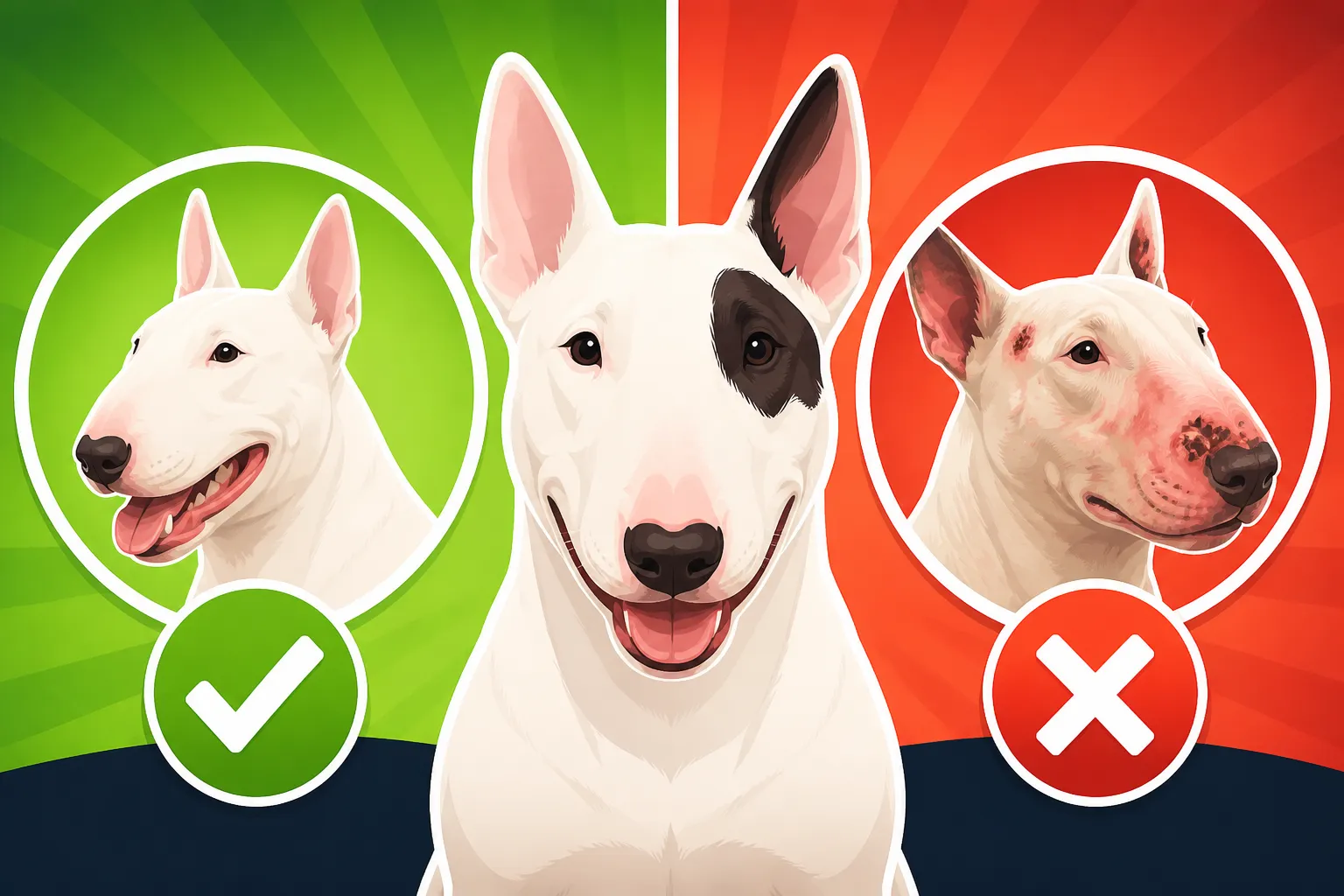
Imagine a tiny, energetic Bull Terrier puppy, full of life, suddenly struggling to thrive. That’s the grim reality of Acrodermatitis. Puppies affected by LAD cannot properly absorb zinc from their diet, leading to a cascade of health problems. Their immune system is severely compromised, making them susceptible to every infection imaginable. Their skin becomes thick and cracked, especially on the paws and around their eyes and mouth, often leading to secondary bacterial and fungal infections. They fail to grow, despite eating, and often exhibit a distinct, sad appearance.
The suffering these puppies endure is profound, and they rarely live past two years of age, often succumbing much earlier. It’s a deeply distressing experience for any family, not just because of the emotional attachment but also the helplessness in watching a puppy slowly fade away. This is why preventing LAD is paramount; it's not just about health, it's about avoiding unnecessary pain and sorrow. You can learn more about this heartbreaking condition in Lethal Acrodermatitis Kills a Bull Terrier Puppy Before It Grows Up or by looking for Signs a Bull Terrier Puppy Has Acrodermatitis.
How Acrodermatitis Is Inherited
The genetics behind Acrodermatitis are well understood, and it's a classic example of an autosomal recessive disorder. This means a puppy must inherit two copies of the faulty gene – one from each parent – to be affected by the disease. If a puppy inherits only one copy, they are considered a "carrier" and will not show any symptoms of LAD themselves. However, a carrier can pass the gene on to their offspring. If a carrier dog is bred with another carrier dog, there's a 25% chance in each pregnancy that a puppy will inherit two copies of the faulty gene and be affected, a 50% chance they'll be a carrier, and a 25% chance they'll be completely clear.
Understanding this inheritance pattern is key to responsible breeding. A breeder might have a perfectly healthy-looking dog that is, in fact, a carrier. Without testing, they wouldn't know and could unwittingly produce affected puppies if they breed that carrier with another carrier. This is why testing both parents is absolutely non-negotiable for ethical breeders, regardless of whether the parents themselves appear healthy. For more detailed information on the inheritance, consider reading How Acrodermatitis Is Inherited in Bull Terriers.
The Acrodermatitis DNA Test and Breeder Responsibility
Thankfully, unlike some genetic conditions where diagnostics are murky, there is a clear, definitive DNA test available for Acrodermatitis. This has been a game-changer for the breed, allowing breeders to make informed decisions and virtually eliminate the production of affected puppies. The existence of this test places a significant responsibility on every Bull Terrier breeder.
The Availability and Reliability of the Test
The DNA test for Acrodermatitis is incredibly straightforward and highly reliable. It typically involves a simple cheek swab collected from the dog, which is then sent to a specialized genetic testing laboratory. The lab analyzes the sample to determine if the dog carries one, two, or no copies of the specific gene mutation responsible for LAD. The results are usually returned within a few weeks, clearly stating whether the dog is "clear," a "carrier," or "affected."
This test means there’s no excuse for not knowing the genetic status of breeding animals. It's not invasive, it's not overly expensive, and it provides concrete, actionable information. The test has been available for a while now, which means the knowledge is widespread among dedicated breeders. You can check When the Bull Terrier Acrodermatitis DNA Test Arrived to understand its history and availability. As for the financial aspect, What the Bull Terrier Acrodermatitis Swab Costs is a good resource to get a general idea.
What a Responsible Breeder Should Do
A truly responsible Bull Terrier breeder will test all of their breeding stock for Acrodermatitis before planning any litter. This isn't just a suggestion; it's a fundamental ethical practice. They will be able to tell you the LAD status of both the sire (father) and the dam (mother) of any puppy they offer. Ideally, a breeder aims to breed "clear" dogs to "clear" dogs, ensuring no affected puppies will be produced. They might also breed a "clear" dog to a "carrier" dog; in this scenario, while no puppies will be affected, approximately half of the litter will be carriers. However, these puppies will be healthy, and if they are to be bred in the future, their status as a carrier will be known, allowing them to be bred only to a "clear" mate.
What a responsible breeder absolutely will not do is breed two carrier dogs together. Knowing the risks, doing so would be a huge red flag, as it directly creates the possibility of producing affected puppies that will suffer and die. They understand that transparency and prevention are key to maintaining the health and integrity of the breed. This commitment to health testing, including LAD, is one of the clearest signs that you're dealing with a reputable breeder, and it's a topic explored further in What a Bull Terrier Breeder Should Have Tested. For more on carrier-to-carrier breeding risks, see Whether Two Bull Terrier Acrodermatitis Carriers Should Be Bred.
Interpreting and Verifying Acrodermatitis Test Results
When you’re looking at puppies, it’s easy to get swept up in the cuteness. But this is where you need to put on your detective hat and ask the right questions, not just about the puppy, but about its parents and their genetic health. A breeder's transparency with Acrodermatitis results is a critical indicator of their integrity.
What to Look For on Test Results
A responsible breeder won't just tell you that their dogs are "clear." They will provide proof. This means showing you official laboratory reports, usually on letterhead from a reputable veterinary genetics lab. These reports should clearly state the dog's registered name, its microchip or tattoo number (if applicable), and the specific result for Acrodermatitis. You'll typically see one of three results:
- Clear / Normal (N/N): This dog does not carry the gene mutation and cannot pass it on to offspring.
- Carrier (N/LAD): This dog carries one copy of the gene mutation but is not affected by the disease. They can pass the gene to 50% of their offspring. Whether an Acrodermatitis Carrier Bull Terrier Is Affected delves into this.
- Affected (LAD/LAD): This dog has two copies of the gene mutation and is affected by Acrodermatitis. Responsible breeders would never intentionally breed an affected dog.
It's vital that you see results for both the mother and the father of the litter. If a breeder shows you only one parent's results, or tells you one parent is "too young to test" (which is rarely true for DNA tests like this, as they can be done at any age once DNA is present), that should immediately raise a red flag. The paperwork should be clear, legible, and directly link to the specific dogs in question.
Asking for Proof: Don't Be Shy!
As a prospective puppy buyer, it is not only your right but your responsibility to ask for and scrutinize these health clearances. A good breeder will welcome your questions and be eager to share the health information on their dogs. They understand that you’re investing a significant amount of money and, more importantly, your heart, into a new family member.
Don't accept vague assurances or simple "yes, they're tested" answers. Politely but firmly request to see the actual, physical (or digital, in a verifiable format) copies of the DNA test results for both parents. If the breeder hesitates, makes excuses, or becomes defensive, it’s a strong indication that they either haven’t tested their dogs or are trying to conceal an unfavorable result. This lack of transparency is a deal-breaker. Sometimes, breeders also register their health results with public databases like the Orthopedic Foundation for Animals (OFA) or breed club health registries, which can provide an additional layer of verification. Always ask for Which Certificates a Bull Terrier Breeder Must Hand Over.
| Feature | Responsible Breeder (Acrodermatitis) | Irresponsible Breeder (Acrodermatitis) |
|---|---|---|
| Testing | All breeding dogs DNA tested for LAD. | May not test, or only test one parent, or claim testing is "not necessary." |
| Transparency | Provides official lab reports for both parents (clear, carrier status). | Offers verbal assurances, vague statements, or avoids showing documentation. |
| Breeding Strategy | Avoids breeding two carriers together; aims for clear offspring. | May knowingly breed carriers, risking affected puppies. |
| Knowledge | Understands LAD inheritance and impact. | May be ignorant of LAD or downplay its severity. |
| Puppy Outcome | Offers puppies with a known genetic health status, no affected pups. | Puppies' genetic status unknown; risk of affected puppies. |
| Buyer Experience | Encourages questions, provides education and support. | Defensive about questions, prioritizes sale over education. |
The Implications of Untested or Poorly Bred Litters
Choosing a puppy from untested parents isn't just a gamble; it's potentially setting yourself up for immense heartache and financial strain. When a reliable test exists for a devastating genetic disease like Acrodermatitis, there’s simply no good reason for a breeder to skip it.
The Risks of Buying an Untested Puppy
Imagine bringing home a puppy, only to realize a few months later that it's developing the painful, debilitating symptoms of Acrodermatitis. This is a very real possibility with an untested litter. The initial joy of a new puppy quickly turns to despair as you watch your companion suffer. Beyond the emotional toll, the financial costs of managing an affected puppy's health can be astronomical, even though LAD is ultimately fatal. You'll be dealing with constant veterinary visits, specialized treatments for skin infections, dietary management, and medications, none of which can cure the underlying problem.
While pet insurance from providers like Healthy Paws can help buffer unexpected vet bills, it typically doesn't cover pre-existing conditions. If you acquire a puppy with an undiagnosed genetic condition, it could be considered pre-existing. The best prevention is to ensure the condition is bred out of existence from the start. The journey with an affected puppy is short and painful, culminating in the difficult decision of humane euthanasia. The Age Acrodermatitis Kills a Bull Terrier gives you an idea of the short lifespan, and What Lethal Acrodermatitis Does to a Bull Terrier paints a clearer picture of the disease progression. If you ever found yourself in such a situation, getting specialized supplies and food from places like Chewy could become a regular necessity, adding to the burden.
Why Some Breeders Don't Test
The reasons why some breeders choose not to test their Bull Terriers for Acrodermatitis are varied, but none of them are truly justifiable. Some might claim ignorance, stating they weren't aware a test existed or how serious the condition is. However, for a prominent, breed-specific genetic disease with a readily available test, this level of ignorance suggests a lack of dedication to the breed's health. Others might try to cut corners, viewing the cost of testing as an unnecessary expense, even though What the Bull Terrier Acrodermatitis Swab Costs shows it's a minor investment in the grand scheme of breeding.
More concerning are breeders who might deliberately avoid testing because they suspect their dogs are carriers and don't want to lose potential breeding stock or face the ethical dilemma of breeding responsible lines. This "ignorance is bliss" approach ultimately harms the breed and the innocent puppies. It's a sad reality that such practices exist, highlighting why buyer vigilance is so crucial. An untested Bull Terrier puppy is a huge gamble, and What an Untested Bull Terrier Puppy Signals should serve as a stark warning. You're entrusting a breeder with the health and future of your potential family member, and their commitment to health screening, including LAD, is non-negotiable for the well-being of the Bull Terrier breed as a whole. Providing good nutrition from brands like Ollie might contribute to overall health, but it will never prevent a genetic disease like LAD.
In conclusion, when searching for your Bull Terrier puppy, the question of Acrodermatitis testing should be at the top of your list. A responsible breeder will not only confirm that their breeding dogs have been tested but will also readily provide verifiable documentation of those results for both parents. Don't be afraid to ask for this proof – it's a critical step in ensuring you bring home a healthy, well-bred Bull Terrier and avoid the heartbreak associated with Acrodermatitis.
Disclaimer
This article is for general informational purposes only and does not constitute professional advice. Laws, prices and regulations vary by location and change over time. Consult a qualified professional for guidance on your specific situation.