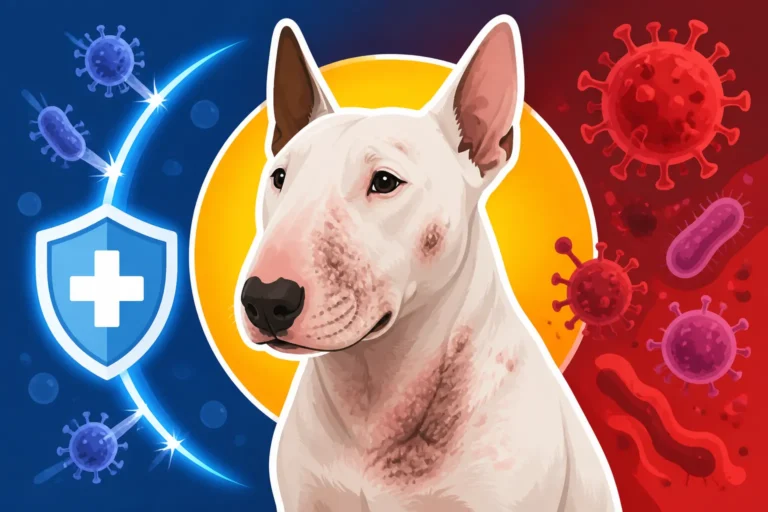
When the Bull Terrier Acrodermatitis DNA Test Arrived
For Bull Terrier owners, few things are as heartbreaking as witnessing a beloved puppy slowly succumb to a devastating genetic illness like Lethal Acrodermatitis (LAD). Before scientific advancements, breeders and families were often left in the dark, facing unimaginable grief and difficult decisions without understanding why. This guide will delve into the history of this cruel condition and, crucially, pinpoint when the life-changing DNA test for Bull Terrier Acrodermatitis finally arrived, offering hope and a path forward for the breed.
The Devastating Reality of Lethal Acrodermatitis
Lethal Acrodermatitis, often simply called LAD, is an inherited disease that has long plagued Bull Terriers, leaving a trail of suffering for puppies and their families. It’s a condition that truly lives up to its name, as puppies diagnosed with it rarely survive past two years of age, often much less. Imagine bringing home a playful, boisterous Bull Terrier puppy, only to see it slowly decline, battling chronic skin infections, painful foot lesions, and a failure to thrive. It’s a gut-wrenching experience that no owner should have to endure.
The disease manifests with a series of severe symptoms. Pups with LAD typically have poor growth, recurrent infections – particularly of the skin, paws, and respiratory tract – and distinct changes to their skin and claws. Their paw pads can become incredibly thick, hardened, and cracked, making walking painful and difficult. They might struggle to eat and absorb nutrients, leading to stunted growth and a generally sickly appearance. Often, owners notice that a puppy with LAD just doesn't seem to "get going" like its littermates. It's a progressive and relentless condition that ultimately impacts nearly every system in the body due to a fundamental inability to properly absorb zinc, even if zinc is supplemented in their diet. If you’ve ever wondered what these debilitating symptoms look like, we’ve covered What an Acrodermatitis Bull Terrier's Paws Look Like in detail elsewhere.
Before the advent of a specific genetic test, identifying carriers or predicting which matings might produce affected puppies was impossible. Breeders worked blindly, relying on anecdotal evidence and hoping for the best, only to be hit with the devastating news when a litter produced sick puppies. This not only caused immense emotional distress but also set back breeding programs significantly, as valuable genetic lines might inadvertently be spreading the faulty gene. The sheer heartbreak of watching a lively puppy lose its vitality and struggle to grow is a burden no one wants to carry. The sad reality is that Lethal Acrodermatitis Kills a Bull Terrier Puppy Before It Grows Up, and this made finding a solution imperative.
The Breakthrough: Identifying the MKLN1 Gene
For years, the exact genetic mechanism behind Acrodermatitis remained a mystery, despite the clear hereditary pattern observed in Bull Terriers. Scientists and dedicated breed enthusiasts knew it was inherited, but without knowing the specific gene responsible, there was no way to develop a screening tool. This made responsible breeding a minefield, with even the most careful breeders occasionally producing affected puppies through no fault of their own, simply because the underlying genetic truth was hidden.
The scientific community, particularly researchers focused on canine genetics, recognized the urgency. Extensive research, involving DNA samples from both affected and unaffected Bull Terriers, was undertaken to pinpoint the causative gene. This painstaking work involved analyzing genetic markers across the canine genome, looking for specific regions that consistently differed between healthy dogs and those with LAD. It was like searching for a tiny, specific needle in an enormous haystack.
The breakthrough came around 2011. Researchers, notably from the Animal Health Trust (AHT) in the United Kingdom, identified the specific gene responsible for Lethal Acrodermatitis in Bull Terriers. This gene is known as MKLN1. The discovery was monumental. It revealed that LAD is an autosomal recessive condition, meaning a puppy must inherit two copies of the faulty MKLN1 gene – one from each parent – to be affected. Dogs inheriting only one copy are carriers; they don't show any symptoms themselves but can pass the gene on to their offspring. This critical finding shed light on Which Gene Causes Acrodermatitis in Bull Terriers and immediately opened the door for developing a DNA test.
This identification of the MKLN1 gene was a game-changer. It moved the problem from an unpredictable, heartbreaking lottery to a solvable equation. For the first time, breeders had a concrete tool to understand the genetic makeup of their dogs regarding LAD, allowing them to make informed decisions and prevent future suffering.
The Arrival of the Bull Terrier Acrodermatitis DNA Test
With the identification of the MKLN1 gene, the scientific community rapidly moved to develop a reliable and accessible DNA test. This was the moment breeders and owners had been waiting for – a way to definitively determine if a Bull Terrier was clear, a carrier, or affected by LAD.
The Bull Terrier Acrodermatitis DNA test was commercially launched and became widely available in late 2011 to early 2012. The Animal Health Trust (AHT) in the UK was at the forefront, offering the test to Bull Terrier owners and breeders worldwide. This meant that, for the first time, a simple cheek swab could provide crucial genetic information. No more guessing, no more heartbreaking surprises. This was a pivotal moment in the history of the breed's health.
The test itself is straightforward. A veterinarian, or sometimes even the owner following specific instructions, collects a buccal swab (a swab from inside the dog's cheek). This non-invasive sample contains enough DNA for the laboratory to analyze the MKLN1 gene. The results classify dogs into three categories:
- Clear: The dog does not carry the MKLN1 mutation and cannot pass it on to its offspring.
- Carrier: The dog carries one copy of the MKLN1 mutation. It is clinically healthy and unaffected but can pass the mutation to 50% of its offspring.
- Affected: The dog has two copies of the MKLN1 mutation. It will develop or already has LAD.
The impact of this test was immediate and profound. Breeders could now test their breeding stock and plan matings to avoid producing affected puppies. A clear dog bred to another clear dog would only produce clear puppies. A clear dog bred to a carrier dog would produce a mix of clear and carrier puppies, but no affected ones. This removed the agonizing uncertainty and allowed for the systematic reduction of LAD in the Bull Terrier population. The ease and reliability of the test quickly made it a standard part of responsible breeding practices. When considering What a Bull Terrier Breeder Should Have Tested, the LAD DNA test quickly rose to the top of the list.
Life After the Test: Breeding and Management
The introduction of the Bull Terrier Acrodermatitis DNA test revolutionized breeding practices for the breed. Suddenly, the mystery surrounding LAD was gone, replaced by clear, actionable genetic data. Responsible breeders embraced the test as an essential tool to safeguard the health of their lines and, most importantly, the future well-being of their puppies.
One of the most significant changes was the ability to avoid "at-risk" matings. Breeders can now confidently pair a "clear" Bull Terrier with a "carrier" without fear of producing affected puppies. While half of the resulting litter might still be carriers, none will suffer from the debilitating disease. This strategy is crucial because it allows breeders to retain valuable genetics from carrier dogs, maintaining genetic diversity within the breed rather than eliminating carriers entirely, which could inadvertently lead to other genetic problems down the line. We often discuss Whether Two Bull Terrier Acrodermatitis Carriers Should Be Bred and the test provides the framework for responsible choices.
For a Bull Terrier classified as a "carrier," it's vital for owners to understand that these dogs are completely healthy. Whether an Acrodermatitis Carrier Bull Terrier Is Affected is a common question, and the answer is a resounding no. Carriers lead full, normal lives, just like any other Bull Terrier. The distinction only becomes important if they are used for breeding, at which point careful selection of a clear mate is paramount. This proactive approach ensures that every puppy sold is either clear or a carrier, never affected.
The cost of the test is also quite reasonable, especially when weighed against the emotional and financial burden of caring for an affected puppy. Typically, What the Bull Terrier Acrodermatitis Swab Costs makes it an accessible screening tool for all serious breeders and prospective owners who want to test an adult dog. Labs like Animal Health Trust (AHT), now part of the Kennel Club Genetics Centre at the University of Cambridge, and others like Embark or Wisdom Panel, offer comprehensive genetic health panels that include LAD testing.
Even with the widespread use of the LAD DNA test, it's important to remember that it's just one piece of the puzzle. Bull Terriers, like many purebred dogs, can be predisposed to other health issues, such as hereditary nephritis, heart conditions, and deafness. That's why a comprehensive approach to health screening, including regular veterinary check-ups and diagnostic tests, remains crucial. While genetic tests help prevent specific inherited diseases, other health concerns can emerge. Having a robust pet insurance plan from providers like Healthy Paws can offer significant peace of mind, covering unexpected veterinary costs for illnesses or accidents that aren't genetic.
The early detection and prevention of LAD allow owners and breeders to focus on other aspects of Bull Terrier care, from ensuring they get enough exercise to managing their sometimes strong personalities. Early signs of issues, such as What an Acrodermatitis Bull Terrier Puppy Stops Growing, are now thankfully much rarer thanks to this test.
Beyond LAD: Broader Implications for Bull Terrier Health
The success of the Acrodermatitis DNA test has had ripple effects, highlighting the immense value of genetic screening for other hereditary conditions in the Bull Terrier breed and beyond. It serves as a powerful example of how scientific research, combined with responsible breeding practices, can profoundly improve canine health.
While LAD is thankfully now largely preventable through genetic testing, Bull Terriers still face predispositions to other serious health issues. Hereditary Nephritis (HN), a kidney disease, is another significant concern. Similarly, some Bull Terriers are prone to heart conditions like Mitral Valve Dysplasia or Aortic Stenosis, and deafness, particularly in white Bull Terriers, remains a consideration. The positive experience with the LAD test reinforces the breed community's commitment to finding similar genetic solutions or management strategies for these other conditions. This continued vigilance is why regular check-ups, like The Yearly Urine Test Every Bull Terrier Owner Should Book, are still incredibly important.
The availability of multiple DNA tests for genetic conditions has made prospective owners much more discerning. When looking for a puppy, it's now standard practice to ask breeders about the health testing performed on the parents, not just for LAD but for all recommended screenings. Transparency is key. A reputable breeder will gladly share the results of their dogs' health tests, including the LAD DNA test results for the sire and dam. They will understand that a buyer wants reassurance that their puppy has the best possible start in life and won't be one of the Signs a Bull Terrier Puppy Has Acrodermatitis.
The success of the LAD DNA test also shines a light on the broader challenges of maintaining genetic diversity in purebred dogs while simultaneously working to eradicate genetic diseases. The test allows carriers to remain in the gene pool, preventing a drastic reduction in genetic variety that could lead to unforeseen health problems later. This balanced approach is critical for the long-term health and vitality of the Bull Terrier breed.
| Genetic Test | Condition Screened | Inheritance Pattern | Purpose |
|---|---|---|---|
| LAD DNA Test | Lethal Acrodermatitis | Autosomal Recessive | Identifies Clear, Carrier, or Affected dogs for MKLN1 gene, preventing affected offspring. |
| UPC Ratio | Hereditary Nephritis | Polygenic/Complex | Screens for kidney function and protein loss, indicating risk or presence of kidney disease. |
| BAER Test | Deafness | Congenital | Tests hearing in both ears, especially crucial for white Bull Terriers to identify deafness. |
| Echocardiogram | Heart Disease | Polygenic/Complex | Evaluates heart structure and function, detecting conditions like Mitral Valve Dysplasia or Aortic Stenosis. |
In conclusion, the arrival of the Bull Terrier Acrodermatitis DNA test in late 2011 to early 2012 was a landmark achievement. It transformed the fight against a truly devastating disease, offering hope and a concrete tool for responsible breeders to prevent suffering. While it doesn't solve every health challenge facing the breed, it certainly paved the way for a more informed and proactive approach to Bull Terrier welfare, emphasizing that continuous health screening, genetic testing, and thoughtful breeding are essential for these wonderful, unique dogs. Understanding The Age Acrodermatitis Kills a Bull Terrier is no longer a conversation about an inevitable end, but rather a historical footnote thanks to dedicated research.
Disclaimer
The information provided in this article is for educational and informational purposes only and does not constitute veterinary advice. Always consult with a qualified veterinarian for any health concerns or before making any decisions about your Bull Terrier's care or breeding program. Genetic testing results should always be interpreted in consultation with a veterinary professional or genetic counselor.