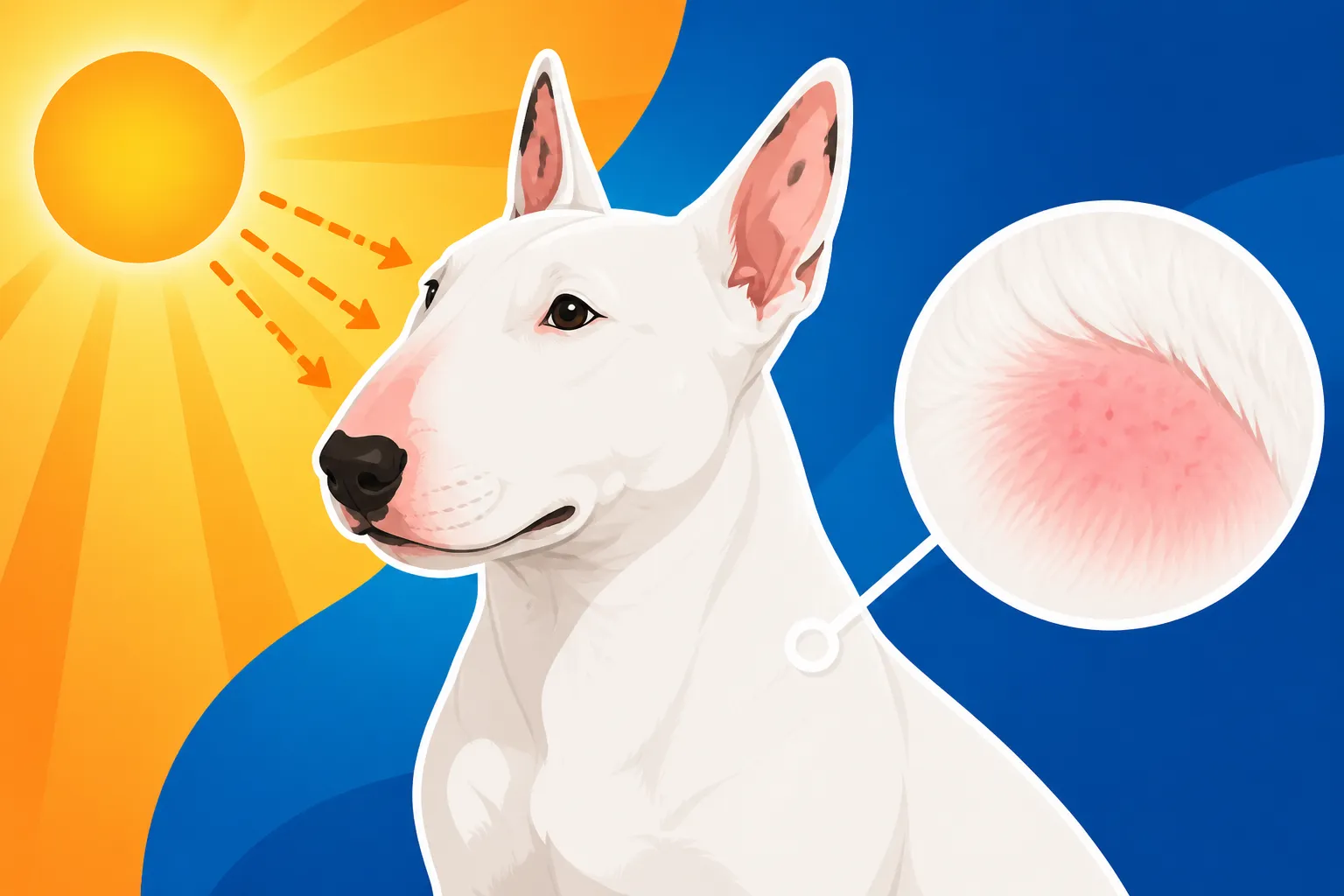
Whether a Bull Terrier’s Pink Skin Burns Through Its Coat
It's a common, heartbreaking worry for Bull Terrier owners: looking at that short, sleek coat and wondering if it's truly enough to protect your beloved "egghead" from the harsh sun. Many of us have seen our dogs’ pale skin and immediately felt that pang of concern, especially with white Bull Terriers who seem to absorb every ray. This guide will thoroughly explore whether a Bull Terrier's naturally pink skin can indeed burn through its coat and provide you with actionable steps to keep your unique companion safe and comfortable.
Understanding Bull Terrier Skin and Coat Characteristics
When you look at a Bull Terrier, their distinctive appearance is immediately striking – that strong, powerful build, the Roman nose, and often, that wonderfully short, almost bristly coat. But beneath that coat, especially on white or very light-colored Bull Terriers, lies sensitive skin that isn't always as protected as we might assume. It’s not just an aesthetic; their skin and coat have unique features that directly impact their vulnerability to environmental factors, particularly the sun.
The Unique Bull Terrier Coat
Unlike many breeds with a thick double coat or longer, denser fur, the Bull Terrier sports a single layer of short, stiff hair. While this makes for incredibly easy grooming and less shedding compared to some breeds, it also means less inherent protection from the elements. Imagine wearing a very thin t-shirt versus a thick woolen sweater on a hot, sunny day; the t-shirt offers some coverage, but certainly not full protection from UV rays. This short, often sparse coat, particularly on the belly, inner thighs, and ears, simply isn't designed to block out all of the sun's powerful ultraviolet radiation. Owners often feel a Bull Terrier's coat and recognize how fine and flat it lies against the body, a stark contrast to breeds like a Golden Retriever or a Husky, which have dense undercoats providing layers of insulation and protection. This characteristic is precisely why we need to be extra vigilant, as it doesn't offer the robust barrier some other dogs naturally possess.
Pink Skin and Pigmentation
The biggest factor in a Bull Terrier's susceptibility to sunburn, especially in white varieties, is their underlying skin pigmentation – or lack thereof. Many Bull Terriers, particularly those with predominantly white coats, have naturally pink skin. This pink skin is essentially skin that has very little to no melanin, the natural pigment that helps absorb and scatter UV radiation, protecting the skin cells from damage. Think of it like a fair-skinned human who easily burns; their skin lacks the melanin that darker-skinned individuals have. This is a common trait in many breeds with white coats and is particularly pronounced in Bull Terriers. Even colored Bull Terriers can have significant patches of pink skin on their bellies, inner legs, and around their mouths and eyes, making them equally vulnerable in these specific areas. For a comprehensive look at this, you might want to read more about why a white Bull Terrier sunburns. The consequence of this low pigmentation is that UV rays penetrate much more easily, reaching the delicate skin cells and causing inflammation, redness, and damage. It’s not just about the coat; it’s about what’s under it.
The Real Risk of Sunburn for Bull Terriers
It’s easy to dismiss a dog’s sunburn as a minor inconvenience, perhaps thinking it’s just a little redness that will fade. However, for Bull Terriers, especially those with minimal pigmentation, the risks associated with sun exposure are far more serious and can have long-term health implications. Understanding these risks is the first step in genuinely protecting your beloved companion.
Vulnerable Areas and UV Radiation
The notion that a Bull Terrier's coat offers complete protection is a myth that can unfortunately lead to real harm. While their coat provides some barrier, it's far from impervious. Just like a thin shirt doesn't prevent a human from burning, a Bull Terrier's short coat can allow significant UV penetration. The areas most at risk are those where the coat is thinnest or where skin is exposed: the bridge of the nose, the tips of the ears, the delicate skin around the eyes and lips, and perhaps most importantly, their belly and inner thighs. When our Bull Terriers sprawl out in the sun, bellies skyward, they are directly exposing these incredibly vulnerable, unpigmented areas to intense UV radiation.
It's not just the direct, intense midday sun we need to worry about. UV radiation can be reflected off surfaces like concrete, sand, or water, meaning even if your Bull Terrier is "in the shade," they can still be receiving damaging rays. The UV index, often reported with weather forecasts, is a critical tool for us to gauge the daily risk. On days with a high UV index (typically 6 or higher), even relatively short periods of exposure can lead to severe burns. Understanding how a Bull Terrier's pink skin burns through its coat isn't just about direct sunlight, but also about the cumulative exposure and the reflective environments they encounter.
Short-Term Discomfort and Long-Term Health Risks
A Bull Terrier with a sunburn isn't just looking a little red; they are experiencing real pain and discomfort. Their skin can become hot, tender to the touch, and even blister, much like a human's severe sunburn. This immediate discomfort can manifest as restlessness, excessive licking or scratching at the affected areas, and a general reluctance to be touched. In more severe cases, dogs can even experience fever or lethargy, signaling a systemic reaction to the burn.
However, the consequences extend far beyond immediate pain. Chronic or repeated sun exposure significantly increases a Bull Terrier's risk of developing serious, life-threatening conditions. The most concerning of these is squamous cell carcinoma, a type of skin cancer that is aggressively linked to UV radiation. These cancerous lesions often appear on the most sun-exposed areas, such as the nose, eyelids, and ear tips, making detection and treatment challenging. This is particularly true for breeds like Bull Terriers with sparse coats and light pigmentation. Learning to spot a sun damaged patch on a Bull Terrier is crucial for early intervention. This is why preventative measures aren't just about avoiding a temporary rash; they are about safeguarding your dog's long-term health and preventing potentially fatal diseases. For owners concerned about these issues, pet insurance providers like Healthy Paws can offer peace of mind by helping manage the significant costs associated with diagnosing and treating serious conditions like skin cancer, though preventative measures are always the best first line of defense.
Practical Prevention Strategies to Protect Your Bull Terrier
Knowing the risks is one thing, but actively preventing sunburn on your Bull Terrier is where the real work, and love, comes in. Thankfully, there are many effective strategies we can employ to shield our beloved companions from the sun's harmful rays. It’s all about creating a multi-layered approach to protection.
Limiting Sun Exposure During Peak Hours
This might sound obvious, but it's the foundation of sun safety. The sun’s UV rays are most intense between 10 AM and 4 PM. During these hours, it’s best to keep your Bull Terrier indoors or ensure they have access to deep, consistent shade. This means adjusting your walking schedule to early mornings or late evenings when the sun is lower and less harsh. If your yard offers little shade, consider investing in a portable canopy or a large, sturdy umbrella for outdoor playtime.
I remember my first Bull Terrier, Bruno, loved to sunbathe on the patio. I quickly learned that even a short 20-minute nap in the midday sun would leave his pink belly visibly flushed. It's not enough to just open the back door and let them decide; we, as their guardians, need to actively manage their exposure. This also extends to car rides. While fun, sitting by a window in a car, even with tinted windows, can expose them to significant UV radiation, especially on long trips. For more general advice on maintaining their overall skin health, The Weekly Skin Check Every Bull Terrier Needs is an excellent resource.
Applying Pet-Safe Sunscreen
Just like we use sunscreen, our Bull Terriers can benefit from it too! However, it's absolutely critical to use only pet-specific sunscreens or those recommended by your veterinarian. Human sunscreens often contain zinc oxide or para-aminobenzoic acid (PABA), which can be toxic if ingested by dogs. Since dogs tend to lick themselves, choosing a safe formula is paramount.
When applying, focus on the most vulnerable areas: the bridge of the nose, ear tips, the thin skin around their eyelids (be very careful not to get it in their eyes!), and any sparse patches on their back or sides. Don't forget their belly and inner thighs, especially if they enjoy lounging on their backs. Apply a generous, even layer at least 15-20 minutes before going outside to allow it to absorb. Reapply every 2-4 hours, or more frequently if your Bull Terrier has been swimming or is excessively active. Many brands now offer roll-on sticks or sprays which can make application easier, especially for wriggly pups. A quick search for "which sunscreen is safe on a Bull Terrier" will give you specific product recommendations, often including brands like Epi-Pet or My Dog Nose It.
Protective Gear and Environment Modifications
Beyond sunscreen, there are other physical barriers that can offer excellent protection.
- UV Protective Clothing: Lightweight, breathable shirts designed for dogs with UPF (Ultraviolet Protection Factor) ratings can be invaluable, especially for white Bull Terriers or those with very sensitive skin. These shirts can cover their back and sides, protecting large surface areas during outdoor activities. Brands like Ruffwear or Gold Paw Series offer quality options.
- Doggie Goggles/Hats: For Bull Terriers with sensitive eyes or noses, specific doggie goggles (like Doggles) or sun hats can provide targeted protection. While some dogs might need a bit of training to accept them, they can be highly effective.
- Shade Structures: If your Bull Terrier spends time outdoors, ensure there's always access to ample, consistent shade. Trees are great, but for patios or open yards, consider investing in shade sails, patio umbrellas, or even a dog house that provides a cool retreat.
- Cooling Mats and Elevated Beds: On hot, sunny days, cooling mats or elevated beds can help keep your Bull Terrier off hot surfaces and provide a cooler spot to rest, indirectly reducing their desire to seek out warm, sunny spots to lie down.
By combining these strategies – smart scheduling, safe sunscreen, and appropriate gear – you can drastically reduce the risk of your Bull Terrier getting a painful and dangerous sunburn. It's an investment in their comfort and long-term health, and well worth the effort.
Recognizing and Treating Bull Terrier Sunburn
Despite our best efforts, sometimes a Bull Terrier might still get a bit too much sun. Knowing how to recognize the signs of sunburn and what steps to take can make a significant difference in their comfort and recovery. Early detection and appropriate treatment are key to preventing further complications.
Identifying Sunburn Symptoms
Sunburn in Bull Terriers, much like in humans, manifests with a few distinct signs. The most obvious is redness on the exposed skin, which might appear pinker or more inflamed than usual. This is particularly noticeable on the belly, ear tips, bridge of the nose, and around the eyes and mouth. The affected skin will often feel warm or hot to the touch, and your Bull Terrier might show signs of pain or tenderness when these areas are touched. They might lick or scratch excessively at the burned spots, indicating discomfort or itchiness. In more severe cases, you might observe swelling, blistering, or peeling of the skin, which requires immediate veterinary attention. Their behavior might also change; they could be more lethargic, restless, or irritable due to the discomfort. An owner really needs to keep a close eye out for these subtle shifts.
It’s important to remember that these symptoms might not appear immediately after sun exposure; it can take several hours for the full extent of a sunburn to become visible. This is why preventative measures are so important, as by the time you see the redness, the damage has already been done. If you're ever in doubt, particularly with a white Bull Terrier, assume that excessive sun exposure has led to some level of burn.
First Aid and Veterinary Care for Sunburn
If you suspect your Bull Terrier has a sunburn, the first step is to get them out of the sun immediately and into a cool, shaded area.
- Cool Compresses: For mild redness and warmth, apply cool, damp cloths to the affected areas. This can help soothe the skin and reduce inflammation. Avoid ice, as it can be too harsh for their delicate skin.
- Aloe Vera (Pet-Safe): Some pet-safe aloe vera gels (ensure they don't contain any toxic additives like lidocaine or benzocaine) can be applied to soothe the burn. Always check the ingredients and consult your vet if unsure.
- Prevent Licking: If your Bull Terrier is constantly licking or scratching the burned area, an Elizabethan collar (e-collar or "cone of shame") might be necessary to prevent them from irritating the skin further or ingesting any topical treatments.
For anything beyond mild redness, or if you notice blistering, peeling, severe pain, lethargy, or signs of infection (pus, foul odor), contact your veterinarian immediately. Severe sunburns can lead to dehydration, skin infections, and even heatstroke. Your vet might prescribe pain relief, anti-inflammatory medications, or antibiotics if an infection is present. They can also recommend specialized topical creams or sprays designed for canine burns. In cases where the sunburn is severe or chronic, especially if there's suspicion of precancerous lesions, they may recommend further diagnostics or even a consultation with a veterinary dermatologist. This is where pet insurance from providers like Healthy Paws can be incredibly valuable, helping to cover the costs of unexpected veterinary visits, diagnostics, and treatments for serious skin conditions that arise from sun damage. A Bull Terrier's skin is its weakest point, and proper care, including swift action on sunburns, is essential.
Disclaimer
This article is intended for informational purposes only and does not constitute medical advice for your pet. Always consult with a qualified veterinarian for any health concerns or before making any decisions about your Bull Terrier's health or treatment.