How Long a Bull Terrier Holds a Grudge
We've all been there: your Bull Terrier gives you that look after you've had to say "no" to something incredibly exciting, or perhaps after a dreaded trip to the vet. It leaves you wondering, "Are they actually mad at me? Are they holding a grudge?" It's a common and completely understandable human impulse to project our emotions onto our beloved dogs, especially expressive breeds like Bull Terriers, but understanding canine psychology is key to unraveling what’s really going on in their unique, egg-shaped heads. This guide will dive deep into how Bull Terriers perceive past events, what might look like a "grudge," and how you can foster a more harmonious relationship based on mutual understanding.
The Myth vs. Reality of a Bull Terrier's "Grudge"
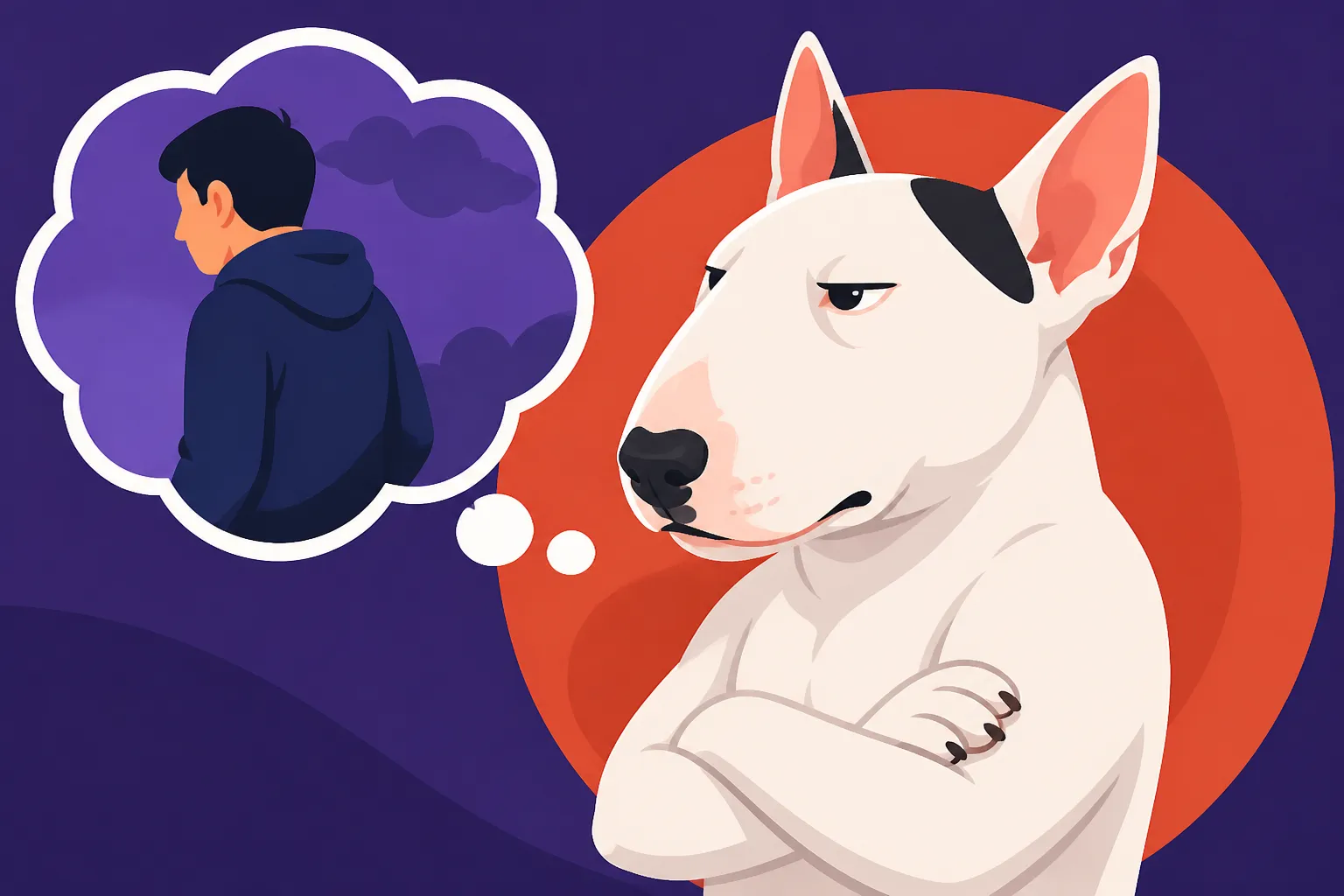
The idea of a dog holding a grudge is incredibly appealing to our human minds, probably because it implies a depth of emotional complexity and a sense of justice that we value. We see our Bull Terrier turn their back on us, refuse to make eye contact, or seem aloof after we've done something they didn't like, and our brains immediately jump to "they're punishing me." But the truth, while perhaps less dramatic, is far more practical and rooted in how dogs learn and process the world around them. Your Bull Terrier isn't plotting revenge or consciously withdrawing affection out of spite; they're reacting based on associations, their current emotional state, and their incredible ability to remember what leads to good outcomes (and what doesn't).
Think about it this way: when your Bull Terrier suddenly avoids the car after a vet visit, it's not a grudge against you for taking them there. It's a strong association of the car ride with a scary or uncomfortable experience. The car, previously a fun ride to the park, has now become a trigger for anxiety. Similarly, if you've given a harsh correction (What a Harsh Correction Does to a Bull Terrier) during training, they might become hesitant or withdrawn around you, not because they're "mad," but because they've associated your presence or a specific action with an unpleasant feeling. Their behavior is a self-preservation mechanism, not a calculated emotional retaliation. They are simply avoiding a situation or person that has historically led to discomfort or fear.
Why We See Grudges in Our Dogs
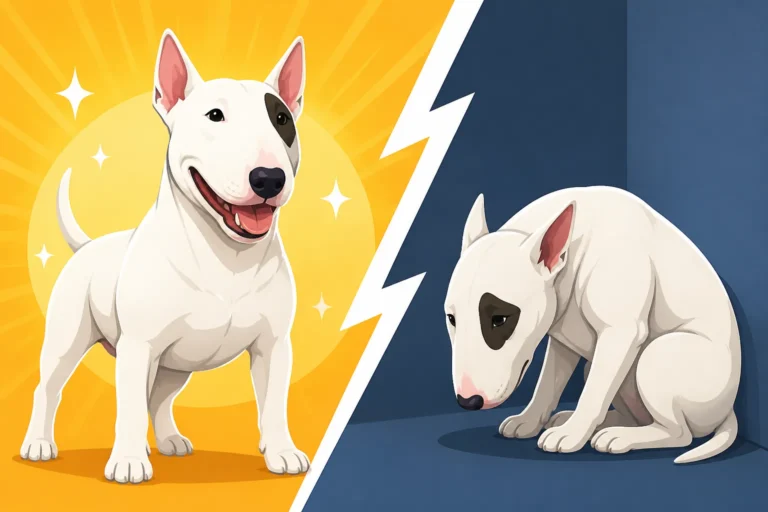
It's easy to anthropomorphize our Bull Terriers because they are so much a part of our families. Their expressions, their body language, and their sometimes dramatic responses can mirror human reactions. A Bull Terrier's sulk, for example, is a classic performance. They might lie down with their back to you, let out an exaggerated sigh, or simply refuse to engage. While to us this looks like they're giving us the cold shoulder, to them, it's often a stress response, a form of self-soothing, or simply disengagement from a situation they don't enjoy. They’re not actively trying to make you feel guilty; they're just expressing their current state, which might be confusion, mild anxiety, or even just boredom with a situation.
Consider the classic scenario: you step on your Bull Terrier's paw by accident. They might yelp, pull away, and then avoid you for a little while. This isn't a grudge. It's a combination of momentary pain, surprise, and perhaps a brief learned association that you were the source of that discomfort. A dog's memory of pain is often immediate and tied to the context. Once the pain subsides and the context changes (you offer a treat, a favorite toy, or gentle affection), the avoidance usually dissipates quickly. Their capacity to forgive, or rather, to move past unpleasant associations, is incredibly strong, which is fortunate for us clumsy humans! Understanding this helps us approach their reactions with empathy rather than guilt or frustration.
Understanding Bull Terrier Memory and Learning
Bull Terriers are intelligent, sensitive dogs with a unique way of looking at the world. They learn through association and consequence. If an action leads to a positive outcome, they're likely to repeat it. If it leads to a negative outcome, they'll try to avoid it. This isn't about deep-seated emotional resentment but about practical survival and comfort. Their memory is highly contextual. They remember places, sounds, smells, and specific situations that led to certain feelings or results. This is why a Bull Terrier might be perfectly fine with the leash until you approach the specific door that leads to the vet's office. The "grudge" isn't against the leash or you; it's against the association of that door with an unpleasant experience.
Their stubborn streak, which any Bull Terrier owner knows well, can sometimes be mistaken for holding a grudge. When a Bull Terrier "decides a cue is optional," it's often not defiance out of spite, but rather a calculation of what's more rewarding in that moment. If sniffing that interesting patch of grass is more enticing than coming when called, their natural inclination will be to follow their nose. This is why consistency in training and finding which reward outranks a Bull Terrier's own idea are so crucial. It’s about making the desired behavior the most rewarding option, not about overcoming their "anger" at you.
How Long Do Associations Last?
The duration of a Bull Terrier's "grudge" or, more accurately, a negative association, depends on several factors: the intensity of the negative experience, the frequency of its occurrence, and how quickly positive counter-conditioning is introduced. A single, minor unpleasant event might create a fleeting avoidance that disappears within minutes or hours, especially if followed by positive interactions. However, a traumatic experience, or repeated negative interactions, can create a much stronger, longer-lasting association. For instance, a Bull Terrier rescued from a difficult situation might have long-standing aversions to certain types of people, objects, or environments. These aren't grudges, but deep-seated fear responses based on past trauma.
Consider a Bull Terrier who has had a painful ear infection. Even after the infection clears, they might flinch or pull away when you reach for their ears for weeks or even months. This isn't because they are "mad" at you for the past pain; it's because their brain has made a very strong link between hands near ears and discomfort. To overcome this, gentle, positive counter-conditioning (e.g., touching the ear briefly, then immediately giving a high-value treat) is necessary to rebuild a positive association. It's a slow, steady process of rewriting their emotional memory, demonstrating that positive reinforcement programs, like those offered by BAXTER & Bella, can be invaluable for consistent guidance.
What Appears to Be a Grudge (and What It Really Is)
So, if it’s not a grudge, what are these behaviors we see? Often, what looks like a Bull Terrier holding a grudge is actually a display of their sensitive nature, a consequence of unclear communication, or a reaction to their own feelings. They are incredibly expressive animals, and their body language can be quite theatrical, making it easy for us to misinterpret their intentions.
Here's a breakdown of common "grudge-like" behaviors and their more accurate canine interpretations:
| Perceived "Grudge" Behavior | Canine Reality | Explanation |
|---|---|---|
| Avoiding Eye Contact | Stress, submission, discomfort | A Bull Terrier might avoid eye contact when feeling pressured, scolded, or uncertain. It's a way to de-escalate potential conflict or communicate they are uncomfortable, not a sign of anger. |
| Turning Their Back/Walking Away | Disengagement, seeking space, avoiding pressure | This is often a dog's way of saying, "I'm done with this conversation" or "I need space." It's a self-preservation tactic to remove themselves from a perceived uncomfortable situation, like a scolding, rather than a punishment for you. |
| Refusing to Perform a Known Command | Confusion, lack of motivation, discomfort, physical pain | If your Bull Terrier suddenly ignores a command they usually know, it could be they don't understand why they should do it now, or they don't feel well, or the reward isn't appealing enough. It's rarely malicious defiance, especially if they are also sensitive to tone. |
| "Sulking" or Being Quiet | Low mood, boredom, fatigue, feeling unwell | A quiet, withdrawn Bull Terrier might be tired, bored, or experiencing a mild illness. While it might look like they're giving you the silent treatment, it's more likely an indication of their internal state, which requires checking in on their physical and mental well-being. |
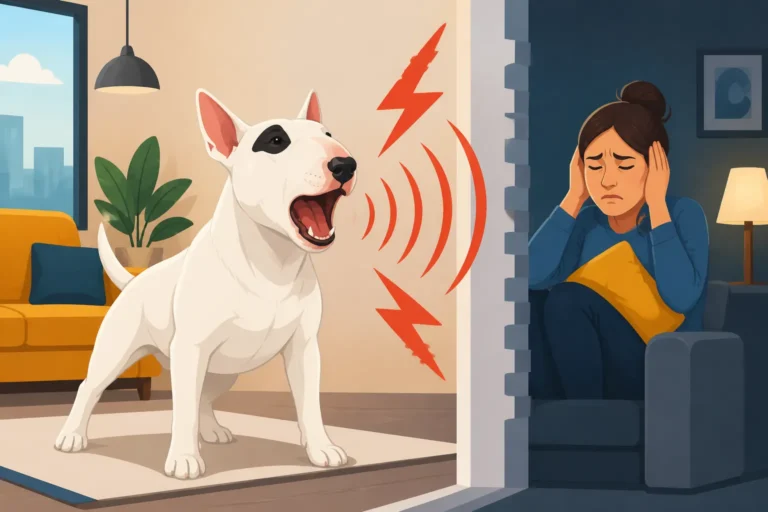
| Destructive Behavior (after being left alone) | Separation anxiety, boredom, excess energy | This is a classic misinterpretation. If your Bull Terrier chews up your sofa after you leave, it's not "getting back at you" for leaving. It's a symptom of anxiety, boredom, or pent-up energy that they release through chewing. Understanding what a Bull Terrier does when it is bored is critical here. |
Understanding these distinctions helps us react more effectively. Instead of feeling guilty or frustrated, we can address the underlying cause of the behavior, whether it's fear, discomfort, lack of clarity, or simply a need for more enrichment.
Sensitivity and Emotional Response
Bull Terriers, for all their robust appearance, can be incredibly sensitive dogs. They pick up on our moods, our tone of voice, and even subtle changes in our body language. If you've been particularly stressed or frustrated with them, they can sense it. This might lead to them becoming withdrawn or hesitant, not out of a "grudge," but because they're reacting to your emotional state. They might think they've done something wrong or become anxious about the interaction. This is where patience and clear, positive communication become paramount.
For example, a Bull Terrier puppy might shut down under pressure if training becomes too intense or too repetitive. This isn't the puppy holding a grudge against learning; it's a sign that they're overwhelmed and need a break, or a different approach. Recognizing this sensitivity is crucial to building trust and a strong bond, ensuring that what might look like defiance is actually a call for understanding and support. Remember, for a Bull Terrier, positive reinforcement and making training a game are far more effective than stern lectures or punishment.
How to Prevent Perceived "Grudge-Holding" Behavior
Since we know Bull Terriers don't truly hold grudges in the human sense, the goal isn't to prevent grudges, but to prevent the behaviors that we interpret as grudges. This involves consistent positive reinforcement, clear communication, and a deep understanding of your Bull Terrier's individual personality and needs.
Establish Clear and Consistent Communication
One of the biggest sources of canine "misbehavior" (and thus, our misinterpretation of it) is inconsistent training and unclear expectations. Your Bull Terrier thrives on routine and knowing what's expected of them. Use consistent cues, reward desired behaviors immediately, and ensure everyone in the household is on the same page. If one person allows jumping on the couch and another scolds it, your Bull Terrier will be confused, leading to frustration for everyone. Enrolling in online courses, like those offered by BAXTER & Bella, can provide a structured approach to training that benefits the entire family. A Bull Terrier trains when it sees the point, so make the point clear and rewarding!
It's also essential to be mindful of your own emotional state. If you approach your Bull Terrier with anger or frustration, they will pick up on that energy. Even if they don't understand the reason for your mood, they'll react to the negative emotion, potentially becoming withdrawn or anxious. Aim for calm, assertive, and positive interactions as much as possible, even when you're correcting a behavior. Focus on redirecting undesirable behavior to something acceptable rather than just punishing.
Focus on Positive Reinforcement and Enrichment
Positive reinforcement builds trust and strengthens your bond with your Bull Terrier. Instead of waiting for them to do something "wrong" and then reacting, focus on rewarding all the good things they do. Did they settle nicely on their mat? Treat! Did they ignore the squirrel on the walk? Treat! This proactive approach helps them understand what you want them to do, rather than just what they shouldn't. Regular mental and physical enrichment is also key to preventing boredom, which can often manifest as perceived "bad behavior."
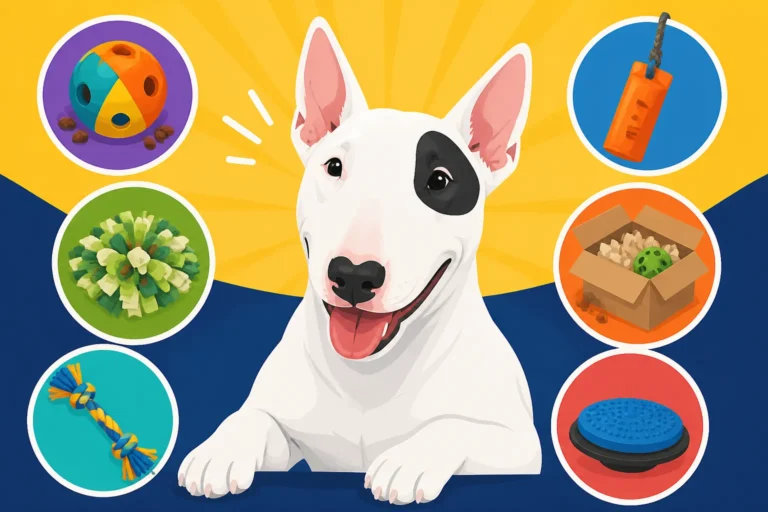
Provide plenty of appropriate chew toys – durable ones that stand up to that powerful Bull Terrier jaw, like those you can find on Amazon. Puzzle feeders and scent games are excellent ways to engage their minds. A well-exercised and mentally stimulated Bull Terrier is a happy Bull Terrier, less likely to exhibit behaviors that we might mistakenly label as a "grudge." Remember, how much exercise a Bull Terrier actually needs goes beyond just physical exertion; it includes mental challenges too.
Rebuilding Trust After a Negative Event
If there's been a negative interaction or a frightening experience, don't despair. Your Bull Terrier can move past it with your help. The key is gradual reintroduction and positive association. For instance, if your Bull Terrier has developed an aversion to the groomer, start by simply driving to the groomer's parking lot, giving treats, and then driving home. Slowly build up to short visits, offering high-value rewards the entire time. The goal is to replace the negative association with a positive one.
Patience is paramount. Don't force interactions or push your Bull Terrier into situations they're clearly uncomfortable with. Allow them to approach you on their own terms, offering gentle reassurance and high-value rewards. How sensitive a Bull Terrier is to tone means that a calm, reassuring voice can do wonders. Over time, consistent positive interactions will help your Bull Terrier regain confidence and trust, dissolving any lingering negative associations that might have looked like a "grudge."
Recognizing Health Issues Over Behavior
Sometimes, what appears to be a sudden change in temperament or a "sulky" mood might actually be a sign of underlying discomfort or illness. If your otherwise playful Bull Terrier suddenly becomes withdrawn, irritable, or seems to be avoiding certain activities, it's always wise to rule out a medical cause first. Pain, dental issues, or even early signs of kidney disease can all manifest as behavioral changes. Always check with your vet if you notice a significant or prolonged shift in your Bull Terrier's usual demeanor. How a Bull Terrier hides pain can make this tricky, so keep a close eye on subtle changes.
Conclusion
While the idea of a Bull Terrier holding a grudge is certainly entertaining and speaks to the deep bond we share, the reality is far more grounded in canine learning and emotion. Your Bull Terrier isn't holding onto resentment; they are reacting to past experiences, current feelings, and how effectively you've communicated with them. By understanding their psychology, committing to consistent positive reinforcement, and providing a loving, stable environment, you can prevent those "grudge-like" behaviors and ensure your Bull Terrier feels secure, understood, and cherished. It's all about building a relationship based on trust, not navigating emotional minefields!
Disclaimer
This article is for general informational purposes only and does not constitute professional advice. Laws, prices and regulations vary by location and change over time. Consult a qualified professional for guidance on your specific situation.