Whether a Prong Collar Belongs on a Bull Terrier
If you've ever found yourself being pulled down the street by your strong-willed Bull Terrier, feeling like your arm is about to be dislocated, you're certainly not alone. The sheer power and boundless enthusiasm of a Bull Terrier on a walk can make finding the right training tools a desperate quest. This guide dives deep into the question of prong collars for Bull Terriers, exploring their mechanics, potential risks, and effective, humane alternatives to help you achieve enjoyable, comfortable walks with your beloved clown.
Understanding the Bull Terrier's Unique Pulling Style
Bull Terriers are known for many wonderful traits: their clownish personality, their unwavering loyalty, and their incredible strength. Unfortunately, that last one often translates into a dog that pulls like a freight train on a leash. It's a common frustration that can turn what should be a pleasant stroll into a wrestling match, leaving owners feeling defeated and exhausted.
The Bull Terrier's Instinct for Exploration and Strength
When a Bull Terrier steps outside, the world opens up as a giant playground, a scent-filled adventure waiting to happen. Their natural curiosity and often high prey drive mean every rustle in a bush, every distant squirrel, every interesting smell on the sidewalk becomes an irresistible magnet. They are dogs built with impressive musculature, especially in their neck and shoulders, and they're not afraid to use it. A Bull Terrier's enthusiasm knows no bounds, and that robust physical build means they can easily ignore discomfort from a standard flat collar when there's something exciting to investigate. Trying to physically restrain a determined Bull Terrier can feel like trying to anchor a small boat in a hurricane – you might hold on, but it's rarely graceful or easy.
The "Stubborn" Factor and Selective Hearing
It’s often said that Bull Terriers are "three-year-olds in a dog suit," and anyone who's lived with one knows exactly what that means. They are incredibly intelligent, but they also possess a charming, yet infuriating, stubborn streak. If a Bull Terrier doesn't see the immediate benefit or reward in what you're asking, they might just decide it's optional. This selective hearing is particularly pronounced on a walk when the environment offers far more compelling distractions than your polite leash cues. They might understand "heel" perfectly in the living room, but the moment a new smell hits their nose or another dog appears, their focus can tunnel, and your requests fade into the background noise. This isn't malice; it's just a Bull Terrier being a Bull Terrier, but it undeniably contributes to the pulling problem. Why a Bull Terrier Decides a Cue Is Optional really hits home for many owners.
The Desire for Full Body Engagement
Unlike some breeds that might be more inclined to walk politely by your side, many Bull Terriers want to be involved with everything. They lean into their harnesses, they push forward with their entire body, and they use their considerable weight to get where they want to go. For them, a walk isn't just about moving from point A to point B; it's a full-contact sport where they are leading the charge. This desire for full body engagement means that tools that rely on subtle pressure might not register against their sheer drive and physical presence. It’s not just their neck that’s pulling; it’s their whole powerful physique. This makes finding the right way to teach them Teaching a Bull Terrier to Walk Without Pulling a critical part of ownership.
How Prong Collars Work and Their Intended Purpose
When traditional flat collars and even many harnesses fail to curb a Bull Terrier's pulling, owners often start looking for more persuasive tools. The prong collar, also known as a pinch collar, frequently comes up in these searches. It's a device that elicits strong opinions, so let's break down how it's designed to function.
The Mechanism of Action and Pressure Points
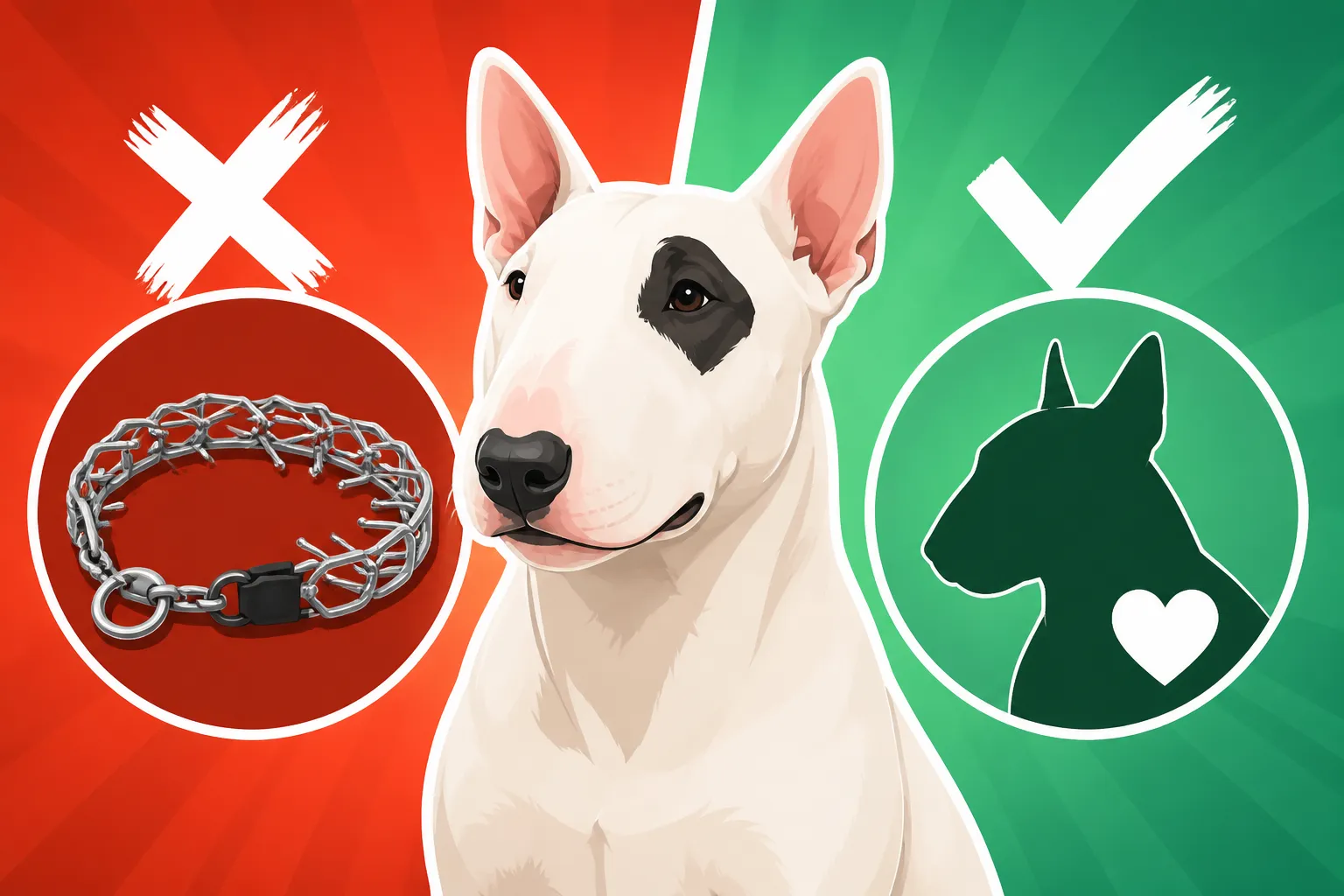
A prong collar is made up of a series of metal links, each with two blunt prongs that sit against the dog's neck. When the leash is tightened, these prongs "pinch" or press into the dog's skin around the neck. The idea behind this design is to mimic the natural correction a mother dog might give her puppies by nipping the back of their neck. Proponents argue that because the pressure is distributed evenly around the neck and the prongs are blunt, it creates a sensation that is startling and uncomfortable, but not inherently painful or damaging, when fitted and used correctly. The goal is to create an unpleasant sensation the moment the dog pulls, prompting them to release the pressure by walking slack-leash.
The Argument for "Gentle" and "Natural" Correction
Those who advocate for prong collars often emphasize that the pressure, when applied correctly with a quick "pop and release" motion, is meant to be a communication tool, not a constant source of pain. They liken it to a natural form of communication between canines, arguing it's more "natural" than the sustained choking of a flat collar against a pulling dog's trachea. The claim is that the prongs create a consistent, unambiguous signal that pulling makes the walk uncomfortable, while walking calmly allows for immediate relief. The idea is that the dog quickly learns to associate pulling with the pressure and chooses to walk without tension to avoid it, rather than learning to brace against continuous pressure. It's intended to be a swift, clear consequence that the dog can easily control by changing its behavior.
Who Recommends Them and Why
Historically, prong collars have been a staple in certain traditional dog training circles, particularly for breeds known for their strength and stubbornness, like many working breeds or, indeed, Bull Terriers. Trainers who use them often do so after other methods, such as basic flat collar training or front-clip harnesses, have been deemed ineffective for a particular dog or owner. They are often recommended for dogs that exhibit extreme pulling, lunge aggressively, or are simply too strong for their owners to manage safely on a walk. The perceived benefit is rapid control and a perceived ability to communicate boundaries quickly, especially for dogs that are highly distracted or have a very high pain threshold for traditional neck pressure. Some professional dog handlers also use them for showing, where precise positioning is crucial and a strong correction might be needed instantly. However, it's important to note that many modern, force-free trainers strongly advise against their use. You'll find a wide array of opinions in the training world, so understanding the basis of these recommendations is key.
The Potential Downsides and Risks of Using a Prong Collar on a Bull Terrier
While the proponents of prong collars emphasize their "gentle" nature, it's crucial for Bull Terrier owners to understand the potential risks and negative impacts, both physical and behavioral. Our Bull Terriers, with their unique personality and physical build, can react in ways that might be counterproductive or even harmful.
Physical Risks and Injury Concerns
Despite claims of "gentle pressure," a prong collar is still a tool that applies concentrated pressure to a very sensitive area: your dog's neck. The Bull Terrier's robust neck might seem invincible, but it contains vital structures that are vulnerable. The trachea (windpipe) can be bruised or collapsed, especially if the dog lunges or if corrections are harsh. The thyroid gland is located in the neck and can be damaged, potentially leading to long-term health issues. The delicate tissues of the esophagus, blood vessels, and nerves are also at risk. Furthermore, incorrect fit or improper use can lead to skin abrasions, puncture wounds (even from blunt prongs if pulled hard enough or twisted), or chronic neck pain. For a breed like the Bull Terrier, known for its sometimes-headstrong nature, the likelihood of sudden lunges or rapid changes in direction means that even a properly fitted collar can exert significant, sudden force on these delicate areas. You want to avoid anything that could lead to pain or injury, especially when considering How a Bull Terrier Hides Pain.
Behavioral Fallout: Fear, Aversion, and Aggression
The most concerning risks associated with prong collars are often behavioral. While the immediate goal might be to stop pulling, the dog learns that walking on a leash, or certain triggers on a walk, predict discomfort. Instead of understanding "don't pull," a sensitive Bull Terrier might associate the pressure with whatever is in their environment at the moment the correction occurs. This could mean they start to fear other dogs, strangers, children, or even specific landmarks, leading to increased reactivity or aggression. What a Harsh Correction Does to a Bull Terrier can be quite profound, causing a dog to shut down or become defensive.
Imagine your Bull Terrier is excited to see another dog and lunges, receiving a harsh correction. Over time, they might not learn "don't lunge," but rather "other dogs cause pain." This can escalate into fear-based aggression, making walks even more stressful and dangerous. Instead of building a positive association with outdoor experiences, you risk creating a dog that walks in a state of anxiety or learned helplessness.
Undermining Trust and the Human-Canine Bond
Our dogs rely on us for safety, comfort, and guidance. Training with tools that inflict discomfort or pain, even if intended as a "correction," can erode the foundational trust between you and your Bull Terrier. Bull Terriers are incredibly affectionate and bond deeply with their families; they thrive on positive interaction and a sense of partnership. When the person who is supposed to be their protector becomes the source of discomfort on every walk, it can damage that bond.
Your Bull Terrier might learn to avoid pulling, but they might also become hesitant to engage with you, or their overall joyful demeanor could dim on walks. Instead of viewing you as a reliable leader who guides them through the world with kindness, they might see you as an unpredictable enforcer. This is particularly difficult with a breed that thrives on connection and often sees their owner as their whole world. For more on their sensitivity, consider How Sensitive a Bull Terrier Is to Tone.
Alternative Training Approaches and Equipment for Leash Manners
If the idea of a prong collar makes you uneasy – and for good reason, given the potential risks – please know that there are many effective, humane, and positive alternatives for teaching your Bull Terrier impeccable leash manners. You don't have to resort to tools that might cause pain or fear to achieve a peaceful walk.
Positive Reinforcement: Building a Willing Partnership
The cornerstone of effective and humane training is positive reinforcement. This method focuses on rewarding desired behaviors, making your Bull Terrier want to walk nicely. When your Bull Terrier walks with a loose leash, mark that behavior (with a clicker or a verbal cue like "yes!") and immediately reward them with a high-value treat or praise. The goal is to make walking politely far more rewarding than pulling.
Start in a low-distraction environment, like your living room or backyard, and gradually introduce more stimulating settings as your Bull Terrier becomes proficient. Keep training sessions short and fun, as How Short a Bull Terrier's Training Session Has to Be is often a key factor for this breed's attention span.
Consistency is absolutely vital. Everyone who walks the dog needs to be on the same page. If your Bull Terrier pulls, stop walking. The moment the leash goes slack, even for a second, reward and start walking again. This teaches them that pulling gets them nowhere, but a loose leash gets them forward motion and rewards. Over time, they learn that cooperation pays off, fostering a stronger bond and a more willing partner. Many excellent online resources, like those offered by BAXTER & Bella, focus entirely on positive reinforcement methods that can be tailored to a strong, intelligent breed like the Bull Terrier.
Effective Harnesses and Head Halters
Beyond a flat collar, several pieces of equipment can greatly aid in managing a pulling Bull Terrier without relying on aversion.
- Front-Clip Harnesses: These harnesses have a leash attachment ring on the dog's chest, rather than on their back. When your Bull Terrier pulls, the leash redirects their body to the side, turning them towards you. This makes it physically difficult for them to pull forward with their full strength and helps them reorient their focus back to you. They don't cause pain or discomfort but use leverage to change the physics of pulling. Look for reputable brands on Amazon that offer sturdy construction suitable for a strong dog. Which Harness Holds a Bull Terrier is a crucial question to ask, as not all harnesses are created equal for a powerful Bull Terrier.
- Head Halters (Halti, Gentle Leader): A head halter fits over your dog's muzzle and behind their ears, similar to a horse's halter. The leash attaches under the chin. When your Bull Terrier pulls, the head halter gently guides their head downwards or to the side, making it impossible for them to pull forward forcefully. Because "where the head goes, the body follows," this gives you much more control with minimal physical effort. While some dogs initially resist them, most Bull Terriers adapt quickly with positive introduction and rewards. They are particularly effective for dogs with a very strong prey drive or those who lunge excessively. Consider exploring Whether a Head Halter Suits a Bull Terrier for your specific dog.
Seeking Professional Guidance and Structured Programs
Sometimes, despite your best efforts, a Bull Terrier's pulling can feel insurmountable. This is where a certified professional dog trainer, particularly one experienced with Bull Terriers and committed to positive reinforcement methods, can be an absolute game-changer. A good trainer can observe your Bull Terrier's specific behaviors, identify triggers, and help you implement a tailored training plan. They can also teach you proper leash handling techniques and timing, which are essential for success.
Many communities offer puppy classes or basic obedience courses that use these humane methods. If group classes aren't an option, private sessions can provide individualized attention. Investing in professional guidance not only helps solve the pulling problem but also strengthens the overall relationship with your Bull Terrier. Don't be afraid to reach out; trainers are there to support both you and your dog.
Here's a quick comparison of common leash training tools:
| Tool Type | Mechanism | Pros | Cons | Ideal For |
|---|---|---|---|---|
| Flat Collar | Attaches to leash, applies pressure to trachea. | Simple, inexpensive, common. | Minimal control for pullers, risk of tracheal damage, promotes choking and gaging. | Dogs with excellent leash manners, identification tag holder. |
| Back-Clip Harness | Attaches to leash on back, distributes pressure. | Comfortable, good for dogs with neck issues. | Can encourage pulling (like a sled dog), offers little control over strong pullers. | Dogs with good leash manners, some puppies. |
| Front-Clip Harness | Attaches to leash on chest, redirects dog. | Reduces pulling without pain, redirects focus to owner, humane. | Can tangle legs if poorly fitted, some dogs dislike chest pressure. | Strong pullers, dogs needing redirection, humane alternative to traditional collars. |
| Head Halter | Fits over muzzle, controls head direction. | Excellent control with minimal force, prevents pulling/lunging effectively. | Requires acclimatization, some dogs initially resist, not suitable for leaving on unsupervised. | Very strong pullers, reactive dogs, owners needing maximum control. |
| Prong Collar | Metal prongs pinch neck when pulled. | Provides strong, immediate correction for pulling. | Risk of physical injury, behavioral fallout (fear, aggression), damages trust, controversial. | Not recommended for Bull Terriers by positive reinforcement trainers due to risks. |
Disclaimer
This article is for general informational purposes only and does not constitute professional advice. Laws, prices and regulations vary by location and change over time. Consult a qualified professional for guidance on your specific situation.