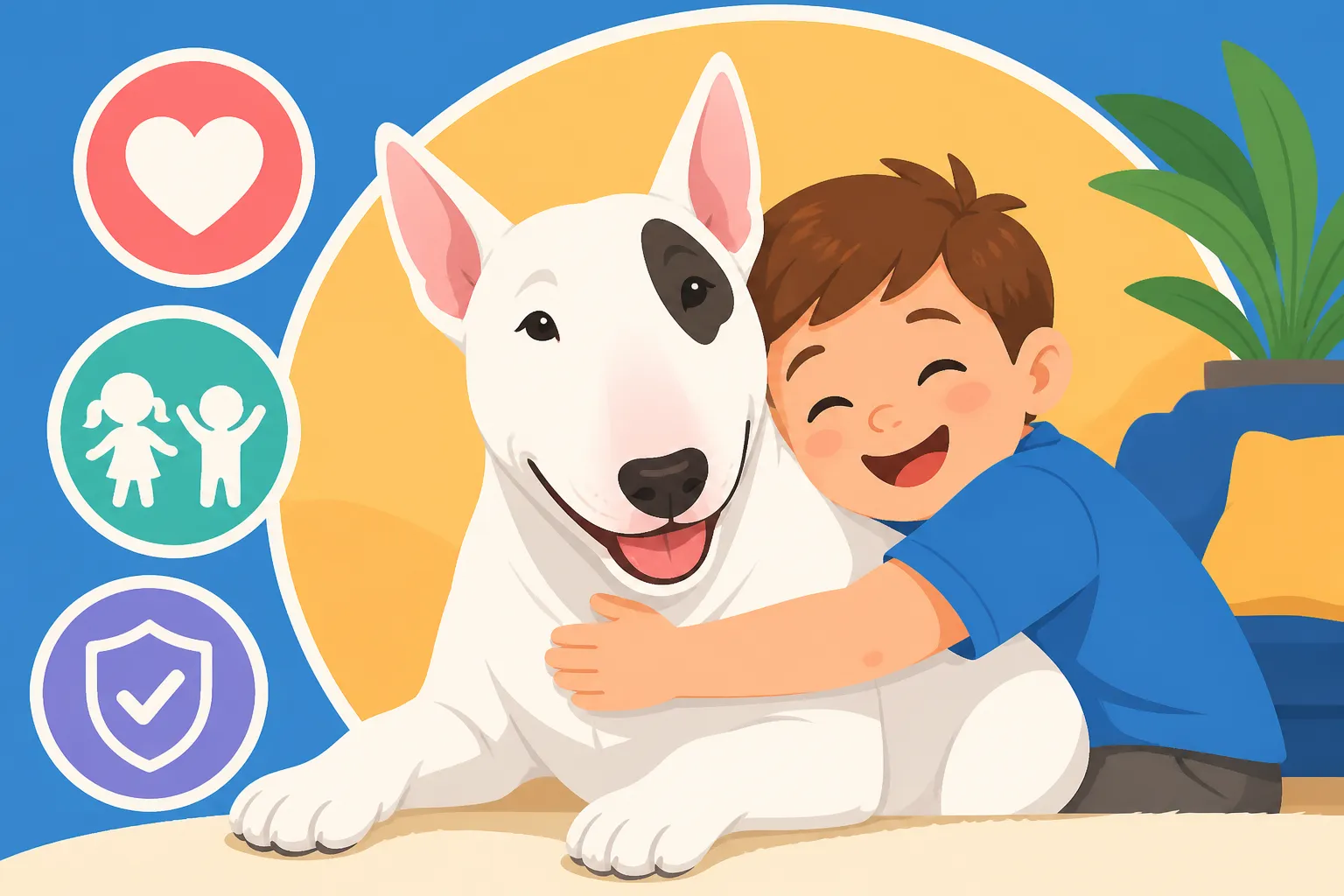
How Good a Bull Terrier Is With Kids
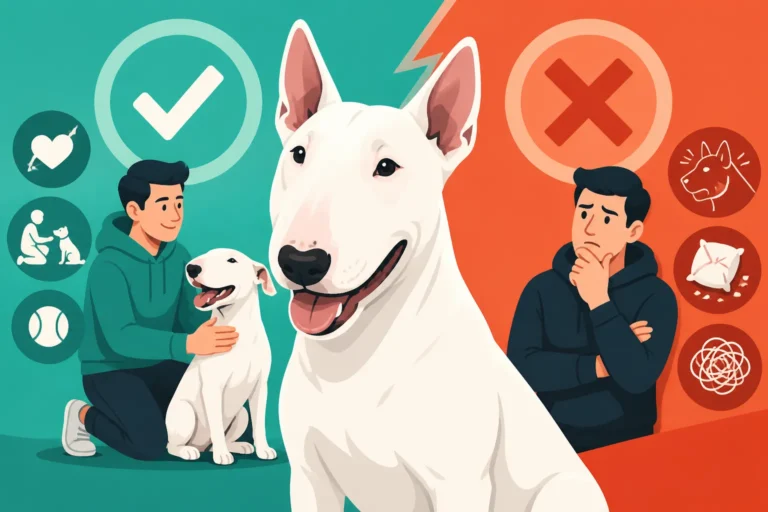
The idea of bringing a Bull Terrier into a family with children can stir up a mix of excitement and apprehension for many parents. On one hand, you see their playful, goofy nature; on the other, their powerful build and boundless energy raise valid questions about safety and compatibility. This guide aims to thoroughly explore how Bull Terriers typically interact with kids, offering a realistic look at their temperament, potential challenges, and actionable strategies to foster a harmonious household where both your Bull Terrier and your children can thrive happily and safely together.
Understanding the Bull Terrier Temperament Around Children
Bull Terriers are a unique blend of clownish charm and unwavering loyalty, a combination that can be wonderfully endearing but also requires thoughtful management, especially with children in the home. It’s crucial to understand their core personality traits to set everyone up for success.
The "Clown in a Dog Suit" Persona
Ah, the Bull Terrier! If you’ve spent any time around one, you’ll quickly understand why they’re affectionately known as a "clown in a dog suit." They are famously goofy, playful, and possess an endless well of charming antics that can keep you laughing for hours. This isn't just a cute descriptor; it's a fundamental aspect of their personality. They love to entertain, often stumbling over their own feet, giving ridiculous expressions, and generally being the life of the party. For children, this can be absolutely captivating, making the Bull Terrier seem like a giant, furry playmate. Imagine your Bull Terrier performing a full-body wiggle dance or chasing its tail with intense, comical focus – these are the moments that truly endear them to a family. You can learn more about this aspect of their character in Why a Bull Terrier Is Called a Clown.
However, this exuberance, while adorable, also comes with a built-in set of considerations when small children are involved. A Bull Terrier's boundless energy and often clumsy enthusiasm mean that what might be a playful nudge to another adult can easily become an accidental knockdown for a toddler. They don’t always grasp their own size and strength, and their desire to engage in play can sometimes override their sense of personal space. Think about a child building a tower of blocks: a curious Bull Terrier might investigate with a powerful nose or a sweeping tail, sending blocks (and perhaps the child) flying without a hint of malice. It’s rarely intentional harm, but the sheer force of their personality and physique means that parents need to be extra vigilant.
Their desire to be part of everything the family is doing extends to children's activities. If your kids are playing in the living room, expect your Bull Terrier to want to be right there in the thick of it, perhaps attempting to "help" with a game of fetch or "supervise" a coloring session by leaning its head on the table. This level of involvement can be wonderful, fostering a deep bond between dog and child, but it also means teaching both parties boundaries and appropriate interactions from day one. Their playful nature is a huge asset, but it requires mindful guidance to ensure it's directed safely and appropriately.
Their Affectionate, People-Oriented Nature
Beyond the clownish exterior lies a heart of pure gold, entirely devoted to their human family. Bull Terriers are incredibly affectionate and people-oriented dogs who crave companionship. They are not the type of dog to be happy existing solely in the backyard; they want to be where their people are, participating in whatever is happening. This deep attachment translates directly to their interactions with children: they tend to view children as extensions of their beloved human pack, deserving of their attention and affection. You’ll often find them leaning into you, or perhaps even trying to wedge themselves onto your lap, regardless of their size, simply because they want to be as close as possible. This unique display of devotion is part of their charm, as described further in Why a Bull Terrier Shows Affection With Its Whole Body.
This strong bond means that Bull Terriers are often remarkably tolerant and patient with the innocent fumbling and sometimes awkward affection of children. They tend to soak up attention like sponges, whether it's a gentle pat on the head or a child leaning against them while watching TV. It’s not uncommon to see a Bull Terrier gently "guarding" a sleeping child, curled up nearby, or following them from room to room. They thrive on being included in family activities, whether it’s a walk in the park, a car ride, or just lounging on the sofa. This inherent desire for connection can be a powerful foundation for a loving relationship between a Bull Terrier and the children in its life.
However, their sheer enthusiasm for connection also means they might not always understand personal space, especially with smaller children. A Bull Terrier expressing affection might deliver a full-body lean, a boisterous head nudge, or a slobbery kiss that’s far more impactful than intended. While their intentions are always loving, their physical presence can be overwhelming. This characteristic is precisely why structured training and careful supervision are paramount. It’s about channeling their immense affection into appropriate ways that respect the child’s size and vulnerability, ensuring that those loving gestures are always a source of comfort and joy, not accidental bumps or tumbles.
The Challenge of Physicality and Enthusiasm
Let's be realistic: a Bull Terrier is a powerful, sturdy dog. Their muscular build, combined with their energetic and playful demeanor, means they can be quite a handful, even for adults. When you introduce this level of physicality to a small, unsteady child, the potential for accidental injury becomes a real consideration. A Bull Terrier might body slam you playfully, thinking it's a great game, but that same playful slam could easily knock a child off their feet. This isn't aggression; it's simply a lack of understanding of their own strength and the relative fragility of a human child. If you've ever experienced Living With a Bull Terrier That Body Slams You for Fun, you know exactly what I mean.
Their play style can also be quite robust. They love to wrestle, tug, and chase, and they often play with their mouths, even if gently. While they are usually quite soft-mouthed by nature, a playful nip or a clumsy bump from a dog of their size can still be startling or even painful for a child. Consider a game of chase in the yard: a Bull Terrier running at full speed might accidentally bowl over a child without even realizing it, simply because they're focused on the fun. It's not about malice or intent to harm, but rather a lack of inhibition when excitement takes over.
Therefore, managing this inherent physicality is one of the biggest challenges for Bull Terrier owners with children. It means being proactive in teaching the dog impulse control and manners, and simultaneously educating children on how to interact respectfully and safely. It's a two-way street that requires consistent effort from the adults in the home. Without proper guidance, their powerful, affectionate nature can inadvertently lead to situations that might scare or injure a child, not because the dog is "bad," but because it simply hasn't learned the appropriate way to modulate its interactions with tiny humans.
Setting Up for Success: Training and Management
A happy and safe household with a Bull Terrier and children doesn't happen by accident; it's built on a foundation of proactive training, thoughtful management, and consistent boundaries. This is where you, as the adult, become the chief architect of harmony.
Early Socialization and Exposure
One of the most critical steps in ensuring a Bull Terrier is good with kids is early and positive socialization. This isn't just about exposing your puppy to children; it's about creating controlled, positive experiences that teach your dog how to behave appropriately and help it form positive associations with children from a young age. Start as early as possible, under strict supervision. This means inviting calm, dog-savvy children over for short, supervised interactions, where both the child and the puppy are kept safe and comfortable. Think of it as carefully curated meet-and-greets rather than a free-for-all play session.
During these interactions, always reward calm behavior. If your Bull Terrier puppy approaches a child gently, offers a soft lick, or simply lies down calmly in their presence, praise it lavishly and offer a small, high-value treat. Conversely, if the puppy gets overly excited, jumps, or starts to mouth, gently interrupt the behavior and redirect it. The goal is to teach the puppy that good things happen when children are around and when they behave politely. Puppy classes are also invaluable, as they expose your Bull Terrier to a variety of people, sounds, and experiences in a structured environment, further building their confidence and social skills. This early foundation is paramount in shaping a well-adjusted adult dog.
Beyond direct interaction, simply exposing your Bull Terrier puppy to the sights and sounds of children from a distance can be beneficial. Taking your puppy to a park where children are playing (but keeping a safe distance) can help them get used to the unpredictable movements and high-pitched noises associated with kids without feeling overwhelmed or overstimulated. The key is to make every experience a positive one, gradually increasing proximity and interaction only as your Bull Terrier demonstrates calm and appropriate behavior. This proactive approach helps your Bull Terrier learn that children are a normal, non-threatening, and even rewarding part of their world, laying the groundwork for a safe and loving bond.
Teaching Impulse Control and Manners
Given a Bull Terrier's natural exuberance and strength, teaching strong impulse control and basic manners is non-negotiable in a household with children. This goes beyond simple obedience; it's about teaching your Bull Terrier to think before it acts, especially when excitement runs high. Commands like "sit," "stay," "off," and "leave it" become vital tools in managing their interactions with kids. For example, if your child is approaching, asking your Bull Terrier to "sit" and wait calmly before greeting can prevent a bouncy, overwhelming hello. Consistently practicing these commands in various scenarios, especially around stimulating environments, helps solidify their understanding and reliability. Teaching a Bull Terrier Not to Shoulder Through a Door is a perfect example of how specific training can prevent common issues.
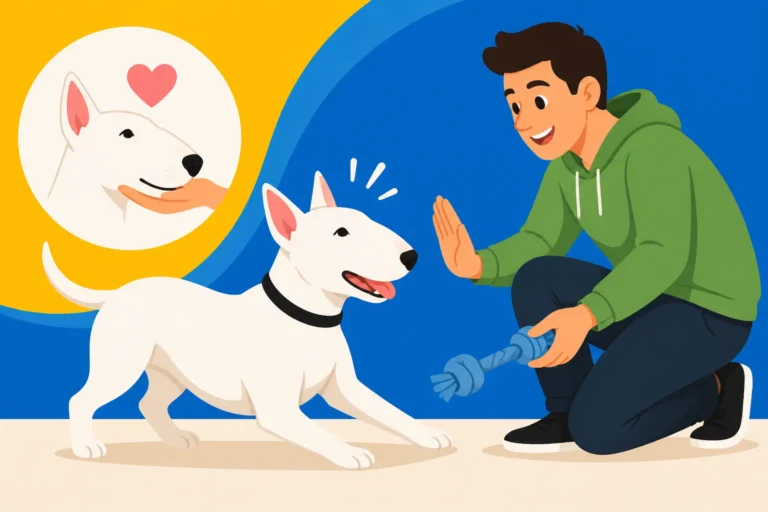
Positive reinforcement is the absolute cornerstone of training a Bull Terrier. They respond best to clear, consistent, and rewarding methods. Harsh corrections or punishment can make them shut down or become resentful, which is counterproductive to building trust, especially in a family setting. Instead, focus on rewarding the behaviors you want to see. If your Bull Terrier keeps all four paws on the floor when a child walks by, celebrate it! If they drop a toy when asked, make it rain treats. You can find excellent training resources, including online courses, through platforms like BAXTER & Bella, which emphasize positive, relationship-based methods. These resources can be invaluable for teaching your Bull Terrier to control its impulses and channel its energy appropriately.
One of the most common issues to address is jumping. Bull Terriers love to jump up to greet, and while an adult might tolerate it, a child can easily be knocked over or scratched. Teaching a rock-solid "off" command is essential. Practice this by having your Bull Terrier sit, then reward it for remaining seated as people approach. If it jumps, calmly turn your back and walk away, only re-engaging when all four paws are on the ground. Consistency is key here. Every family member, including older children, needs to be on board with this rule. Over time, your Bull Terrier will learn that calm greetings are what earn attention and rewards. This not only keeps everyone safe but also teaches your dog respectful social etiquette. More on managing this can be found in How to Stop a Bull Terrier Jumping Up.
Creating Safe Spaces for Both Dog and Child
In any multi-species household, especially one with an energetic dog and curious children, creating designated safe spaces is paramount for everyone’s well-being. Think of it as giving each family member a personal sanctuary where they can relax undisturbed. For your Bull Terrier, this might be a sturdy crate, a comfortable dog bed in a quiet corner, or even a specific room where they can retreat when they need a break from the hustle and bustle of family life. It’s important that children understand that this is the dog’s special place and they are not to disturb the Bull Terrier when it’s there. This teaches respect for boundaries and prevents accidental nips or growls that can occur when a dog is startled or cornered.
Equally important is ensuring children have their own safe zones. This might be a playpen for a baby or toddler, a bedroom with a closed door for an older child, or simply a defined area of the house where the dog is not allowed during certain times. Baby gates, widely available on platforms like Amazon, are excellent tools for creating these physical barriers without completely isolating either party. For instance, you might use a gate to block off the kitchen during meal prep, ensuring your Bull Terrier isn't underfoot while you're managing children and hot food. This proactive management strategy significantly reduces opportunities for unwanted interactions and helps prevent accidents before they happen.
The concept of a safe space extends to structured quiet times. Even the most tolerant Bull Terrier needs downtime, especially after an energetic play session or a stimulating walk. Teaching your dog to "settle" on its mat or in its crate during children's nap times or quiet reading sessions can be beneficial for everyone. This reinforces the idea that calm behavior is valued and provides your Bull Terrier with a much-needed mental break. By thoughtfully designing your home environment with these safe zones in mind, you empower both your Bull Terrier and your children to coexist peacefully, building mutual respect and understanding that strengthens their bond over time.
Supervising Interactions and Understanding Boundaries
While training and management lay a solid foundation, the ongoing responsibility of supervision and understanding boundaries is what truly ensures safety and fosters a healthy relationship between your Bull Terrier and your children. This isn’t a passive role; it’s an active, engaged commitment.
Constant, Active Supervision is Non-Negotiable
Let's be absolutely clear: no dog, regardless of breed, should ever be left unsupervised with children. This isn't just a recommendation; it's a golden rule for dog ownership in a family setting. Bull Terriers, with their powerful build and occasional clumsiness, are no exception. Active supervision means more than just being in the same room; it means actively observing the interactions, anticipating potential issues, and being ready to intervene at a moment's notice. This involves understanding dog body language—recognizing subtle signs of discomfort, stress, or overstimulation in your Bull Terrier, such as lip licking, yawning, turning away, or a stiff posture. These are often early warnings that the dog needs a break or the interaction needs to stop.
Think of it as being a referee in a playful but intense game. Your job is to ensure fair play, prevent fouls, and call a timeout when needed. For instance, if your Bull Terrier is getting a bit too rambunctious, or if a child is inadvertently bothering the dog, you step in immediately. This might mean physically separating them, redirecting the dog to a chew toy, or moving the child to a different activity. It also means educating visitors and their children on your household rules regarding dog interactions. Don't assume others will know; explicitly state your expectations for safe behavior.
This level of vigilance also applies to what might seem like innocent scenarios. A Bull Terrier might love snuggling with a child on the couch, but if the child suddenly tries to pull an ear or climb on its back, the situation can change in an instant. Even the most patient dog has a limit. Active supervision ensures you're there to prevent these moments from escalating, protecting both your child from accidental nips and your Bull Terrier from being put in a position where it feels it needs to defend itself. This constant presence reinforces trust and prevents negative experiences that could damage their relationship.
Teaching Children How to Interact Respectfully
While training your Bull Terrier is crucial, teaching children how to interact respectfully with dogs is equally important. This is a vital life skill that protects both the child and the animal. The core principle is "no teasing, no tormenting, and no roughhousing with the dog." Children, especially younger ones, often don't understand that dogs have feelings, personal space, or physical limits. It's up to you to gently, but firmly, teach them. Start by explaining that your Bull Terrier is a living, breathing being, not a toy. Teach them to approach the dog gently, using a soft voice and slow movements.
Emphasize respecting the dog's personal space. This means teaching children not to climb on the dog, pull its tail or ears, or try to take toys or food directly from its mouth. A great rule of thumb is "If the dog walks away, let it be." This teaches children to recognize and respect when the dog needs a break. You can model appropriate interactions by showing them how to gently pet the Bull Terrier on its back or chest, avoiding sensitive areas like the head or tail initially. Make sure they understand that running and screaming can excite a Bull Terrier to the point of accidental rough play. For more detailed guidance, consider consulting How to Teach a Child to Play With a Bull Terrier.
Another important lesson is around food and resting. Children should never interrupt a Bull Terrier while it's eating or sleeping. These are prime times for potential misunderstandings, as a startled or resource-guarding dog might react instinctively. Setting clear boundaries, such as not allowing children near the dog's food bowl or bed, prevents these situations entirely. By consistently teaching these rules, you empower your children to be responsible and empathetic dog companions, fostering a relationship built on mutual respect rather than fear or accidental confrontation. This education is an ongoing process that evolves as your children grow and mature.
Recognizing and Managing Potential Issues
Even with the best training and supervision, owning a Bull Terrier with children means being prepared to recognize and manage potential issues. No dog is perfect, and understanding typical Bull Terrier behaviors can help you address problems proactively. Common issues might include overly enthusiastic mouthing during play, occasional resource guarding (though less common with kids, it's always a consideration around high-value items), or simply being too boisterous when excitement runs high. For instance, a Bull Terrier puppy might instinctively nip in play; teaching a "gentle" command or redirecting with an appropriate chew toy is key.
If you observe any signs of discomfort or stress in your Bull Terrier around your children—such as growling, snapping, prolonged lip-licking, or a rigid body posture—it's crucial to take it seriously. These are not signs of a "mean" dog, but rather a dog communicating that it's feeling overwhelmed or threatened. Immediately separate the dog and child, assess the situation, and identify the trigger. This might require adjusting your management strategies, revisiting training, or increasing supervision. Never punish a dog for growling, as this often suppresses the warning signal, making future bites more likely without warning. For insights into their play, refer to How a Bull Terrier Plays With Children.
If behaviors persist or escalate, it’s always best to seek professional help. A certified professional dog trainer or a veterinary behaviorist can help you diagnose the root cause of the behavior and develop a tailored plan to address it safely and effectively. They can assess your specific household dynamics and offer guidance that online resources might miss. Ignoring these signs or hoping the dog will "grow out of it" is a dangerous gamble that can jeopardize the safety of your children and the well-being of your Bull Terrier. Being proactive and seeking expert advice when needed demonstrates responsible pet ownership and commitment to a safe family environment.
Specific Scenarios and Practical Tips
Life with a Bull Terrier and children presents a variety of scenarios, from welcoming a newborn to managing boisterous teens. Each stage requires thoughtful consideration and practical strategies to ensure a harmonious household.
Introducing a Bull Terrier to a Baby or Toddler
Bringing a new baby home or introducing a Bull Terrier to a home with an existing baby or toddler is a significant life event that requires careful planning and a gradual approach. The key is to make every step positive and controlled, avoiding overwhelming your Bull Terrier or risking accidental injury to the child. Before the baby arrives, start preparing your Bull Terrier for the changes. Introduce baby smells (lotions, powders, dirty diapers) ahead of time, allowing your dog to sniff them and associating these smells with positive reinforcement like treats or praise. Practice walking with an empty stroller so the dog gets used to the new equipment.
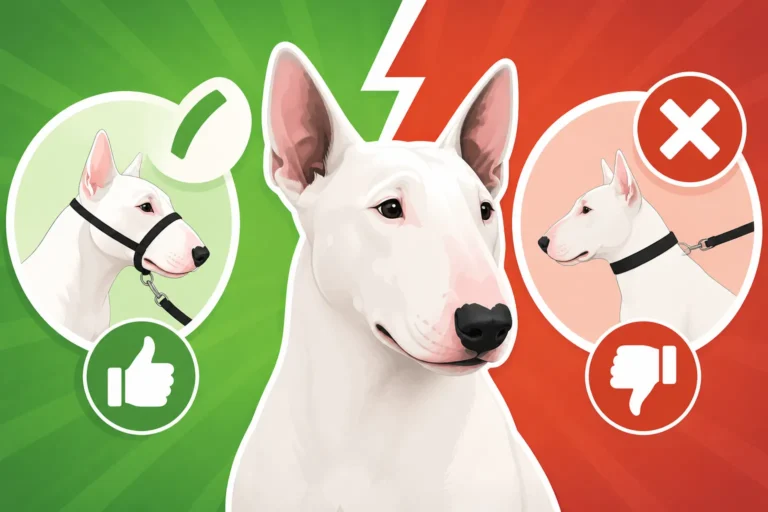
When the baby first comes home, keep the initial interactions brief and highly supervised. Have your Bull Terrier on a leash, ensuring you have full control. Allow them to sniff the baby cautiously, but don't force interaction. Reward calm curiosity. Never leave them alone together, even for a second. The goal is to build a positive association: baby arrives, good things happen (treats, praise, gentle attention). This helps your Bull Terrier see the baby not as a threat or competition, but as a valued, gentle addition to the family, as discussed in Whether a Bull Terrier Is Safe With a Baby.
For toddlers, the challenge lies in their unpredictable movements and boundless curiosity. Toddlers are naturally drawn to dogs, often with less-than-gentle hands. This is where physical management tools like baby gates become invaluable. Use them to create safe zones, allowing the Bull Terrier to observe the toddler from a distance without direct, unsupervised contact. Teach your toddler early on to be "gentle" and to "pat softly." Never allow them to pull ears, tails, or climb on the dog. Always supervise play, keeping an eye on both the toddler’s actions and the Bull Terrier’s body language. Interrupt any interactions that seem too intense or that show signs of discomfort from either party. Consistency is the bedrock of success in these delicate early stages.
Living with School-Aged Children and Teenagers
As children grow into school-aged kids and teenagers, the dynamic with a Bull Terrier often evolves into a more robust and mutually engaging relationship. Bull Terriers, with their sturdy build and love for activity, can become fantastic playmates for older children who are better able to understand dog cues and participate in appropriate, energetic play. A school-aged child can often throw a ball for long stretches, engage in structured games of fetch, or even participate in training sessions under adult supervision. This shift allows the Bull Terrier to truly thrive, as its need for physical and mental stimulation can be met in more varied ways.
Teenagers, with their increased strength and maturity, can often forge incredibly deep bonds with Bull Terriers. They might enjoy taking the dog for longer walks, engaging in active sports, or teaching new tricks. This interaction provides both the Bull Terrier with valuable companionship and exercise, and the teenager with a sense of responsibility and a loyal confidant. However, even with older children, the importance of adult oversight remains. While a teenager might be able to handle a Bull Terrier's energy, they still need guidance on reading dog body language, enforcing consistent rules, and ensuring play doesn't become overly rough or unsupervised.
The benefit of this stage is that older children can actively contribute to the Bull Terrier's well-being, helping to manage their energy and provide mental enrichment. Bull Terriers absolutely adore being part of family activities, and when those activities involve chasing, running, or puzzle-solving with an enthusiastic child, they are in their element. This isn't to say that all challenges disappear; a Bull Terrier can still be clumsy or forget its manners in moments of extreme excitement. But with consistent training from early on and ongoing education for the children, the unique blend of loyalty, playfulness, and affection that a Bull Terrier offers can truly shine in a family with older kids.
Toys, Exercise, and Enrichment for a Harmonious Home
A well-exercised and mentally stimulated Bull Terrier is a calmer, more manageable companion for children. Their robust nature means they require plenty of opportunities to burn off energy and engage their intelligent minds. Simply letting them out in the yard isn't enough; they need structured exercise. Daily walks, runs, or vigorous play sessions are essential. For an energetic Bull Terrier, this isn't a luxury; it's a necessity for their physical and mental health. A Bull Terrier that doesn't get enough exercise is far more likely to be restless, destructive, or overly boisterous with children. For ideas on how much activity they need, check out How Much Exercise a Bull Terrier Actually Needs.
Beyond physical exertion, mental enrichment is equally vital. Bull Terriers are smart, and they need their brains to be challenged. This is where puzzle toys, available widely on Amazon, become your best friend. Toys that dispense treats, snuffle mats, or interactive games can keep their minds engaged and prevent boredom, which often leads to unwanted behaviors like destructive chewing or excessive attention-seeking from children. Rotating toys regularly keeps them novel and interesting. Engaging in short, positive training sessions throughout the day also provides mental stimulation and reinforces good manners.
Providing appropriate chew toys is also paramount, especially in a home with kids' toys scattered around. Bull Terriers have powerful jaws and a natural urge to chew. Redirecting this instinct onto durable, safe chew toys prevents them from gnawing on furniture, shoes, or children’s belongings—any of which could lead to a dangerous situation if ingested, or frustration if a child's favorite toy is ruined. Toys like Kongs, filled with safe treats, can keep a Bull Terrier occupied for extended periods, giving both the adults and children a much-needed break. By strategically providing outlets for their energy and intelligence, you create a more peaceful and predictable environment, reducing the likelihood of your Bull Terrier’s exuberance accidentally impacting a child. Discover more about engaging their minds with Which Puzzle Toys Occupy a Bull Terrier.
| Aspect | Pros of Bull Terriers with Kids | Cons/Challenges of Bull Terriers with Kids |
|---|---|---|
| Temperament | Deeply affectionate, loyal, and people-oriented | Can be stubborn and test boundaries |
| Playfulness | Goofy, entertaining, and loves to be part of family fun | Overly enthusiastic, physically strong, can be clumsy and knock kids over |
| Energy Level | Eager for active play, can be great companions for older, active kids | Requires significant exercise to prevent boredom and destructive behavior |
| Patience/Tolerance | Often patient with gentle children | May have limits, especially if bothered during rest or eating |
| Training Needs | Eager to please (on their terms), responds well to positive methods | Requires consistent, firm, and patient training for impulse control |
| Supervision | Bonds strongly with family members, including children | Never to be left unsupervised with children, regardless of age |
| Physicality | Robust and sturdy | Strong jaw, powerful body, can accidentally injure small children |
Disclaimer
This article is for general informational purposes only and does not constitute professional advice. Laws, prices and regulations vary by location and change over time. Consult a qualified professional for guidance on your specific situation.