Whether a Head Halter Suits a Bull Terrier
Oh, the joy (and sometimes, pure shoulder-wrenching agony!) of walking a Bull Terrier on a leash. If you've ever felt like your morning stroll was actually a competitive strongman event, you're not alone. These dogs are powerful, enthusiastic, and often have a singular focus on whatever captivating scent or squirrel lies ahead. This guide is here to explore whether a head halter, often suggested as a miracle solution, is indeed the right tool to help you regain control and enjoy those walks with your beloved Bull Terrier.
The Bull Terrier's Unique Pulling Power & Why Standard Equipment Often Fails
Let's be honest, walking a Bull Terrier can feel like being tethered to a small, extremely muscular locomotive. Their unique blend of strength, compact build, and unwavering determination makes them formidable pullers, often leaving owners with sore shoulders, aching wrists, and a general sense of being dragged rather than walking. It's a common frustration, and one that often leads us to seek out equipment that promises a bit more leverage.
The "Bull Terrier Tug-of-War": Understanding Their Strength
Bull Terriers are built like tanks. They have a low center of gravity, incredible muscle mass, and a zest for life that translates directly into pulling power. When they decide they want to investigate that interesting smell or greet another dog (sometimes with too much enthusiasm), they commit fully. A standard flat collar, while fine for identification, offers little to no control against a determined Bull Terrier. It simply sits on their neck, potentially causing discomfort or even damage to their trachea if they're constantly pulling. You might find yourself bracing, leaning back, and still losing ground, feeling completely at the mercy of their four-legged exuberance.
Even a martingale collar, which tightens slightly to prevent slipping, still applies pressure around the neck. While it's certainly a safer option than a choke chain, it doesn't fundamentally change the dynamic of the pull. Your Bull Terrier can still lean into it, gagging and straining, and you're still left battling their incredible strength. Many owners describe feeling like they're in a constant tug-of-war, dreading every walk because it's less a pleasant outing and more a test of endurance. This isn't fair to you, and it certainly isn't comfortable for your dog, even if they seem oblivious to their own strength. For more insights into managing their power, you might want to read How Strong a Bull Terrier Is on a Leash.
The Limitations of Front-Clip Harnesses
For many breeds, a front-clip harness is a fantastic step up from a flat collar. By clipping the leash to the dog's chest, it redirects their forward momentum to the side, making it harder for them to pull directly ahead. For a lot of dogs, this works wonders. However, with a truly powerful and motivated Bull Terrier, even a front-clip harness can have its limitations. While it certainly reduces the direct pulling force compared to a neck collar, some Bull Terriers quickly learn to compensate.
They might still lean into the harness, using their broad chest and shoulder strength to power through the redirection. You might find yourself still being pulled, albeit at a slightly different angle. Additionally, some Bull Terriers with their deep chests can experience rubbing or chafing in the armpit area from certain harness designs, especially if they are pulling consistently. It's a better tool than a flat collar, for sure, but it's not always the complete answer for every Bull Terrier owner struggling with strong pulling behavior.
How a Head Halter Works and Its Benefits for Bull Terriers
So, if traditional collars and even some harnesses fall short, what makes a head halter different? The core principle of a head halter is simple yet incredibly effective: where the head goes, the body follows. Think of it like a bridle on a horse; you guide the head, and the rest of the animal responds.
Understanding the Mechanics: It's Not a Muzzle
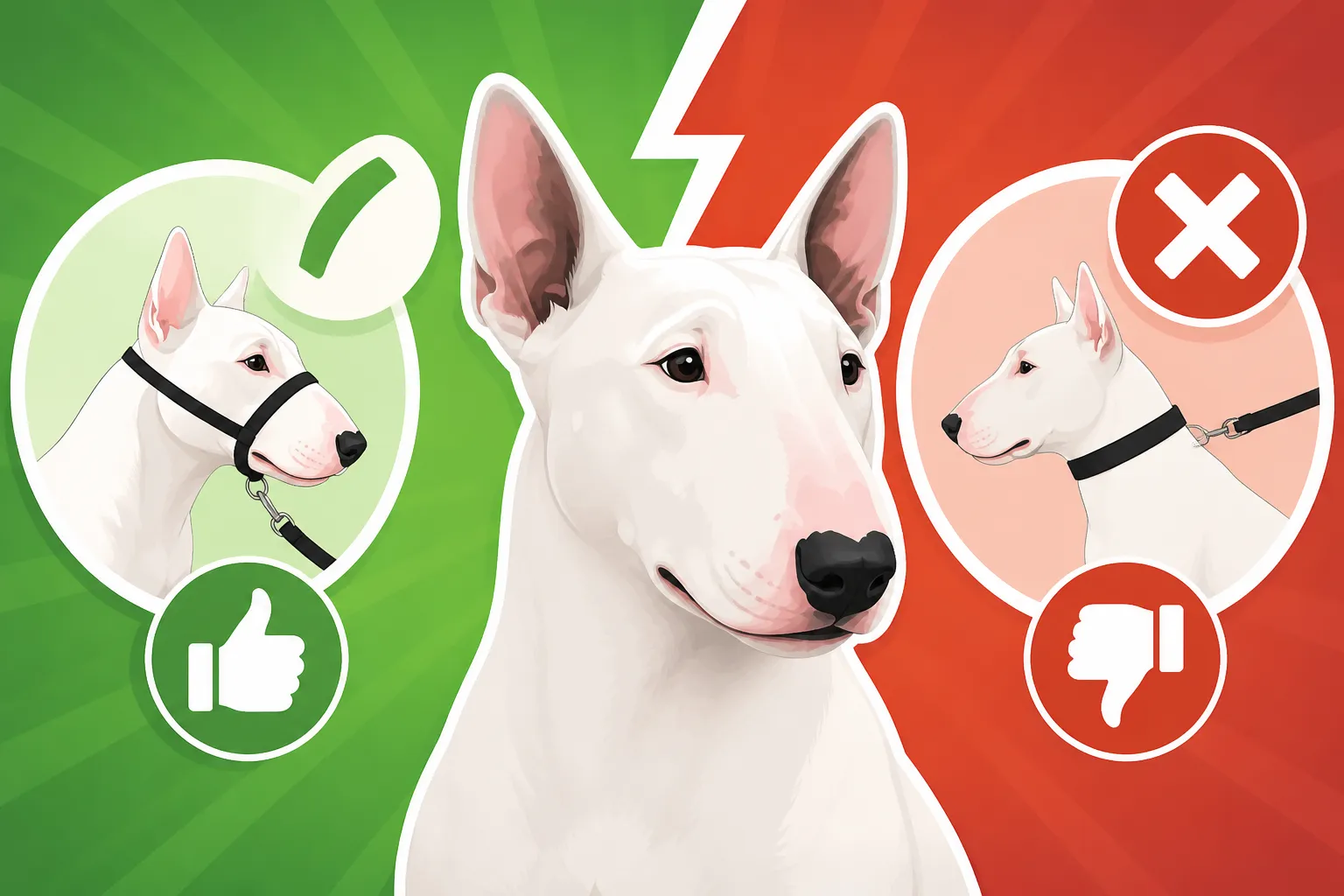
A common misconception is that a head halter is a muzzle. It's absolutely not. While it fits over the muzzle area, its purpose is to provide gentle guidance and control, not to prevent barking or biting. The halter typically has two loops: one that goes around the neck, behind the ears, and another that goes over the dog's nose. The leash attaches underneath the chin, to the loop that goes over the nose.
When your Bull Terrier pulls forward, the leash connection under the chin causes their head to turn gently to the side or downwards. This subtle redirection immediately disrupts their ability to pull straight ahead with full force. It makes it physically uncomfortable and inefficient for them to keep surging forward, naturally encouraging them to slow down and walk more politely by your side. Because the pressure is on the sensitive areas of the head and not just the neck, it offers a level of control that other tools simply can't provide.
Immediate Control and Reduced Pulling
The most striking benefit of a head halter is often the immediate change in pulling behavior. Owners who have spent years battling their Bull Terriers on walks often report a night-and-day difference from the very first outing. The moment your dog tries to lunge or pull, a gentle tug on the leash turns their head, breaking their focus and leverage. This often results in a dog walking calmly beside you, attentive to your movements, rather than dragging you down the street.
This immediate reduction in pulling not only saves your shoulders and back but also makes walks infinitely more enjoyable. Imagine actually being able to hold a cup of coffee or check your phone (safely, of course!) while walking your Bull Terrier, without fear of being unexpectedly yanked. It transforms a stressful chore into a pleasant shared experience. This newfound control can be invaluable, especially when navigating busy streets, crowded parks, or unexpected encounters with other dogs or distractions.
Safety and Preventing Reactivity
Beyond just stopping the pulling, a head halter can significantly enhance safety and help manage reactivity in Bull Terriers. These dogs are often incredibly strong and can react quickly to stimuli – a sudden burst of energy towards a passing cyclist, a lunge towards a squirrel, or a strong desire to investigate another dog. While Bull Terriers are typically friendly, their size and strength mean that an uncontrolled lunge can be startling or even dangerous, both for your dog and for others.
With a head halter, you have much greater control over your Bull Terrier's head and, therefore, their line of sight and direction. If they start to fixate on something, a gentle turn of the head can redirect their attention more effectively than trying to physically pull back on a collar around their neck. This ability to easily turn their head away from a trigger can be a game-changer for dogs who might be leash-reactive or overly excitable. It allows you to intervene calmly and redirect their focus before they get too aroused, helping to de-escalate potential issues and maintain a sense of calm. This kind of redirection is crucial in helping a Bull Terrier learn self-control and appropriate responses to their environment, aligning with the idea that A Bull Terrier Trains When It Sees the Point.
Introducing a Head Halter to Your Bull Terrier: A Gentle Approach
While a head halter offers incredible benefits, simply clipping it on and heading out for a walk is usually a recipe for disaster. Bull Terriers, with their strong personalities, are notorious for rejecting anything unfamiliar or uncomfortable. A positive, patient introduction is key to ensuring your Bull Terrier accepts and even embraces this new tool. Remember, the goal is not to punish them, but to gently guide them.
The Importance of Positive Association
Your Bull Terrier needs to view the head halter as something positive, associated with treats, praise, and good times – not as a punishment or something scary. If you force it on, or only use it when they're already misbehaving, they'll quickly develop a strong aversion to it. This can make future training incredibly difficult. Instead, think of it as a special piece of gear that means fun walks and tasty rewards.
A lot of Bull Terriers are naturally wary of things on their faces. Their expressions are so important to them, and having something new obstructing that can feel strange. Validating this initial discomfort is vital. Don't scold them for trying to paw it off; instead, calmly redirect and reward small successes. This positive groundwork is the foundation for successful integration.
Step-by-Step Introduction for Acceptance
Introducing a head halter should be a gradual process, broken down into tiny, manageable steps, always paired with high-value treats and praise. Patience here will pay off immensely.
- Introduce the Halter: Let your Bull Terrier sniff the halter. As they do, offer a high-value treat. Repeat this several times over a few sessions until they seem curious or indifferent to its presence.
- Touch the Nose: Hold the halter loop open and briefly touch it to their nose. Immediately give a treat and praise. Repeat until they are comfortable with this.
- Nose Through Loop: Lure their nose through the loop with a treat. As soon as their nose is in, give the treat and remove the halter. Keep these interactions very short at first.
- Buckle and Remove: Once they're comfortable putting their nose through the loop, quickly buckle the neck strap. Give a jackpot of treats (multiple treats in quick succession) and immediately unbuckle and remove the halter. The goal is for them to associate the halter being on with great rewards, and for the experience to be over before they get too bothered.
- Increase Duration Gradually: Slowly increase the time the halter stays on. Start with just a few seconds, then a minute, then five minutes. Always provide treats and praise while it's on. You can feed them a meal or a high-value chew while wearing it to make it a completely positive, distracting experience.
- Attach Leash and Walk: Once they are comfortable wearing the halter around the house for several minutes without pawing at it, attach the leash. Start with very short, positive walks in a low-distraction environment. The moment they pull, gently redirect their head. As soon as they loosen the leash, mark the behavior with praise and a treat.
Consistency is key here. Every time the halter comes out, it should signal good things are about to happen. You can even combine this training with some basic obedience, like having them sit for the halter, which can be useful for Teaching a Bull Terrier to Sit and Stay.
Common Challenges and Troubleshooting
It’s almost guaranteed that your Bull Terrier will object to the head halter initially. Don't be discouraged; this is completely normal given their strong will and independent nature.
- Pawing and Rubbing: This is the most common reaction. They'll try to paw it off, rub their face on the ground or furniture, or shake their head. When this happens, avoid scolding. Instead, redirect their attention immediately with a treat or a toy. If they persist, calmly remove the halter for a few minutes and then restart the introduction process at an earlier, easier step. Make sure the fit is correct – not too tight, not too loose.
- "Freezing" or Refusing to Move: Some Bull Terriers might simply freeze up or refuse to walk. This is often a sign of discomfort or confusion. Revert to shorter wear times and more intense positive reinforcement. Try to make the first few steps outside with the halter incredibly exciting, with lots of praise and treats for any forward movement.
- The "Head Down" Trick: A clever Bull Terrier might learn to keep their head down to avoid the pressure. In this case, use high-value treats to lure their head up and forward, rewarding them for maintaining a neutral head position.
- Choosing the Right Time: Introduce the halter when your Bull Terrier is calm and receptive, not when they are overly excited or tired. A sleepy Bull Terrier might be more tolerant.
Remember, a head halter is a tool to help you communicate, not to do all the work. It provides immediate physical feedback, which is something Bull Terriers often respond well to.
Choosing the Right Head Halter and Long-Term Considerations
With so many options on the market, choosing the right head halter for your Bull Terrier can feel a bit overwhelming. But finding a comfortable, well-fitting one is crucial for success. And it's important to remember that a head halter is just one piece of the puzzle; it works best when combined with consistent training.
Types of Head Halters and Key Features
Several brands offer head halters, each with slightly different designs. The key is to find one that is durable, comfortable, and offers a secure yet gentle fit for your Bull Terrier's unique head shape. You'll likely find various options on platforms like Amazon, so it's worth browsing and reading reviews.
- Gentle Leader: This is one of the most widely recognized brands. It features a single piece of nylon webbing that forms the nose loop and neck strap. It's known for its effectiveness and is often recommended by trainers. Look for padded versions for added comfort.
- Halti Headcollar: Similar in principle to the Gentle Leader, the Halti often has a slightly different fit that some dogs find more comfortable. They also offer a training lead that clips to both the headcollar and a regular collar, providing extra security and control.
- PetSafe Premier Head Halter: This is another popular choice, often praised for its secure fit and durability.
When selecting, consider these features:
- Material: Look for soft, durable nylon webbing that won't chafe. Some brands offer neoprene padding on the nose loop for extra comfort, which can be a big plus for a sensitive Bull Terrier.
- Adjustability: Your Bull Terrier's head isn't a perfect cone. You'll need a halter that allows for fine-tuning both the neck strap and the nose loop to ensure a snug but not tight fit. You should be able to fit two fingers comfortably under both straps.
- Security: The neck strap should sit high on the neck, just behind the ears, to prevent the halter from slipping off. The nose loop should rest comfortably at the base of the muzzle, not up near their eyes or too far down towards the end of their nose.
It's wise to measure your Bull Terrier's neck and muzzle circumference before purchasing to ensure you get the correct size. Different brands have different sizing charts, so always double-check.
Combining with Training Methods
A head halter is an excellent management tool, but it's not a substitute for training. It's a way to gain control and then teach your Bull Terrier how to walk politely on a loose leash. Think of it as training wheels for walking. Once your Bull Terrier understands the concept of loose-leash walking, you might find you can transition to a front-clip harness or even a martingale collar for certain situations, though many owners stick with the head halter for consistent reliability.
Here’s how to combine it with training:
- Positive Reinforcement: Continue to heavily reward loose-leash walking. Every step your Bull Terrier takes without tension on the leash should earn praise and a treat. This helps them understand what you want them to do.
- Loose-Leash Walking Drills: Practice "stop-and-go" games. When your dog pulls, stop walking. Only resume walking when the leash is loose. This teaches them that pulling gets them nowhere. Incorporate turns, changes of pace, and sudden stops to keep them attentive. This is directly related to Teaching a Bull Terrier to Walk Without Pulling.
- Engagement: Keep your Bull Terrier engaged with you during walks. Talk to them, carry treats, and occasionally ask for a "look" or a "sit" to maintain their focus. The more attention they give you, the less they'll be pulling towards distractions. If you're looking for guidance, online training platforms like BAXTER & Bella offer a wealth of resources, from puppy manners to loose-leash walking, that can complement the use of a head halter.
- Short, Frequent Sessions: Bull Terriers have notoriously short attention spans when it comes to repetitive tasks. Keep training sessions brief, positive, and fun. Ending on a high note ensures they remain enthusiastic. This ties into How Short a Bull Terrier's Training Session Has to Be.
When a Head Halter Might Not Be the Best Fit
While head halters are highly effective for many Bull Terriers, they aren't a universal solution, and there are situations where they might not be the ideal choice.
- Extreme Aversion: Despite all efforts at positive introduction, some Bull Terriers simply cannot tolerate a head halter. They might become excessively stressed, shut down, or injure themselves trying to remove it. In these rare cases, forcing the issue could create a negative association with walks altogether.
- Medical Conditions: If your Bull Terrier has facial injuries, severe skin sensitivities around the muzzle, or certain neurological conditions, a head halter might cause discomfort or exacerbate the problem. Always consult your veterinarian if you have any concerns about your dog's health before using a new piece of equipment.
- Lack of Training Support: If the owner isn't committed to the positive introduction and ongoing training, the head halter alone won't solve underlying behavioral issues. It's a tool, not a magical cure for a lack of training or proper socialization. For these owners, working with a professional trainer might be the first step, regardless of the equipment used.
- For the super sensitive dog: While most Bull Terriers are robust, some individuals can be particularly sensitive. If the constant redirection seems to genuinely upset your dog, and careful desensitization isn't working, another tool or method might be better for their overall well-being.
Ultimately, a head halter can be a truly transformative tool for many Bull Terrier owners struggling with pulling. It offers a level of control that can make walks enjoyable again, fostering a better relationship between you and your powerful companion. When introduced patiently and positively, and combined with consistent training, it can pave the way for a lifetime of pleasant adventures together.
Disclaimer
This article is for general informational purposes only and does not constitute professional advice. Laws, prices and regulations vary by location and change over time. Consult a qualified professional for guidance on your specific situation.