Whether a Bull Terrier Is Safe With a Baby
The arrival of a new baby is one of life's most joyful and, let's be honest, overwhelming experiences. For Bull Terrier owners, that joy often comes with a whisper of anxiety: "Will my energetic, often goofy, but sometimes intense Bull Terrier really be safe around this tiny, fragile human?" It's a valid and incredibly common concern, and navigating the unique temperament of a Bull Terrier alongside the unpredictable nature of an infant requires careful planning, unwavering supervision, and a deep understanding of your dog. This guide is here to walk you through the real-world challenges and practical steps to foster a safe and loving home for both your beloved Bull Terrier and your new little one.
Understanding Your Bull Terrier's Nature Around Infants
Bull Terriers are truly unique dogs, known for their powerful build, distinctive egg-shaped head, and often clownish personalities. They are often described as having the temperament of a "three-year-old in a dog suit," which speaks volumes about their boundless energy, strong will, and sometimes clumsy enthusiasm. While they can be incredibly affectionate and form deep bonds with their families, these very traits can present challenges when introducing a vulnerable infant into the household.
The Bull Terrier's Energy and Affection
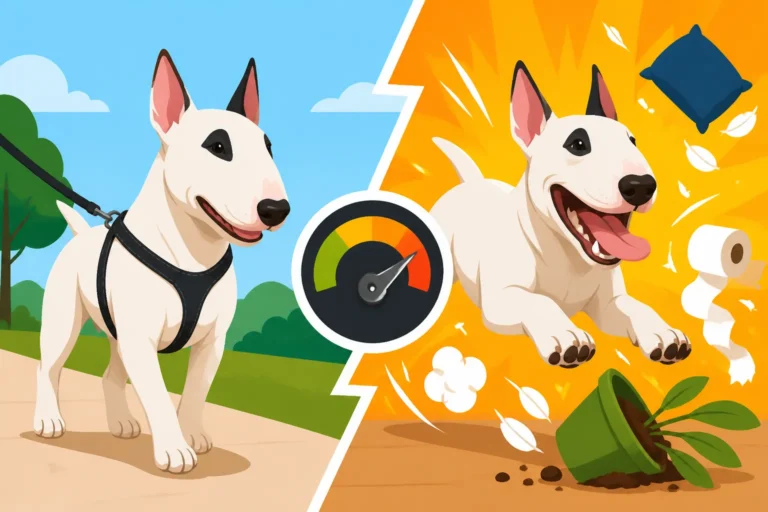
Bull Terriers typically possess a robust physical presence and an almost endless supply of energy. They love to play, often with a full-body zest that can involve leaning, nudging, and even body-slamming their favorite people. While this might be endearing with adults or older children, an accidental bump from a playful Bull Terrier could easily injure an infant. They often don't truly understand their own strength, and their desire to engage or show affection can manifest as a powerful, unthinking gesture. This isn't malice; it's simply a lack of understanding boundaries and fragility. Their affection is often expressed physically, and they can be very "in your space," wanting to be close and involved in everything you do. This desire for proximity, while heartwarming, means they will naturally want to investigate and be near the new baby.
Instincts and Sensory Overload
Even the most well-behaved Bull Terrier can be surprised by the sudden, high-pitched cries or jerky movements of an infant. These are stimuli that your dog has likely never encountered before and can be confusing or even startling. Their prey drive, while often well-managed in a domestic setting, is still an inherent part of their makeup, and a crying, flailing baby could, for a fleeting moment, trigger an instinctual response in an unprepared dog. Furthermore, Bull Terriers are creatures of routine and often thrive on predictability. A new baby completely disrupts this, bringing new smells, sounds, schedules, and attention dynamics that can be unsettling for your dog. For some Bull Terriers, who bond very strongly to their primary caregivers, the sudden shift in attention towards the baby can lead to feelings of displacement or jealousy, which might manifest in undesirable behaviors. This isn't to say your Bull Terrier will immediately see your baby as prey, but rather to acknowledge that their instincts are there, and managing the introduction carefully is paramount.
Preparing Your Home and Your Bull Terrier for the Baby's Arrival
The key to a successful integration isn't just hoping for the best; it's proactive, consistent preparation. You want to set your Bull Terrier up for success long before the baby even comes home. This involves creating a safe environment, establishing clear boundaries, and starting specific training well in advance. Think of it as a months-long project, not a last-minute scramble.
Desensitization and Training Ahead of Time
One of the most effective strategies is to begin desensitizing your Bull Terrier to baby-related sights, sounds, and smells. Start playing recordings of baby cries, coos, and squeals at low volumes, gradually increasing the volume over time, always pairing these sounds with positive reinforcement like treats or praise. Introduce baby lotions, powders, and even a used baby blanket for your dog to sniff, associating these new scents with pleasant experiences. Set up the nursery and all baby equipment, like the crib, changing table, and stroller, long before the baby arrives. Allow your Bull Terrier to explore these items under supervision, but establish "no-go" zones (e.g., inside the crib) from the start. You might find a good selection of baby gates on Amazon to help enforce these new boundaries.
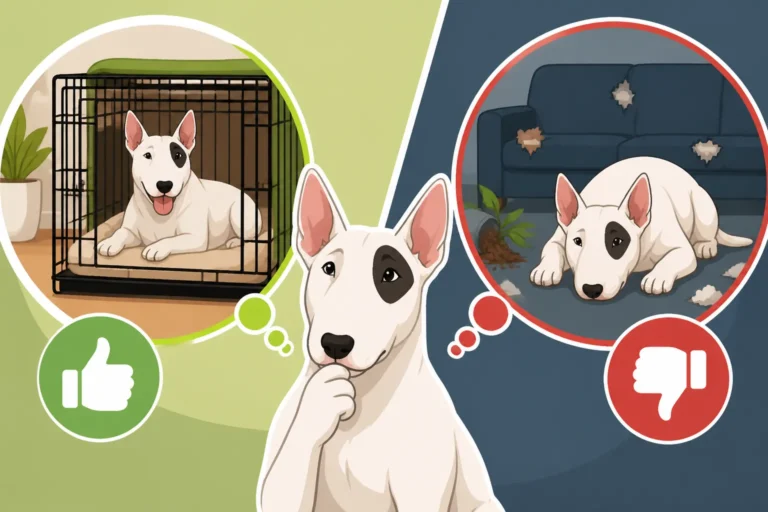
Beyond desensitization, reinforce basic obedience commands. "Sit," "stay," "down," and "leave it" become vital. Work on a solid "go to your place" or "crate" command, teaching your Bull Terrier to calmly retreat to a designated safe space when asked. This provides a crucial management tool when you need uninterrupted time with the baby. Practice walking your Bull Terrier with a stroller, getting them accustomed to its presence and movement. If you anticipate less time for long walks, start gradually reducing walk times and supplementing with mental enrichment activities to prevent frustration later. Consider an online positive reinforcement training program like those offered by BAXTER & Bella, which can help you structure these training sessions and address specific behavioral needs from the comfort of your home. They often have modules dedicated to preparing for a new baby. Remember, consistency is key, and every positive interaction builds a stronger foundation. What Training Classes Cost a Bull Terrier Owner can give you an idea of the investment involved, but it's truly priceless for peace of mind.
Establishing New Routines and Boundaries
Your Bull Terrier's life is about to change dramatically, and it's fairer to them if those changes begin before the baby arrives. If you plan for your dog to spend less time on the sofa or in your bed, start that transition now. Introduce a new, comfortable dog bed in a designated spot that will remain their safe haven. If you'll be feeding your dog at different times or exercising them less frequently, slowly adjust these routines. This helps prevent your Bull Terrier from associating negative changes directly with the baby's arrival.
Create "baby-free" zones using those baby gates. These aren't just for the baby's safety, but also for your dog's mental well-being, providing them a space to retreat and relax away from the constant new stimuli. Teach your Bull Terrier that these boundaries are firm but not punitive. Make sure their safe space, like their crate or a comfy bed in a quiet room, is still a positive place where they get high-value treats and can chew a favorite toy. This ensures they don't feel exiled, but rather have a sanctuary. Your goal is to make the baby's presence a normal, even positive, part of the household, not a sudden, upsetting upheaval.
Managing the Introduction and Daily Life with Your Bull Terrier and Baby
The first introduction is a significant moment, but it's just the beginning. Long-term safety and harmony depend on consistent management, supervision, and ongoing training. This isn't a one-and-done event; it's an evolving process.
The First Meeting
When you bring the baby home from the hospital, resist the urge to immediately let your Bull Terrier investigate. Have someone else bring the baby inside while you greet your dog calmly, giving them attention first. Then, while the baby is safely in someone's arms or a bassinet, allow your Bull Terrier to approach on a leash, in a calm and controlled manner. Keep the leash loose, not taut, to avoid creating tension. Let them sniff the baby's feet or the edge of a blanket. Reward calm behavior with quiet praise and treats. Never force the interaction.
Short, positive introductions are best. These initial encounters should always be supervised 100%, with no direct physical contact between the dog and baby. The goal is for your Bull Terrier to associate the baby's presence with positive, calm experiences, not overwhelming excitement or anxiety. This is where How to Stop a Bull Terrier Greeting at Full Speed can be incredibly helpful – you want controlled interactions, not enthusiastic leaps!
Constant Supervision and Management
This cannot be stressed enough: never leave your Bull Terrier unsupervised with a baby, not even for a second. This rule is non-negotiable, regardless of how trustworthy you believe your dog to be. Even an accidental bump or an excited lick could cause harm. Use baby gates, closed doors, and crates to create physical barriers when you can't offer direct, active supervision. When you are together in the same room, keep your Bull Terrier leashed, or have them on their "place" with a long-lasting chew toy (like something you found on Amazon designed for tough chewers).
As the baby grows and becomes more mobile, the dynamics will change. A crawling baby pulling an ear or grabbing a tail can provoke an unexpected reaction from even the most tolerant dog. How Much a Bull Terrier Tolerates From a Child really highlights why management is critical here. It's your responsibility to prevent these situations, not expect your dog to simply endure them. Teach your dog that calm proximity to the baby earns rewards. Continue to provide your Bull Terrier with adequate exercise and mental stimulation. A bored Bull Terrier is more likely to engage in unwanted behaviors. Why a Bull Terrier Needs a Job is so true – they thrive on purpose.
Here's a quick comparison of supervision levels:
| Supervision Level | Description | Best Use Case |
|---|---|---|
| Direct, Active | You are physically present, observing dog and baby, ready to intervene instantly. Dog is on leash or engaged in a calm activity. | Initial introductions, playtime where baby is in a bouncer/playmat, any time dog and baby are in the same room. |
| Passive/Indirect | You are in the same room but distracted (e.g., cooking, on phone). Dog and baby are not physically interacting. | Never Recommended. Too much risk. |
| Separated (Gated/Crated) | Dog and baby are in separate, secure spaces (e.g., baby in playpen, dog in crate or behind a sturdy baby gate). | When you cannot provide direct, active supervision, when you need to shower, nap, or leave the room briefly. |
| Fully Separate (Different Rooms) | Dog and baby are in entirely different rooms with doors closed, or one is outside. | Overnight sleeping, when leaving the house, extended periods of unsupervised time. |
Remember, the goal is to prevent any negative incidents from ever occurring. Every positive, calm interaction helps build a foundation of trust and safety. A Bull Terrier With Children and How a Bull Terrier Plays With Children offer excellent insights into the general dynamics between this breed and younger family members, which is good background for anticipating interactions with a baby.
Recognizing and Responding to Warning Signs
Bull Terriers, like all dogs, communicate through body language. Learning to "read" your dog is crucial for maintaining safety, especially around a baby. It's about spotting subtle cues that indicate discomfort or stress before they escalate into something more serious.
Subtle Cues and Escalation Ladders
Dogs rarely bite or snap without warning. They typically exhibit a series of escalating stress signals, often called an "escalation ladder." Initially, these signs might be subtle:
- Lip licking (when no food is present)
- Yawning (when not tired)
- Turning head away or averting gaze
- Body stiffening or freezing
- Whale eye (where the whites of their eyes are visible)
- Low growl or rumble
- Showing teeth
- Snapping (air bite)
- Biting
A Bull Terrier, with their sometimes stoic demeanor, might have particularly subtle early signs. Pay close attention. If you see any of these signals, it's your cue to immediately and calmly separate your dog and the baby. Never punish your Bull Terrier for growling or showing discomfort; they are communicating their feelings, and suppressing these warnings could lead to a bite with no prior notice. Instead, remove them from the stressful situation and re-evaluate your management strategy.
It's also important to understand that pain can significantly alter a dog's temperament. A Bull Terrier that is usually tolerant might become irritable or snappish if they are silently suffering from an underlying health issue. How a Bull Terrier Hides Pain is a critical read for any Bull Terrier owner, as these dogs are known for their stoicism. A visit to the vet for a check-up might be in order if you notice any sudden, unexplained changes in your Bull Terrier's behavior.
Long-Term Safety and Ongoing Training
The journey of integrating a Bull Terrier and a baby is a marathon, not a sprint. As your baby grows into a toddler and then a child, their interactions with your Bull Terrier will change. Toddlers are naturally curious and often lack impulse control, which can lead to accidental ear tugs, tail pulls, or even attempts to climb on the dog. This is where your continued diligence is paramount.
Teach your child, as soon as they are old enough, how to interact respectfully with your dog. This includes teaching them not to approach a sleeping dog, not to pull fur, and to always ask permission before petting. Reinforce that the dog's crate or bed is their safe space and should not be disturbed. How to Teach a Child to Play With a Bull Terrier provides invaluable guidance as your baby matures. Continue to prioritize your Bull Terrier's physical and mental needs, ensuring they get sufficient exercise, enrichment, and individual attention. This helps prevent boredom, frustration, or feelings of neglect that could negatively impact their behavior around the baby.
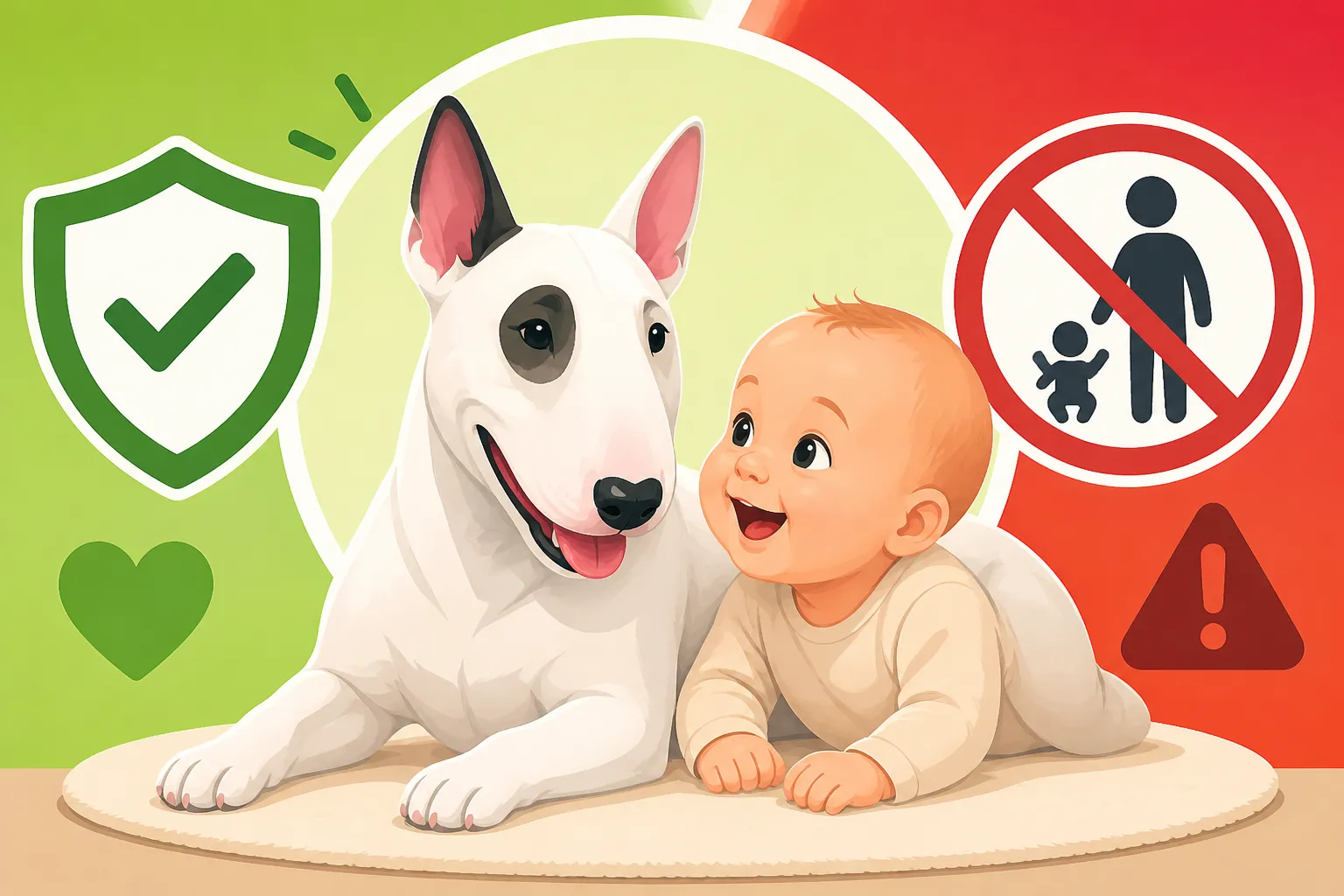
Ultimately, whether a Bull Terrier is "safe" with a baby isn't about the breed itself being inherently dangerous or perfectly placid. It's about dedicated, responsible ownership. It's about your commitment to rigorous supervision, proactive training, clear boundaries, and empathetic understanding of your unique Bull Terrier. With these elements in place, you can create a safe, loving, and joyful environment where both your Bull Terrier and your baby can thrive, growing up together in harmony.
Disclaimer
This article is for general informational purposes only and does not constitute professional advice. Laws, prices and regulations vary by location and change over time. Consult a qualified professional for guidance on your specific situation.