How a Bull Terrier Does at Agility
It’s a common misconception that Bull Terriers, with their sturdy build and often perceived stubbornness, aren't cut out for dog sports. Many owners wonder if their clownish companion could ever truly excel at something as intricate and fast-paced as agility. This guide will dive deep into how a Bull Terrier truly does at agility, from their unique personality quirks to their physical capabilities, offering realistic expectations and actionable advice for anyone considering this exciting sport with their beloved Bullie.
The Bull Terrier Temperament and Agility Potential
When you look at a Bull Terrier, you might see a powerful, compact dog with a mischievous glint in its eye. And you wouldn't be wrong! But beneath that sturdy exterior lies a surprisingly agile and incredibly intelligent mind that, when properly motivated, can absolutely thrive in an agility setting. It’s all about understanding what makes them tick.
Understanding the Bull Terrier Mindset
Bull Terriers are often described as "a three-year-old in a dog suit," and for good reason. They possess an almost childlike enthusiasm for life, coupled with a remarkable capacity for creative problem-solving – which sometimes translates into finding new ways to get into trouble. This zest for life is actually a huge asset in agility. They love to engage, to be the center of attention, and to have a "job" to do, especially when that job involves their favorite human. The key is to make agility feel like the most thrilling game they've ever played, rather than a chore. Their strong bond with their owner means they often perform best when they feel like they're working with you, not just for you. They need to feel like partners in the fun, not just a performer. We often forget that while they are clowns, they are also incredibly sensitive creatures who respond to positive reinforcement and connection far better than any harsh correction.
They're not typically driven by the same intense, laser-focused desire to please that you might see in a Border Collie. Instead, their motivation stems from pure joy, the thrill of the chase, and the satisfaction of mastering a new trick. For a Bull Terrier, A Bull Terrier Trains When It Sees the Point, and if the point is "this is fun and I get rewarded with my favorite tug toy or a piece of cheese," then they are all in. This means that agility training for a Bull Terrier often looks a bit different than for other breeds, leaning heavily into play, praise, and high-value rewards to keep their interest piqued.
Natural Physical Abilities and Limitations
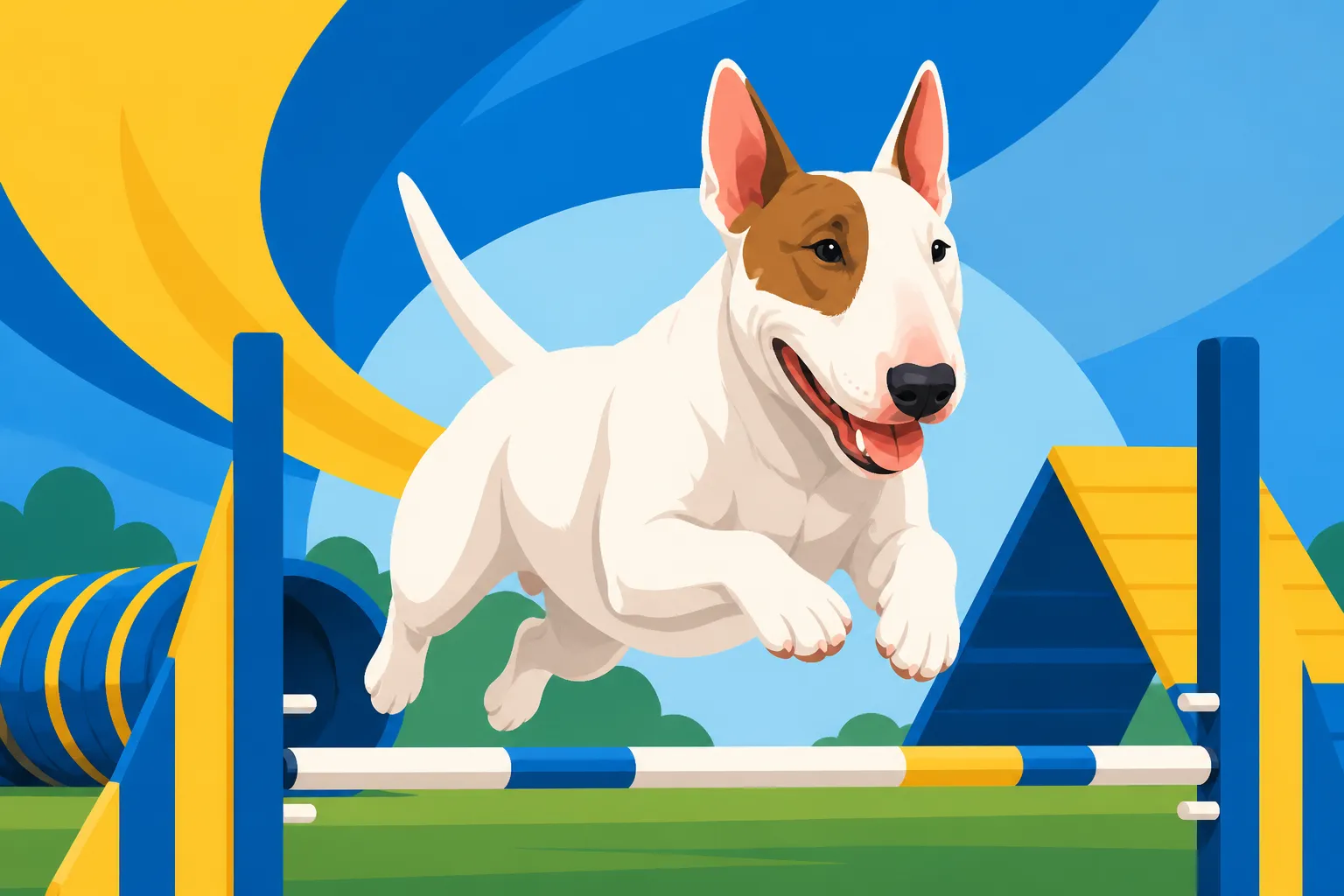
Physically, Bull Terriers are surprisingly athletic. They are strong, muscular, and have a low center of gravity, which gives them excellent balance and power. They can jump with impressive verticality and their compact frame allows them to navigate obstacles with surprising grace. Their short coat means less risk of overheating from heavy fur, which is a definite plus during intense workouts. However, they are also a heavy-boned breed, and their broad chest can make tight turns a bit more challenging than for a more slender dog. This means that while they might not be the fastest dog on the course, they can be powerful and accurate.
It's crucial to be mindful of their physical well-being. Their strong build doesn't make them immune to injury, especially with repeated impact from jumps. Ensuring proper warm-ups and cool-downs is paramount. Also, due to their broad chests and relatively short legs, some Bull Terriers might find certain obstacles, like A-frames or dog walks with very steep angles, more challenging to ascend or descend without jarring themselves. Careful conditioning and proper technique training are vital to prevent strain. While they can keep up, their stamina might not match that of a super-charged working breed for extended periods, so How Much Exercise a Bull Terrier Actually Needs should be balanced with their enjoyment and comfort in training.
When Agility Clicks for a Bull Terrier
The "click" moment for a Bull Terrier in agility often happens when they truly grasp that it's a team sport, and that their contributions are celebrated wildly. It's when they realize that navigating the weave poles or soaring over a jump means a shower of enthusiastic praise, a super fun game of tug, or that squeaky ball they adore. Their playful nature truly shines through on the course. They might throw in an extra bounce or a comical grin, adding their signature "clown" factor to their performance. When they're having fun, their focus can be surprisingly intense.
This 'click' also often coincides with building a deep, trusting relationship with their handler. Agility isn't just about teaching commands; it's about communication, trust, and mutual understanding. A Bull Terrier who trusts their handler implicitly and knows that training is a positive experience will perform with a heart full of joy. It’s incredibly rewarding to watch a Bull Terrier, once thought of as merely a stubborn companion, transform into a focused, joyful athlete, bounding through a course with an undeniable zest for life. Why a Bull Terrier Needs a Job isn't just about preventing destructive boredom; it's about fulfilling their innate need for purpose and engagement, and agility can be a perfect outlet for that.
Challenges and Considerations for Bull Terriers in Agility
Let's be real, no breed is perfect for every sport, and Bull Terriers come with their own unique set of quirks that can make agility training an adventure, to say the least. But understanding these challenges upfront means you can prepare for them and turn them into opportunities for creative training.
The Stubborn Streak and Motivation
Ah, the legendary Bull Terrier stubbornness! It's not so much a refusal to learn as it is a strong independent streak and a tendency to prioritize their own brilliant ideas over yours, especially if your idea seems boring. This means you can't just drill them endlessly. Repetition, without variation or high reward, will quickly lead to them deciding they have better things to do. Their attention span, especially for something they don't find intrinsically rewarding, can be shorter than a gnat's. How Stubborn a Bull Terrier Is often depends on how engaging you make the task.
The key to overcoming this "stubbornness" is motivation. Forget harsh corrections; they'll only shut down your Bullie and make them lose interest entirely. Instead, think positive reinforcement, play, and extremely high-value rewards. What does your Bull Terrier absolutely love? Is it a squeaky tennis ball? A game of tug? Cheese? Cooked chicken? Whatever it is, that's your currency. Keep training sessions short, fast-paced, and incredibly fun. End on a high note before they get bored or frustrated. Variety is your friend – don't do the same sequence of obstacles over and over. Mix it up! Incorporate games, chase, and lots of celebratory praise. Online programs like BAXTER & Bella, which emphasize positive reinforcement and fun, might offer a good structure for building this foundation of engagement.
Physical Considerations and Injury Prevention
While Bull Terriers are athletic, their body type requires careful consideration in agility. Their broad chests and powerful build, while strong, can put extra strain on their joints during sharp turns, landings from jumps, or when navigating contact obstacles like dog walks and A-frames. This means conditioning is not just a good idea, it's absolutely essential. Strong core muscles and good body awareness will help them move efficiently and reduce the risk of injury. Regular veterinary check-ups, especially focusing on joint health, are a must. Patellar Luxation in a Bull Terrier is a concern, as are other orthopedic issues that can be exacerbated by intense physical activity if not managed proactively.
Always warm up your Bull Terrier with a brisk walk or some light trotting before training, and cool them down afterward with a relaxed walk and gentle stretches. Pay close attention to their footing on different surfaces. For young Bull Terriers, it's vital to wait until their growth plates have closed before introducing jumping and weaving to prevent developmental injuries. Your vet can advise you on the appropriate age. Investing in a good, well-fitting harness that allows for full range of motion without restricting their shoulders is also important, especially for controlling them during training. You can find excellent options on Amazon.
Focus and Distraction Management
One of the biggest hurdles for many Bull Terrier owners in agility is their dog's boundless curiosity and sometimes, their lack of focus in a distracting environment. A strange smell, a leaf blowing by, another dog barking, or even just a particularly interesting shadow can be enough to derail a Bull Terrier mid-course. They have a mind of their own, and if something else catches their attention, they will absolutely go investigate it. This is where their strong independent nature can make things interesting!
Training in increasingly distracting environments is key. Start in a quiet, familiar space and gradually introduce more sights, sounds, and smells. Use those high-value rewards to keep their attention on you. Build a strong "watch me" command and practice it constantly. A solid recall is also non-negotiable, not just for safety but for getting them back on track when their mind wanders. Consistency, patience, and making yourself more interesting than any distraction will be your superpowers. Remember, What a Bull Terrier's Temperament Is Really Like includes that zest for life that makes them so endearing, but also means everything is an adventure waiting to happen!
Tips for Training Your Bull Terrier for Agility
So, you're ready to embrace the challenge and fun of agility with your Bull Terrier? Fantastic! Here are some tips to set you both up for success and ensure it's a positive, enriching experience.
Building a Strong Foundation
Agility isn't just about running and jumping; it's built on a foundation of basic obedience, body awareness, and a strong relationship with your dog. Before you even think about weaving poles, ensure your Bull Terrier has a solid grasp of commands like "sit," "stay," "come," and "down" in various environments. A reliable recall is essential for safety and for getting them back to you when their playful nature leads them astray. Teaching a Bull Terrier to Sit and Stay and Teaching a Bull Terrier to Come Back Mid Zoomie are critical starting points.
Working on body awareness exercises, like walking over different textures, stepping over low obstacles, or learning to back up, will help your Bull Terrier understand where their paws are in space and improve their coordination. Confidence on unstable surfaces, like a wobble board, can also be beneficial before introducing full agility equipment. Puppy classes or foundational obedience courses can be a great place to start, teaching both of you the language of training. Online resources like BAXTER & Bella offer structured curricula that can help you build these essential skills from the comfort of your home, focusing on positive reinforcement which is absolutely vital for a Bull Terrier.
Keeping Training Fun and Engaging
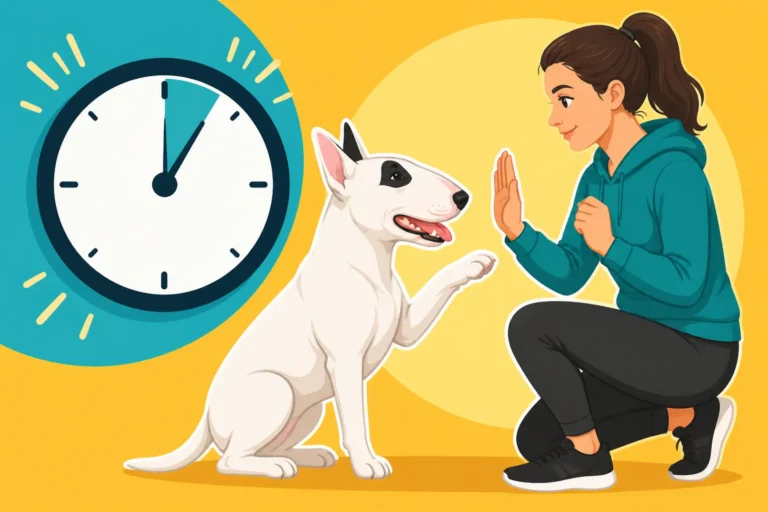
This is arguably the most important tip for a Bull Terrier. Their enthusiasm for agility will only last as long as they perceive it to be a game, not a chore. Keep sessions short – think 5-10 minutes, especially in the beginning – and end them before your Bull Terrier gets bored or tired. Always end on a high note, even if it means doing one successful, easy obstacle and then quitting for the day. This leaves them wanting more.
Use a variety of rewards: toys, treats, praise, and even a quick game of chase or tug. Figure out what motivates your individual Bull Terrier the most and rotate through them to keep things exciting. Don't be afraid to be silly! Your enthusiasm is contagious. If you're having fun, they're more likely to have fun. Change up your routine and the order of obstacles. Incorporate little "free play" moments during training where they can just zoom around and be a Bull Terrier. Remember, How Short a Bull Terrier's Training Session Has to Be is critical for maintaining their interest.
The Importance of a Good Coach and Community
While you can certainly start some basic agility skills in your backyard, working with an experienced agility instructor is invaluable, especially with a Bull Terrier. A good coach will understand breed-specific behaviors and know how to motivate a Bull Terrier effectively. They can help you with proper handling techniques, obstacle execution, and safety, ensuring both you and your dog learn correctly and avoid injury. Look for coaches who emphasize positive reinforcement and make training fun for all dogs, not just the "traditional" agility breeds.
Joining an agility class or club also provides a fantastic community. You'll meet other dog owners, share tips, and have a supportive environment for learning. This social aspect can also be beneficial for your Bull Terrier, exposing them to different dogs and people in a controlled, positive setting. They might even find a training buddy! Don't feel discouraged if your Bull Terrier isn't topping the speed charts; focus on personal bests and the joy of the journey. A strong community can provide encouragement and celebrate every tiny victory.
Beyond Competition: Agility for Fun and Fitness
Agility doesn't always have to be about competition. For many Bull Terrier owners, it's a fantastic way to bond with their dog, provide essential mental and physical exercise, and simply have a blast together. The benefits extend far beyond ribbons and trophies.
Agility as Mental and Physical Enrichment
Bull Terriers are intelligent dogs who need mental stimulation just as much as physical exercise. A bored Bull Terrier is a destructive Bull Terrier! Agility provides a wonderful outlet for both. Learning to navigate a course requires concentration, problem-solving, and responding to cues, which gives their brains a fantastic workout. Physically, it builds muscle, improves coordination, and helps maintain a healthy weight. It's a full-body workout that's far more engaging than just a walk around the block.
Think of it as structured play. It channels their natural energy and zest for life into something productive and fun. For dogs who might be too rough for dog parks or have issues with other dogs, individual agility practice can be a safe and enriching activity. It builds confidence, reduces boredom-induced behaviors, and strengthens their physical capabilities. How Much a Bull Terrier Digs or What a Bull Terrier Chews often stems from unspent energy and mental under-stimulation, and agility can be a powerful antidote.
Backyard Agility: DIY Fun
You don't need a full-blown agility course to enjoy the benefits with your Bull Terrier. You can set up a fun "backyard agility" course with everyday items or affordable equipment found on platforms like Amazon. Use broomsticks over cinder blocks for low jumps, hula hoops for tunnels (or buy a collapsible tunnel designed for dogs), weave poles made from PVC pipe, or even just a series of cones for turns. The goal is to introduce the concepts of obstacles and directional cues in a low-pressure environment.
This DIY approach allows you to tailor the challenges to your Bull Terrier's comfort level and physical abilities. It's also great for practicing short bursts of training and reinforcing basic skills. Just ensure all homemade equipment is safe, stable, and won't injure your dog. Gradually increase the height of jumps or the complexity of sequences as your Bull Terrier gains confidence and skill. Backyard agility is a fantastic way to strengthen your bond, offer mental stimulation, and burn off some of that famous Bull Terrier energy.
Strengthening Your Bond Through Agility
Perhaps the greatest benefit of doing agility with your Bull Terrier, whether competitively or just for fun, is the profound bond it builds between you. Agility demands clear communication, trust, and mutual understanding. You learn to read your dog's subtle cues, and they learn to rely on your guidance. It's a dance, a partnership where you're both working towards a common goal. This shared experience creates a deeper connection and enhances your relationship in ways that everyday interactions simply cannot.
The celebration of successes, big and small, creates positive associations and reinforces the idea that you are their ultimate source of fun and joy. There's nothing quite like the feeling of watching your Bull Terrier, with their unique style and boundless enthusiasm, fly over a jump or expertly navigate a tunnel, knowing that you helped them get there. It's a testament to patience, understanding, and the incredible, often underestimated, athletic potential of this wonderful breed. Whether a Bull Terrier Is a One Person Dog often comes down to who they share these deepest, most exciting connections with, and agility can solidify that role for you.
| Aspect of Agility | Bull Terrier Strengths | Bull Terrier Challenges | Training Strategy |
|---|---|---|---|
| Temperament | Joyful, energetic, loves attention, loyal, problem-solver | Stubborn, independent, easily distracted, short attention span | Keep it fun, short, high-value rewards, positive reinforcement, build strong bond |
| Physicality | Strong, powerful, good balance, high vertical jump, good stamina in bursts | Heavy build, broad chest (can impact tight turns), joint strain risk from impact | Proper warm-ups/cool-downs, conditioning, vet checks, safe equipment, age-appropriate training |
| Focus | Can be intense when motivated, loves a "game" | High curiosity, easily distracted by environment/smells/other dogs | Start in quiet areas, gradually add distractions, high-value rewards, "watch me" command |
| Motivation | Highly food or toy driven, thrives on praise/play | Can quickly lose interest if bored or drilled, does not respond to harshness | Vary rewards, end on high note, make handler the most exciting thing, use play |
| Learning Speed | Intelligent, can pick up concepts quickly if engaged | Can refuse to perform if not motivated, inconsistent performance if bored | Break down complex tasks, consistent cues, celebrate small successes, patience |
Disclaimer
This article is for general informational purposes only and does not constitute professional advice. Laws, prices and regulations vary by location and change over time. Consult a qualified professional for guidance on your specific situation.