Whether Food Beats a Ball for a Bull Terrier
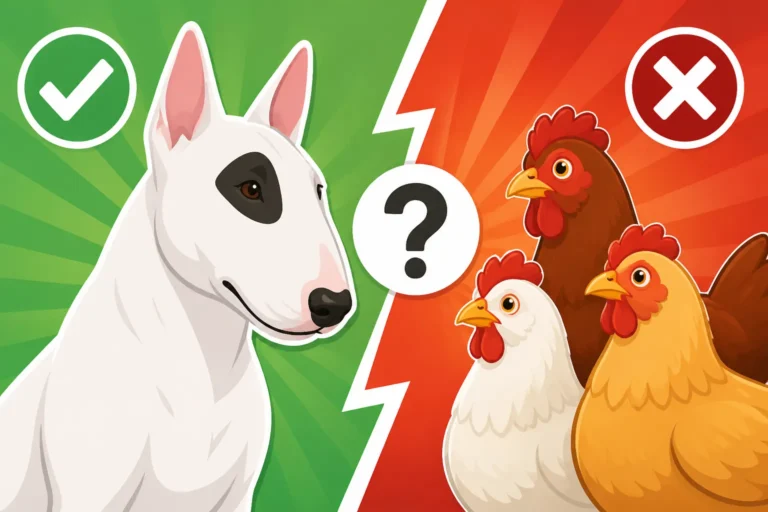
One of the biggest head-scratchers for any Bull Terrier owner is figuring out what truly lights up that quirky, strong-willed dog during training. You might be holding what you think is the most amazing treat, only for your Bull Terrier to give you that signature sidelong glance as if to say, "Seriously? That's all you got?" This guide dives deep into the age-old question of whether food or a ball holds more power as a motivator for our beloved eggheads, helping you unlock their full training potential.
The Unique Bull Terrier Motivation Landscape
Understanding what makes your Bull Terrier tick is the first step in successful training. These aren't your average "pleasers." They are thinkers, strategists, and often, absolute comedians, but their motivations can be wonderfully complex and utterly frustrating all at once.
The Bull Terrier's Independent Streak
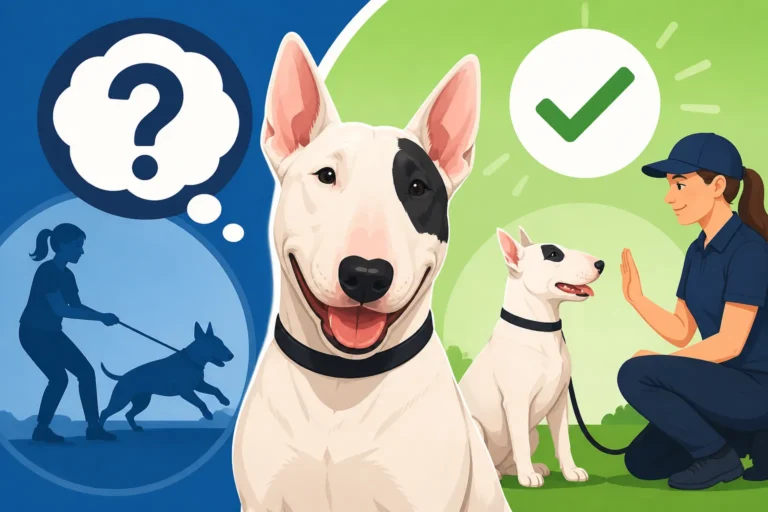
Let's be real, Bull Terriers are famous for their independent nature. They often have their own ideas about how things should go, and that includes training. It's not that they don't want to learn; it's that they need to see the inherent value in what you're asking. They're not wired to blindly follow commands just because you said so. This isn't a flaw; it's part of their charming, strong-willed personality, but it means you, as their trainer, need to be exceptionally convincing. You might find yourself scratching your head, wondering Why a Bull Terrier Decides a Cue Is Optional, especially when you know they know the command perfectly well at home.
This independent streak means rote repetition often falls flat. If they perceive a task as boring or pointless, they'll simply disengage, sometimes with a dramatic sigh or by wandering off to inspect a dust bunny. Their engagement is directly tied to the perceived benefit to them. This isn't defiance; it's a practical assessment of priorities from a dog who believes their time is valuable, just like yours. A trainer needs to constantly refresh their approach and keep things novel to maintain that precious Bull Terrier focus.
Understanding Their "What's In It For Me?" Mentality
Every Bull Terrier, no matter how goofy or loving, operates with a clear "what's in it for me?" radar. This isn't selfishness; it's their breed's practical intelligence shining through. They are incredibly smart, often observing and learning from their environment and from you, even when you don't think they're paying attention. When it comes to training, the reward has to genuinely outweigh the effort, the distraction, or whatever exciting idea just popped into their unique head.
This mentality is why simply saying "good dog" or offering a low-value kibble might get you nowhere fast. They quickly assess the value proposition. If the reward isn't compelling enough, their internal spreadsheet will calculate that chasing a butterfly, inspecting a fascinating smell, or simply napping sounds like a much better use of their energy. Your job is to make your reward the absolute best thing on offer, the jackpot that makes them eager to participate and show off their cleverness. This often means rotating rewards and keeping them guessing about what incredible prize might be next.
The Allure of Food Rewards for Bull Terriers
Food is a primary motivator for almost all dogs, but for a Bull Terrier, it can be a particularly potent tool if wielded correctly. It appeals directly to their primal drive and can be incredibly effective for focus and precision work.
High-Value Treats: The Ultimate Currency
When we talk about food rewards for a Bull Terrier, we're not talking about just any old kibble. We're talking about the good stuff. Think small pieces of cooked chicken, cheese, hot dogs, liverwurst, or specialized training treats that smell amazing. These are what we call "high-value" treats, and for many Bull Terriers, they are the gold standard. They need to be irresistible, something they rarely get outside of training. This elevates their perceived value exponentially. Which Reward Outranks a Bull Terrier's Own Idea? Often, it's that surprise, super-tasty morsel they only get for truly exceptional effort.
The key is variety and novelty. Don't stick to the same treat every single session. Your Bull Terrier is too smart for that. Keep them guessing. One day it might be cheese, the next day a bit of steak, the next day a special soft chew. This keeps the anticipation high and prevents them from getting bored or taking the reward for granted. Having a pouch of these delightful morsels can make all the difference, transforming a reluctant participant into an eager partner.
The Art of Strategic Food Delivery
It's not just what you offer, but how you offer it. Strategic food delivery means using the treat to guide, lure, and reinforce behaviors precisely. For a Bull Terrier, this means clear, quick delivery right at the moment they perform the desired action. Their short attention spans benefit from instant gratification. If you're fumbling for the treat, the moment is lost, and they've already moved on to their next grand thought.
Consider using food to build focus. Holding a tiny, delicious piece near their nose can help them concentrate on your hand or follow a lure. Once they perform the action, the treat appears. It's a clear, concise transaction. You can even use food as a distraction in challenging environments. For example, if you're working on walking politely past another dog, a quick scatter of high-value treats on the ground can redirect their attention from the other dog to a rewarding scavenger hunt. This technique can be especially useful for those moments when their intensity gets the better of them, giving them a constructive outlet.
Food as a Calming and Focus Tool
Beyond just motivating, food can also be a powerful tool for calming a Bull Terrier and building sustained focus, especially during longer or more intricate training sessions. Lick mats, frozen Kongs stuffed with deliciousness, or puzzle feeders from Amazon can provide a productive outlet for their energy and mental stimulation, extending their engagement. These aren't just toys; they're working tools that make them think and problem-solve to get their reward.
When teaching a complex sequence or working in a new, slightly overwhelming environment, a steady stream of small, delicious food rewards can keep their brain engaged and prevent them from becoming overstimulated or shutting down. For a breed known for its "three-year-old in a dog suit" exuberance, anything that encourages a moment of calm, focused thought is invaluable. This also ties into teaching them to settle, where a continuous reward for staying in place can build a positive association with stillness.
The Power and Pitfalls of Ball Rewards
For some Bull Terriers, especially those with a strong prey drive, a ball isn't just a toy; it's a religion. The thrill of the chase and the satisfaction of "capturing" their prize can be an incredibly powerful motivator, sometimes even more so than food.
The Intense Prey Drive and Chasing Instinct
Many Bull Terriers possess an inherent and often intense prey drive. This isn't about aggression; it's about the instinct to chase, capture, and sometimes "kill" (metaphorically, of course) a moving object. A bouncy, squeaky ball can tap directly into this ancient instinct, igniting a joyous, focused energy unlike anything else. The anticipation in their eyes, the quivering body, the explosive launch – it's a sight to behold and a potent training tool. Which Toy a Bull Terrier Will Work For? For many, it's undeniably a ball.
Using a ball as a reward often works best as a "reinforcer" at the end of a successful training sequence. For example, after a perfect recall or a solid stay, releasing them to chase and retrieve their favorite ball can be the ultimate payoff. This makes the process of training, the preceding behavior, incredibly rewarding because it leads to their ultimate joy. It also provides a fantastic physical and mental release, channeling their abundant energy into a structured, positive interaction with you.
When a Ball Becomes Too Exciting
The very power of the ball can also be its downfall. For some Bull Terriers, a ball can be too exciting, leading to overstimulation, frustration, or a complete inability to focus on anything else. You might notice them fixating, whining, or even nipping at your hands in their intense eagerness to get the ball. In these moments, the ball ceases to be a reward for a job well done and becomes a giant distraction or even a source of anxiety.
If your Bull Terrier becomes a manic ball-chaser who can't hold a "sit" for a second if the ball is visible, it might not be the right primary reward for all training scenarios. It's crucial to gauge your individual dog's reaction. Some Bull Terriers can be taught to manage their excitement around a ball, but others become entirely consumed. If you find your dog is on the edge of frantic, the ball might be best reserved for specific, high-energy games rather than intricate obedience work.
Using the Ball for Drive and Release
Despite its potential for overstimulation, the ball is peerless for building drive and offering a healthy release of energy. It's fantastic for recall training in a secure area – what dog wouldn't want to return to you if it meant a thrilling chase and retrieve? It’s also excellent for teaching impulse control if you incorporate structured play, like making them wait before you throw the ball. This teaches them that calm focus leads to their desired reward.
For Bull Terriers that love to move, using a ball or a flirt pole from an online retailer like Amazon can be an incredible way to incorporate structured play into their training regimen. You can reward a series of successful commands with a short, intense burst of ball play, then quickly bring them back to focus. This teaches them that engaging with you brings the fun, and that the fun can be earned through cooperation.
The Hybrid Approach: Combining Motivators
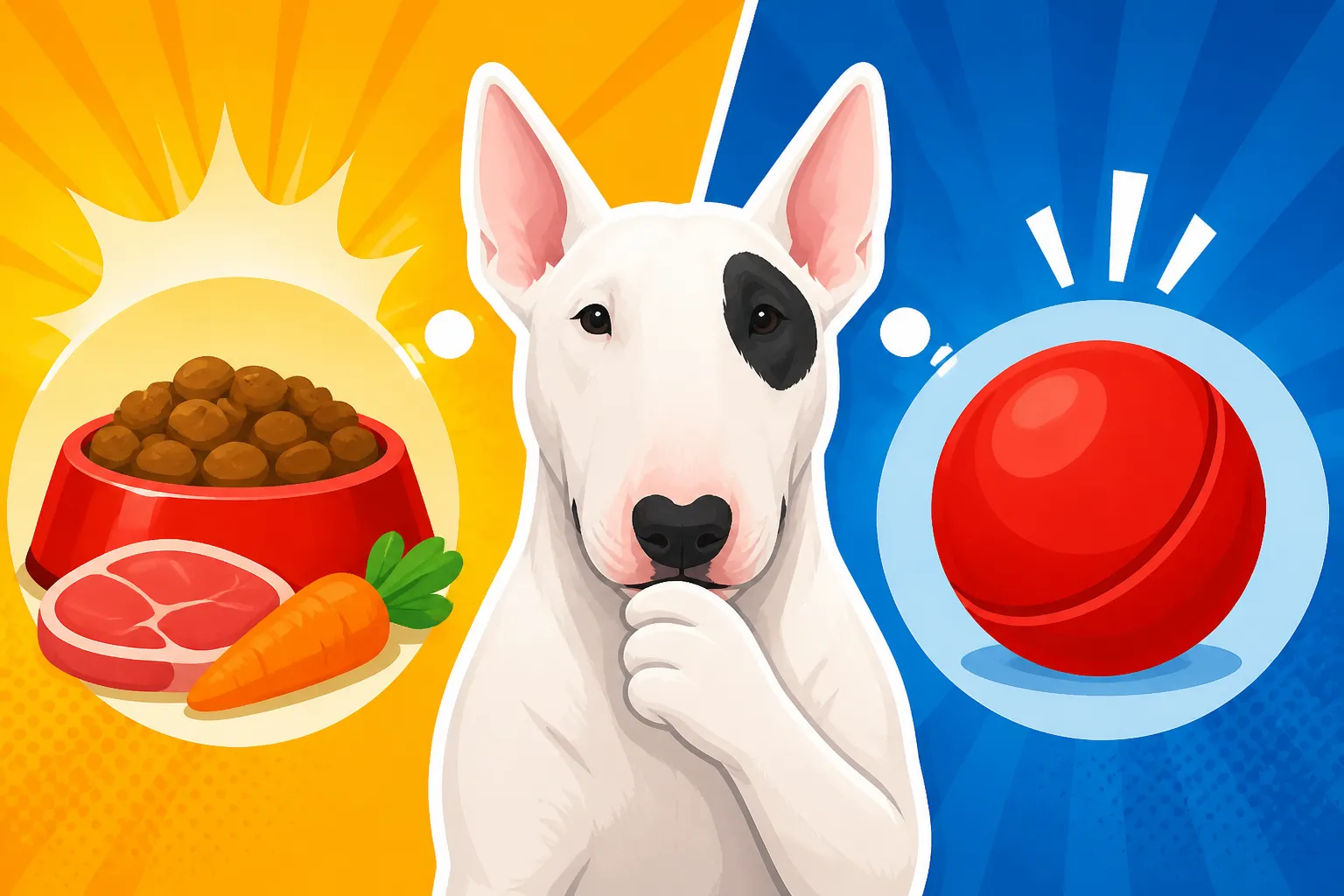
Often, the most effective strategy for training a Bull Terrier isn't choosing between food and a ball, but intelligently combining them. This hybrid approach leverages the strengths of both, adapting to your dog's preferences and the demands of the training scenario.
Balancing Food and Ball for Optimal Engagement
Think of food as your precision tool, and the ball as your big, exciting jackpot. You might use small, high-value food treats for initial learning and precise shaping of behaviors, where you need your Bull Terrier to think and focus intently. Once the behavior is solid, or for particularly challenging tasks, you can use a brief game of fetch with a ball as a super-sized reward. This creates a powerful reinforcement chain: "Do the thinking work for yummy treats, and then get to explode with joy for the ball!"
This balance keeps things fresh and keeps your Bull Terrier engaged. It helps prevent them from getting bored with just one type of reward and allows you to tailor the payoff to the effort required. For example, a simple "sit" might earn a tiny piece of cheese, while a perfect, rock-solid "stay" in a distracting environment might earn a vigorous game of tug with their favorite toy. This variable reinforcement makes training an exciting adventure rather than a predictable chore.
| Reward Type | Pros for Bull Terriers | Cons for Bull Terriers | Best Use Cases |
|---|---|---|---|
| Food (High-Value) | Excellent for precision & focus; easily portable; can be used for luring & shaping; good for calming. | Can lead to "sniffing" distractions; requires careful portion control; can be ignored if too low-value. | Learning new commands; precise shaping; proofing behaviors in distractions; maintaining calm. |
| Ball/Toy | Taps into prey drive; high energy release; builds excitement & drive; great for recalls. | Can lead to overstimulation; distraction if visible; requires active participation; not always suitable for precise work. | Reinforcing completed behaviors; high-energy drills (recall, fetch); building play drive; mental/physical release. |
| Hybrid (Food & Ball) | Combines precision with excitement; maintains novelty; adaptable to different scenarios & energy levels. | Requires careful management to avoid overstimulation; need to understand individual dog's preference shifts. | Comprehensive training plans; complex sequences; balancing mental focus with physical outlet. |
Transitioning from Food to Life Rewards
While food and toys are excellent initial motivators, the ultimate goal in training is often to transition to "life rewards" – things your Bull Terrier wants to do anyway. This could be opening the door for a walk, getting permission to greet a friendly person, or even just getting a specific kind of praise. The food and ball act as bridges to these intrinsic motivators. A good training program, such as those offered by BAXTER & Bella, often emphasizes this natural progression.
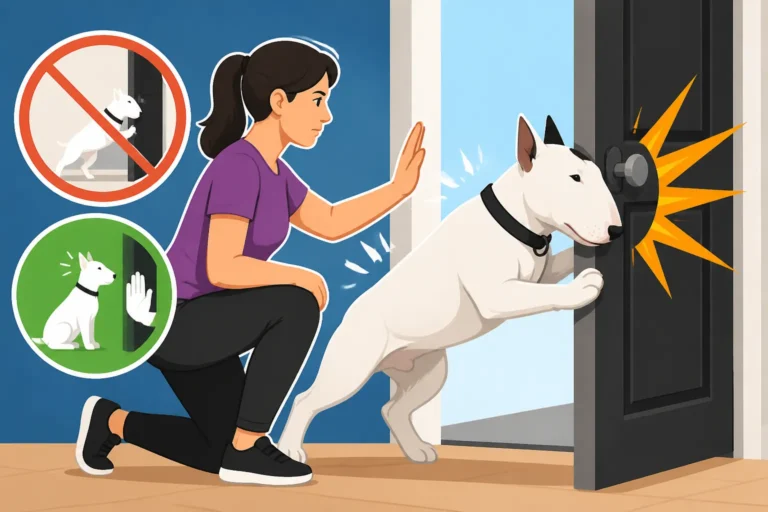
For example, asking for a sit before opening the door (the "life reward" of a walk) is a classic example. Your Bull Terrier learns that polite behavior earns them access to the things they desire. This is where their "what's in it for me?" mentality truly works in your favor. They begin to understand that you are the gatekeeper to all good things, and cooperating with you unlocks those rewards. This builds a deeper, more intrinsic motivation for listening, moving beyond mere bribery.
Tailoring Rewards to the Training Context
No two Bull Terriers are exactly alike, and no two training sessions are identical. The most successful trainers are those who can read their dog and the environment, then adapt their reward strategy accordingly.
High-Distraction Environments vs. Focused Work
Imagine trying to teach your Bull Terrier a new trick in your quiet living room versus at a busy park during prime dog-walking hours. The level of distraction is vastly different, and so should be your reward strategy. In a low-distraction environment, you might be able to use slightly lower-value treats, or even just enthusiastic praise, especially if you're building a new skill. The mental effort required isn't as high, and the competition for their attention is minimal.
However, once you move to a high-distraction environment – say, working on Teaching a Bull Terrier to Sit and Stay amidst barking dogs and scurrying squirrels – you'll need to pull out the big guns. This is where those super high-value food rewards or a quick, explosive game with their favorite ball become indispensable. The reward has to be compelling enough to cut through all the environmental noise and remind them that you are still the most interesting thing around. This is also where consistency is king; they need to know that following your lead always, always pays off handsomely.
Personalizing Rewards for Individual Bull Terriers
Just like people, Bull Terriers have unique preferences. While one might go absolutely bonkers for a tennis ball, another might turn up their nose at it and only work for a specific brand of soft, stinky treat. It's your job to become a detective and figure out what truly motivates your individual dog. What makes their eyes light up? What do they secretly covet? This isn't a one-size-fits-all breed.
Observe them during play and meal times. Do they have a toy they'd die for? Do they get particularly excited about a certain type of food? Experiment with different types of rewards and watch their response. You might even discover that for some Bull Terriers, the ultimate reward is a vigorous ear scratch, a short game of tug, or simply getting your undivided, silly attention. The more you tailor the reward to their individual desires, the more engaged and enthusiastic they'll be in their training. Remember, A Bull Terrier Trains When It Sees the Point, and personalizing that "point" is key.
Practical Tips for Maximizing Reward Effectiveness
No matter if you lean more towards food, a ball, or a combination, there are universal principles that will make your rewards work harder for you and your Bull Terrier.
Timing and Consistency are Key
The effectiveness of any reward hinges on two critical factors: timing and consistency. For a Bull Terrier, whose attention can wander in a blink, the reward must be delivered immediately after the desired behavior. We're talking within 1-2 seconds. This "marker" helps them understand precisely what action earned the reward. If you're too slow, they might think they're being rewarded for looking away, sniffing the ground, or even just breathing! A clicker, available from many pet supply stores or Amazon, can be a fantastic tool here, acting as a precise audible marker for that exact moment of brilliance.
Consistency means that the reward follows the behavior every single time in the early stages of learning. As the behavior becomes more ingrained, you can gradually move to an intermittent reinforcement schedule, which actually makes the behavior stronger and more resistant to extinction. However, in the beginning, especially with a Bull Terrier who needs to see the clear cause-and-effect, be as consistent as the sunrise. This clear communication builds trust and understanding between you.
Troubleshooting When Neither Seems to Work
What happens when your Bull Terrier seems utterly uninterested in both your gourmet treats and their favorite squeaky ball? This can be incredibly frustrating and disheartening. First, don't despair. It usually means you need to rethink your strategy, not that your Bull Terrier is untrainable. Often, the issue isn't the dog, but the perceived value of the reward or the environment. How Stubborn a Bull Terrier Is can sometimes be misinterpreted as disinterest.
Here are a few troubleshooting steps:
- Elevate the Value: Are your "high-value" treats truly high-value? Try something even more enticing, like cooked meat or a tiny smear of peanut butter (if safe for dogs).
- Manage the Environment: Is the environment too distracting? If your dog can't focus, no reward will work. Start training in a quiet, low-distraction area and gradually introduce distractions.
- Check for Over-Stimulation or Stress: Sometimes, a dog isn't uninterested, but overwhelmed or stressed. They might be too excited, too tired, or uncomfortable. Training shouldn't be stressful.
- Are They Hungry? A Bull Terrier who just had a big meal might not be as motivated by food. Schedule short training sessions before meal times.
- Try a Different Toy: Maybe it's not the ball, but that specific ball. Or maybe they prefer tug to fetch. Explore different types of toys and play. You might find that Which Puzzle Toys Occupy a Bull Terrier are more engaging than simple fetch.
- Keep it Short and Fun: Bull Terriers have limited patience for repetitive drills. Keep training sessions brief and upbeat, maybe just 2-5 minutes at a time. How Short a Bull Terrier's Training Session Has to Be is often shorter than you think.
- Consult a Professional: If you're truly stuck, a professional dog trainer specializing in positive reinforcement can offer tailored advice and help you identify underlying issues or more effective motivators. They can also provide insights into Why a Bull Terrier Needs a Job and how to channel their energy constructively.
Ultimately, training your Bull Terrier is a journey of discovery. While food and balls are incredibly powerful tools, the most important ingredient is your patience, understanding, and willingness to adapt to your unique companion. By understanding their motivations and strategically employing various rewards, you can build a strong, cooperative bond that makes training a joy for both of you.
Disclaimer
This article is for general informational purposes only and does not constitute professional advice. Laws, prices and regulations vary by location and change over time. Consult a qualified professional for guidance on your specific situation.