Whether Attention Makes Bull Terrier Spinning Worse
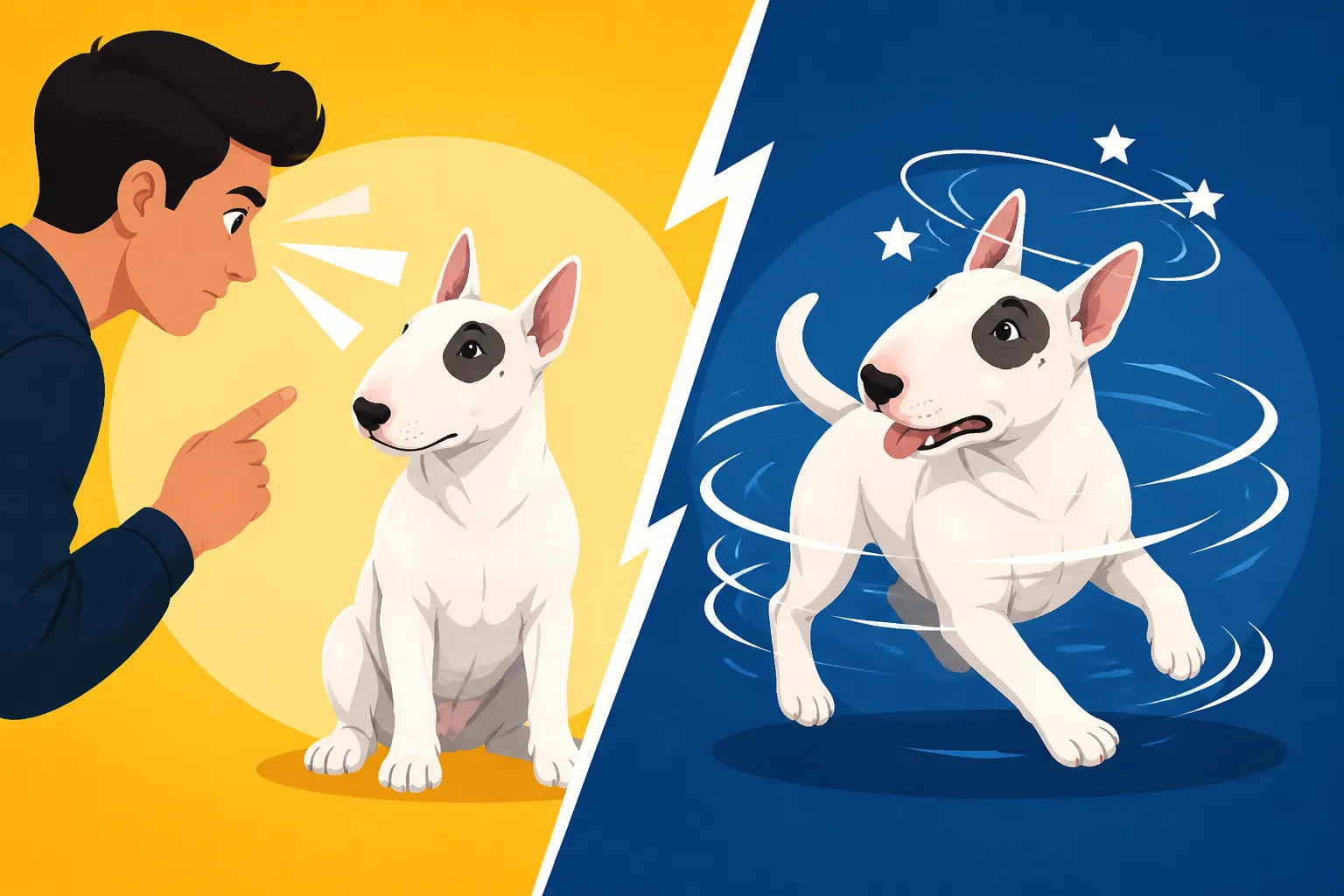
It’s a sight that can be both bewildering and concerning for any Bull Terrier owner: your beloved, egg-headed companion suddenly drops everything and begins chasing their tail, not just once or twice, but in an incessant, almost trance-like whirl. You call their name, clap your hands, offer a toy, and sometimes, it feels like any reaction from you, good or bad, only makes the spinning worse, pulling them deeper into their own little cyclone. It’s natural to wonder if your attention is inadvertently fueling this intense, sometimes alarming behavior. This guide is dedicated to exploring the complex nature of Bull Terrier spinning and whether our human reactions play a role in its perpetuation.
Understanding Bull Terrier Spinning: More Than Just a Quirk
When you first witness your Bull Terrier engaging in intense tail chasing or spinning, it can be easy to dismiss it as a quirky habit, just another one of their endearing eccentricities. After all, these dogs are known for their unique personalities and sometimes unusual behaviors. However, for many Bull Terriers, spinning is far more than just a passing fancy or a bit of playful silliness; it can be a deeply ingrained, compulsive behavior that impacts their quality of life. Understanding what this behavior truly entails and what might be driving it is the first critical step toward managing it effectively.
What Spinning Actually Looks Like in a Bull Terrier
Imagine your Bull Terrier, typically a picture of goofy joy, suddenly dropping their head, focusing intently on their tail, and then launching into a frantic, repetitive chase. It’s not a casual flick of the tail or a quick sniff; this is a full-body commitment. They often spin in tight circles, sometimes so fast they blur, completely engrossed in the pursuit. Some will nip or even bite at their tail or flank, occasionally drawing blood. The intensity can vary from a few rapid spins to prolonged episodes lasting several minutes, during which they seem unresponsive to their environment. It’s almost as if they’re in their own world, oblivious to your calls or attempts to distract them. This isn't your average playful puppy chasing its tail; it's a focused, almost obsessive action that often builds in intensity and frequency if left unchecked. You might notice their body language becomes stiff, their eyes glazed over, and their usual bouncy demeanor replaced by a singular, unyielding focus on their tail. If you've never seen it before, it can be quite alarming.
The Root Causes Behind the Whirlwind
The origins of spinning in Bull Terriers are often multifaceted and can involve a combination of genetic predisposition, medical issues, and behavioral factors. It’s crucial to remember that this isn't usually just "bad behavior" in the typical sense; it’s a symptom of something deeper. Genetically, Bull Terriers are known to be prone to compulsive disorders, and spinning is one of the most commonly observed. It's thought to have a neurological component, making it similar to obsessive-compulsive disorder in humans. Beyond genetics, medical conditions can certainly trigger or exacerbate spinning. Pain or discomfort, particularly around the tail base, hindquarters, or even an ear infection, can cause a dog to constantly turn and nip. Neurological conditions, such as focal seizures, can also manifest as repetitive behaviors like spinning, making it imperative to rule out underlying health problems. Then there are the environmental and behavioral triggers: boredom, stress, anxiety, lack of appropriate mental or physical stimulation, or even seeking attention can all play a role. A Bull Terrier left alone too long or without enough to do might resort to spinning as a self-soothing or self-stimulating behavior. It’s a complex puzzle, and figuring out the pieces is vital. For more on this, you might find Why a Bull Terrier Chases Its Tail particularly insightful.
When to Worry: Distinguishing a "Zoomie" from a Problem
We've all seen our dogs get the "zoomies" – those bursts of frantic energy where they run laps around the living room or yard, seemingly for no reason other than pure joy. This playful, exuberant running is often accompanied by a wagging tail and a happy, bouncy demeanor. It's usually short-lived and doesn't involve a focused obsession with their own tail. Bull Terrier spinning, particularly when it becomes a concern, is distinctly different. Problematic spinning is characterized by its repetitive, ritualistic nature, often with a detached or hyper-focused gaze. The dog seems less aware of their surroundings, and it can be difficult to interrupt them. Unlike a normal zoomie, which dissipates quickly and leaves your dog panting but content, compulsive spinning often leaves the dog agitated, out of breath, and sometimes even physically injured from self-trauma to the tail. If you notice an increase in frequency, duration, or intensity, or if your Bull Terrier begins to injure itself, these are clear indicators that the behavior is more than just a harmless quirk and warrants investigation. Pay close attention to How Often a Bull Terrier Spins in a Day to help you identify patterns and potential concerns.
The Attention Dilemma: Fueling the Fire or Offering Support?
This is where the heart of the matter lies for many Bull Terrier owners. When your dog is spinning, your first instinct is often to intervene. You might call their name, tell them "no," try to physically stop them, or even attempt to distract them with a toy or a treat. But then you watch them, and it feels like your efforts, no matter how well-intentioned, just make them spin more. It’s a frustrating cycle, leaving you questioning whether your very presence is exacerbating the problem.
The Double-Edged Sword of Human Reaction
It’s true that any form of attention – positive, negative, or even neutral – can sometimes inadvertently reinforce a behavior in a dog, especially one that is seeking interaction. When your Bull Terrier starts to spin, and you immediately respond, even if it's with a frustrated "stop it!" or a gentle nudge, you are still engaging with them. For a dog that might be bored, anxious, or simply looking for a connection, even negative attention is attention. They learn that spinning is a highly effective way to get you to look at them, talk to them, or physically interact. This isn't to say your Bull Terrier is deliberately manipulating you; it's simply how dogs learn through association.
However, the "attention" factor isn't always straightforward. For a Bull Terrier whose spinning is rooted in a compulsive disorder, the act of spinning itself might be internally rewarding, providing a sensory output or a way to cope with internal discomfort. In such cases, your attention might not be the cause of the spinning, but it could certainly become an additional layer of reinforcement, making the behavior more resistant to change. It's a tricky balance: you want to help, but you don't want to accidentally encourage.
Why Ignoring It Isn't Always the Answer
Given the potential for attention to reinforce the behavior, many owners are advised to ignore unwanted behaviors. While this can be a highly effective strategy for some issues, it's not always the panacea for Bull Terrier spinning, especially if it's a severe or compulsive form.
Firstly, if the spinning is rooted in pain, a medical condition, or a neurological issue, ignoring it is not only unhelpful but potentially harmful. Your dog needs veterinary intervention, not to be left alone with their discomfort. Secondly, for dogs with true compulsive disorders, the behavior isn't always performed for attention; it's a coping mechanism. Ignoring it won't address the underlying anxiety or compulsion. In fact, it might even increase their stress, leading to more spinning. Thirdly, intense spinning can lead to self-injury. Ignoring a dog that is literally biting its own tail until it bleeds is neither safe nor responsible. While it's important to avoid reinforcing the spinning with overt attention, simply tuning out the behavior isn't a comprehensive solution and can actually be detrimental depending on the root cause. Whether a Bull Terrier Should Be Interrupted Mid Spin delves into this further.
Identifying What Your Bull Terrier Seeks
To effectively manage spinning, you need to become a detective and figure out what your Bull Terrier is truly gaining from the behavior. Is it genuinely a bid for your attention? Or is it something else entirely?
Consider the circumstances surrounding the spinning episodes:
- When does it happen? Is it when you're busy on the phone, watching TV, or about to leave the house? This might indicate attention-seeking or anxiety.
- What precedes it? Does it occur after a period of inactivity, or when they're over-excited? Boredom or overstimulation could be factors. Whether Overtiredness Triggers Bull Terrier Spinning is a great resource here.
- What is their body language like? Are they making eye contact, almost "performing" for you? Or do they seem lost in their own world, unaware of your presence? The latter suggests a deeper, internal driver.
If you suspect attention-seeking, the goal isn't necessarily to ignore your dog, but to ignore the spinning behavior while simultaneously teaching them more appropriate ways to ask for your attention. This means becoming incredibly proactive in giving them attention for calm, non-spinning behaviors, and redirecting them before the spin even begins, or as soon as it starts.
| Type of Human Reaction | Potential Impact on Spinning Behavior | Best Practice |
|---|---|---|
| Direct Eye Contact | Can be interpreted as engagement, good or bad attention. | Avoid sustained eye contact during a spin. |
| Verbal Commands/Scolding | "No!", "Stop!", "Leave it!" – Still forms of attention, even if negative. Can increase arousal. | Avoid direct scolding. Use a calm, neutral interruption if necessary. |
| Physical Intervention | Pushing, pulling, restraining – Can escalate stress, pain, or perceived "game." | Avoid physical force. Use gentle redirection if safe. |
| Offering Toys/Treats Directly | Can accidentally reward the act of spinning. | Offer after a successful redirection and calm behavior. |
| Ignoring Completely | Risk of self-injury, not addressing underlying medical/compulsive issues, or increasing frustration. | Not a standalone solution. Must be combined with other strategies. |
| Calm Redirection | Interrupts the pattern, offers an alternative, and rewards appropriate behavior. | Ideal approach. Focus on prevention and teaching alternatives. |
Strategies for Managing Spinning Without Reinforcing It
Okay, so we know that simply ignoring isn't always the answer, and direct attention can sometimes make things worse. So what do you do when your Bull Terrier starts to spin? The key is a multi-pronged approach that addresses both the immediate behavior and its underlying causes, all while avoiding inadvertent reinforcement.
Redirection: Shifting Focus Away from the Spin
Redirection is one of the most powerful tools in your arsenal. The goal is to interrupt the spinning as quickly and calmly as possible, before it gains momentum, and then immediately guide your Bull Terrier toward a more appropriate, desirable behavior.
- Be Observant: Learn to recognize the subtle cues that precede a spin. Does your Bull Terrier get a certain look in their eye, start to pace, or stiffen? The sooner you can intervene, the better.
- Calm Interruption: Instead of yelling "No!" try a soft, novel sound to break their focus – perhaps a gentle clap, a quiet whistle, or even dropping a small, non-harmful item a short distance away from them (not at them). The goal is to get their attention without alarming them or raising their arousal level.
- Offer an Alternative: As soon as you have their attention for even a split second, immediately present a highly valued alternative. This could be a favorite puzzle toy, a short training exercise (like "sit" or "down" for a high-value treat), or initiating a game of fetch with a durable ball. The trick is to have these alternatives readily available. For instance, keeping a Nylabone or a Kong filled with something delicious nearby can be a lifesaver. Redirecting a Bull Terrier That Has Started Spinning provides more specific techniques.
- Reward Calm: As soon as they engage with the alternative or settle into a calm behavior, offer praise or a small treat. You are teaching them that calm, non-spinning behaviors get your positive attention and rewards.
Remember, the moment they stop spinning and look at you, that's your window. Make that moment count by immediately offering something more rewarding than the spin itself.
Environmental Enrichment: Filling the Void That Leads to Spinning
Many Bull Terriers spin out of boredom, frustration, or a need for mental and physical exertion. They are intelligent, energetic dogs who thrive on having a "job" and can become destructive or develop compulsive behaviors when under-stimulated. Providing a rich, engaging environment is crucial.
- Physical Exercise: Bull Terriers need consistent, appropriate exercise. This isn't just a quick walk around the block. They need opportunities to run, play, and burn off steam. Daily walks, controlled off-leash play in a secure area (if appropriate for your dog), or even dog sports like agility or flirt pole play can make a huge difference. Just be mindful of their joints and overall health; don't overdo it, especially with young pups.
- Mental Stimulation: This breed thrives on challenges. Puzzle toys, snuffle mats, and scent work engage their minds and tire them out more effectively than just physical exercise alone. Rotate these toys to keep things fresh. Instead of putting their entire meal in a bowl, consider using a food-dispensing toy for at least one meal a day. BAXTER & Bella offers some fantastic virtual training resources that incorporate mental engagement exercises that can be invaluable.
- Training and Socialization: Ongoing training not only reinforces good manners but also provides mental stimulation and strengthens your bond. Basic obedience, trick training, or even advanced classes can give your Bull Terrier a purpose. Appropriate and positive socialization experiences from a young age can also help reduce anxiety and improve their coping mechanisms in various situations. Check out What Enrichment a Spinning Bull Terrier Needs for more ideas.
Consistent Management and Professional Guidance
Consistency is paramount when dealing with any behavioral issue, and spinning is no exception. Everyone in the household needs to be on the same page regarding how to respond to and manage the spinning. A clear routine for exercise, feeding, training, and quiet time can also provide structure and reduce anxiety for your Bull Terrier.
However, sometimes you need more than just consistent management. If the spinning is frequent, intense, causing self-injury, or unresponsive to your efforts, it's time to seek professional help. This isn't a sign of failure; it's a sign of responsible pet ownership. A certified professional dog trainer or a veterinary behaviorist can help you identify specific triggers, develop a tailored behavior modification plan, and address any underlying anxiety or compulsive tendencies. They can offer insights you might miss and techniques that go beyond what a typical owner might know. They might recommend specific counter-conditioning or desensitization protocols.
A Holistic Approach to Your Spinning Bull Terrier's Well-being
Dealing with a Bull Terrier who spins can be incredibly frustrating and even heartbreaking, especially when you feel like you're doing everything right. It's a journey, not a sprint, and it requires patience, understanding, and a commitment to your dog's overall health and happiness. Remember, your Bull Terrier isn't choosing to be "naughty"; they are struggling with a behavior that often has deep roots.
Ruling Out Medical Causes: The Crucial First Step
Before embarking on any extensive behavioral modification program, the absolute first step must be a thorough veterinary check-up. As discussed, pain, neurological issues, or other medical conditions can directly cause or significantly contribute to spinning. Your vet will conduct a full physical examination and may recommend diagnostic tests to rule out any underlying health problems. This might include blood work, neurological assessments, or even imaging. If a medical issue is identified, treating that condition could drastically reduce or even eliminate the spinning behavior. Do not skip this critical step, as you could be trying to train away a problem that requires medical intervention. For example, When a Bull Terrier's Spinning Needs a Vet explains why professional medical advice is so important.
Tailoring Your Approach: No One-Size-Fits-All Solution
Every Bull Terrier is an individual, and what works for one might not work for another. A young, bored Bull Terrier might respond beautifully to increased exercise and puzzle toys, while an anxious, older Bull Terrier might need medication, a more structured routine, and gentle counter-conditioning. A Bull Terrier whose spinning is truly a compulsive disorder may require a combination of behavioral therapy and pharmaceuticals prescribed by a veterinary behaviorist.
Be prepared to experiment, observe, and adjust your approach. Keep a journal of when the spinning occurs, what seems to trigger it, and what your responses were, along with the outcome. This detailed record can be incredibly valuable for you and any professionals you consult. Embrace the fact that it's an ongoing process of learning about your specific dog.
Ultimately, while attention can certainly play a role in reinforcing Bull Terrier spinning, it's rarely the sole cause. A comprehensive strategy that prioritizes medical clearance, addresses environmental needs, provides mental and physical stimulation, and incorporates calm, consistent redirection is your best bet for helping your unique Bull Terrier find peace from their whirlwind habit.
Disclaimer
This article is for general informational purposes only and does not constitute professional advice. Laws, prices and regulations vary by location and change over time. Consult a qualified professional for guidance on your specific situation.