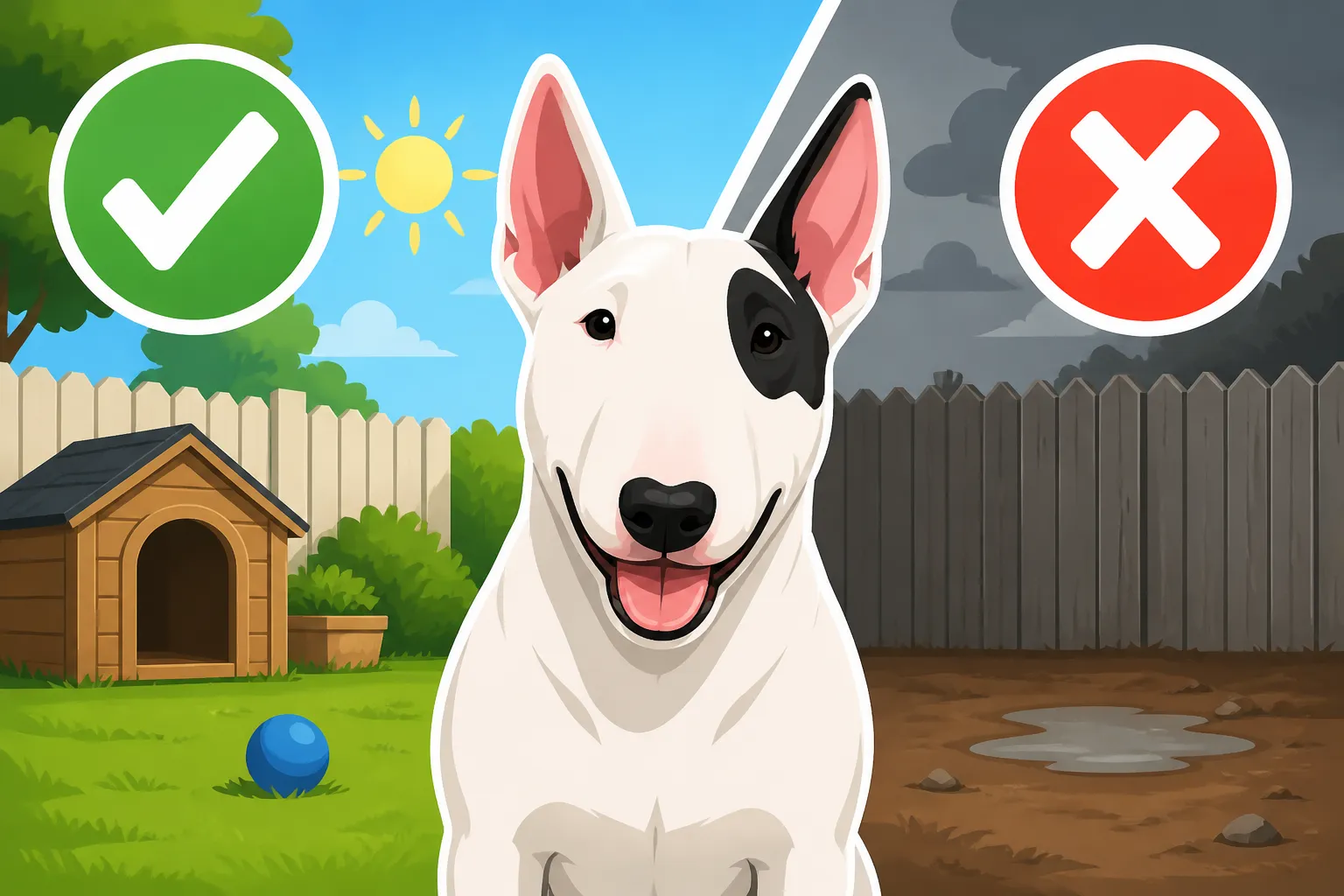
Whether a Bull Terrier Can Be Left in a Yard at All
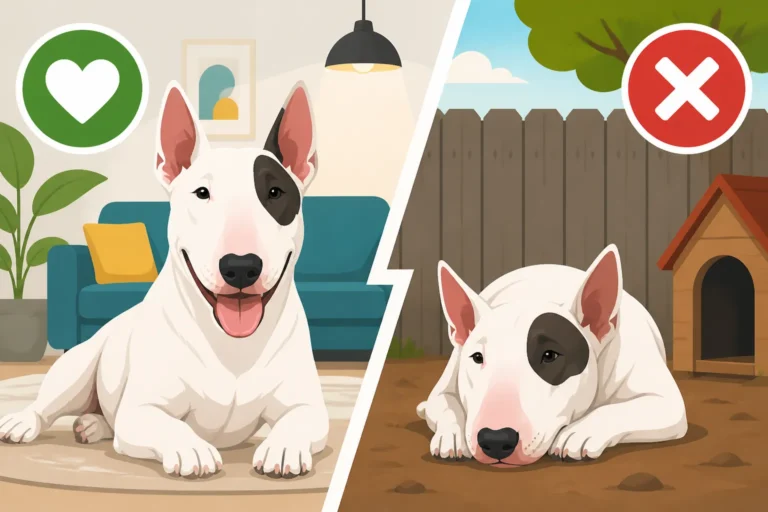
As Bull Terrier owners, we often dream of giving our energetic, fun-loving companions a big yard to romp in, believing it will be their paradise. However, the reality of leaving a Bull Terrier unsupervised in a yard, even a well-fenced one, is far more complex and often fraught with unforeseen challenges, frustrations, and genuine risks. This guide will delve into why simply letting your Bull Terrier "out in the yard" isn't a viable long-term solution and what truly goes into creating a safe, stimulating outdoor environment for these unique dogs.
Why a Bull Terrier's Nature Makes Unsupervised Yard Time Risky
Bull Terriers are phenomenal dogs, full of character, boundless energy, and an intelligence that often outsmarts their well-meaning owners. These very traits, which make them so endearing, also make them incredibly challenging to leave alone in an outdoor space. They aren't content to simply bask in the sun or chew quietly on a bone for hours; their minds are constantly working, and their bodies are built for action.
The Bull Terrier's Incredible Escape Artistry
If there's a weakness in your fence, a Bull Terrier will find it. If there isn't one, they'll create one. They are notorious diggers, able to excavate impressive tunnels in surprisingly short amounts of time. A loose board, a gate latch that isn't truly secure, or even a gap underneath the fence where the ground dips can become an exit strategy. It's not about being malicious; it's about being curious, driven, and often, bored. They explore, they follow scents, and suddenly, they're on an adventure down the street, putting themselves in danger and causing immense worry for you. Many a Bull Terrier owner has returned home to an empty yard, only to find their beloved dog a mile away, simply because a squirrel offered a more interesting path to follow.
Think about it: a seemingly sturdy wooden fence might have a small knothole, or a section might be slightly rotted at the bottom. To another breed, it might be inconsequential. To a Bull Terrier, that's a potential weak point, a project. They’ll chew, they’ll dig, they’ll body-slam, testing the limits until they find their freedom. A secure fence for a Bull Terrier often means digging prevention, such as burying chicken wire or a concrete footer, and ensuring vertical barriers are truly insurmountable. It's not just about height; it's about integrity from top to bottom.
The Power of Boredom-Induced Destruction
A bored Bull Terrier is a destructive Bull Terrier, and a yard, while seemingly full of interesting things, can quickly become a canvas for their creative energy if they're left without mental and physical stimulation. They don't just chew on their toys; they chew on anything and everything within reach. That lovely flower bed you meticulously planted? It's now a fantastic digging pit. The sprinkler system? A curious, chewable puzzle. Your patio furniture? A prime target for gnawing.
This isn't about malice; it's about an intelligent, high-energy dog seeking an outlet. If they're not given appropriate activities, they will invent their own, and those activities rarely align with your landscaping goals. We've heard countless stories of Bull Terriers dismantling entire decks, gnawing through irrigation lines, or even attempting to "remodel" the siding of a house, all out of sheer boredom. What starts as a quiet afternoon in the yard can quickly devolve into an expensive renovation project. This destructive tendency is why things like What a Bull Terrier Does to a Sofa or What a Bull Terrier Does to a Door Frame are very real concerns for owners, and the yard is no exception.
Prey Drive and Neighborhood Critters
Bull Terriers were originally bred with a strong prey drive, and that instinct hasn't diminished. While they might be the gentlest companion indoors, a squirrel darting across the fence, a rabbit hopping through the bushes, or even a bird landing on a branch can ignite that powerful chase instinct. If your fence isn't absolutely secure, that prey drive becomes a huge risk. They will go over, under, or through anything to get to it.
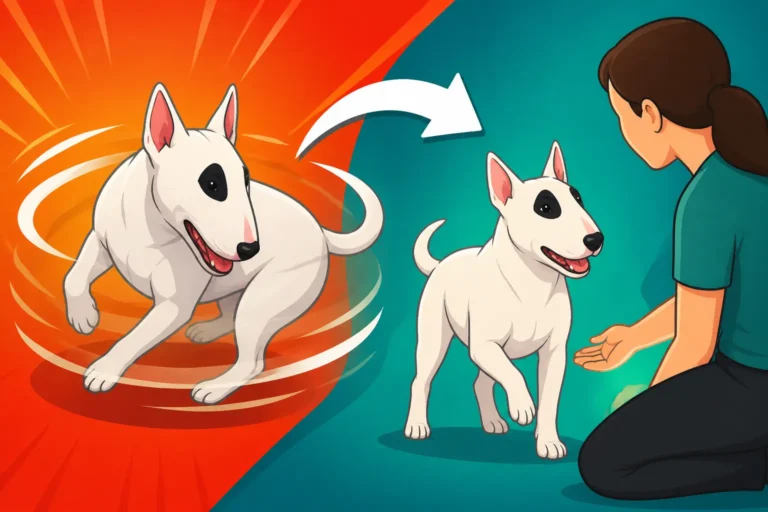
This isn't just a nuisance; it's dangerous. A Bull Terrier chasing a squirrel into the street could lead to a tragic accident. It could also lead to altercations with other neighborhood animals or even people if they perceive someone as interfering with their chase. Their focus can become so intense that recall commands, no matter how well-trained, might be ignored in the heat of the moment. Owners often attest that trying to teach a Bull Terrier to come back mid-zoomie is a challenge that requires significant and consistent effort.
The Unseen Dangers of Unsupervised Outdoor Time
Beyond the behavioral challenges specific to Bull Terriers, leaving any dog, especially a Bull Terrier, unattended in a yard exposes them to a host of dangers that many owners don't immediately consider. It’s not just about property damage; it’s about their safety, well-being, and even their life.
Environmental Hazards and Weather Extremes
Your yard, while familiar, can hide numerous hazards for an unsupervised dog. Toxic plants, fertilizers, pesticides, or even stagnant water in a bird bath or old pot can be ingested, leading to serious illness. Insects like wasps or spiders, and larger animals such as snakes or skunks, can pose threats. And then there's the weather.
Bull Terriers, with their short coats, are not equipped for extreme temperatures. In summer, they can quickly overheat, especially if left without constant access to shade and fresh, cool water. Their enthusiasm can override their good judgment, leading them to play in direct sun for too long. Similarly, in winter, they don't have the insulating undercoat to stay warm, making them susceptible to hypothermia. How Well a Bull Terrier Handles Cold and Signs a Bull Terrier Is Overheating are important topics for any owner considering leaving their dog outside. Even a seemingly mild day can have hidden risks: a sudden downpour, a burst of hail, or a drop in temperature that goes unnoticed if you're not actively supervising.
Theft and Injury Risks
It’s an unfortunate reality that dogs, especially popular or distinct breeds like Bull Terriers, can be targets for theft. An unsupervised dog in a yard is an easy target for someone looking to steal them for resale or other nefarious purposes. A Bull Terrier's friendly, often trusting nature can make them approach strangers, inadvertently putting themselves in harm's way.
Beyond theft, there's the risk of injury. A Bull Terrier might try to jump or climb a fence and fall awkwardly, injuring a leg or back. They might get into a scuffle with an animal that comes into the yard. They could step on something sharp, ingest something harmful, or get entangled in yard equipment or loose wires. The dangers multiply when no one is there to intervene quickly. A Bull Terrier hiding pain is a common characteristic, so often by the time you notice an injury, it could be more severe.
Neighborly Relations and Legal Liabilities
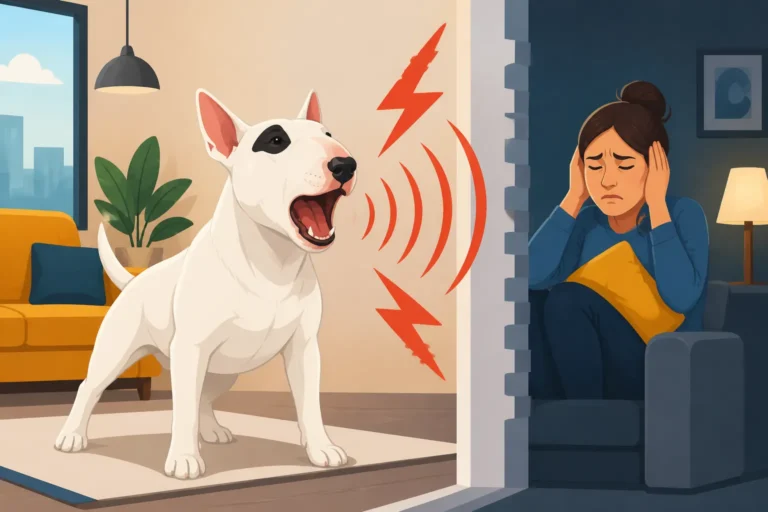
While your Bull Terrier might be a beloved member of your family, not all neighbors will feel the same, especially if your dog is left to its own devices. Constant barking, digging under a shared fence, or even just being a visible presence can create tension. Bull Terriers can be vocal when bored or when they see something interesting, and persistent barking can lead to complaints and strained relationships with those living nearby.
Furthermore, if your Bull Terrier manages to escape your yard, you become liable for any damage or harm it might cause. This could range from digging up a neighbor's prize-winning roses to, in a worst-case scenario, an accident with a vehicle or another animal. The legal and financial ramifications can be significant. Even if your dog is the sweetest creature, its escape could lead to a truly dreadful situation. Knowing Which Home Insurers List the Bull Terrier is crucial because many insurance policies have breed-specific clauses, and a claim resulting from an escape might not be covered.
Creating a Truly Secure Outdoor Space for Your Bull Terrier
Given the challenges, the goal isn't to never let your Bull Terrier enjoy the outdoors. Instead, it's about creating a safe, stimulating, and supervised outdoor environment. This requires foresight, investment, and a commitment to their well-being.
Fortifying Your Fencing: More Than Just a Barrier
When it comes to Bull Terriers, a fence isn't just a visual boundary; it's a critical safety measure that needs to be escape-proof. This means thinking about more than just height.
Consider these elements:
- Height: A minimum of 6 feet is generally recommended, but even taller might be necessary for particularly athletic jumpers.
- Digging Prevention: This is crucial. Burying a section of the fence (at least 1-2 feet deep), installing L-footers made of concrete or heavy-gauge wire, or laying down a concrete apron along the fence line can prevent tunneling.
- Material Strength: Chain-link fences should be heavy-gauge and properly installed. Wooden fences need to be solid, with no gaps or loose boards, and ideally, panels that are difficult to chew through. Metal ornamental fences need very narrow gaps to prevent a Bull Terrier from squeezing through or getting stuck.
- Gate Security: Gates are often the weakest point. Ensure they are self-latching and have additional, heavy-duty locks that a smart Bull Terrier can't manipulate. Double-latching mechanisms are a good idea.
- Obstacle Removal: Don't leave anything near the fence that a Bull Terrier could use as a launchpad to jump over—no outdoor furniture, woodpiles, or large planters.
Here's a quick comparison of common fencing types and their considerations for Bull Terriers:
| Fence Type | Pros | Cons | Bull Terrier Considerations |
|---|---|---|---|
| Wood Privacy | Aesthetically pleasing, blocks visibility | Can be chewed, boards can rot/loosen, often requires digging prevention | Requires regular inspection for weak spots. Ensure panels are securely attached and consider reinforcing the base to deter digging. May need chew-proof panels at the bottom. |
| Chain Link | Durable, relatively inexpensive | Can be climbed, easily cut (if light gauge), doesn't block visibility, digging is easy underneath if not secured | Needs to be heavy gauge to resist chewing/bending. Anti-digging measures (e.g., concrete footer or buried wire) are critical. Consider anti-climb top extensions. |
| Vinyl/PVC | Low maintenance, weather-resistant, attractive | Can be expensive, some types can be brittle and crack, can still be dug under | Generally sturdy, but ensure high-quality material that won't shatter if a Bull Terrier body-slams it. Digging prevention is still paramount. |
| Wrought Iron/Steel | Very strong, aesthetically appealing, visibility | Most expensive, gaps can be wide enough for a determined Bull Terrier to squeeze through if not properly spaced, can still be dug under | Excellent strength but critically inspect bar spacing. Bars should be close enough to prevent escape or entrapment. Digging prevention essential. |
| Invisible Fence | No physical barrier, relatively inexpensive, keeps dog within boundary (usually) | Does not prevent escapes, does not deter other animals, shock can be ineffective on high-drive dogs, doesn't protect against theft or external threats | Not recommended as a primary containment for Bull Terriers, especially unsupervised. A Bull Terrier with enough drive will often run through the shock. Only suitable as a supplement to a physical fence and with heavy training. |
Enrichment: Keeping Minds and Bodies Active
A secure yard is only half the battle. To prevent boredom-induced destruction and escape attempts, you need to provide engaging activities and enrichment while they are supervised.
- Indestructible Toys: Invest in toys specifically designed for power chewers. Brands known for durable dog toys on Amazon can be a good starting point. Kongs, GoughNuts, and heavy-duty rubber toys filled with treats can occupy them for a while. Rotate toys to keep things interesting. Which Toys Survive a Bull Terrier is an important read for any owner!
- Designated Digging Area: If your Bull Terrier loves to dig, give them a sanctioned spot. A sandbox or a designated patch of dirt where they are encouraged to dig can save your landscaping elsewhere. Bury toys or treats in it to make it appealing.
- Shade and Water: Always ensure easy access to fresh, cool water, especially on warm days. Multiple water bowls or a dedicated dog fountain can be helpful. Provide ample shade, whether natural from trees or artificial from sails or awnings.
- Puzzle Toys: Even outdoors, puzzle toys can provide mental stimulation. Fill them with kibble or treats, and let your Bull Terrier work for their reward.
- Supervised Play: The most important "enrichment" is you! Playing fetch, practicing recall, doing scent work, or just lounging together are invaluable. This is their quality time with you, which a Bull Terrier thrives on.
- Flirt Pole: A flirt pole can be a fantastic way to burn off energy in a contained space, satisfying their prey drive in a safe, controlled manner.
The Importance of Supervision
The bottom line is that a Bull Terrier should never be left unsupervised in a yard for extended periods. "In the yard" is not a substitute for human companionship or a structured exercise routine.
- Active Supervision: When your Bull Terrier is outside, you should be too. Use this time to play, train, or simply observe them. Watch for signs of boredom, overheating, or any attempts at escape.
- Crate Training for Indoor Safety: When you can't actively supervise them, indoor containment in a secure crate is often the safest option, especially for young or destructive Bull Terriers. A heavy-duty crate can prevent destruction and keep them safe when you step out. Which Crate Holds a Bull Terrier discusses options that can withstand their ingenuity.
- Training is Key: A solid foundation of training, including a reliable recall and "leave it" command, is vital for safety, even in a yard. Training programs like those offered by BAXTER & Bella can provide structured guidance for these essential skills, helping you build a stronger bond and safer routines with your Bull Terrier.
- Cameras: While not a replacement for human supervision, outdoor security cameras can give you an alert if there's unexpected movement in your yard or if your Bull Terrier is attempting an escape when you briefly step inside.
Alternatives to Leaving Your Bull Terrier Alone in the Yard
Understanding that leaving your Bull Terrier alone in the yard is generally ill-advised doesn't mean they're condemned to a life indoors. It means being creative and committed to providing appropriate outlets for their energy and intelligence.
Structured Exercise Routines
Bull Terriers need consistent, structured exercise. A daily walk isn't just about potty breaks; it's a chance for mental stimulation, sniffing new scents, and burning off physical energy. Two brisk walks a day, plus play sessions, are often a good starting point. Remember, they are incredibly strong on a leash, so teaching a Bull Terrier to walk without pulling is essential for enjoyable outings.
Variety is also key. Don't just do the same route every day. Explore different parks, trails, or even engage in dog sports like obedience, rally, or even scent work. These activities tap into their intelligence and physical capabilities in a controlled environment. How Much Exercise a Bull Terrier Actually Needs can help you tailor a routine to your individual dog.
Supervised Playdates and Dog Sports
If your Bull Terrier enjoys the company of other dogs and is properly socialized (and many can be quite particular about their dog friends, as explored in A Bull Terrier With Other Dogs), supervised playdates can be a wonderful energy outlet. However, choose companions carefully, as Bull Terriers can play rough and sometimes misunderstand social cues.
Dog sports are another excellent alternative. Agility, flyball, or even advanced obedience classes can channel their energy and intelligence in a positive direction. These activities provide mental challenges and physical exertion, building confidence and strengthening your bond. They learn new skills and get to spend quality time with you, which is always their preferred activity.
Dog Daycare or Professional Walkers
For owners who work long hours, leaving a Bull Terrier entirely alone can be detrimental. Boredom can lead to destructive behavior or even separation anxiety. Investigating reputable doggy daycare facilities that understand the Bull Terrier temperament can be a great option. Make sure the daycare has strict screening processes, experienced staff, and provides plenty of structured play and rest time. Not all daycares are equipped for the unique play style and energy of a Bull Terrier, so choose wisely.
Alternatively, hiring a professional dog walker can break up their day, provide exercise, and give them a much-needed mental break. A midday walk can make all the difference in preventing issues that arise from prolonged solitude.
In summary, while a yard seems like a natural fit for an active dog, a Bull Terrier's distinct personality, intelligence, and physical capabilities mean that leaving them unsupervised outdoors is generally not safe, responsible, or fair to the dog. Their well-being truly depends on active, engaged ownership, even when they're enjoying the great outdoors.
Disclaimer
This article is for general informational purposes only and does not constitute professional advice. Laws, prices and regulations vary by location and change over time. Consult a qualified professional for guidance on your specific situation.