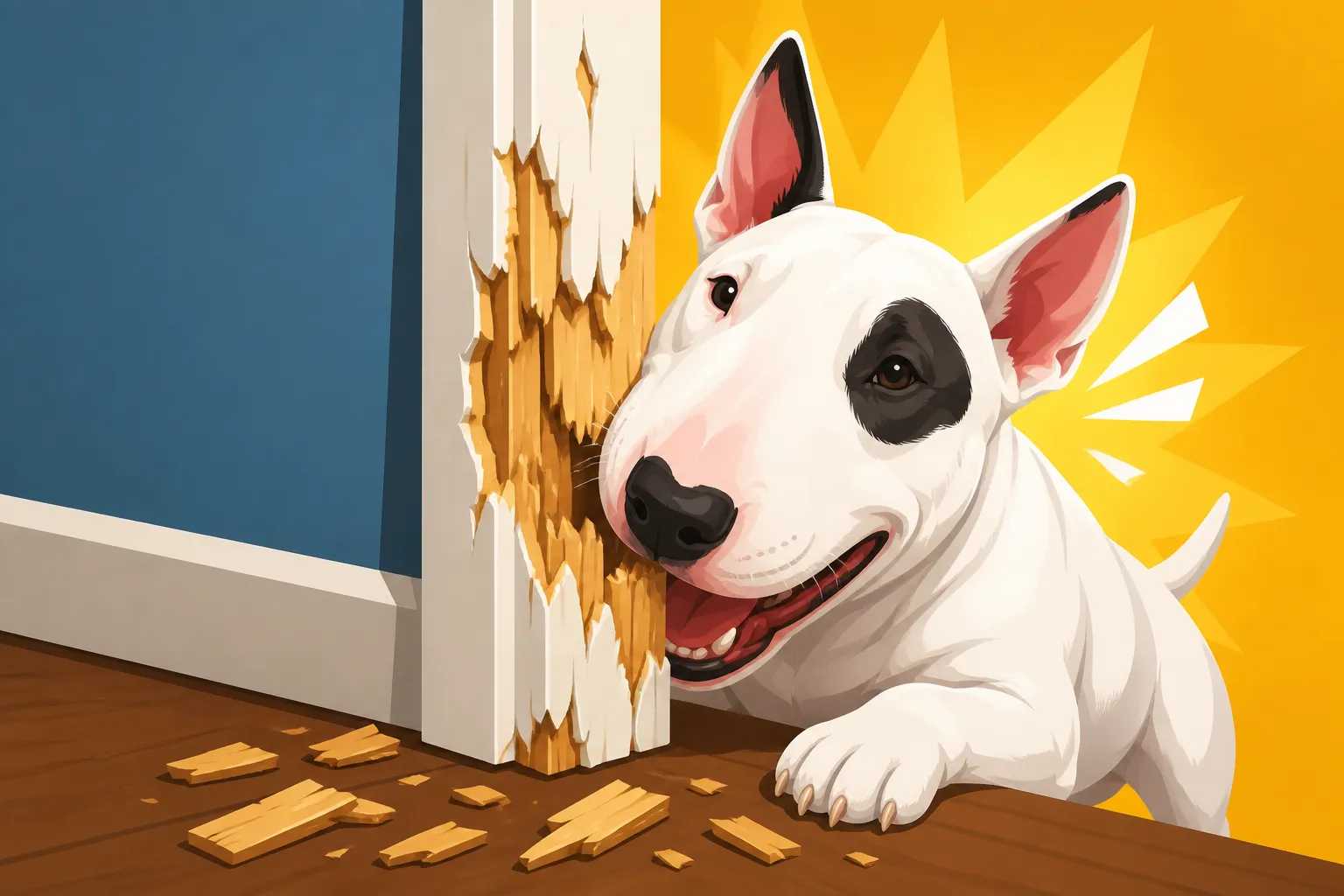
What a Bull Terrier Does to a Door Frame
Ah, the beloved Bull Terrier. You bring them home, expecting boundless joy and hilarious antics, but then one day you walk into a room and your heart sinks a little. There it is: a splintered, ragged door frame, testament to your Bull Terrier's boundless energy and, perhaps, a moment of boredom or anxiety. This guide isn't here to judge; it's here to unpack why your Bull Terrier might turn your home's architecture into a chew toy and, more importantly, what you can realistically do about it. It’s a common frustration many Bull Terrier owners face, and you’re definitely not alone in seeing your home remodel itself, one doorway at a time.
The "Why": Unpacking the Motivation Behind Door Frame Destruction
It’s easy to feel personally offended when your Bull Terrier decides your beautiful wooden trim is a chew toy. But for your dog, it’s not an act of defiance; it’s usually a way to cope with something, or simply an expression of their innate drive. Understanding the root cause is the first step toward finding a lasting solution. Without knowing why they’re doing it, any fix will likely be a temporary band-aid.
Boredom, Energy, and a Lack of Appropriate Outlets
Let’s be honest, Bull Terriers are incredibly intelligent and ridiculously strong dogs with an almost endless well of energy. If that energy isn't channeled into constructive activities, it will find an outlet. And often, that outlet is destructive chewing. A door frame offers a satisfying texture, it's conveniently located, and it doesn't move – making it a prime target for a bored Bull Terrier looking for a "job." They might start with a tentative nibble, then find it surprisingly satisfying, and before you know it, you have a permanent art installation of canine dentistry.
Think about it: dogs are natural chewers. It's how they explore their world, strengthen their jaws, and relieve stress. If you're not giving your Bull Terrier enough structured exercise, engaging playtime, or mentally stimulating tasks, they're going to create their own entertainment. This is especially true for a breed like the Bull Terrier, which is often described as Why a Bull Terrier Is Called a Three Year Old in a Dog Suit – they have that same tenacious curiosity and a need to be constantly engaged. A quick walk around the block might not cut it for these powerhouse dogs; they need vigorous activity that truly tires them out, both physically and mentally.
Anxiety and Stress: When Chewing Becomes a Coping Mechanism
Sometimes, chewing isn't just about boredom; it's a symptom of deeper anxiety. Separation anxiety is a big one for Bull Terriers, and it often manifests as destructive chewing, especially around exit points like doors and windows. Your dog isn't trying to redecorate; they might be genuinely distressed about being left alone and are attempting to "escape" or soothe themselves through the act of chewing. The frantic effort to get through a door frame can be heartbreaking to witness, as it signals a dog truly struggling with its emotions.
If the destruction primarily happens when you're away, and is accompanied by other signs like excessive drooling, pacing, vocalization, or house-soiling, it's a strong indicator of anxiety. A Bull Terrier is a companion dog through and through, deeply bonded to their people, and they simply don't do well when left in isolation for long periods. You'll quickly learn Why a Bull Terrier Cannot Be Left Alone All Day. This isn't just about preventing property damage, but addressing your dog's emotional well-being. It’s a different problem than simple boredom and requires a different approach, one rooted in empathy and gradual conditioning rather than just providing more toys.
Puppy Teething and Exploration: The Early Days of Destruction
For younger Bull Terriers, especially puppies, chewing is a crucial part of their development. Just like human babies, puppies go through a teething phase, and gnawing on anything and everything helps relieve the discomfort of erupting teeth. Door frames, baseboards, chair legs – anything at mouth-level with an interesting texture is fair game. They're also exploring their environment and learning about different textures and tastes, and that powerful little jaw is constantly testing boundaries.
While this phase is normal, managing it correctly is absolutely crucial to prevent it from becoming a deeply ingrained habit. If a puppy learns that chewing a door frame is a satisfying and acceptable activity, it will be much harder to break that habit as an adult. They need to be consistently redirected to appropriate chew items from day one. You'll quickly realize How Mouthy a Bull Terrier Puppy Is, and while cute at first, this mouthiness needs careful guidance. Ignoring it, or simply scolding without providing alternatives, often only exacerbates the problem.
Assessing the Damage and Immediate Solutions
Once you’ve identified that your Bull Terrier is indeed turning your door frames into modern art, the next step is to assess the situation and implement some immediate strategies to halt the destruction. This isn't about blaming your dog, but about setting them up for success and protecting your home from further wear and tear.
Identifying the Extent of the Problem
Before you can fix it, you need to understand it. Take a good look at the damage. Is it superficial gnawing, a bit of paint scratched off, or deep gouges that expose the raw wood? Is it always the same door frame, or are multiple entryways suffering? Does the destruction only occur when you leave the house, or do you catch them in the act even when you're home? The pattern can be incredibly revealing. For instance, damage concentrated around the bottom of a front door when you're out screams "separation anxiety," while general gnawing on various pieces of trim might point more towards boredom or under-stimulation.
Also, consider the timing. Does it happen right after you leave? Or after a few hours? Is it worse on days when they haven't had much exercise? Keeping a mental (or even written) log of when and where the destruction occurs can provide vital clues to the underlying cause. Don't just get frustrated; become a detective. Your Bull Terrier is communicating something, and it's up to us, their human companions, to figure out the message.
Containment and Prevention Strategies
While you're working on the root cause, you need to prevent further damage. This is where containment and physical barriers become your best friends.
- Crates: A properly sized, indestructible dog crate can be a lifesaver. It provides a safe, secure den for your Bull Terrier when you can't supervise them. The key here is "safe den" – a crate should never be used as punishment. Introduce it positively, make it comfortable with soft bedding and engaging toys, and ensure they feel secure inside. For a Bull Terrier, you'll want a heavy-duty model. Many wire crates, while fine for other breeds, can be no match for a determined Bull Terrier. Look for options designed for escape artists or powerful chewers, perhaps a reinforced steel design. When considering Which Crate Holds a Bull Terrier, remember their strength.
- Management: If crating isn't an option, consider using baby gates to confine your Bull Terrier to a "dog-proofed" room when you leave, or simply keeping doors closed to areas with vulnerable door frames. This limits their access to temptations.
- Bitter Sprays: Some owners try bitter-tasting sprays on door frames. While they work for some dogs, a truly determined Bull Terrier might just power through the unpleasant taste. It's worth a shot, but don't expect miracles.
- Physical Barriers: For persistent chewers, more robust barriers might be necessary. You can attach clear Plexiglass sheets or metal chew guards to the lower parts of door frames. These are a physical deterrent that removes the "satisfaction" of chewing wood. They might not be the prettiest solution, but they can save your woodwork while you address the behavioral issues.
Providing Acceptable Chew Alternatives
This is perhaps the most critical immediate solution. Your Bull Terrier needs to chew. It's a fundamental part of being a dog, especially a Bull Terrier. The trick is to redirect that natural instinct to appropriate items. This is where a good stash of durable, engaging chew toys comes in.
You'll need toys that can stand up to a Bull Terrier's powerful jaws. Forget flimsy plush toys for unsupervised chewing; they'll be confetti in minutes. Look for solid rubber toys, nylon chews, and hard, interactive puzzle toys that dispense treats. Brands like Kong are often a good starting point, but even those might eventually succumb. You might find yourself on Chewy, endlessly scrolling through their "power chewer" section, trying to find the holy grail of indestructible toys. It's an ongoing quest for many Bull Terrier owners to find Which Toys Survive a Bull Terrier.
Fill puzzle toys with high-value treats or a specially formulated food, perhaps a bit of wet food or a paste. Some owners even use fresh food options like those offered by Ollie, freezing them into Kongs for a long-lasting, mentally engaging challenge. The goal is to make the appropriate chew items far more appealing and rewarding than the door frame. Rotate toys to keep things interesting, and always have several options available.
| Chew Toy Type | Pros | Cons | Best for | Durability (Bull Terrier Scale) |
|---|---|---|---|---|
| Rubber Puzzle Toys | Mental stimulation, holds treats | Can be destroyed by super chewers | Boredom, mental work | Moderate to High |
| Nylon Chews | Long-lasting, satisfies urge to chew | Can be too hard for teeth, less engaging | Power chewers | High |
| Rope Toys | Interactive, good for tug | Easily shredded, ingestion risk | Play, supervised | Low to Moderate |
| Wood Chews (safe) | Natural, satisfying texture | Splintering risk, messy | Moderate chewers | Moderate |
| Edible Chews | High value, fully consumable | Consumed quickly, calorie intake | Reward, short sessions | Low |
Long-Term Behavioral Modification and Training
Stopping the chewing in the moment is one thing, but truly solving the problem means addressing the underlying behavior. This requires consistency, patience, and a deep understanding of your Bull Terrier’s needs. This isn’t a quick fix; it’s a commitment to training and enrichment.
Increasing Mental and Physical Stimulation
A tired Bull Terrier is usually a well-behaved Bull Terrier. These dogs need a significant amount of exercise, more than just a potter around the block. We’re talking about structured walks, runs, hikes, and active playtime. They thrive on vigorous activity that engages both their bodies and their sharp minds. Consider activities like flirt poles, which can mimic prey drive in a controlled way, or playing fetch in a large, secure area. You’ll be surprised at How Much Exercise a Bull Terrier Actually Needs to truly feel content and less prone to destructive behavior.
Beyond physical exertion, mental stimulation is paramount. Bull Terriers are smart, and they bore easily. Incorporate short, fun training sessions into your daily routine. They might be stubborn at times, but A Bull Terrier Trains When It Sees the Point. Use positive reinforcement and keep sessions engaging and brief. Teach them new tricks, practice obedience cues, or engage in scent work games around the house. Puzzle toys, as mentioned earlier, are fantastic for mental enrichment, forcing them to "work" for their food or treats. A few minutes of brain games can be as tiring as a long walk.
Addressing Separation Anxiety
If you suspect separation anxiety is at the heart of the door frame destruction, a multi-faceted approach is necessary. This isn't just about giving them a chew toy; it's about gradually helping them feel secure and calm when you're not around.
- Gradual Desensitization: This involves slowly increasing the time you leave your Bull Terrier alone. Start with just a few minutes, then extend it gradually, always returning before they show signs of distress. This helps them build confidence that you will come back. It’s a slow process, often requiring a lot of patience. You’ll need to really observe for Signs a Bull Terrier Has Separation Anxiety.
- Calming Aids: Some owners find success with calming aids, such as pheromone diffusers (like Adaptil), calming supplements, or even ThunderShirts. These can help reduce overall anxiety levels, making them more receptive to training. Consult your veterinarian for advice on appropriate options.
- Professional Help: For severe cases of separation anxiety, don't hesitate to consult a certified professional dog behaviorist or a veterinary behaviorist. They can provide tailored plans and, in some cases, medication to help your dog manage their anxiety more effectively. This is not a failure on your part, but a responsible step to help your dog live a happier, less stressed life.
Reinforcing Good Choices and "Bull Terrier Proofing" Your Home
Consistency is key. Whenever you see your Bull Terrier chewing on an appropriate toy, praise them lavishly and offer a treat. Make it clear that chewing that item is a fantastic choice. If you catch them eyeing the door frame, gently redirect them to an appropriate chew toy and reward them when they engage with it.
Beyond redirection, actively "Bull Terrier proofing" your home is crucial. This means looking at your environment through your Bull Terrier's eyes. What temptations are at nose level? What could be easily destroyed? Remove or protect anything valuable or dangerous. This might involve covering vulnerable furniture legs, securing cords, and yes, continuing to shield those enticing door frames. It’s not about restricting them entirely, but about creating an environment where their good choices are the easiest ones to make. Think of it as creating a fortress of fun and safety. You can dive deeper into this with resources like How to Bull Terrier Proof a Room.
Repairing the Damage and Moving Forward
After the immediate crisis is averted and you've started working on the behavioral aspects, you'll likely be left with a battle-scarred door frame or two. Repairing the damage is part of the process of reclaiming your home, and it’s a tangible step towards moving past the frustration.
DIY Door Frame Repairs
For minor damage, you might be able to handle the repairs yourself. If it's just superficial gnawing or scratches, a bit of sanding can smooth out rough edges. Wood filler can be used to patch small gouges, which you can then sand flush and paint over to match your existing trim. This is often the case for younger puppies or those who were only casually exploring.
For more extensive damage where chunks of wood have been removed, you might need to replace sections of the trim. This requires a bit more DIY savvy, including careful measuring, cutting, and securing new pieces of trim before sanding and painting. It can be a satisfying project, though, knowing you're restoring your home while simultaneously working on your Bull Terrier's habits.
When to Call in a Professional
If the damage is significant, involves structural elements, or if you're simply not comfortable tackling carpentry projects, don't hesitate to call in a professional. A skilled carpenter can repair or replace door frames, often making them look good as new. It might be an added expense, but it can save you a lot of headache and ensure the repairs are done correctly and safely. Sometimes, for deep gouges or complex trim profiles, a professional touch is truly worth the investment.
The Cost of Destruction: Budgeting for the Unexpected
Dealing with a chewed door frame is a harsh reminder that owning a Bull Terrier involves more than just the initial purchase price and food bill. There's an entire "destruction budget" that many new owners overlook. The cost of replacing furniture, repairing drywall (a Bull Terrier might decide to chew a hole in What a Bull Terrier Does to Drywall), or even replacing a ruined sofa (What a Bull Terrier Does to a Sofa) can add up quickly. This falls squarely under Which Bull Terrier Bill Nobody Budgets For. It's a realistic aspect of ownership that needs to be factored in.
While pet insurance, such as policies from Healthy Paws, is absolutely vital for covering unexpected veterinary emergencies and long-term health issues (which Bull Terriers are prone to, like kidney disease or heart conditions), it typically does not cover property damage caused by your pet. So, while Healthy Paws can be a lifesaver if your Bull Terrier needs an emergency vet visit, it won't pay to fix your door frame. This is why having an emergency fund or budgeting specifically for potential home repairs and durable dog supplies is a smart move for any Bull Terrier owner. It's about being prepared for the unique challenges and joys that come with these incredible dogs.
Remember, seeing a chewed door frame can be disheartening, but it's a problem with solutions. With patience, consistent effort, and a deep understanding of your Bull Terrier’s needs, you can turn that destructive habit into a well-managed part of their life, ensuring both your home and your beloved canine companion thrive.
Disclaimer
This article is for general informational purposes only and does not constitute professional advice. Laws, prices and regulations vary by location and change over time. Consult a qualified professional for guidance on your specific situation.